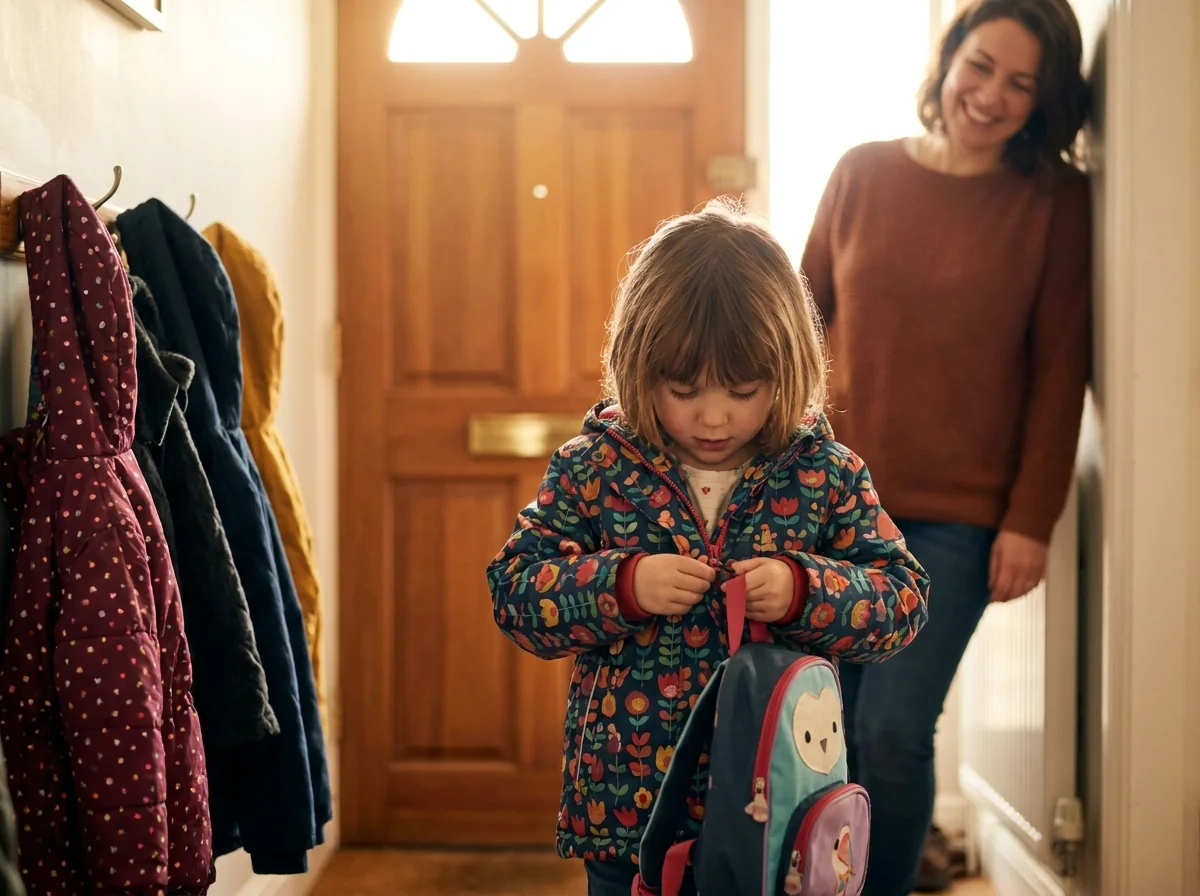
A 5 year old checklist, by area
This checklist follows the CDC's "Learn the Signs. Act Early." milestones, revised in 2022 so that each item is something most children, about three in four or more, can do by that age. The AAP's 5-year checkup guidance adds a few school skills (healthychildren.org). Read it as "most children by age 5", not as a test. Children vary, and a child who turned 5 last week will look different from one about to turn 6.
Language
- Tells a story they heard or made up with at least two events in it
- Keeps a conversation going for more than three back-and-forth turns
- Uses time words like yesterday, tomorrow, morning and night
- Answers simple questions about a book after you read it
Early literacy
- Names some letters when you point to them
- Writes some of the letters in their own name
- Uses or recognizes simple rhymes, like bat and cat or ball and tall
- Pays attention for 5 to 10 minutes during a story or a craft (screen time does not count)
Early math
- Counts to 10
- Names some numerals between 1 and 5 when you point to them
- Compares small groups: which plate has more grapes?
- Sorts objects by color, size or shape and spots a simple pattern
Fine motor
- Buttons some buttons
- Holds a pencil with fingers rather than a fist, and draws a person with several body parts
- Cuts along a line with child scissors, wobbles and all
Gross motor
- Hops on one foot
- Runs, climbs and catches a large ball most of the time
Social-emotional
- Follows rules or takes turns in simple games with other children
- Sings, dances or acts for you
- Gets along with other children and follows an adult's directions
Self-care
- Does simple chores, like matching socks or clearing their plate
- Dresses with little or no help
- Uses the toilet and washes hands on their own
What should a 5 year old know before starting kindergarten?
In most US states, children start kindergarten at 5 (healthychildren.org). The AAP describes readiness broadly: talking and listening, getting along with others, managing feelings, toileting and physical skills like holding a crayon or pencil, alongside early ideas about letters, sounds, numbers and shapes.
Ask kindergarten teachers what helps most on day one and you will hear:
- Independence. Opening a lunch box, zipping a coat, going to the bathroom, keeping track of a backpack.
- Listening in a group. Following a direction given to the whole class, not just to them.
- Waiting and turn-taking. In line, in a game, for the teacher's attention.
- Asking for help. A child who says "I don't understand" is easy to teach.
- Busy hands. Holding a pencil, cutting, gluing and turning pages without help.
Letters and numbers matter too, but teachers expect a wide range on the first day. A child who knows ten letters and a child who knows all 26 will both be taught the sounds from the start. For a printable list of these skills, see the kindergarten readiness checklist, and if your child is still closer to 4, look at what a 4 year old should know.
The Kindergarten Ready! Skills Kit gives a short burst of practice on the skills teachers notice first: cutting, pencil control, shapes, patterns, rhymes, beginning sounds, counting and first letters.
What should a 5 year old know in math?
At 5, math is still mostly hands-on: counting things, comparing groups and noticing shapes. The table shows where most children are at 5 and what the Common Core kindergarten standards expect by the end of the kindergarten year (Common Core, Counting & Cardinality).
| Skill | Most children by 5 | By the end of kindergarten |
|---|---|---|
| Counting aloud | To 10 | To 100 by ones and by tens |
| Counting objects | A small group, touching each one | Up to 20 objects, knowing the last number is the total |
| Numerals | Names some numbers from 1 to 5 | Reads and writes 0 to 20 |
| Comparing | More, fewer, the same | Which number is greater or less, up to 10 |
| Adding and taking away | Acts out "one more" with toys | Adds and subtracts within 10, quickly within 5 |
| Shapes | Names circle, square, triangle | Names and builds 2D and 3D shapes, compares lengths |
Five-minute math games for a 5 year old
- Snack counting. Count crackers onto a plate, then eat two. How many now?
- Dice at a glance. Roll a die and say the number without counting the dots.
- Ten in the bag. Hide some of ten blocks in a bag. How many are hiding?
- Shape hunt. Find three circles and three rectangles around the kitchen.
- Which is longer? Line up a spoon and a pencil, or two shoes.
For more ideas at this level, see math activities for preschoolers.
Reading and writing at 5
Most 5 year olds are not reading yet. What they are doing is building the parts reading is made from: hearing sounds in words, knowing letter shapes and names, and loving stories.
What to work on
- Sounds before spelling. Play "I spy something that starts with /m/." Clap the beats in names: Ma-ri-a.
- Letter names and sounds together. "This is s, it says /sss/." Our guide on how to teach letter sounds gives a good order.
- Their name. Capital first letter, then lowercase. The name-writing guide walks through it.
- Talk about books. After a story ask, "What happened first? Why was the bear sad?" Answering questions about a story is one of the CDC's age-5 milestones.
What comes in kindergarten
Over the kindergarten year, children learn every letter sound, blend three-letter words like the ones on our CVC words list, and learn a set of common words by sight. The kindergarten sight words guide shows which ones. There is no need to start these before school, but if your child is curious and asking, follow their lead.
A 20-minute day at home
Most 5 year olds can focus for 10 to 20 minutes on one table activity. A simple daily shape:
- Warm-up (5 minutes): one short page, such as a maze, a letter or a count-and-color.
- Sounds (5 minutes): a rhyming game or a beginning-sound hunt.
- Numbers (5 minutes): one of the games above.
- Hands (5 minutes): cutting, play dough, threading or drawing.
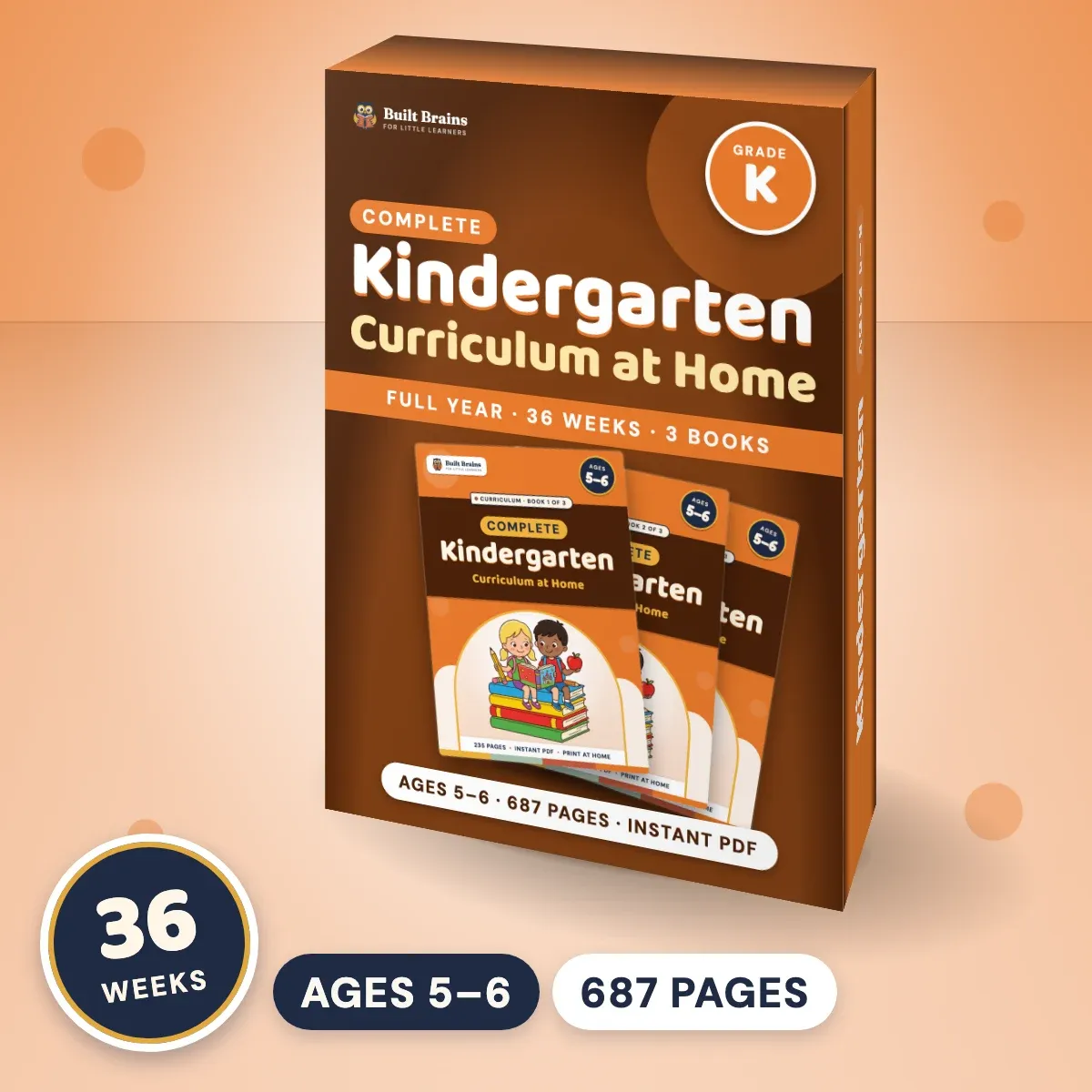
Then read together at bedtime. If you would like the planning done for you, the Complete Kindergarten Curriculum at Home is a 36-week plan for ages 5 to 6 in about 30 minutes a day, covering phonics in order, sight words, a short decodable story each week and kindergarten math from counting to 100 to adding within 10. For a full picture of the year, read what to teach in kindergarten at home.
When to talk to your pediatrician
The CDC encourages parents to act early rather than wait. Mention it at your child's next checkup, or call sooner, if your child:
- Is hard for people outside the family to understand
- Can't follow a two-step direction or answer simple questions about a story
- Shows little interest in playing with other children
- Has lost skills or words they used to have
- Seems to have trouble hearing or seeing
Raising a question is not a diagnosis. Often the answer is "this is within the normal range," and when support is needed, starting early helps. The AAP also recommends talking with your pediatrician about any concern, at any age (healthychildren.org). For children 3 and older, your local public school district can arrange a free evaluation.
If your child is ready for more, daily pages and sight words are the next step.
Ages 5–6 · 185 pages
Good Morning! Kindergarten Warm-Ups180 daily pages: phonics, sight words and math
Sources
- HealthyChildren.org (AAP) – Your Checkup Checklist: 5 Years Old: storytelling, dressing, pencil grip and getting along with other children at 5.
- HealthyChildren.org (AAP) – Is Your Preschooler Ready for Kindergarten?: kindergarten age, the skills that make up readiness and the AAP view on delaying school.
- HealthyChildren.org (AAP) – Milestones Matter: Your Child's Growth & Development By Age 5: CDC milestone checklists and talking to your pediatrician about concerns.
- Common Core State Standards – Kindergarten: Counting & Cardinality: end-of-kindergarten counting expectations.
Questions parents ask
Not yet, for most children. Reading is the main job of kindergarten, where children learn letter sounds, blend short words like cat and sun, and pick up a set of common sight words. At 5, the useful groundwork is naming some letters, hearing rhymes, enjoying books and answering simple questions about a story. A few children read early, and that is a bonus.
Most 5 year olds can count to 10, and many say the numbers well past that, often stumbling in the teens. Counting objects matters more than reciting: touching each one once and knowing the last number tells how many. Counting to 100 by ones and by tens is an end-of-kindergarten goal, so there is a whole school year to get there.
Most 5 year olds can write some of the letters in their name, and many can write all of it, often large, uneven or with a reversed letter. That is normal. Teach a capital first letter and the rest lowercase, the way school will, and practice a few times a week with a model to copy rather than daily drills.
By 5, most children count to 10, name some numerals between 1 and 5, and can tell which group has more. Over kindergarten they learn to count to 100, count up to 20 objects, write numbers to 20, and add and take away within 10 using fingers, objects and drawings. Everyday counting and simple games build this better than worksheets alone.
It depends on the child, and it is worth discussing with your pediatrician and the school. The American Academy of Pediatrics notes that early academic gaps for the youngest children in a class usually fade by third or fourth grade, and it cautions against treating readiness as a test a child must pass before starting.
Reviewed by
Early Childhood Educator & Curriculum Specialist
Maya Caldwell, M.Ed., is a veteran kindergarten teacher and instructional coach who specializes in structured literacy and purposeful play. With over a decade of classroom experience, she designs hands-on, inclusive learning environments that turn emerging readers into confident lifelong learners.
More about Maya →