Counting and one-to-one correspondence
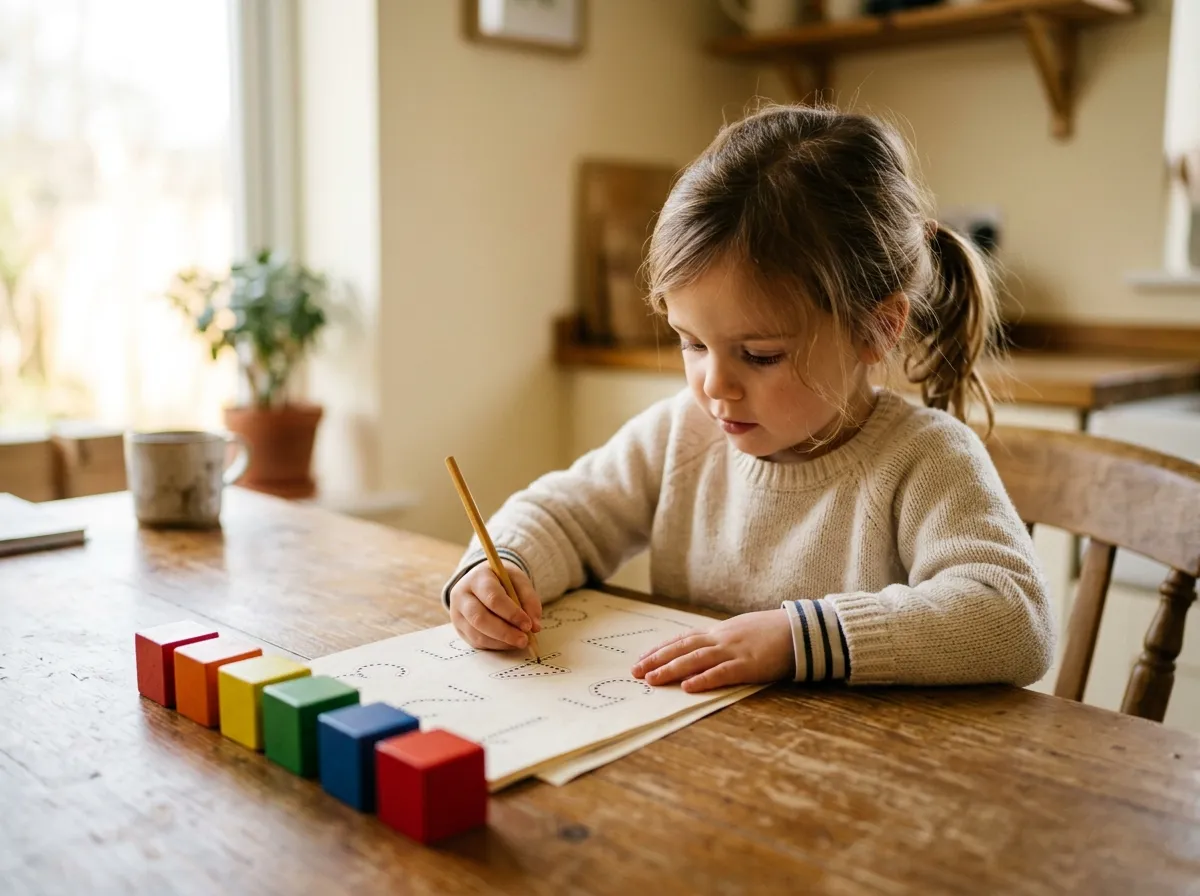
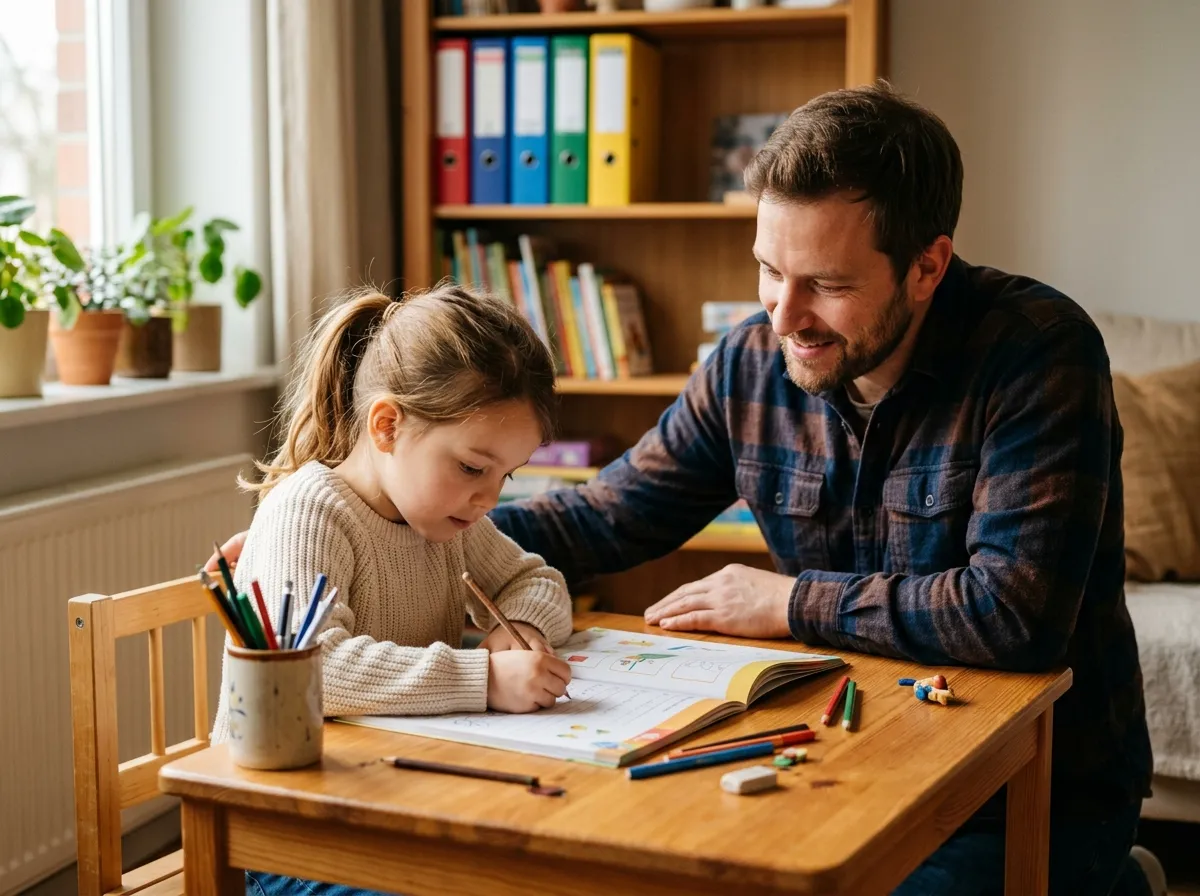
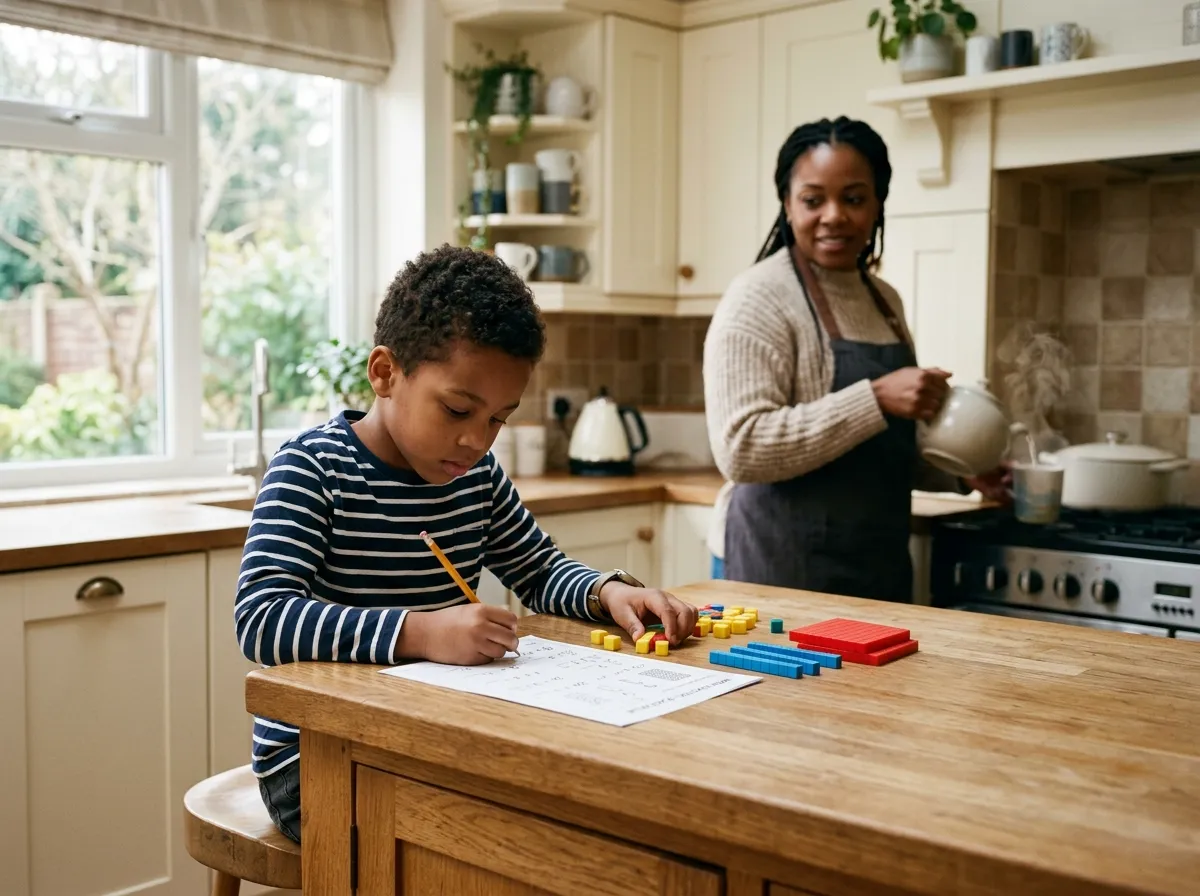
Many young children can recite “one, two, three…” long before they understand that each number matches exactly one object. That matching idea, called one-to-one correspondence, is the real foundation of counting. These activities build it:
- Touch and count. Line up five toy cars. Your child touches each one as they say its number. Builds: one number per object.
- Muffin tin drop. Put one pompom or button in each cup of a muffin tin. Builds: one-to-one matching.
- Stair counting. Count every step out loud on the way up to bed. Builds: rote counting with movement.
- How many now? Count a pile of blocks, then ask “So how many are there?” If your child says the last number, they’ve got it. Builds: cardinality (the last number tells how many).
- Table setting. One plate, one cup, one spoon for each person. Builds: matching sets.
- Count and clap. Clap, jump or stomp a number of times: “Can you do four jumps?” Builds: counting actions, not just objects.
Number recognition
Knowing that the squiggle “5” means five is a separate skill from counting to five. Link the two as often as you can.
- Number hunt. Look for numbers on doors, clocks, license plates and cereal boxes. “I see a 3! Can you find one?” Builds: recognizing numerals in the real world.
- Parking lot. Write 1 to 10 on sticky notes as parking spaces. Call a number and your child parks a car there. Builds: numeral recognition.
- Match the dots. Write numerals on cards and dots on others, then match the pairs. Builds: connecting numerals to quantities.
- Number line hop. Chalk a number line outside. “Hop to 4. Now hop forward two. Where are you?” Builds: number order and early adding.
- Fill the cup. Label cups 1 to 5 and have your child drop in that many beans or buttons (for children past the mouthing stage). Builds: numeral plus quantity.
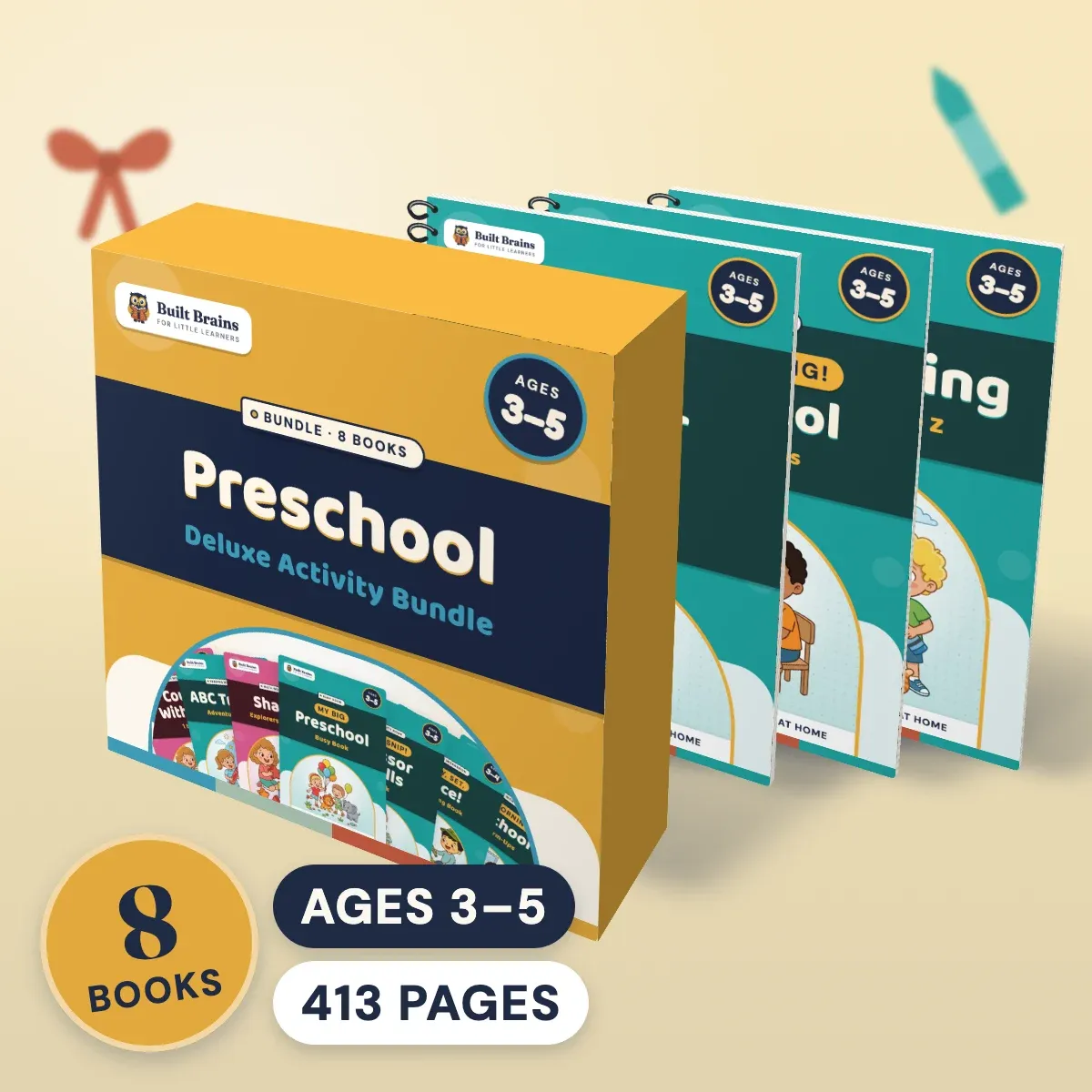
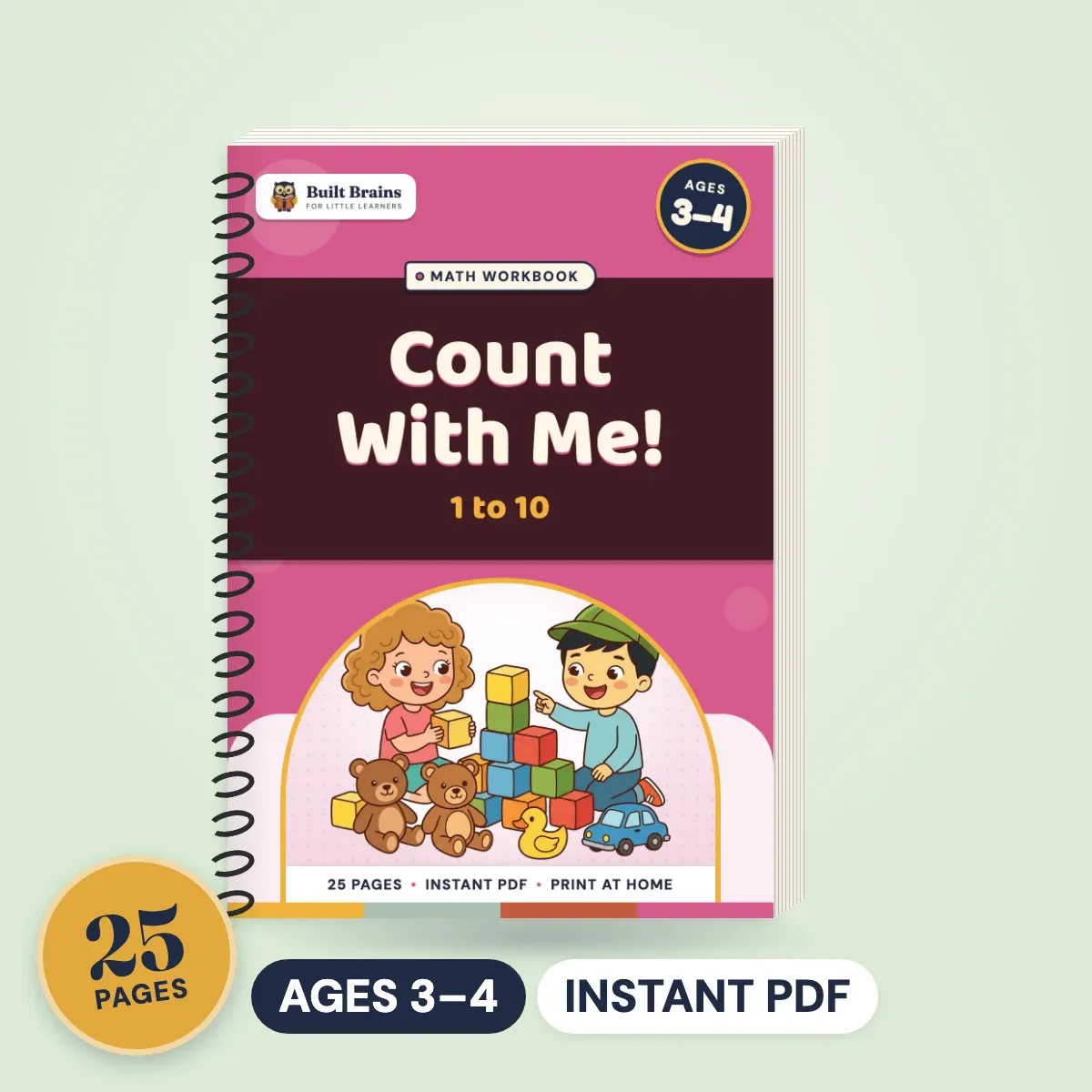
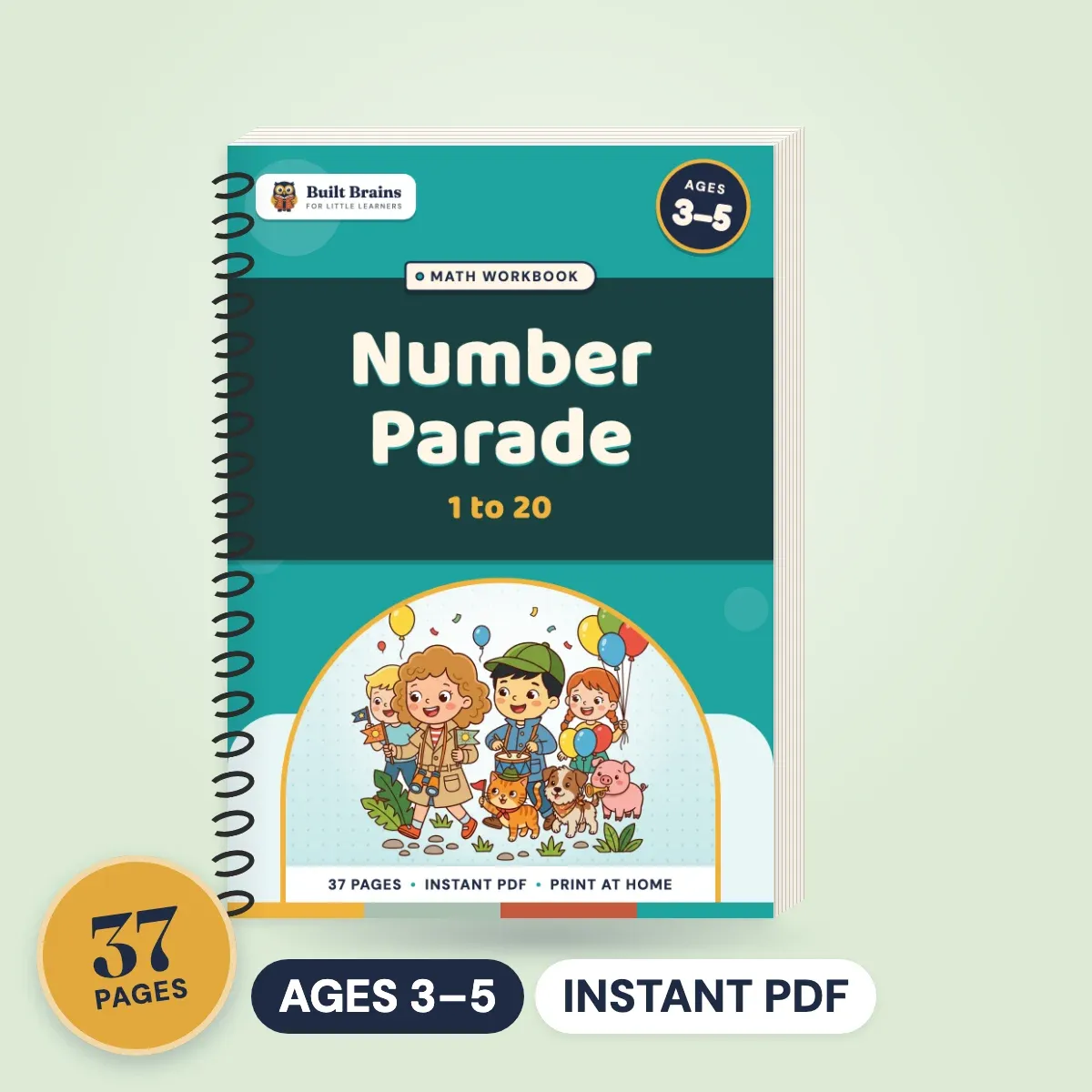
For printable practice, Count With Me! 1 to 10 gives a page for each number from 1 to 10 using toys your child knows, then counting, matching, I-spy and graphing. When your child is ready for bigger numbers, Number Parade: 1 to 20 has a page for every number to color, count and trace.
Shapes
Preschoolers usually start with circles, squares and triangles, then add rectangles, ovals, stars, hearts and diamonds. The goal is naming shapes and noticing their parts: sides, corners and curves.
- Shape walk. Find shapes on a walk: round wheels, square windows, triangle roofs. Builds: spotting shapes in the world.
- Shape sandwich. Cut toast or sandwiches into squares, triangles and circles. Builds: naming shapes, and seeing how two triangles make a square.
- Tape shapes. Make big shapes on the floor with painter’s tape and walk along the sides. “How many corners did you turn?” Builds: counting sides and corners.
- Feely bag. Put shape blocks in a bag and ask your child to find the triangle by touch alone. Builds: shape attributes.
- Shape pictures. Build a house, rocket or robot from paper shapes. Builds: combining shapes, an early geometry skill.
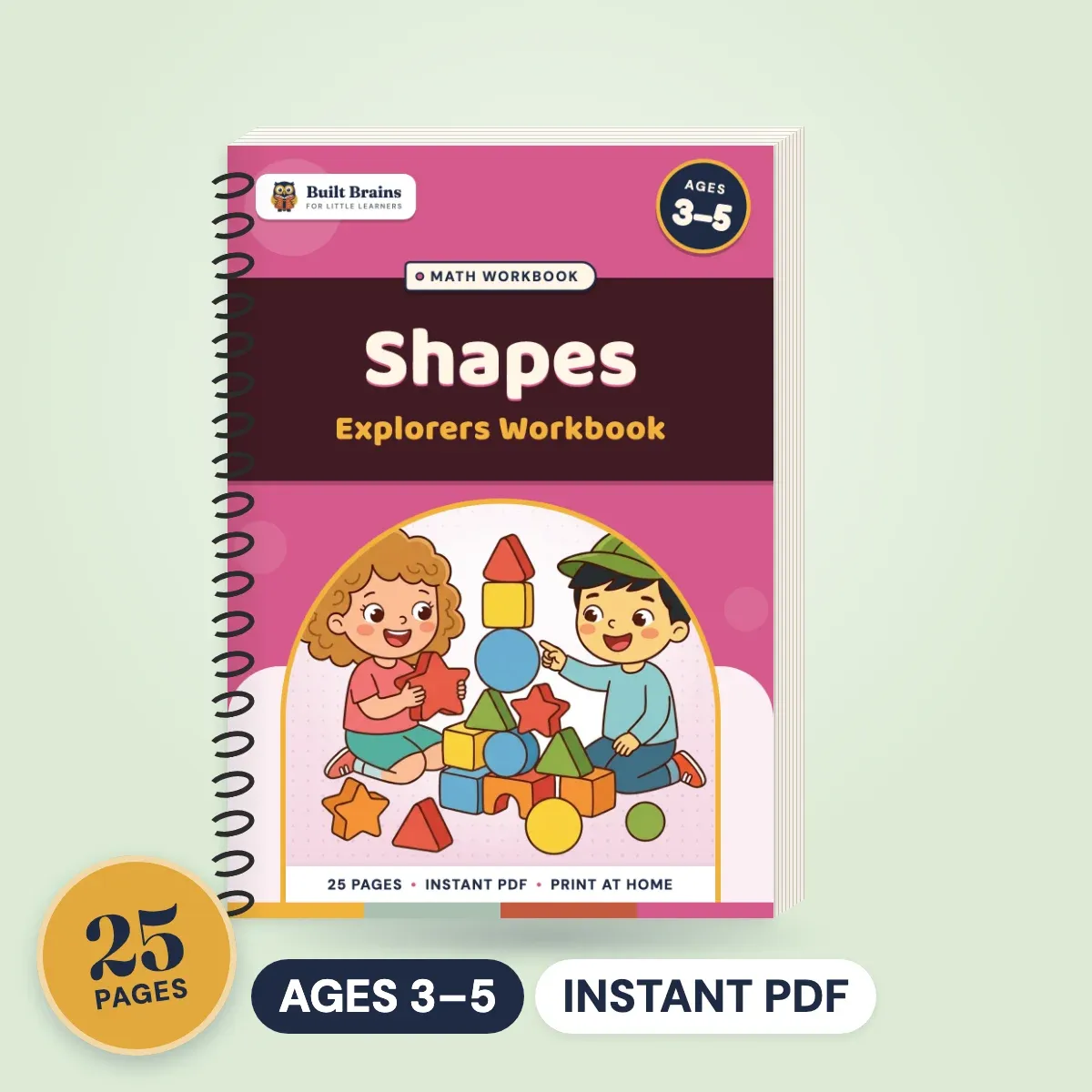
The Shape Explorers Workbook covers eight shapes to trace, name and find, plus patterns, dot-to-dots and finish-the-picture pages.
Patterns
Spotting and extending patterns is an important early math skill, because noticing what repeats is how children later understand counting by 2s, times tables and more.
- Snack patterns. Cracker, cheese, cracker, cheese. “What comes next?” Builds: AB patterns.
- Body patterns. Clap, pat knees, clap, pat knees. Then try clap, clap, stomp. Builds: patterns in movement and sound, and ABB patterns.
- Bead or block trains. Start a color pattern and let your child continue it. Then let them make one for you. Builds: extending and creating patterns.
- Pattern detective. Look for patterns on clothes, tiles, fences and wrapping paper. Builds: recognizing patterns everywhere.
Script: “Red, blue, red, blue… what do you think comes next? How did you know?” Asking “how did you know?” gets your child to put the rule into words, which is where the real learning happens.
Sorting and classifying
Sorting teaches children to notice what is the same and what is different, which underlies later work with data and graphs.
- Laundry sort. Sort socks by color, then find the pairs. Builds: classifying and matching.
- Toy cleanup sort. Animals in one bin, cars in another, blocks in a third. Builds: sorting by category.
- Button sort. Sort by color, then by size, then by number of holes (for children past the mouthing stage). Builds: sorting by different rules.
- Toy graph. Sort toys into lines by type and ask “Which line is longest? How many more cars than trains?” Builds: early graphing and comparing.
Measuring and comparing
Preschool measuring is about words first: bigger, smaller, taller, shorter, heavier, lighter, more, fewer. Rulers come later.
- Line up by height. Line up stuffed animals from shortest to tallest. Builds: ordering by size.
- Measure with blocks. “How many blocks long is your shoe? How many is Dad’s?” Builds: measuring with non-standard units.
- Kitchen helper. Pour, scoop and level cups while baking. “Which cup holds more?” Builds: capacity and fractions talk (half, full, empty).
- Heavy or light. Hold two objects, one in each hand, and guess which is heavier. Check with a kitchen scale. Builds: comparing weight.
Early adding and taking away with snacks
Snacks are the perfect math tool: they are countable, motivating and edible. Keep numbers within 5 for most preschoolers and within 10 for older ones.
- Adding snacks. “You have 3 crackers. I’ll give you 2 more. How many now?” Count them all together. Builds: adding as putting together.
- Take away and eat. “You have 5 grapes. Eat 2. How many are left?” Builds: subtracting as taking away. (Cut grapes lengthwise for young children.)
- Fair sharing. Share 6 berries between two plates, one for you, one for me. Builds: early division and equal groups.
- More or fewer? Put 4 raisins on one plate and 6 on another. “Which has more? How many more?” Builds: comparing quantities.
When your child is comfortable adding and taking away with real objects, Snack Time Math: Adding & Taking Away moves the same idea onto paper with pictures first. It is designed for ages 5–6, so save it for older pre-K or kindergarten.
Everyday math talk (and what to expect by age)
Talking about numbers during ordinary moments may matter as much as any activity. Try slipping these into your day:
- “How many more minutes until the bath? Let’s count down.”
- “You have two shoes on. How many feet is that?”
- “Is your tower taller than you, or shorter?”
- “Can you get me three apples from the bag?”
- “First we brush teeth, second we read, third we sleep.” (Ordinal numbers.)
Age 3
Focus on counting small groups (to 5 and then 10) with a finger touch, naming circles, squares and triangles, and simple sorting by color. Many three year olds still skip numbers or count objects twice, which is normal.
Age 4
Many four year olds count objects to 10 or more, recognize numerals 1 to 10, continue AB patterns and compare more and fewer. This is a great age for number hunts, snack patterns and measuring with blocks.
Age 5
Heading into kindergarten, many children count to 20 and beyond, recognize numerals to 20, create their own patterns and solve simple adding and taking away with objects. Every child gets there on their own timeline.
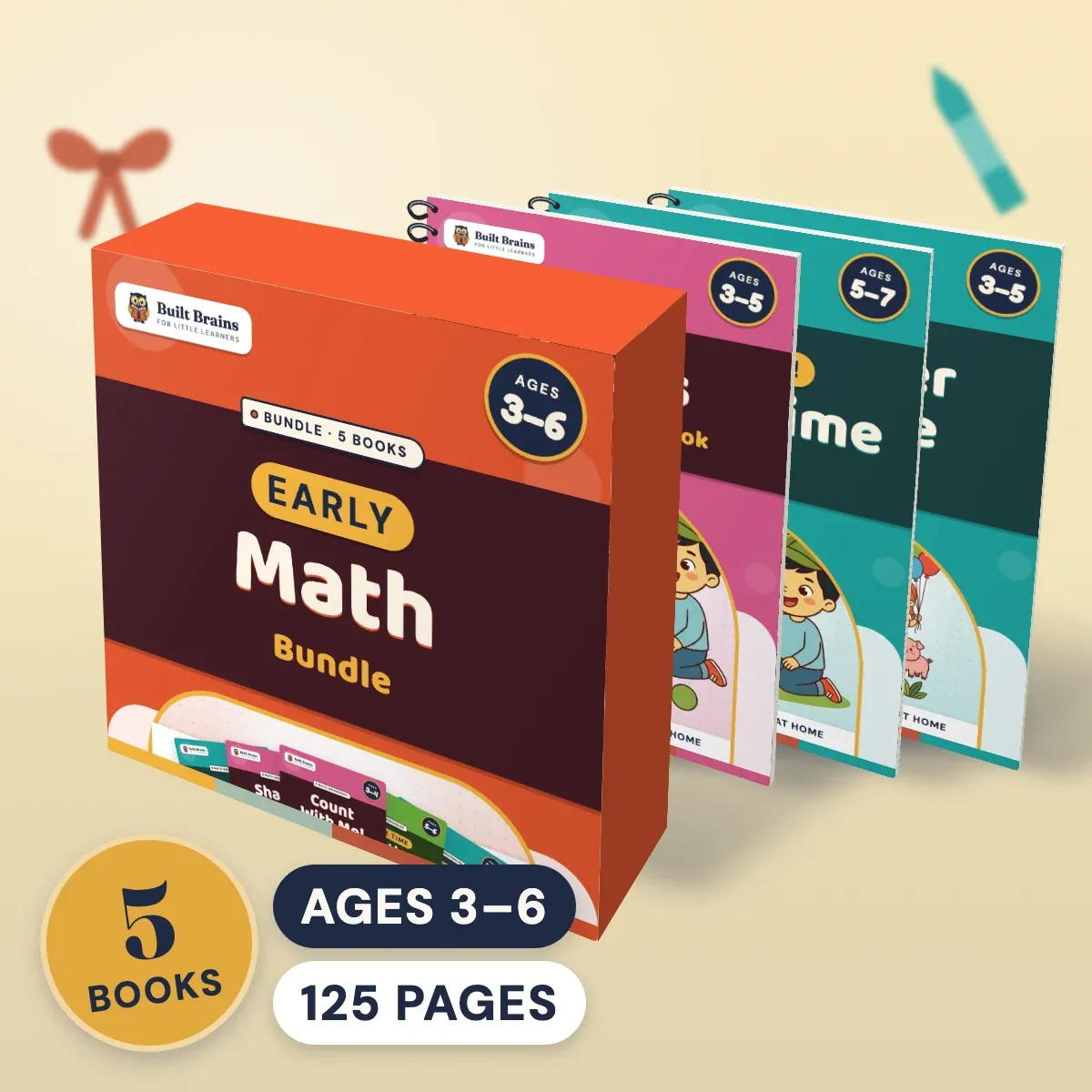
Children develop at their own pace, so use these as a direction rather than a test. If you’d like all five math workbooks in order (first counting, numbers to 20, shapes, adding and taking away to 10, and telling time), the Early Math Bundle collects them in one download. For a full plan that weaves math into a daily routine, see the Complete Preschool Curriculum at Home.
Questions parents ask
By the end of preschool, many children count objects to 10 or more, recognize numerals 1 to 10, name basic shapes, sort by color or size, continue simple patterns and compare more and fewer. Some also add and take away small numbers with objects. Children vary a lot, so treat this as a direction, not a checklist to pass.
Keep it hands-on and part of daily life. Count stairs, toys and snacks together, touching each one. Name shapes on walks, sort laundry by color and use words like bigger, smaller, more and fewer. A few minutes of playful counting and plenty of number talk teaches more at this age than worksheets.
One-to-one correspondence means matching exactly one number word to each object when counting. A child who says “one, two, three, four” while touching only three toys hasn’t got it yet. Practice by touching or moving each object as you count, and by matching activities like one cup per plate.
Five to ten minutes of focused math is plenty for most preschoolers, a few times a week or daily. Short, playful sessions keep interest high. The rest of the learning happens through everyday math talk, like counting snacks, setting the table or comparing heights, which adds up over the day.
Many children start simple adding and taking away with real objects around age 4 or 5, once they count small groups reliably. Begin with snacks or toys and numbers within 5. Written equations usually come later, in kindergarten, after lots of hands-on practice with putting together and taking away.