What is the 100th day of school, and when is it?
The 100th day of school is exactly that: the 100th day of lessons since the first day of the school year. Because US schools start anywhere from early August to after Labor Day, and snow days shift the count, there is no fixed date. Most schools land between late January and mid-February, and teachers usually send a note home a week or two before.
Classrooms have celebrated it since the early 1980s, for good reason. Counting to 100 by ones and by tens is a kindergarten standard (Common Core State Standards, Counting & Cardinality), and 100 is the first number that makes place value visible: ten groups of ten, lined up. A day spent counting, building and collecting 100 of something gives that idea a shape children remember.
Preschool and kindergarten: count to 100 by 10s
At 4 and 5, counting to 100 by ones is a long haul. Counting by 10s is the way in, so everything here is built around ten groups of ten.
- Ten cups, ten each. Label ten cups 10, 20, 30 and so on, drop ten blocks into each, and count the cups by 10s. Builds: skip counting, groups of ten.
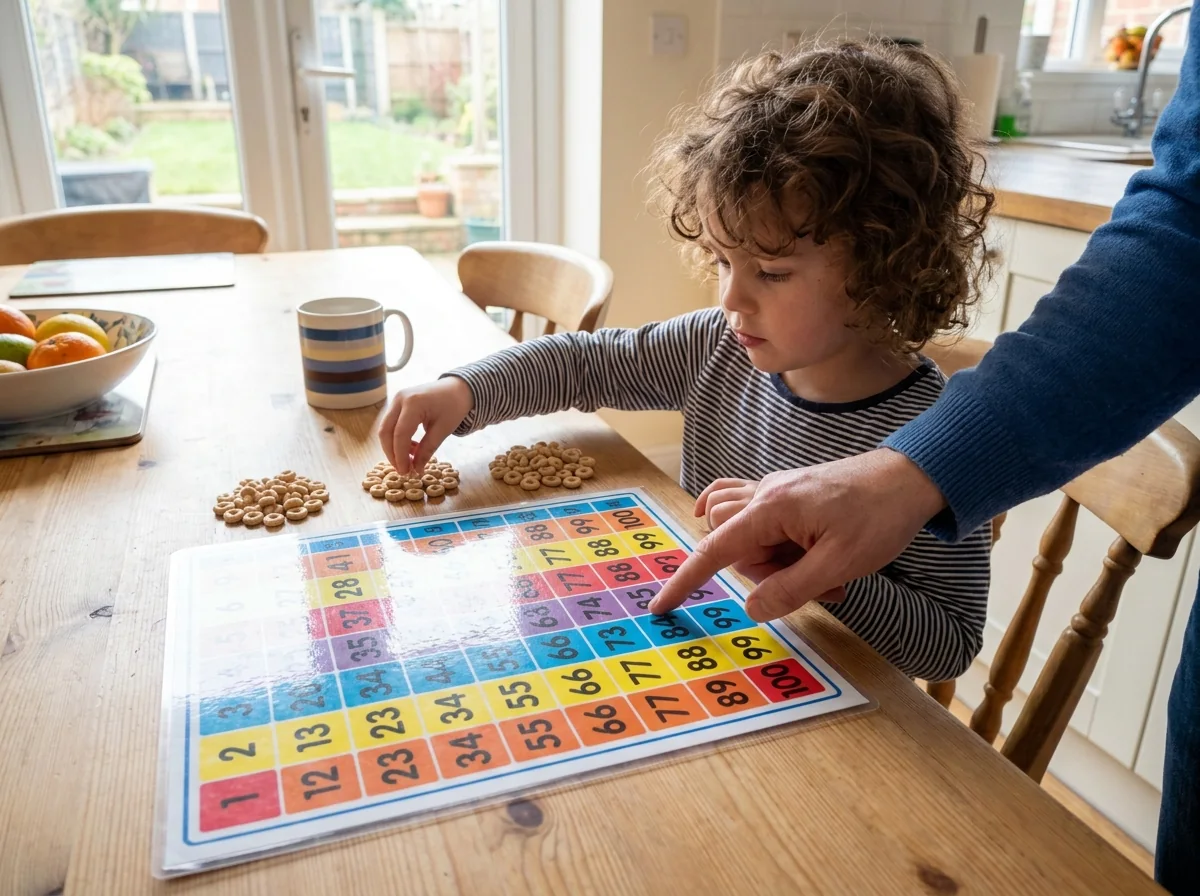
- Rainbow-row 100 chart. Color each row of ten a different color and say the last number in each row aloud. Builds: number recognition to 100.
- 100 sticker grid. Ten rows of ten dot stickers on a blank grid. Builds: one-to-one correspondence, patience.
- 100 fingerprints. Press all ten fingers into paint ten times and count the prints by 10s. Builds: skip counting with the body.
- The 100 days crown. Ten paper strips, each with ten stickers, stapled around a headband. Builds: tens.
- Cereal necklace of 100. Thread ten pieces, then add a different-colored marker piece. Repeat ten times. Builds: fine motor skills, counting in groups.
- 100 steps. Walk 100 steps together and mark where you end up. Builds: counting to 100, distance.
- Ten exercises, ten times. Ten jumps, ten claps, ten hops, ten toe touches. Builds: counting actions, gross motor skills.
- 100-block snake. Lay blocks in tens of alternating colors along the floor. Builds: visualizing 100.
- Estimation jars. One jar of 100 cotton balls, one of 100 beans. Which looks like more? Builds: estimating.
- "When I am 100" portrait. Draw yourself at 100 years old and dictate one sentence. Builds: early writing, a sense of time.
- Ten ten-frames. Fill ten ten-frames with buttons and count the full frames: "one ten, two tens." Builds: tens and ones.
- 100-second dance party. Set a timer for 100 seconds and freeze when it rings. Builds: a feel for how long 100 seconds is.
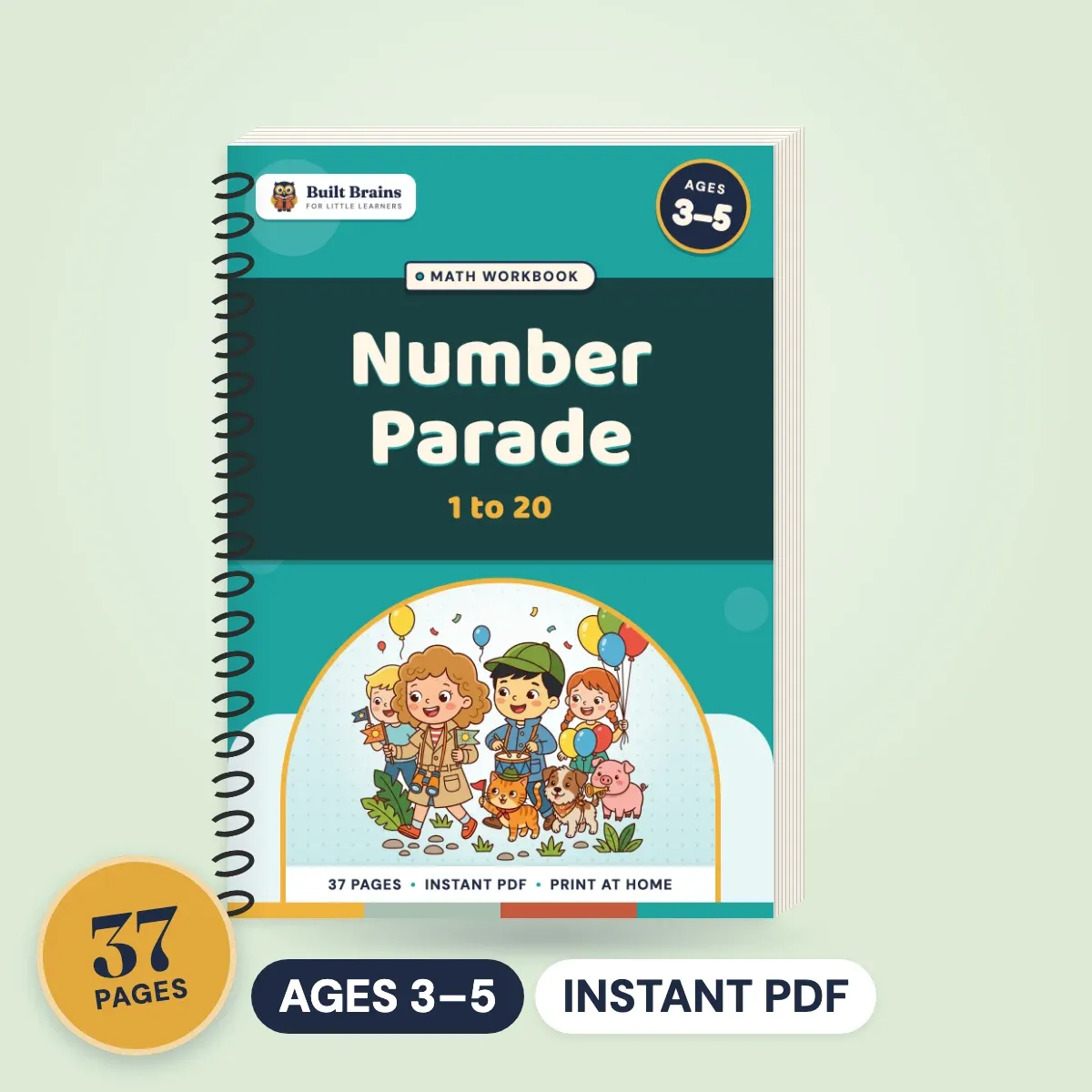
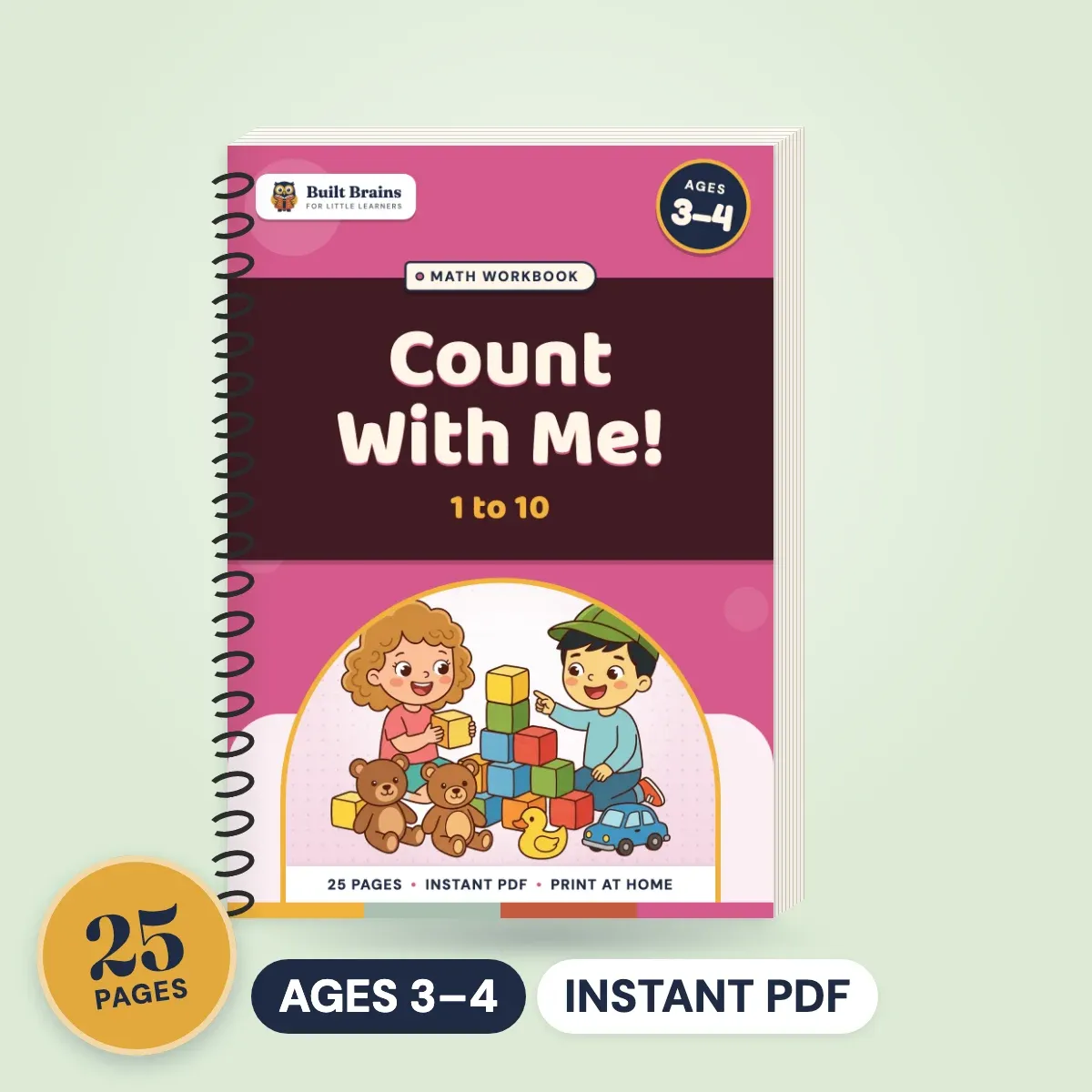
For children still working on 1 to 10 and 1 to 20, secure that counting first. Count With Me! 1 to 10 gives a page for each number, then matching and graphing, and Number Parade: 1 to 20 carries on with a page for every number to 20. The number tracing guide shows how to connect each numeral to a quantity.
1st grade: 100 charts, ten frames and 100 in pieces
Six- and seven-year-olds are expected to count past 100 and to understand it as ten tens, so these ideas lean on the 100 chart and ten frames.
- Missing-number 100 chart. Cover 15 squares with sticky notes and ask what is under each. Builds: chart patterns (down adds 10, across adds 1).
- 100 chart jigsaw. Cut a 100 chart into pieces of five or six squares and put it back together. Builds: number order.
- Color the pattern. Color every 2nd number on one chart, every 5th on another, every 10th on a third. Builds: skip counting, multiplication patterns.
- Race to 100. Roll a die and move that many on the chart; roll a 6 and jump ahead 10. Builds: counting on, adding ten.
- Tens snake. Start at any number and add 10 ten times, tracing the column. Builds: adding 10 mentally.
- Pairs that make 100. Fill ten ten-frames, then show 100 as 50 + 50, 70 + 30 and 90 + 10 by moving them. Builds: number bonds to 100.
- 100-cup tower. The tallest tower from 100 paper cups that stands for 10 seconds. Builds: engineering, counting by tens.
- 100 Lego build. Count out exactly 100 bricks and build one thing. Builds: counting, planning.
- Words in 100 seconds. Write words you know before the timer rings, then count them. Builds: writing fluency.
- Tally circuit. Ten stations, ten reps each, with a tally card at each. Builds: tallying, counting by tens.
- "100 things I can do" list. A shared list on a long roll of paper, added to all day. Builds: writing, counting.
- 100 heartbeats. Find a pulse and count to 100. Time it. Builds: focused counting, measuring time.
- 100 drops. Count 100 drops of water into a cup with a dropper; guess first how full it will be. Builds: estimating capacity.
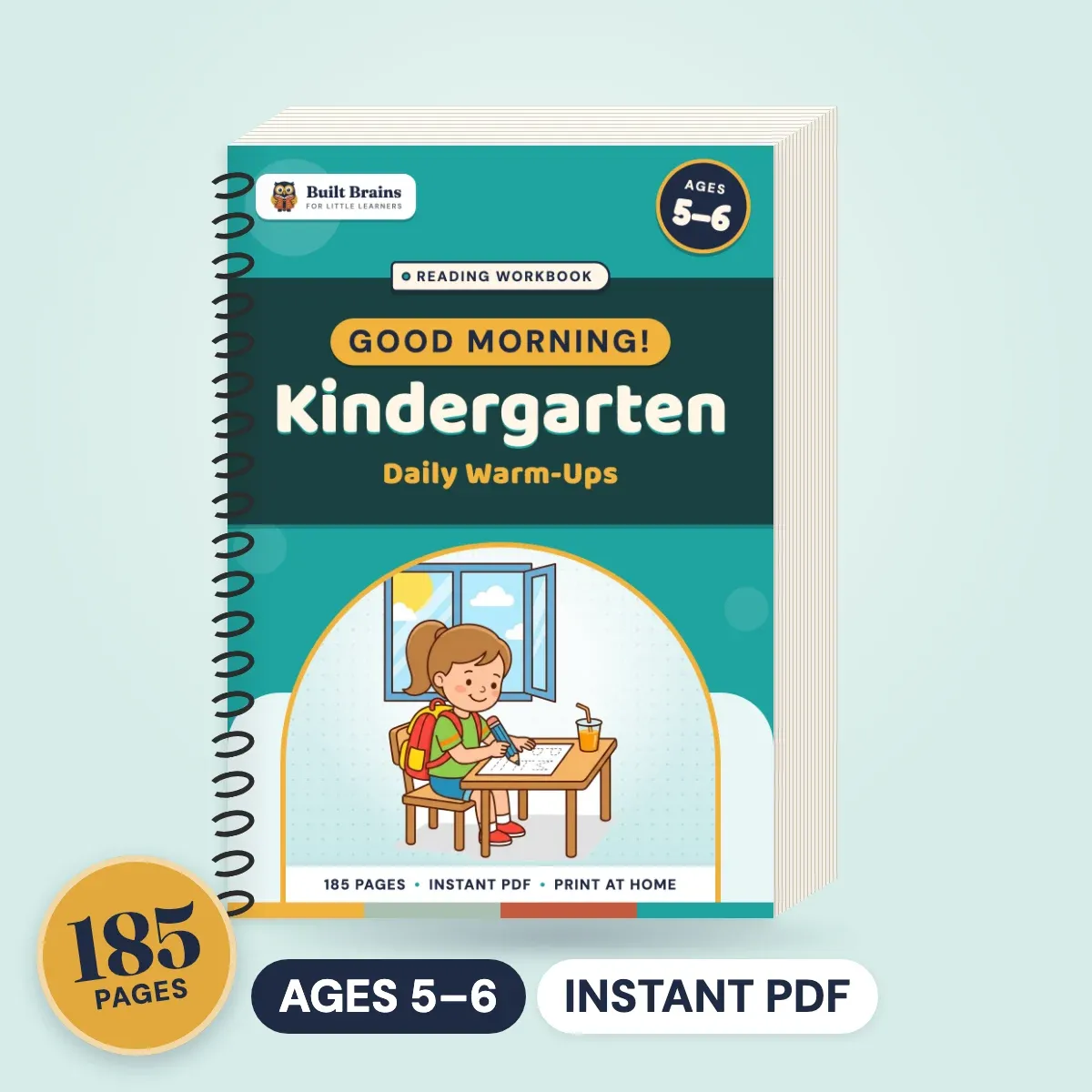
If your 1st grader does a daily warm-up page, the Good Morning! 1st Grade Warm-Ups run one page per school day (number pyramids, codes and the week's math), so day 100 lands on page 100.
2nd and 3rd grade: 100 in money, measurement and writing
By 7, 8 and 9, children can take 100 into money, measurement, data and longer writing: not "what is 100?" but "how many ways can we make, measure or describe it?"
- 100 cents, how many ways? Make a dollar with pennies, nickels, dimes and quarters, and record each way. Builds: coin values, systematic listing.
| Coin | How many make 100 cents |
|---|---|
| Pennies | 100 |
| Nickels | 20 |
| Dimes | 10 |
| Quarters | 4 |
- The 100-dollar shopping list. Using a store flyer, spend as close to 100 dollars as possible without going over. Builds: adding money, estimating.
- How long is 100 inches? Guess, then measure. Now 100 centimeters. Which is longer, by how much? Builds: comparing units.
- Pace out 100 feet. Measure one stride, estimate how many make 100 feet, then check. Builds: measurement, multiplication.
- 100 seconds vs 100 minutes. Time 100 seconds, then work out what time it will be in 100 minutes. Builds: elapsed time.
- 100 jumping jacks. Time it and predict how long 200 would take. Builds: doubling.
- "100 years from now" writing. What will school, cars and houses look like? One page, with a picture. Builds: imaginative writing.
- 100 years ago. Look up how people traveled, dressed and listened to music 100 years ago; make a then-and-now chart. Builds: research, comparing.
- A story in exactly 100 words. Count carefully, then cut or add words to hit 100. Builds: editing.
- 100 rolls of a die. Tally and graph the results. Which number came up most? Builds: data, bar graphs.
- Fractions of 100. Shade half, a quarter and a tenth of a 100 grid. Builds: fractions, groundwork for percents.
- Arrays to 100 (3rd grade). Build 100 with counters as 10 × 10, 4 × 25, 5 × 20 and 2 × 50. Builds: multiplication facts, factors.
- 100 on a number line. Draw 0 to 100, mark 25, 50 and 75, then place ten random numbers. Builds: number magnitude.
- 100 compliments. Keep a jar and try to reach 100 kind things said in the family in a week. Builds: counting over time, kindness.
The Good Morning! 2nd Grade Warm-Ups include graphs, number pyramids and the week's math, and the 2nd grade homeschool curriculum guide shows where money and measurement sit in the year.
100 collections: what to bring and how to count it
The collection of 100 is the classic 100th day homework. The counting is the point, so do it in tens: ten rows on a grid, ten small bags, or ten egg-carton cups. Easy options:
- Cereal pieces, dry pasta, pretzels, mini marshmallows or raisins
- Buttons, beads, pom-poms, googly eyes or sequins
- Pennies, paper clips, rubber bands, bread tags or bottle caps
- Cotton balls, cotton swabs, craft sticks or toothpicks
- Stickers, stamps, hole-punch dots or confetti
- Pebbles, shells, acorns or leaves from a walk
Display it as a poster with ten labeled rows, on a T-shirt in ten groups, or in a clear jar in ten layers. Keep small items away from younger siblings: beans, buttons and coins are choking hazards for children under 4 (healthychildren.org).
Then ask: "If we lost one bag, how many would be left?" A child who answers 90 without recounting has understood tens.
The 100th day at home (homeschool version)
Homeschoolers choose when day 100 falls: count lesson days from day one on a paper chain or a 180-day chart. When you reach 100, keep the morning simple:
- Warm-up: the usual page. With the Good Morning! Kindergarten Warm-Ups, one page per school day, your child should be on page 100.
- 100 chart: finish coloring one in rows of ten (younger) or do the missing-number version (older).
- Collection: count it in tens together and take a photo.
- Move: 100 steps outside, or the ten-by-ten exercise circuit.
- Snack: ten groups of ten, mixed from whatever is in the pantry.
- Write: "When I am 100" (ages 4–6) or "100 years from now" (ages 7–9).
That is about 90 minutes and covers math, writing and PE. For how a kindergarten morning fits together, see kindergarten morning work and how to homeschool kindergarten.
The math lives in the talk around it. Say the tens ("three bags of ten is 30"), ask "how do you know?" after every count, estimate before counting, and connect to real 100s: cents in a dollar, centimeters in a meter, years in a century. NAEYC encourages families to weave this kind of math talk into ordinary routines. And if "dress as a 100-year-old" is on the calendar, keep it kind: the goal is to imagine a long life, not to make fun of older people.
Sources
- Common Core State Standards Initiative – Kindergarten: Counting & Cardinality: the kindergarten standard to count to 100 by ones and by tens.
- NAEYC – Support Math Readiness Through Math Talk: why everyday number talk matters for young children.
- healthychildren.org – Choking Prevention: beans, buttons and coins as choking hazards for children under 4.
Questions parents ask
It is the 100th day your child has been in class, not a fixed date. Schools that start in early or mid-August usually reach it in late January; schools that start after Labor Day reach it in mid-February. Snow days and holidays push it later. Your school calendar or the teacher's newsletter will give the exact date.
Most classes count, build and collect in groups of 100: filling a 100 chart, stringing 100 cereal pieces, stacking 100 cups, doing 10 sets of 10 exercises and bringing a collection of 100 small items from home. Older grades add money, measurement and writing, such as a "100 years from now" story.
A collection of exactly 100 small items counted at home, ideally in 10 bags or rows of 10 so the counting is visible. Cereal, pasta, buttons, stickers, pom-poms and bottle caps all work. Check the teacher's note first: many classes ask for a poster or a decorated shirt rather than a loose bag.
Count your own school days from day one, then plan a short morning around the number: a 100 chart to finish, a collection to count in tens, 100 steps to walk and measure, a snack of 10 tens and one piece of writing. It does not need to be elaborate; one hour of 100-themed math is plenty.
One hundred is the first big place-value landmark. Counting to 100 by ones and by tens is a kindergarten standard, and 100 is where children start to see that numbers are built from tens and ones. The day also marks real progress through the year, which is worth celebrating in itself.

Reviewed by
Year 1 Teacher & KS1 Phase Lead
Tom Evans is a Key Stage 1 Phase Lead dedicated to smoothing the transition from EYFS play-based learning to structured Year 1 curriculum.
More about Tom →