How to teach number tracing 1 to 20 (quick answer)
Number tracing is really two skills at once: forming the digit and knowing how many it means. Teach both together and in this order:
- Digits 0 to 9 first. Every number to 20 is made from these.
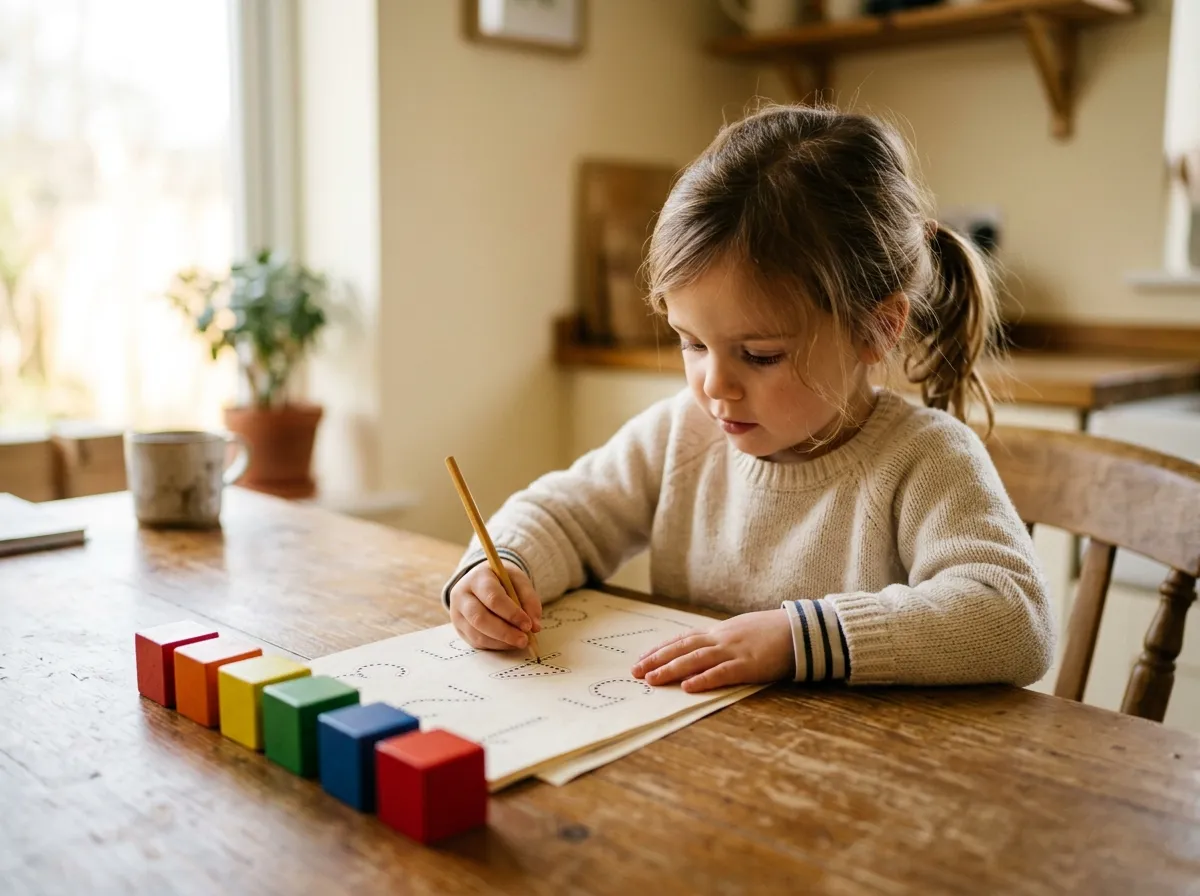
- Top-down, from a start dot. Almost every digit starts at the top.
- A short rhyme for each path, said out loud while tracing.
- Count first, trace second. Count six blocks, then trace 6.
- Then 10 and the teens. Once the digits are steady, 14 is "a one, then a four."
Keep it short: one or two numbers a day, five to ten minutes, a few careful traces and one written alone.
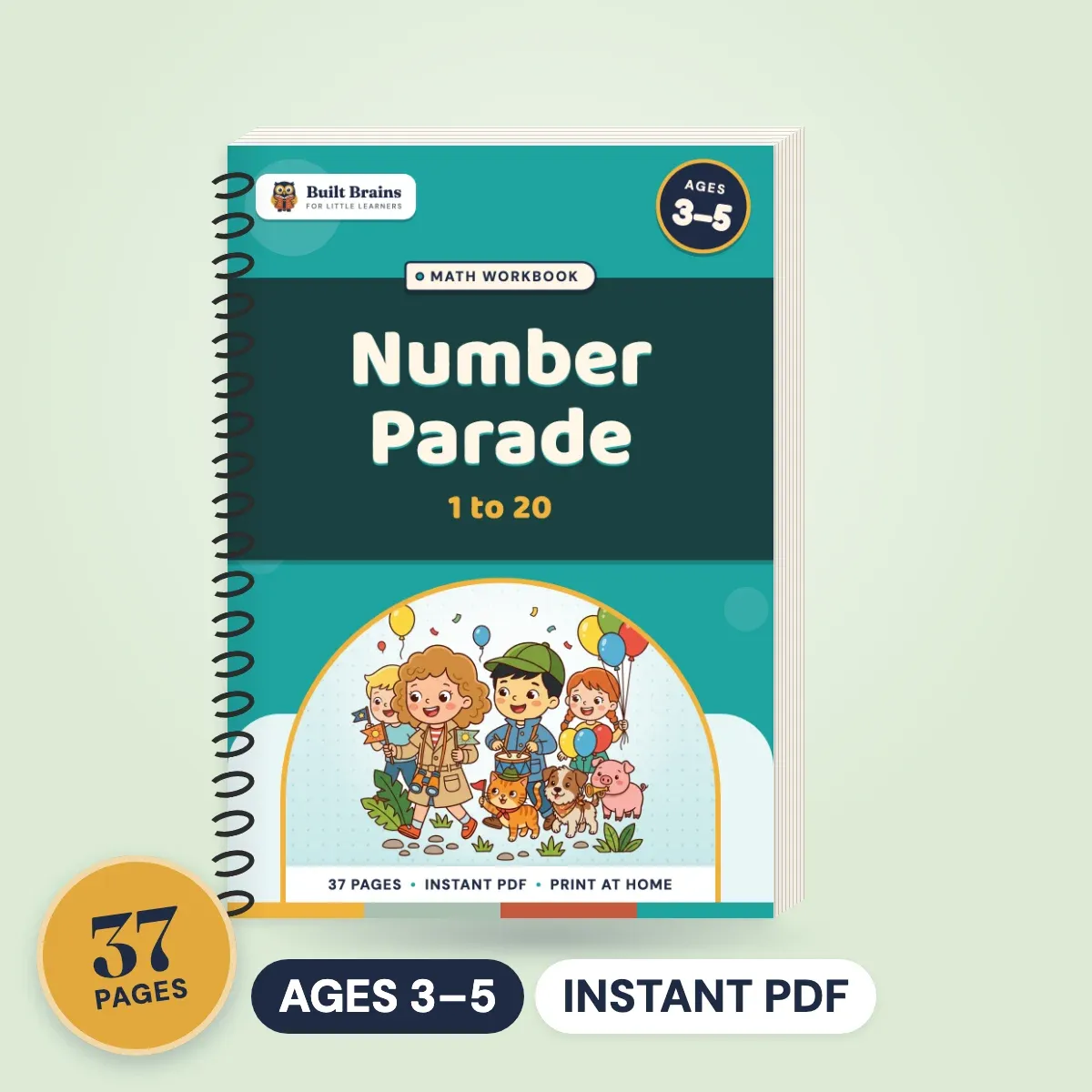
Number Parade: 1 to 20 follows the same idea. There's a page for every number from 1 to 20 where your child colors the big number, counts the pictures, traces the digits and traces the number word. After every five numbers comes a review, with counting, matching and more-or-less practice, plus count-and-clip cards, dot-to-dots and a certificate of completion. It's 37 pages for ages 3 to 5, an instant PDF in black and white that prints on US Letter or A4, with a 14-day money-back guarantee.
When are children ready for number tracing?
Most children are ready to trace numbers once they can copy a straight line and a circle and hold a crayon with their fingers. For many that's around age 3 to 4. Children vary a lot, and a later start is normal.
A rough guide:
| Age | Counting | Number tracing and writing |
|---|---|---|
| 3 | Counts a few objects, often skipping or repeating | Traces large lines and circles, maybe 1 and 0 |
| 4 | Counts objects to 10, says numbers further | Traces 1 to 10, starts writing a few alone |
| 5 | Counts objects to 20, counts out loud higher | Traces to 20, writes 0 to 9 from memory with some reversals |
| 6 | Often counts to 100 by ones and tens | Writes numbers to 20 and beyond, reversals fading |
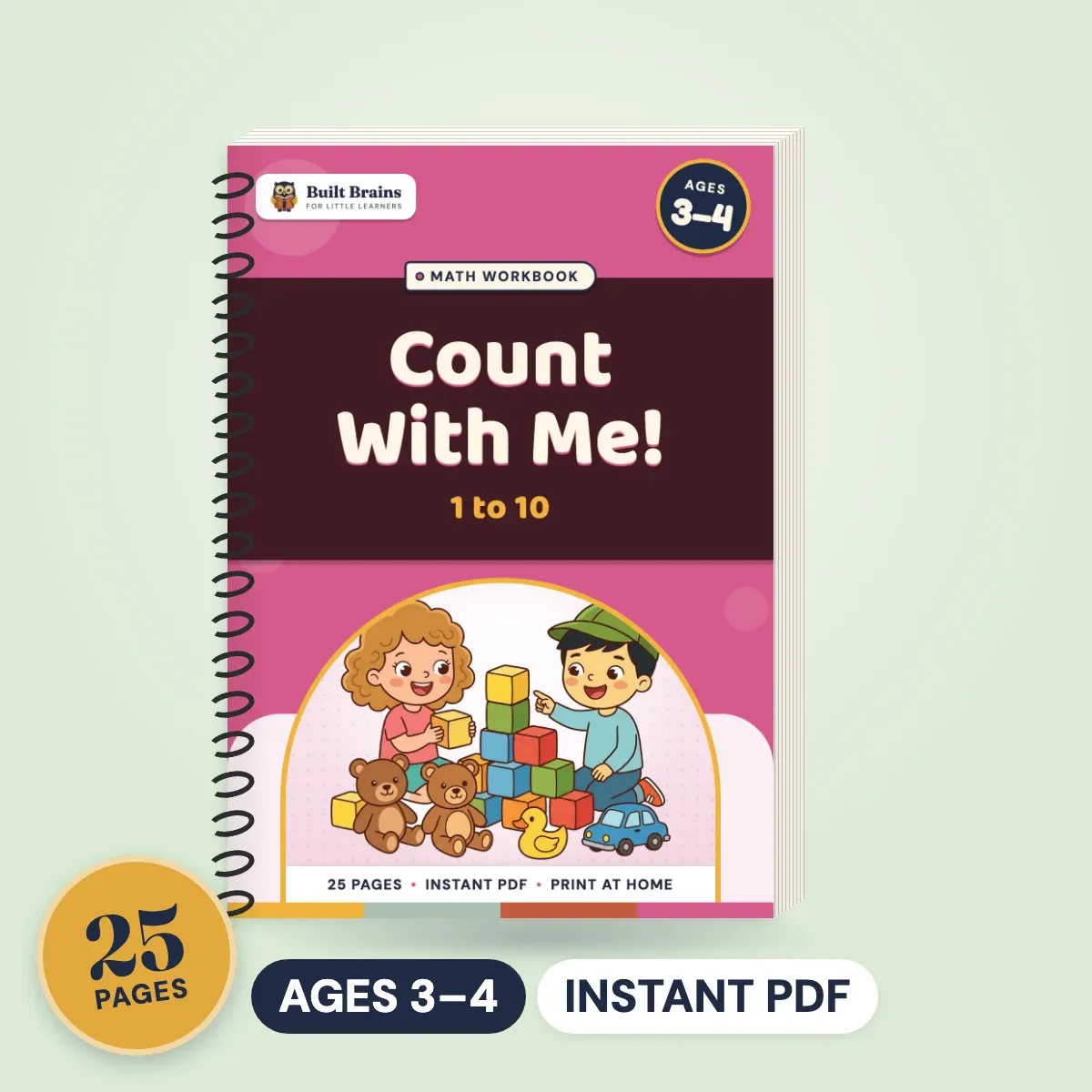
If your child isn't counting objects yet, start there. Our math activities for preschoolers guide has plenty of hands-on ideas, and Count With Me! 1 to 10 is a gentle first step with one page per number and counting, matching, I-spy and graphing practice.
Number formation rhymes for 0 to 9
A rhyme gives your child words for the movement, so the path is the same every time. Say it slowly while tracing, and let your child say it too. These are our own; feel free to change them to suit your family.
- 0: "Start at the top and curve to the left, round to the top, a zero's the best."
- 1: "Top to the bottom, one line straight, that's how we make a one. Great!"
- 2: "Over the hill, then slide down low, a line along the floor, and there you go."
- 3: "Round to the middle, round once more, a three has two bumps, that's what they're for."
- 4: "Down and across, then lift up high, a long line down, and four says hi."
- 5: "Short line down, a big round belly, then put on a hat, and five is all ready."
- 6: "Slide down the curve and roll in a ball, a six is curled at the bottom of the wall."
- 7: "Across the sky, then slant to the ground, a seven is the straightest around."
- 8: "Start like an S, then zoom back straight, up to the top to finish the eight."
- 9: "A little round ball, then a line down tall, a nine stands up by the garden wall."
The plain-words version
Some children prefer short directions over rhymes. Use whichever sticks:
- 0 top, curve left, all the way round
- 1 top, straight down
- 2 curve over, slant down, line across
- 3 curve to the middle, curve to the bottom
- 4 down, across, lift, long line down
- 5 short line down, curve round, lift, hat across the top
- 6 curve down, loop round
- 7 line across, slant down
- 8 S shape, then back up to the start
- 9 small circle, then line down
Number reversals: why they happen and how to fix them
Writing numbers backwards is very common through preschool and kindergarten. Young children have spent years learning that a cup is still a cup whichever way it faces, and it takes time to learn that a 3 facing the other way is not a 3. Most children grow out of it with practice and time.
The digits flipped most often
- 2, 3, 5, 7 and 9, which all "face" a direction
- 6 and 9, which are mixed up as well as reversed
- 12 and 21, written in the wrong order
What helps
- One consistent start. Most reversals come from starting in a different place each time. Top, green dot, same path.
- A direction anchor. Many digits curve or face to the right. Tape a number line along the top of the table so your child can check.
- Trace big first. Sky-write the digit, then trace it in sand, then on paper. Big movements set the direction.
- Fix one digit at a time. If 3 is reversed, practice just 3 for a few days.
- Teens: say "ten and..." For 14, say "ten and four, the one comes first." It helps with the 41 and 14 mix-up too.
What doesn't help
- Circling every reversal in red
- Long pages of the same digit
- Treating it as carelessness
If reversals are still frequent after first or second grade, or come with other reading and writing difficulties, it's worth mentioning to your child's teacher or pediatrician.
Linking each numeral to its quantity
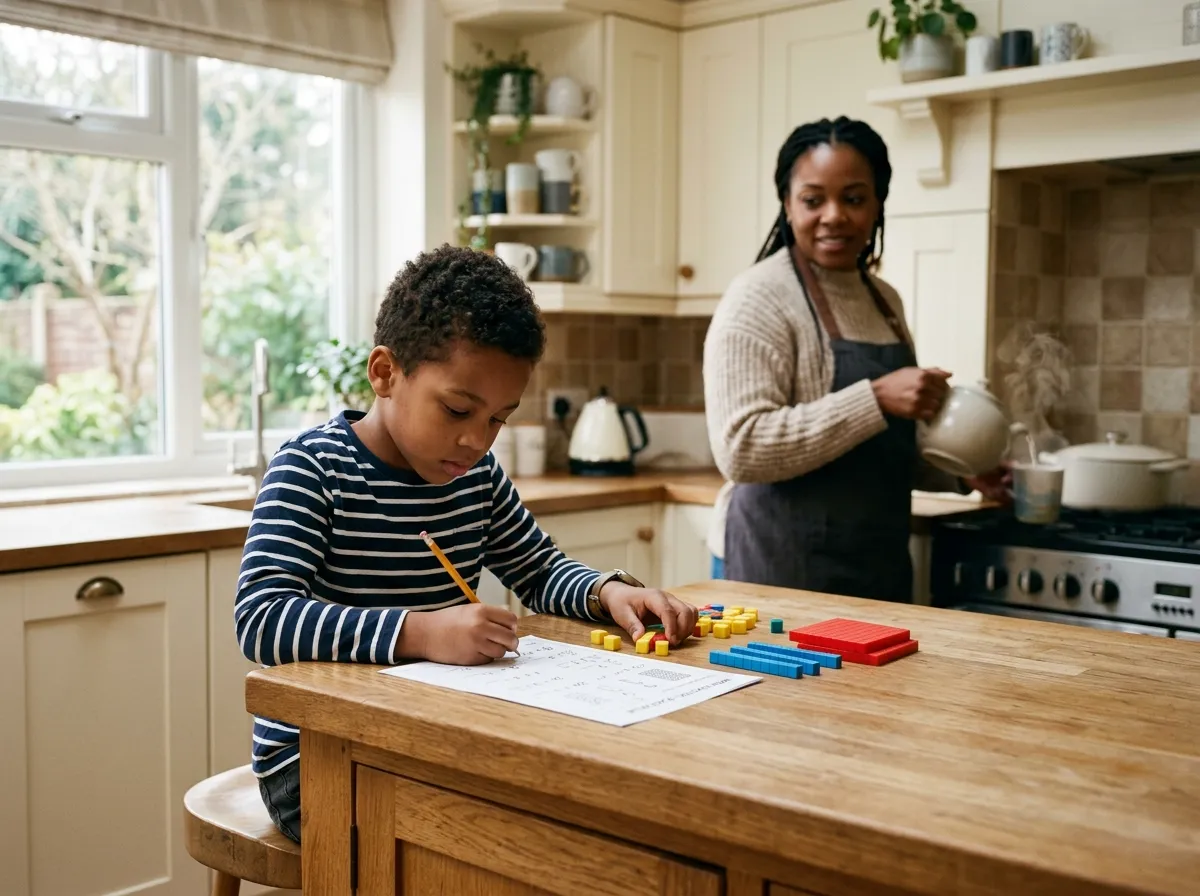
A child who can trace a perfect 8 but can't hand you eight crackers has learned a drawing, not a number. Build the link every time:
Before tracing
- Count real things. Blocks, buttons, toy cars, claps, jumps.
- Show it on fingers. "Show me five. Now show me five a different way."
After tracing
- Draw that many dots beside the number.
- Fill a ten-frame. Draw a 2-by-5 grid and put one counter in each box. For teens, use two ten-frames: one full, one with the extra.
- Match cards. Cards with numerals on one set and dots on the other. Mix and match.
- Clip cards. A card shows a group of pictures; your child clips a clothespin on the right number. It's counting and fine motor practice at once.
Through the day
- "Can you get four spoons?"
- "How many stairs to the top?"
- "Which plate has more grapes?"
Making sense of the teens
Numbers 11 to 20 are a full ten plus some more. Build 13 with a bundle of ten straws (rubber band around them) and three loose straws. Write it as you build: "one ten" (the 1) and "three more" (the 3). This simple picture makes later place-value work in kindergarten math much easier.
A 4-week number tracing plan (1 to 20)
Five short sessions a week, about ten minutes each. Every session: count first, trace a few times, write once alone, then a quick game. Adjust the pace for your child.
| Week | Numbers | Focus | Extra each day |
|---|---|---|---|
| 1 | 0, 1, 2, 3, 4, 5 | Top-down starts, rhymes, counting to 5 | Finger counting, dot matching |
| 2 | 6, 7, 8, 9, 10 | Curves and loops (6, 8, 9), counting to 10 | Ten-frame to 10, order cards 1 to 10 |
| 3 | 11 to 15 | "Ten and..." with straw bundles | Two ten-frames, number line hops |
| 4 | 16 to 20 | Teens finished, review of reversals | Count-and-clip, more or less, a number hunt |
What a single session looks like
- Count (2 minutes): count out the day's number with toys or snacks.
- Model (1 minute): write the digit slowly while saying the rhyme.
- Trace (3 minutes): finger trace, then two or three pencil traces.
- Write alone (1 minute): once, from memory.
- Play (3 minutes): dot matching, a ten-frame, or a number hunt around the house.
On the Friday of each week, play a review game with all the numbers so far. Go back to any digit that still flips or wobbles.
Common number tracing mistakes
- Teaching 1 to 20 straight through. The digits come first; the teens are a pattern on top.
- Tracing without counting. Always pair the numeral with a real quantity.
- Starting at the bottom. Redirect gently to the green dot every time.
- Pages full of one number. A few slow, correct traces beat a row of twenty.
- Skipping the "write alone" step. Tracing only ever practices following a line.
- Correcting everything at once. Choose one thing per session, such as a start point or a single reversal.
- Pushing when your child's hand is tired. If grip is tight or tears come quickly, add play-dough, tongs and pegs for a few weeks. Our fine motor activities guide has ideas.
If your child also traces letters, the same rules apply. See our alphabet tracing tips for letter formation and grip.
Start number tracing this week
Choose a time, put out a pencil and five small toys, and start with 1, 2 and 3. Count them, trace them, say the rhymes, write each once alone. That's a full lesson.
If you'd like to try a printable first, try our free printable book. For a complete 1 to 20 set with counting built into every page:
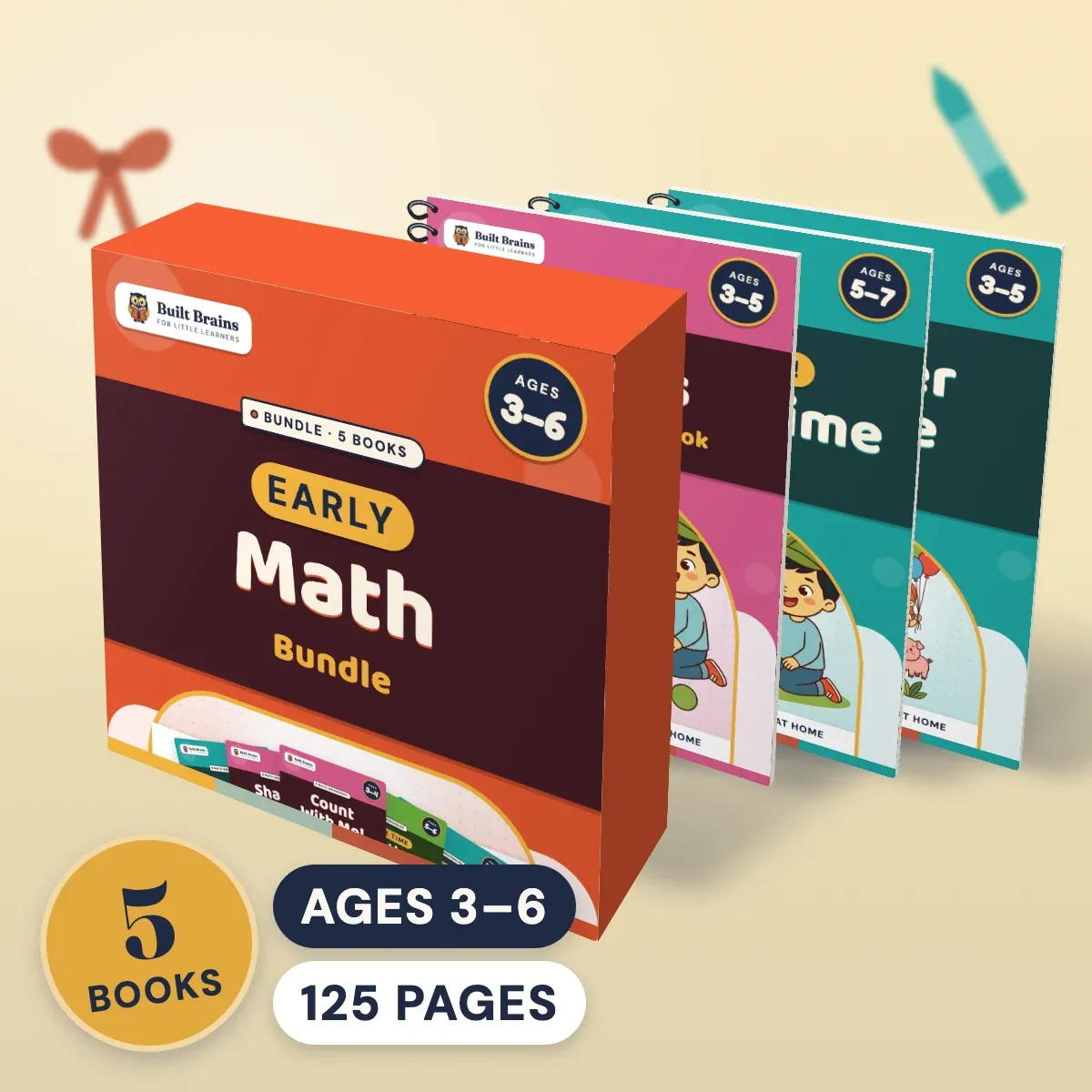
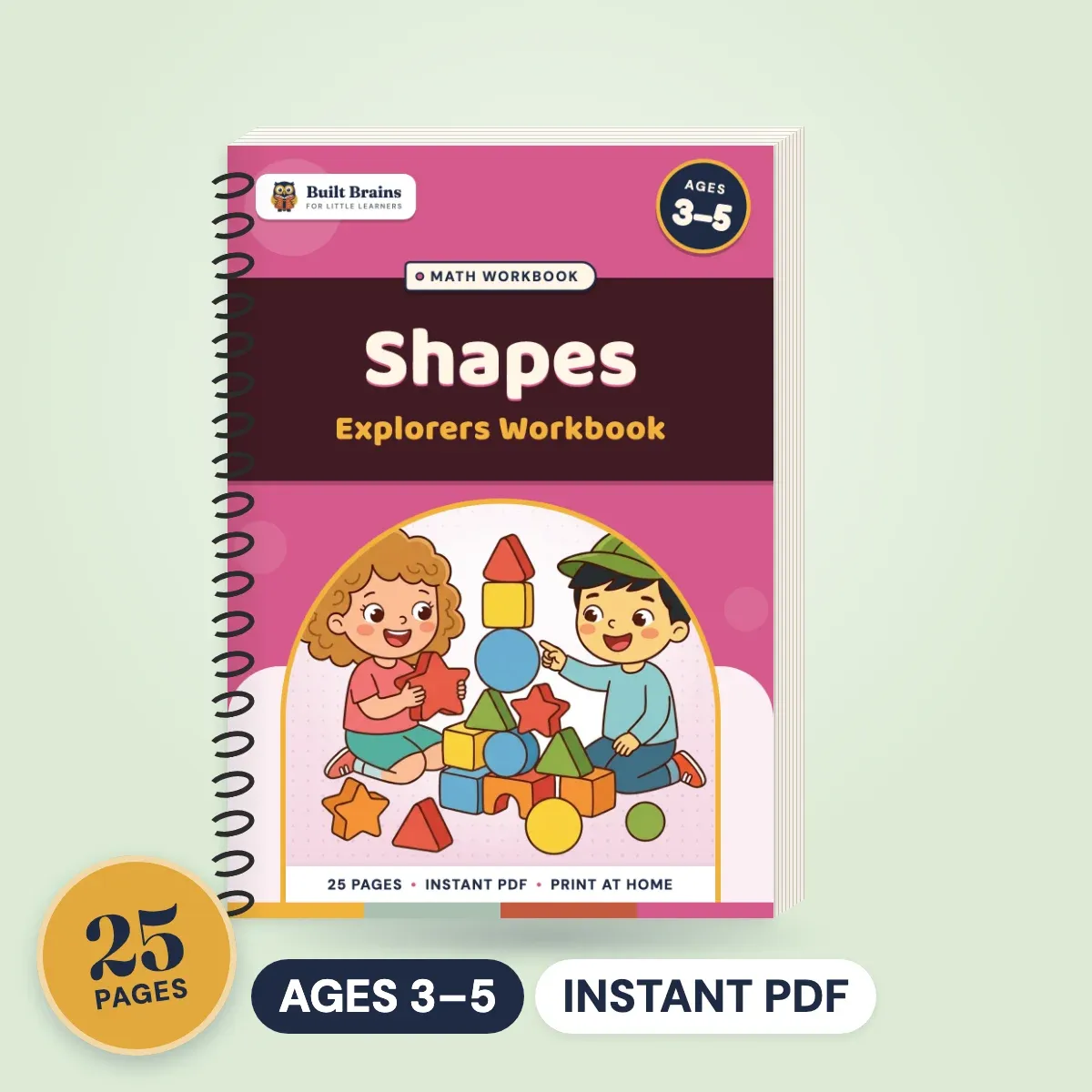
Number Parade gives every number from 1 to 20 its own page to color, count, trace and write as a word, with review pages after every five numbers, count-and-clip cards and dot-to-dots. Younger children can begin with Count With Me! 1 to 10, and the Early Math Bundle puts five workbooks in order: first counting, numbers to 20, shapes, adding and taking away to 10, and telling time. Browse more for preschool.
Questions parents ask
Many children begin tracing numbers 1 to 10 around age 3 to 4 and work up to 20 between 4 and 5. Writing them all neatly from memory often comes during kindergarten. Children vary, so let counting skills lead: trace a number once your child can count that many objects.
Almost every digit starts at the top. Zero starts at the top and curves left. One is a single line down. Two curves over and slides across the bottom. Four, five and seven are made with separate strokes. A start dot and a verbal path, said the same way every time, keep the order consistent.
Reversals are very common through preschool and kindergarten, because young children don't yet treat direction as important. Digits like 2, 3, 5, 7 and 9 are flipped most. A consistent start point and a short rhyme help. If reversals are still frequent past first or second grade, mention it to the teacher.
Yes. Teach recognition, counting and formation of 0 to 9 first, then add 10, then the teens. Numbers 11 to 20 reuse the same digits, so a child who forms 0 to 9 well finds the teens much easier. Teach 11, 12 and 13 last, since their names don't match their digits.
Never trace a number alone. Before tracing 6, count six real things, such as raisins, blocks or claps. After tracing, draw six dots or fill a ten-frame. Matching cards with dots to cards with numerals, and asking "show me six" during play, builds the link quickly.