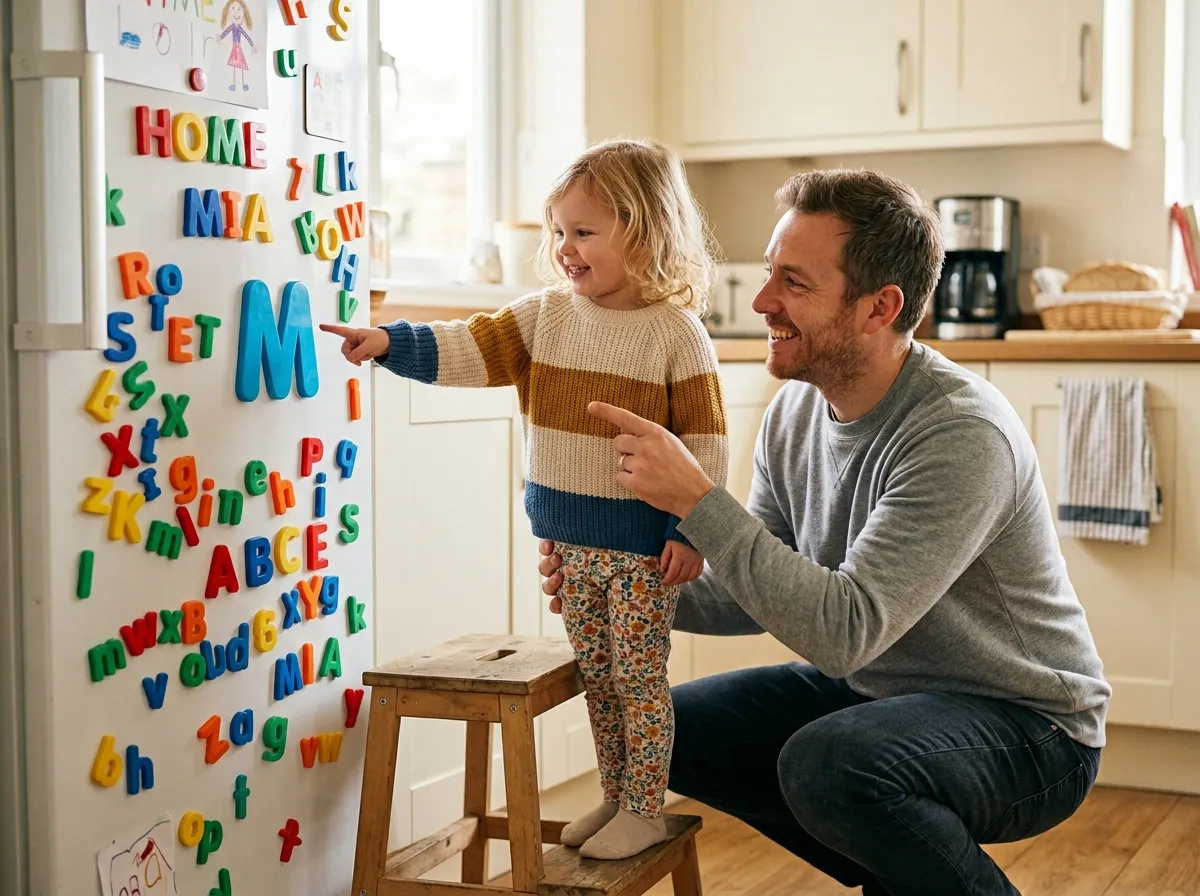
What are fine motor skills, and why do they matter?
Fine motor skills are the precise movements of the fingers, hands and wrists, working together with the eyes. They sit on top of bigger skills: a child with a steady trunk and strong shoulders has a much easier time controlling a pencil. That’s why climbing, crawling games and playing on the floor on their tummy all help handwriting too.
In preschool, fine motor skills show up everywhere: zipping a coat, opening a lunchbox, turning book pages, building with blocks, drawing and, eventually, writing letters. Kindergarten teachers often say hand strength and pencil control matter as much as knowing the alphabet. Our kindergarten readiness checklist covers this alongside the other skills teachers look for.
Fine motor milestones: what to expect by age
Children develop at different speeds, so treat these as rough ranges, not deadlines. They reflect commonly used developmental checklists, including the CDC’s milestone lists.
Age 2
- Scribbles with a crayon, usually holding it in a fist.
- Stacks several blocks.
- Turns board book pages, often a few at a time.
- Starts to use a spoon with some spills.
Age 3
- Strings large beads or pasta onto a lace.
- Copies a circle; draws lines up and down and side to side.
- Starts snipping paper with child-safe scissors.
- Uses a fork and puts on some loose clothes.
- Grip starts moving from a fist toward the fingers.
Age 4
- Holds a crayon or pencil between fingers and thumb instead of a fist (a CDC milestone for this age).
- Cuts along a straight line, getting closer to the line over the year.
- Copies a cross and begins a square; draws a simple person.
- Unbuttons some buttons.
Age 5
- Writes some letters, often those in their own name.
- Buttons some buttons.
- Cuts out simple shapes, including curves.
- Copies a square and starts on a triangle.
- Colors mostly inside the lines of a simple picture.
Fine motor activities that build hand strength
Strong hands come first. Before a child can hold a pencil for long, the little muscles in the palm need work. These activities feel like play.
- Play-dough: rolling snakes, squashing balls flat, pinching off tiny pieces, pressing in cookie cutters. Hide small beads inside for them to dig out.
- Tearing paper: tear scrap paper into strips, then small pieces for a collage. Tearing uses both hands in different roles, a key writing skill.
- Squeezing: spray bottles for watering plants, squeezing sponges in the bath, using a turkey baster to move water.
- Tongs and tweezers: move pom-poms, cotton balls or cereal from one bowl to another. Start with kitchen tongs, then kid-sized tweezers.
- Clothespins: clip them onto the edge of a box or a paper plate. Write numbers on the pins for a counting game.
- Stickers: peeling a sticker off the sheet takes real pincer control.
How to help a preschooler with pencil grip
Most 2 and 3 year olds hold crayons in a fist, and that’s normal. The grip usually matures on its own between 3 and 5 as hands get stronger. You can help it along without constant correcting.
- Use short crayons. Snap crayons in half or use chunky, short ones. A short tool is hard to hold in a fist, so fingers take over naturally.
- Work on a vertical surface. Drawing on paper taped to a wall or an easel puts the wrist in a good position and strengthens the shoulder.
- Try the “pinch and flip” trick. Put the pencil on the table pointing toward your child. They pinch it near the tip with thumb and pointer finger, then flip it back over their hand into position.
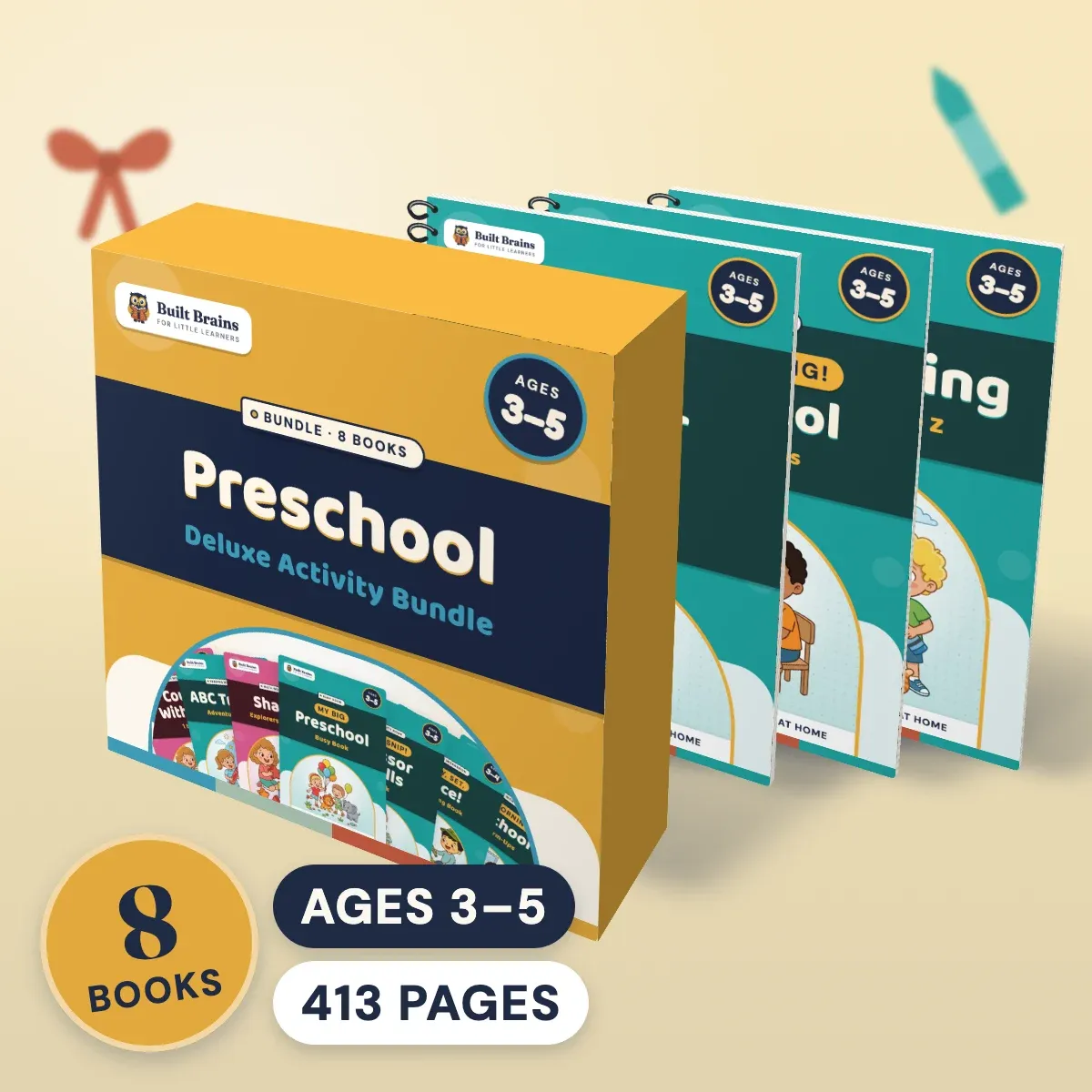
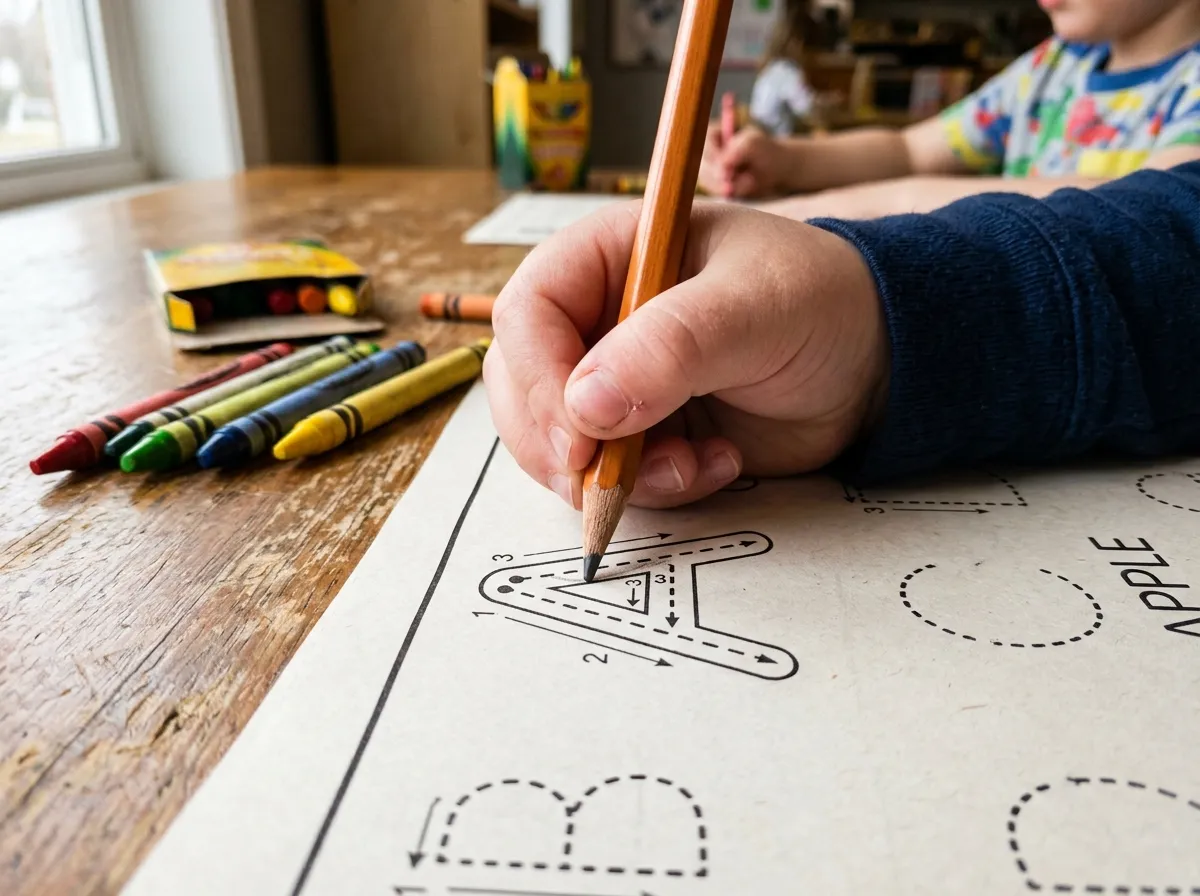
- Trace before writing letters. Straight lines, zigzags, waves and loops build the exact movements letters need. Our Ready, Set, Trace! Pre-Writing Book works through those lines in order, then moves to mazes and shapes.
- Move to letters when lines are easy. When your child can trace a wavy line and copy a cross, letter tracing is a natural next step. The ABC Tracing Adventure shows the real writing path for each letter, starting at a green dot.
Keep tracing sessions short: two or three pages, five to ten minutes. Stop while it’s still fun. A tired hand gets sloppy, and practicing sloppy movements doesn’t help.


Ages 3–5 · 60 pages
ABC Tracing Adventure: A to ZLearn every letter the right way — trace, find, color
How to teach scissor skills to a preschooler
Cutting is one of the best fine motor workouts there is, because it trains the hand to open and close with control while the other hand steadies and turns the paper. Use child-safe scissors that actually cut, and always supervise.
Scissor skills in order
- Snipping: cut short strips of cardstock into little pieces. One snip, one piece. Great for about age 3.
- Straight lines: cut along thick, short lines, then longer ones.
- Diagonal and zigzag lines: practice changing direction.
- Curves and wavy lines: the helper hand starts turning the paper.
- Simple shapes: squares first, then circles, usually closer to age 5.
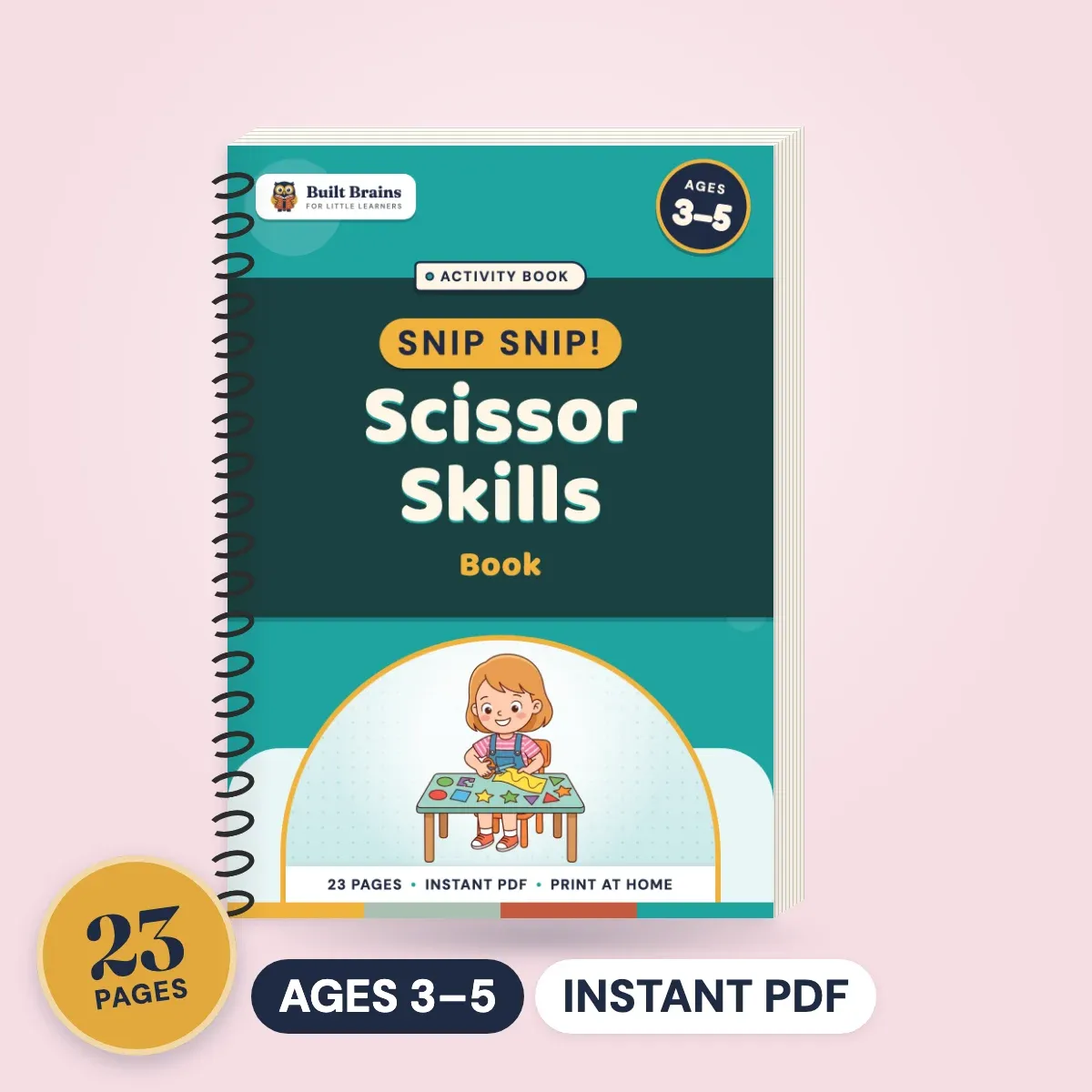
The Snip Snip! Scissor Skills Book follows this kind of progression, from first snips through straight, diagonal, wavy, zigzag, castle and loop lines, each with a picture to cut toward so children have a goal.
What to say while they cut
- “Thumbs up!” Their thumb goes in the small hole, pointing to the ceiling.
- “Open, shut, open, shut.” Say it with them for rhythm.
- “Helper hand holds the paper.” The other hand holds and turns the page, never the scissors.
- “Cut toward the picture.” A target gives them a reason to keep going.
Everyday tasks that count as fine motor practice
You don’t need special supplies. Some of the best practice happens during ordinary routines, if you slow down and let your child do the job.
- Pouring water or dry rice from a small jug into a cup.
- Opening and closing containers, jars and zip bags.
- Buttoning, zipping and snapping their own clothes (start with a coat on your lap facing them).
- Spreading butter or hummus with a butter knife.
- Peeling a clementine or a banana.
- Pegging socks onto a drying rack.
- Sorting cutlery into the drawer.
- Turning pages in a real book one at a time.
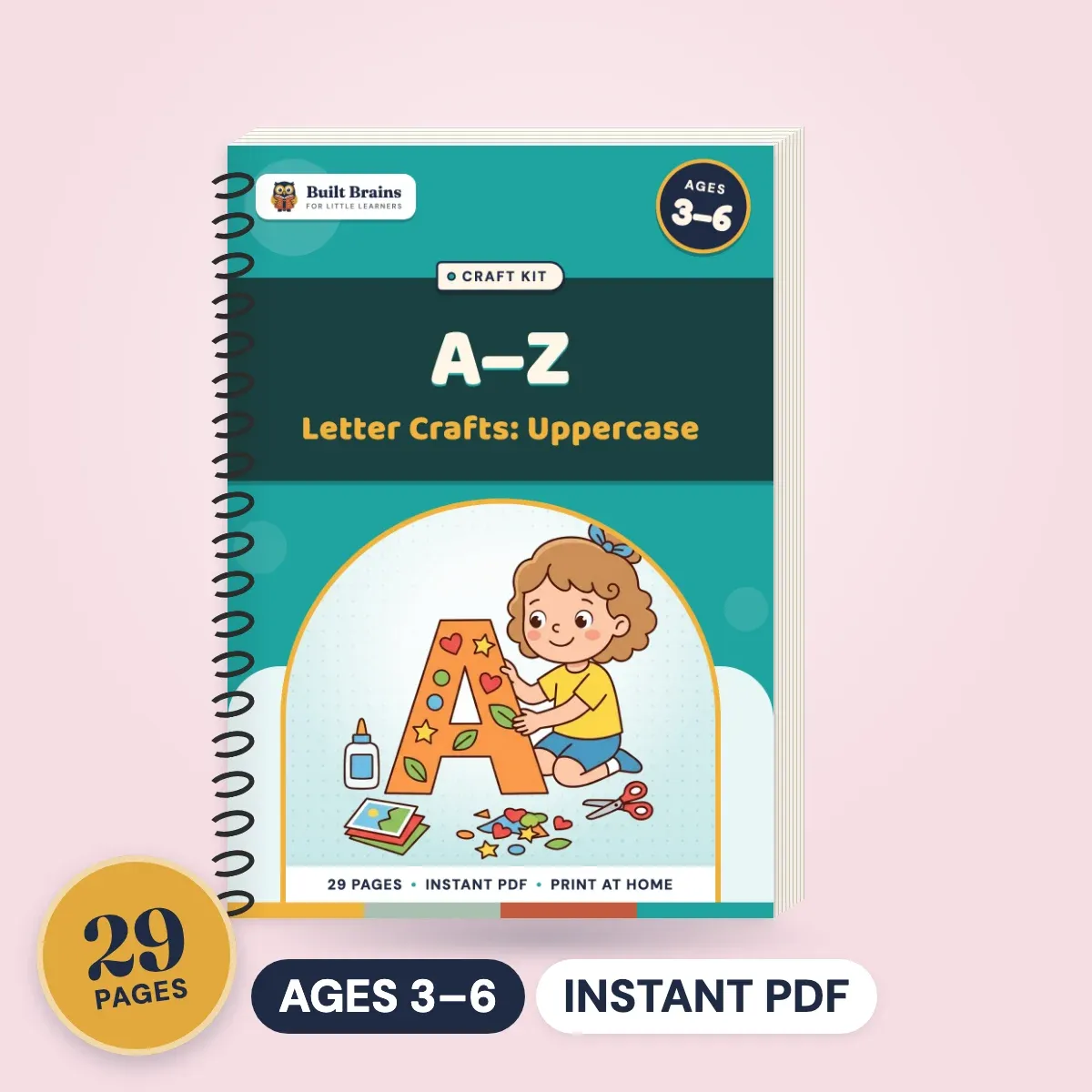
Letter crafts combine several of these skills in one page. The A–Z Letter Crafts: Uppercase book has children color a giant letter, cut out pictures that start with that letter and glue them on, so they practice cutting and letter sounds together.
A simple fine motor routine for the week
Ten minutes a day is plenty. Here’s one easy rotation for a 3 to 5 year old:
- Monday: play-dough snakes and pinching.
- Tuesday: two pages of tracing.
- Wednesday: tongs game with pom-poms or cereal.
- Thursday: a cutting page.
- Friday: threading beads or a lacing card.
- Weekend: kitchen helper jobs, or drawing on paper taped to the wall.
If you’d like fine motor work built into a full plan, our Preschool at Home curriculum includes it week by week. For quick ideas that also work as independent play, see quiet time activities for preschoolers.
When to talk to a professional about fine motor delays
Many children who struggle with pencils simply need more practice and more time. Still, it’s worth mentioning to your pediatrician if you notice things like these. They may suggest an evaluation by an occupational therapist, who specializes in hand skills.
- Your child loses skills they used to have.
- By around age 4, they still can’t hold a crayon with their fingers rather than a fist, or can’t scribble.
- They strongly avoid all hand activities like drawing, puzzles or play-dough, even ones they’d otherwise enjoy.
- One hand seems much weaker or is hardly used.
- They tire very quickly, complain of hand pain, or seem to have very floppy or very stiff muscles.
- Everyday tasks like feeding themselves are much harder than for other children their age.
Trust your instincts. If something feels off, asking early is always fine, and in the US, children under 3 can also be assessed through your state’s early intervention program, with children 3 and up evaluated through your local school district.
Questions parents ask
Good examples include rolling and pinching play-dough, tearing paper for collages, cutting with child-safe scissors, tracing lines, threading beads, using tongs to move pom-poms, peeling stickers, clipping clothespins and doing puzzles. Everyday jobs like pouring, buttoning, zipping and spreading with a butter knife count too, and they happen without any special supplies.
Most children move from a fist grip toward holding a pencil with their fingers between about 3 and 5. The CDC lists holding a crayon between fingers and thumb, rather than in a fist, as a milestone around age 4. A mature grip often keeps developing into kindergarten, and short crayons encourage it naturally.
Many children can begin snipping paper with child-safe scissors around age 3, with close supervision. Cutting along a straight line usually comes next, followed by curves and simple shapes closer to age 5. Start with short strips of thicker paper and teach “thumbs up” so their hand is positioned correctly from the start.
Tracing pages are helpful once a child has some hand strength, because they build the controlled strokes that letters need. Keep sessions short, five to ten minutes, and mix them with hands-on play like play-dough and cutting. Start with lines and shapes before letters, and move on when your child can trace them smoothly.
Look at the overall pattern, not one skill. Signs worth raising with your pediatrician include losing skills, still not scribbling or using a fist grip well past age 4, strongly avoiding hand activities, using one hand much less, or tiring very quickly. They may refer you to an occupational therapist for an assessment.