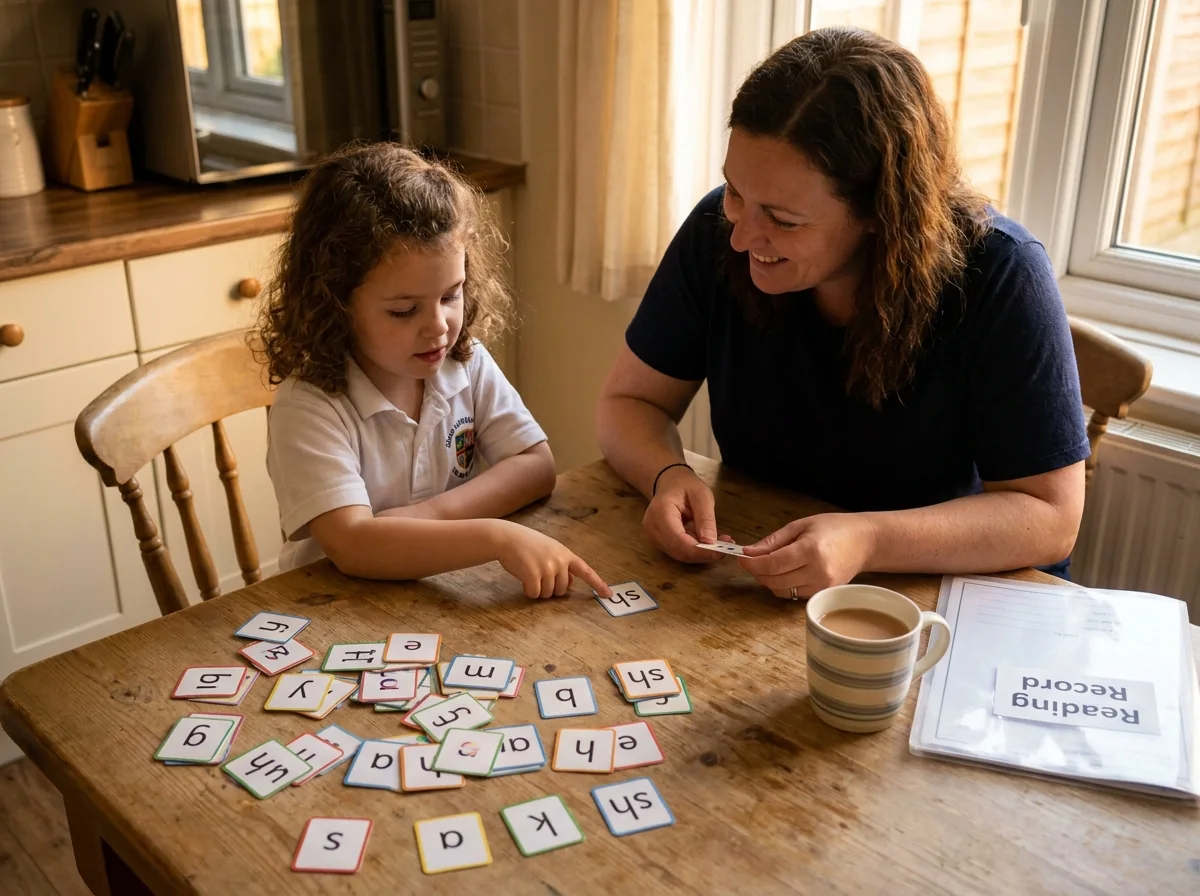
What is Phase 3 phonics?
Phase 3 is the second big step in Reception phonics. Children who know the Phase 2 sounds (s, a, t, p and so on) and can blend simple words now learn:
- the rest of the alphabet: j, v, w, x, y, z, plus zz and qu
- digraphs: two letters making one sound, such as sh, ch, ai and ee
- trigraphs: three letters making one sound, such as igh, ear, air and ure
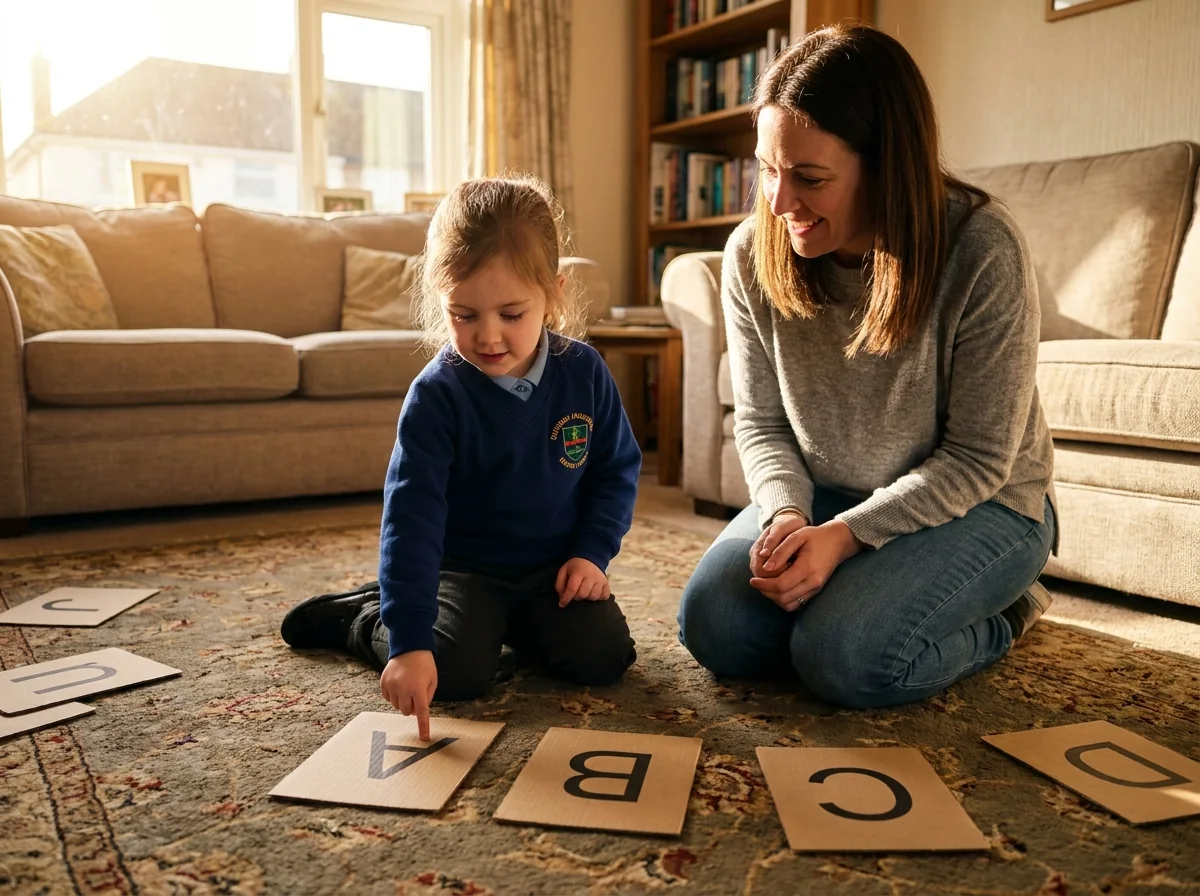
- letter names, often through an alphabet song
- more tricky words: he, she, we, me, be, was, my, you, her, they, all, are
By the end of Phase 3, many children can read short captions and sentences such as "a fish in a dish" or "the moon is high". This is the order set out in Letters and Sounds, the 2007 framework the phase names come from. Most schools now use a DfE-validated programme, which follows a similar path but may order or name things differently, so always check your school's sound mat. For the whole journey from Phase 1 to Phase 6, see phonics phases explained.
Phase 3 sounds with example words
Here is every Phase 3 grapheme (the written letter or letters) with words children can read once they've learned it.
| Group | Grapheme | Example words |
|---|---|---|
| Letters | j | jam, jet, jog |
| v | van, vet | |
| w | web, wig, win | |
| x | box, fox, six | |
| y | yes, yum, yell | |
| z, zz | zip, zap, buzz, fizz | |
| qu | quiz, quick, quack | |
| Consonant digraphs | ch | chip, chin, much |
| sh | ship, shop, fish | |
| th | thin, moth (unvoiced); this, that (voiced) | |
| ng | ring, long, sing | |
| Vowel digraphs and trigraphs | ai | rain, tail, wait |
| ee | feet, see, week | |
| igh | night, light, high | |
| oa | boat, coat, goat | |
| oo (long) | moon, food, zoo | |
| oo (short) | book, look, foot | |
| ar | farm, car, park | |
| or | fork, corn, sort | |
| ur | hurt, fur, turn | |
| ow | cow, now, down | |
| oi | coin, oil, boil | |
| ear | near, ear, hear | |
| air | hair, fair, chair | |
| ure | sure, pure | |
| er | letter, hammer, ladder |
Two of these deserve a note. th has two sounds: a quiet, breathy one in thin and a buzzy one in this. And er at the end of a word is a soft, unstressed sound, so letter doesn't rhyme with her. Schools teach both, so just follow how your child's teacher says them.
Digraphs vs trigraphs: what's the difference?
A digraph is two letters that make one sound. A trigraph is three letters that make one sound. That's the whole idea, but it's a big step for a four- or five-year-old, who has just spent weeks learning that each letter makes its own sound.
| Word | Letters | Sounds | Why |
|---|---|---|---|
| ship | 4 | 3: sh-i-p | sh is a digraph |
| rain | 4 | 3: r-ai-n | ai is a digraph |
| night | 5 | 3: n-igh-t | igh is a trigraph |
| chair | 5 | 3: ch-air | ch is a digraph, air a trigraph |
Many schools use a chant such as "two letters, one sound" and mark words with sound buttons: a dot under each single-letter sound and a line under each digraph or trigraph. Children touch each button as they say the sound, then sweep along to blend.
Phase 3 tricky words
In Letters and Sounds, children learn to read these twelve tricky words in Phase 3:
he, she, we, me, be, was, my, you, her, they, all, are
At the same time they learn to spell the Phase 2 tricky words: the, to, I, no and go. Validated schemes have their own lists and labels (some say "common exception words" or "harder-to-read words"), so ask the class teacher which words your child is on.
Notice that some "tricky" words are only tricky for now. Her becomes decodable once a child knows the er sound, and my will make sense when they meet y as a vowel later. Children still sound out the parts they can and learn the odd bit by heart. Our guide to Year 1 common exception words covers the next list.
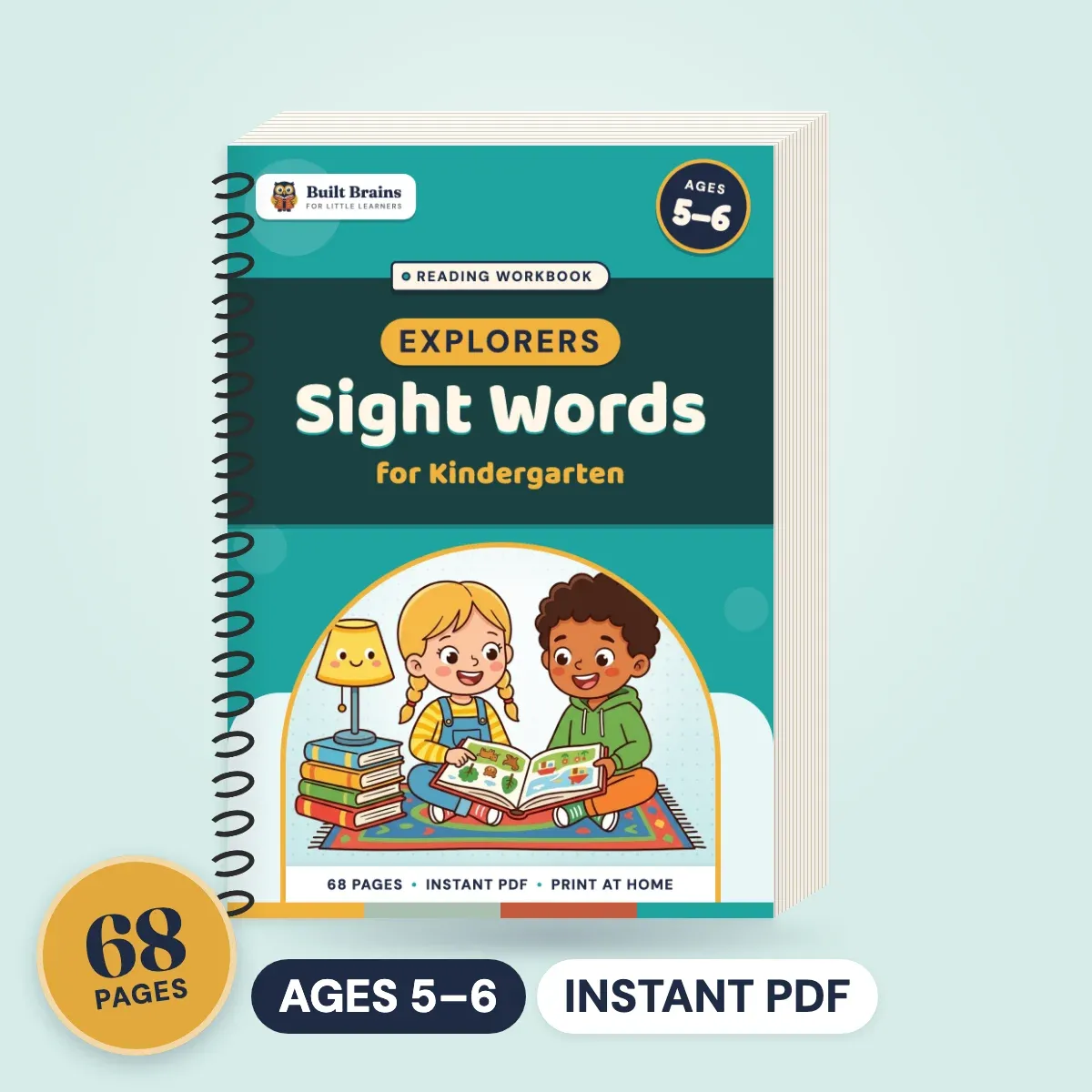
Sight Word Explorers: Kindergarten (ages 5 to 6) gives 52 common words, including all and are, one page each to read, trace, write and find. It follows a US word list, so use it as extra reading practice alongside your school's tricky-word list, not instead of it.
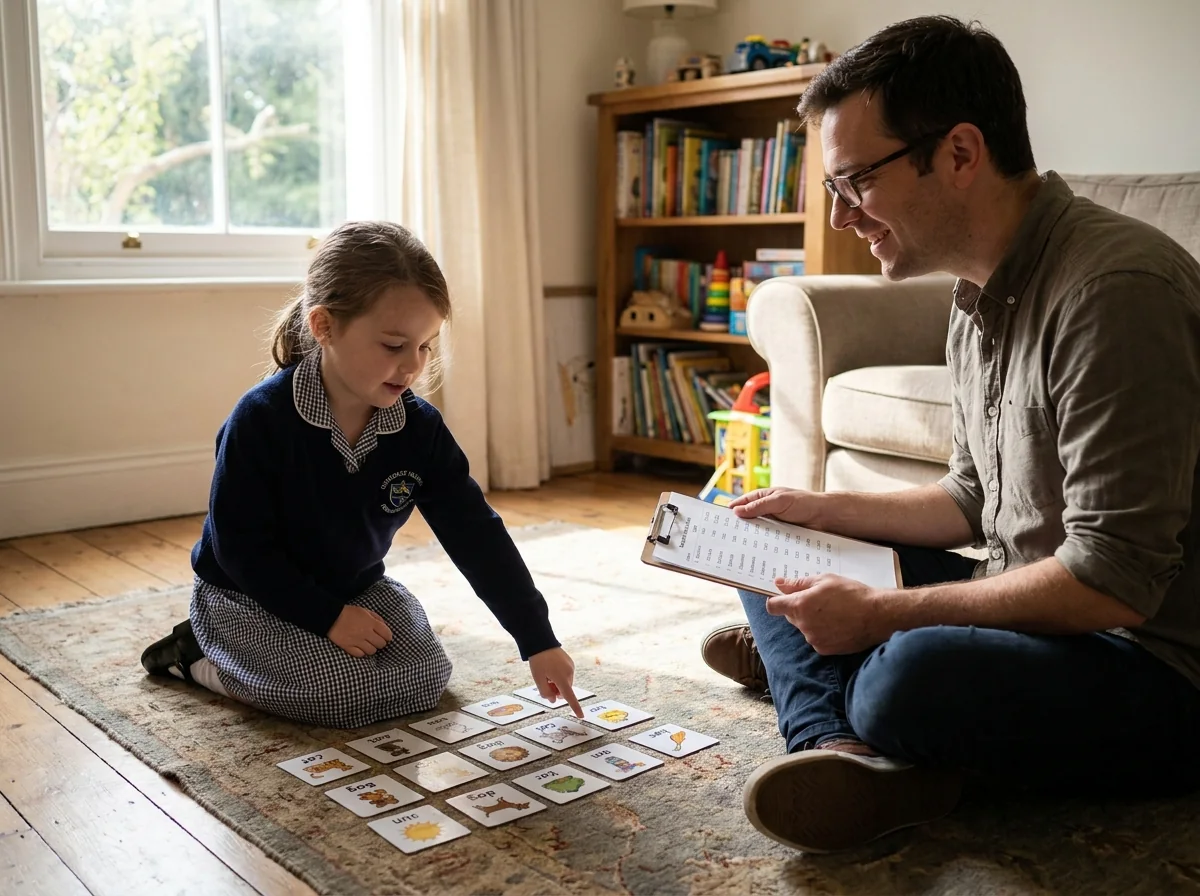
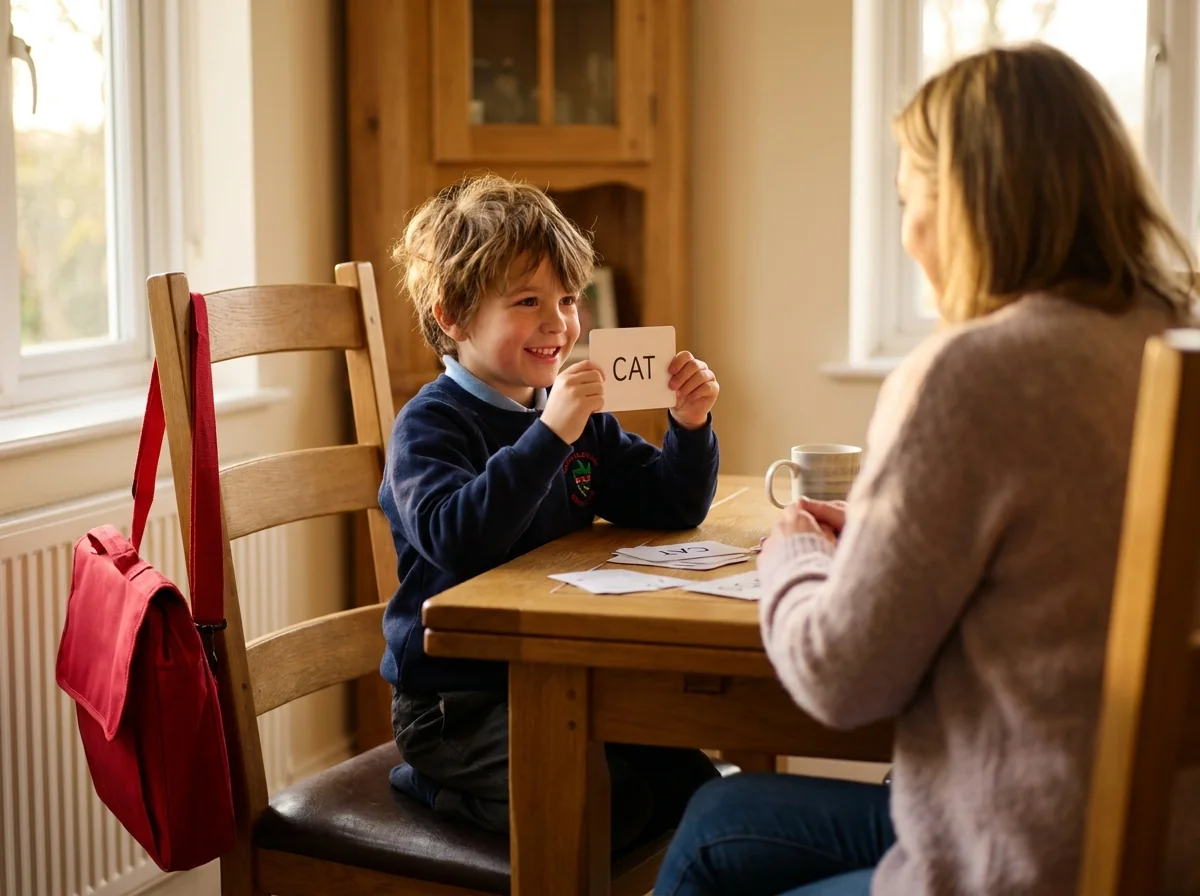
10 Phase 3 phonics games for home
Use only the sounds your child has been taught so far, and keep each game to five or ten minutes.
- Digraph hunt. Give your child a picture book and a pencil-shaped pointer. How many sh, ch or ee can they find on one page?
- Sound buttons. Write three or four words on a whiteboard. Your child adds dots and lines, then reads each word.
- Moon or book? Write oo words on cards and sort them into two piles: long oo (moon, zoo, food) and short oo (book, look, good).
- Real or alien? Mix real words (chip) and made-up ones (shum). Your child reads each and posts the alien words to a drawn monster.
- Roll and read. Write six words on a grid, numbered 1 to 6. Roll a dice and read that word. First to read them all wins.
- Silly captions. Read and draw captions such as "a goat in a boat" or "a fish with a chain". The sillier, the better.
- Magnetic word building. Keep the digraph letters stuck together as one tile (s and h side by side) so your child builds sh-o-p in three moves.
- Kim's game. Put out objects whose names use one digraph (a sock, a shell, a sheep toy). Remove one; which sound is missing?
- Kitchen detective. Spot digraphs on cereal boxes, tins and road signs. "There's an ee in cheese!"
- Bingo. Make bingo cards with Phase 3 graphemes. Call a word; players cover the sound they hear in it.
Earlier games still matter. Keep oral blending and rhyme going with ideas from rhyming activities for preschoolers, and see our CVC words list for simple word practice.
Common Phase 3 mistakes (and easy fixes)
- Sounding out digraphs letter by letter. s-h-o-p won't blend. Fix: sound buttons and underlining, and model it yourself.
- Adding "uh" to sounds. "chuh-i-puh" makes blending hard. Keep sounds pure, just as in Phase 2; our guide on how to teach letter sounds explains how.
- Mixing up letter names and sounds. Letter names are taught now, but reading still uses sounds. If your child says "aitch" while reading, say "That's its name. What sound does it make?"
- Teaching ow as in snow. In Phase 3, ow is the sound in cow. The snow sound comes later, with other alternative spellings.
- Guessing from pictures or the first letter. Cover the picture, point to each sound in turn, then blend.
- Rushing ahead. Knowing a sound on a flashcard isn't the same as reading it inside a word. Revisit Phase 2 words as well as new ones.
- Choosing books that are too hard. For your child's own reading, use the decodable book school sends. Save richer stories for you to read aloud.
When is Phase 3 taught, and what comes next?
Phase 3 usually runs from around October half term into the spring term of Reception. Letters and Sounds allowed up to 12 weeks, and validated programmes set their own pace, so your child's class may be quicker or slower than this.
The goal for the end of Reception is written into the EYFS statutory framework: the early learning goal for word reading includes saying a sound for each letter of the alphabet and at least 10 digraphs, blending to read words, and reading simple sentences that match their phonics. Phase 3 covers most of that.
After Phase 3 comes Phase 4, which teaches no new sounds but practises words with adjacent consonants, such as frog and crisp. Then Phase 5 in Year 1 adds alternative spellings, ready for the phonics screening check in June.
Printable practice
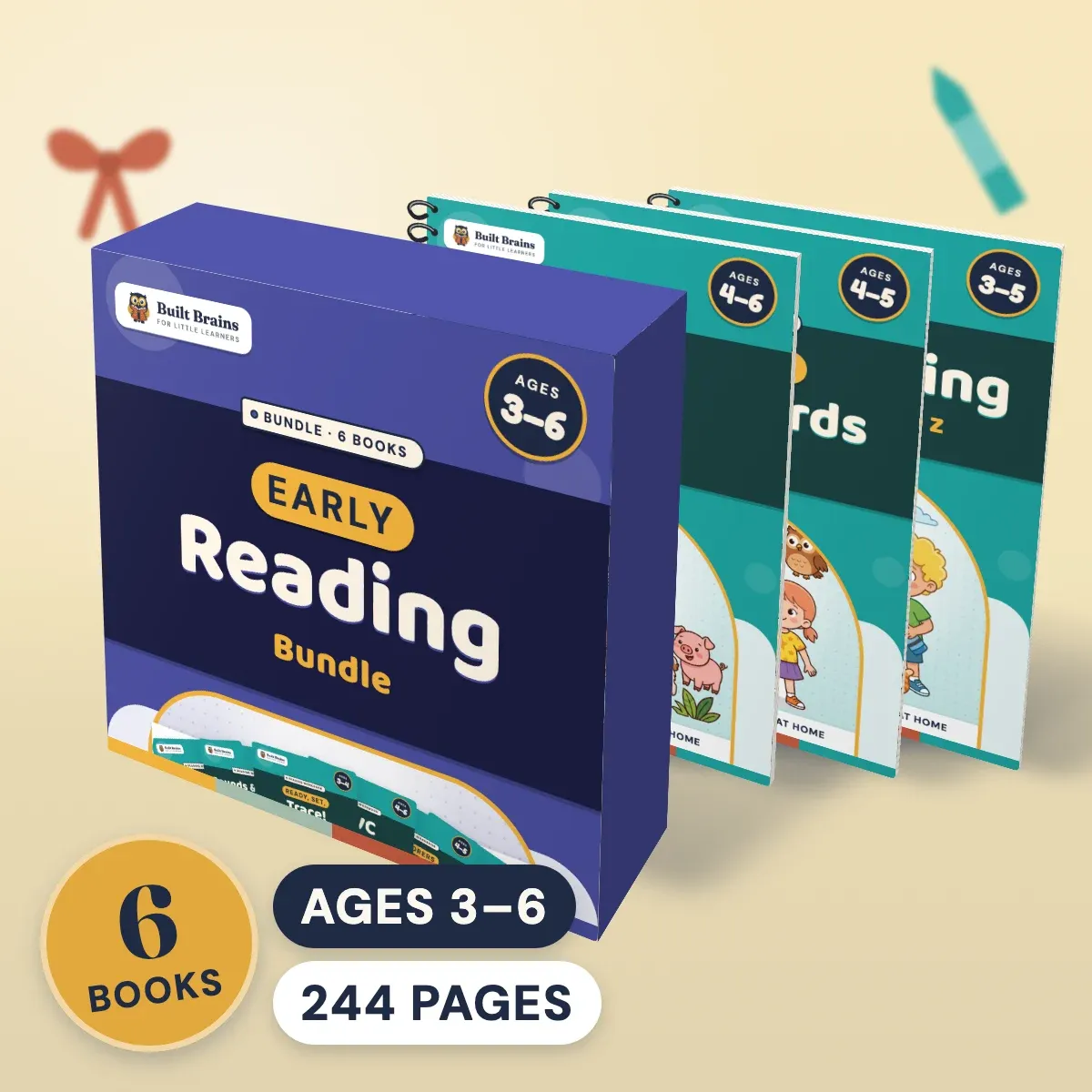
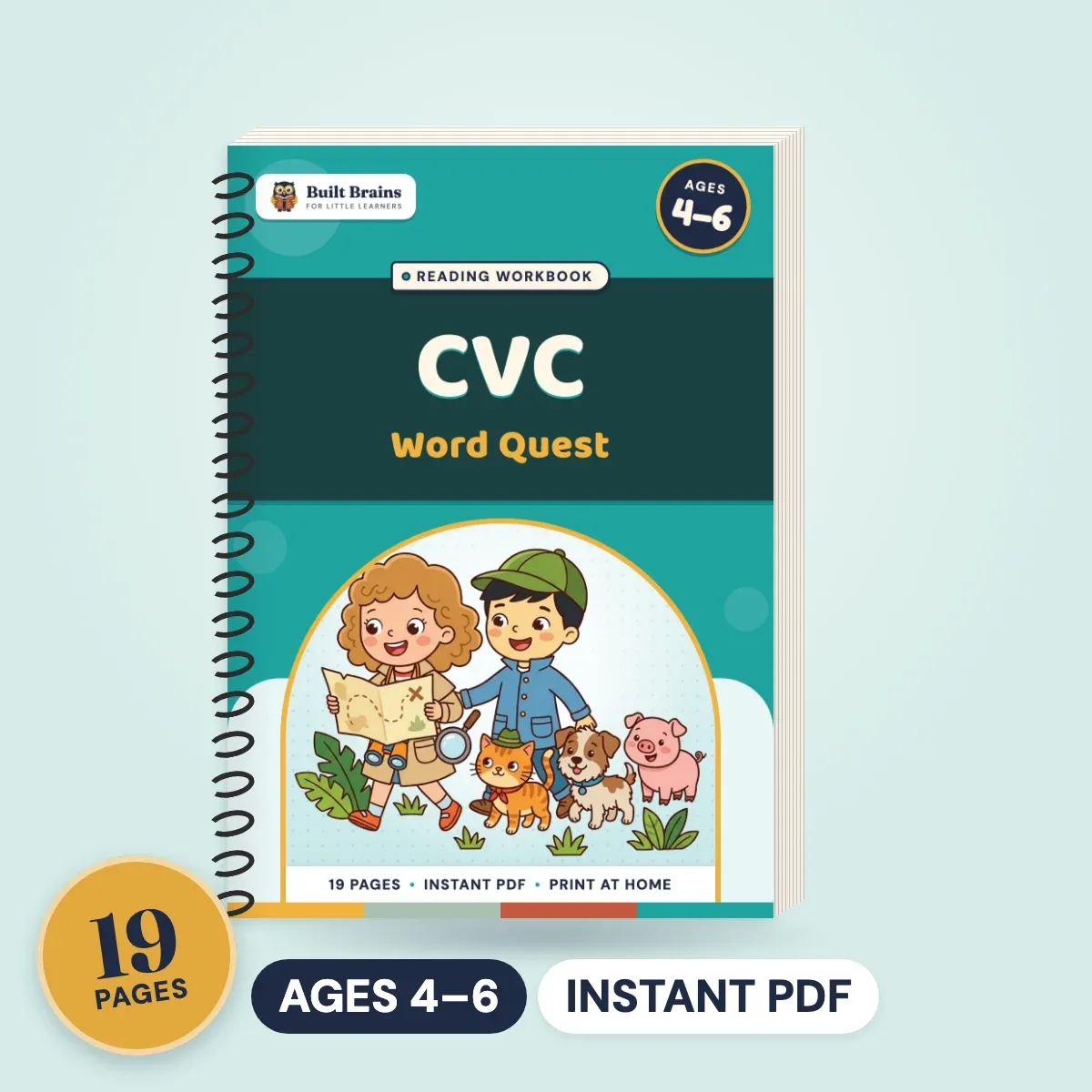
CVC Word Quest keeps blending and segmenting strong with three-letter words. Sound Detectives: Sounds & Rhymes suits children who still need practice hearing sounds and rhymes. The Early Reading Bundle puts six books in order, from pre-writing lines through the alphabet, beginning sounds, CVC words and sight words, for ages 3 to 6. Every book comes in A4 as well as US Letter.
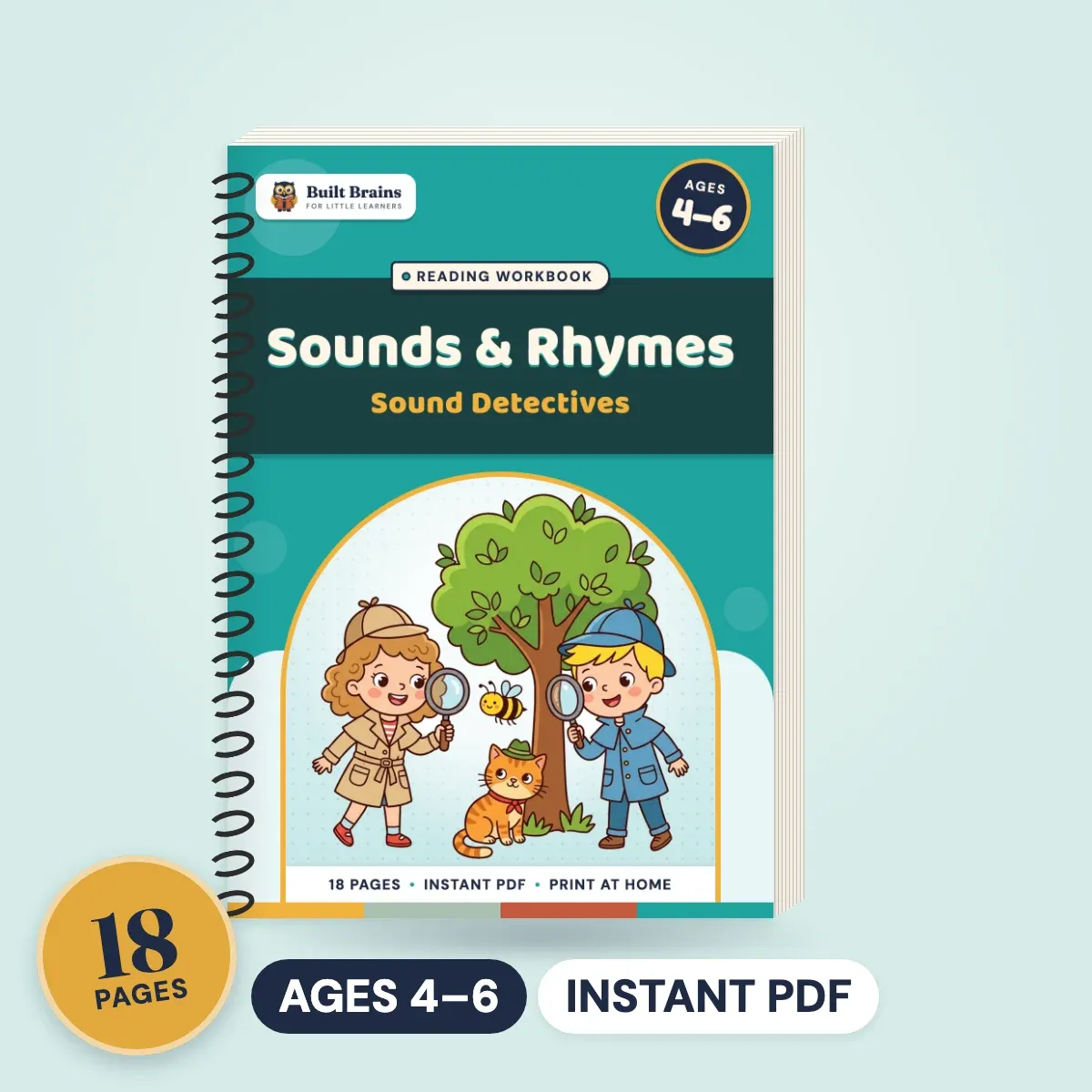
Ages 4–6 · 18 pages
Sound Detectives: Sounds & RhymesHear it, say it, circle it — the step before reading
Sources
- GOV.UK – Letters and Sounds: the 2007 framework with the Phase 3 graphemes, tricky words and suggested length.
- GOV.UK – Choosing a phonics teaching programme: the list of DfE-validated phonics programmes most schools now follow.
- GOV.UK – Early years foundation stage (EYFS) statutory framework: the word reading early learning goal at the end of Reception.
Questions parents ask
In Letters and Sounds, Phase 3 teaches j, v, w, x, y, z, zz and qu, then the digraphs ch, sh, th and ng, then ai, ee, igh, oa, oo, ar, or, ur, ow, oi, ear, air, ure and er. Children also learn the letter names. Your child's school scheme may teach the same sounds in a slightly different order or with different labels.
In the original Letters and Sounds they are he, she, we, me, be, was, my, you, her, they, all and are. Children learn to read them in Phase 3 and to spell the Phase 2 tricky words, such as the, to and go. Validated schemes have their own lists, so ask the teacher which words your child is practising.
A digraph is two letters that make one sound, such as sh in ship or ee in feet. A trigraph is three letters that make one sound, such as igh in night or air in hair. Children learn to spot them as one chunk, so they read sh-i-p as three sounds, not s-h-i-p as four.
Usually in Reception, straight after Phase 2, often from the second half of the autumn term into the spring term. Letters and Sounds allowed up to 12 weeks. Most validated programmes aim to finish their Reception sounds by the summer term, but each school sets its own pace, so your child's class may be ahead or behind this.
In English oo can be long, as in moon and food, or short, as in book and look, and some regional accents say certain words either way. Many schools teach both from the start. If your child reads a word with the wrong one, ask "Does that sound like a word? Try the other oo."

Reviewed by
Year 1 Teacher & KS1 Phase Lead
Tom Evans is a Key Stage 1 Phase Lead dedicated to smoothing the transition from EYFS play-based learning to structured Year 1 curriculum.
More about Tom →