
Why rhyming matters for reading
Rhyming is one of the first ways children learn to listen to the sounds of words instead of their meaning. To hear that cat and hat rhyme, your child has to ignore what the words mean and focus on how they end. That is a big mental shift for a 3 or 4 year old.
This listening skill is called phonological awareness. It grows in a rough order:
- Hearing words in a sentence
- Hearing syllables (clapping di-no-saur)
- Hearing rhymes and first sounds
- Hearing every separate sound in a word (c-a-t)
That last step is what children use to sound out and spell words. Rhyming sits right in the middle, so it builds the path to reading. It also sets up word families: a child who knows cat, hat, sat can later read mat and bat by changing just one letter.
The US Head Start early learning framework lists rhyming among the phonological awareness skills preschoolers work on, and in England the EYFS guidance does the same (more on that below).
How to teach rhyming: hear it, judge it, make it
Most rhyming frustration comes from asking children to produce rhymes before they can hear them. Teach in this order and move on only when a step feels easy.
Step 1: Hear it (exposure)
Read rhyming books, sing nursery rhymes and chant rhymes in the car. Point out rhymes as you go: "Oh, moon and spoon rhyme! They sound the same at the end." Nothing is asked of your child yet. Usually ages 2 to 4.
Step 2: Judge it (recognition)
Say two words and ask if they rhyme. Start with pairs that are very different when they don't rhyme ("cat, dog") and very clear when they do ("cat, hat"). This is the step many 4 year olds are working on.
Step 3: Make it (production)
Ask your child to come up with a rhyme: "What rhymes with bug?" This is the hardest step. Many children manage it somewhere between 4 and 6, and nonsense answers ("bug, zug") count.
27 rhyming games and activities (with scripts)
Each takes 2 to 5 minutes. Pick one or two a day and repeat favorites.
Hearing games (step 1)
- Pause and finish. Sing a well-known nursery rhyme and stop before the rhyming word. "Twinkle, twinkle, little star, how I wonder what you..." Your child fills the gap.
- Wrong-word rhyme. Say a familiar rhyme with a silly mistake: "Jack and Jill went up the... mountain." Your child shouts the right word. Laughter guaranteed.
- Rhyme spotting in books. Read a rhyming book and pause on each pair: "Did you hear two words that sound the same?"
- Clap the rhyme. Recite a short rhyme and clap every time you say a rhyming word.
- Name rhymes. Make up rhymes with family names: "Silly Billy," "Hattie Batty," "Ben, Ben, count to ten."
- Car chants. On any drive, chant a word family: "Cat, hat, sat, mat, bat, rat, that's that!"
Judging games (step 2)
- Thumbs up, thumbs down. "I'll say two words. Thumbs up if they rhyme. Sun, fun." Up! "Sun, dog." Down.
- Odd one out. "Listen: cat, hat, pig. Which one doesn't rhyme?" Start with three words, pictures if needed.
- Rhyme or not jump. Jump forward if the words rhyme, stay still if they don't.
- Rhyming basket. Put toys in a basket (car, star, bear, chair, frog, log). Your child pulls out two: "Do they rhyme?"
- Picture match. Lay out picture cards face up and find rhyming pairs: cake, snake; bee, tree. The Sound Detectives workbook has match-the-rhyme pages like cat and hat for this.
- Rhyming memory. Turn the same cards face down and play memory, where a match is a rhyme.
- Silly or sensible. "Does goat rhyme with coat? Does goat rhyme with pizza?" Big reactions help.
- Sort the family. Two bowls labeled with a picture (a cat and a pig). Sort picture cards into the -at bowl or the -ig bowl.
Making games (step 3)
- Rhyming I Spy. "I spy something that rhymes with hair." (Chair.) Then swap roles.
- What's in the bag? "It rhymes with rock. You wear it on your foot." (Sock.) Clues plus rhyme make it easier.
- Rhyme chain. Take turns saying rhymes for one word until someone gets stuck: bug, rug, hug, mug, jug...
- Hot potato rhymes. Pass a ball. Whoever holds it says a rhyme for the word before they pass.
- Rhyming tidy-up. "Put away something that rhymes with hook." (Book.) Tidying is suddenly a game.
- Rhyming snack. "Would you like some bapple? Oh, I mean apple." Children love correcting you.
- Make a silly rhyme. "The cat sat on a... hat!" Start the line and let your child finish it with any rhyme.
- Rhyme with me. "I say pan, you say..." (Man, can, fan.) Give a few seconds and a hint if needed: "Something that keeps you cool."
- Change the first sound. "Take sun. Change the first sound to /r/. What do you get?" (Run.) This bridges straight into phonics.
Moving and making games
- Rhyming hopscotch. Chalk pictures in squares. Your child hops to two that rhyme.
- Rhyme hunt. Hide pairs of rhyming objects around the room (a toy car and a star). Find a pair and bring them together.
- Make a rhyming book. Fold paper into a little book. Each page: a picture pair your child chose (bee and tree). Read it back all week.
- Rhyme of the day. Choose one word each morning and collect rhymes for it all day. A preschool warm-up page at breakfast is a natural place to start the day's words.
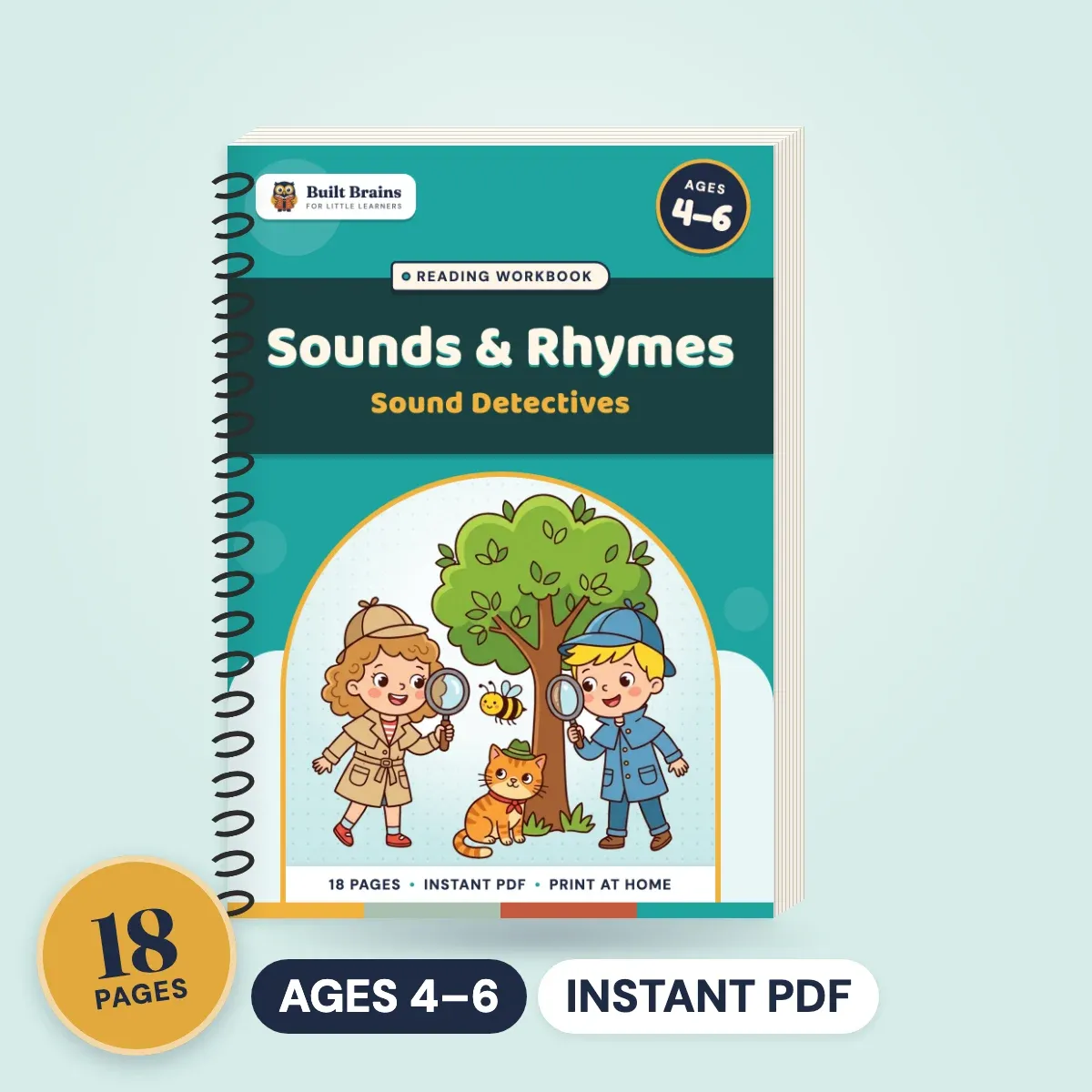
Ages 4–6 · 18 pages
Sound Detectives: Sounds & RhymesHear it, say it, circle it — the step before reading

Ages 3–5 · 60 pages
ABC Tracing Adventure: A to ZLearn every letter the right way — trace, find, color
Rhyming activities for kindergarten
By kindergarten, most children are ready to connect rhymes to print. Keep the games above and add:
- Word family houses. Draw a house with "-at" on the roof. Write words that live there: cat, hat, mat. Read them together.
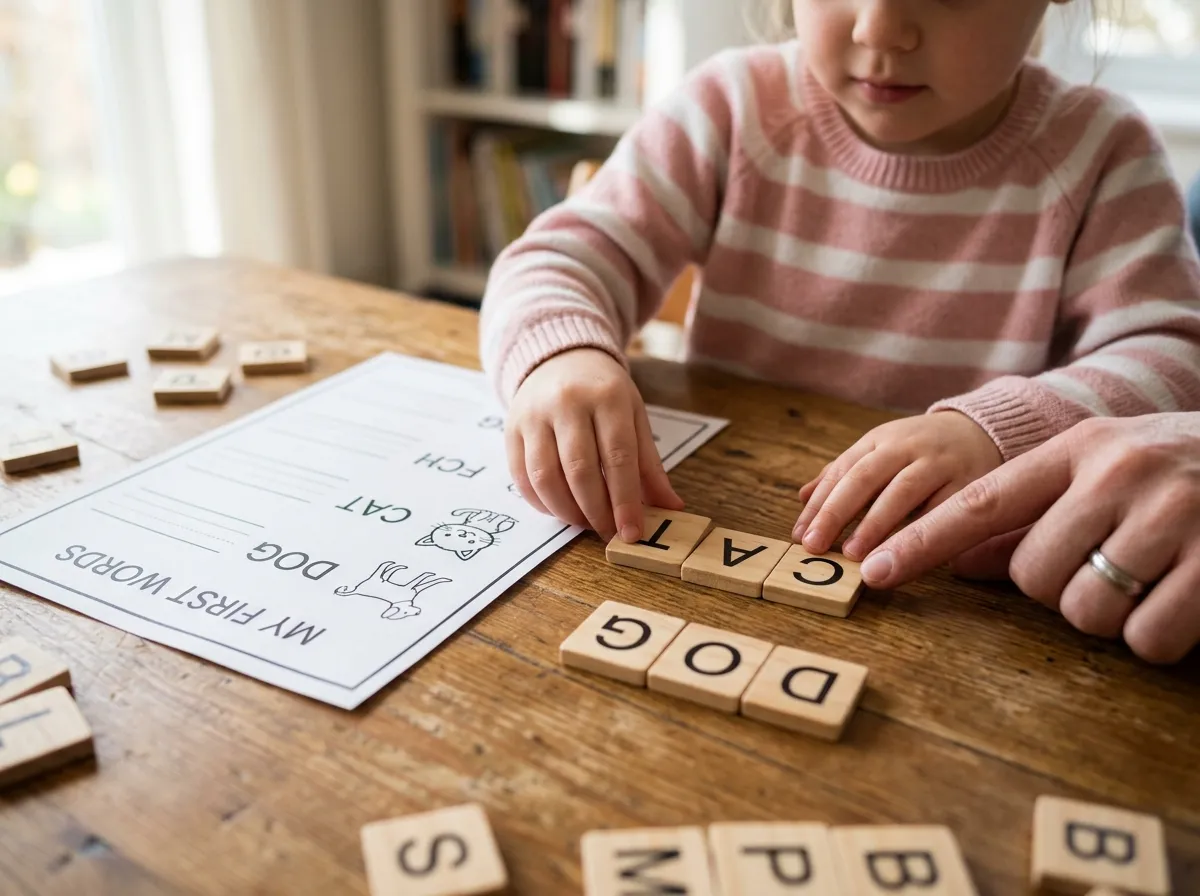
- Flip-a-letter. With magnetic letters, build cat, then swap the c for h, m, s, b. Read each new word.
- Rhyming sentences. Write a short silly sentence together: "The fat cat sat on a mat."
- Poem hunt. Read a short poem and underline the rhyming words at the end of each line.
This is where rhyming meets phonics. Once your child can blend sounds, a workbook like CVC Word Quest gives them simple three-letter words to read. For the order to teach sounds, see how to teach letter sounds.
Rhyming books to read aloud (what to look for)
You don't need a special list. Look for these types at the library:
- Nursery rhyme collections. Short, traditional and meant to be repeated. Choose one with big, clear pictures.
- Predictable rhyming picture books. Books where the rhyme is so strong your child can guess the next word. These are perfect for "pause and finish."
- Silly nonsense verse. Books full of made-up rhyming words show children that rhyming is about sound, not meaning.
- Counting rhymes. Books and songs that count up or down with a rhyme on each line.
- Lift-the-flap rhyming books. The rhyme gives a clue to what is under the flap.
Read the same books many times. Repetition is how your child learns the pattern well enough to fill in the rhymes themselves.
What if my child can't rhyme yet?
This is very common. Rhyming is surprisingly abstract for young children, and plenty of bright 4 year olds cannot make up a rhyme yet. Some children click at 3, others at 5 or later.
What to try
- Go back to step 1. Two weeks of lots of rhyming songs and books, with no questions asked.
- Only play judging games. Thumbs up or down with obvious pairs.
- Use pictures. Seeing a cat and a hat helps them hold both words in mind.
- Exaggerate the ending. Stress and stretch the part that rhymes.
- Accept nonsense words. "Cat, gat" shows they understand.
When to ask for advice
If your child is 5 or older and still can't tell whether two words rhyme after regular practice, or if you have other concerns about their speech, hearing or understanding, talk to your pediatrician, health visitor or their teacher. Rhyming difficulties on their own are not a diagnosis, but it is worth checking hearing, especially after lots of ear infections.
A note for UK parents: rhyming and the EYFS
In England, rhyme is part of the Early Years Foundation Stage. The non-statutory Development Matters guidance describes 3 and 4 year olds developing their phonological awareness so they can spot and suggest rhymes, count or clap syllables, and recognise words with the same first sound. In school, this listening work is often called Phase 1 phonics, which runs through nursery and into Reception. Our guide to phonics phases explained shows how it leads into letter sounds.
A 10-minute daily rhyming routine
- Morning (2 minutes): a nursery rhyme with "pause and finish."
- Play time (5 minutes): one game from the list, matched to your child's step.
- Anytime (1 minute): rhyming I Spy in the car, bath or queue.
- Bedtime: one rhyming book, pointing out a rhyming pair.
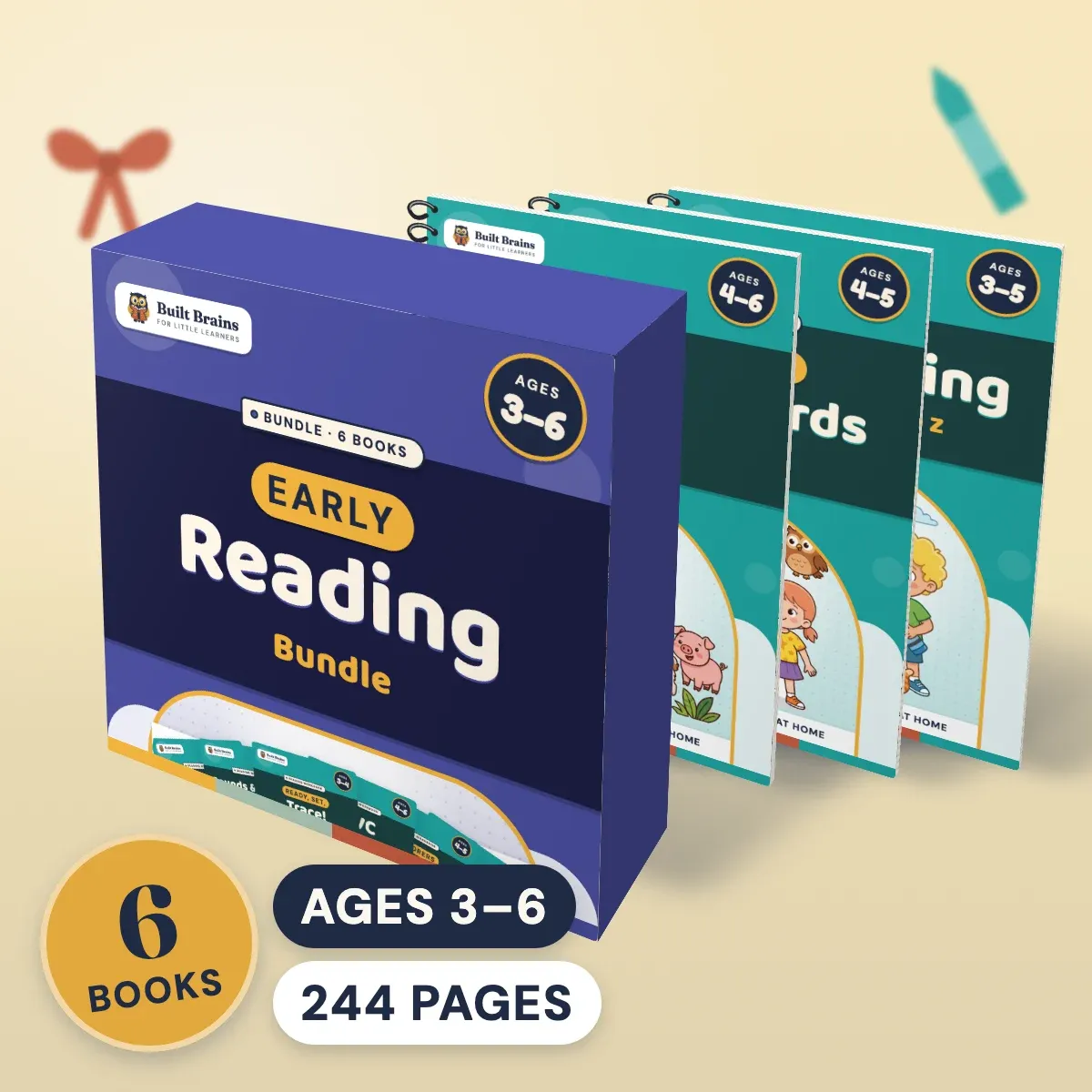
The Early Reading Bundle puts the whole path in order, from pre-writing lines and the alphabet to beginning sounds and rhymes, CVC words and sight words, so you always know what comes next.
Questions parents ask
It varies widely. Many 3 year olds enjoy rhymes and can finish a line of a familiar song. Around 4, many children can tell you whether two words rhyme. Making up their own rhymes usually comes later, often between 4 and 6. A 4 year old who can't produce rhymes yet is very common and not a reason to worry on its own.
Rhyming teaches children to listen to the sounds inside words, not just their meaning. Noticing that cat and hat share the same ending is an early step in phonological awareness, the listening skill that later helps children hear the separate sounds in words and blend them to read. It also prepares them to spot word families like -at and -ig.
Go back a step. Read and sing lots of rhymes, then play only "do these rhyme?" games with very clear pairs like cat and hat. Stretch and stress the ending when you say words. Most children get there with a few weeks of short daily practice. If you also have concerns about hearing or speech, talk to your pediatrician or health visitor.
Keep it simple: "Rhyming words sound the same at the end." Then show it: "Cat, hat. Listen to the end: c-AT, h-AT. They both end with at." Use your hands, putting the two words side by side, and give lots of examples before asking your child to try one.
Yes, and they are great practice. If your child says "cat, zat" they have understood rhyming perfectly, because they changed the first sound and kept the ending. Celebrate it, then say "Zat is a silly word. Can you think of a real one?" Silly words keep the game fun and show the skill is there.