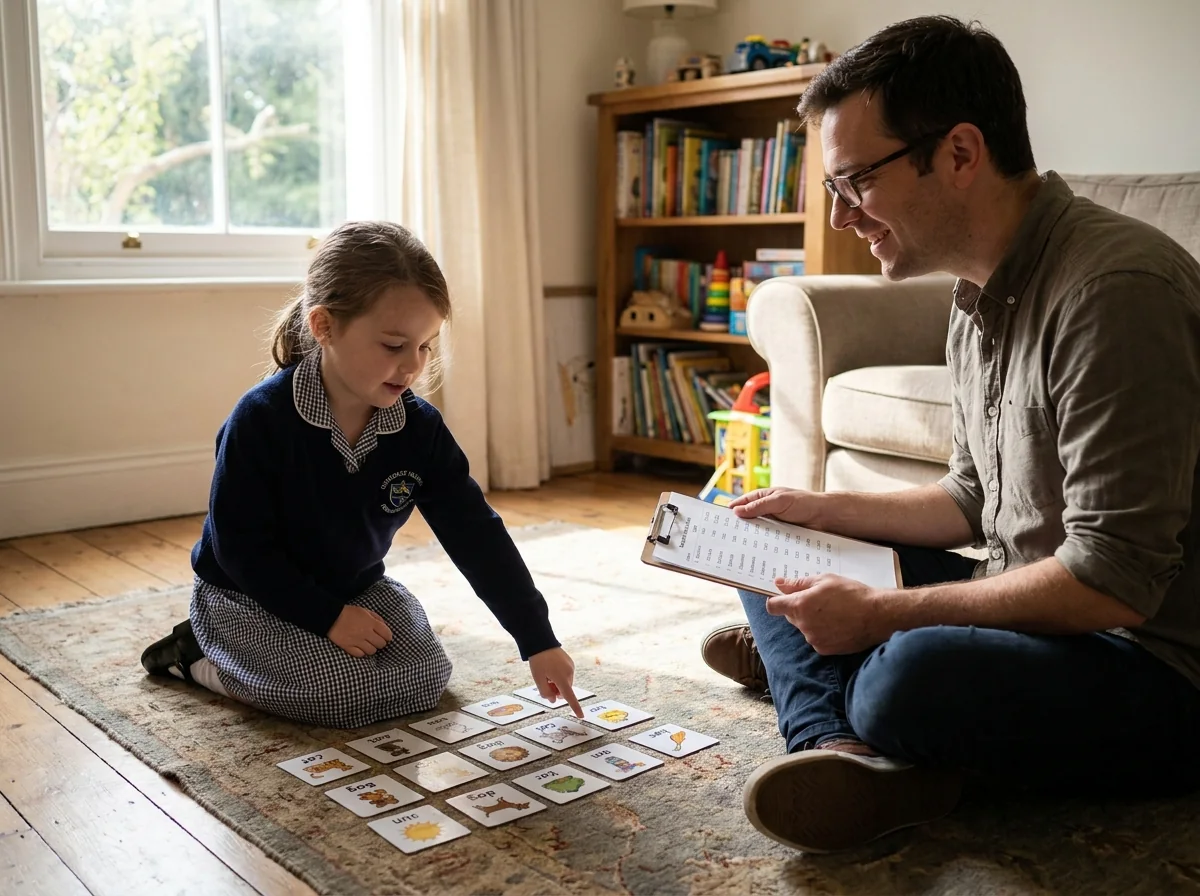
What are common exception words?
Common exception words are the words children meet constantly in reading that cannot be fully sounded out with the phonics they have been taught so far. The national curriculum for England lists them in Appendix 1 (Spelling) of the English programmes of study, with a set for Year 1 and a longer set for Year 2, and asks children to read them, "noting unusual correspondences between spelling and sound", and to spell them (GOV.UK, English programmes of study).
Your child's school may call them something else: phonics programmes say "tricky words", "harder-to-read-and-spell words" or "red words", and most spread them across Reception and Year 1 in small sets, so your child will already read many of them before Year 1 starts. The words are the same; only the labels and the order differ. Our guide to the phonics phases shows where tricky words fall in the classic Letters and Sounds sequence.
The full Year 1 common exception words list
Here are all 45 words, in the order they appear in the national curriculum:
- the, a, do, to, today, of, said, says, are
- were, was, is, his, has, I, you, your, they
- be, he, me, she, we, no, go, so, by
- my, here, there, where, love, come, some, one, once
- ask, friend, school, put, push, pull, full, house, our
Why each word is tricky
The words fall into families, and once a child knows the tricky part of one, the rest of the family comes almost free.
| The tricky part | Words | What is going on |
|---|---|---|
| A single vowel saying its name | be, he, me, she, we, no, go, so | The final e or o says its name |
| y (or I) as a vowel | by, my, I | The letter says the igh sound |
| o spelling the u sound | love, come, some, one, once | The o says the vowel in cup; one and once also start with a hidden w sound |
| s saying z | is, his, has, was | A single s that sounds like z; was also has an a that says o |
| u saying the oo in book | put, push, pull, full | The u is short but rounded, not the u in cup |
| A vowel spelling not yet taught | said, says, they, you, your, friend, here, there, where, school, house, our | ai and ay saying e; ey saying ai; ou doing several jobs; ie saying e; ere; ch saying k |
| Unstressed little words | the, a, do, to, of, today | Said quickly, with a vowel that does not match the spelling; of ends in a v sound |
| A silent e on the end | are, were | The e does nothing: are says ar and were says wer |
| Accent-dependent | ask | Long a in much of southern England; fully decodable in the north |
A child who learns "the s says z" from is reads his, has and was almost immediately.
Why they are called "exception" words
Phonics promises that you can read a word by sounding it out. An exception word breaks that promise in one place: in said, the s and d behave and the ai, saying e, is the exception; in they, th is familiar and ey is the new bit.
That shapes how you teach them. Rather than learning the whole word as a shape, like a logo, schools in England teach children to sound out what they can and learn the tricky part, because:
- it keeps the decoding habit, the main thing Year 1 is building;
- the tricky part is usually one grapheme, so there is one thing to remember per word;
- most tricky parts turn up in other words later (the ey in they is the ey in grey and obey).
A few words are only temporarily tricky: house and our decode once ou is taught, usually later in Year 1, and school once children know ch can say k.
Common exception words and the phonics screening check
The phonics screening check, taken in June of Year 1, does not test these words. It uses 40 decodable words, half of them made-up "alien" words, precisely so that children cannot pass it from memory (GOV.UK, phonics screening check). A child who has built the sound-it-out habit through exception words is in good shape for it.
How schools teach common exception words
Most Year 1 classes follow a similar pattern, and copying it at home means one message rather than two:
- A few words a week, often two to four, introduced during the phonics lesson rather than as a separate list.
- Sound it out, spot the tricky bit. The teacher writes the word, the class sounds out the regular graphemes, and the tricky grapheme gets a mark: a dot, a heart, a red underline or a wavy line.
- Read it in a sentence straight away, usually in the week's decodable book, which includes the words taught so far.
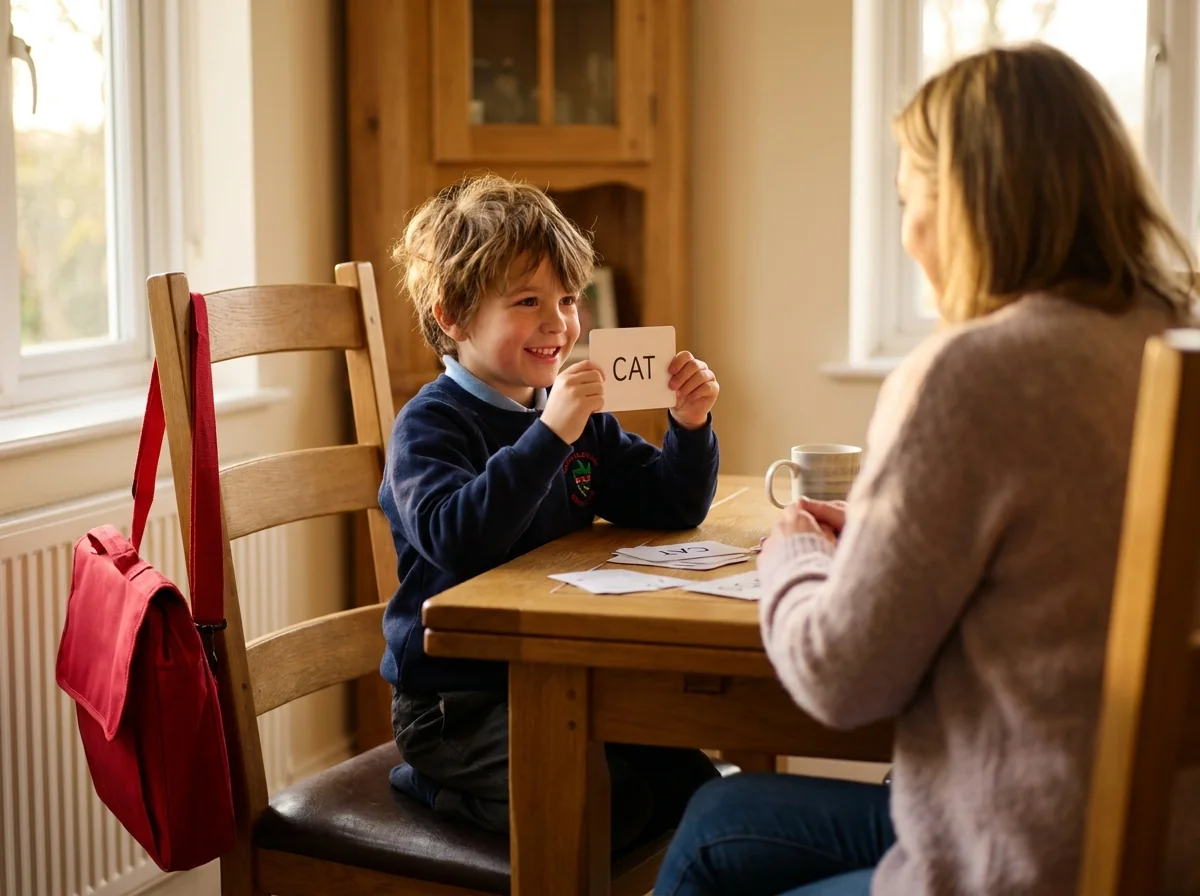
- Speed reading on flashcards or a slide, so the words become instant.
- Spell it a week or two after reading it, with "look, say, cover, write, check" and a short dictated sentence on Friday.
- Keep revisiting. Words come back on the working wall, in handwriting practice and in Year 2.
Ask the teacher which words have been taught so far and how the school marks the tricky bit, and use the same mark at home. If the school's list comes in a different order, follow the school's.
10 games to practise common exception words at home
Three minutes a day with two or three words beats a weekly session with all 45. Pick one game:
- Tricky-bit detective. Write the word big. Your child sounds out the regular letters, then highlights the tricky part and says what it "should" say and what it really says.
- Say it as it is spelt. Read the word the way it looks: "sa-id", "wass", "fri-end". Children find it funny, and the odd pronunciation sticks when they come to spell it.
- Sticky-note hunt. Five words on sticky notes hidden around a room. Each one found is read aloud and stuck to the door.
- Splat. Six word cards on the table; mum or dad calls a word and your child splats it with a hand or a fly swat. Swap roles and splat the wrong one on purpose so they correct you.
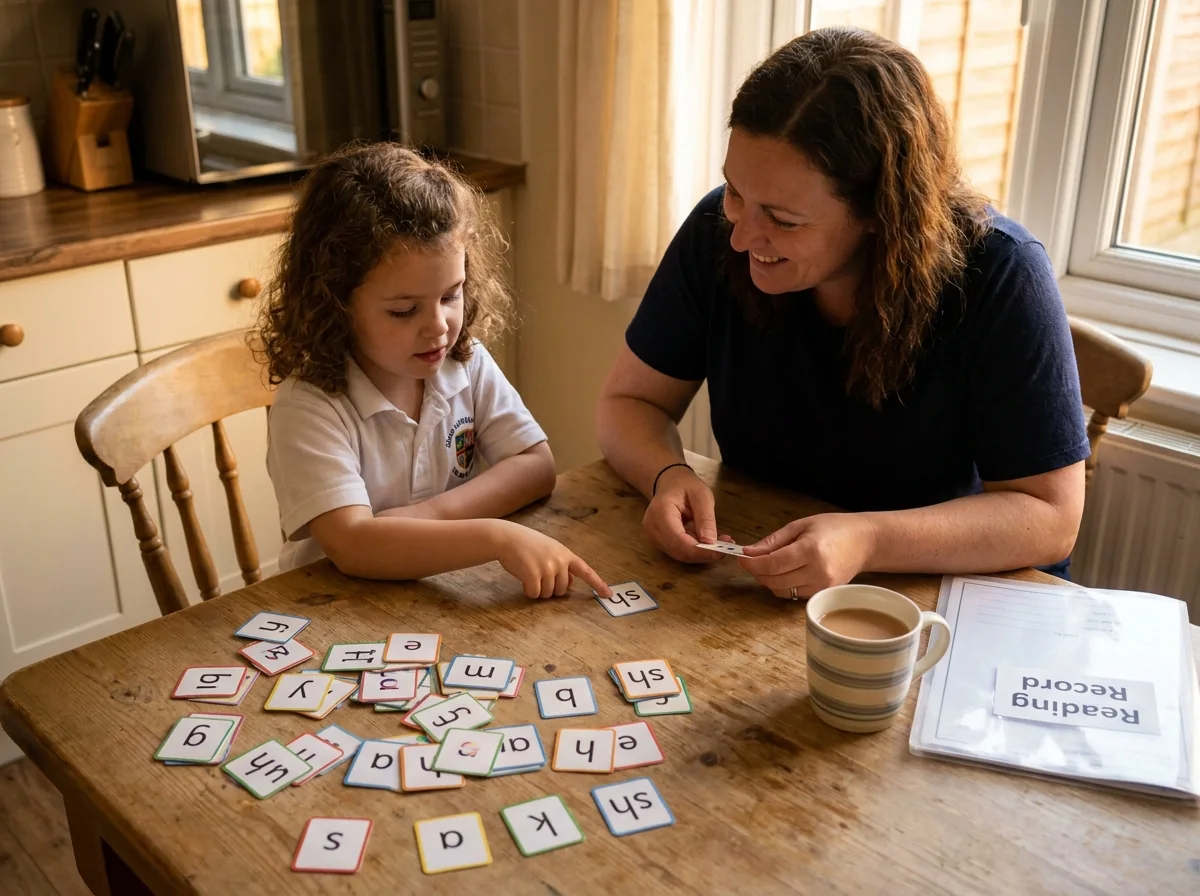
- Read, build, write. Read the word on a card, build it with magnetic letters, write it with a pen: three routes into one word.
- Rainbow write. Write the word once in pencil, then trace it in three colours, saying the letters each time.
- Word hopscotch. Chalk the week's words into a hopscotch grid; each square has to be read before it can be hopped on.
- Snap and pairs. Two cards for each of eight words, played as snap or as a memory game; every match is read aloud.
- Spot it in the book. Choose one word before the bedtime story and tally every time it appears. "The" will win; "once" is rarer and more exciting.
- Three-word dictation. Once a week, say a short sentence using three of the words ("I love my school") and your child writes it. Mark the tricky bits together, not the handwriting.
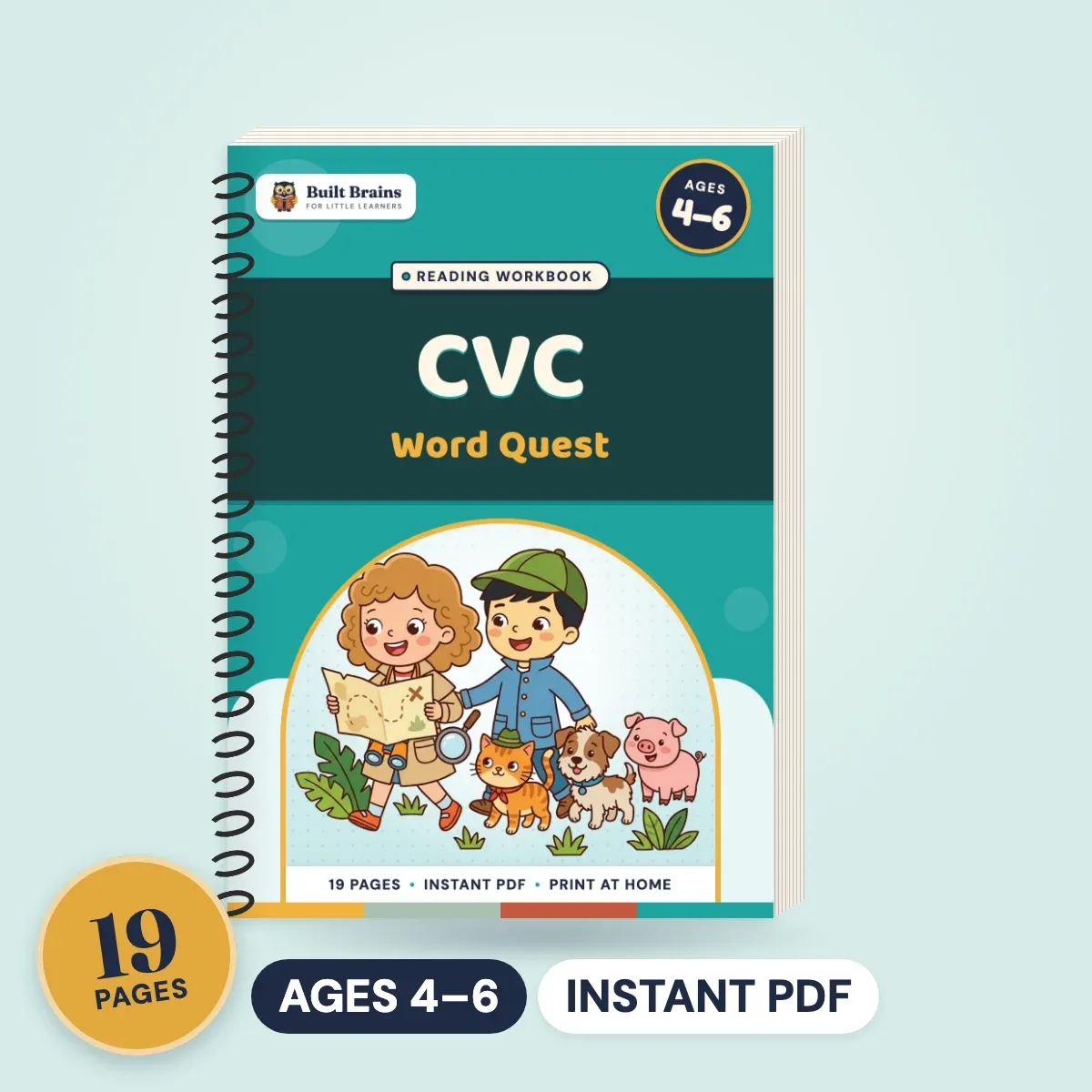
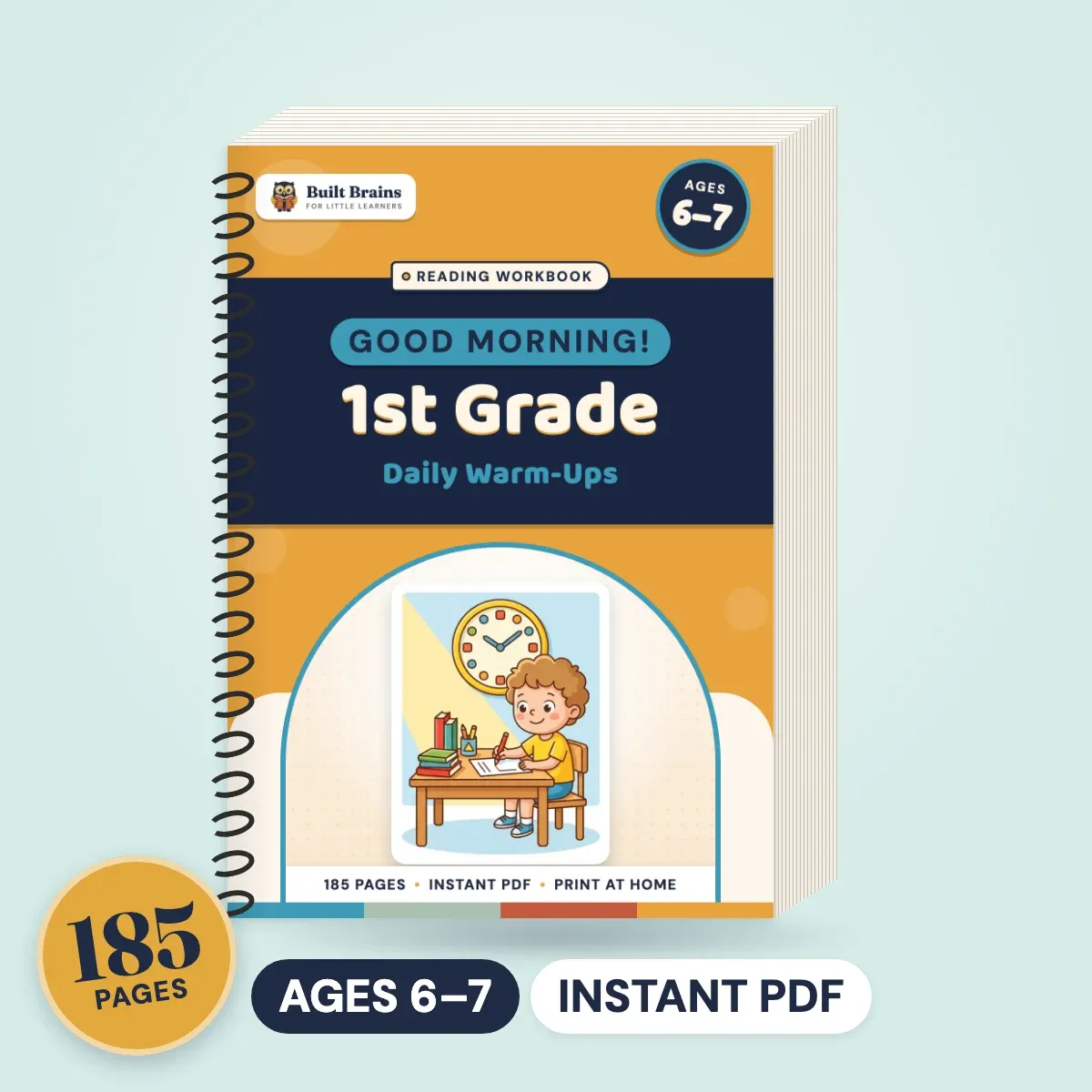
For the sound-it-out half of the job, CVC Word Quest gives first blending practice with three-letter words (one sound per box, then trace, read and find) for ages 4 to 6, and the Good Morning! 1st Grade Warm-Ups rotate spelling, word ladders and a fix-it sentence through 180 short morning pages for ages 6 to 7, a good fit for Year 1 and Year 2. For the method, see how to teach letter sounds.
Common exception words and US "sight words"
Search for help with these words and you will land on American pages about sight words, so it is worth knowing how the two relate.
US schools use lists such as the Dolch and Fry words: the most frequent words in children's books, taught to be read on sight. Those lists include plenty of words that can be sounded out perfectly well (and, in, can, big) alongside the irregular ones, whereas the English Year 1 list contains only the exceptions. Many US teachers now teach the irregular ones as "heart words", with the tricky part marked by a heart, the same idea as the tricky-bit dot, and the US Department of Education's foundational skills guide recommends exactly that: point out the part that does not follow the rules (IES What Works Clearinghouse).
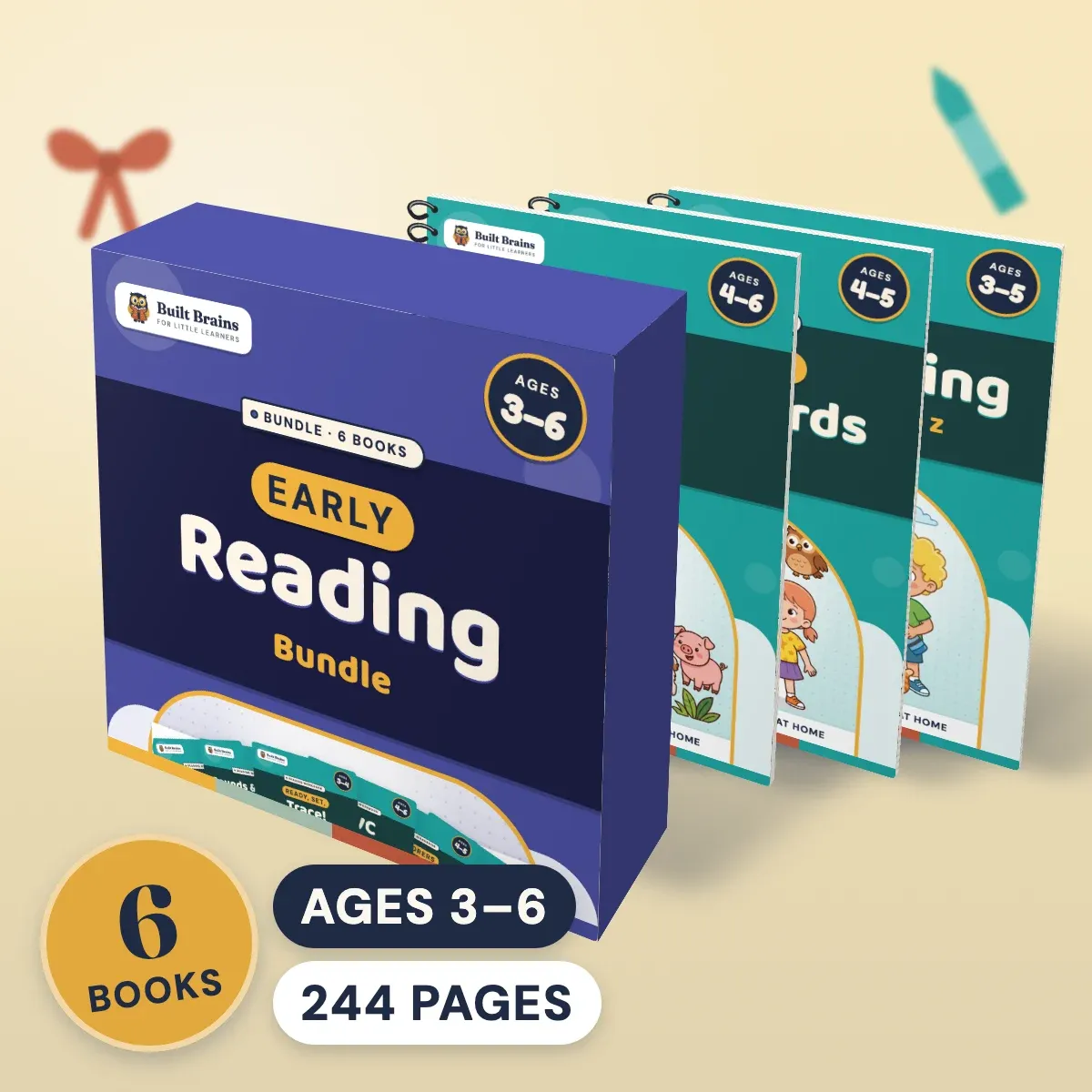
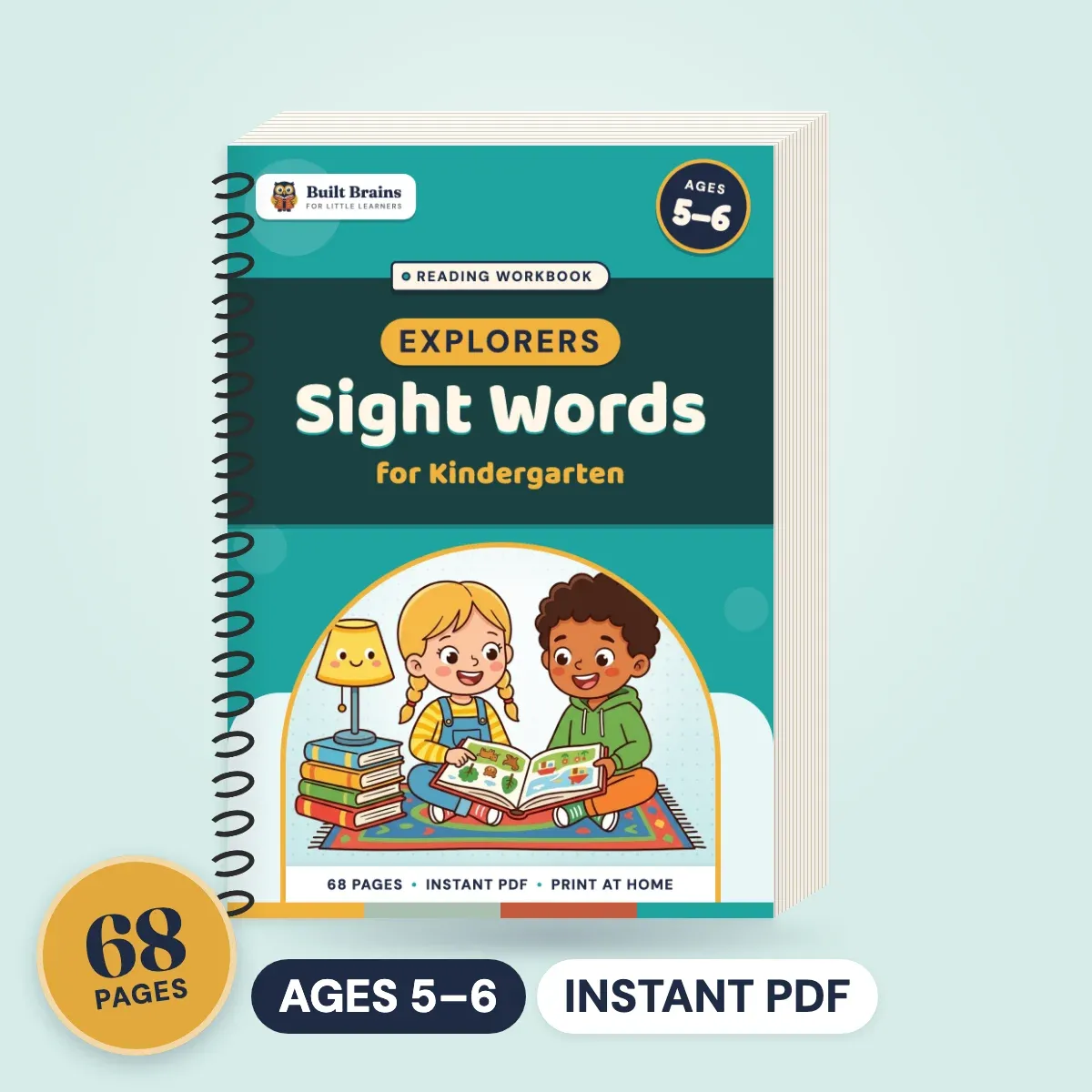
So US sight word materials work well for the Year 1 list as long as you keep the sound-it-out habit. Our Sight Word Explorers: Kindergarten covers the 52 primer words with a page each (read, colour, trace, write and find) for ages 5 to 6, including are, be, do, he, no, our, she, so, there, they and was from the Year 1 list. The Early Reading Bundle adds the earlier 40 words (the, a, to, said, you, my, come and more) plus the alphabet, beginning sounds and CVC work, 244 pages for ages 3 to 6. Both come in A4 as well as US Letter. For the US view, see kindergarten sight words and how to practise sight words.
The Year 2 list and what comes after
Year 2 has its own, longer list of common exception words, more than 60 of them, including because, people, could, should, would, many, water, again and Christmas. By then children are also learning spelling rules and most of the Year 1 tricky parts have become ordinary spellings. If your child finishes Year 1 reading all 45 words instantly and spelling most of them, they are exactly where the curriculum expects.
If they are not, do not drill. Pick the five words that come up most in their reading books, play one game a day over the summer, and tell the Year 2 teacher which are still tricky. Little and often, with the sound-it-out habit intact, gets children there.
Sources
- GOV.UK – National curriculum in England: English programmes of study: the statutory Year 1 and Year 2 common exception word lists (Appendix 1: Spelling) and the requirement to read and spell them.
- GOV.UK – Phonics screening check: administration: what the Year 1 check contains: 40 decodable real and pseudo-words, not exception words.
- IES What Works Clearinghouse – Foundational Skills to Support Reading for Understanding in Kindergarten Through 3rd Grade: US guidance on teaching irregular high-frequency words by drawing attention to the irregular part.
Questions parents ask
There are 45 Year 1 common exception words in the national curriculum for England, from the, a, do and to through to house and our. Children are expected to read all of them and spell most by the end of Year 1. Year 2 has a separate, longer list of more than 60 words, including because, people and could.
They are largely the same words with different labels. "Common exception words" is the national curriculum's term; "tricky words" comes from phonics programmes such as Letters and Sounds, and other schemes say "red words" or "harder-to-read words". Phonics schemes also spread their tricky words across Reception and Year 1, so the sets do not match the curriculum list exactly.
Both. The Year 1 programme of study asks children to read them, noticing the unusual part, and to spell them. In practice schools expect reading to come first and spelling to follow a term or two behind, and a few of the harder spellings, such as friend, school and once, are still being secured at the start of Year 2.
No. The check, taken in June of Year 1, uses 40 words that can be sounded out, half of them made-up words, so that children cannot pass by memory. Common exception words are taught and assessed by the class teacher through the year instead, and a child who reads them by sounding out the regular parts is well prepared for the check anyway.
Take two or three words a week from the school's current set, sound out the regular letters together, mark the tricky bit, and play one three-minute game a day: splat, sticky-note hunts, rainbow writing or spotting the word in the bedtime book. Retire a word after it is read instantly on three separate days, and check retired words on Saturdays.
American schools talk about sight words or high-frequency words, from lists such as Dolch and Fry, and increasingly about "heart words" for the ones with an irregular part. US sight word lists include decodable words as well as exceptions, so they are longer than the English list, but the overlap is large and the teaching methods are now very similar.

Reviewed by
Year 1 Teacher & KS1 Phase Lead
Tom Evans is a Key Stage 1 Phase Lead dedicated to smoothing the transition from EYFS play-based learning to structured Year 1 curriculum.
More about Tom →