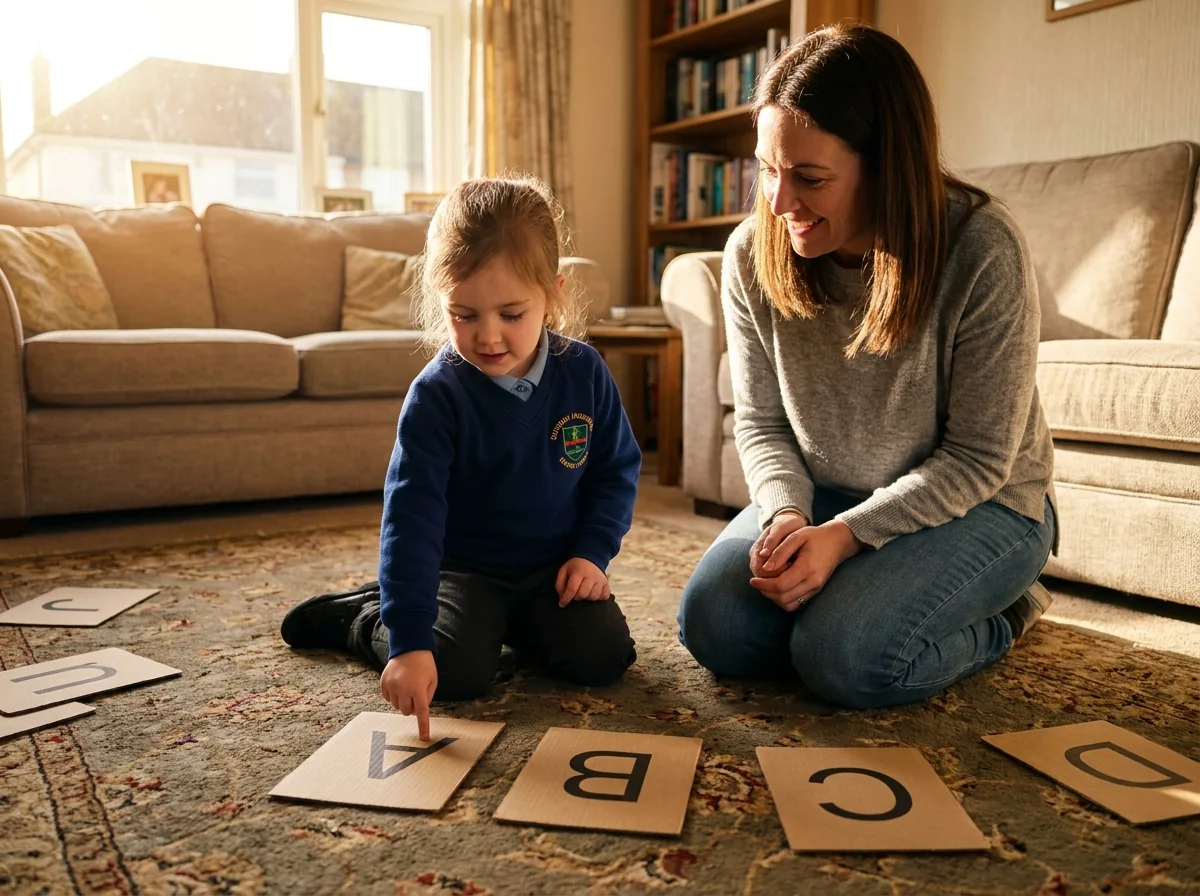
What is Phase 2 phonics?
Phase 2 is the first stage where children link sounds to letters. In the Letters and Sounds framework, published by the government in 2007 and still the source of the phase names most parents hear, it follows Phase 1's listening games and begins early in Reception, usually in the first few weeks of the autumn term when children are 4 or just turned 5.
In Phase 2 children learn:
- 19 letter sounds, taught a few at a time in five sets
- four double-letter spellings: ck, ff, ll and ss
- blending: saying the sounds in a word and pushing them together to read it (s-a-t, sat)
- segmenting: hearing a spoken word and breaking it into its sounds to spell it
- a few tricky words that can't yet be sounded out, such as the and to
Today most schools in England use one of the DfE's validated phonics programmes rather than the original document, so your child's scheme may group sounds slightly differently or call them "Set 1" rather than "Phase 2". The overall path is very similar. For the big picture of all six phases, see our guide to phonics phases explained.
Phase 2 sounds in order, set by set
This is the order set out in Letters and Sounds. The first letters were chosen because they make lots of short words quickly, so children can read real words within days.
| Set | Sounds | Words children can read by the end of the set |
|---|---|---|
| 1 | s, a, t, p | at, sat, pat, tap, sap |
| 2 | i, n, m, d | it, in, pin, tin, man, mad, dip, and |
| 3 | g, o, c, k | dog, got, cat, cap, can, kit, top, pot |
| 4 | ck, e, u, r | duck, sock, red, bed, run, up, mum, rug |
| 5 | h, b, f, ff, l, ll, ss | hat, big, fan, off, leg, bell, doll, kiss |
A few things that surprise parents
- c and k make the same sound, and so does ck. Children learn that ck usually comes at the end of a short word, as in duck and back.
- ff, ll and ss are one sound written with two letters, as in off, bell and kiss. Calling them "double f, double l, double s" helps.
- Vowels are short. a as in apple, e as in egg, i as in insect, o as in octopus, u as in umbrella. Long vowel sounds come later.
Phase 2 tricky words
Tricky words are common words with a part children haven't been taught yet. In the 2007 framework the Phase 2 list is the, to, I, no and go, and many schools and charts add into. Some newer schemes include is as well, and a few use different words or label them "common exception words". Ask the class teacher for their list.
Children still sound out the parts they can (t-o) and learn the tricky bit by heart. A fuller list for later years is in our guide to Year 1 common exception words.
How to say pure sounds (no "uh")
The single most useful thing you can do at home is to say sounds the way school does: pure, with nothing added. If you say "suh-a-tuh", your child hears three syllables that never quite turn into sat. Say "sss-a-t" and the word almost blends itself.
| Type | Sounds | How to say them |
|---|---|---|
| Stretchy | s, m, n, f, l, r | Hold them: "sss", "mmm", "nnn", "fff", "lll", "rrr" |
| Bouncy | t, p, d, g, c, k, b | Short and clipped, as quietly as you can: "t", not "tuh" |
| Breathy | h | A puff of air, like steaming up a window |
| Short vowels | a, e, i, o, u | Quick and clear: a (apple), e (egg), i (itchy), o (on), u (up) |
Our step-by-step guide on how to teach letter sounds has more on pronunciation and letter formation.
Blending and segmenting at home
Blending (for reading)
- Start out loud with no letters at all. Say "Can you find your s-o-ck?" and let your child say sock.
- Move to letters. Lay out s, a, t. Point to each one as your child says the sound, then sweep your finger under the word: "Say it fast."
- Start with words beginning with a stretchy sound (mat, sun, fan). They are easier to blend than words starting with a bouncy one (top).
- If your child gets stuck, say the sounds with them, then blend together. Don't jump in with the word.
Segmenting (for spelling)
- Say a word, such as pig. Your child repeats it.
- They "robot-talk" it, counting the sounds on their fingers: p-i-g, three sounds.
- They find or write one letter for each sound. Magnetic letters are perfect here because no handwriting is needed.
Five minutes a day is plenty. Little and often beats one long session at the weekend. The DfE's phonics advice for parents says the same thing in other words: encourage your child to sound out and blend from left to right rather than guess from the pictures.
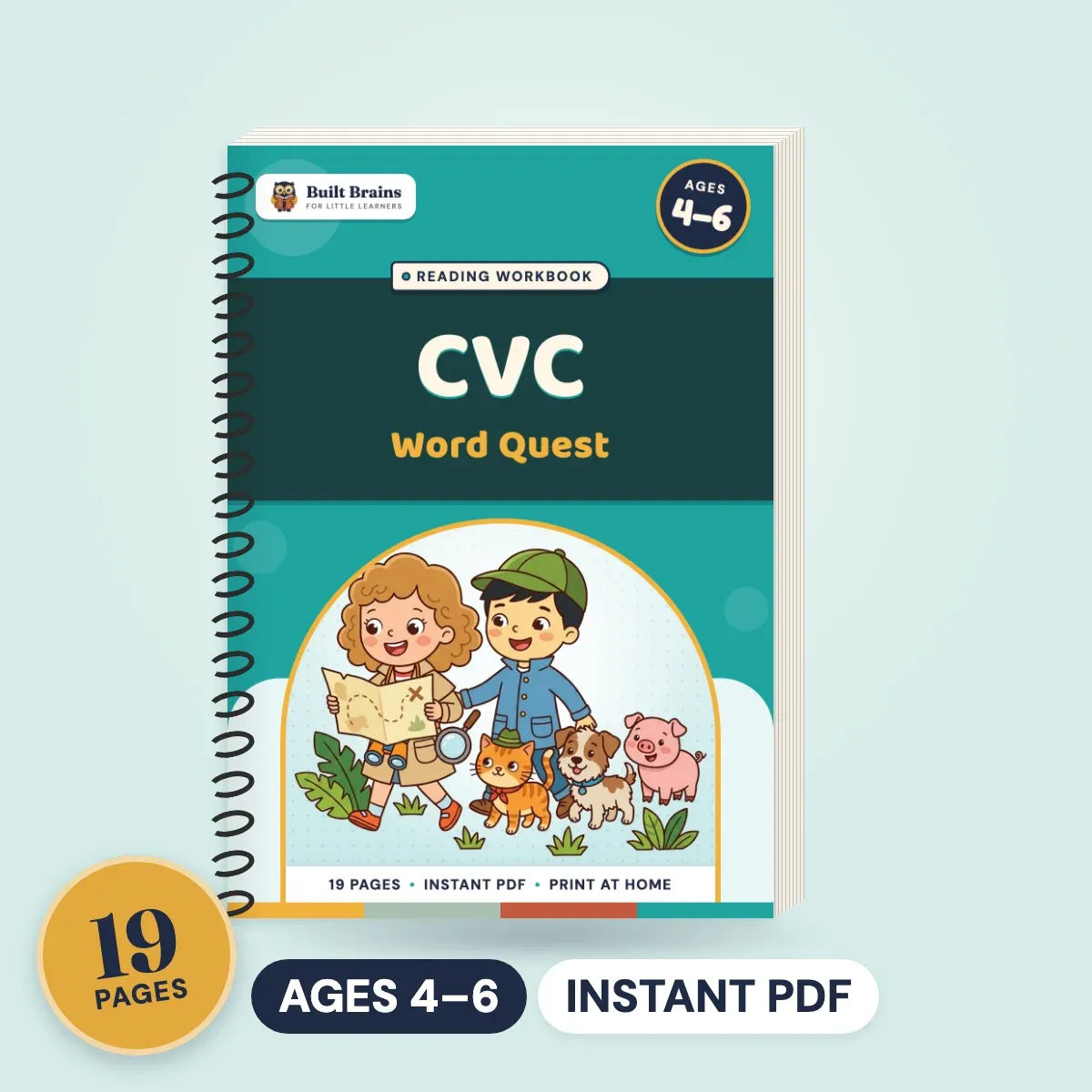
CVC Word Quest is built for exactly this stage: children say each picture slowly, write one sound per box, then trace, read and find three-letter words. It suits ages 4 to 6, and like all our books it comes in A4 as well as US Letter.
10 Phase 2 phonics games to play at home
None of these needs special kit. Use only the sounds your child has been taught so far.
- Sound I Spy. "I spy something beginning with sss." Use sounds, not letter names.
- Sound basket. Fill a basket with things starting with Set 1 sounds: a sock, an apple, a toy, a pen. Sort them by first sound.
- Robot talk. Give instructions in sounds: "Touch your l-e-g." "Find the c-u-p." This is oral blending in disguise.
- Word swap. Make sat with magnetic letters. Swap s for p: pat. Swap t for n: pan. Each new word is a fresh blend.
- Fishing. Write sounds on card fish with a paperclip each, fish with a magnet on string, and say the sound you catch. Catch three and try to make a word.
- Chalk hop. Chalk sounds on the patio or path. Call a sound; your child hops to it. Later, call a word and they hop its sounds in order.
- Sound snap or pairs. Two cards of each sound, face down. Say the sound every time you turn one over.
- Real or silly? Write words on paper "coins", some real (hat) and some made up (tog). Blend each one and sort into a treasure box or the bin. Children love deciding.
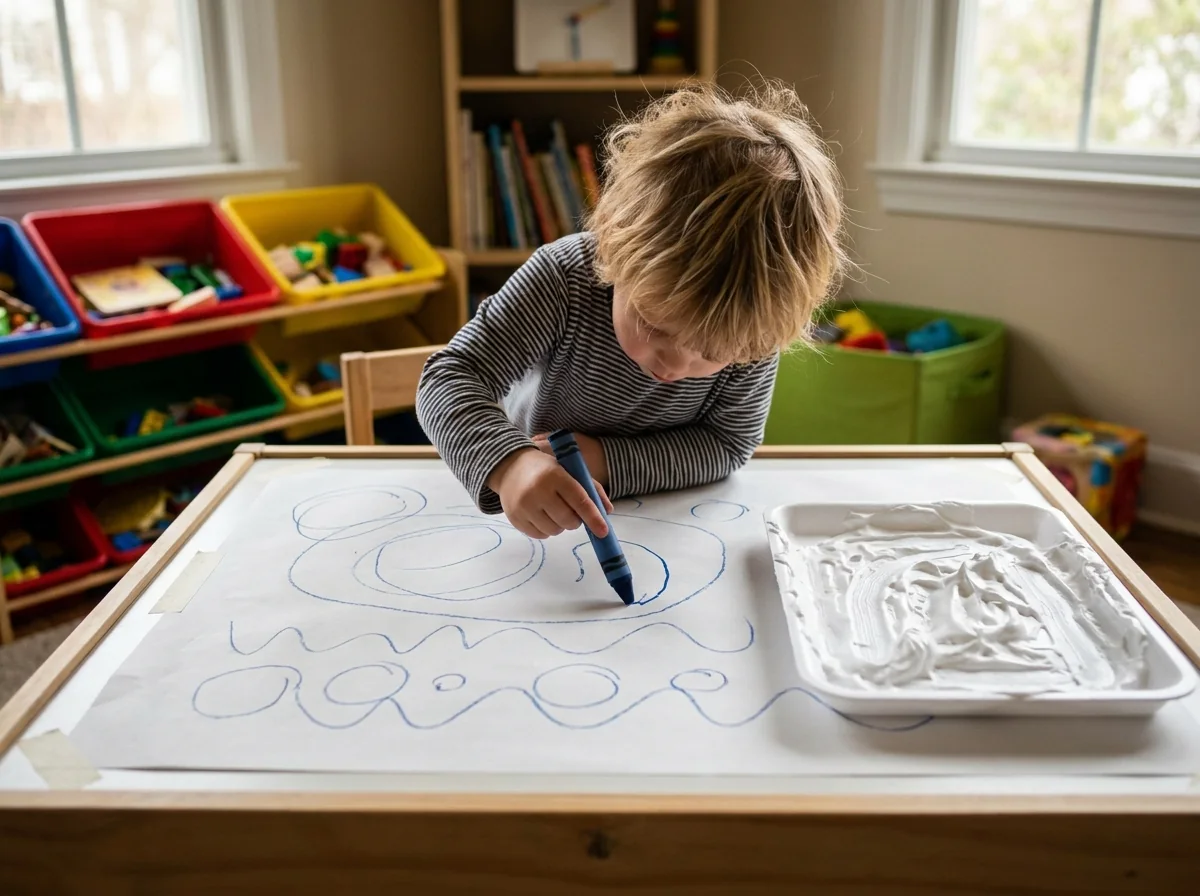
- Messy writing. Write sounds with a finger in shaving foam, sand or flour on a tray. Great for children who resist pencils.
- Caption match. Write short captions such as "a cat on a mat" or "a big red bus" and match them to quick drawings.
Rhyme and sound games from Phase 1 still help too; our rhyming activities for preschoolers and letter recognition activities have more.
How long does Phase 2 take?
Letters and Sounds suggested up to six weeks for Phase 2, and in most schools it fills the first half of the Reception autumn term, often at about four new sounds a week. Validated programmes each set their own pace, and some move faster at the start.
What that looks like at home:
- September: first sounds, lots of oral blending, possibly sound cards or a sound mat in the book bag.
- October: reading short words and captions; first decodable books or picture books for sharing.
- By half term: many children know most Phase 2 sounds and can blend simple words, though some are still working on blending, which is completely normal.
Then Phase 3 begins, with the rest of the alphabet and sounds written with two letters, such as sh and ai.
Printable practice that fits Phase 2
Printable books work best as a short, calm add-on to what school is teaching, not a separate method.
- ABC Tracing Adventure: A to Z (ages 3 to 5) gives every letter a big picture page, tracing from a green starting dot and a beginning-sounds hunt. It runs A to Z, so pick out the pages for the sounds your child is learning this week.
- Sound Detectives: Sounds & Rhymes (ages 4 to 6) practises hearing first sounds, matching rhymes and sounding out first simple words.
- CVC Word Quest moves on to sounding out and spelling three-letter words.
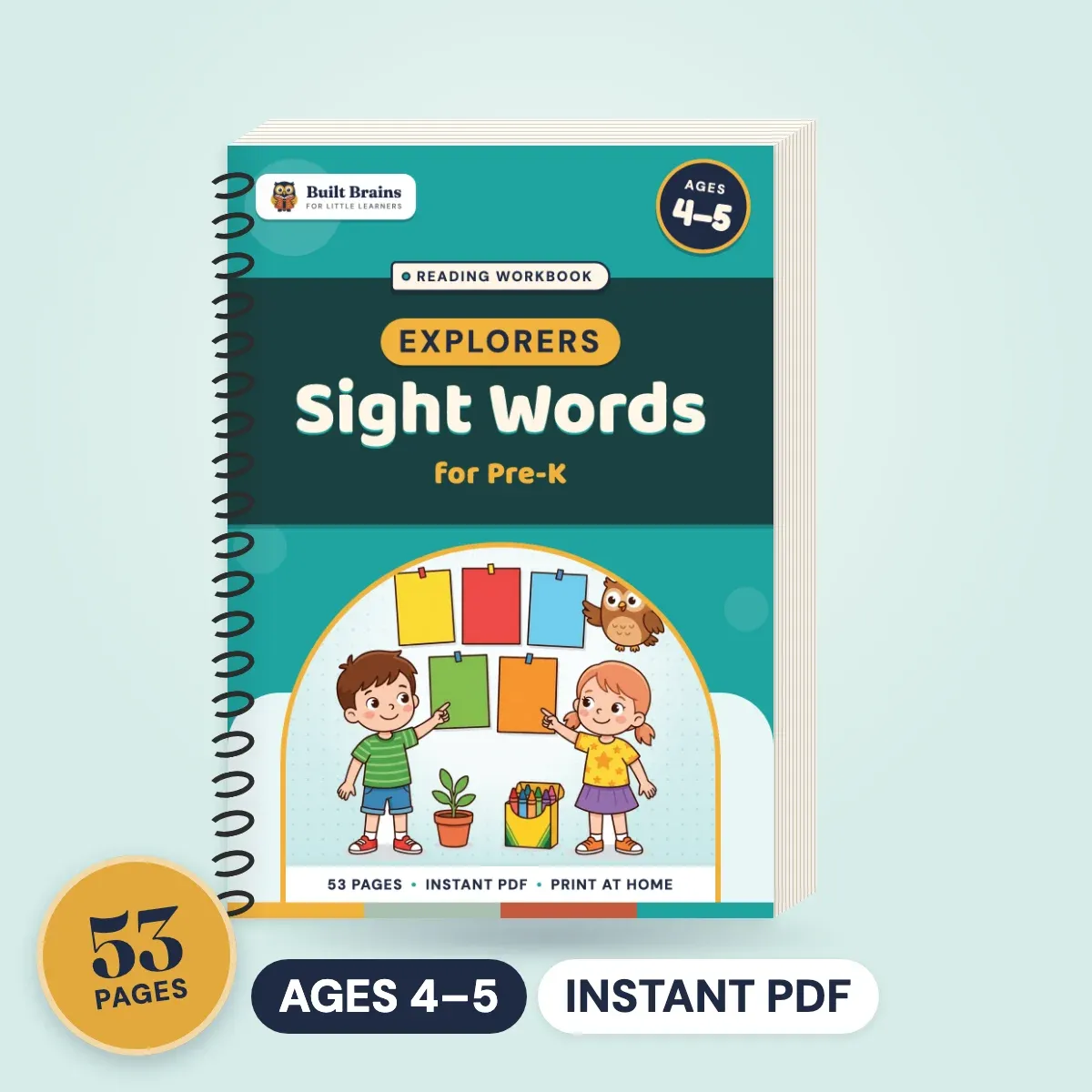
- Sight Word Explorers: Pre-K covers 40 common first words, including the and you. It follows a US word list, so treat it as extra reading practice and stick to your school's tricky-word list for phonics.
All of them print on A4 as well as US Letter.
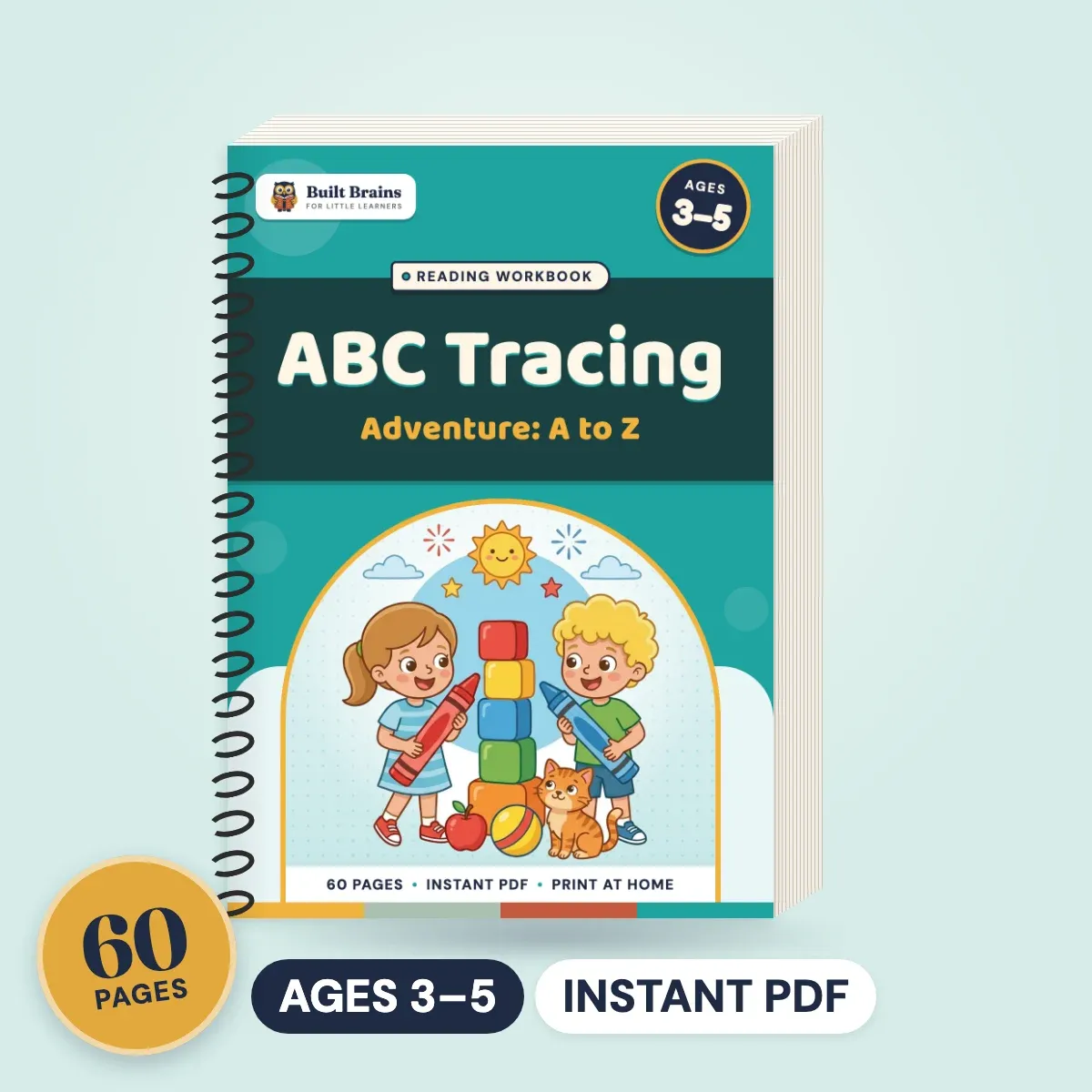
Ages 3–5 · 60 pages
ABC Tracing Adventure: A to ZLearn every letter the right way — trace, find, color
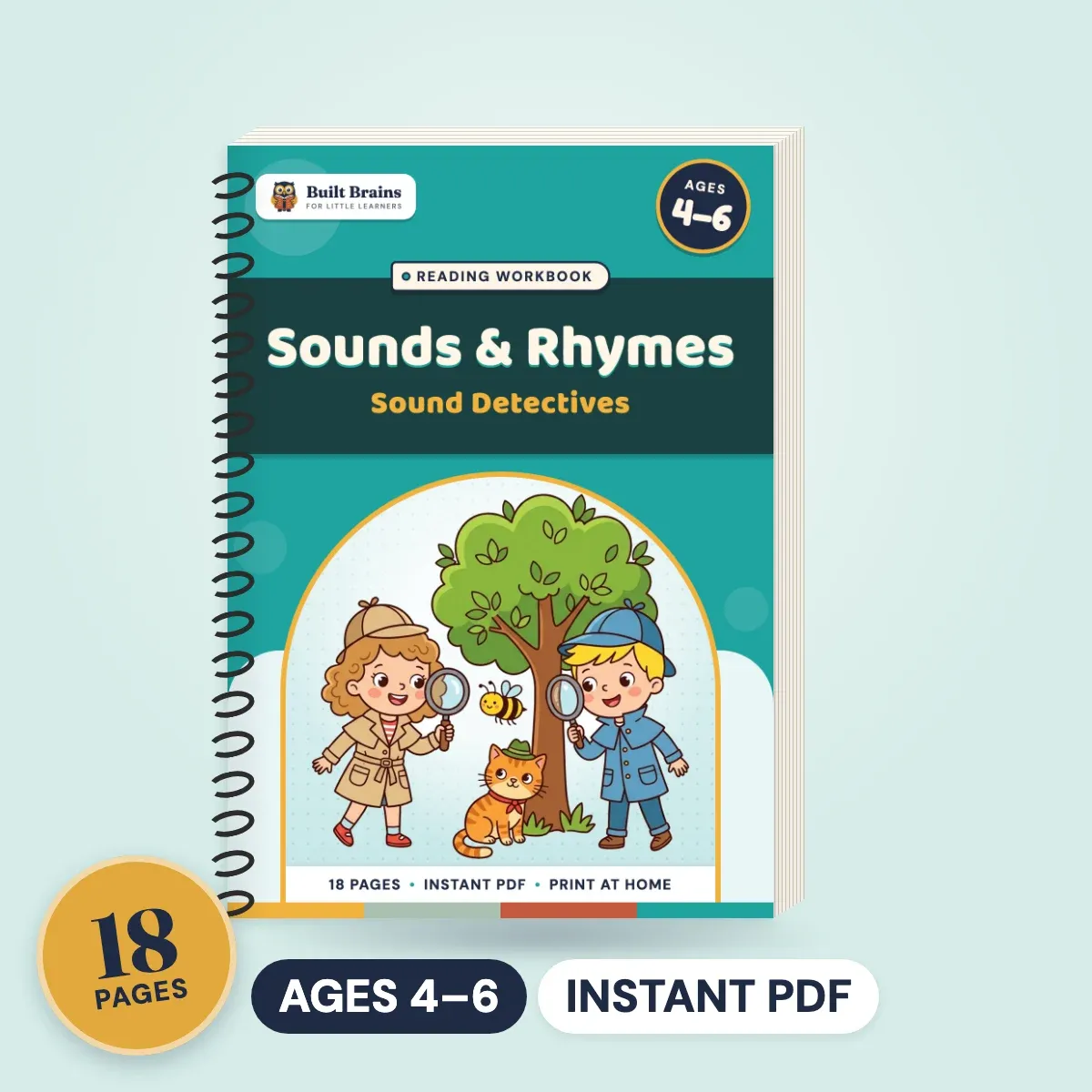
Ages 4–6 · 18 pages
Sound Detectives: Sounds & RhymesHear it, say it, circle it — the step before reading
Sources
- GOV.UK – Letters and Sounds: the 2007 framework with the Phase 2 sets, tricky words and suggested length.
- GOV.UK – Choosing a phonics teaching programme: the DfE's list of validated systematic synthetic phonics programmes schools use today.
- GOV.UK – Phonics screening check: information for parents: DfE advice on sounding out and blending at home and using decodable books.
Questions parents ask
In the 2007 Letters and Sounds order there are five sets: s, a, t, p; i, n, m, d; g, o, c, k; ck, e, u, r; and h, b, f, ff, l, ll, ss. That is 19 letters plus four double-letter spellings. Your child's school follows its own validated scheme, so the order and grouping may differ a little.
The original Letters and Sounds lists the, to, I, no and go, and many schools add into. Some newer schemes also teach is, and a few use other words or call them common exception words. Ask your child's teacher for the list they use and practise those words, so home and school say the same thing.
Letters and Sounds allowed up to six weeks for Phase 2, and most schools teach it in the first half of the autumn term in Reception, often at a pace of about four new sounds a week. Validated programmes set their own pace. Some children need longer to blend confidently, and that is normal at four.
Sounds first. In Phase 2 children learn the sound each letter makes, such as "sss" for s, because sounds are what they blend to read. Letter names usually come in Phase 3. If your child already knows the alphabet song, that is fine; just use sounds when you read and spell together.
Keep going with oral blending, where you say the sounds and your child says the word: "c-a-t, cat". Stretch the sounds that can be held, such as "mmm-a-t", and use short words. Blending often clicks suddenly after weeks of practice. If you are worried, ask the teacher how they are supporting it in class.
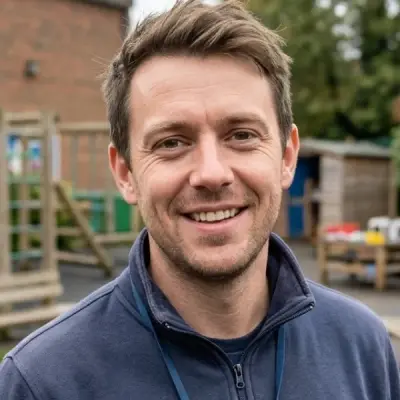
Reviewed by
Year 1 Teacher & KS1 Phase Lead
Tom Evans is a Key Stage 1 Phase Lead dedicated to smoothing the transition from EYFS play-based learning to structured Year 1 curriculum.
More about Tom →