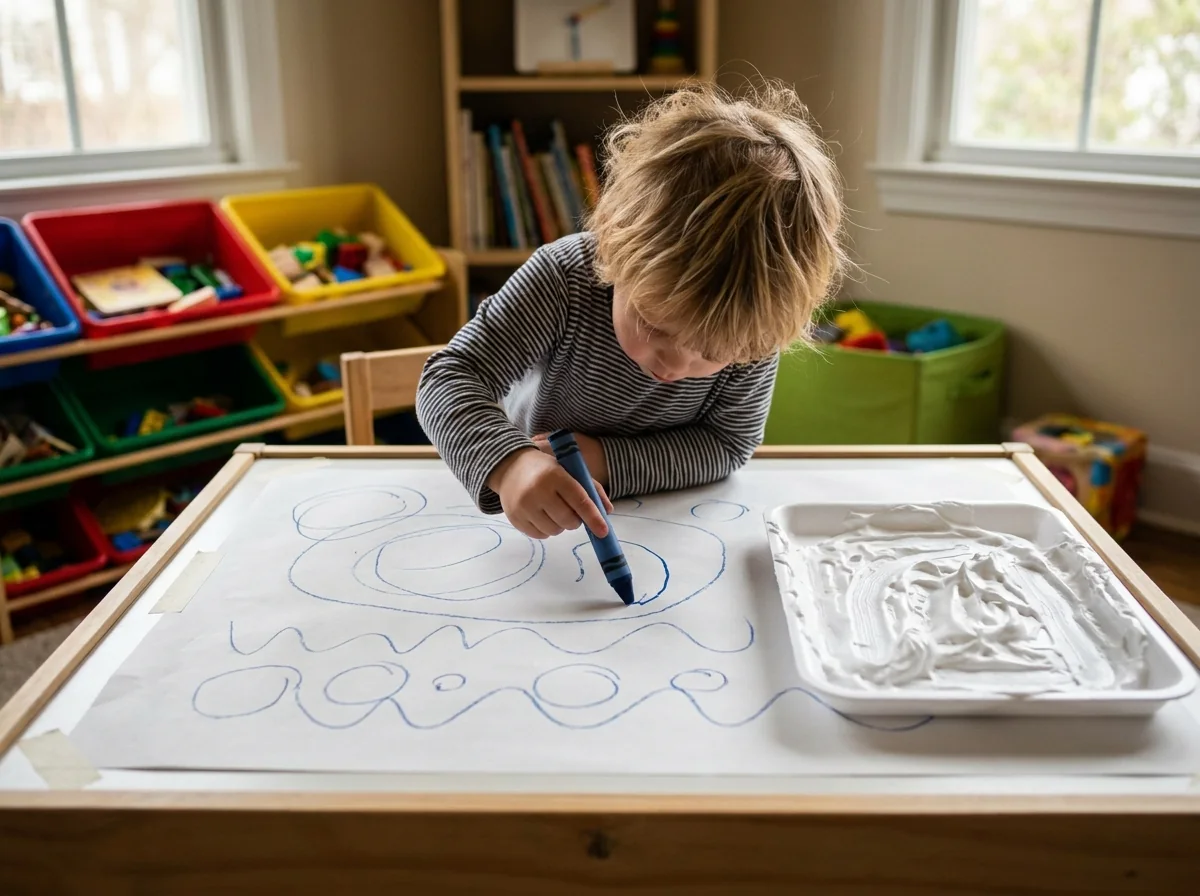
What are pre-writing activities?
Pre-writing activities are the drawing, tracing and play activities that teach the lines and shapes letters are made from, before a child writes letters. Look at a capital letter and you can see them: T is a vertical and a horizontal line, O is a circle, A is two diagonals and a line across.
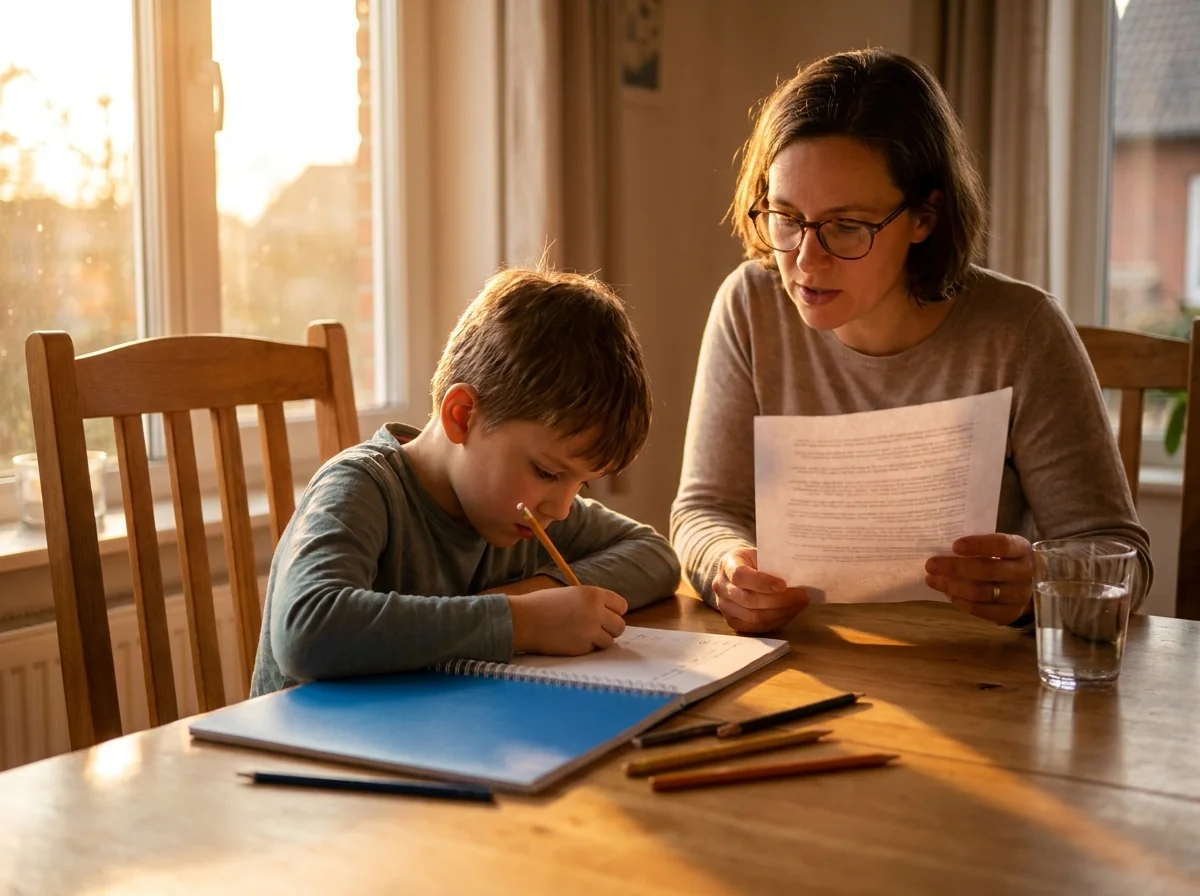
They also build what children need to control a pencil: strength in the hand and fingers, a steady shoulder and wrist, and the eyes and hands working together. NHS occupational therapists suggest starting with large, whole-body movements and then moving to smaller ones, and say children learn to copy a shape first by watching an adult draw it (Somerset NHS Foundation Trust).
The pre-writing strokes in order, with ages
Children learn the strokes in a fairly fixed order. The ages below are typical ages for copying each shape from a picture, from NHS occupational therapy guidance. Children usually imitate a shape, watching you draw it and then drawing it themselves, several months earlier. All children vary.
| Stroke | Typical age to copy | Letters it helps with |
|---|---|---|
| Vertical line ( | ) | About 2 | l, i, t, L, T, H |
| Horizontal line ( – ) | About 3 | e, t, E, F, H |
| Circle ( O ) | About 3 | o, a, c, d, O, Q |
| Cross ( + ) | About 4 | t, f, plus signs |
| Diagonal lines ( / and \ ) | About 4½ | v, w, x, A, K, M |
| Square | About 4½ | Corners and stops in E, F, b, d |
| X | About 5 | x, X |
| Triangle | About 5 | A, V, W, Z |
The CDC's milestones fit this pattern: most 3 year olds draw a circle when you show them how, and most 4 year olds draw a person with three or more body parts.
Pencil grip: from fist to fingers
Grip changes a lot between 1 and 6. A typical progression (Cambridgeshire and Peterborough NHS):
- Fist grip (palmar). The crayon is held in the fist, and the whole arm moves. Common at 1 and 2.
- Fingers-down grip (digital pronate). The hand is over the crayon, fingers pointing down toward the paper. Common around 2 and 3.
- Static tripod. Thumb, index and middle fingers hold the crayon, but the wrist and arm still do the moving. By 4, most children hold a crayon between fingers and thumb rather than in a fist.
- Dynamic tripod. The same three fingers hold the pencil, and the fingers do the moving. The AAP notes that most 5 year olds hold a pencil correctly (healthychildren.org), and the grip keeps refining to about 6.
You can't rush grip by correcting fingers over and over. What helps is hand strength and the right tools: short, chunky crayons or broken crayon pieces naturally push little fingers into a pinch, and vertical surfaces like an easel or a wall pull the wrist into a good position.
Pre-writing activities for 2 year olds
At 2, everything is big, messy and in the air. Aim for scribbling and vertical lines, with lots of time to explore.
- Giant paper scribbling. Tape a big sheet to the floor or a table and let your child scribble with chunky crayons.
- Easel painting. Big brushes on paper at an easel, or water on a fence.
- Rain lines. Draw rain falling from a cloud, top to bottom, together.
- Bath crayons. Lines and scribbles on the tub wall at bath time.
- Sidewalk chalk. Chunky chalk on the driveway or sidewalk.
- Dot-dab painting. Dot markers or a cotton swab dipped in paint, pressed onto big circles.
- Finger painting. Make lines and swirls with one finger.
- Tearing paper. Tear scrap paper into pieces for a collage. Builds both hands working together.
- Posting. Push coins, buttons or large pom-poms through a slot in a box lid. Supervise closely, since small items are a choking risk.
- Play dough squishing. Squeeze, poke and pull dough to build hand strength.
Our learning activities for toddlers and sensory bin ideas have more ideas at this level.
Pre-writing activities for 3 year olds
At 3, children copy vertical and horizontal lines and circles. Tracing pages start to make sense, as long as the lines are thick and the paths are short.
- Car roads. Draw straight roads on paper and drive a toy car along them, then trace them with a crayon.
- Start-and-stop lines. Draw a line from one sticker dot to another: "Start at the green dot, stop at the red."
- Ladders and train tracks. Draw two long lines, then add the short rungs between them.
- Circle pictures. Draw circles for suns, balloons and faces. Add the details together.
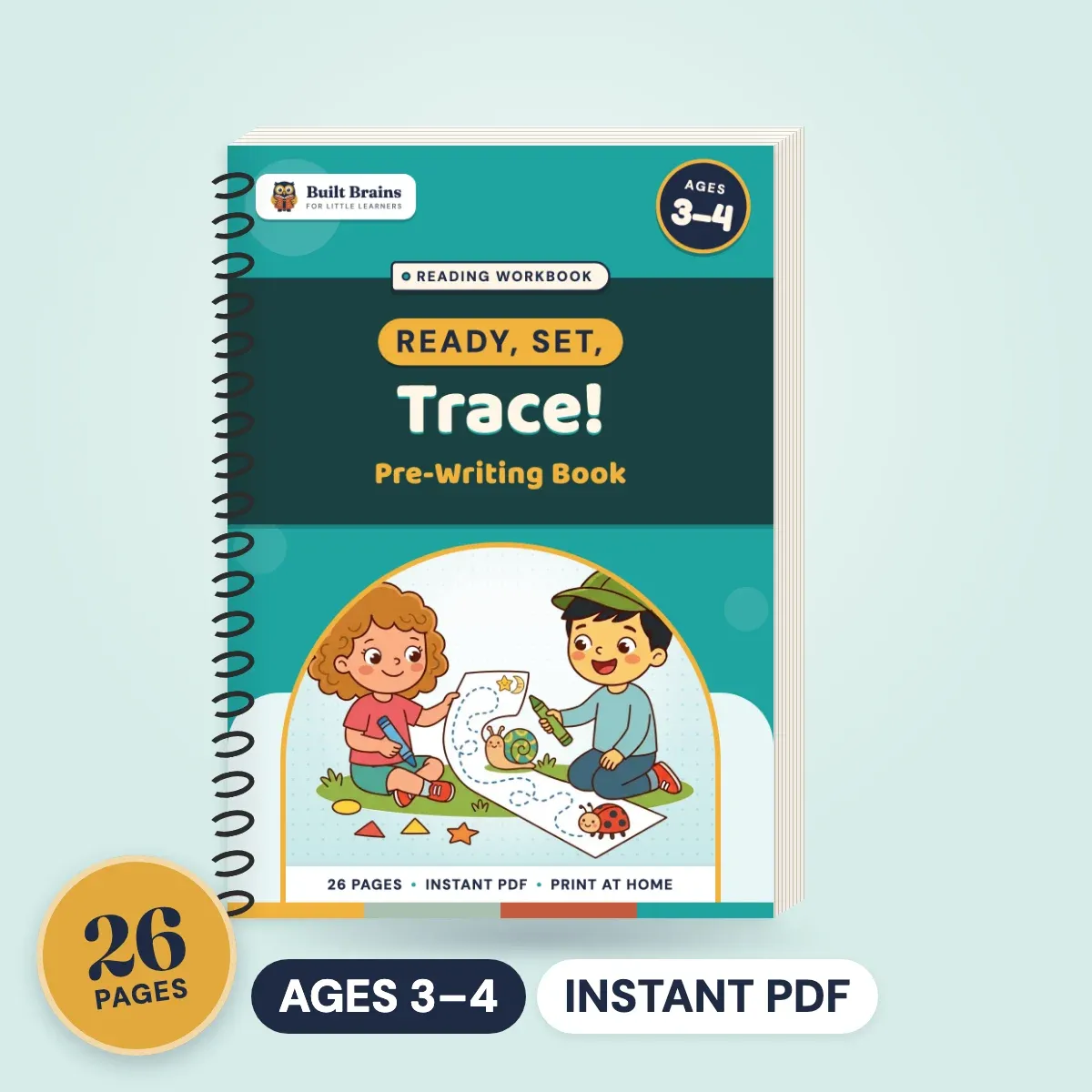
- Big path tracing. Trace thick paths from a bee to a flower or a dog to a bone. The Ready, Set, Trace! Pre-Writing Book has 16 path-tracing pages, from straight lines to waves, zigzags, bumps and loops, plus mazes and shape tracing.
- Air drawing. Draw lines and circles in the air with a whole straight arm, like a magic wand.
- Stickers on a line. Peel stickers and place them along a drawn line. Builds pincer grip and accuracy.
- Clothespin clipping. Clip clothespins around a paper plate.
- Lacing cards. Thread a shoelace through holes in a card.
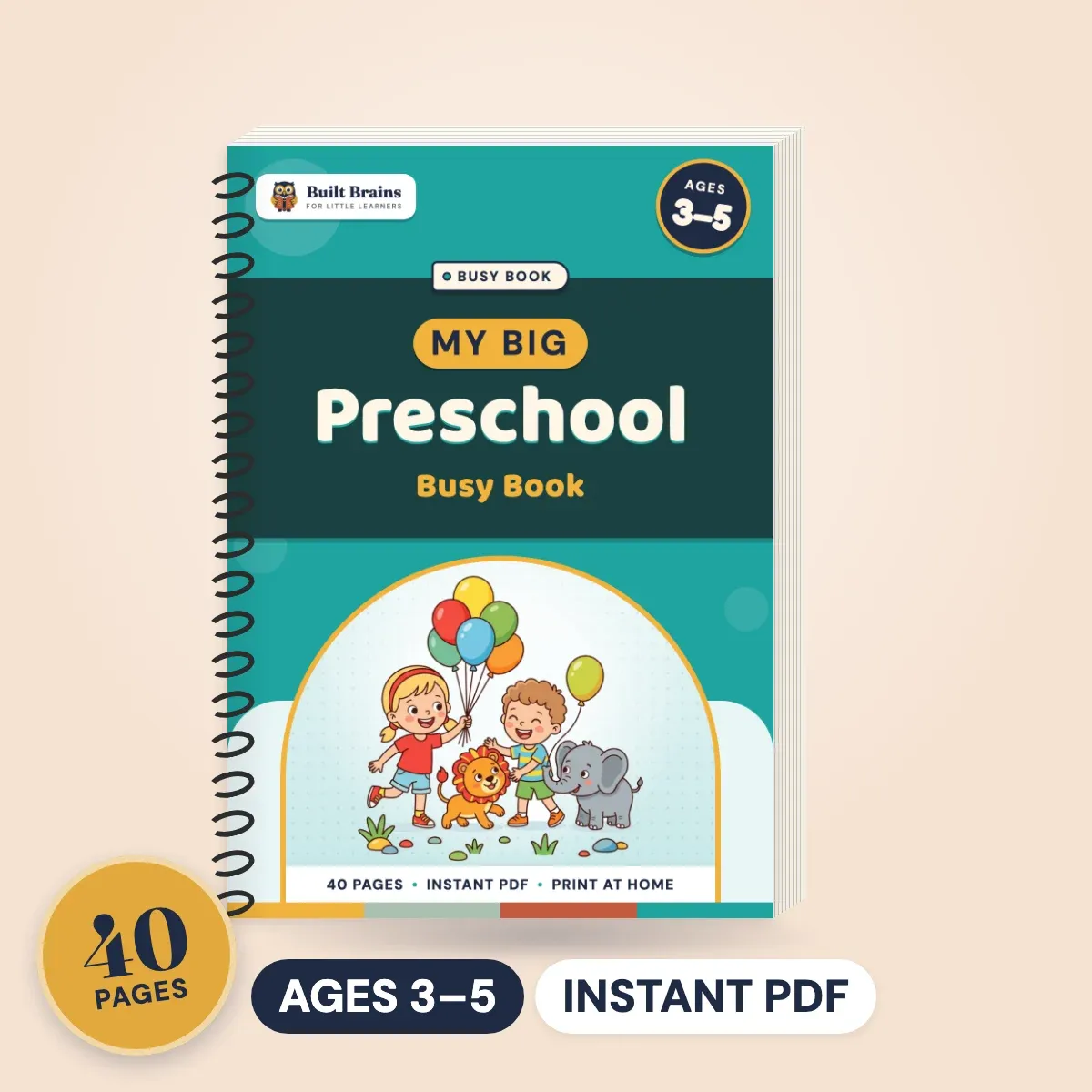
- Coloring big pictures. Simple pictures with thick outlines, like those in My Big Preschool Busy Book, build control without pressure.
Pre-writing activities for 4 year olds
At 4, children work on the cross, then diagonals, the square, the X and the triangle. Once those are steady, letters follow.
- Plus signs. Draw crosses on a pretend treasure map: X (or +) marks the spot.
- Kites and slides. Draw diagonal lines for a slide on a playground picture, or kite strings.
- Diagonal hunt. Look for diagonal lines outside, on roofs, road signs and stair rails, then draw them.
- Stick shapes. Make squares and triangles from craft sticks or straws, then draw them.
- Square with words. Draw a square while saying "down, across, up, across."
- Dot-to-dot. Simple dot-to-dots with straight lines between big numbered dots.
- Mazes. Simple mazes with wide paths. Our busy book ideas include more quiet pencil puzzles.
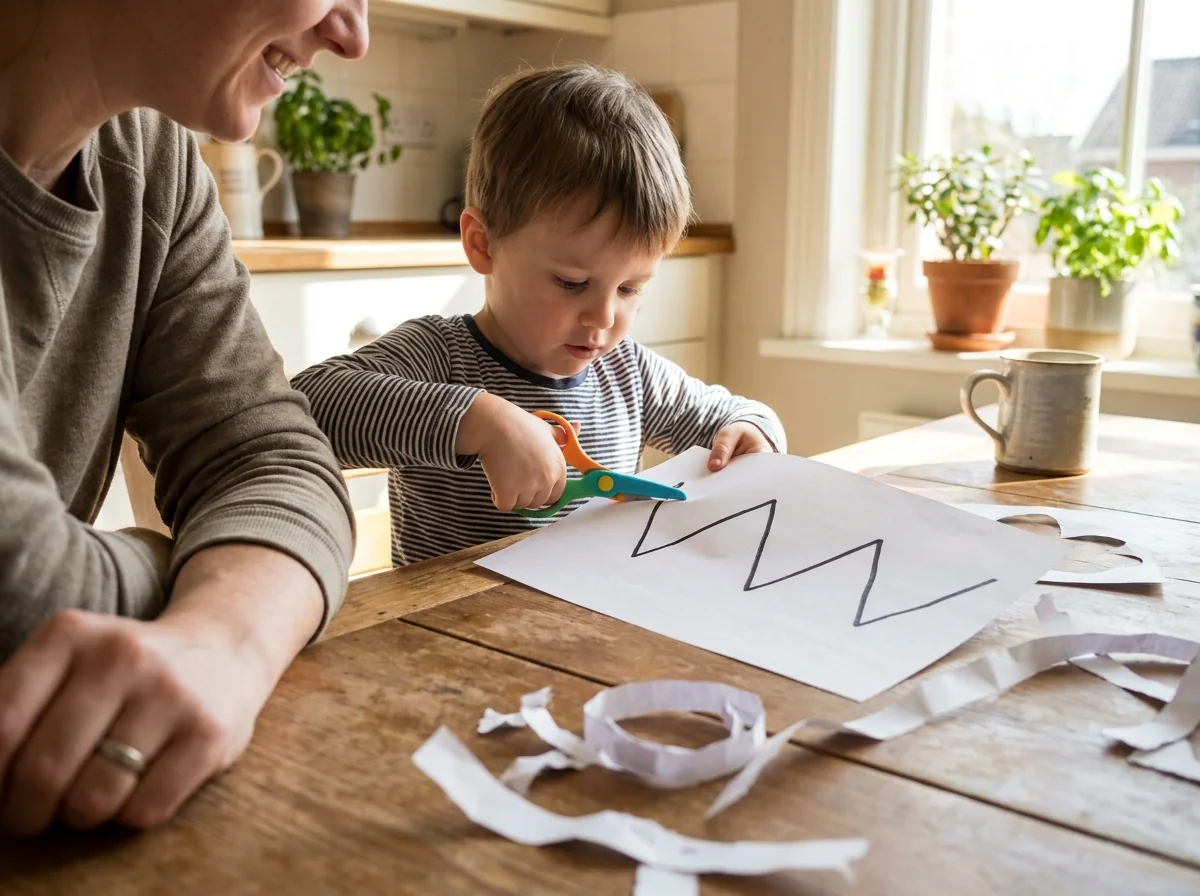
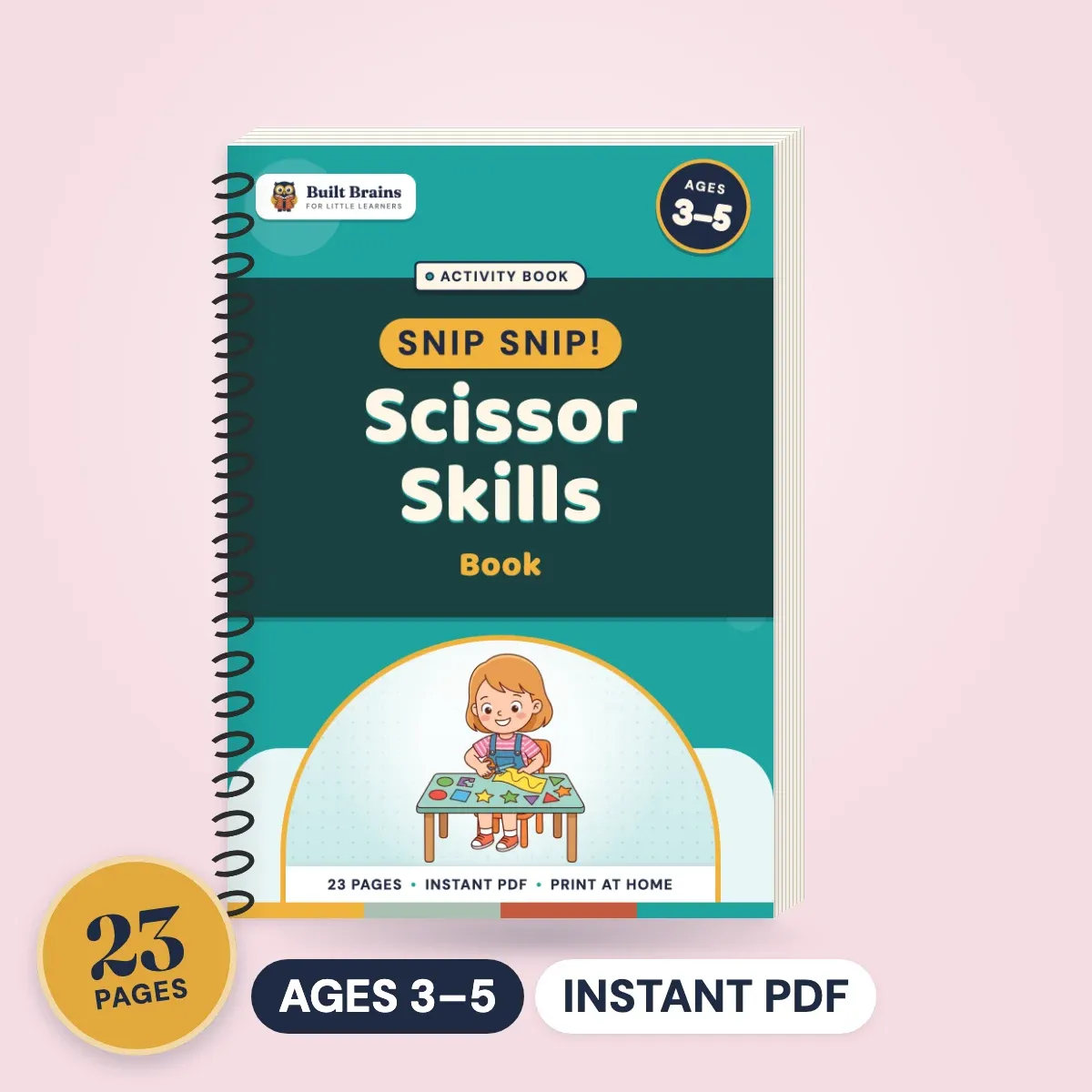
- Cutting along lines. Cutting builds the same hand control as writing. The Snip Snip! Scissor Skills Book moves from straight lines to wavy, zigzag and loop lines.
- Draw a person. Ask for a person and add one more body part each time. It's a good, low-pressure check of control.
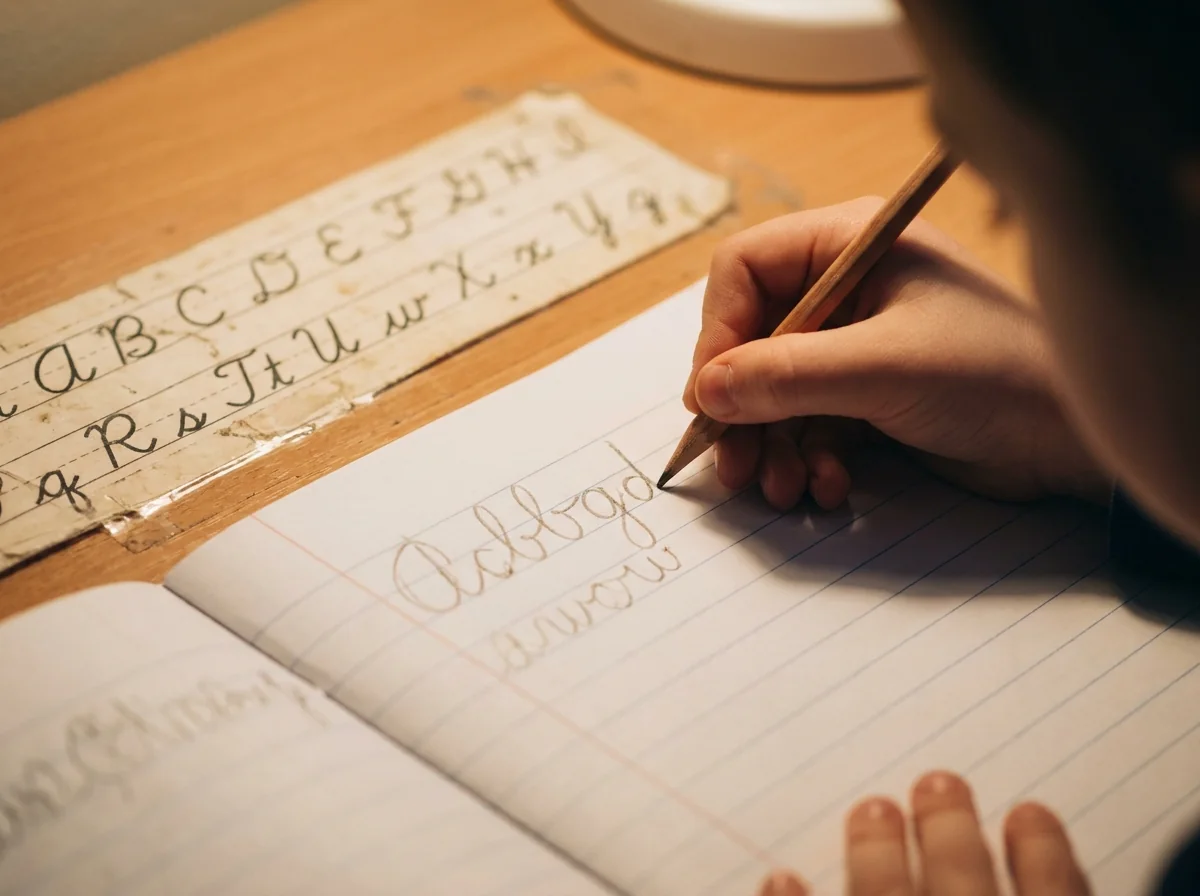
- First letters. When the shapes are steady, start with the letters in your child's name. Our guides to alphabet tracing and writing their name show how.
For more strength and coordination ideas, see fine motor activities for preschoolers.
Sensory writing: salt trays, shaving cream and more
Sensory writing means drawing strokes with a finger in something soft or textured. It's great for children who resist pencils, because there's no wrong mark and it wipes away. Therapists recommend sand trays, flour, finger paint and shaving cream for practicing shapes (Somerset NHS Foundation Trust).
- Salt or sand tray. Pour a thin layer of salt, sand or rice into a baking tray. Put a colored sheet of paper underneath so each line shows up bright.
- Shaving cream on the table. Spread a little on a tray and draw lines, circles and crosses with one finger. For children who still put things in their mouths, use plain yogurt instead and supervise closely.
- Paint in a bag. Seal paint in a zip-top bag, tape it flat and trace shapes on the outside, mess-free.
- Sandpaper shapes. Cut lines and shapes from sandpaper, glue them to card and trace them with a finger.
- Play dough shapes. Roll snakes and form lines, circles and crosses on top of a drawn card.
- Water painting. A brush and a cup of water on a fence or chalkboard.
When the letters are ready
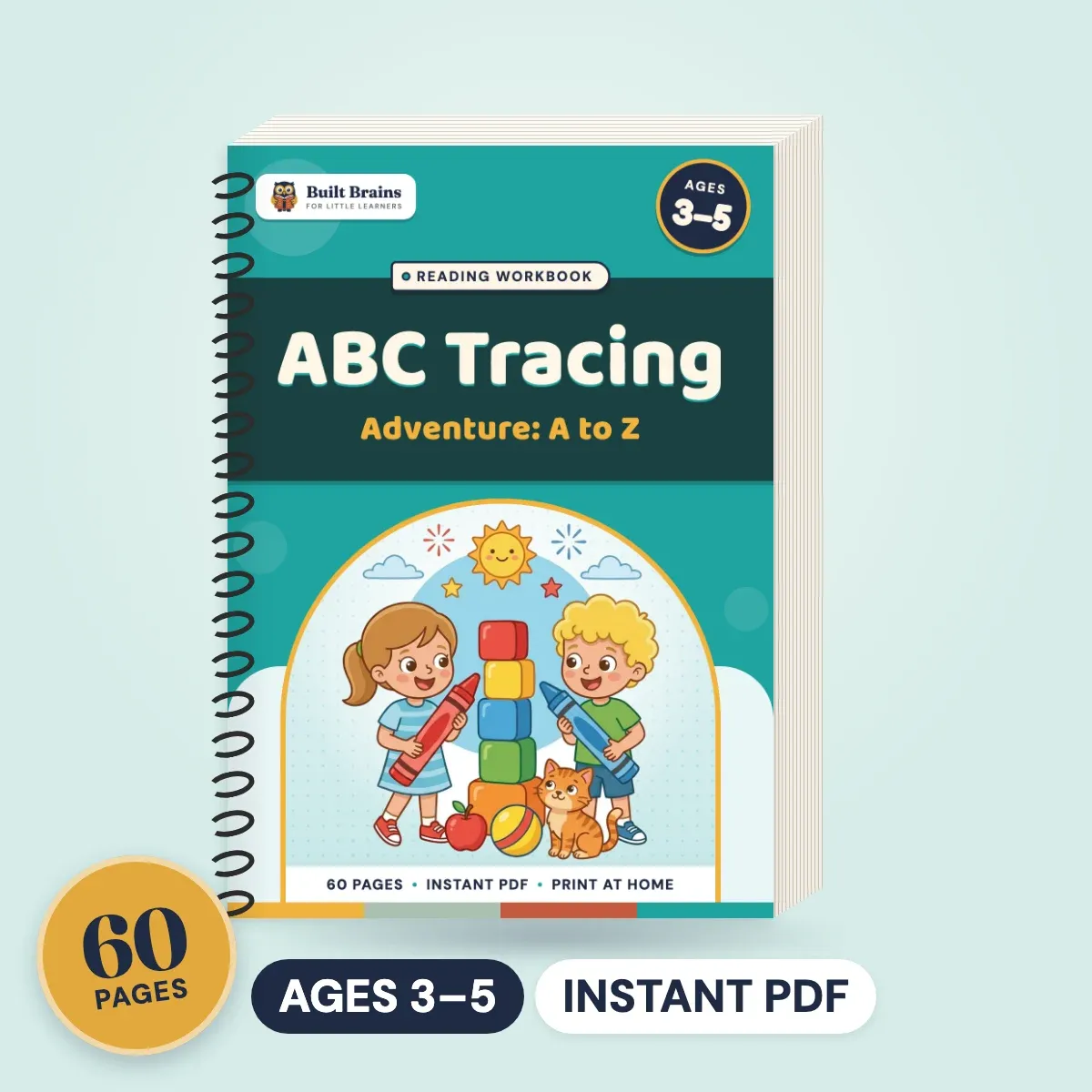
Once your child can copy a cross, a square and diagonals, they have what they need for most capital letters. The ABC Tracing Adventure: A to Z shows each letter's writing path, starting at a green dot, so the order of strokes is right from the start.
When to ask for advice
Children vary widely, and a child who prefers building to drawing is not behind. Mention it to your pediatrician or your child's preschool teacher if, by 4, your child still can't copy a circle when shown, avoids all drawing and hand activities, or holds every tool in a tight fist and tires very quickly. An occupational therapist can help if needed.
Sources
- Somerset NHS Foundation Trust – Pre-writing activities: the pre-writing shapes in order with typical ages, imitating before copying, large movements and sensory writing.
- Cambridgeshire and Peterborough NHS – Getting ready to write: pencil grip stages from fist to dynamic tripod, start-and-stop lines and diagonal activities.
- HealthyChildren.org (AAP) – Your Checkup Checklist: 5 Years Old: most 5 year olds hold a pencil correctly and draw a person with at least six body parts.
Questions parents ask
The pre-writing strokes are the basic lines and shapes letters are built from. In the usual developmental order they are a vertical line, a horizontal line, a circle, a cross, diagonal lines, a square, an X and a triangle. Children usually imitate each one, watching you draw it, a few months before they can copy it from a picture.
Most 3 year olds scribble with purpose, copy a vertical line, and draw a circle when you show them how. Many are starting on horizontal lines. They often still hold crayons in a fist or with fingers pointing down, and that is fine. Big movements, like painting at an easel and drawing in sand, help more than small worksheets at this age.
By 4, most children hold a crayon between their fingers and thumb rather than in a fist, copy circles and lines, and are learning to copy a cross. Over the year they work toward squares and diagonal lines. Once a child can copy the cross, square and diagonals, they have the strokes needed for most capital letters.
Usually once they can copy the main pre-writing shapes, including the cross, square and diagonal lines, which for many children happens between 4 and 5. Letters in their own name are a good first step. Starting too early, before the strokes are in place, often leads to letters formed in awkward ways that are harder to fix later.
Not really. Two year olds learn lines best with big movements: crayons on large paper, painting, chalk on the sidewalk and fingers in sand or shaving cream. Tracing pages work better from about 3, when children can follow a path with some control. Keep any table time short and stop while it is still fun.
Reviewed by
Nursery Manager & Early Years Practitioner
Aisha Khan is a Nursery Manager and early language specialist who helps toddlers and preschoolers build foundational communication skills before starting formal schooling.
More about Aisha →