What is a busy book (and is it the same as a quiet book)?
A busy book is a set of hands-on pages your child can work through on their own, calmly, in one spot. There are three main kinds:
- Felt quiet books. Sewn fabric pages with zips, buttons, buckles and snaps. Soft, durable and lovely, but they take hours to sew or cost a fair bit to buy.
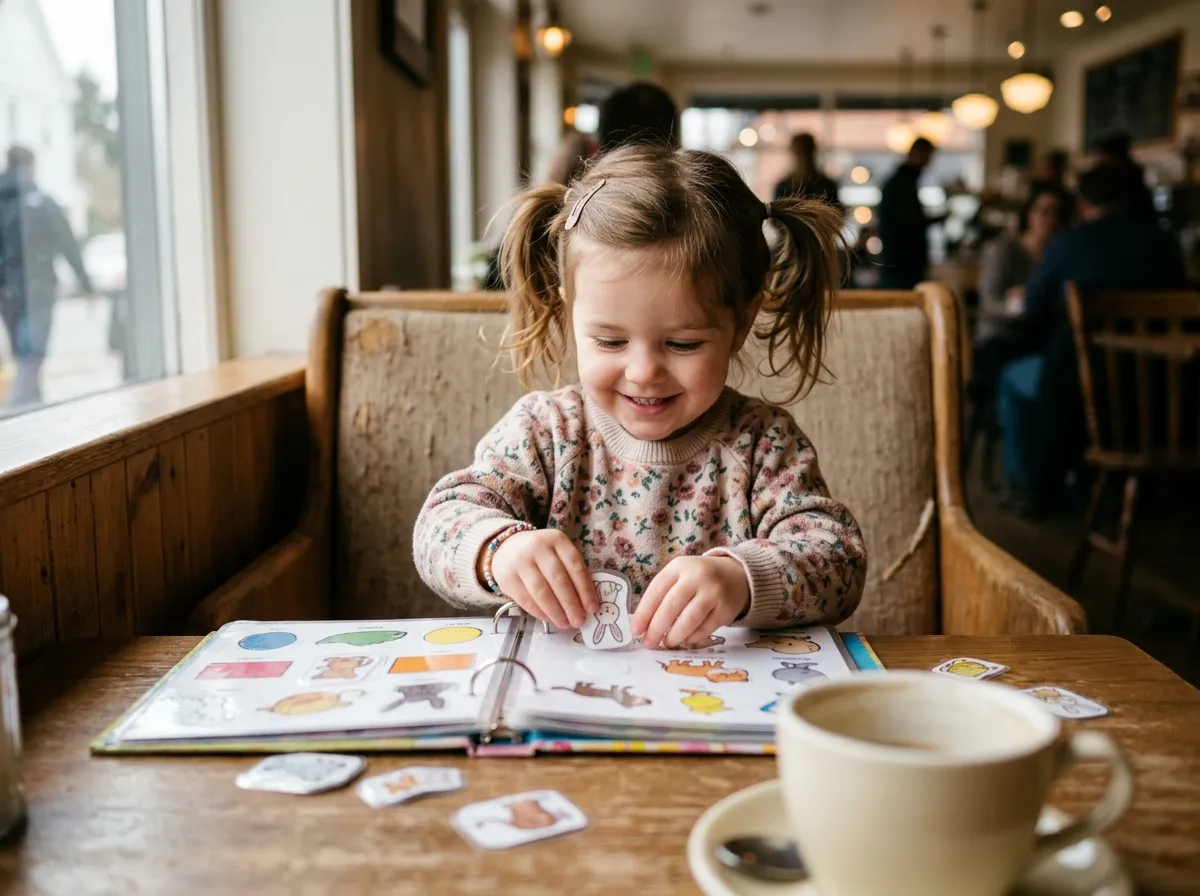
- Laminated Velcro busy books. Printed pages in a binder, with small laminated pieces that stick on with Velcro dots: match the color, finish the pattern, feed the monster. Cheap and quick to make.
- Printable activity busy books. Pages to color, trace, count and solve (mazes, matching, find the shadow). Print and hand over, or laminate and use with a dry-erase marker again and again.
Many families end up with a mix: a laminated binder for 2 and 3 year olds, then printable activity pages as children turn 3, 4 and 5 and start enjoying pencil work. Browse our busy books collection to see the printable kind.
Busy book ideas for 2 year olds
Two year olds need big pieces, one step, instant success. Aim for 4 to 6 pages and sit nearby.
- Color matching. Colored squares on the page, matching Velcro circles to stick on. Start with two colors, then four.
- Feed the animal. A cow or bear with a slot-shaped pocket for its mouth. Post laminated food cards inside.
- Open the doors. Paper flaps (taped at one edge) over pictures of family members or animals. "Who's behind the door?"
- Big and little. A big and small version of an apple, a car, a duck. Match each pair.
- Shape puzzle. Three shapes drawn in outline. Stick the matching laminated shape on top.
- Peek-a-boo pockets. A pocket made from a sheet protector cut in half, with pictures to pull out and name.
- Weather bear. A bear with a sun, cloud and umbrella to add. "What's the weather today?"
- Pull-the-tab. A ribbon threaded through the page that slides a picture of a car along a road.
For more at this age, see our list of learning activities for toddlers.
Busy book page ideas for 3 year olds
Three year olds can sort, sequence and start tracing. 8 to 10 pages works well.
- Color sorting jars. Draw four jars in different colors. Sort pom-pom pictures into the right jar.
- Counting apples. Trees numbered 1 to 5. Stick on the right number of apples.
- Dress the bear. A paper bear with a hat, scarf, boots and coat for sunny or snowy days.
- Shadow match. Pictures of animals to match to their black silhouettes.
- Line tracing. Straight, wavy and zigzag lines from a bee to a flower, used with a dry-erase marker.
- Pattern strip. Red, blue, red, blue... finish the pattern with Velcro circles.
- Build a face. A blank face with eyes, nose, mouth and hair pieces. Name each body part.
- What's missing? A pizza, a car or a house with pieces to add.
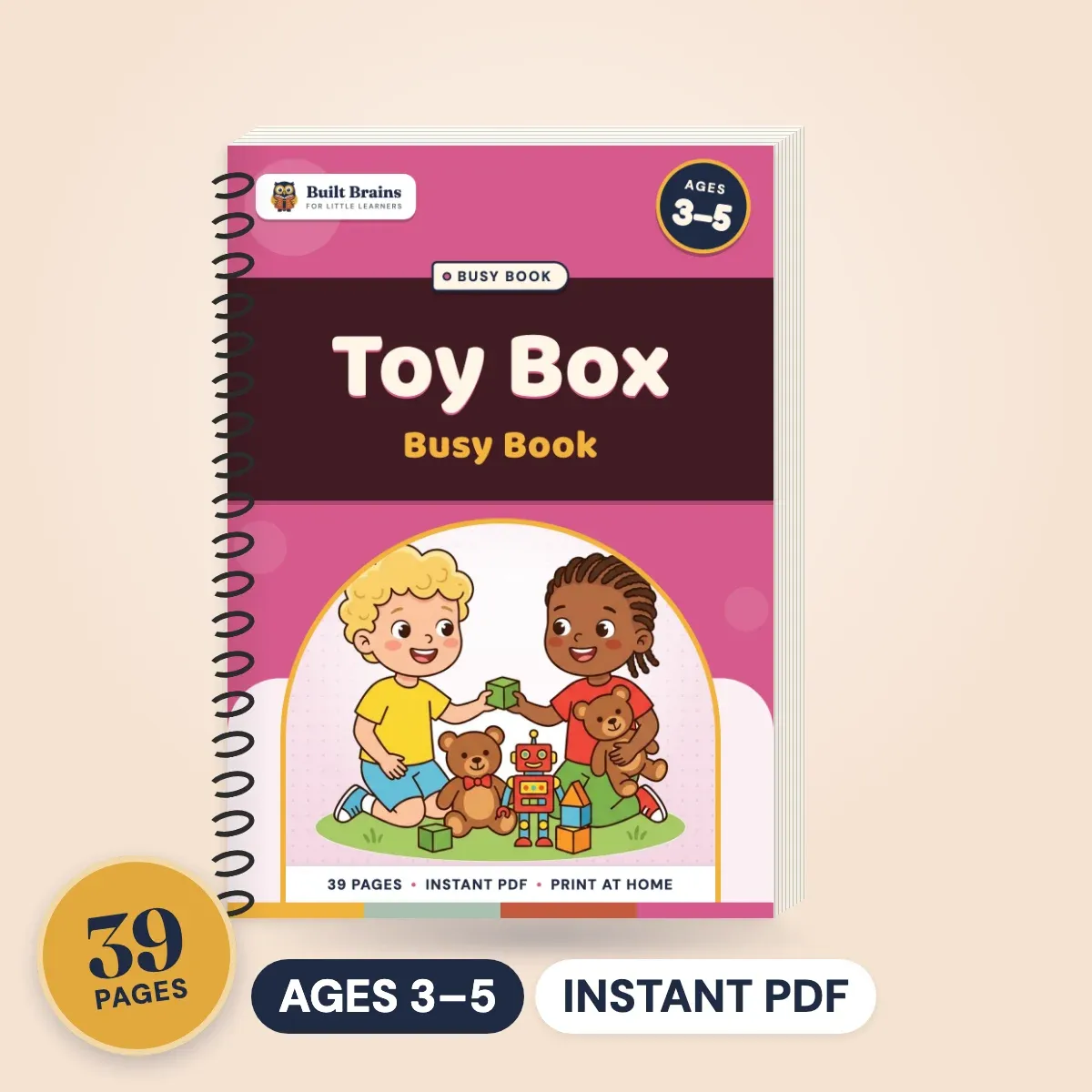
- Coloring page. A big, simple picture with thick lines. Pages from a printable like the Toy Box Busy Book (teddies, robots and rubber ducks to color, trace and count) are perfect here.
- Feelings faces. Happy, sad, cross and sleepy faces to match to pictures of situations.
Busy book ideas for 4 and 5 year olds
Older preschoolers want a bit of challenge: letters, numbers, puzzles and something to write.
- Name builder. Letter tiles to spell their own name in order on a line.
- Uppercase and lowercase match. Big letters on the page, small letters as Velcro pieces.
- Beginning sounds. Pictures (bat, sun, cat) to match to their first letter.
- Number line. Fill in the missing numbers from 1 to 10, then 1 to 20.
- Ten-frame counting. Show 7 dots, count them, find the numeral.
- Mazes. Help the bunny reach the carrot. Laminate and reuse with a dry-erase marker.
- Dot-to-dot. Connect 1 to 10 to reveal a star or a rocket.
- Seasons sort. Pictures of a snowman, sandcastle, leaves and flowers to sort into four seasons.
- Clock page. A paper clock with a brass fastener for the hands. Set it to "lunchtime".
- Sequencing story. Three or four picture cards to put in order: seed, sprout, flower.
- I spy page. A busy scene with a list of things to find and count.
- Draw and write. A blank box: "Draw what you did today." Grown-up writes the words, child traces over them.
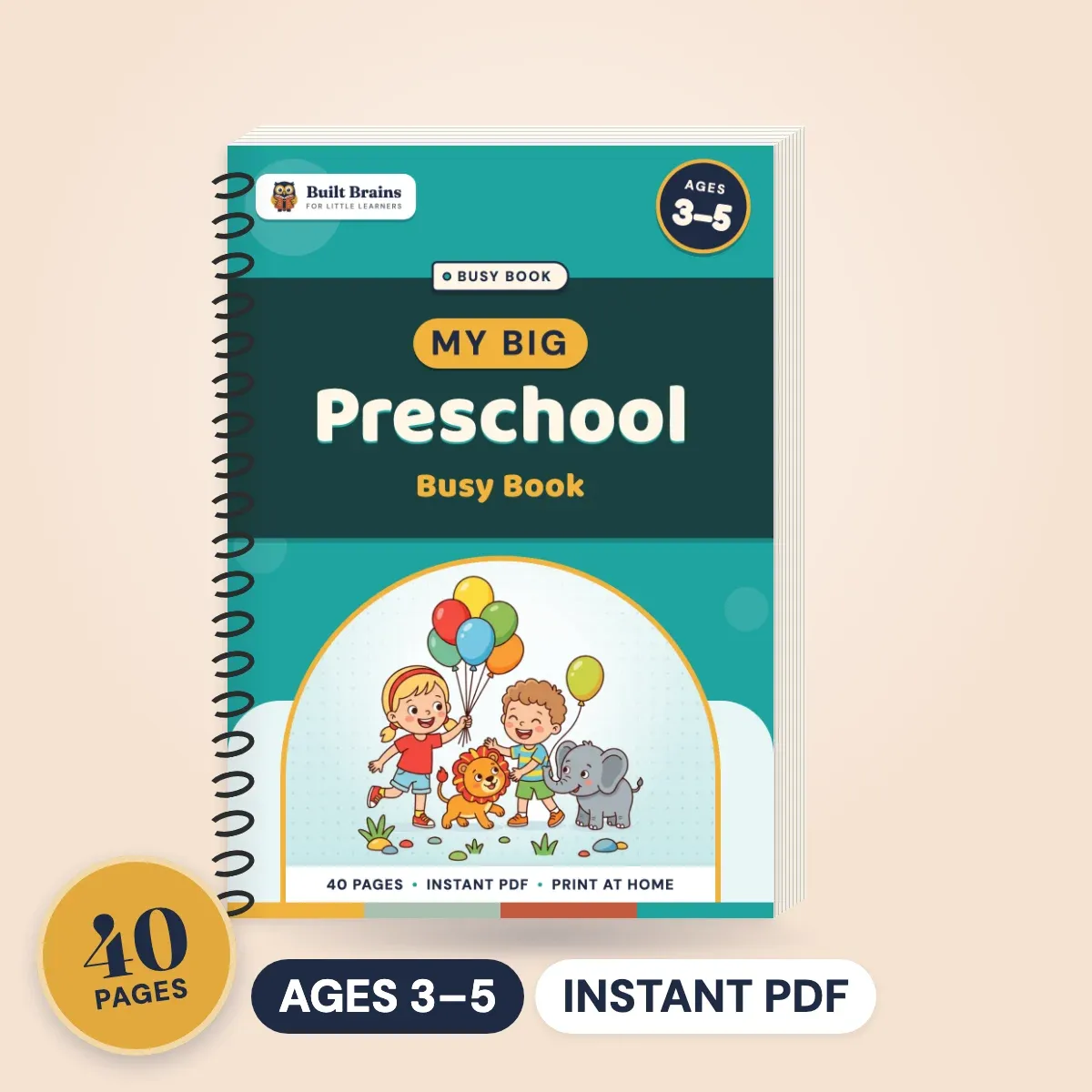
Most of these (mazes, tracing, counting, matching, find the shadow) are exactly what fills the My Big Preschool Busy Book, an all-year book of animals, trains, balloons and rockets.
How to make a DIY printable busy book
You can make a sturdy busy book in an evening.
What you need
- Printed pages on cardstock (or regular paper plus a laminator)
- A laminator and pouches, or clear sheet protectors
- Self-adhesive Velcro dots (hook and loop)
- A 1-inch three-ring binder, or 2 to 3 binder rings
- A hole punch, scissors and a corner rounder if you have one
- Dry-erase markers and a small cloth or felt eraser
- A zip pencil pouch to hold loose pieces
Step by step
- Choose 6 to 10 pages for your child's age from the lists above.
- Print. Print the base pages and a second copy of any page you need pieces from.
- Laminate everything. Leave about 3 mm (1/8 inch) of laminate around cut pieces so they stay sealed.
- Cut out the pieces and round the corners. Keep pieces large, at least 5 cm (2 inches), for children under 3.
- Add Velcro. Hook side on the page, loop side on the pieces. Press firmly and leave for an hour before use.
- Punch and bind. Punch the pages and add them to the binder or rings.
- Add the pouch at the front for loose pieces and markers.
- Test it yourself. Pull on every piece. If a Velcro dot lifts easily, replace it.
Printable pages without the fuss
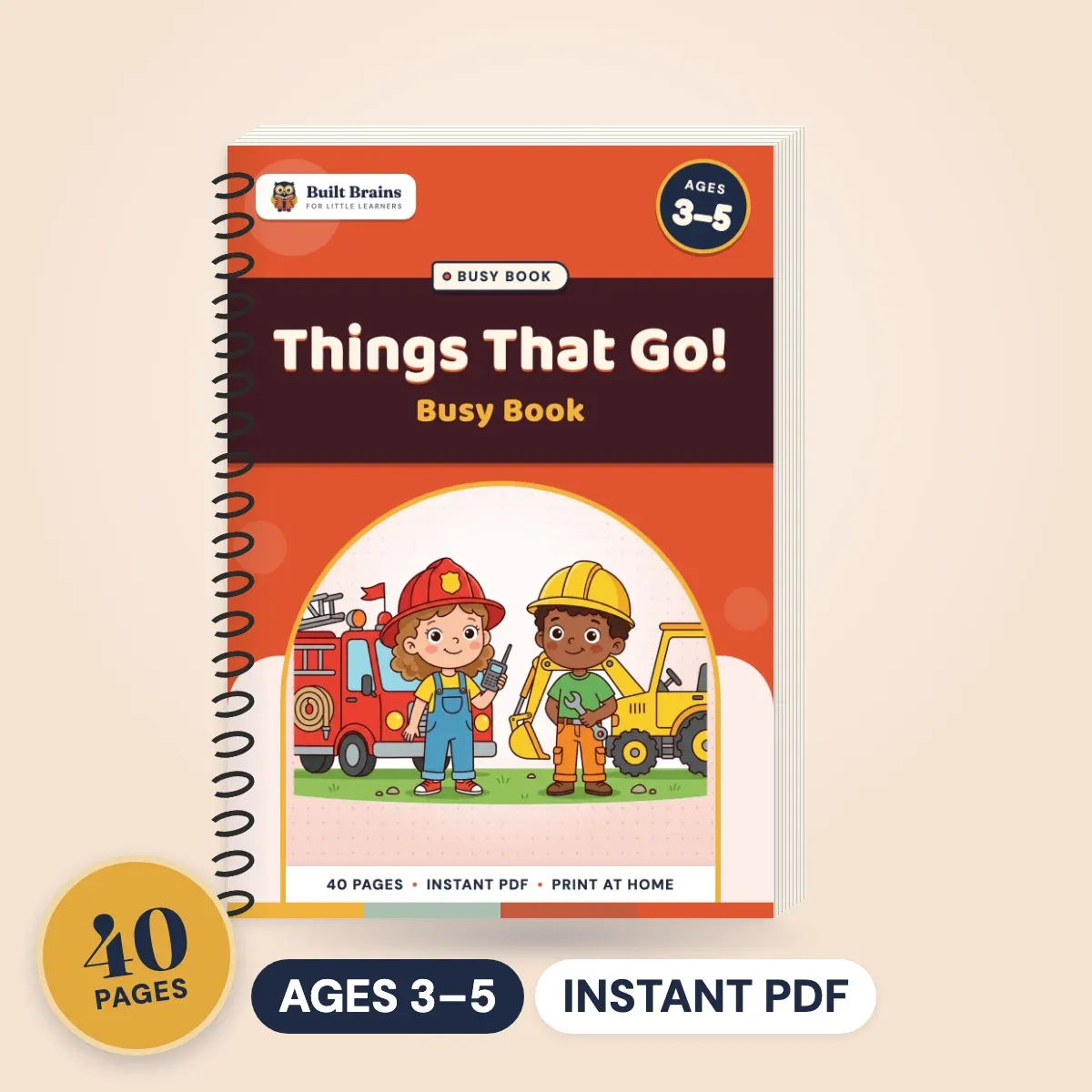
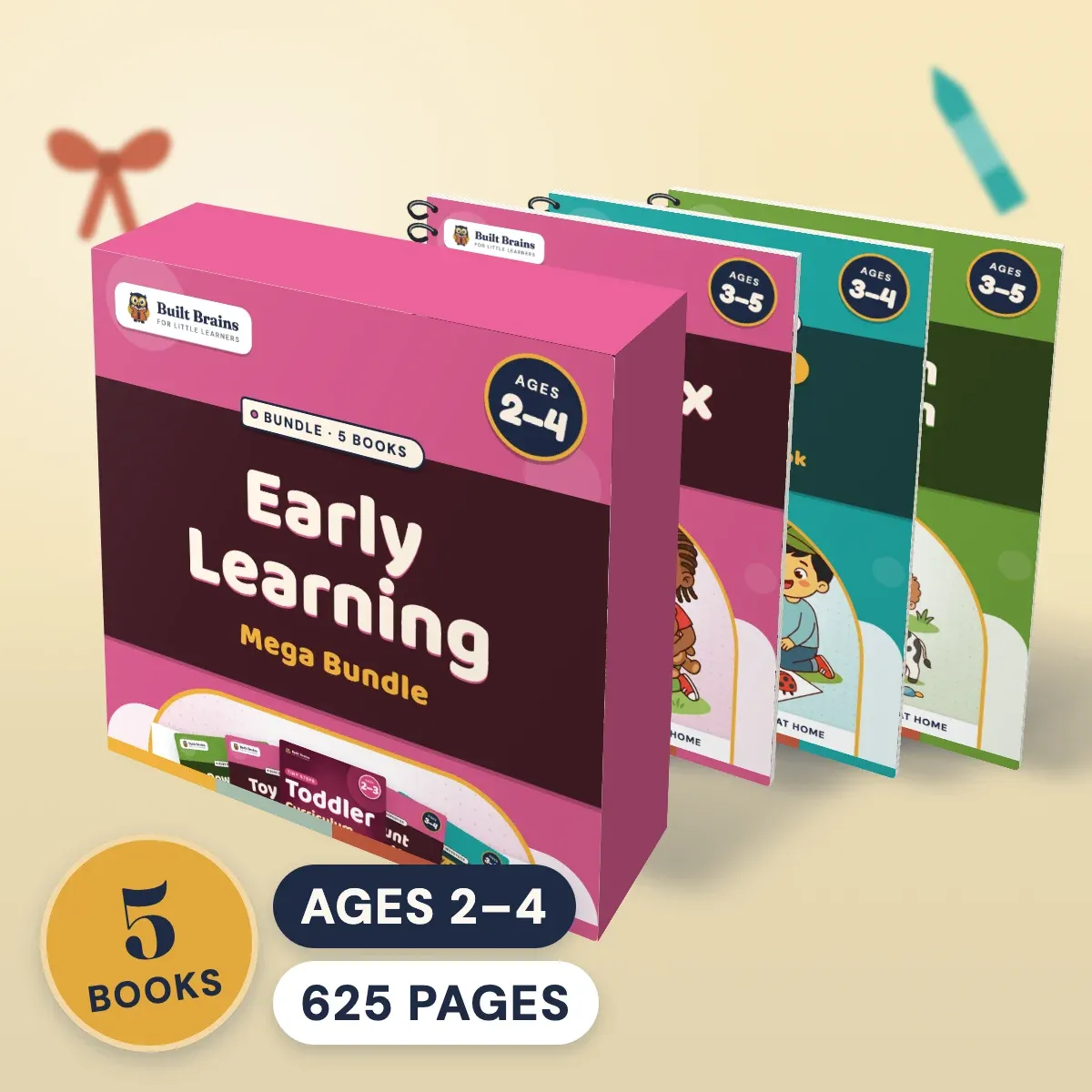
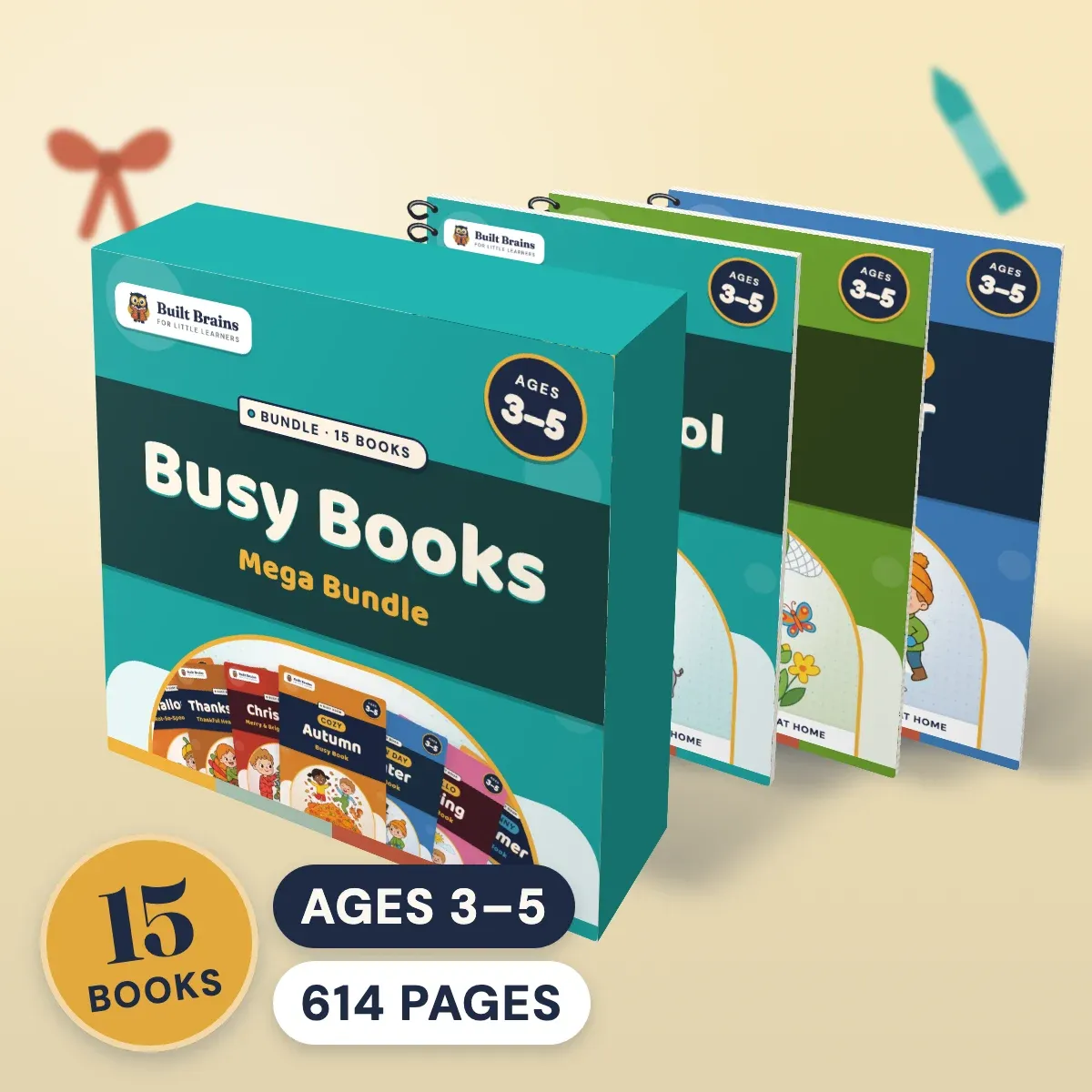
If you'd rather skip drawing and designing pages, printable busy books are the shortcut: print them as-is to color and trace, or laminate a few favorite pages for dry-erase reuse. The Busy Book Mega Bundle has every Built Brains busy book in one download, over 600 pages of coloring, tracing, mazes and counting across seasons, holidays, farm, ocean, dinosaurs, space, bugs, vehicles and toys.
When to use a busy book
A busy book works best when your child needs to sit still somewhere they can't run around:
- Travel. Planes, trains and long car rides (tracing and coloring pages travel better than loose Velcro pieces in a moving car).
- Waiting rooms. Doctor, dentist and hair appointments.
- Religious services and ceremonies. Choose silent pages, no crinkly flaps.
- Restaurants. While the food comes. Put it away when the food arrives.
- Quiet time. A daily rest period for children who no longer nap. Our quiet time activities for preschoolers guide shows how to set it up.
- A sibling's nap or a work call. A busy book is a good way to buy 15 calm minutes.
Keep a "special" busy book that only comes out at these times. Novelty holds attention.
How to keep a busy book interesting: rotation
The biggest reason busy books stop working is that children finish them. A few habits keep them fresh:
- Make more pages than you use. Keep 15 to 20 in a folder and put 6 to 10 in the binder.
- Swap two or three pages every week. Friday afternoon is a good habit.
- Follow the season. Leaves and pumpkins in fall, snowflakes in winter, bugs in spring.
- Follow the obsession. Dinosaurs this month, trains next month.
- Level up. When a page gets too easy (they finish it in seconds), add a harder version: four colors instead of two, numbers to 10 instead of 5.
- Put it away between uses. A busy book left in the toy box becomes just another toy.
Common busy book mistakes
- Too many pages at once. Overwhelming, and pieces get lost.
- Pieces too small. A choking risk for under-3s and frustrating for small fingers.
- Pages too hard. If your child needs help on every page, it isn't a busy book, it's a lesson. Swap in easier pages.
- Using it all day. Save it for the times you need it and it keeps its power.
Where to start
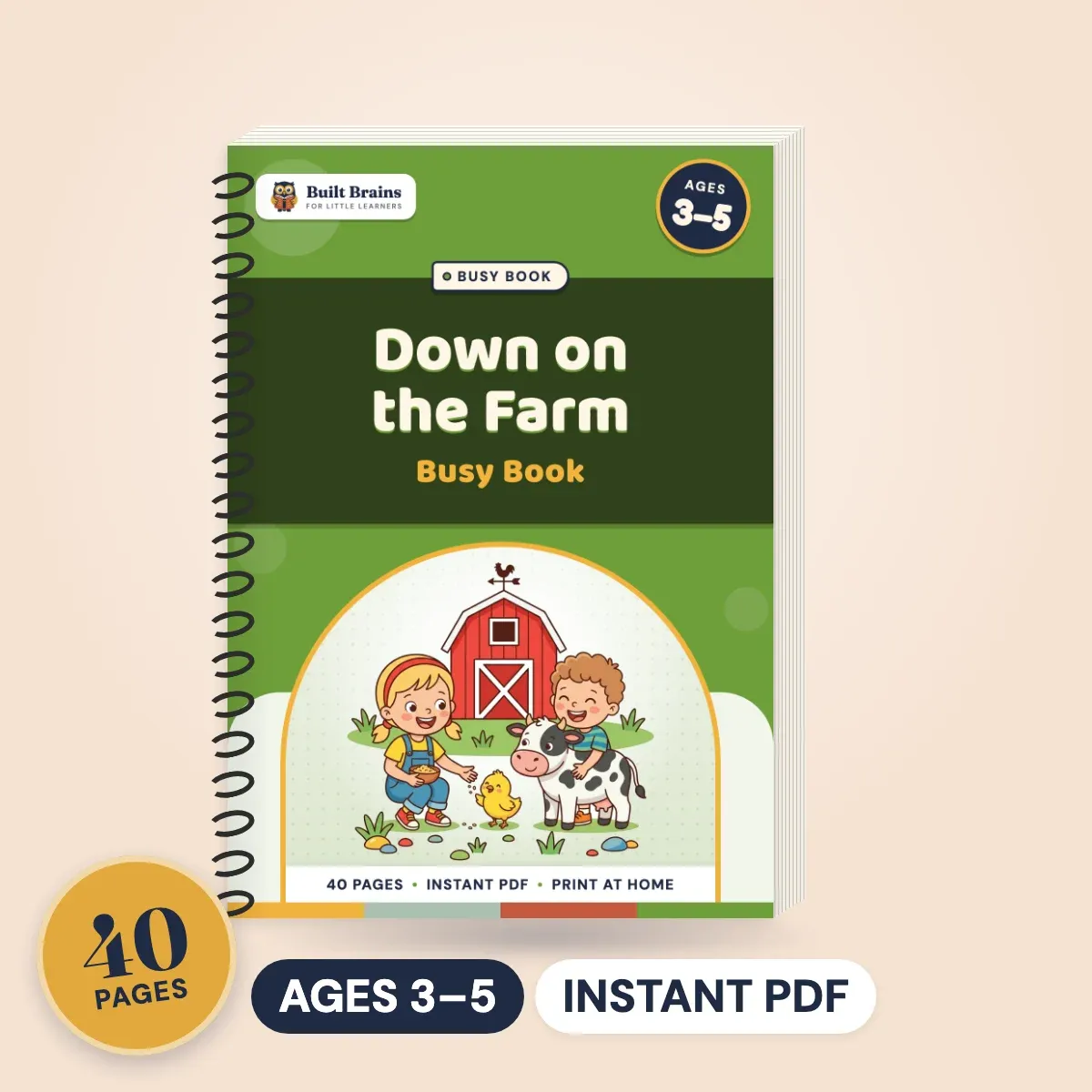
Pick your child's age above, choose six pages and make them tonight. If your child is 3 to 5 and you want pages ready to print, start with one themed book they'll love, like the Toy Box Busy Book or the My Big Preschool Busy Book, or grab the whole busy books collection in the mega bundle for a year of rotation.
Questions parents ask
Busy books suit roughly ages 2 to 5. Two year olds do best with a few simple matching or open-and-close pages and an adult nearby. Three year olds can sort, match and trace. Four and five year olds enjoy letters, numbers, mazes and puzzles they can finish alone. Pick pages for the child's skills, not the number on the box.
Mostly the name. "Quiet book" usually means a sewn felt book with buttons, zips and snaps. "Busy book" often means a binder of printed, laminated pages with Velcro pieces, or a printable activity book to color, trace and count. Both give children something calm and hands-on to do without a screen.
For a 2 year old, 4 to 6 pages is plenty. For ages 3 to 5, 8 to 12 pages works well. More pages is not better: a thick binder overwhelms young children and pieces go missing. Keep a larger stash and rotate a few pages in and out each week so the book feels new.
They can be, with care. Small Velcro pieces can peel off and become a choking hazard, so cut pieces bigger than a toilet paper tube opening, check them before each use and sit nearby. Avoid buttons, beads and small snaps for children who still mouth things. Supervise until you know how your child plays with it.
Printed pages, a laminator or sheet protectors, self-adhesive Velcro dots, a 1-inch binder or two or three binder rings, a hole punch, scissors and a dry-erase marker. A laminator costs about the same as a few store-bought busy books and pays for itself quickly.