What are Forest School activities?
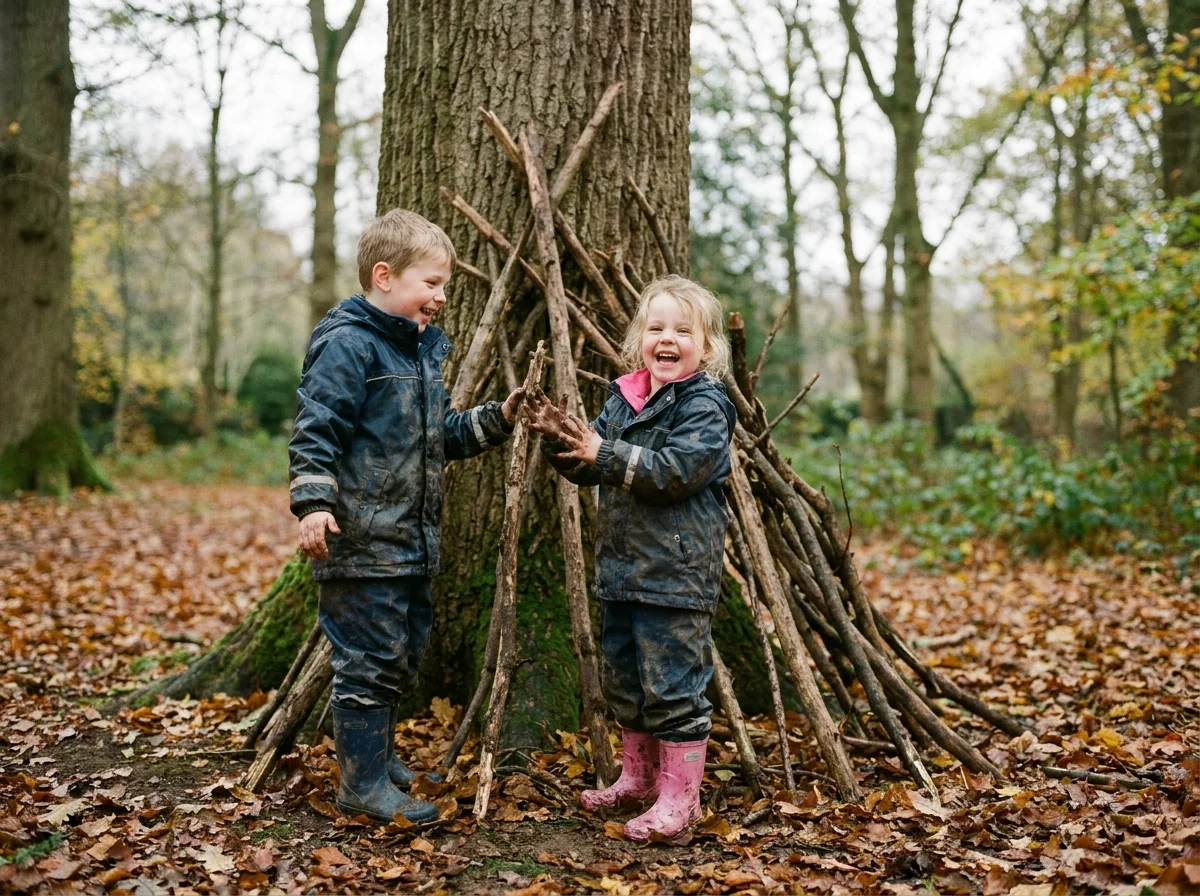
Forest School activities are child-led, hands-on things to do outside in a natural space: building dens, making mud pies, looking for minibeasts, climbing, whittling with a trained adult, and making art from leaves and sticks. In the UK they are a regular part of many nurseries, preschools and Reception and Year 1 classes, so children aged 3 to 6 often come home talking about them.
The real thing is run by a qualified Forest School leader, but the spirit is easy to bring home. Pick one outdoor spot, go back often in all weathers, and follow your child's lead.
Forest School principles in plain words
The Forest School Association describes six principles agreed by the Forest School community in 2011. In everyday words:
- Long term. Regular sessions, week after week, not a one-off trip.
- Nature. It happens in woodland or another natural space, so children build a relationship with the outdoors.
- Community. Learners are at the centre and the group works together.
- The whole child. It supports confidence, friendships, movement and resilience as well as learning.
- Supported risk. Children take risks that suit them and the place, with adults managing them.
- Trained leaders. Sessions are run by qualified Forest School practitioners.
At home you can manage most of these: go often, stay outside, let your child choose, and allow sensible risks. The last one is why tools and fires stay with trained adults.
Your Forest School kit list
You don't need much, and most of it is already in the house.
| For your child | For the bag |
|---|---|
| Waterproof jacket and trousers (or an all-in-one) | Small first aid kit and wipes |
| Wellies, plus thick socks | Water and hand-washing water or gel |
| Layers: fleece, long sleeves, long trousers | Magnifying glass and a bug pot |
| Hat and gloves (winter); sun hat and sun cream (summer) | Old tarp or groundsheet and some string |
| A spare set of clothes in the car | Trowel, bucket and an old saucepan |
| Clipboard or nature journal and crayons |
30 Forest School activities to try
Dens and building
- Tarp den. String a line between two trees, throw a tarp over and peg or weigh down the corners.
- Stick den. Lean fallen branches against a tree trunk to make a tepee shape.
- Fairy or gnome house. Build a tiny home at the bottom of a tree from twigs, moss and bark.
- Stick bridge. Lay sticks across a puddle or stream bank and test whether a toy can cross.
- Natural maze. Lay out a maze or path of sticks and stones to walk or run along.
Mud and water
- Mud kitchen. Old pans, spoons, water and soil: soups, cakes and potions.
- Puddle science. Which boot makes the biggest splash? Which things float in a puddle?
- Mud faces. Press mud on a tree trunk and add leaf hair and twig eyebrows.
- Dams. Build a dam in a stream or gutter with stones and mud, then knock it down.
- Muddy painting. Mix mud with water and paint with sticks and feathers on card.
Trees and plants
- Tree hug ID. Pick a tree, feel its bark, look at its leaves and find out its name.
- Leaf rubbings. Put paper over a leaf and rub with the side of a crayon.
- Tree diary. Visit the same tree each month and draw or photograph how it changes.
- Seed hunt. Collect conkers, sycamore helicopters and acorns, then sort and count them.
- Plant a seed. Plant a bean or sunflower seed in a pot and watch it grow.
The Woodland Trust's guide to identifying trees is a friendly starting point: start with leaves and bark on trees you pass often, such as oak, ash, birch and horse chestnut.
Minibeasts and wildlife
- Log lift. Gently roll a log and look for woodlice, beetles and worms, then roll it back.
- Bug hotel. Stack pallets, bricks, hollow stems, pine cones and bark in a sheltered corner. The RSPB's bug hotel guide shows how.
- Minibeast safari. Count how many legs each creature has and sort them into groups.
- Bird watch. Sit quietly for five minutes and tally the birds you see.
- Worm charming. Drum gently on the grass after rain and see who pops up.
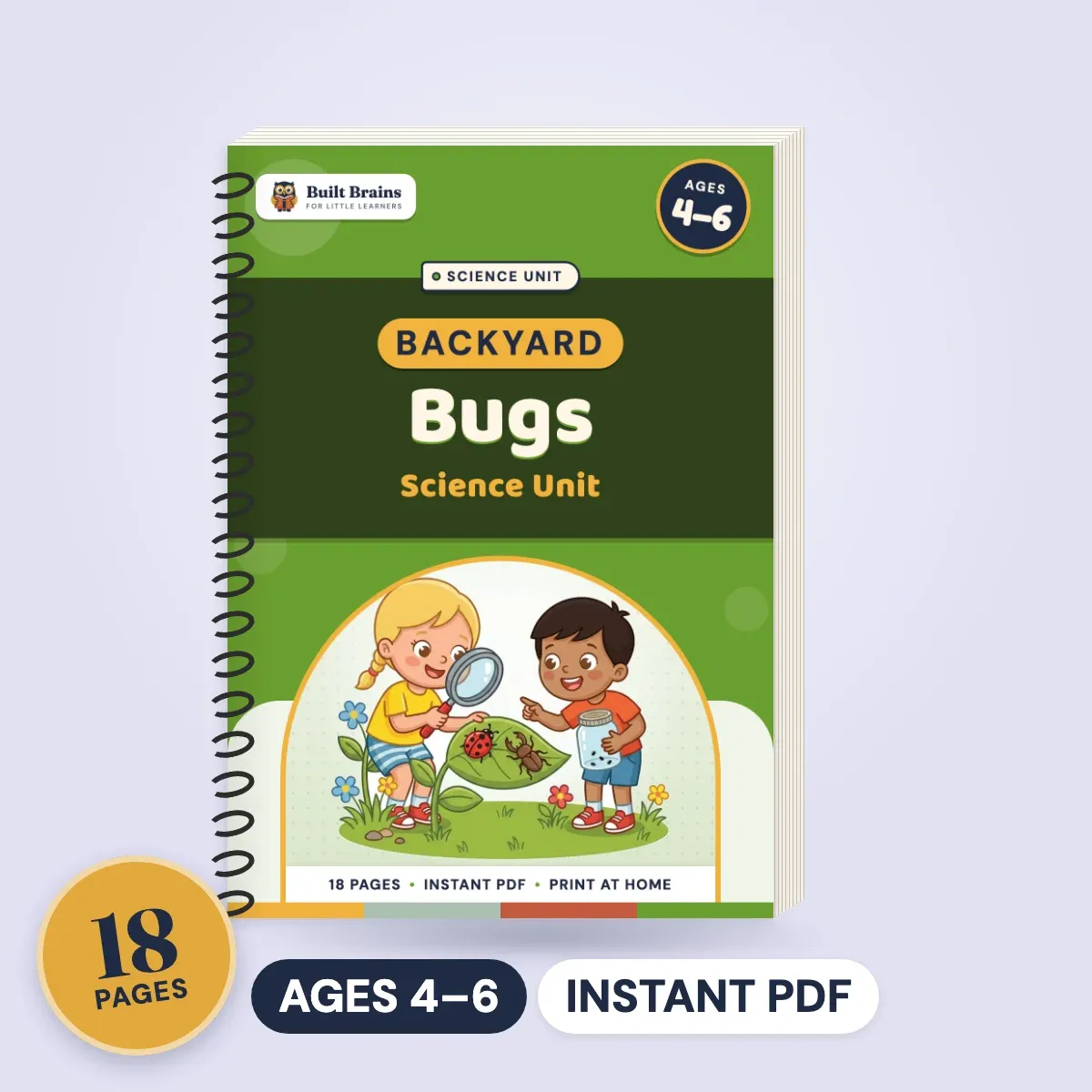
Our bug activities for preschoolers and life cycle activities have more ideas to bring back indoors.
Nature art and play
- Stick people. Wrap wool round a stick and give it a leaf cloak.
- Land art. Make spirals, faces or rainbows on the ground from leaves, stones and petals that have already fallen.
- Nature crowns. Stick leaves and feathers to a card band with double-sided tape.
- Colour hunt. Match natural finds to paint charts or crayon colours.
- Sound map. Sit still, close your eyes and mark what you hear and where. Our five senses activities build on this.
Tools, knots and fire (adult-led only)
- Peeling a stick. With a vegetable peeler, an adult beside them and a gloved hand, a 5 or 6 year old can peel bark from a green stick, always pushing away from their body.
- Hammer and nails. Tap nails into a soft log or a thick slice of wood, with an adult beside them and fingers kept well clear.
- Knots. Practise a simple overhand knot, then tie up your den.
- Rope swing or balance line. A rope tied low between two strong trees for balancing, set up and checked by an adult.
- Fire watching. Fires are for properly trained adults only. If you go to a Forest School family session, children can learn fire safety from the leader; at home, look at a fire safely from a distance or skip it.
Risky play: why a little risk is good for children
"Supported risk" is one of the six Forest School principles for a reason. When children climb a little higher, balance on a log or use a tool with an adult beside them, they learn to judge their own limits, cope with small knocks, and feel proud of something they found hard. Forest School leaders use a risk-benefit approach: they weigh the chance of a bump against what the child gains.
At home, try this:
- Stand close, but don't jump in straight away. Ask "Where will you put your foot next?" rather than "Be careful!"
- Let children set their own height when climbing. A child who climbs up on their own can usually climb back down.
- Agree a few firm rules. Stay where you can see me; walk, don't run, with a stick; sticks no longer than your arm.
Safety rules that never change
- An adult supervises at all times, close enough to step in.
- Never eat anything you find, including berries, leaves and mushrooms, even if you think you know what it is. No foraging.
- Wash hands before snacks and after touching soil or animals.
- Fire only with a properly trained adult, and tools only with an adult beside the child.
- Check for ticks after woodland or long grass. The NHS explains how to check, remove them and spot signs of Lyme disease.
- Leave it as you found it. Don't break living trees, and put logs back.
A garden or park version
You don't need a wood. A garden corner, a local park or a playing field with a few trees can all work.
- Garden: leave one patch a little wild, set up a mud kitchen and a bug hotel, and plant a few seeds in pots.
- Park: choose one corner and go back every week. Use fallen sticks, not branches pulled from trees, and follow the park's rules on dens and digging.
- Woods: check who owns the wood and whether dens are allowed, take everything home with you, and stay on paths with the youngest children.
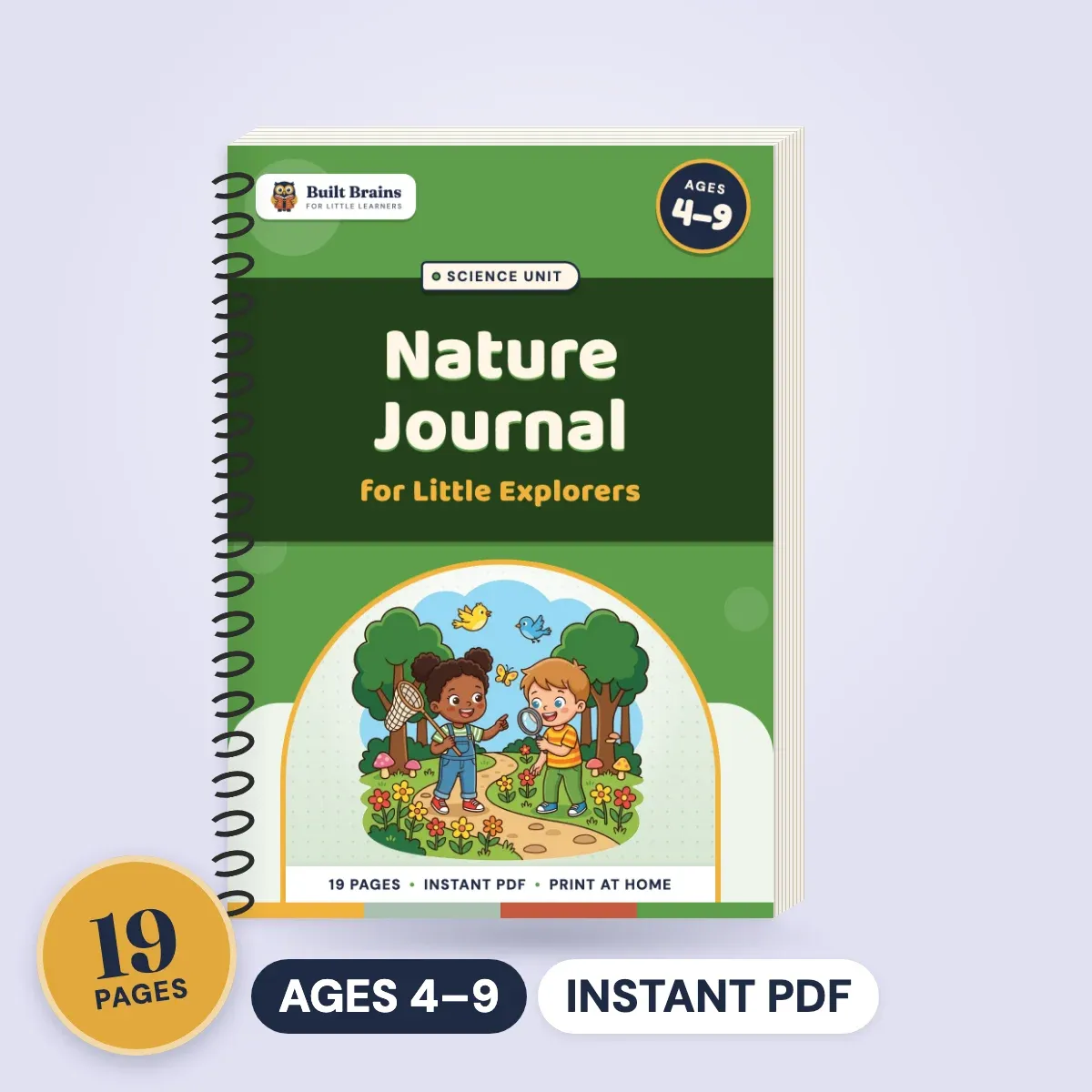
Bring the learning back indoors with a few minutes of drawing or writing. The Little Explorer's Nature Journal (ages 4 to 9) has scavenger hunts, leaf rubbings, bird, bug and tree pages and a weather log, and like all our books it prints in A4 as well as US Letter.
Forest School all year round
Forest School carries on in every season and most weathers, except high winds and storms, when trees and branches can fall.
| Season | Try this |
|---|---|
| Autumn | Conker and leaf sorting, leaf rubbings, mud kitchen soups, spotting fungi (look, never touch or eat) |
| Winter | Ice hunts in puddles, animal tracks in frost or snow, bird feeders, a den with an extra tarp |
| Spring | Planting seeds, frogspawn spotting, minibeast safaris, nest-watching from a distance |
| Summer | Dams and water play, land art, shade dens, evening bat watching |
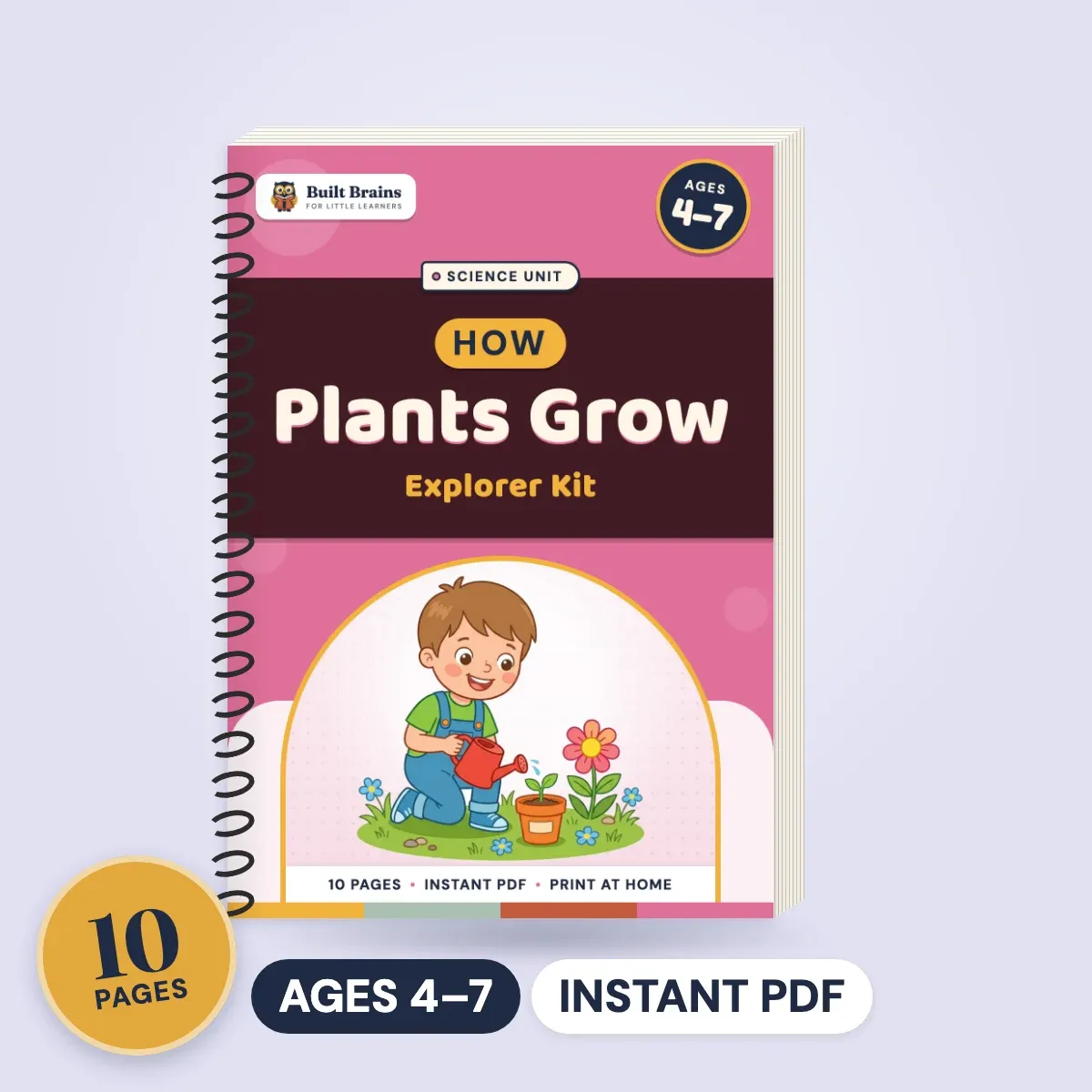
For more seasonal ideas, see our weather activities, autumn activities and winter activities. The How Plants Grow Explorer Kit (ages 4 to 7) follows seed to flower if your spring planting sparks questions, and the Science & Our World Bundle gathers 13 units, including bugs, weather and life cycles, for ages 4 to 7.
Ages 4–9 · 19 pages
Little Explorer's Nature JournalScavenger hunts, leaf rubbings and observation pages

Sources
- Forest School Association – Full principles and criteria for good practice — the six Forest School principles, supported risk and trained practitioners.
- Woodland Trust – How to identify trees — identifying common British trees by leaves and bark.
- RSPB – How to make a bug hotel — building a bug hotel in a garden.
- NHS – Lyme disease — checking for and removing ticks after time outdoors.
Questions parents ask
Forest School is a long-term programme of regular sessions in woodland or another natural space, led by a qualified practitioner. Children follow their own interests, take supported risks such as climbing or using tools, and build confidence and a relationship with nature. It is defined by six principles agreed by the Forest School community and promoted by the Forest School Association.
Not officially, because real Forest School is run by a trained leader. But you can borrow its spirit: visit the same outdoor spot often, in all weathers, let your child choose what to explore, and allow small, supervised risks. A garden corner, local park or nearby wood all work. What matters is regular time outside, not the location.
Any age, from toddlers to adults, but it is especially popular with nurseries and Reception and Year 1 classes, where children aged 3 to 6 learn through play. Younger children need closer supervision and simpler activities, such as mud kitchens, collecting and minibeast hunts, while 5 and 6 year olds can manage dens, knots and simple projects.
In Forest School, tools such as peelers, saws and bow saws are used only after a risk assessment, one-to-one with a trained adult, with clear rules. At home, keep tools adult-led and close at hand, start with a vegetable peeler on a soft stick, and skip anything you aren't confident supervising. Fires should only be lit by a properly trained adult.
Layers they can move in, a waterproof jacket and trousers or an all-in-one, wellies with warm socks, a hat and gloves in winter, and a sun hat and long sleeves in summer. Long trousers help protect against scratches and ticks. Old clothes are best, because mud is part of the fun.
Reviewed by
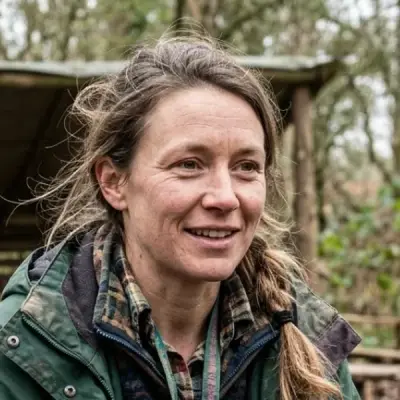
Forest School Leader & Early Years Educator
Lucy Graham is a certified Forest School Leader who uses the natural world as a classroom to build resilience, motor skills, and environmental awareness in early learners.
More about Lucy →