
What are the best winter activities for preschoolers?
The winter activities that work best for 3 to 5 year olds are hands-on and a little bit messy. Preschoolers learn about cold, ice and snow by touching it, watching it change and talking about what happened. You do not need much: a tray, a freezer, some food coloring, paper and a few pairs of mittens cover most of this list.
A quick note for families in Australia, New Zealand and elsewhere in the Southern Hemisphere: your winter runs from June to August, and you may have frost and rain rather than snow. Every indoor idea here works as it is, and freezer ice stands in for snow in the science activities.
Each group below has a mix of ideas, so you can pick one active and one calm activity for each day.
Snow activities for preschoolers (outdoors)
- Paint the snow. Fill squeeze bottles or spray bottles with water and a few drops of food coloring. Spray pictures, letters or a rainbow.
- Snow letters. Write your child's first letter in the snow with a stick, then have them trace it with a mitten.
- Animal track hunt. Look for bird, dog or rabbit prints. Make your own tracks and follow each other.
- Snow castle molds. Sand toys, yogurt pots and loaf tins all make great snow bricks.
- Snow scavenger hunt. Find something white, something that crunches, an icicle, a pine cone, a footprint.
- Snow angels and "snow shapes." Make a snow angel, then a snow star or snow circle by walking in shapes.
- Collect snow to compare. Fill two cups, one packed and one loose, and see which melts first indoors.
- Sledding or sliding. Small hills, a plastic sled, feet-first, with an adult at the bottom.
Keeping preschoolers warm and safe outside
Pediatric advice for cold-weather play, including the AAP's winter safety tips, centers on layers and checking in often.
- Layer up. A snug base layer, a warm middle layer and a waterproof outer layer, plus hat, mittens and waterproof boots. A common rule of thumb is one more layer than an adult would wear in the same weather.
- Mittens over gloves. Mittens keep little fingers warmer. Pack a dry spare pair.
- Come in to check. Every 20 to 30 minutes on cold days, bring children in to warm up and swap wet mittens or socks.
- Know the warning signs. Shivering, pale or red patches on fingers, toes, ears or nose, and numbness mean it is time to go inside. Call your pediatrician or health visitor if skin stays pale, hard or blistered after warming.
- Car seats. Remove puffy coats before buckling a car seat harness and lay the coat on top instead.
- Ice. Keep children off frozen ponds and streams unless an adult has confirmed safe ice in an approved area.
Indoor winter activities for kids on snow days
- Snow in a tub. Bring a bin of snow indoors, add spoons, cups and small animal figures, and play on a towel. No snow? Mix baking soda with a little white conditioner for soft "snow."
- Blanket fort cabin. Drape blankets over chairs, add a flashlight and read books inside.
- Hot-cocoa café. Set up a pretend café with cups, a menu and a notepad for "orders." The Seasonal Pretend Play Pack includes a winter hot-cocoa café with signs, menus and order forms.
- Indoor snowball toss. Rolled-up white socks tossed into a laundry basket. Count the hits.
- Mitten matching. Mix up the family's mittens and sort them into pairs.
- Ice skating in socks. Paper plates under feet on a hard floor for "skating."
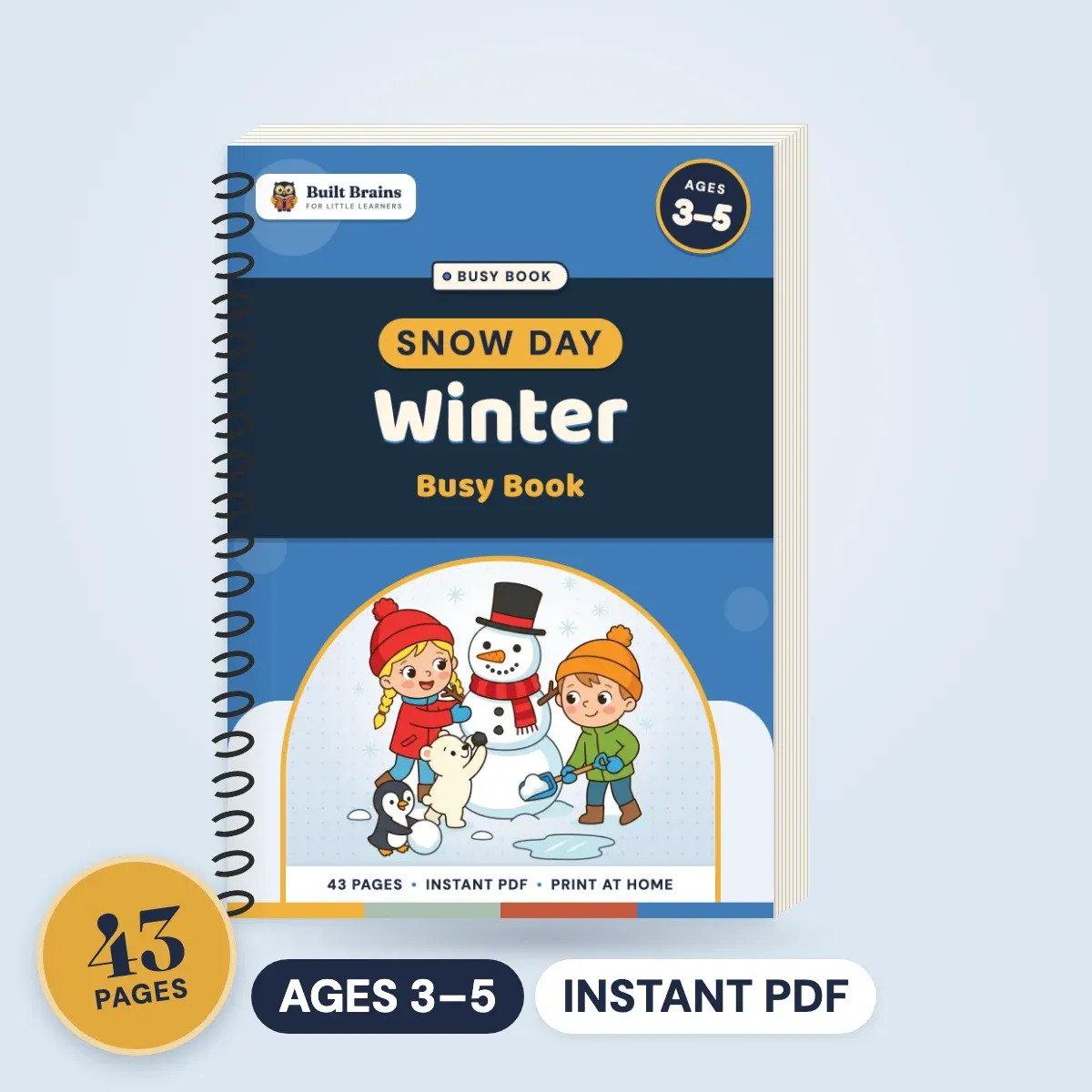
- Winter busy book time. A calm half hour after lunch. The Snow Day Winter Busy Book has polar bears, penguins, sleds and snowflakes to color, trace, count and match.
Winter science: ice, melting and freezing
Science for preschoolers is simple: ask a question, try it, look closely and talk about it. Always ask "What do you think will happen?" before you start.
- Ice melting race. Put ice cubes in spots around the house: a sunny window, the counter, the fridge. Check which melts first.
- Salt and ice. Sprinkle salt on a block of ice and add drops of colored water. Watch channels and cracks appear.
- Frozen treasures. Freeze small toys in a tub overnight. Use warm water, droppers and spoons to rescue them.
- Does it freeze? Put small cups of water, juice, oil and salty water in the freezer. Check after an hour and again the next morning.
- Ice suncatchers. Freeze water with leaves, berries or pine needles in a pie tin with a loop of string. Hang outside if it is below freezing.
- Snow to water. Fill a clear jar with snow, mark the line and check after it melts. Most children are amazed how little water is left.
- Breath on a cold window. Talk about how warm breath makes fog on cold glass.
Animals in winter and hibernation
Preschoolers are fascinated by what animals do when it gets cold. Keep it to three big ideas they can remember: some animals sleep (hibernate), some travel to warmer places (migrate) and some stay and adapt with thick fur, feathers or fat.
- Hibernation cave. Turn off the lights, crawl into a blanket cave and "sleep" like a bear. When you ring a bell, it's spring and everyone wakes up hungry.
- Blubber glove. Fill a zip bag with shortening, put a second bag inside it and seal. Your child puts a hand in the inner bag and dips it in ice water, then tries with a bare finger. This shows how fat keeps polar animals warm.
- Sort the animals. Pictures of bears, geese, penguins, foxes and bats sorted into sleep, travel or stay.
- Penguin waddle. Hold a beanbag between the feet and waddle across the room without dropping it.
- Animal track matching. Draw simple tracks on cards and match them to animal pictures.
Winter math and literacy for preschoolers
Math
- Snowflake counting. Write numbers 1 to 10 on paper mittens and have your child place that many cotton balls on each.
- Mitten patterns. Cut paper mittens in two colors and make AB patterns on a "clothesline" of string.
- Snowman sizes. Cut circles in three sizes and order them small, medium, big.
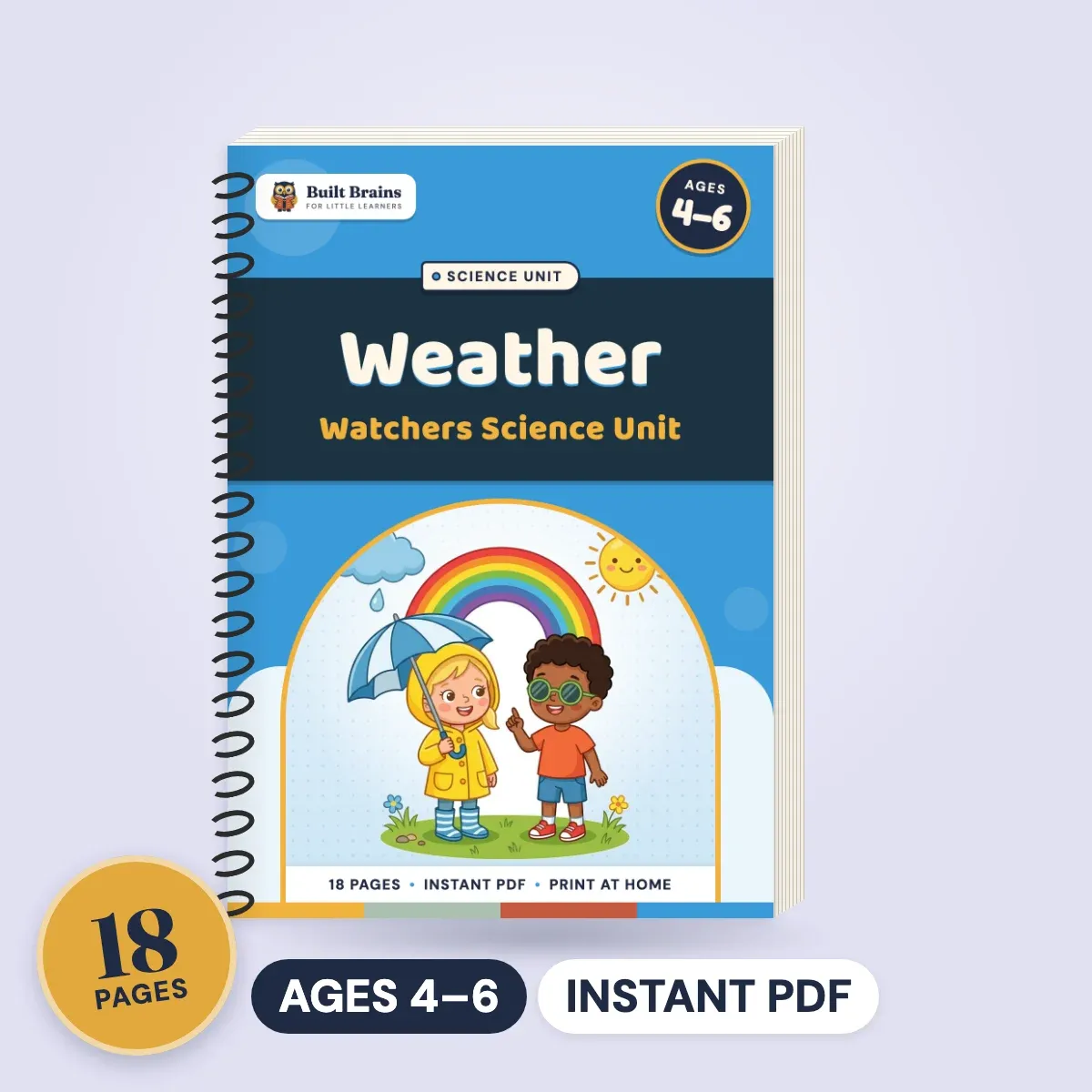
- Weather graph. Each day, color a square for sunny, cloudy, rainy or snowy. At the end of the week, count which won. The Weather Watchers Science Unit includes weather words to trace, a weather graph and sorting what to wear, for ages 4 to 6.
Literacy
- Winter word wall. Snow, ice, cold, hat, sled. Add a picture for each and read it together daily.
- Letter hunt in the snow tub. Hide foam letters in snow or cotton wool and have your child dig them out and say the sound.
- Rhyme time. Snow, go, blow. Hat, cat, mat. Clap each time you hear a rhyme.
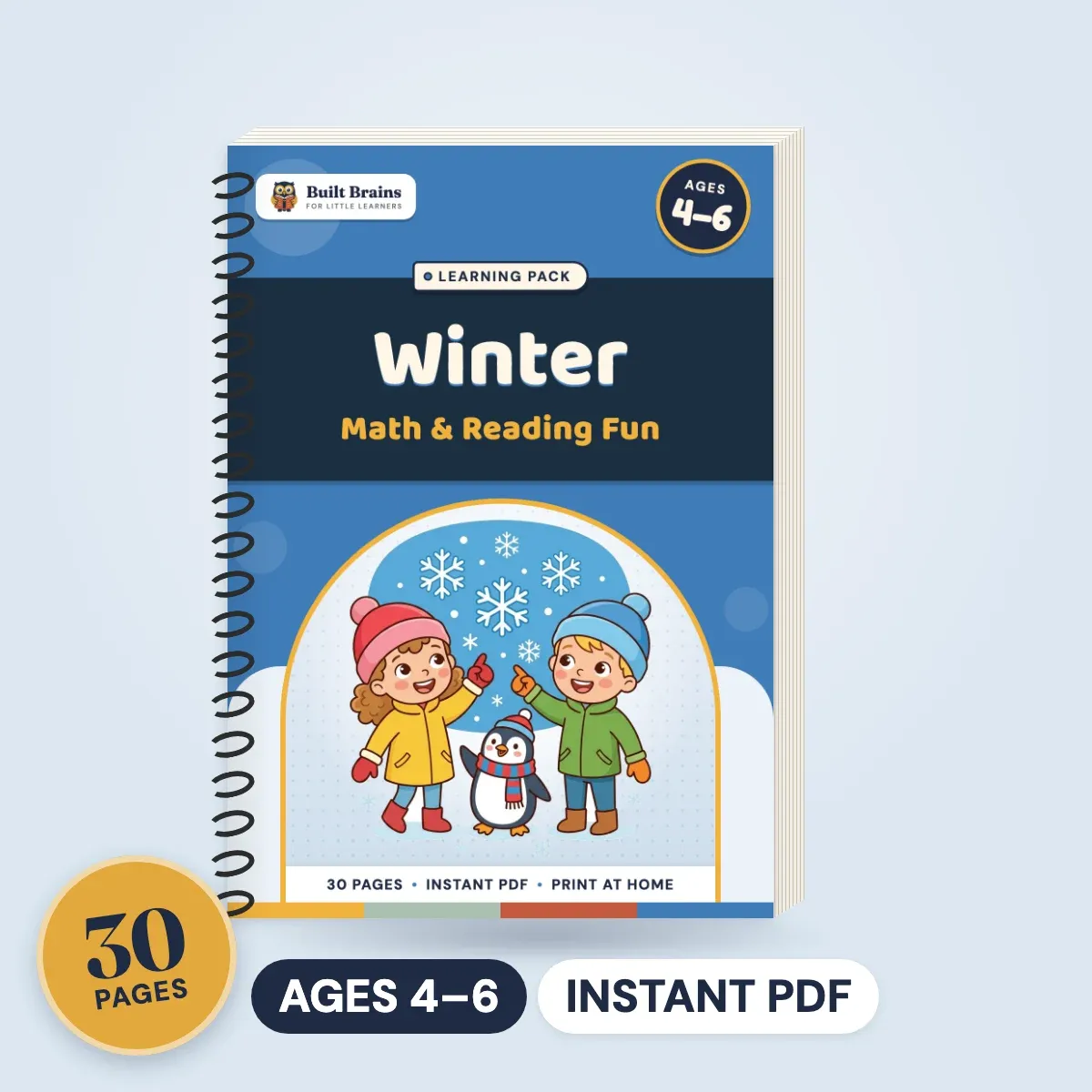
For 4 to 6 year olds ready for more, the Winter Math & Reading Fun pack covers counting snowflakes, adding and taking away mittens, tracing and reading winter words and snowy mazes.
Winter crafts and indoor gross motor play
Crafts
- Paper snowflakes. Fold a coffee filter or thin paper square into quarters and snip small shapes along the edges.
- Cotton ball snowman. Glue cotton balls onto three drawn circles and add a paper hat.
- Salt painting. Draw with glue on dark paper, sprinkle salt and dot on watercolors.
- Handprint penguins. A black handprint with a white oval tummy and an orange beak.
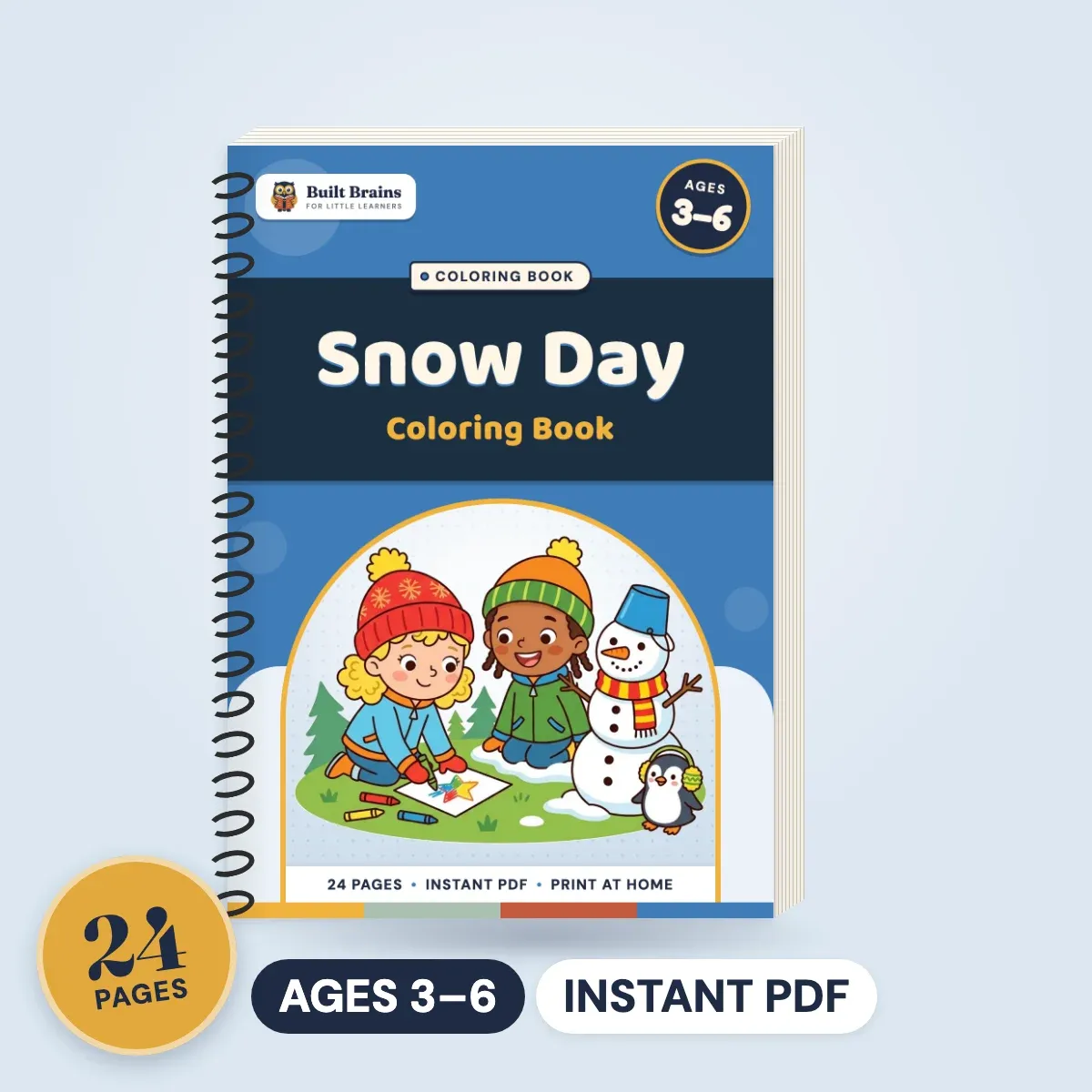
- Winter coloring. A quiet coloring page with warm cocoa. The Snow Day Coloring Book has big, simple line art of sledding, snowmen, polar bears and cozy cabins.
Gross motor indoors
- Snowball path. Tape paper plates across the floor as "stepping stones" over an icy river.
- Freeze dance. Dance to music and freeze like an icicle when it stops.
- Pillow snow hill. Pile cushions against the sofa to climb and slide down.
- Animal moves. Waddle like a penguin, lumber like a bear, hop like a snow hare.
A 5-day winter theme plan for preschool
Use this at home or in a classroom. Each day has a focus, one hands-on activity and one quieter follow-up. Adjust freely.
| Day | Focus | Hands-on activity | Quiet follow-up |
|---|---|---|---|
| Monday | What is winter? | Weather walk and start the weather graph | Winter word wall with pictures |
| Tuesday | Snow and ice | Frozen treasures rescue | Paper snowflakes |
| Wednesday | Melting and freezing | Ice melting race around the house | Draw "before" and "after" pictures |
| Thursday | Animals in winter | Blubber glove and hibernation cave | Sort animals: sleep, travel, stay |
| Friday | Staying warm | Mitten matching and mitten patterns | Cotton ball snowman and a winter story |
A few tips for running it:
- Prepare the ice the night before for Tuesday and Wednesday.
- Read one winter picture book each day and ask one question: "What do you think the bear is doing now?"
- Keep sit-down time short. About 15 to 20 minutes of focused activity is plenty for most 3 and 4 year olds.
- Finish the week with a review. Look at the weather graph and ask your child to tell someone what they learned.
If you want a full season of printables in one download, the Winter Holiday Bundle covers December to February with the Christmas and winter busy books and packs, two coloring books, a craft kit, Christmas Around the World and Lunar New Year and Valentine's Day packs. For more seasonal ideas, see our fall activities for preschoolers and, for the youngest siblings, Christmas activities for toddlers.
Questions parents ask
Try painting snow with colored water, freezing toys in ice and melting them out, making paper snowflakes, building a blanket-cave for "hibernating," and counting mittens or snowflakes. Mix one outdoor or active idea with one calm table activity each day so energy and attention both get used.
It depends on temperature, wind and clothing. Dress children in layers, bring them in regularly to warm up and check for wet clothes, and head inside if they shiver, have red or pale patches on fingers, toes, ears or nose, or complain of numbness. On very cold or windy days, keep outdoor play short.
A preschool winter theme usually covers weather and seasons, snow and ice (freezing and melting), how animals survive winter through hibernation, migration or thick coats, and staying warm. Winter words, counting snowflakes, patterns with mittens and snowman crafts carry the theme into literacy and math.
Bring a tub of snow inside for scooping and painting, build a fort, run a hot-cocoa café pretend play, do a movement card game, make paper snowflakes and try an ice melting race. Plan the day in short blocks: active, calm, snack, active, story, so nobody is climbing the walls by afternoon.
In the Southern Hemisphere, winter runs from June to August. Most of Australia and New Zealand see little or no snow, so focus on frost, cold mornings, rain, puddles, ice made in the freezer and animals that live in snowy places. All the indoor ideas here work the same in July as in January.