What are the best Easter activities for preschoolers?
The Easter activities that work best for 3 to 5 year olds are the ones that get them moving, making and counting: a hunt, a craft and a short game at the table. Preschoolers do not need a full day of themed events. Three or four ideas spread across the long weekend is plenty, and most of the list below uses things you already have: plastic eggs, an egg carton, paper, glue and a bag of jelly beans. Short, playful activities with real things to touch are how children this age learn best, as NAEYC's guidance on play explains.
Easter moves each year and falls between late March and late April. Everything here sticks to eggs, bunnies, chicks and spring, so any family can use it. If your family marks the religious meaning of Easter, add your own traditions alongside these ideas.
Each section mixes easy ideas for 3 year olds with slightly harder ones for 4 and 5 year olds, so pick what fits your child today.
Easter egg hunts with a learning twist
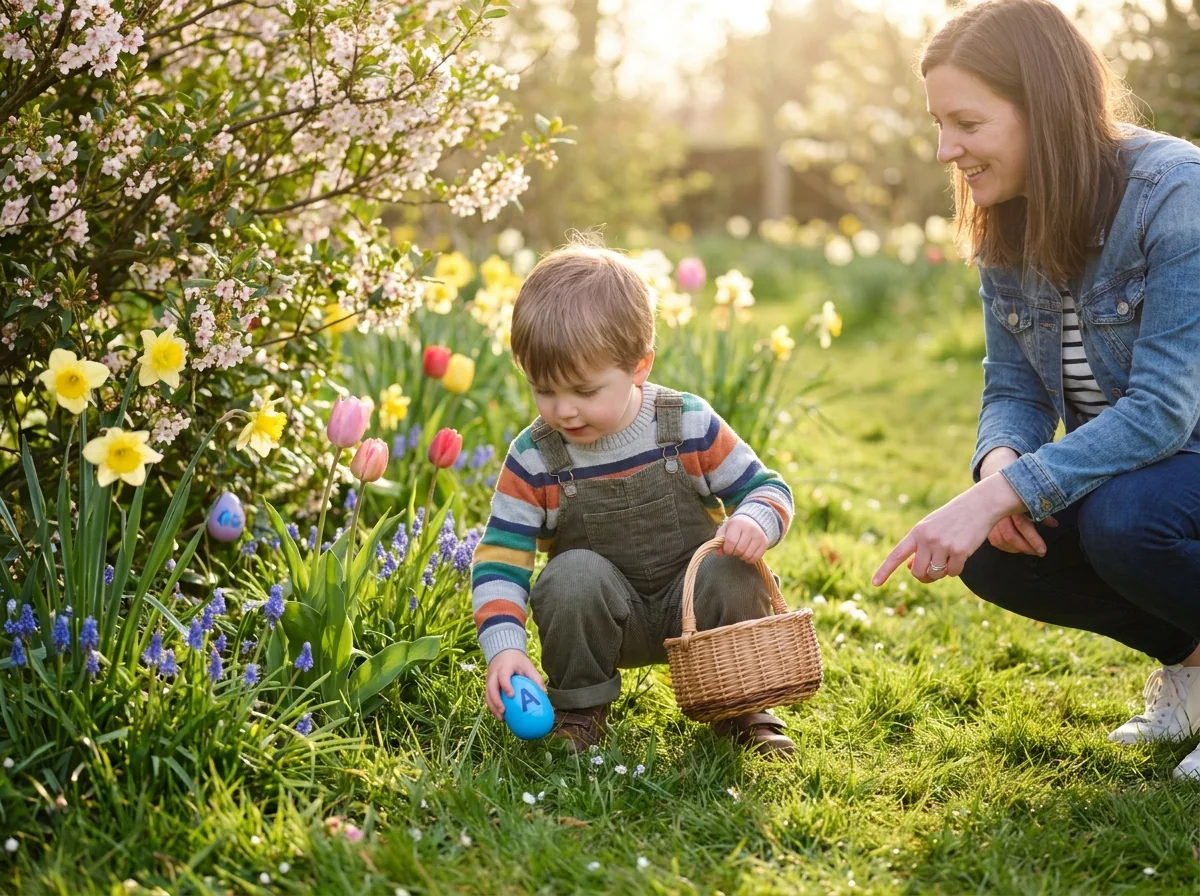
An egg hunt is already a great activity: searching, bending, spotting and carrying are good for little bodies and attention. Add one small change and it also becomes a letter, number or color game. Use the same plastic eggs for all of these.
- Letter eggs. Write a letter on each egg. Your child matches the eggs they find to the letters on a card with their name, then to the alphabet.
- Number eggs. Number the eggs 1 to 10 (or 1 to 20 for 5 year olds). Found eggs go into an egg carton in order, which makes gaps easy to see.
- Color-sorting hunt. Each child, or each basket, gets a color. Only that color counts. Sorting by color is one of the first math skills children master.
- Shape eggs. Draw a shape on each egg and have your child find the matching shape drawn on the patio or on a sheet of paper.
- Puzzle eggs. Put half of a picture in each of two eggs. The hunt is over when every picture is whole.
- Rhyme eggs (ages 4–5). Say a word as your child picks up an egg: "hop." They have to say a rhyme before it goes in the basket.
- Sound eggs. Fill eggs with rice, beans, coins and paper. Shake, listen, guess, then open to check.
- Clue hunt. Hide one egg at a time with a picture clue inside ("look where we keep the towels"). Great indoors on a wet day.
- Counting-bag hunt. Give a bag with a number on it. Your child collects exactly that many eggs and no more.
- Follow-the-trail hunt. Lay a trail of paper bunny footprints to the basket. Children stay on the trail, hopping only.
Easter math activities for preschoolers
Eggs come in cartons of twelve and jelly beans come in handfuls, which makes Easter an easy fit for early math. Most 4 year olds can count a few objects and name some colors, according to the CDC's milestone checklists, so start with sorting and small counts and stretch from there. Keep sessions to 10 minutes and let your child handle the real objects.
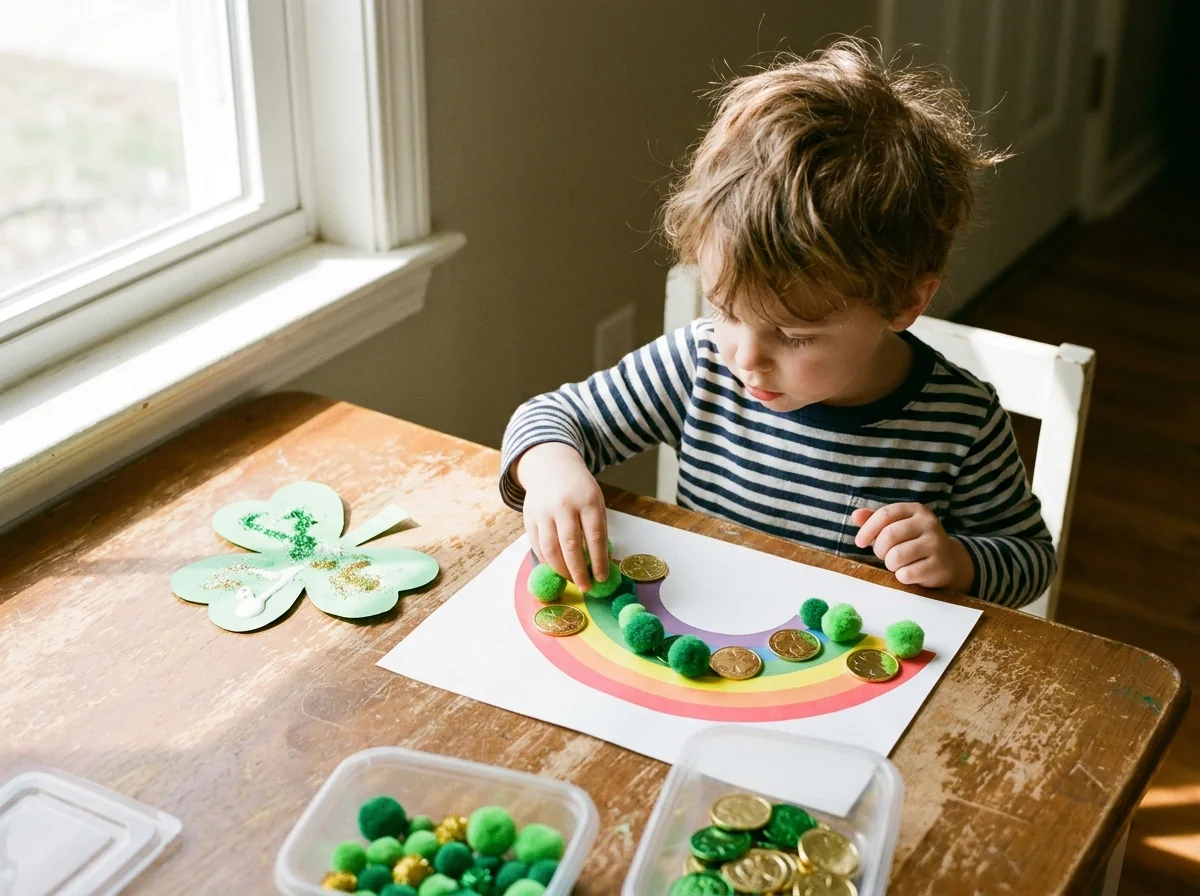
- Egg carton counting. Call a number; your child drops that many pom-poms or (with you right there) jelly beans into the carton, one per cup.
- Jelly bean sorting. Sort by color into a muffin tin, then count each color. Which has the most? Fewest?
- Egg patterns. Line up plastic eggs in a pattern: pink, blue, pink, blue. Your child continues it, then invents one for you.
- More or less. Put a few eggs in two baskets. Which has more? Move one egg over and ask again.
- Egg measuring. How many eggs long is the sofa? The rug? Lay them end to end and count.
- Bunny hop counting. Roll a die and hop that many times like a bunny. Five year olds can roll two dice and add.
- Egg-half matching. Write a numeral on one half of each egg and draw that many dots on the other. Mix up and match.
- Oval hunt. Hunt the house for egg shapes: spoons, picture frames, a mirror, a bar of soap.
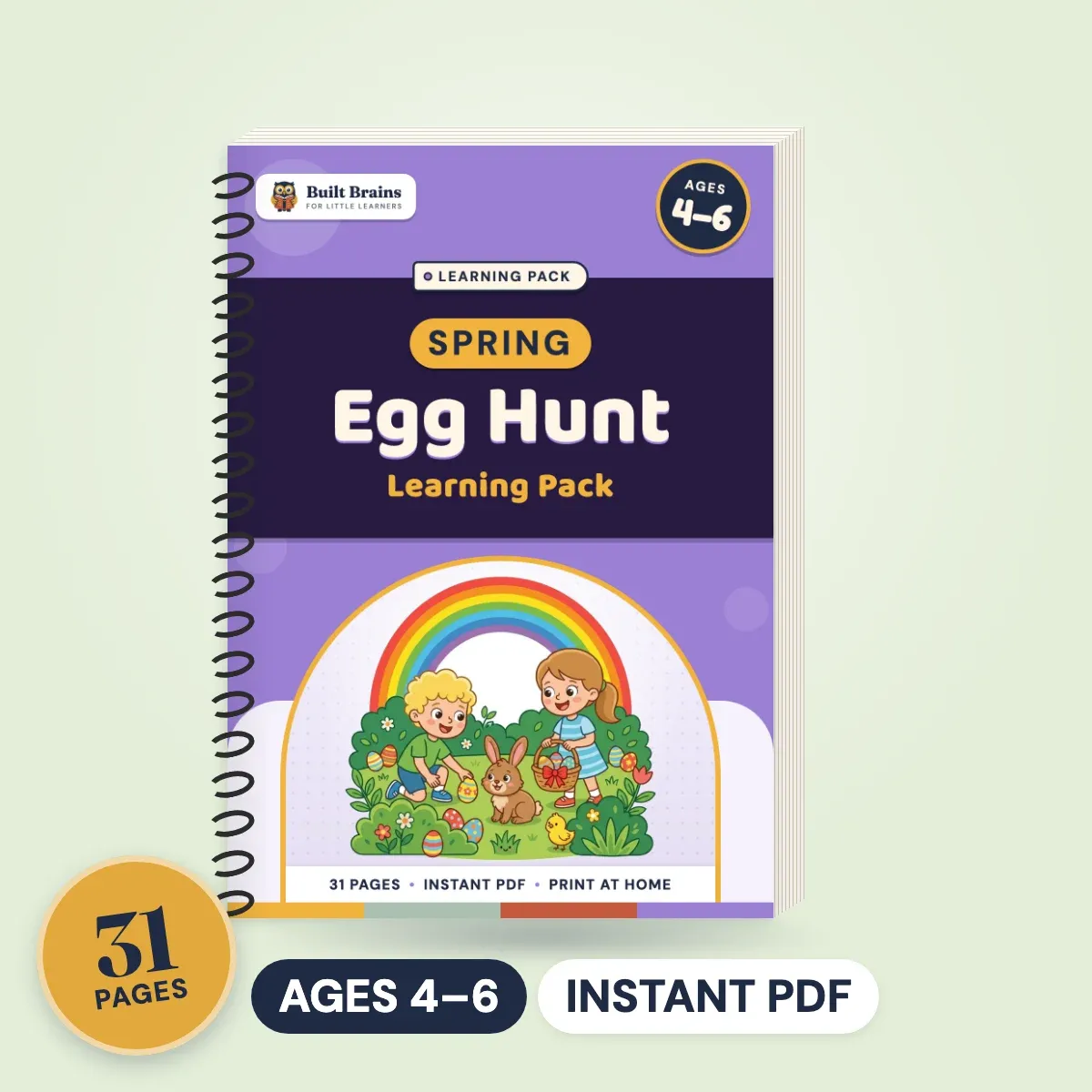
For a printable version of all this, the Spring Egg Hunt Learning Pack has counting to 20, adding and taking away with jelly beans, patterns, mazes and dot-to-dots for ages 4 to 6. More ideas that work any time of year are in our math activities for preschoolers.
Easter literacy activities for preschoolers
Easter literacy for this age is about letters, sounds, rhymes and stories, not reading. Use your child's name as the starting point, because those are the letters they care about most.
- Name eggs. Write each letter of your child's name on an egg. Hunt, then put them in order on the table.
- Letter-sound baskets. Label two baskets with letters, such as b and s. Your child sorts small toys or pictures by their first sound: bunny, ball, sock, sun.
- Capital and lowercase eggs. Write B on one half and b on the other. Match the halves.
- Egg word cards. Write spring words on egg-shaped cards (egg, chick, bunny, sun) with a picture. Your child traces them with a finger, then a crayon.
- Story eggs. Put three small objects from a favorite story in eggs. Open them in order and retell the story together.
- Bunny rhyme time. Make up silly rhymes about a bunny: "The bunny in the sun found a bun." Children love the nonsense and hear the rhymes.
- Egg book basket. Gather every book you own about eggs, chicks, bunnies or spring and read one a day over the week.
If your child is just getting to know letters, our guides to letter recognition activities and how to teach letter sounds show the gentle order that works.
Easter art and crafts for preschoolers
Crafts for 3 to 5 year olds should be mostly tearing, sticking, stamping and painting, with cutting for the older ones. Every one of these builds the hand strength children need for writing later, as our fine motor activities for preschoolers explain.
- Torn-paper eggs. Cut a big egg shape from card. Your child tears tissue paper and glues it on. No scissors needed.
- Bunny-ears headband. A strip of card around the head plus two long ears to color. Instant costume for the hunt.
- Cotton-ball chick. Glue cotton balls onto a yellow circle, add an orange paper beak and two eyes.
- Handprint bunny. Paint your child's hand, press it down with fingers together, then draw a face on the palm and ears on two fingers.
- Potato egg stamps. Cut a potato in half, carve a simple pattern, dip in paint and stamp egg shapes on paper.
- Salt-and-glue eggs. Draw lines of glue on a paper egg, sprinkle salt, shake off, then touch wet paintbrushes to the salt and watch the color travel.
- Paper-plate basket. Fold a paper plate in half, staple the sides, add a handle and decorate. Perfect for holding found eggs.
- Dyed real eggs. Hard-boil, cool and dye with food coloring and vinegar. Treat dyed eggs as food: keep them in the fridge and don't eat ones that have been hidden outside.
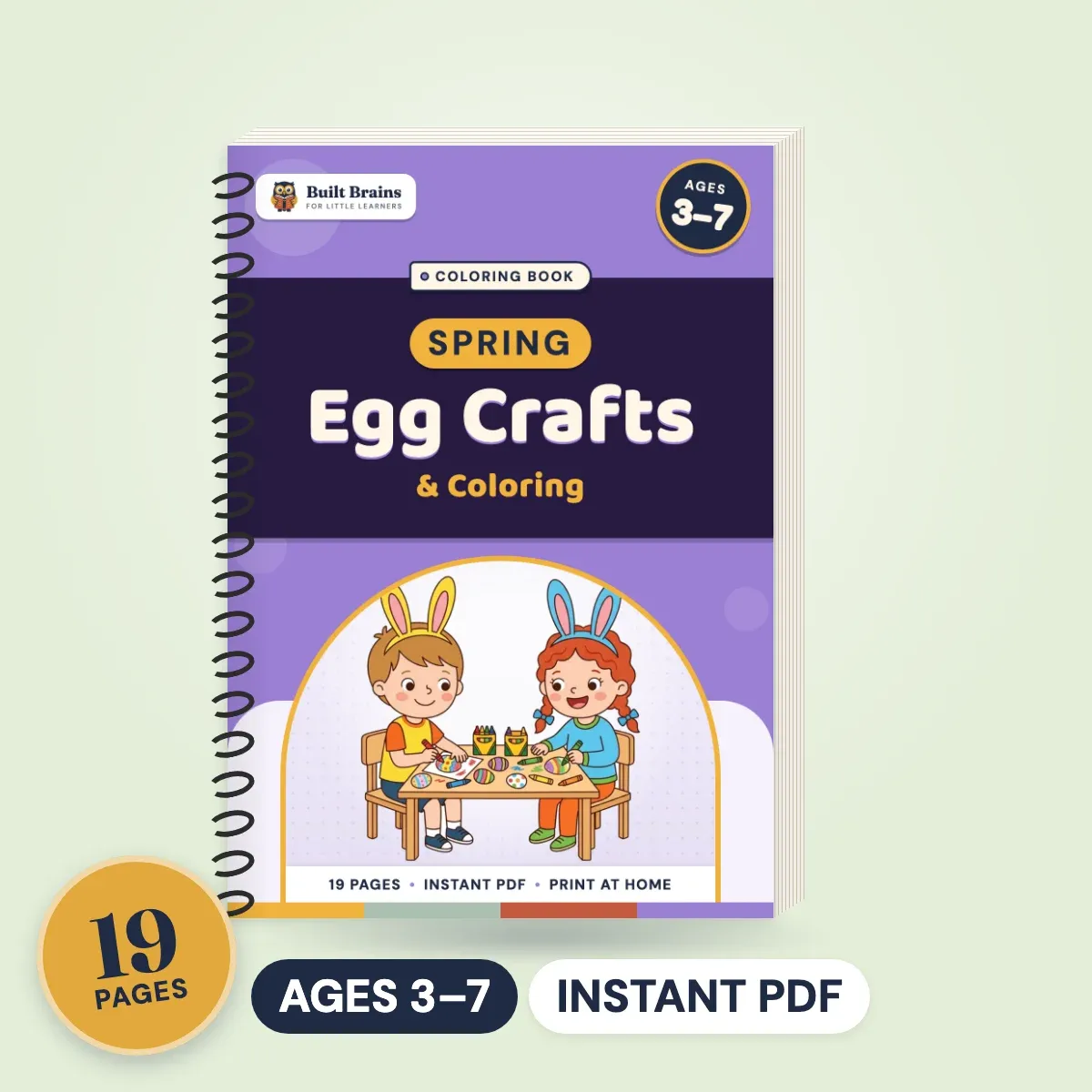
The Spring Egg Crafts & Coloring book has paper eggs to decorate, a bunny-ears headband and a stand-up chick to cut and fold, plus coloring scenes, for ages 3 to 7.
Sensory, movement and outdoor Easter ideas
These use up energy and give busy hands something to do while you set up the next thing.
- Shredded-paper egg bin. A tub of shredded paper with plastic eggs hidden inside. Add scoops and a basket. Our sensory bin ideas for toddlers has more fillers that work.
- Egg-and-spoon walk. A plastic egg on a wooden spoon, across the room and back. Slow and careful is the point.
- Egg roll race. Roll eggs down a ramp made from a cushion or a piece of cardboard. Which goes furthest?
- Bunny obstacle course. Hop over cushions, crawl under a chair, carry an egg to the finish.
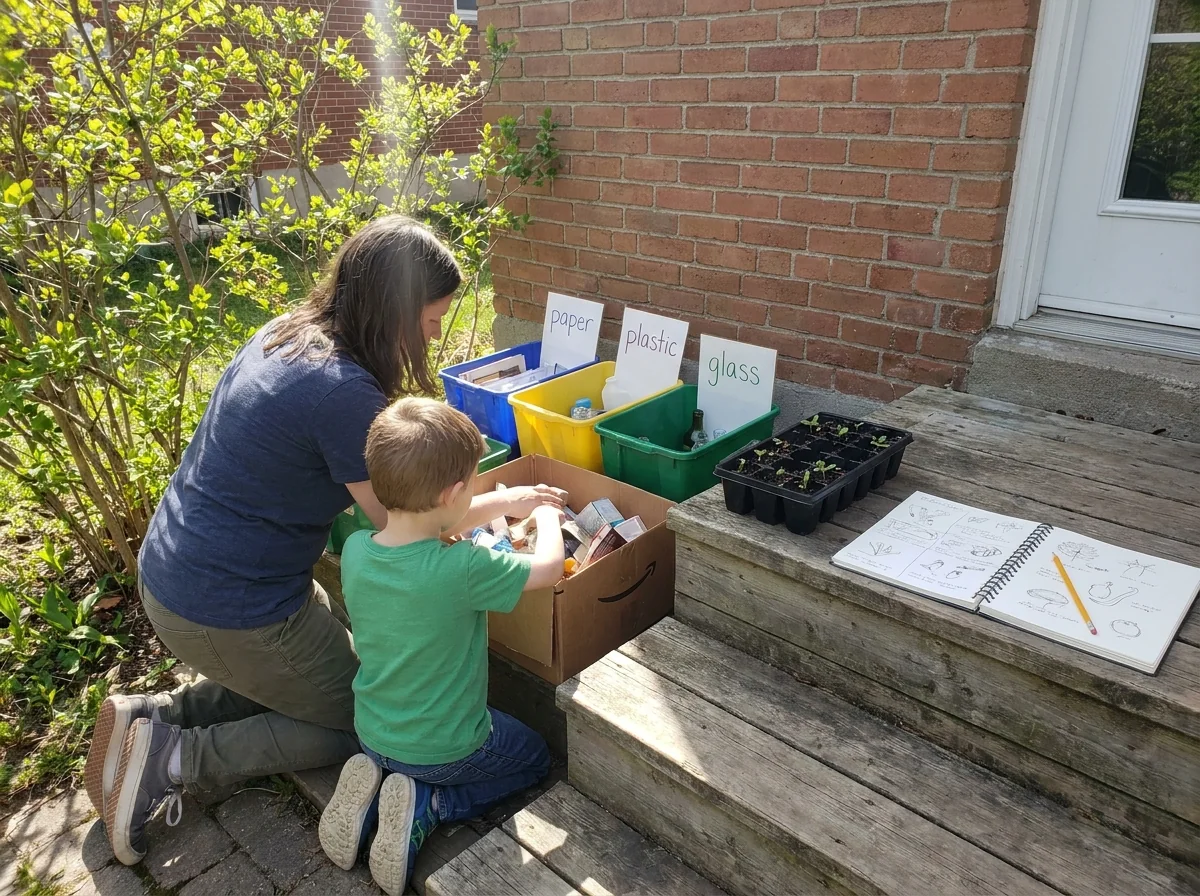
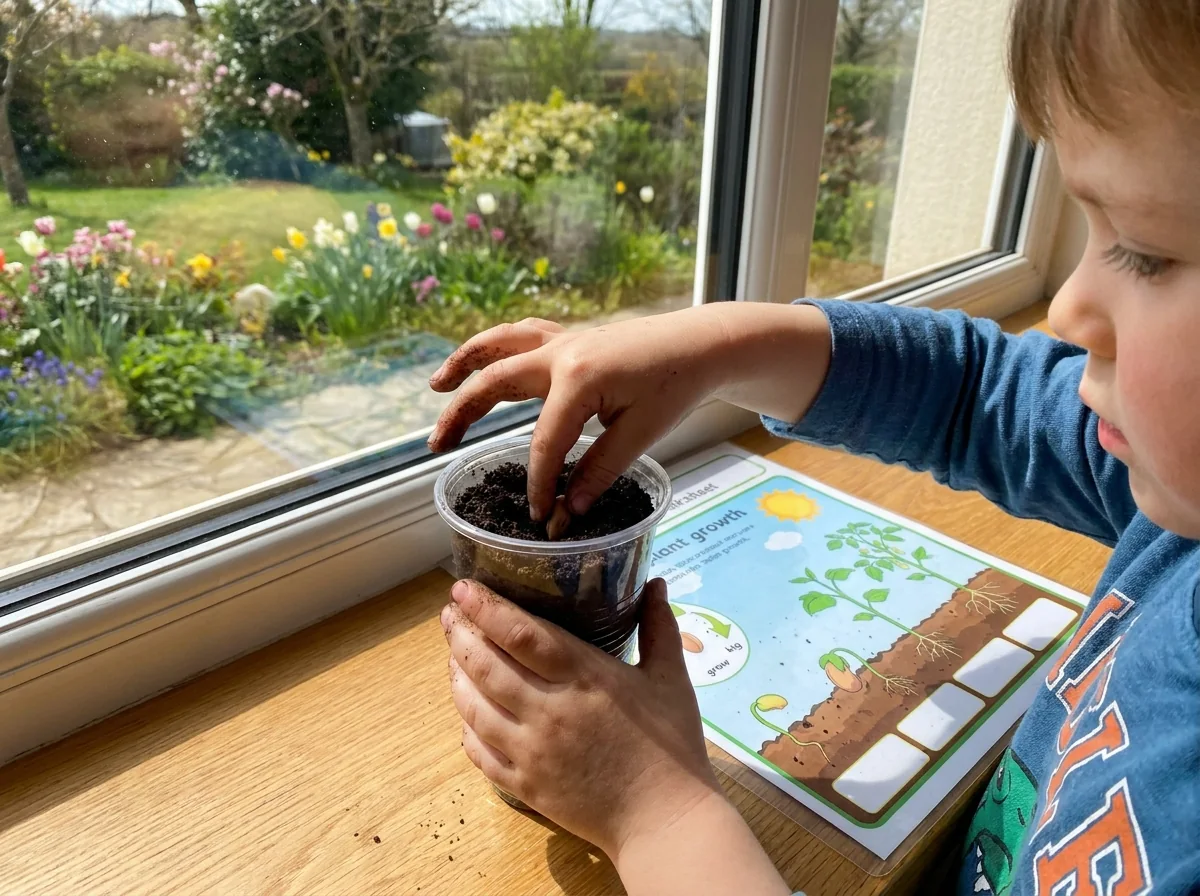
- Grass-head eggshell. Fill a clean eggshell with soil, sprinkle grass seed, draw a face and watch the "hair" grow over a week.
- Spring walk. Look for new leaves, buds, birds carrying twigs and, if you're lucky, ducklings. Count what you find.
A no-candy Easter basket list for preschoolers
A basket does not have to be full of candy to feel exciting. Mix one thing to do outside, one thing to make, one thing to read and one small surprise.
- Sidewalk chalk and a small bottle of bubbles
- Stickers or a sticker scene book
- Play dough and a plastic egg to use as a mold
- A picture book about spring, chicks or bunnies
- Egg-shaped crayons or a fresh pack of washable markers
- A packet of sunflower or bean seeds and a small pot
- Bath toys or a set of bath crayons
- A small puzzle, 12 to 24 pieces
- A printed activity book, ready to go in a folder with a pencil
- Rain boots or bright spring socks
- A "coupon" for a trip to the park, the library or a farm
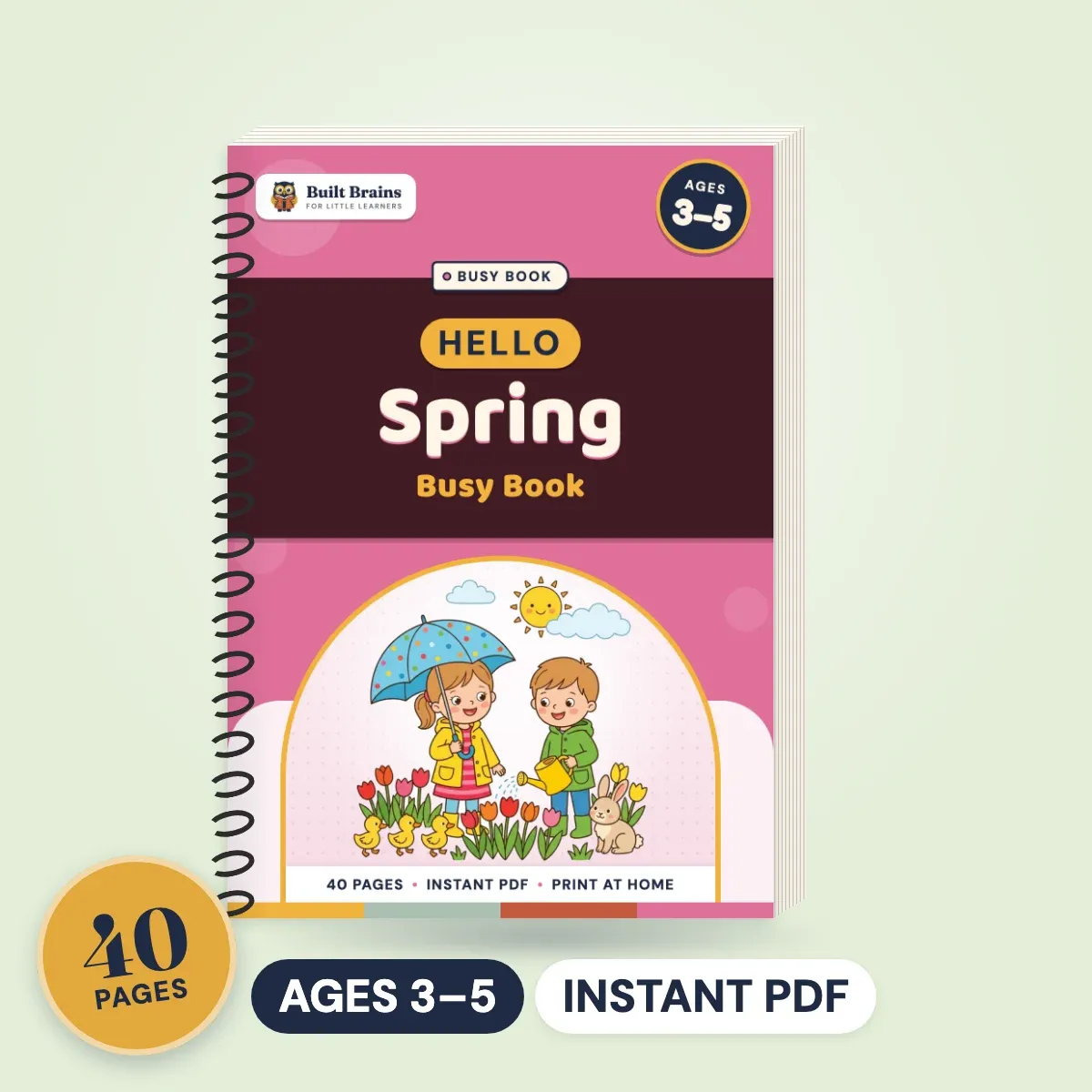
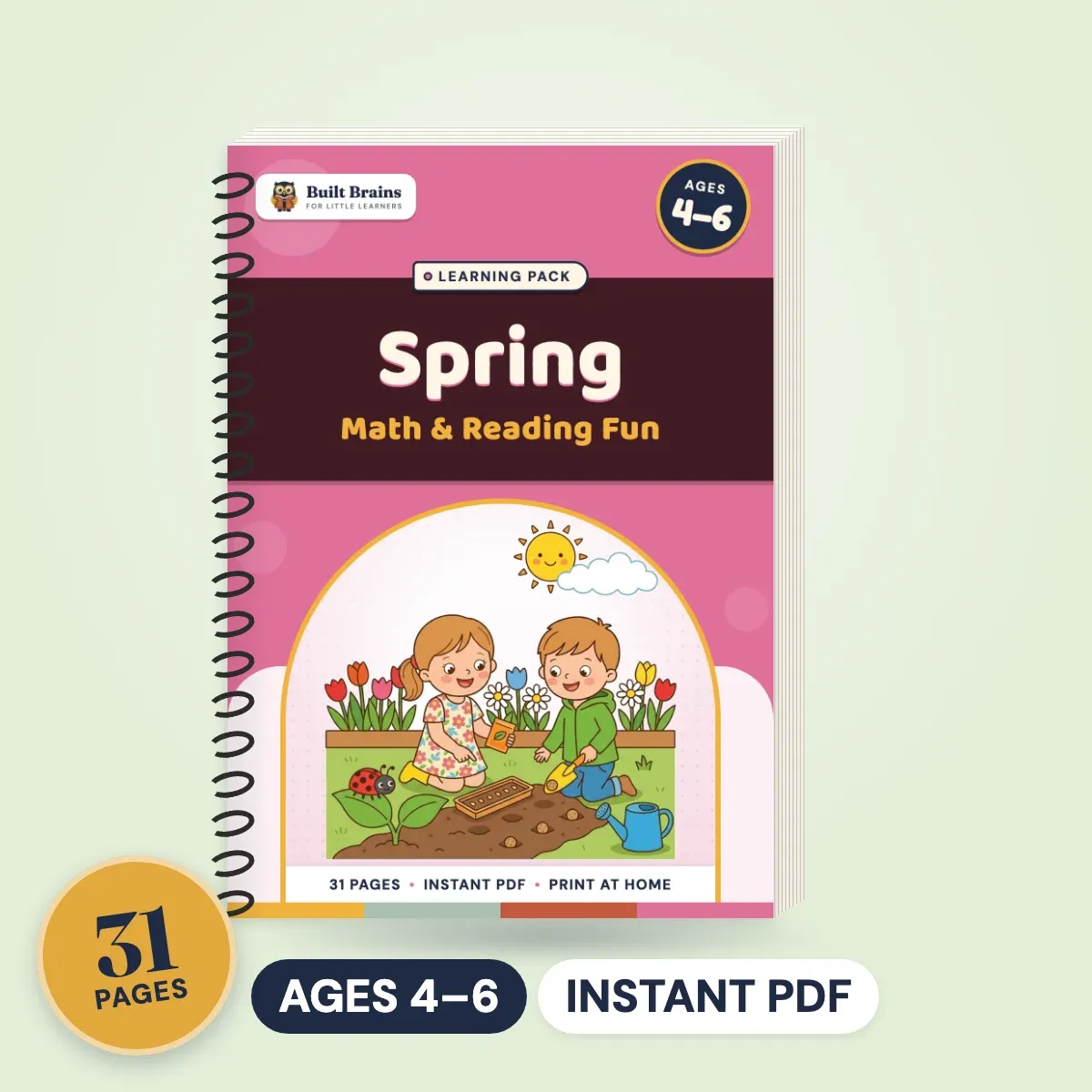
For the printed book, the Hello Spring Busy Book suits 3 to 5 year olds with bunnies, ducklings, tulips and puddles across coloring, tracing, mazes and counting pages, and Spring Math & Reading Fun gives 4 to 6 year olds counting to 20, simple adding and spring words to trace. Both print at home in minutes, so there's no last-minute shopping.
Sources
- HealthyChildren.org (American Academy of Pediatrics) – Choking Prevention: why small egg fillings and hard, round candies are a hazard for children under 4.
- CDC – Developmental Milestones: what most 3 and 4 year olds can do, which the counting and sorting ideas above are pitched to.
- NAEYC – 10 Things Every Parent Should Know About Play: how short, hands-on play supports learning in the preschool years.
Questions parents ask
Pick one active idea, one craft and one short table game. An egg hunt where each egg holds a letter or number, a paper-egg decorating craft with torn tissue paper, and counting jelly beans into an egg carton cover movement, hands and early learning in under an hour. Keep each activity to 10 or 15 minutes for 3 and 4 year olds.
Put something to learn inside or on each egg. Write letters on eggs and have your child match them to a card with their name, number the eggs and count them into an egg carton in order, or color-code eggs and sort them into matching baskets. Older preschoolers can hunt for eggs that rhyme or for two halves that make a picture.
Stickers, small erasers, mini crayons, bouncy balls, hair clips, foam letters, coins for a piggy bank, puzzle pieces to assemble at the end, and slips of paper with a jump or a dance to do. For 3 year olds, skip anything small enough to swallow and use eggs with pictures or letters written on the outside instead.
Three year olds do best with tearing, sticking and stamping rather than careful cutting. Try tissue-paper collage on a paper egg, a cotton-ball chick, a handprint bunny, or stamping egg shapes with a cut potato. Set out the materials and let them decide where things go. The result matters less than the practice their hands get.
Plastic eggs are fine to hunt for, but small fillings and hard, round candies such as jelly beans are choking hazards for children under 4, so keep them for sorting with you sitting beside your child, not for snacking on the move. Pediatricians advise keeping small objects away from toddlers and cutting round foods for young children.
Reviewed by
Maternelle (Kindergarten) Teacher
Clara Tremblay is a Maternelle educator in Quebec focused on French early literacy, fine motor development, and inquiry-based play.
More about Clara →