The best St. Patrick's Day activities for preschool (quick answer)
St. Patrick's Day falls on March 17 every year, right as most preschools move into a spring theme. For 3- to 5-year-olds the day works best as three mini-themes, each with its own skill:
- Rainbows for color sorting, ordering and a little science.
- Gold coins for counting, comparing and first adding.
- Shamrocks for shapes, cutting and fine motor practice.
Add one STEM build (the leprechaun trap), one movement session with Irish music and a two-sentence answer to "who was St. Patrick?" and you have a full, balanced day. The 32 ideas below are grouped that way, so pick one or two from each.
Rainbow activities: color sorting, order and science
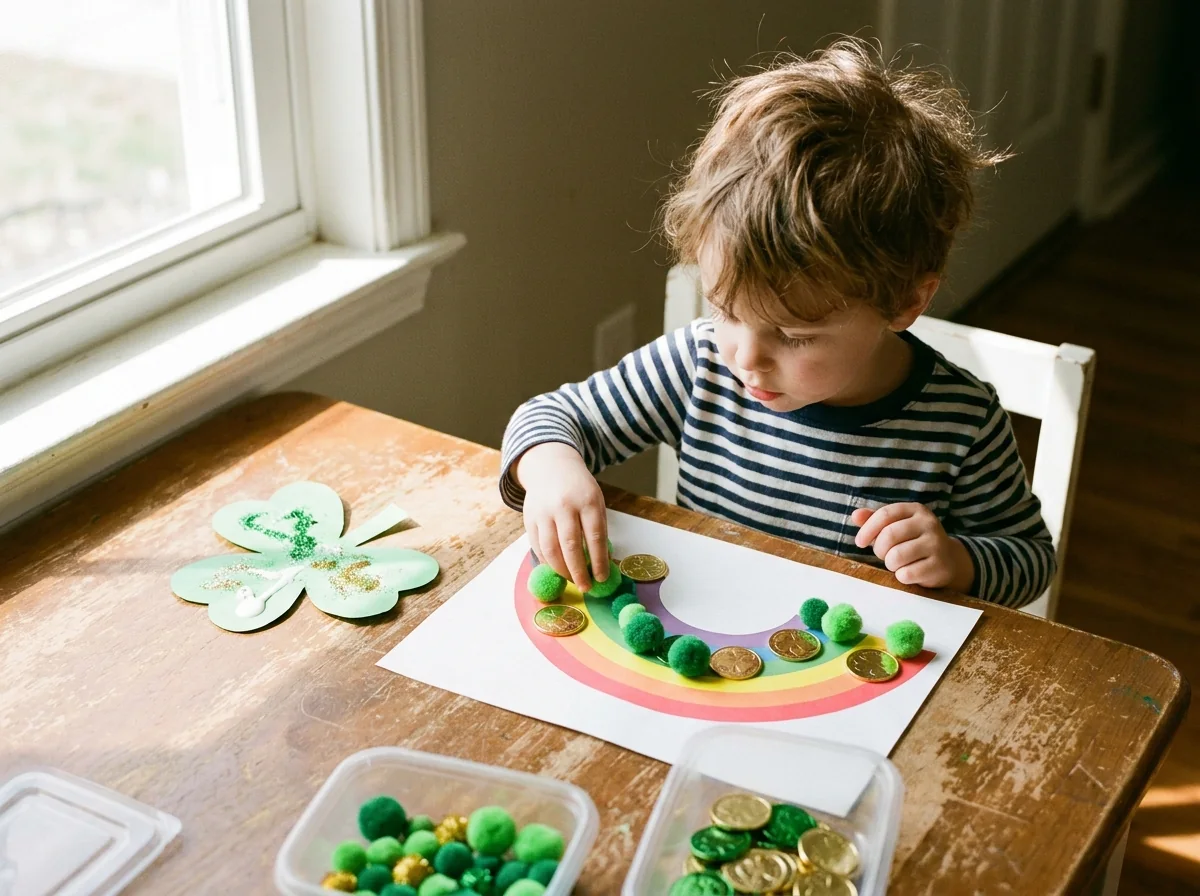
- Rainbow pom-pom sort. Tip mixed pom-poms onto a tray with six colored bowls. Add tongs for 4- and 5-year-olds. Builds: color naming, sorting, pincer grip.
- Rainbow in order. Strips of red, orange, yellow, green, blue and purple paper arranged into an arch. Builds: color order, sequencing.
- Rainbow color hunt. Carry a rainbow strip around the house or yard and find one object for each color. Builds: matching, observation.
- Walking water rainbow. Six cups in a row, red, yellow and blue water in alternate cups, empty cups between, folded paper towels bridging them. By afternoon the empty cups hold orange, green and purple. Builds: predicting, color mixing, patience.
- Mix your own rainbow. Three cups of red, yellow and blue water and droppers. "Can you make orange?" Builds: cause and effect.
- Rainbow rice bin. Rice dyed in six colors, scoops, and a pot to fill with "gold." Builds: scooping, color words, hide and find.
- Rainbow fruit plate. Strawberries, orange segments, pineapple, grapes, blueberries. Count each color before eating. Builds: counting, trying new foods.
- Rainbow hopscotch. Six colored squares taped in a path; call a color and your child jumps to it. Builds: listening, gross motor.
Gold coin math: counting, comparing and first adding
Plastic gold coins are cheap, satisfyingly clinky and easy to count. They are also a choking hazard under 4 (healthychildren.org), so supervise, count on a tray and use large cardboard coins for younger children.
- Numbered pots. Write 1 to 10 on cups and fill each "pot" with the matching number of coins. Builds: numeral recognition, one-to-one correspondence.
- Gold coin hunt. Hide 20 coins around the room; find, count, hide again for a sibling. Builds: counting to 20.
- More or fewer. Two pots with different amounts. Which has more? How many more? Line them up to check. Builds: comparing quantities.
- Coin estimation jar. Guess, then count in groups of five. Builds: estimating.
- Pot-of-gold toss. Toss coins into a pot from a tape line, then count the ones in and the ones out. Builds: counting two groups, adding (ages 4–5).
- Coin patterns. Gold, silver, gold, silver with two kinds of coins. Builds: patterning.
- Ten-frame treasure. Drop coins onto a ten frame. How many more to fill it? Builds: number bonds to 10.
- Sink or float. Will a plastic coin float? A penny? A leaf? Predict, test, sort. Builds: prediction, science words.
Say the numbers out loud as you count and compare; NAEYC's guidance on math talk is a good reminder that the talking is the teaching. For more counting games, see math activities for preschoolers.
The Lucky Leprechaun St. Patrick's Pack puts the same ideas on paper for ages 4–6: count gold coins, add shamrocks, trace and read St. Patrick's words, and color rainbow and shamrock scenes, with patterns, mazes and dot-to-dots.
Shamrock shapes and fine motor practice
A shamrock is three hearts joined at the point, which makes it a shape lesson in disguise.
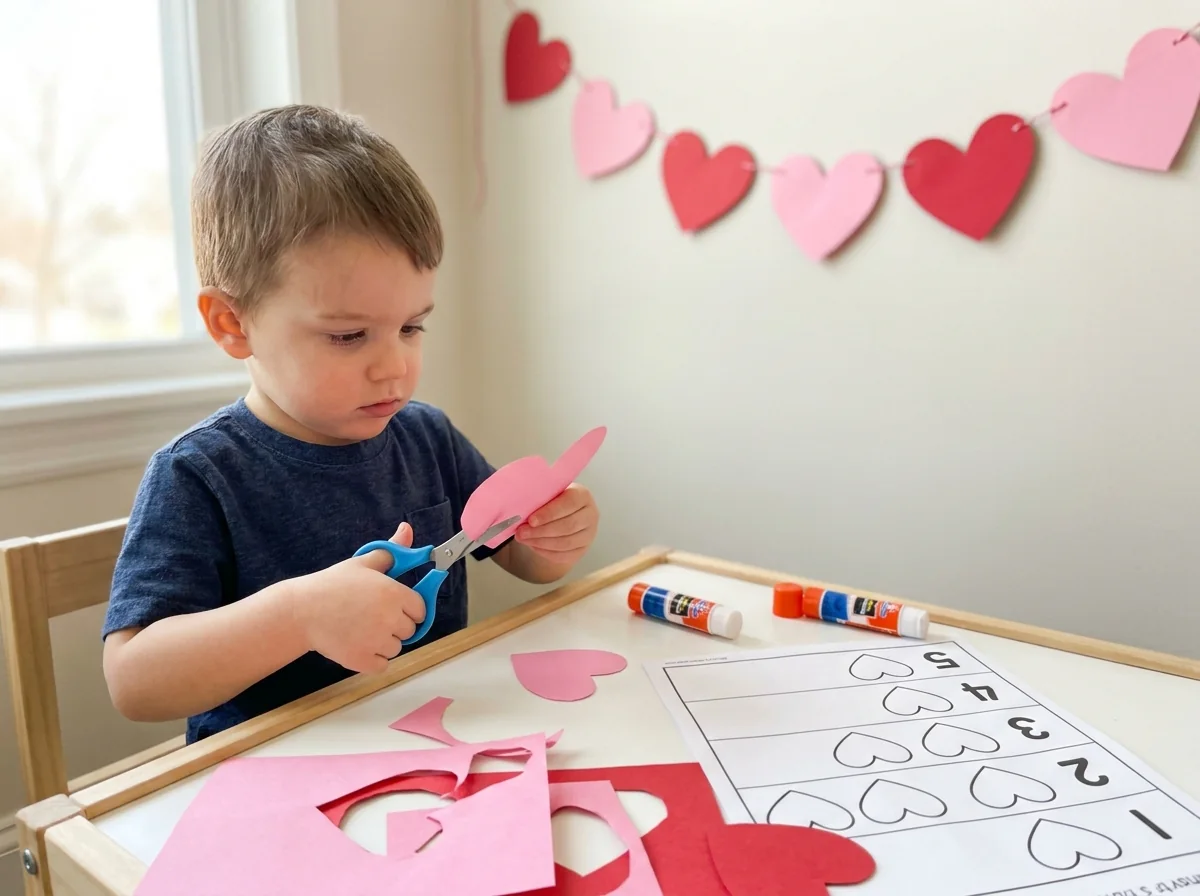
- Three hearts make a shamrock. Fold and cut three paper hearts, glue them point to point, add a stem. Builds: composing shapes, symmetry, cutting.
- Heart-punch shamrocks. A heart-shaped craft punch and green paper; your child punches, you help arrange. Builds: hand strength.
- Shamrock lacing. Punch holes around a cardboard shamrock and lace with yarn. Builds: bilateral coordination.
- Shape leprechaun. A circle face, a rectangle hat with a square buckle, a triangle beard, oval shoes. Name every shape as it goes on. Builds: shape names, assembling parts.
- Shamrock play dough. Green dough, a shamrock cutter and gold coins to press in and count. Builds: hand strength, counting.
- Cut along the shamrock. Draw a thick line around a shamrock and let your child cut it out. Three-year-olds snip; most 4- and 5-year-olds can turn the corners. Builds: scissor control.
- Shape hunt. Find hearts, circles and triangles around the house, then "a shape with three parts." Builds: shape attributes.
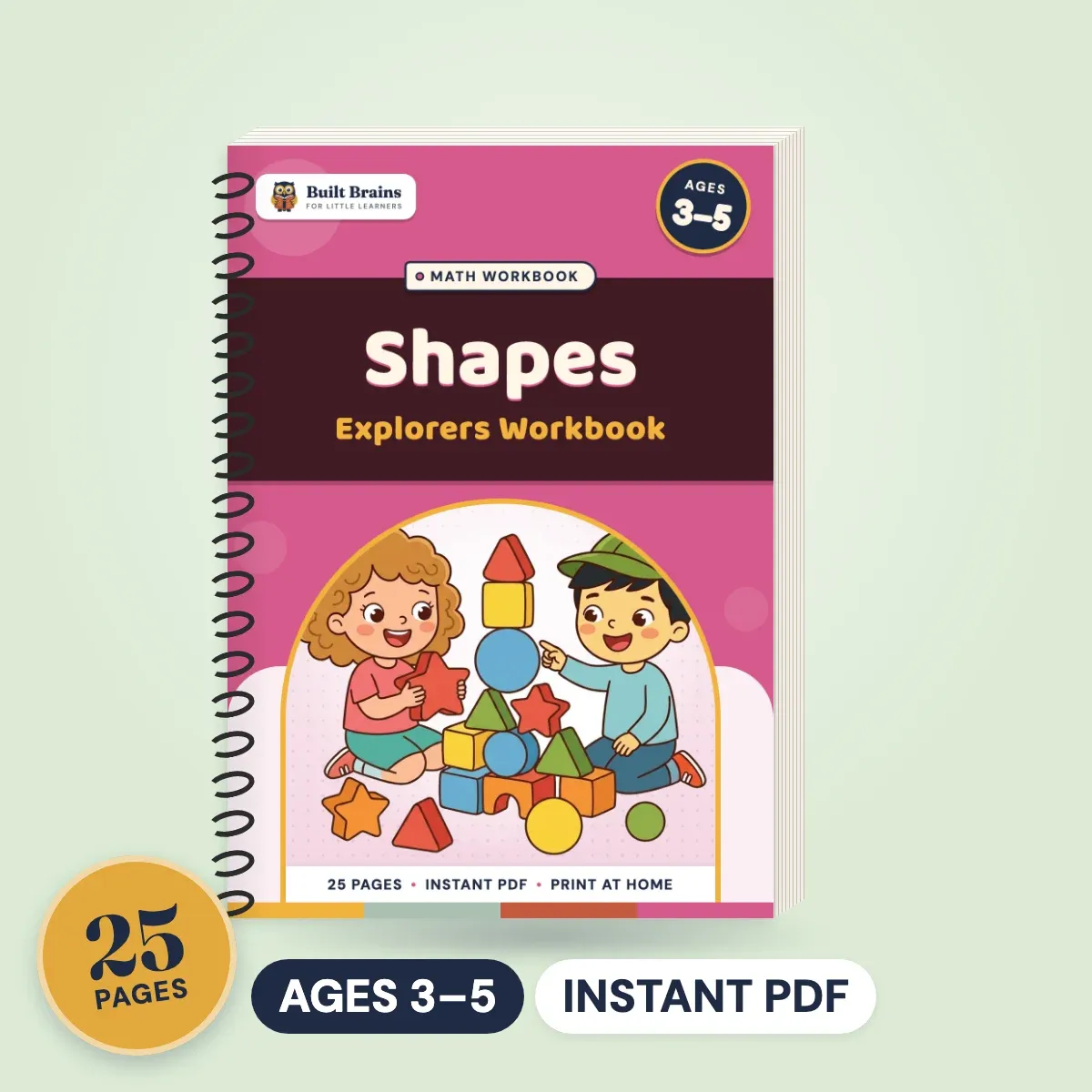
The Shape Explorers Workbook covers the eight shapes a leprechaun is made of (circle, square, triangle, rectangle, oval, star, heart and diamond) with tracing, find-the-shape, patterns and symmetry pages for ages 3–5. More hand-strength ideas: fine motor activities for preschoolers.
Leprechaun trap STEM and building challenges
- The leprechaun trap. Give your child a shoebox, tape, craft sticks, a paper-towel tube and a few gold coins, then talk through four questions: How will he get in (a ramp, a ladder)? What will make him stay (a trapdoor, a lid propped on a stick)? What is the bait (coins, a rainbow)? How will we know he came? A few tiny green footprints the next morning are optional. Builds: planning, cause and effect, problem solving.
- Rainbow bridge challenge. Build the longest arch from blocks that a toy car can drive under. Builds: balance, trial and error.
- Gold tower. Stack coins or cups as high as possible and count the layers. Builds: fine motor, counting.
- Pot-of-gold ramp. Roll coins down a cardboard ramp into a pot and change the angle. Which gets more in? Builds: early physics, comparing.
Keep the leprechaun a story your family tells together. Most preschoolers love the make-believe, but a few find the idea of a creature sneaking in at night unsettling. If yours does, make the trap "for a toy leprechaun" and skip the footprints. The build itself, planned and tested by the child, is the whole value, and that kind of open-ended play is exactly what pediatricians recommend at this age (healthychildren.org on the power of play).
Irish music, movement and stories
- Jig freeze dance. Play Irish fiddle or tin whistle music; dance fast, freeze when it stops. Builds: listening, self-regulation.
- Follow-the-rainbow course. An obstacle course with a colored marker at each station: crawl under the red chair, hop to the yellow cushion. Builds: color words, directions, gross motor.
- Green scavenger hunt outside. How many green things can you find in the yard in March? Builds: observation, early spring science.
- Say hello in Irish. "Dia duit" (roughly "JEE-ah gwit") is hello in the Irish language. Builds: curiosity about languages.
- Irish stories and soda bread. Borrow picture books set in Ireland or retelling Irish folk tales, then bake a simple soda bread: your child measures and stirs, you handle the oven. Builds: listening, measuring, following steps.
Who was St. Patrick? A short, gentle answer
Children will ask, so here is the accurate version in preschool-sized pieces. Patrick lived about 1,600 years ago. He was born in Britain, was taken to Ireland as a teenager, and later returned to Ireland, where he spent the rest of his life as a teacher and religious leader. He became Ireland's patron saint, and March 17, traditionally the day he died, became his feast day. A legend says he used the three-leaf shamrock in his teaching, which is why it became the holiday's symbol. The parades, green clothing and city-wide parties grew up much later, especially among Irish communities in the United States (History.com).
For a 4-year-old: "St. Patrick was a man who lived in Ireland a very long time ago. On March 17 people remember him and celebrate Ireland, with green, shamrocks and music." Leprechauns, you can add, are a story people tell for fun.
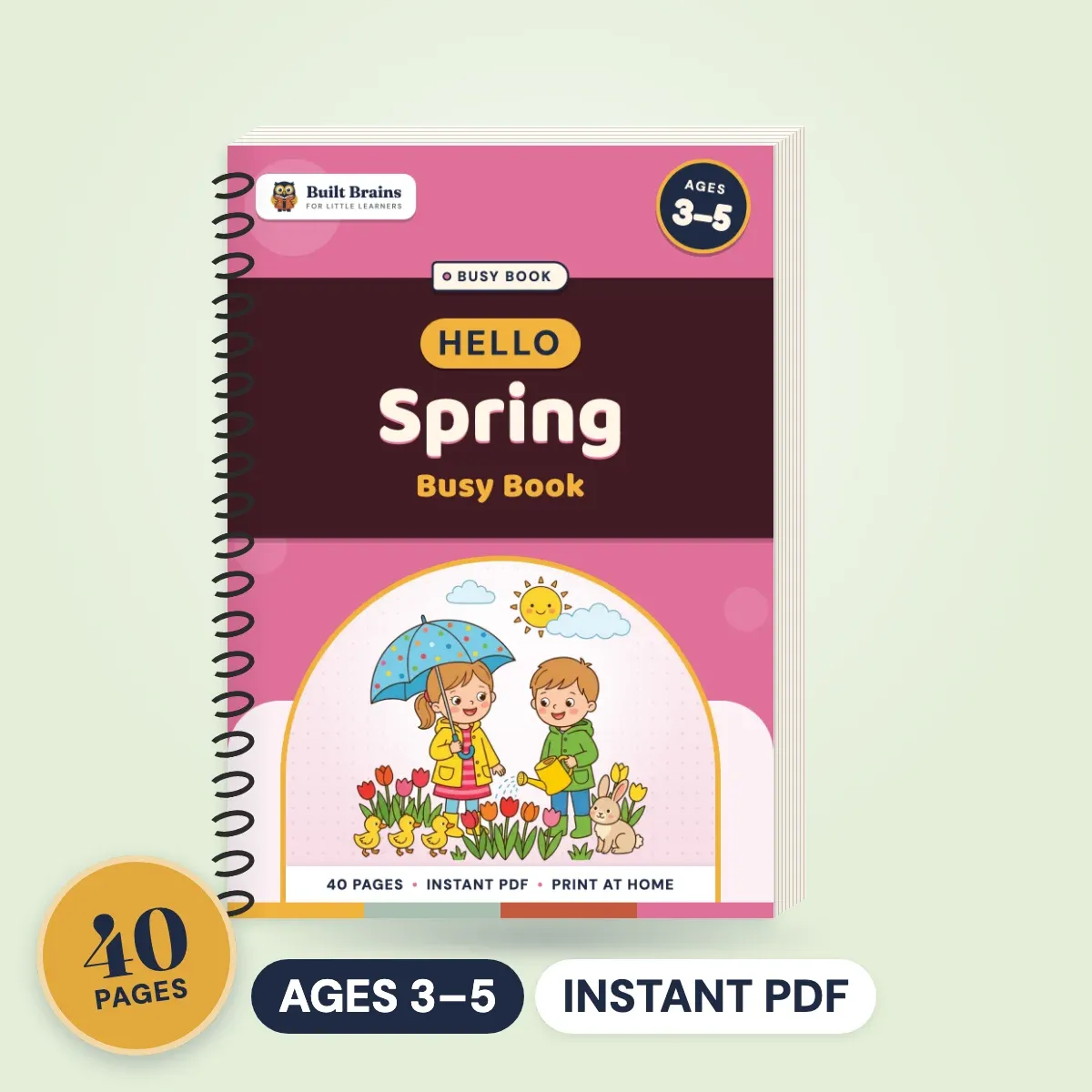
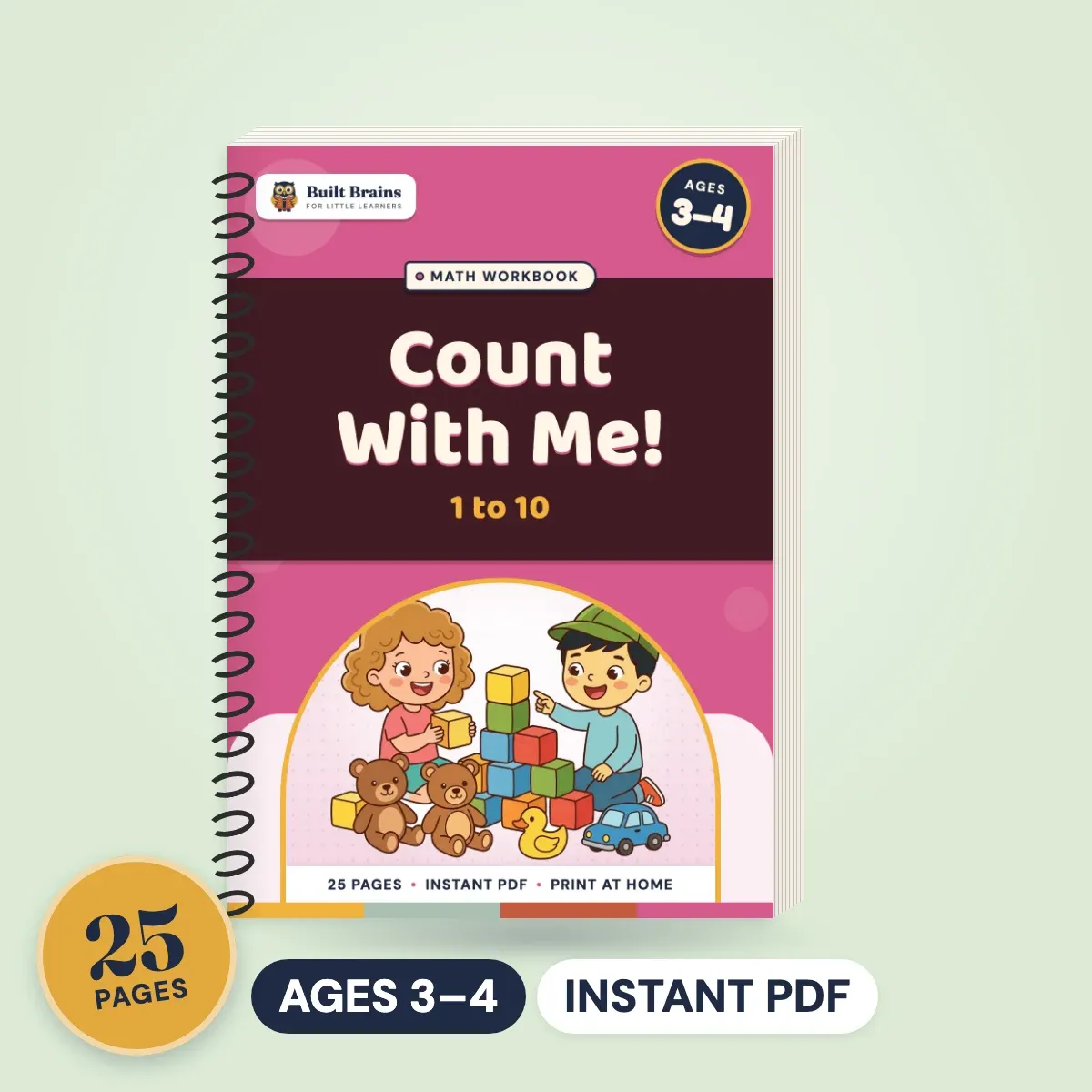
If you are running a spring theme alongside, the Hello Spring Busy Book picks up where the shamrocks leave off with tulips, ducklings and puddles for ages 3–5, and Count With Me! 1 to 10 is the gentle counting book to use before the gold coin games with 3-year-olds. For what else a 3-year-old is typically ready for this spring, see what should a 3 year old know.
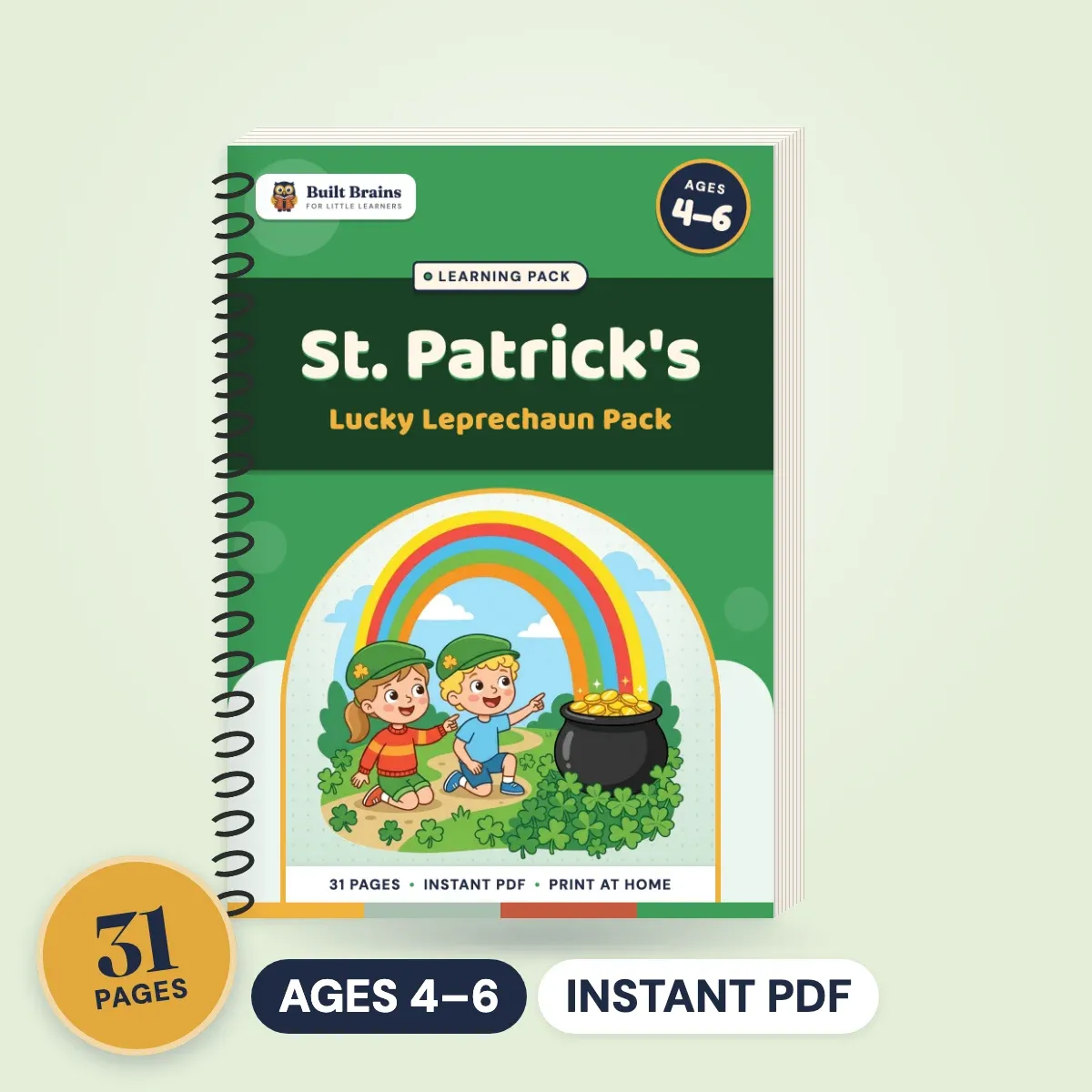
Ages 4–6 · 31 pages
Lucky Leprechaun St. Patrick's PackRainbows, shamrocks and gold to count and read
Sources
- History.com – History of St. Patrick's Day: who St. Patrick was and how the holiday's traditions developed.
- healthychildren.org – Choking Prevention: coins and other small objects as choking hazards for children under 4.
- healthychildren.org – The Power of Play: why open-ended, child-led play such as building a trap matters for preschoolers.
- NAEYC – Support Math Readiness Through Math Talk: why counting and comparing out loud matters.
Questions parents ask
Rainbow color sorting with pom-poms, counting plastic gold coins into numbered pots, cutting and lacing shamrocks, building a leprechaun trap from a shoebox and a freeze dance to Irish fiddle music. Each takes 10 to 15 minutes and builds a real skill: colors, counting, shapes, planning and listening. Pick one from each group for a full themed day.
Gold coin hunt (hide 20 coins, count them back), pot-of-gold toss, rainbow hopscotch, a green scavenger hunt outside and a jig freeze dance. None needs more than coins, tape and music, and all work for two children or a whole class. Keep coins for children over 4 or use large cardboard ones.
Keep it short and true: "St. Patrick was a man who lived in Ireland a very long time ago, and people in Ireland remember him on March 17. Now it is a day to celebrate Ireland, with green clothes, shamrocks and music." Leprechauns and pots of gold are stories people tell for fun, like the Tooth Fairy.
The leprechaun trap is the classic: a box, a ramp, a trigger and bait, planned and tested by your child. Add a walking-water rainbow with paper towels, mixing red, yellow and blue water, sink-or-float with coins and a tallest-rainbow-bridge block challenge. Ask "what will happen?" before each try and "why?" after.
Plastic coins are a choking hazard for children under 4 and for anyone who still mouths objects, so use them only with close supervision, swap in large foam or cardboard coins for toddlers, and count on a tray. Real coins are a choking risk too and carry germs; keep them for older children.

Reviewed by
Year 1 Teacher & KS1 Phase Lead
Tom Evans is a Key Stage 1 Phase Lead dedicated to smoothing the transition from EYFS play-based learning to structured Year 1 curriculum.
More about Tom →