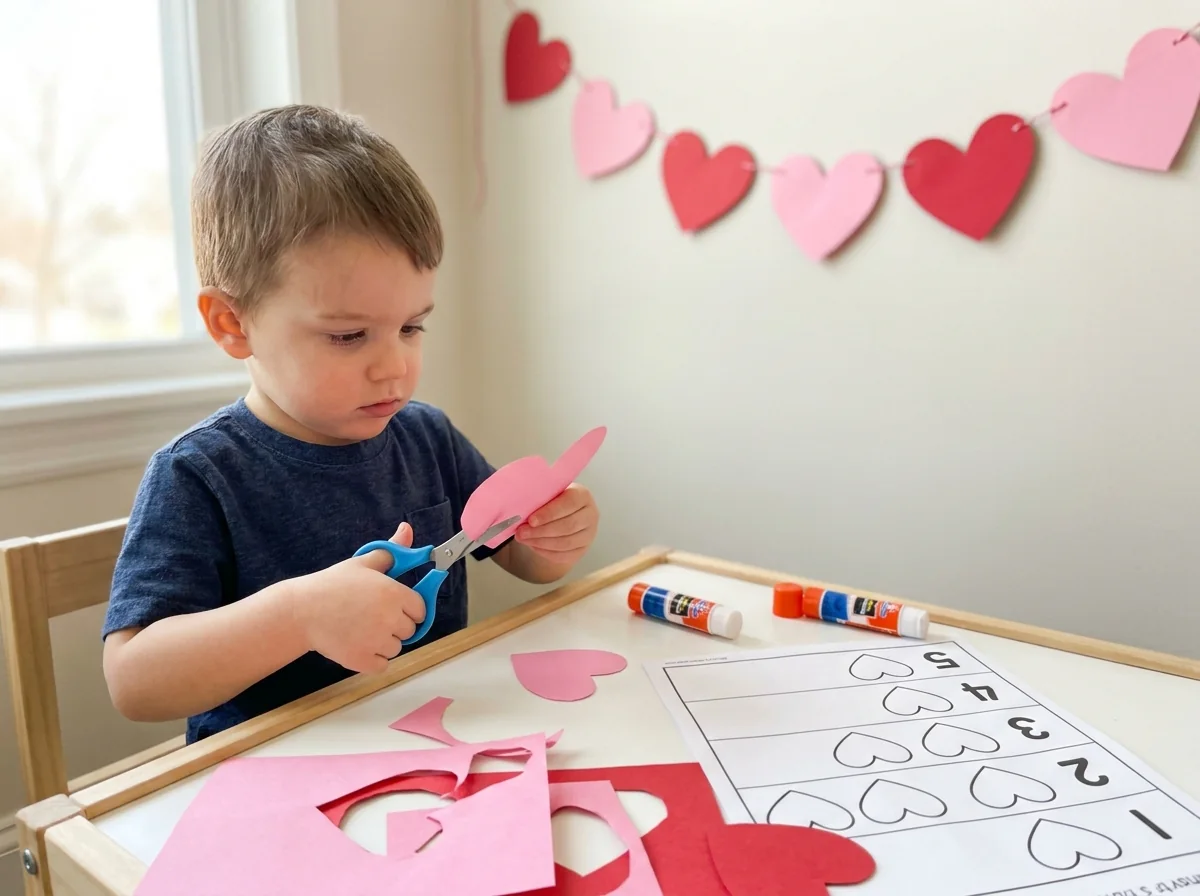
The best Valentine's Day activities for preschoolers (quick answer)
If you only do five things this February, make them these: heart counting cups (math), a kindness jar (feelings and words), a torn-paper heart collage (fine motor), a pink rice sensory bin (play) and three cards for friends signed by your child (name writing). Spread over a week, that is about an hour of learning that covers counting, vocabulary, hand strength, sensory play and early writing. Everything else below is a menu.
Preschoolers also ask where the day comes from. The short, accurate version: Valentine's Day is named for Saint Valentine, a Christian figure from the 3rd century; it became linked with love and romance in the Middle Ages, and took off as a card-giving holiday when printed valentines became popular in the 1800s (History.com). For a 4-year-old, "a day for showing people we care about them" is plenty.
Heart math: counting, patterns and graphing
Hearts are a perfect counter: cheap, flat and interesting for about two weeks a year. Use foam, paper or felt hearts rather than candy, so the math is not interrupted by eating the manipulatives.
- Heart counting cups. Write 1 to 10 on cups and fill each with that many hearts. Builds: numeral recognition, one-to-one correspondence.
- Heart ten frame. Fill a ten frame with hearts and ask how many more make 10. Builds: number bonds (ages 4–5).
- Heart patterns. Red, pink, red, pink; then red, red, white. Your child continues it, then makes one for you. Builds: AB and AAB patterns.
- Heart size line-up. Five hearts of different sizes, ordered smallest to biggest. Builds: seriation, size words.
- Favorite color graph. Everyone picks a heart color and sticks it in a column. Which column is tallest? Builds: early graphing.
- Heart puzzles. Cut hearts in half with a zigzag, a numeral on one side and dots on the other. Builds: numeral to quantity.
- Heart hopscotch. Tape hearts numbered 1 to 10 on the floor and jump the count. Builds: number order, gross motor.
- Fold-and-cut symmetry. Fold paper, draw half a heart, cut, open. Builds: symmetry, scissor skills.
- Heart addition mats. "Three hearts and two more, how many?" Builds: adding within 5 with objects (ages 4–5).
- Estimation jar. Fill a jar with hearts, guess, then count in fives. Builds: estimating.
Talk through the math as you go ("you have more red ones, how many more?"). NAEYC's note on math talk explains why the talking is the teaching. For more counting games, see math activities for preschoolers.
On paper, the Love & Learn Valentine's Pack counts hearts to 20, adds and takes away candies, and has patterns, mazes, dot-to-dots and card-making scenes to color. It is pitched at ages 4–6, so save it for the older end of preschool.
Kindness and feelings vocabulary
"Be kind" is an instruction. "You saw Maya was sad and gave her a turn; that was kind" is a lesson. Valentine's week is a natural time to give children words for feelings and for the small acts that go with them.
- Kindness jar. Every kind act anyone spots goes in as a paper heart; read them out at dinner. Builds: naming kind acts.
- Feelings hearts. Happy, sad, mad, scared and surprised faces on hearts. "Which heart are you right now?" Builds: emotion vocabulary.
- "I love you because" book. One dictated page per family member; you write, your child illustrates. Builds: expressing affection, print awareness.
- Compliment circle. Pass a heart; whoever holds it says one nice thing about the person on their left. Builds: giving and receiving compliments.
- Helping hands. Trace your child's hand ten times and color one each time they help. Builds: a visible record of helping.
- Friendship read-alouds. Library books about friends and feelings, with "how does she feel?" on every page. Builds: perspective-taking.
- Puppet repair shop. Two puppets argue over a toy and your child helps them fix it. Builds: problem-solving scripts ("Can I have a turn when you're done?").
- What a good friend does. A chart: shares, takes turns, gentle hands, says sorry, checks you're okay. Builds: concrete expectations.
Empathy grows through exactly these small, repeated conversations, as Zero to Three explains. Two-year-olds mostly watch; by 4, many children will comfort a sad friend unprompted.
Fine-motor Valentine crafts
Every one of these works the small hand muscles that later hold a pencil. Keep the finished product loose; the process is the point. More in fine motor activities for preschoolers.
- Torn-paper heart collage. Tear pink, red and white paper and glue the bits inside a big heart outline. Builds: tearing (hard work at 3), gluing.
- Hole-punch and lace. Punch holes around a cardboard heart and lace with yarn. Builds: bilateral coordination.
- Tissue-paper suncatcher. Press tissue squares onto a heart cut from clear contact paper. Builds: pincer grip.
- Doily painting. Paint over a paper doily on card, then lift it off. Builds: brush control, noticing pattern.
- Cardboard-tube heart stamps. Pinch a cardboard tube into a heart and stamp. Builds: wrist movement.
- Fingerprint hearts. Two thumbprints make one heart; fill a card with them. Builds: fingertip isolation.
- Pipe-cleaner heart threading. Bend a pipe cleaner into a heart and thread beads or cut straws on. Builds: threading precision (ages 3+, no mouthing).
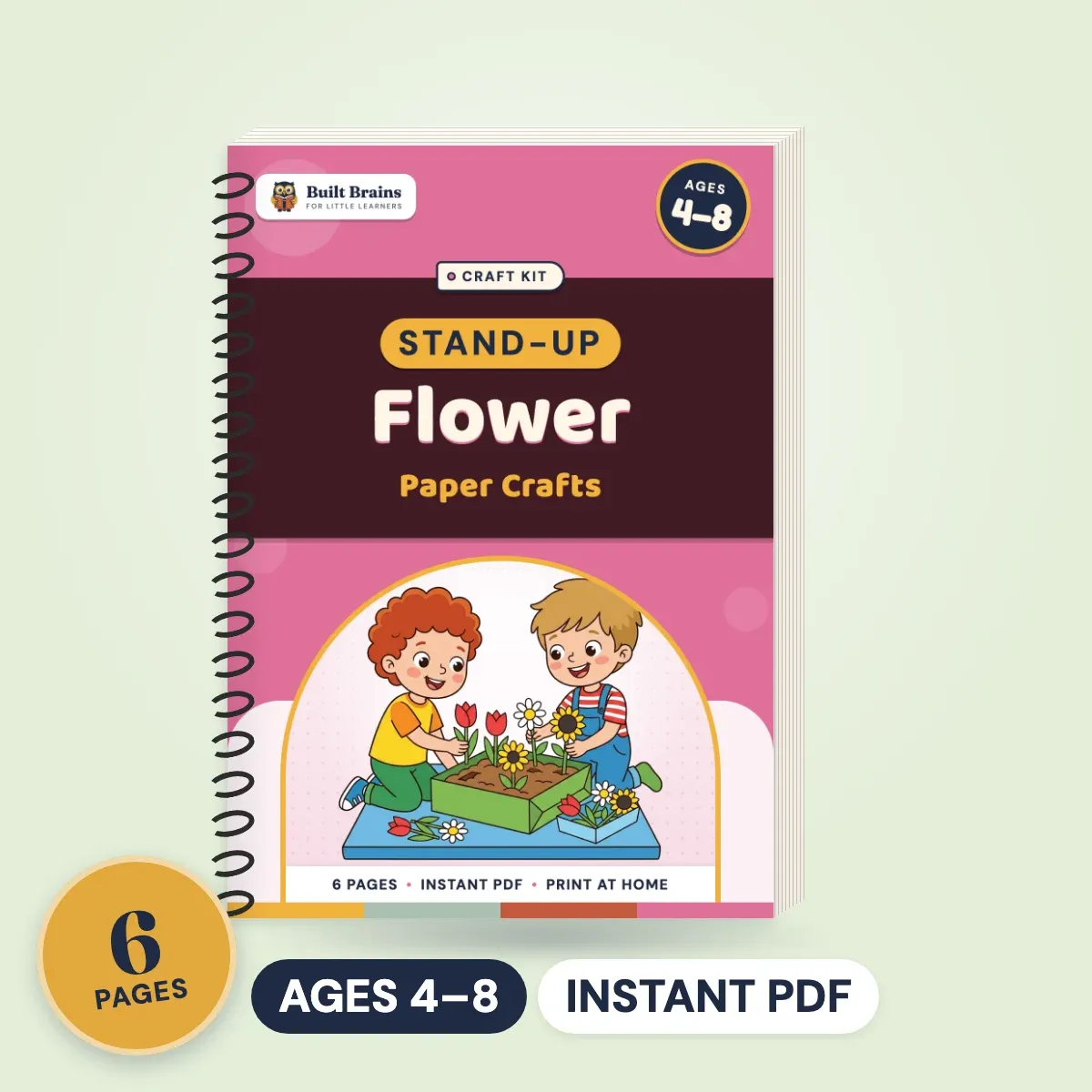
- Paper flower bouquet. Color, cut and fold stand-up paper flowers to give a grandparent instead of a store bouquet. The Stand-Up Flower Paper Crafts have tulips, daisies, roses and more; the cutting suits ages 4 and up. Builds: scissor skills, following steps.
Valentine sensory bins and play
Sensory play is where toddlers get their Valentine's Day. Set bins on a tray or an old sheet, and remember that small hearts, beads and candies are choking hazards for children under 4 (healthychildren.org): use oversized hearts and big scoops for the youngest. More toddler-safe setups: sensory bin ideas for toddlers.
- Pink rice bin. Rice dyed with a drop of food coloring, scoops, cups and big foam hearts to find. Builds: scooping, pouring, hide and find.
- Love potion water play. Pink water, a drop of vanilla, flower petals, funnels and whisks. Builds: capacity, describing words.
- Heart play dough. Red dough, heart cutters, a rolling pin and buttons to press in. Builds: hand strength.
- Valentine post office. A shoebox mailbox, envelopes, stickers for stamps and a bag to deliver. Builds: pretend play, print awareness.
- Frozen hearts. Freeze foam hearts in a tub of water and free them with warm water from a dropper. Builds: patience, cause and effect.
- Heart hunt. Hide 20 paper hearts around a room; find them, count them, hide them for a sibling. Builds: counting to 20, position words.
Cards for friends: name writing without tears
A class of 18 means 18 names, which is a lot for a 3-year-old. Spread it over the week before and aim for the signature, not the whole card.
- Ages 2–3: stamp or sticker. A name stamp or a printed name sticker, plus one scribble or fingerprint heart per card.
- Ages 3–4: highlighter trace. You write the name in yellow highlighter; your child traces it. Two or three cards a day.
- Ages 4–5: copy from a card. Your child copies their name from a model with the first letter in a different color as the start point.
Write the "To" labels yourself, and keep the class list visible, with photos if the school shares them. The full method is in how to teach a child to write their name.
A no-candy Valentine party plan
Sugar, allergies and dozens of identical candy cards make the standard party stressful. This 75-minute plan works for a preschool class, a co-op or four friends in a living room.
| Time | What | Ideas used |
|---|---|---|
| 0–10 min | Arrival: heart hunt around the room | #32 |
| 10–40 min | Four stations, 7 minutes each: counting cups, torn-paper collage, pink rice bin, friendship book corner | #1, #19, #27, #16 |
| 40–55 min | Snack: strawberries, heart-cut watermelon or cheese, pretzels, water | – |
| 55–65 min | Card delivery into each child's decorated bag | #30 |
| 65–75 min | Compliment circle, then games to finish | #14, #36–38 |
Three games that need nothing but hearts and music:
- Musical hearts. A paper heart on the floor for every child; when the music stops, stand on a heart. Nobody is out. Builds: listening, stopping on cue.
- Bean-bag heart toss. Toss into heart targets taped on the floor, then count the hits. Builds: aim, counting.
- Pass the heart. Pass a heart to music; whoever holds it when the music stops gets a compliment from the group. Builds: turn-taking, kind words.
Non-food favors that cost very little: a pencil, bubbles, a bookmark, a sheet of stickers or a page from a busy book rolled up with a ribbon. Tell families two weeks ahead that the party is candy-free and allergy-aware, and ask for helpers at stations rather than food.
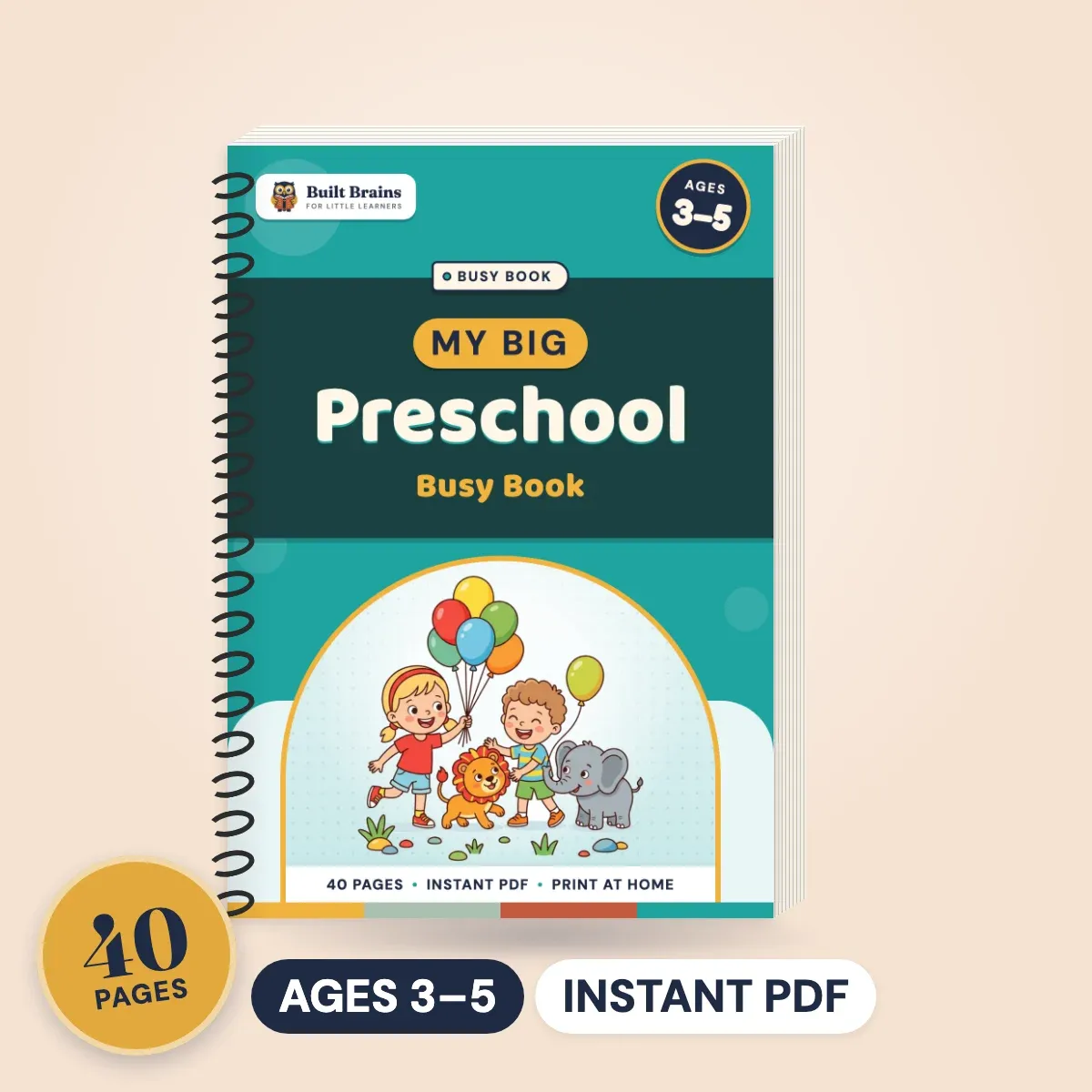
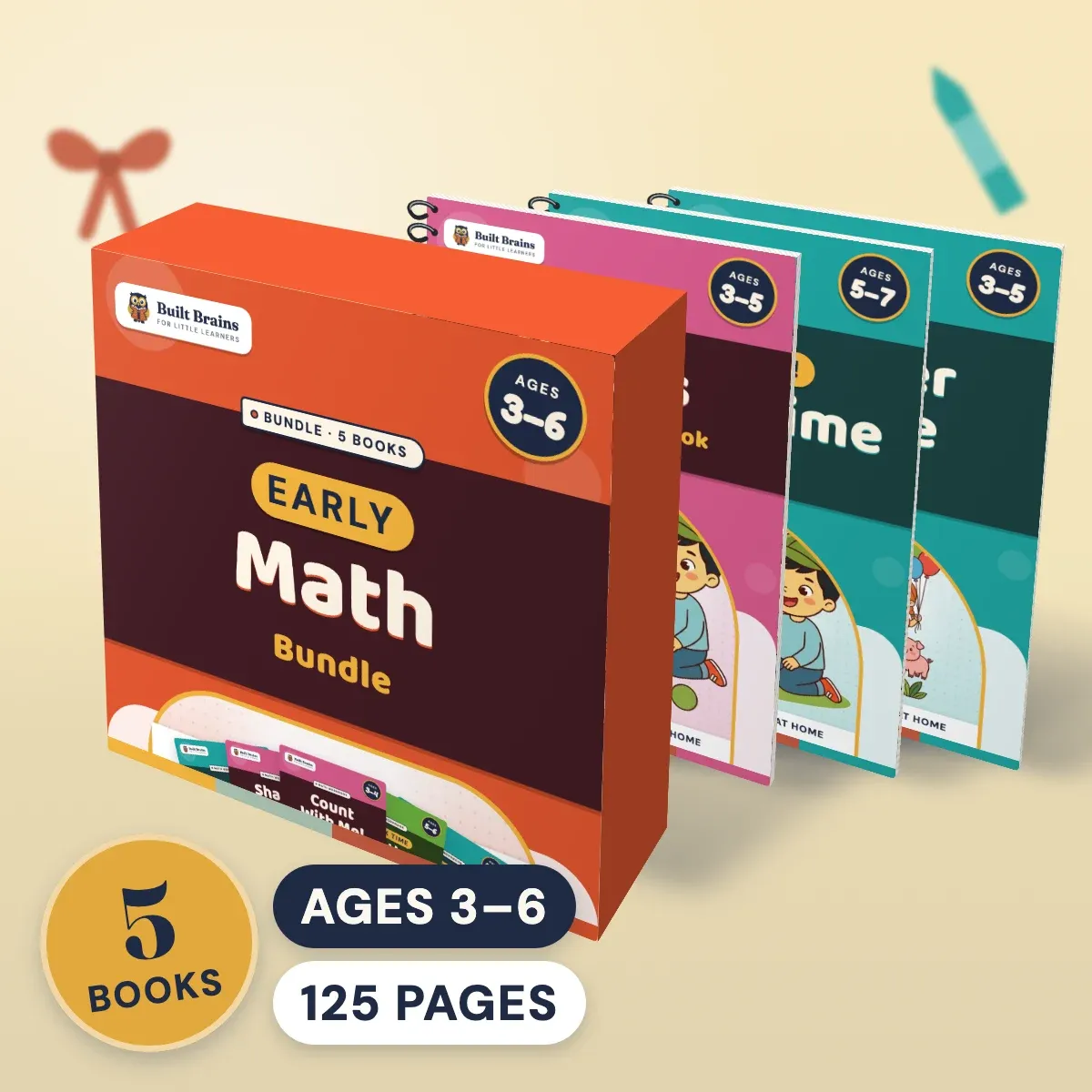
For a printable to send home or keep in a quiet corner, My Big Preschool Busy Book has coloring, tracing, counting and mazes for ages 3–5, and the Early Math Bundle carries the heart counting on into numbers to 20, shapes and early adding.
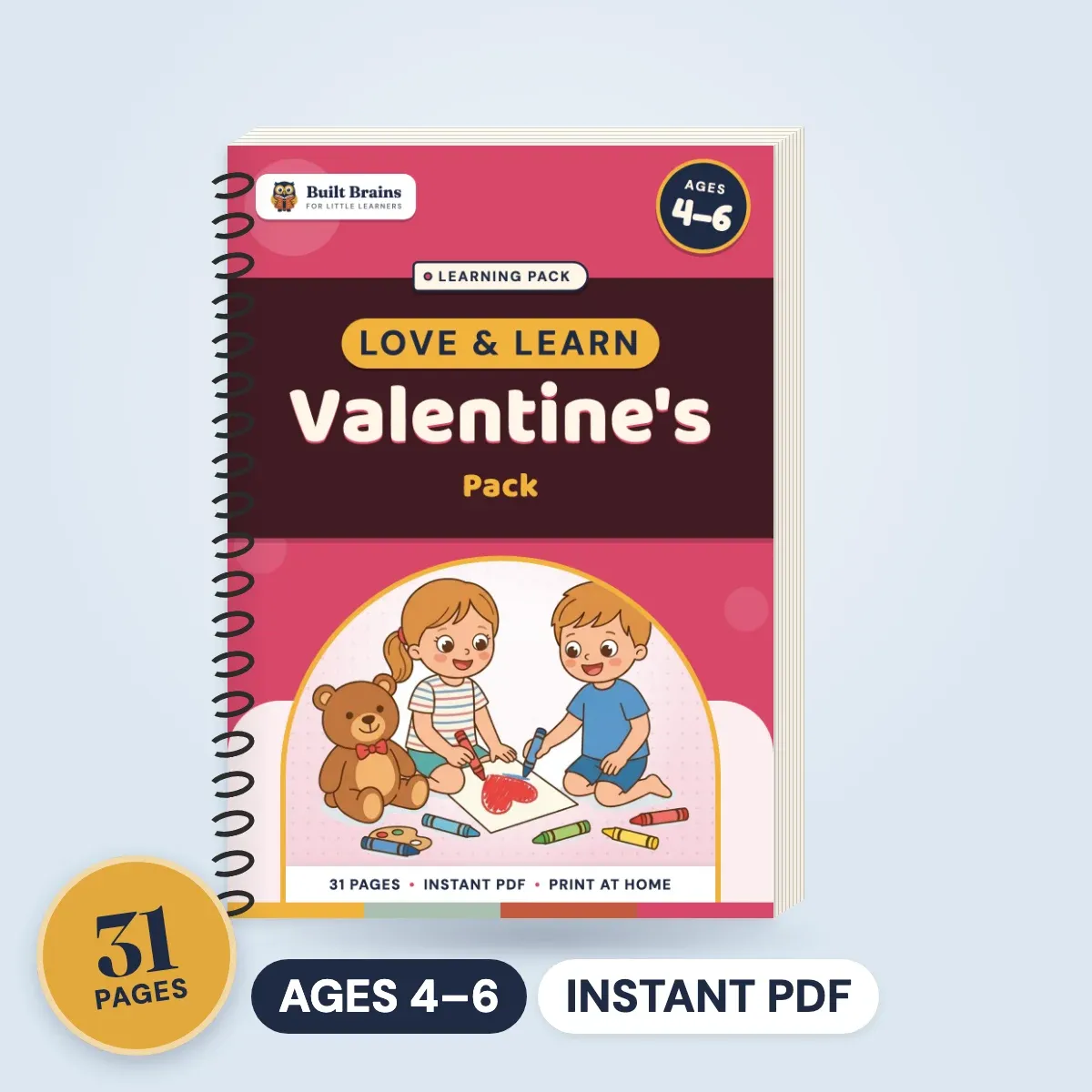
Ages 4–6 · 31 pages
Love & Learn Valentine's PackHearts, cards and kindness with counting and reading
Sources
- NAEYC – Support Math Readiness Through Math Talk: why narrating counting and comparing matters for preschoolers.
- Zero to Three – How to Help Your Child Develop Empathy: how empathy develops through everyday interactions in the early years.
- healthychildren.org – Choking Prevention: small objects as choking hazards for children under 4.
- History.com – History of Valentine's Day: the holiday's origins and the rise of printed valentines.
Questions parents ask
Short, hands-on ones: counting foam hearts into numbered cups, making heart patterns, tearing paper for a heart collage, a pink rice sensory bin and a kindness jar. Pick three or four across math, feelings, crafts and play rather than a full day of hearts. Ten to fifteen minutes per activity suits most 3- to 5-year-olds.
Heart hunt (hide 20 paper hearts and count them back), heart hopscotch with numbers, pass-the-heart to music with a compliment when it stops, a bean-bag toss into heart targets, musical hearts where nobody is out, and a Valentine mailbox post office. All of them work with two children or twenty.
Keep it sensory and big-muscle: a pink water table, heart stickers to peel and stick, torn-paper hearts to glue, a heart hunt around the room and lots of naming feelings while you play. Skip anything with small parts. For two-year-olds the activity is the fun, not the finished craft.
Most 3-year-olds use a name stamp, a sticker with their name, or trace a highlighter version you write first. Many 4- and 5-year-olds can copy their name from a card. Do two or three cards a day in the week before, not twenty in one sitting, and let the first letter be the goal.
Run four short stations: a heart craft, a heart counting game, a sensory bin and a friendship book corner. Serve strawberries, heart-cut watermelon or cheese, and send home a pencil, bubbles or a bookmark instead of sweets. Tell families in advance so nobody brings treats and the party stays allergy-safe.

Reviewed by
Early Childhood Educator & Curriculum Specialist
Maya Caldwell, M.Ed., is a veteran kindergarten teacher and instructional coach who specializes in structured literacy and purposeful play. With over a decade of classroom experience, she designs hands-on, inclusive learning environments that turn emerging readers into confident lifelong learners.
More about Maya →