The best snow day activities for kids
If school just got canceled and you need a plan by breakfast, these ten carry most of a day:
- Snow in a tub on a towel, with spoons, cups and small animals
- A blanket fort with a flashlight and a stack of books
- Paper snowflakes taped to the window
- A pretend hot-cocoa café with a menu and a notepad
- An ice-melting race around the house
- Sock snowball toss into a laundry basket
- A short, bundled-up trip outside to paint the snow
- Baking something with real measuring
- A movie block after lunch, decided in advance
- A stack of winter pages to color, trace and count
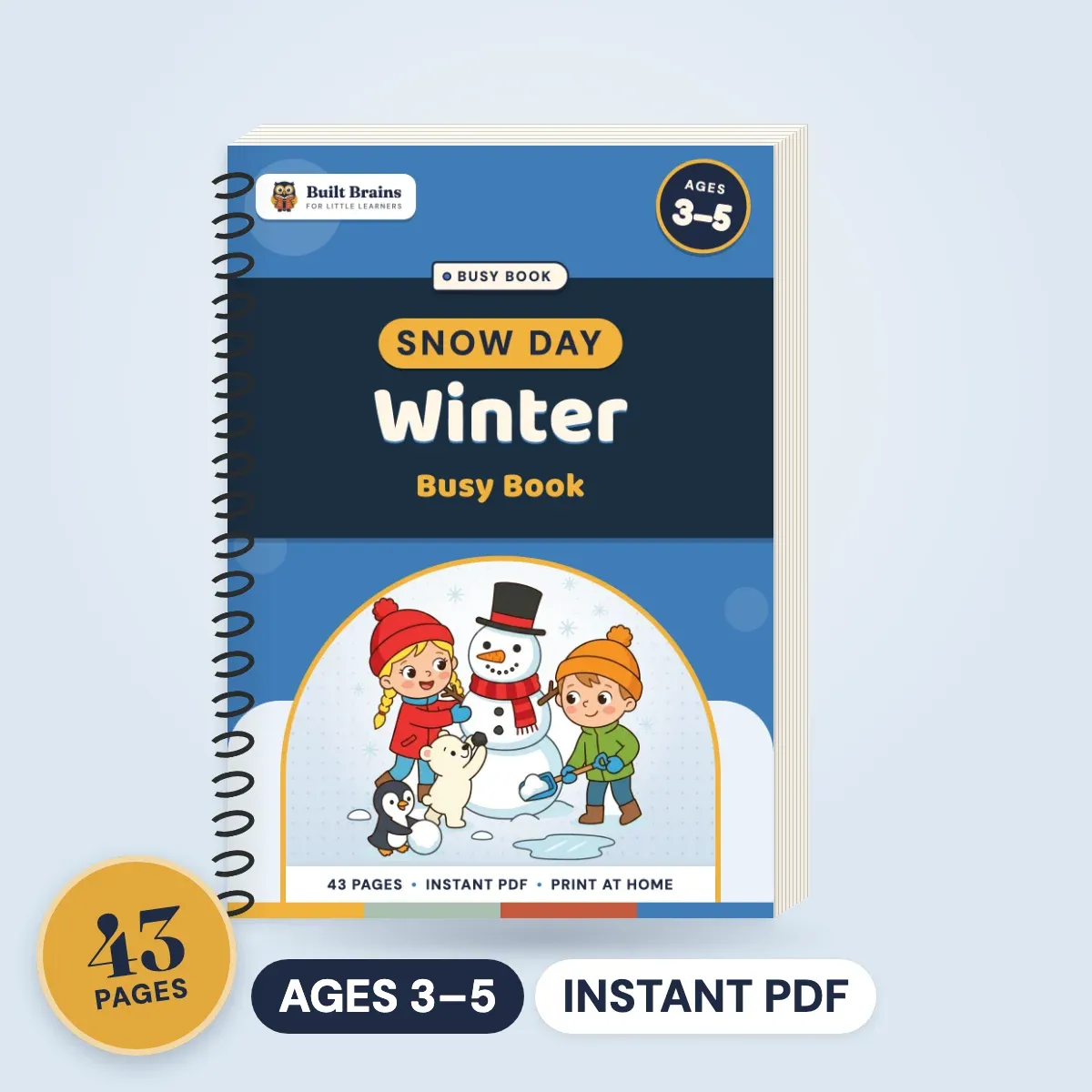
For the quiet block, our Snow Day Winter Busy Book was made for exactly this day.
What's inside the Snow Day Winter Busy Book: 43 pages of polar bears, penguins, sleds and snowflakes for ages 3 to 5: 6 coloring pages, 4 big pictures to color and trace, 3 mazes, 3 counting pages, dot-to-dots, tracing and pencil-control pages, matching, patterns, odd-one-out, look-and-count, drawing pages, cut-out word and clip cards and a certificate. It's an instant PDF for US Letter or A4, so print a handful of pages now and more tomorrow if the snow sticks around. Want to see the style first? Try our free printable book.
How to structure a snow day so nobody melts down by 2 p.m.
The activities matter less than the rhythm. Children who have been cooped up need bursts of movement, and children who have been racing around need a calm job to land on. Alternate the two, put a snack between every pair, and the day runs itself.
| Time | Block | What it looks like |
|---|---|---|
| After breakfast | Active | Fort building, sock snowball toss, indoor obstacle course |
| Mid-morning | Calm | Snow tub on a towel, coloring, busy-book pages |
| Late morning | Outside (short) | Snow painting, tracks hunt, sledding; come in to warm up |
| Lunch | Café | Hot-cocoa café: children write the menu and take orders |
| Early afternoon | Screen or rest | One movie, chosen in advance, or quiet time with books |
| Mid-afternoon | Make | Baking, paper snowflakes, salt painting |
| Late afternoon | Calm | Story pile, puzzles, mazes |
A note on screens: a movie block is a perfectly good part of a snow day. The difference between a fine snow day and a cranky one is usually whether the screen was a decision or a default. The AAP's family media plan tool is a quick way to set the limit before the day arrives (AAP – Family Media Plan).
Snow day activities for toddlers (ages 2–3)
Toddlers need the most switching and the least setup. Ten minutes per activity is normal.
- Snow in a tray on a towel. Spoons, cups, a few plastic animals. When it melts, it's water play.
- Cotton-ball snowball fight. Soft, silent and nobody cries.
- Laundry-basket sled. Pull them across the carpet on a blanket or in a basket.
- Tape roads on the floor for cars, with a "garage" under the table.
- Blanket cave with a flashlight and three board books.
- Mitten match. Tip out the family mitten basket and find the pairs.
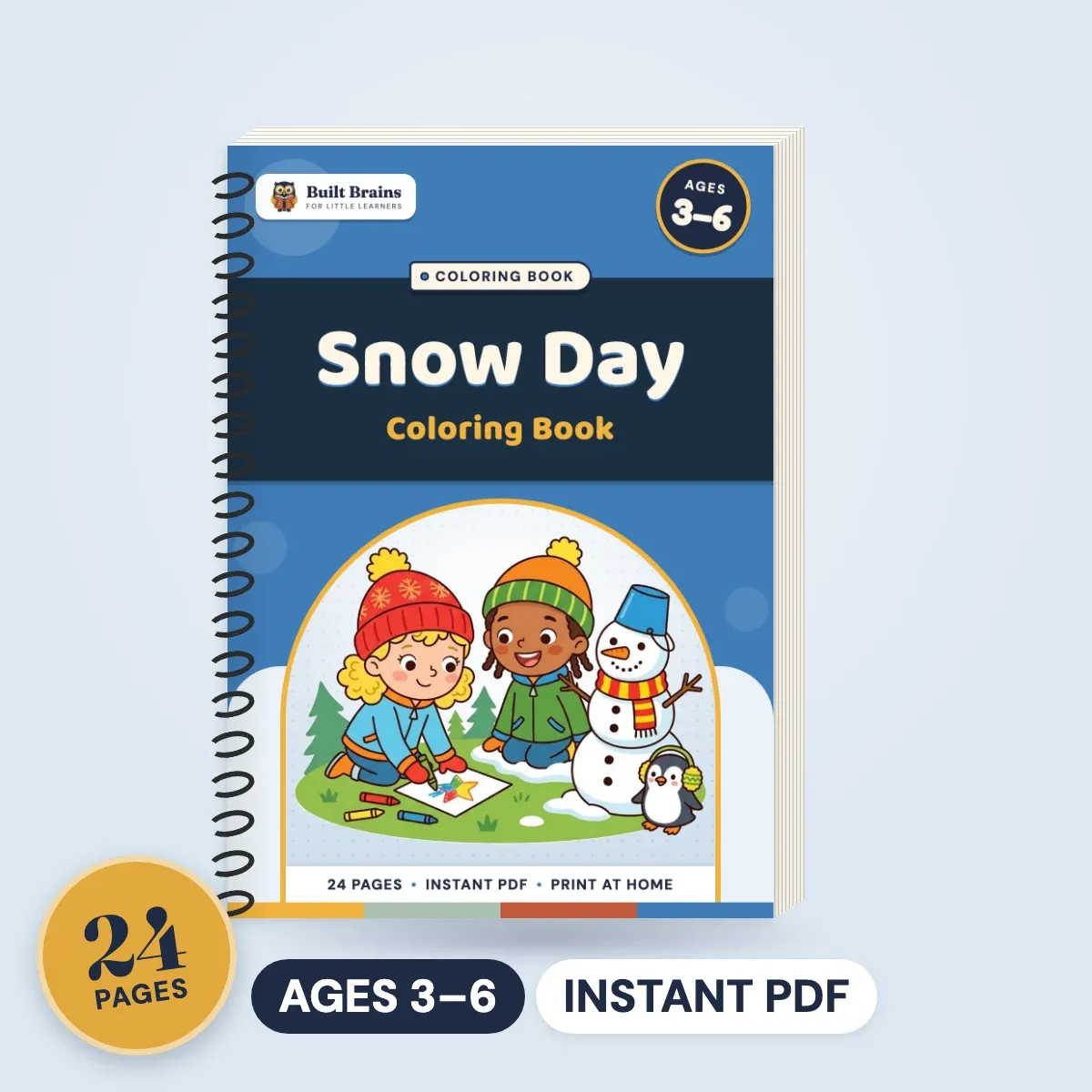
- Dot markers on big winter pictures. The Snow Day Coloring Book has big single snowmen, sleds and polar bears that suit dabbing and scribbling.
- Contact-paper snowflake. Tape clear contact paper sticky-side-out on a window and let them press on tissue paper and cotton balls.
- A long bath mid-morning with pouring cups. Counts as sensory play and resets the mood.
- Kitchen band. Pots, wooden spoons and a winter song.
More of this kind of thing in our sensory bin ideas for toddlers and screen-free activities for toddlers.
Snow day activities for preschoolers (ages 4–5)
Four and five year olds can follow a short plan, cut with safety scissors and play pretend for a long time if you set it up.
- Paper snowflakes. Fold a coffee filter into quarters and snip small shapes. Good scissor practice.
- Hot-cocoa café. Cups, a menu they draw, a notepad for orders, marshmallows as currency.
- Frozen treasures. Freeze small toys in a tub overnight; rescue them with warm water, droppers and spoons.
- Snowball target math. Number paper plates 1 to 5, tape them to the wall, throw sock snowballs and add up the hits.
- Indoor obstacle course. Cushions to climb, a blanket tunnel, a tape line to balance along.
- Paper-plate ice skating. Plates under socks on a hard floor.
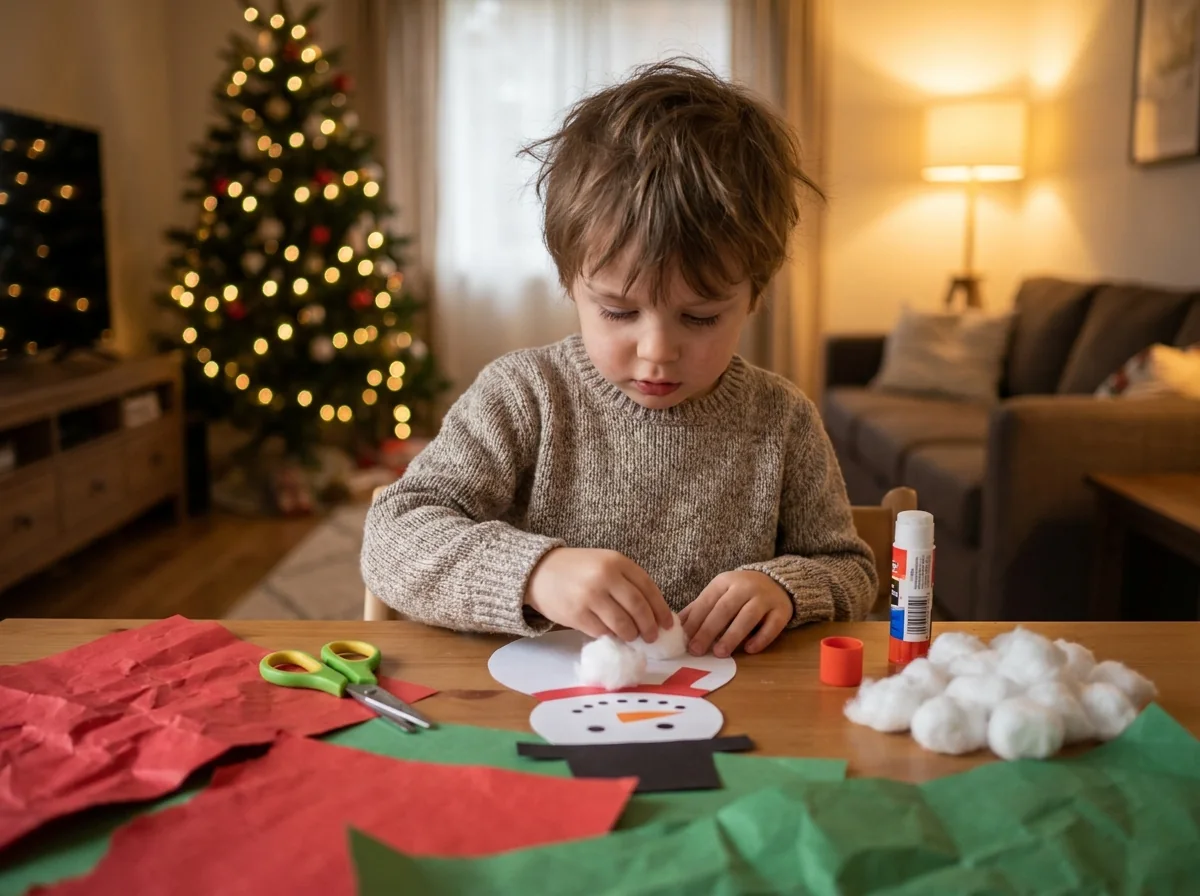
- Build a snowman indoors. Three circles of paper, then a tray of buttons, scraps and bottle caps for faces.
- Act out a winter story. Read it once, then everyone plays a character.
- Snow painting by the back door. Spray bottles with water and a drop of food coloring, five minutes, back in.
- Color and trace. The big winter pictures in the Snow Day Coloring Book each have a word to trace underneath.
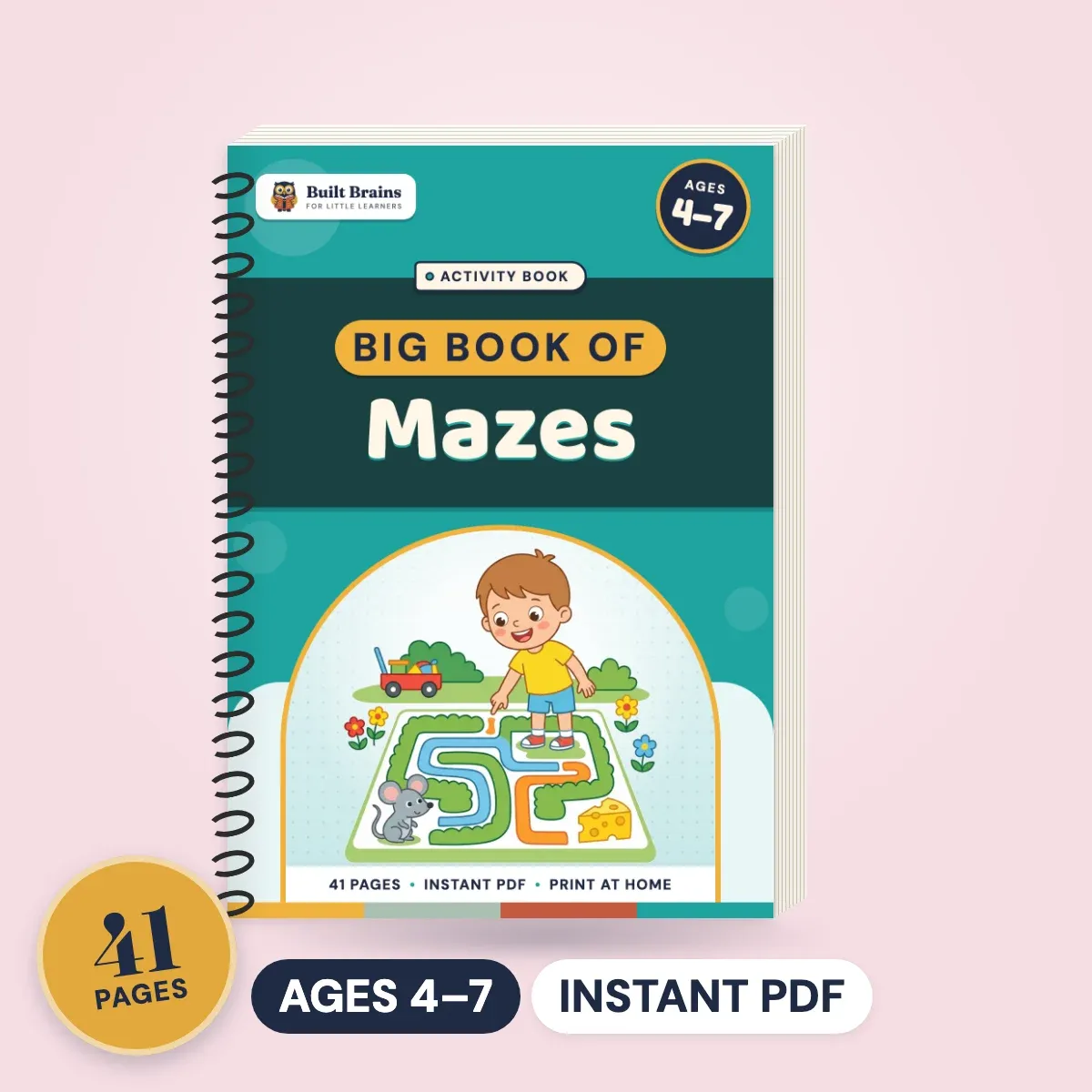
- First mazes. The front of The Big Book of Mazes starts small and friendly; the back is for the big siblings.
- Quiet-time basket. A busy-book page, a puzzle and a book, set out before lunch so the afternoon slump has somewhere to go.
Our winter activities for preschoolers guide has 35 more, including ice science and animals in winter, and quiet time activities for preschoolers covers the calm blocks.
Snow day activities for kindergarten and early grades (ages 6–8)
Older children want a project with a result they can show at dinner.
- The snow jar experiment. Fill a jar with snow, mark the line, predict where the water will come to, and check in an hour. Then try packed snow versus loose.
- Snow-day journal. One page: the temperature, a drawing of the yard, what they did, a sentence about the best part.
- Cardboard igloo. Boxes, tape and a plan drawn first. Engineering with a nap spot at the end.
- Salt and ice. Sprinkle salt on a block of ice and drop on colored water; watch tunnels appear.
- Bake with real measuring. Doubling a recipe is a fractions lesson that ends in cookies.
- Card and board games. Turn-taking, counting and losing gracefully, all in one.
- Write and perform a puppet show for the toddlers, with tickets and a program.
- Written scavenger hunt. Clues around the house for an early reader: "Look under the thing you sleep on."
- Symmetry snowflakes. Fold paper in half, draw half a snowflake along the fold, cut and open.
- Read-aloud marathon. A chapter book on the sofa with cocoa, as many chapters as they'll sit for.
- Video-call a grandparent to show them the igloo, the snow jar and the cookies.
- Winter math and reading pages. Counting snowflakes to 20, adding and taking away mittens, winter word searches and snowy mazes.
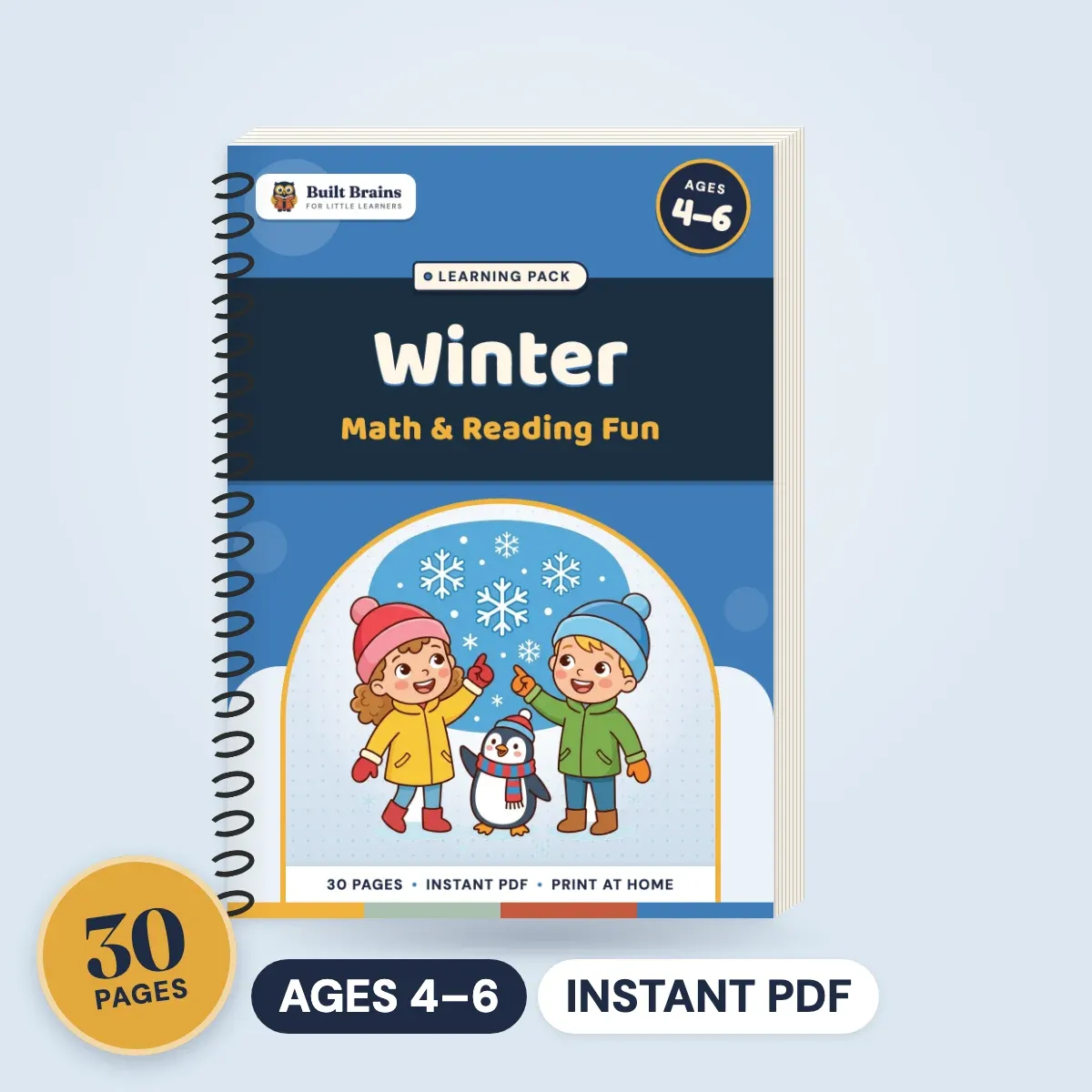
What's inside Winter Math & Reading Fun: 30 pages for ages 4 to 6: counting to 20, adding and taking away, 3 counting and number pages, tracing and sentence-writing pages, reading pages and word searches, patterns, a maze, a dot-to-dot, cut-out cards and 2 winter coloring pages. Instant PDF for US Letter or A4. For a 7 or 8 year old, pair it with the twistier half of The Big Book of Mazes. If you like the one-page-a-day idea, our kindergarten morning work guide explains how to run it on school days too.
Getting outside safely: a short cold-weather checklist
A short trip out is good for everyone, and the snow itself is the best activity of the day. Six ideas, then the safety part.
- Paint the snow with spray bottles of colored water.
- Snow volcano. A mound of snow, a cup of baking soda in the top, vinegar poured in.
- Animal track hunt. Bird, dog, rabbit, and your own tracks to follow back.
- Snow bricks from a loaf tin, stacked into a wall.
- Snow kitchen with old pots, spoons and a muffin tin.
- Sledding on a small hill, feet first, with an adult at the bottom.
The AAP's winter safety advice covers everything below in more detail (AAP – Playing Outside in Winter):
- Layers. Several thin layers keep children drier and warmer than one thick one. A common rule of thumb is one more layer than an adult would wear in the same conditions, plus warm boots, mittens and a hat.
- Time limits and warm-up breaks. Set a reasonable limit and bring children in periodically to warm up. Change wet socks, mittens and snow pants straight away.
- Frostbite signs. Fingers, toes, ears and nose are most at risk. Pale, gray or blistered skin, or a child complaining that skin burns or feels numb, means come inside, put the area in warm (not hot) water and call your pediatrician. Don't rub the skin.
- Hypothermia signs. Shivering, pale cold skin, clumsiness, unusual tiredness and slurred speech are warning signs, and young children are more at risk than adults (NHS – Hypothermia). Bring the child in, remove wet clothes, warm them gradually and call emergency services if you are worried.
- Sledding. Away from roads, ponds and trees, sitting up and facing forward, one at a time, with an adult watching.
- Car seats. Take puffy coats off before buckling the harness and lay the coat over the top.
Snow day in a box: prep before the forecast
The difference between a good snow day and a long one is usually whether you had to invent it at 7 a.m. Pack this box in November and don't open it until the schools close.
- A printed stack of winter coloring, maze and busy-book pages, in a folder, with a new box of crayons on top.
- Painter's tape for roads, hopscotch and obstacle courses.
- Cotton balls, paper plates, coffee filters and a glue stick for snowballs, skating and snowflakes.
- Food coloring and two spray bottles for snow painting.
- Baking soda and vinegar for the snow volcano, plus a boxed cookie mix for the baking block.
- A bag of marshmallows and a tin of cocoa, non-negotiable.
- Two new library books or a chapter book nobody has read yet.
- A card game and a small puzzle.
- A roll of clear contact paper for the sticky window.
- The day plan from the table above, printed, so you can stick it to the fridge.
And five for when all else fails: 41. a pajama picnic on the living room floor, 42. a bath with glow sticks and the lights off, 43. a dance party with the winter playlist, 44. "restaurant night" where the children cook dinner (with help) and 45. an early bedtime with a long story. Nobody has ever regretted number 45.
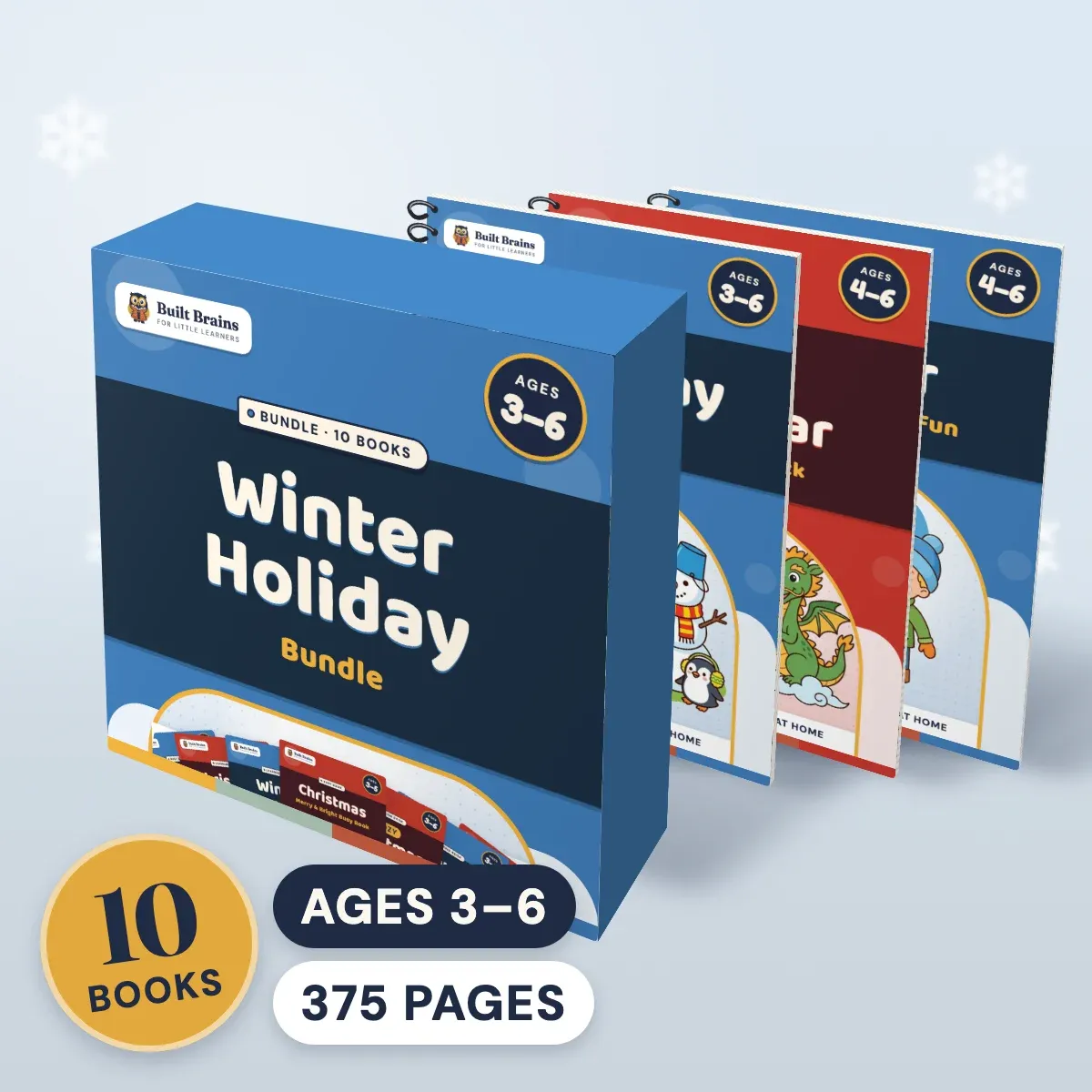
If you'd rather print the whole season at once, The Winter Holiday Bundle covers December to February with ten printables for ages 3 to 6: the Christmas and winter busy books, Christmas and Winter Math & Reading Fun, two coloring books, the Christmas craft kit, Christmas Around the World, and the Lunar New Year and Valentine's Day packs. For more ways to use busy-book pages on long days, see our busy book ideas.
Sources
- HealthyChildren.org (AAP) – Playing Outside in Winter — layering, time limits and warm-up breaks, frostbite and hypothermia warning signs, sledding and car seat advice.
- NHS – Hypothermia — symptoms of hypothermia and why babies and young children are at higher risk.
- HealthyChildren.org (AAP) – Family Media Plan — the AAP's tool for deciding screen time in advance, used for the movie-block advice.
Questions parents ask
Bring a tub of snow inside to scoop and paint, build a blanket fort, run a pretend hot-cocoa café, make paper snowflakes, do an ice-melting race, toss sock snowballs into a laundry basket, bake something and sit down with winter coloring, mazes and counting pages. Switch activity every 30 to 45 minutes and alternate active and calm.
Keep it sensory and simple: a tray of snow with spoons and cups on a towel, cotton-ball "snowballs" to throw, a blanket cave with books, a long bath mid-morning, tape roads on the floor, dot markers on big winter pictures and a laundry-basket sled ride across the carpet. Toddlers need the most switching, so plan ten-minute activities.
There is no single number; it depends on temperature, wind and how wet they get. The AAP advises dressing children in several thin layers, setting reasonable time limits and bringing them in periodically to warm up. Come in sooner if clothes are wet or if a child shivers, complains of numb fingers or toes, or has pale, gray skin on the nose, ears or fingers.
Decide the screen block in advance rather than defaulting to it: one movie after lunch, say, when everyone is tired. Fill the rest with a rhythm of active, calm, snack, active, story, and have a prepared "snow day box" so you are not inventing activities at 7 a.m. The AAP's family media plan tool helps set the limit before the day arrives.
A printed stack of winter coloring, mazes and busy-book pages, a new box of crayons, painter's tape, cotton balls, food coloring and spray bottles for snow painting, a bag of marshmallows for cocoa, paper plates for indoor "skating," a couple of new library books and a card game. Pack it in November and leave it alone until the forecast says snow.
Five to eight year olds want a challenge: measure how much water a jar of snow makes, keep a snow-day journal, build a cardboard-box igloo, salt-and-ice science, bake with real measuring, card and board games, write and perform a puppet show, bigger mazes, and winter math and reading pages. Give them a project with a result to show at dinner.
Reviewed by
Forest School Leader & Early Years Educator
Lucy Graham is a certified Forest School Leader who uses the natural world as a classroom to build resilience, motor skills, and environmental awareness in early learners.
More about Lucy →