What Thanksgiving activities work for 2 and 3 year olds?
Thanksgiving is a long day for a small person: a late meal, lots of visitors, a hot kitchen and busy grown-ups. The activities that work give your toddler something to do with their hands and body, close to you, a few minutes at a time.
Three ground rules make the list easier:
- Keep it to 5 to 10 minutes. A 2 year old may wander off after three; that is normal. Set things up so they can be picked up again later.
- Set up before you invite them in. Pour the corn into the tub, peel the first sticker, tape the paper down. Toddlers do not wait well.
- Think "bigger than a toilet paper tube." Dried beans, acorns, popcorn kernels and buttons are choking risks under 3; the American Academy of Pediatrics' choking-prevention advice singles out small, round and hard items. Use whole corn cobs, large pasta, big pom-poms and real vegetables, and stay within arm's reach.
This guide covers ages 2 to 3. For a 4 to 7 year old, our Thanksgiving activities for kids guide has turkey crafts, counting games and kitchen jobs.
Gratitude talk toddlers can actually join
A 2 year old does not understand gratitude as an idea, but they can copy you. The AAP's toddler pages describe this as the age of learning by imitating adults, so the goal is to make "thank you" visible and warm, not to teach a lesson.
- The thank-you walk. Walk through the house touching things you are glad about: "Thank you, cozy bed. Thank you, warm bath." Your toddler will add their own ("Thank you, truck!").
- A thankful photo wall. Pictures of family, pets and favorite foods taped low on a wall. Toddlers love to point and name.
- One thankful thing at dinner. Go around the table. A 2 year old may say "cat" or "pie." That counts.
- Thank the helpers. When you drop a pie at a neighbor's or wave at the mail carrier, say thank you out loud and let your toddler copy.
- The gratitude leaf tree. Cut big paper leaves. You write what your child says on each, they scribble or dot-dab it, and you stick it on a paper trunk on the fridge.
- Say thank you to your child. "Thank you for bringing me the spoon." Hearing a word in context dozens of times a day is how toddlers learn it.
Sensory play and easy crafts for toddlers
Sensory tubs and trays
Put a towel or a shower curtain under the tub, keep the filler large, and stay close.
- Corn-and-pie-tin tub. Dried corn on the cob (whole, not loose kernels), a couple of big gourds, pie tins and a large spoon. Scoop, bang, roll.
- Washing the vegetables. A bowl of cool water, a scrub brush and the potatoes or carrots for dinner. This is a real job and toddlers know it.
- Pumpkin pie play-dough. Homemade dough with a shake of cinnamon, a small rolling pin and a pie tin to "bake" in.
- Feather sorting. Big craft feathers sorted by color into muffin-tin cups, or blown across the table. Fabric scraps for a 2 year old who still mouths things.
- Apple stamping. Cut an apple in half, press it in paint and stamp. Point out the star shape inside.
- Warm and cold. Two bowls of water, one warm and one cool, and cookie cutters to move between them.
More fillers and a safety checklist by age: sensory bin ideas for toddlers.
Low-mess crafts
Toddler crafts are about the process. Tape the paper down, use washable supplies, and expect the turkey to look like a toddler made it.
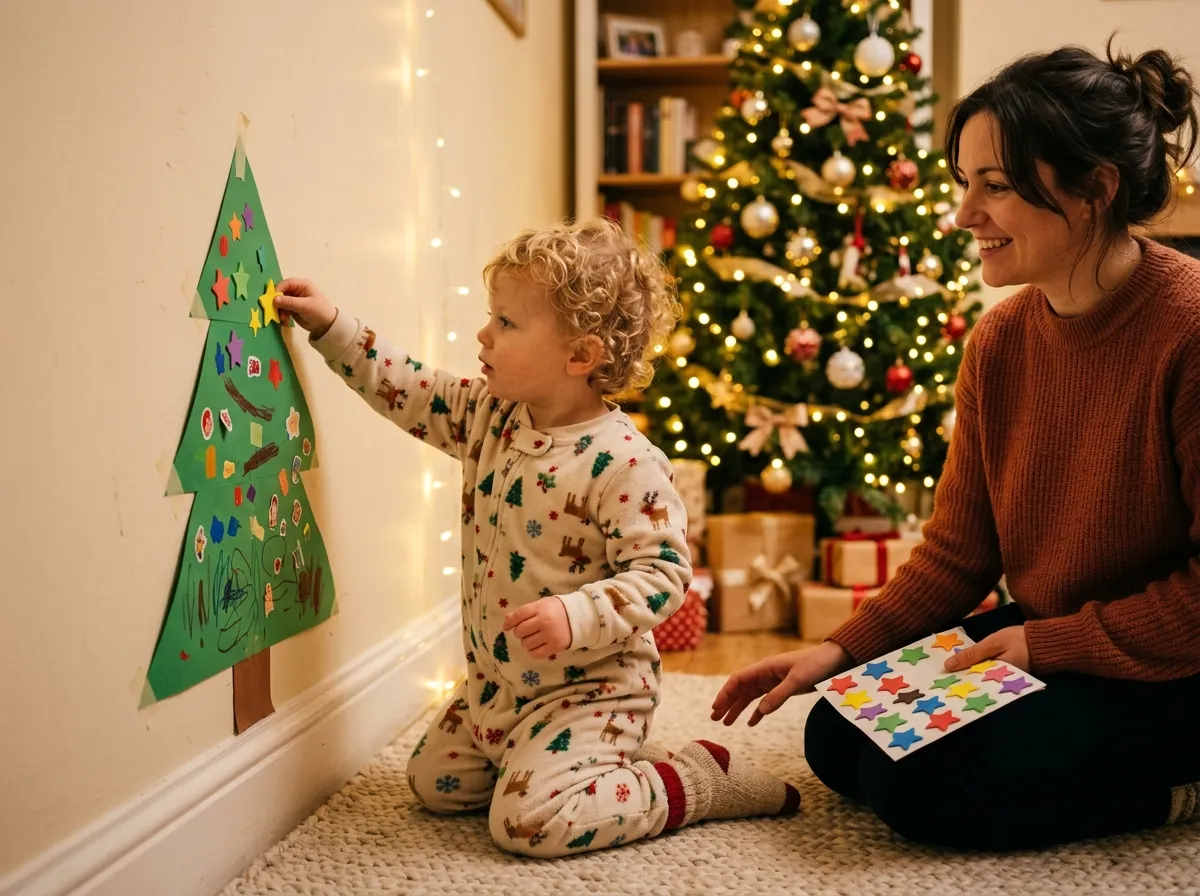
- Sticker turkey. Draw a big brown circle for the body and a smaller one for the head; your toddler presses large dot stickers around the back as feathers. Peeling builds the pincer grip.
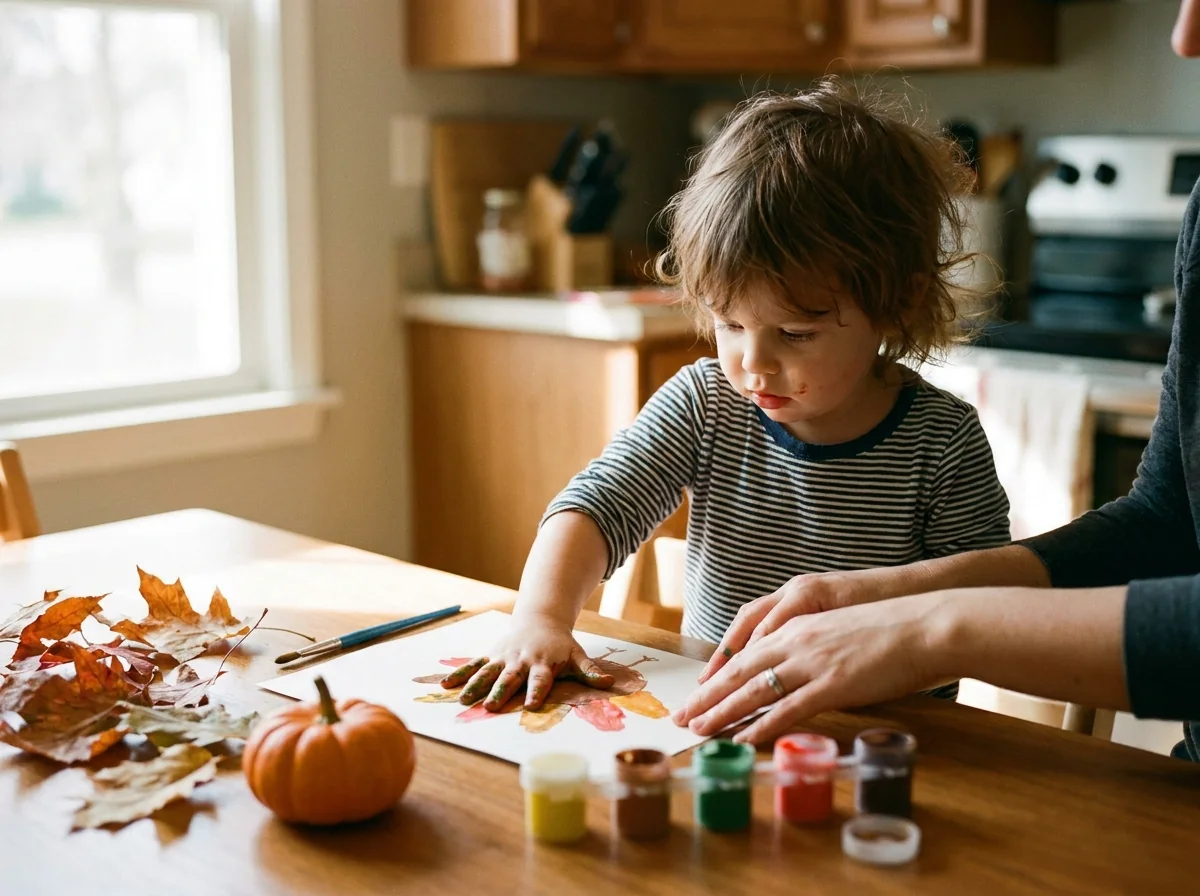
- Handprint turkey. One hand, pressed once in paint, beak and legs added by you. Write the year and age at the bottom.
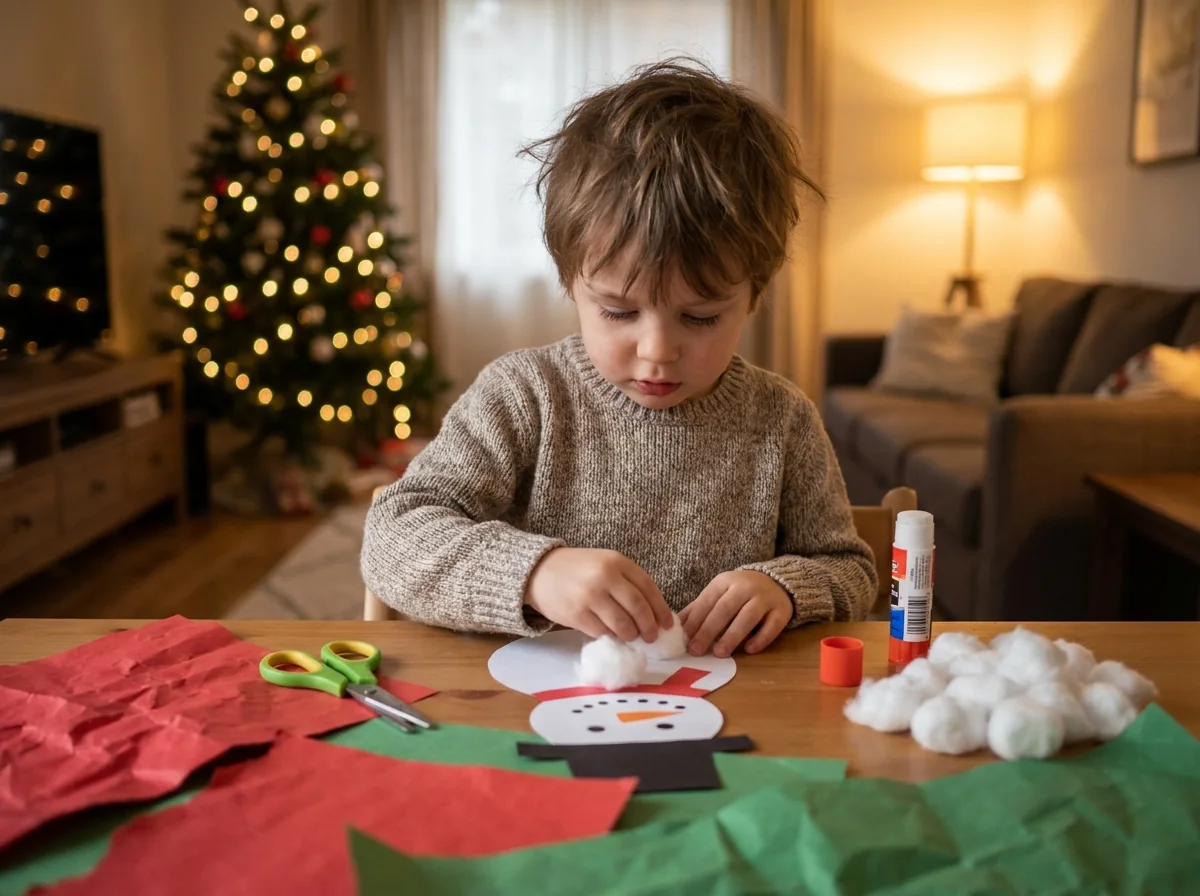
- Torn-paper pie. Your toddler tears orange paper and presses the pieces onto a glue-sticked circle for the "filling." Tearing is real hand work at 2.
- Paper-plate turkey. Glue paper strips or feathers around half a paper plate. You hold, they stick.
- Contact-paper fall tree. Clear contact paper taped sticky-side out on a window, with tissue squares in red, orange and yellow. No glue at all.
- Dot-dab corn. Draw a corn cob outline to fill with yellow dot stickers or a dot marker.
- Thankful place mats. Your toddler's scribbles, their name added by you, clear tape over the top, used at dinner.
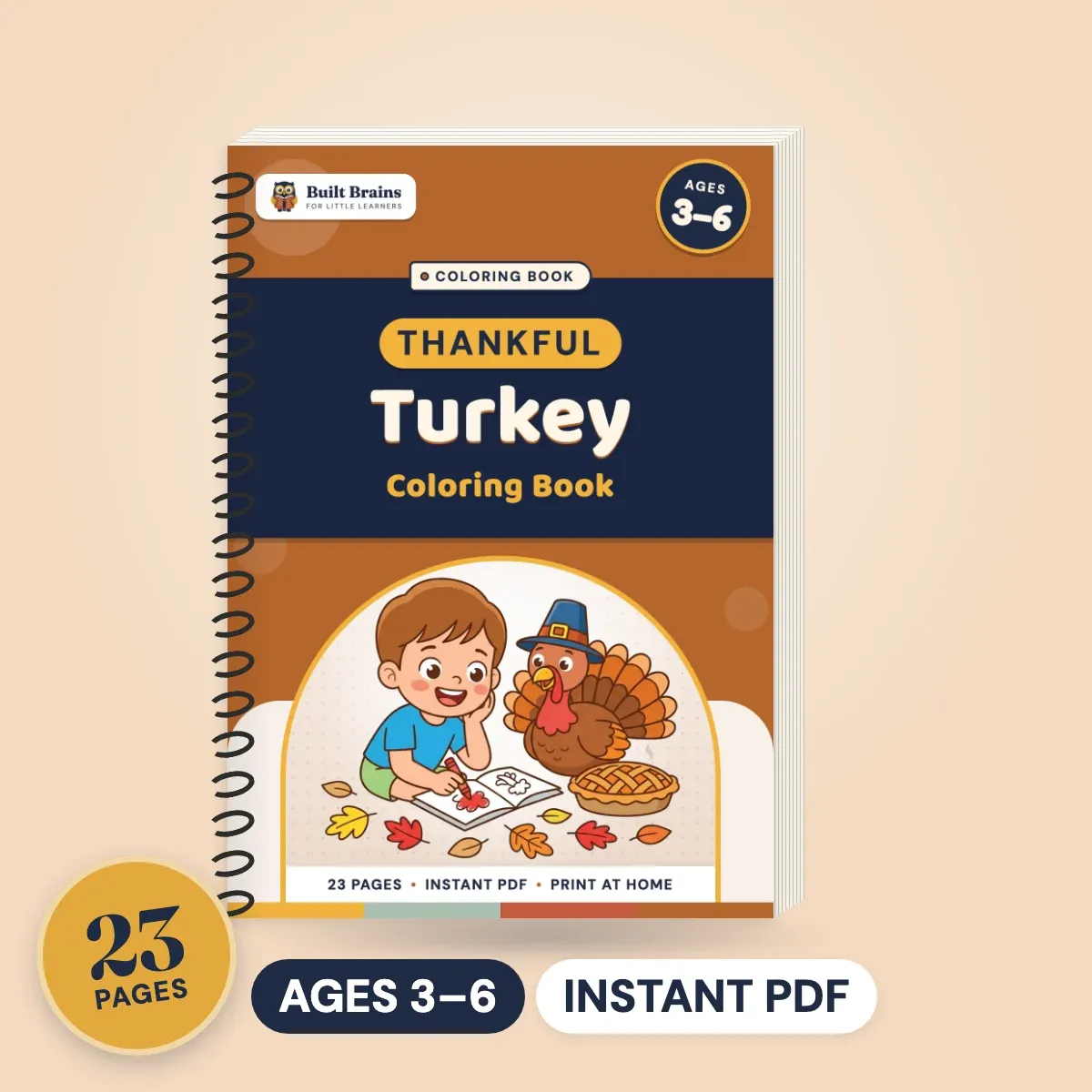
- Big coloring pages. Chunky crayons and thick lines. The Thankful Turkey Coloring Book (ages 3 to 6) has big, simple scenes for older toddlers who like a "real" picture to scribble on.
Table-time busy pages while the adults talk
The hardest stretch is the hour when dinner is nearly ready and everyone is in the kitchen. A basket of table activities, set out in advance, buys you that hour.
- A new sticker sheet. Saved for the day. Peel, stick, done.
- Big and small sorting. Big spoons and small spoons from the drawer: "Big ones here, little ones here."
- Posting game. Cut a slot in a shoebox lid; big craft sticks or playing cards go in.
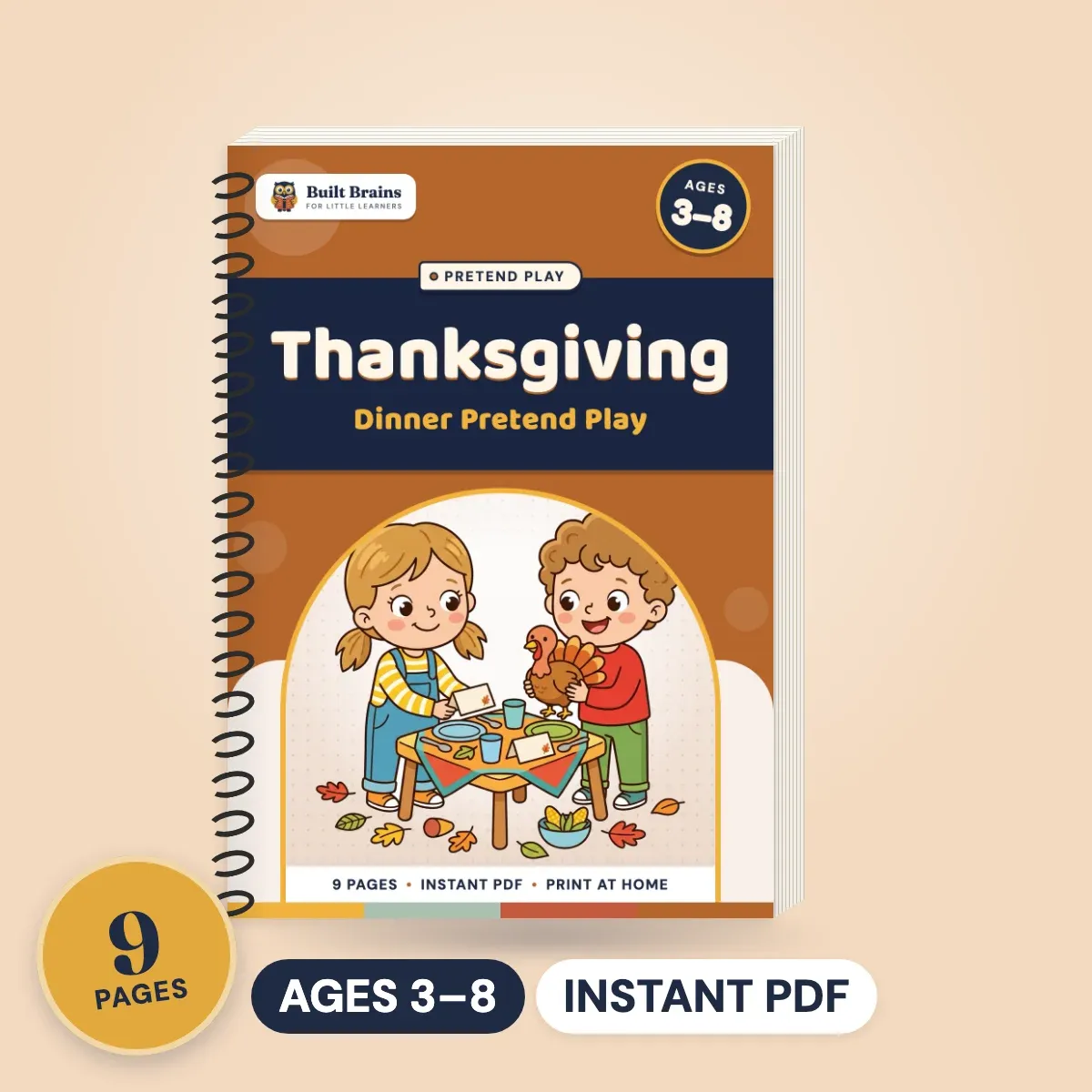
- Place cards. A 3 year old colors a card for each guest while you write the names. Thanksgiving Dinner Pretend Play (ages 3 to 8) has printable place cards, menus and thankful cards an older sibling can run as a "restaurant" with the toddler as first customer.
- Dot-to-dot and tracing with a crayon. A 3 year old can follow a thick dotted line from a turkey to its corn; a 2 year old scribbles over it, which is fine.
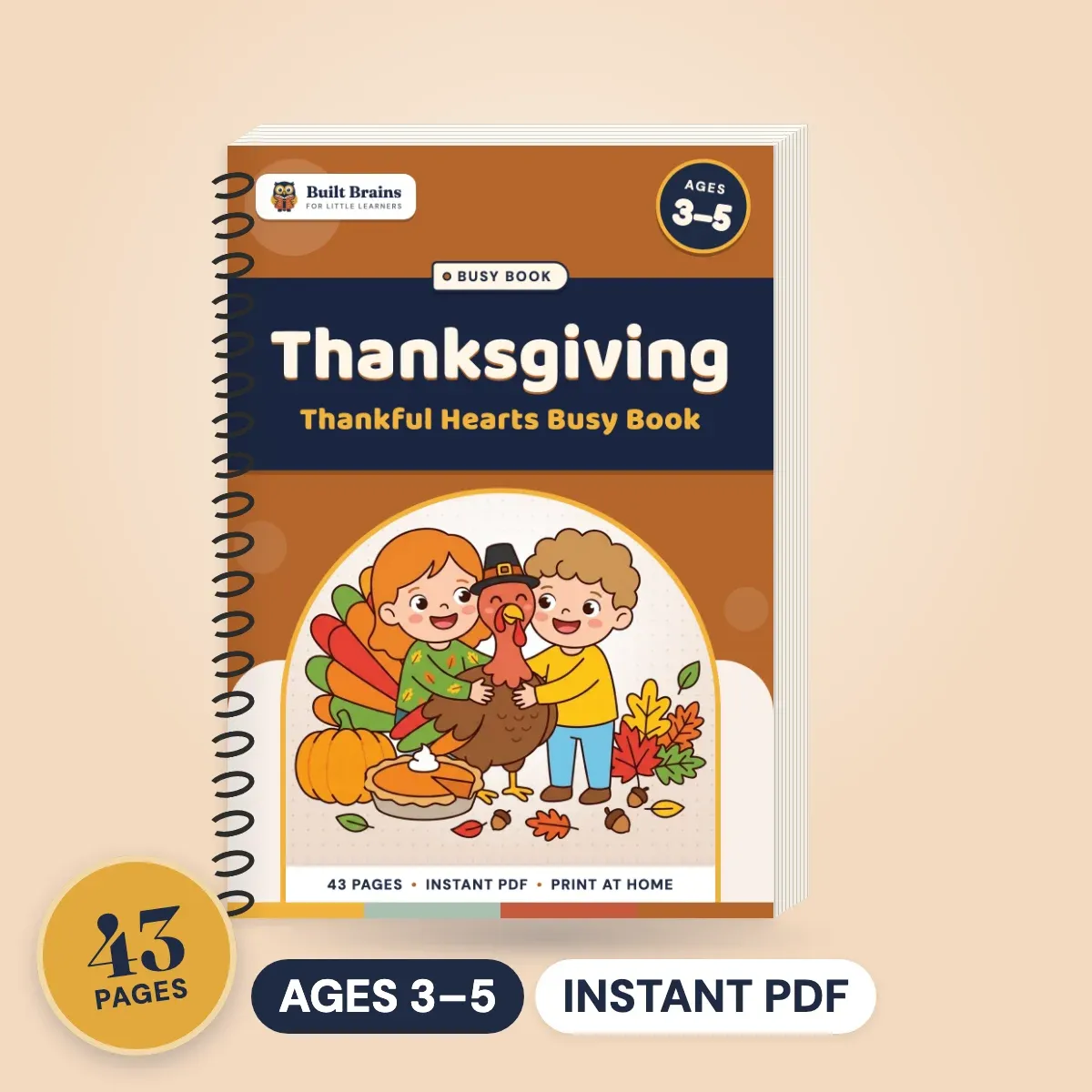
- Matching and coloring pages. The Thankful Hearts Thanksgiving Busy Book is made for ages 3 to 5: turkeys, pies and family-dinner pictures across coloring, tracing, matching, dot-to-dot and look-and-count pages, plus a "what I'm thankful for" drawing page. Print a handful for a 3 year old and keep them in a folder by the table; a 2 year old enjoys the big pictures with a grown-up.
Movement and music for wiggly toddlers
Toddlers need to move, especially before a long sit at the table.
- Turkey waddle. Hands tucked under armpits, elbows flapping, waddle across the room. Freeze when the music stops.
- Gobble, gobble, hide. Hide-and-seek where the "turkey" hides behind a cushion and you find them with a big gobble.
- Pumpkin roll. Roll a small pumpkin across the floor to each other.
- Pots-and-pans parade. Wooden spoons on saucepan lids, marching around the kitchen before cooking starts.
- Turkey stretches. Stretch tall like a turkey's neck, curl small like a pie in a tin, stand on one leg. Three poses, big laughs.
The 10-minute "while dinner cooks" plan
Run this when the kitchen is busiest; set the pieces out that morning so you can start one-handed.
| Minute | What happens | What you need |
|---|---|---|
| 0–2 | Turkey waddle and freeze to one song | Music |
| 2–5 | Vegetable wash in a bowl | Bowl of water, brush, three potatoes |
| 5–8 | Sticker turkey at the table | Paper with two circles, dot stickers |
| 8–10 | One thankful thing each, then a snack | Cut-up soft fruit |
Then rotate: the sticker turkey becomes a coloring page, the potatoes go back in the water, the song plays again. Two rounds covers 20 minutes, often enough before a visitor takes over.
For the meal itself, keep expectations low: a toddler may eat two things, leave after ten minutes and want to be held. Protecting the nap earlier in the day does more for the evening than any activity. Keep a basket by your chair with a board book, a few cars and the busy-book pages.
What a 2 year old can do vs a 3 year old
The gap between 2 and 3 is big. Using the CDC's "Learn the Signs. Act Early." checklists (each item is something most children can do by that birthday), here is how the same activity looks at each age.
| Activity | At 2 | At 3 |
|---|---|---|
| Stickers | Peels with help, sticks anywhere | Peels alone, places feathers around the body |
| Crayons | Scribbles with a fist grip | Draws lines and a circle when shown |
| Tearing and gluing | Tears big pieces; you spread the glue | Tears smaller pieces, uses a glue stick |
| Talking | Two-word phrases: "big pie" | Sentences; says a thankful thing in their own words |
| Movement | Kicks a ball, walks up a few stairs with help | Jumps with both feet, copies a simple dance move |
| Table time | About 5 minutes beside you | 10 to 15 minutes with a page they like |
| Self-care | Eats with a spoon | Uses a fork, washes hands with help |
These are typical, not a test: some 3 year olds still prefer to scribble, and some 2 year olds sit happily with stickers. For a fuller picture, read what a 3 year old should know.
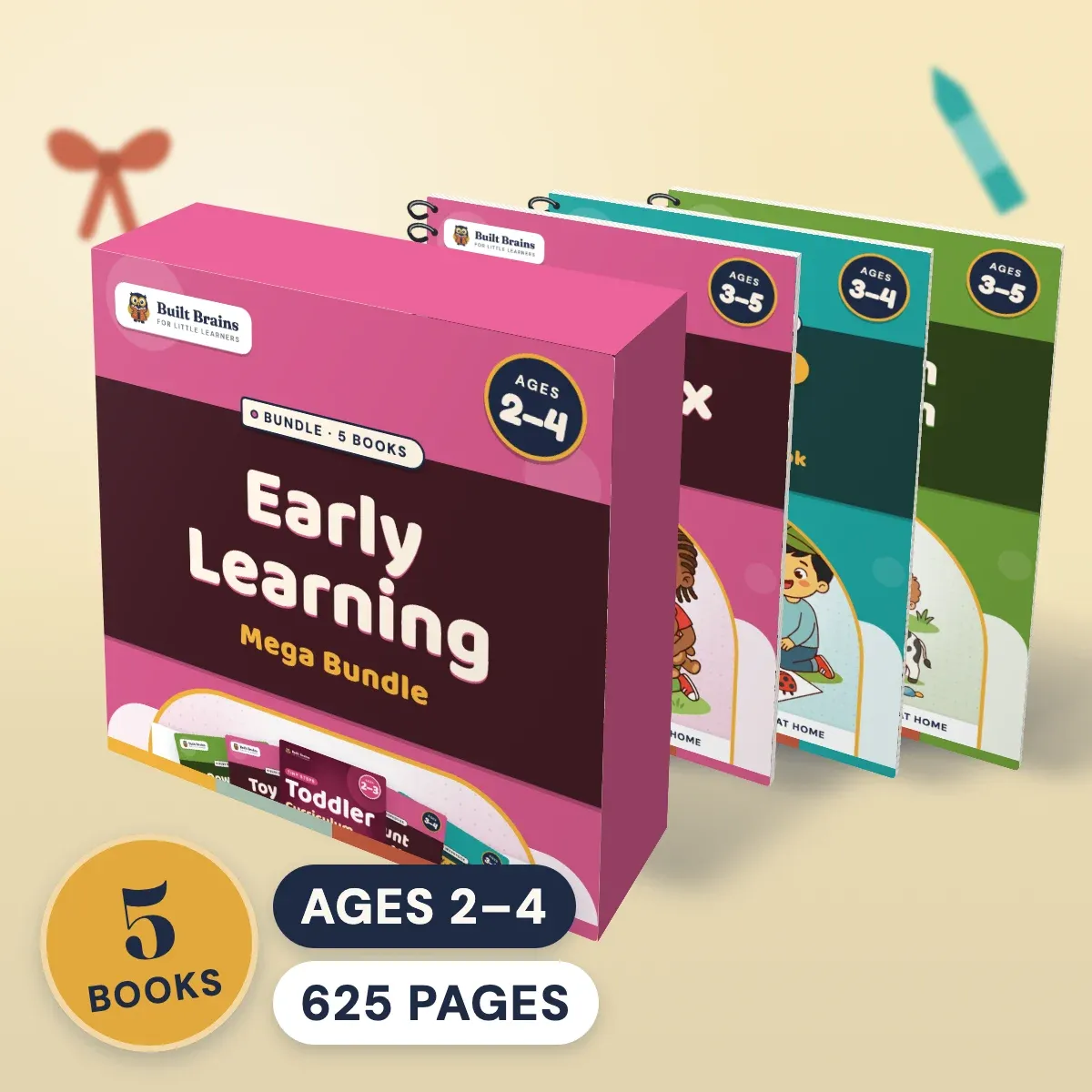
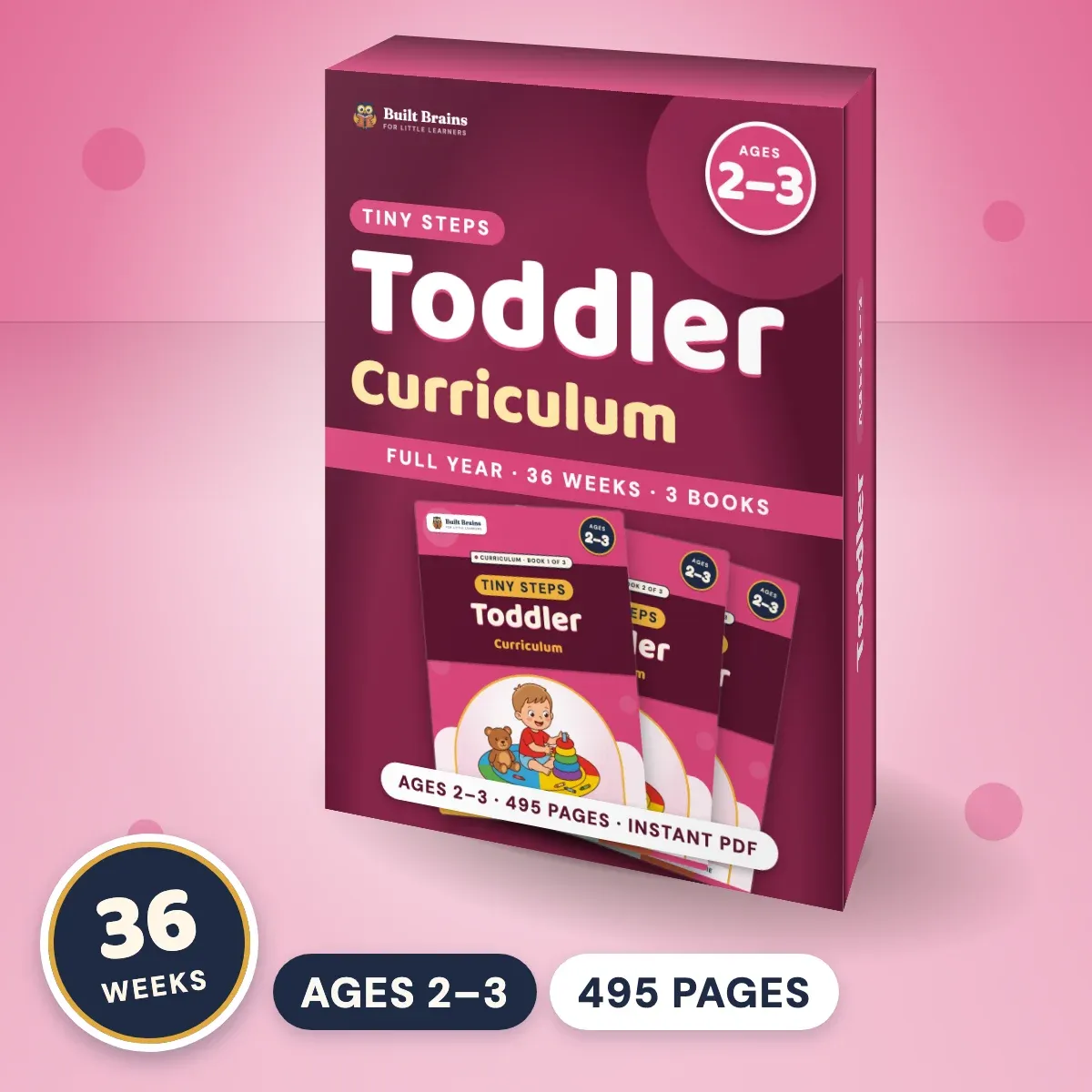
For a gentle weekly rhythm beyond the holiday, the Early Learning Mega Bundle is built for ages 2 to 4: the Tiny Steps Toddler Curriculum (a color, a shape, a number and a theme a week for 36 weeks), two busy books, first counting to 10 and pre-writing tracing.
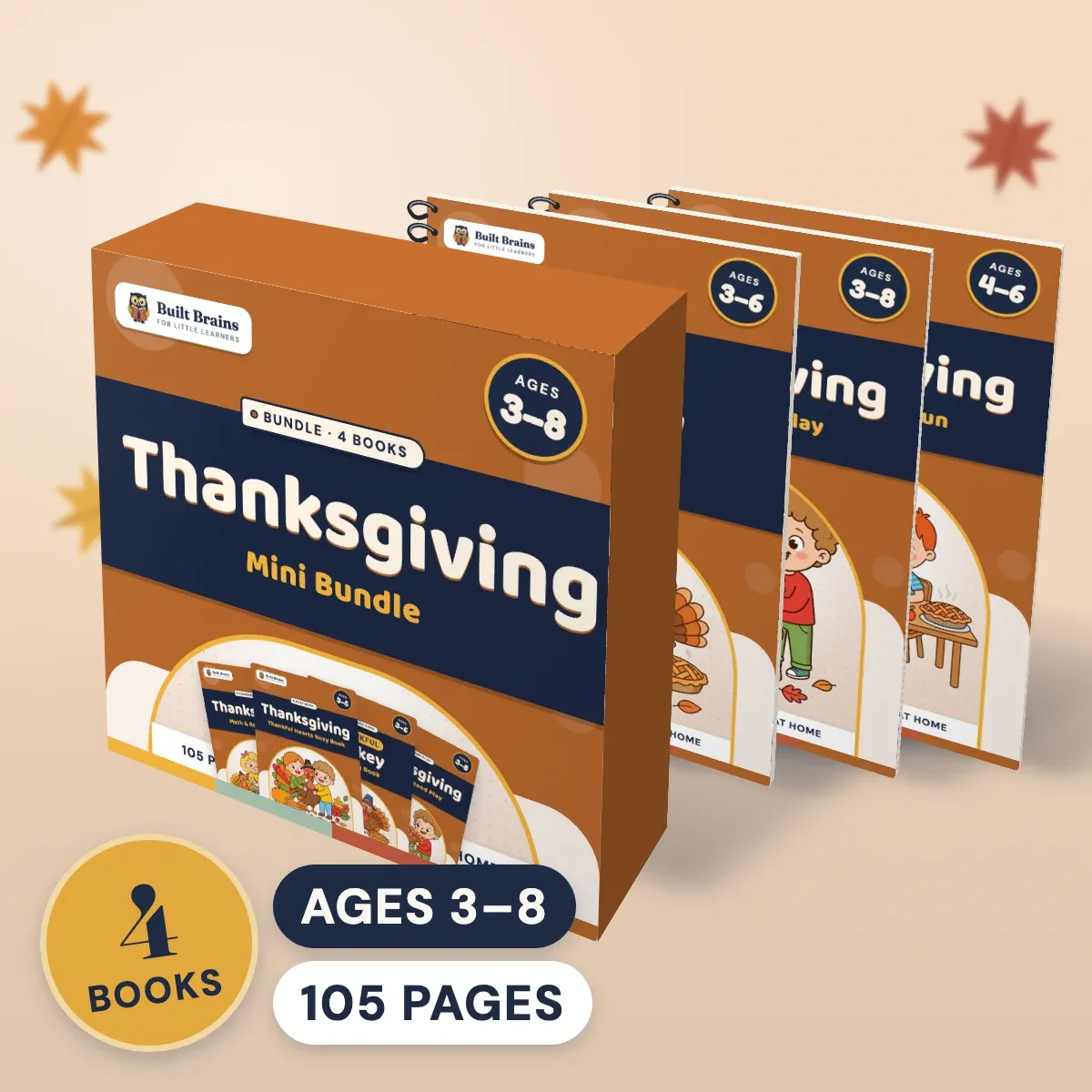
In a mixed-age house, the Thanksgiving Mini Bundle (ages 3 to 8) adds math and reading pages and a coloring book to the busy book and pretend-play set, so an older sibling makes menus while the toddler colors beside them.
Sources
- CDC – Learn the Signs. Act Early. Developmental milestones: the 2- and 3-year checklists behind the table above.
- HealthyChildren.org (AAP) – Ages & Stages: Toddler: toddlers learn by imitating adults, including habits like saying thank you.
- HealthyChildren.org (AAP) – Choking Prevention: why kernels, beans, acorns and other small, hard items stay away from under-3s.
Questions parents ask
A 2 year old can wash the potatoes in a bowl of water, press dot stickers onto a paper turkey, tear orange paper for a pie collage, stir dry ingredients, waddle like a turkey to music and scribble on big coloring pages. Keep each activity to a few minutes, set it up before they arrive, and stay close, since most 2 year olds still put things in their mouths.
Three year olds enjoy a handprint turkey, a gratitude leaf tree, pumpkin pie play-dough, sorting big and small spoons, following a thick dotted line on a tracing page and coloring a place card for each guest. Many can sit with a coloring or matching page for 10 to 15 minutes if a grown-up is nearby, which makes busy-book pages useful during the pre-dinner rush.
Keep it to one sentence they can hold: "Thanksgiving is a day when we eat a big dinner with people we love and say thank you." Toddlers do not need the history yet. Show it instead: name the people who are coming, cook something together and say thank you out loud all day. Around age 3, children start to repeat the idea back in their own words.
Protect the nap, then plan short bursts: a movement game before guests arrive, a real kitchen job like washing vegetables, a sticker craft at the table, and a basket of quiet things near your chair for the meal, such as a board book, a few cars and a couple of coloring pages. Expect your toddler to leave the table early, and let them.
They can be, if the filler is large. Skip dried beans, popcorn kernels, loose corn, acorns and small gourds for children under 3, since anything that fits through a toilet paper tube is a choking risk. Whole corn cobs, large pasta, big pom-poms, pie tins, scoops and water are safer choices. Stay within arm's reach and put the bin away when you are done.

Reviewed by
Nursery Manager & Early Years Practitioner
Aisha Khan is a Nursery Manager and early language specialist who helps toddlers and preschoolers build foundational communication skills before starting formal schooling.
More about Aisha →