Gratitude activities for kids
Young children understand thankfulness best when it is concrete. “I’m thankful for my family” is a start, but “I’m thankful Grandpa pushed me on the swing” is where real gratitude lives. These activities help kids get specific.
- Gratitude jar. Each evening in November, one person names something good from the day and you write it on a slip. Read them all on Thanksgiving. Builds: reflection, listening, early print awareness.
- Thankful tree. Tape a bare branch shape to the wall and add a paper leaf each day with a thankful word or drawing. Builds: vocabulary, fine motor skills.
- Thank-you drawings. Draw a picture for the mail carrier, a teacher or a neighbor and deliver it together. Builds: empathy, connecting actions to feelings.
- Thankful ABCs. Go through the alphabet and name one thing for each letter: apples, bubbles, cousins. Builds: beginning sounds, letter order.
- Kindness count. Keep a tally of kind things your family does in one week. Builds: counting, tally marks, noticing others.
Ages note: 3 year olds may name the same thing every night (often a snack or a toy). That is fine. By 5 and 6, gently ask “why?” to stretch the answer into a full sentence.
Turkey crafts for kids
No Thanksgiving is complete without a turkey or two taped to the fridge. These crafts use supplies you likely already have.
- Handprint turkey. Trace your child’s hand; the thumb is the head and the fingers are feathers. Builds: pencil control, following steps.
- Paper plate turkey. Paint a plate brown, then glue on paper feathers your child cuts from strips. Builds: scissor skills, color names.
- Leaf feather turkey. Use real fall leaves as feathers. Builds: sorting by color and size, nature observation.
- Thankful feathers. Write one thankful word on each feather before gluing it on. Builds: early writing, gratitude.
- Pinecone turkey. Tuck felt or paper feathers into a pinecone and add eyes. Builds: pincer grip, 3D building.
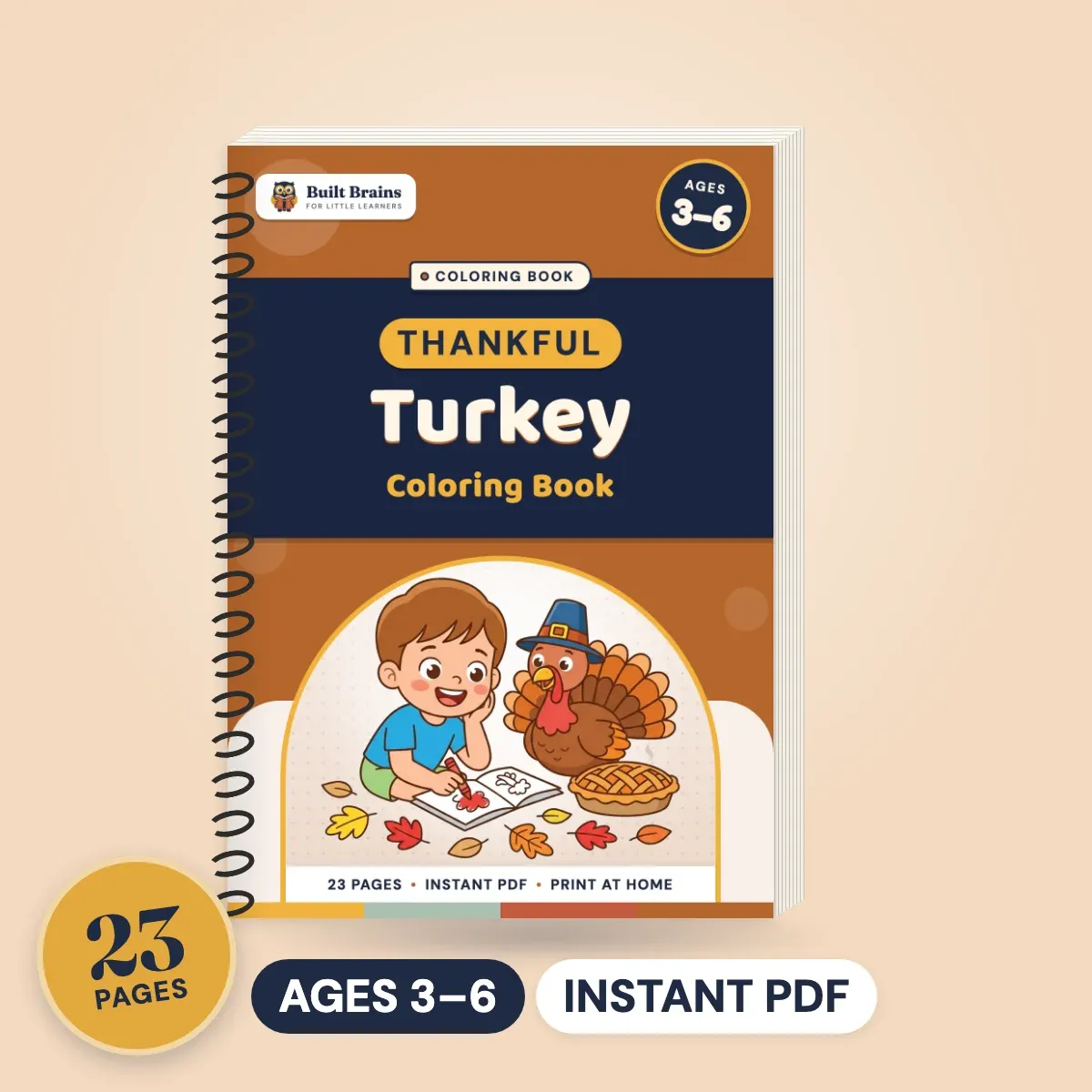
- Coloring page turkeys. On low-energy days, a big line-art turkey and a box of crayons is plenty. The Thankful Turkey Coloring Book has turkeys, pies, cornucopias and a family around the table. Builds: hand strength, staying on a task.
If your child is still learning to cut, draw thick lines on the feather strips and let them snip straight across.
Thanksgiving counting and math activities
Holiday themes make math feel like play. Use real objects first, then move to paper once your child has the idea.
- Count the feathers. Roll a die and add that many feathers to a paper turkey. First to ten wins. Builds: number recognition, counting on.
- Pie fractions. Cut a paper circle into halves, then quarters. Ask, “If four people share this pie, how many slices?” Builds: early fractions, fair sharing.
- Set-the-table math. Count guests, then count out the same number of napkins, forks and cups. Builds: one-to-one correspondence.
- Corn kernel adding. Use dried corn or buttons to act out simple sums: 3 kernels and 2 more. Builds: addition to 10.
- Guest graph. Ask each guest their favorite pie and color a square for each vote. Builds: graphing, comparing more and fewer.

Ages 4–6 · 30 pages
Thanksgiving Math & Reading FunCount turkeys, add pies, write thankful sentences
For 4 to 6 year olds, Thanksgiving Math & Reading Fun has pages to count and add with turkeys and pies, trace and read harvest words and write a thankful sentence. For more year-round ideas, see math activities for preschoolers.
Thanksgiving reading and writing activities
- Harvest word hunt. Write turkey, pie, corn and leaf on cards and hide them. Your child finds each card and matches it to a picture. Builds: word recognition.
- Place card writing. Kids write or trace each guest’s name on a folded card. Builds: letter formation, purposeful writing.
- Menu making. Your child dictates the dinner menu and illustrates it. Builds: sequencing (first, next, last), print awareness.
- Beginning sound basket. Gather a pumpkin, a pie tin, a potato and a pinecone. What sound do they all start with? Builds: phonemic awareness.
- Thankful sentence. “I am thankful for ___.” Younger kids draw and dictate; older kids copy or write it. Builds: sentence structure, handwriting.
Place cards are a great time to practice names. If your child is still working on their own, start with the first letter and let a grown-up write the rest in highlighter to trace.
Kitchen jobs for little helpers
Children who help make the meal are more likely to try it, and they feel proud of being part of the day. Pick jobs that are safe and away from the stove.
Ages 3–4
- Wash potatoes and vegetables in a bowl of water.
- Tear lettuce or bread for stuffing.
- Stir cold ingredients and pour pre-measured cups.
- Press cookie cutters into pie dough scraps.
Ages 5–7
- Measure flour and sugar with real cups and spoons.
- Crack eggs into a separate bowl first (easy to fish out shells).
- Mash cooked, cooled potatoes.
- Read the recipe steps aloud, with help, and check them off.
Keeping kids busy on Thanksgiving Day
The hardest part of the day for many parents is the stretch between guests arriving and dinner on the table. Plan for it the way you plan the turkey.
- A “Thanksgiving basket.” Fill a basket with crayons, stickers, a busy book and a few new-to-them items. Bring it out only when you need it. Builds: independent play.
- A cousins’ job list. Older kids can hang coats, deliver napkins or run the guest graph. Builds: responsibility, confidence.
- Outdoor break. A walk, a leaf pile or a game of tag before dinner burns energy so kids can sit longer at the table. Builds: gross motor skills.
- Quiet corner. A blanket, pillows and books in a calm room for kids who get overwhelmed by noise. Builds: self-regulation.
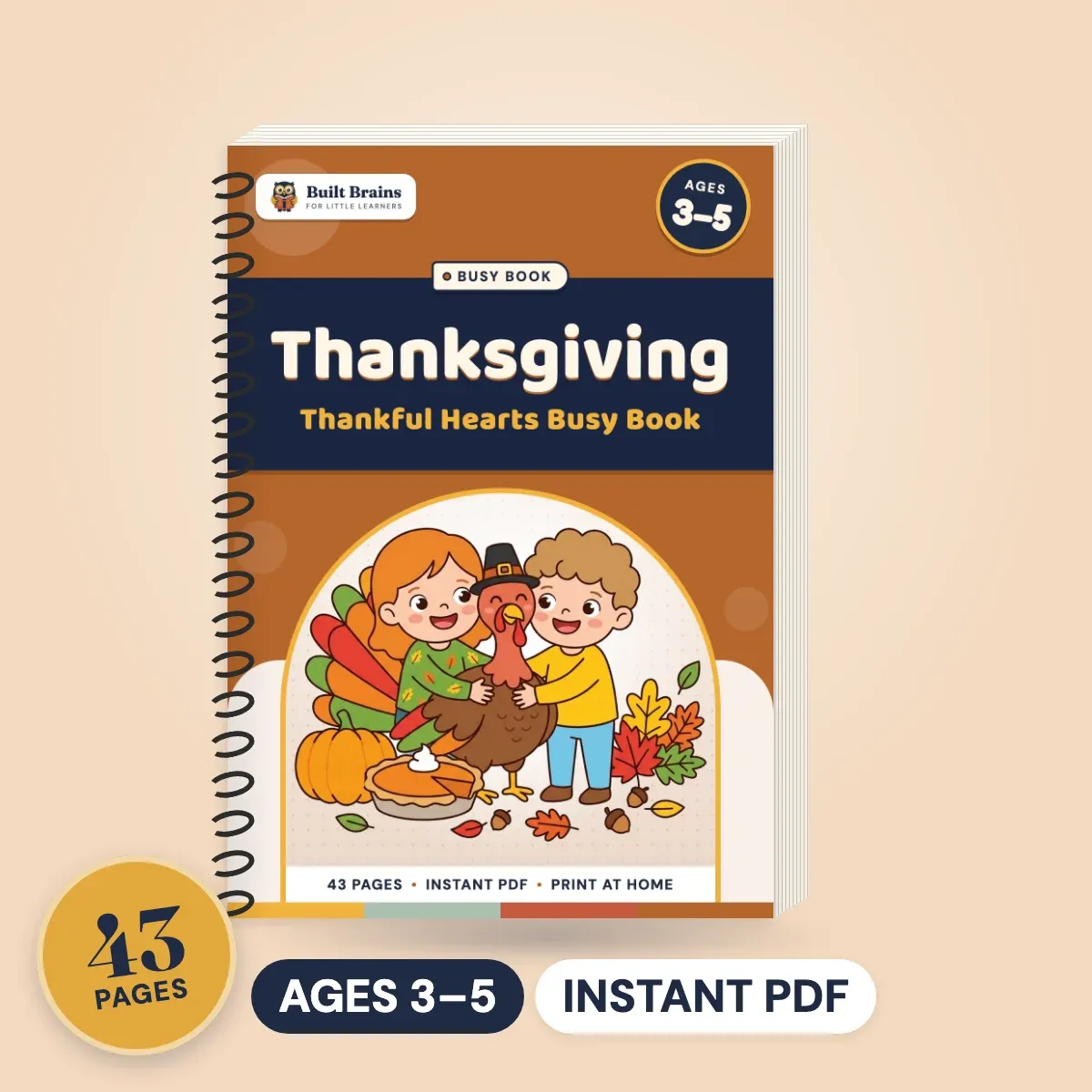
A themed busy book is ideal here. The Thankful Hearts Thanksgiving Busy Book has turkeys to color, harvest words to trace, pies to count and a thankful drawing page to share at the table. Our quiet time activities guide has more ideas for calm stretches.
Thanksgiving table activities and pretend play
A few small things at the table help kids feel included and stay seated a little longer.
- Paper tablecloth. Cover the kids’ table in craft paper with a cup of crayons. Builds: drawing, conversation.
- Thankful round. Everyone shares one thing before eating. Kids can hold up a drawing instead of speaking. Builds: public speaking, listening.
- I spy at the table. “I spy something orange.” Builds: color words, observation.
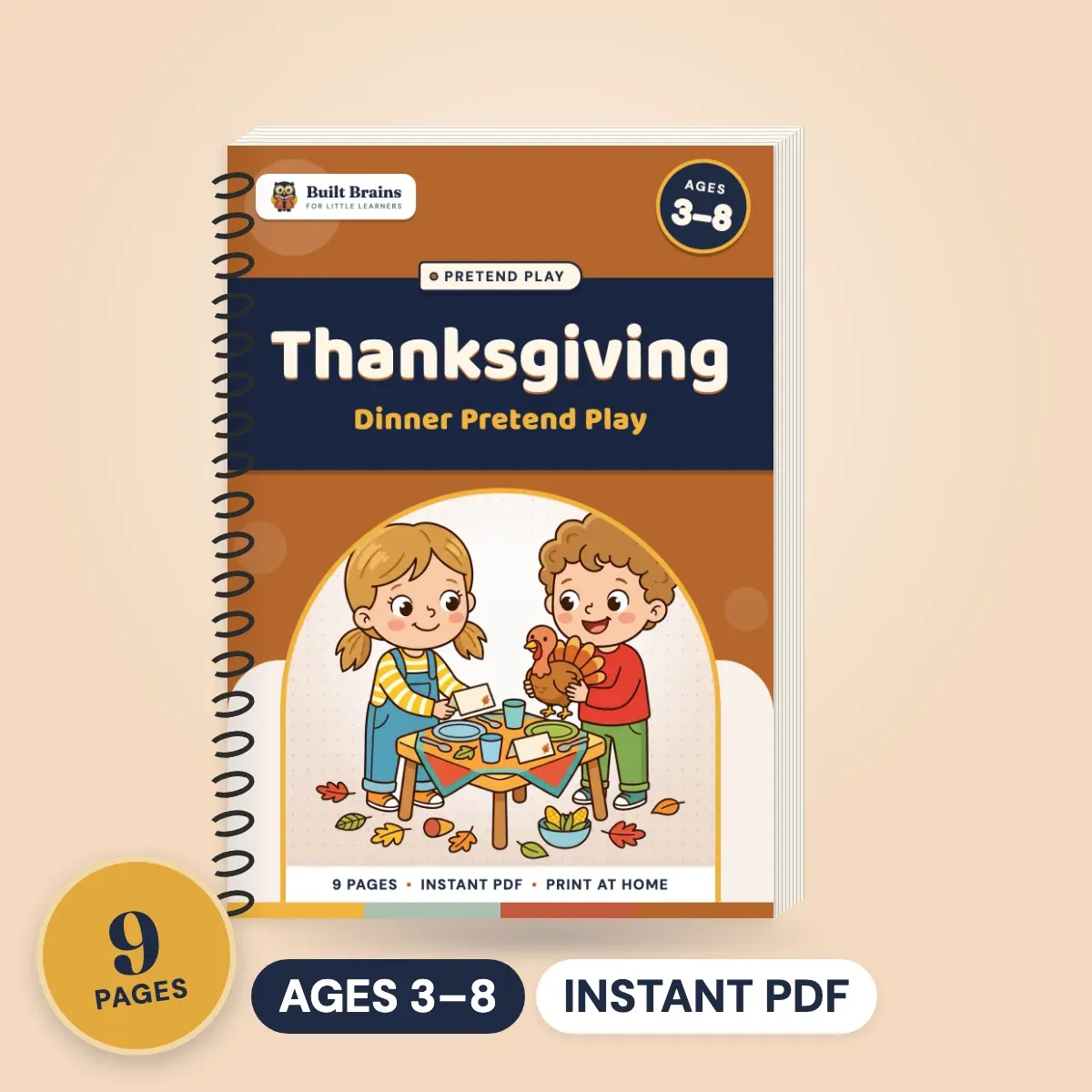
- Pretend restaurant. Before or after the meal, kids take orders from grown-ups. The Thanksgiving Dinner Pretend Play pack has menus, place cards, dinner order forms and thankful cards to fill in. Builds: writing, social skills, role play.
- Pretend feast with toys. Stuffed animals sit down to a play-food dinner and each says what they are thankful for. Builds: storytelling, empathy.
Talking about the first Thanksgiving
If your child asks where Thanksgiving comes from, keep it short and accurate. In 1621, English colonists at Plymouth and the Wampanoag people shared a harvest feast that lasted several days. The Wampanoag had lived on that land for thousands of years and still live there today. For young kids, it is enough to say that people shared food and that it is kind to learn about the people whose land we live on.
A simple Thanksgiving week plan
You do not need all 30 ideas. Here is one easy plan for the week of Thanksgiving:
- Monday: start a gratitude jar and make a handprint turkey.
- Tuesday: set-the-table math and a harvest word hunt.
- Wednesday: write place cards and help with pie dough.
- Thursday: kitchen jobs in the morning, busy basket before dinner, thankful round at the table.
- Friday: read the gratitude jar slips together and draw a favorite moment.
You can find more holiday pages in our seasonal collection, or grab the free book to try the Built Brains style first.
Questions parents ask
Handprint turkeys, a gratitude jar, counting feathers with a die, washing vegetables for dinner and coloring turkey pages are all easy wins for preschoolers. Keep each activity short, hands-on and low-mess. Most 3 and 4 year olds do best with ten to fifteen minutes on one thing before switching to something else.
Make it specific and daily. Ask your child to name one good thing that happened today, and share your own. Write the answers on slips for a gratitude jar or leaves for a thankful tree. Thank-you drawings for neighbors and teachers turn feelings into action, which young children understand far better than a lecture.
Plan the gap between guests arriving and dinner. Prepare a basket with crayons, stickers and a Thanksgiving busy book that only comes out that day. Give older kids real jobs like hanging coats. Take everyone outside for a walk before dinner, and set up a quiet corner for children who need a break from the noise.
Keep it simple and accurate. In 1621, English colonists and the Wampanoag people shared a harvest meal at Plymouth. Mention that the Wampanoag lived there long before the colonists and still live there today. For young children, focus on sharing, harvest and gratitude, and avoid costumes that dress up as Native people.
A 3 year old can wash potatoes, tear bread for stuffing, stir cold ingredients, pour pre-measured cups and press cookie cutters into pie dough scraps. Give one job with a clear end, like washing six potatoes, and keep your helper at a stool away from the stove, hot pans and knives.