How to do Christmas around the world with kids
Pick a country a day, keep each "trip" to 15 or 20 minutes, and follow the same four steps every time:
- Find it on the map. A sticker on a world map or globe; name the continent.
- Hear how families celebrate. Two or three facts in your own words is plenty at 4 or 5; older children can take a short paragraph and a question: "What's the same as ours? What's different?"
- Say the greeting. Use it at dinner.
- Do one activity, then stamp the passport.
Twelve countries fit three weeks at four a week with a Friday review; with a 4 year old, six over two weeks is plenty. Start at home: your own Christmas is the first stamp and the comparison point for everything after.
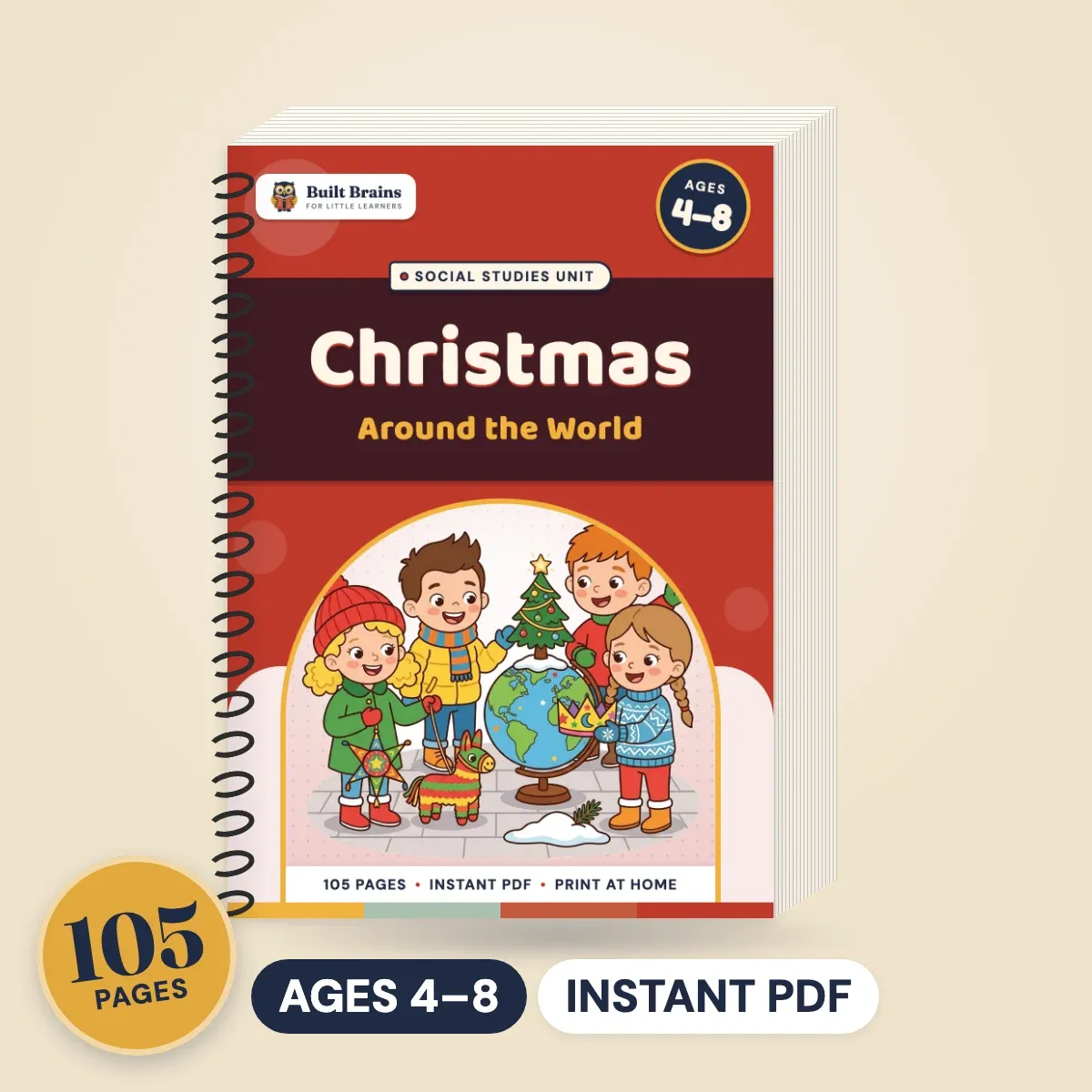
If you want the unit ready to print, Christmas Around the World is a three-week plan for ages 4 to 8 covering the United States, Canada, Mexico, England, France, Germany, Sweden, Italy, the Philippines, India, Japan and Australia, each with a map page and grown-up script, read-aloud facts, flag, greeting, a craft or no-bake recipe, a puzzle and a passport page. Ethiopia and the Netherlands are not in the kit; use the ideas below and add two blank passport pages.
Make a passport, a map and a suitcase
Three props turn facts into a game:
- The passport. Fold three sheets in half and staple the spine. Photo on the cover; one country per inside page, with the flag to color, the greeting to trace and a space for a "stamp" (a sticker, a date stamp or an inked thumbprint).
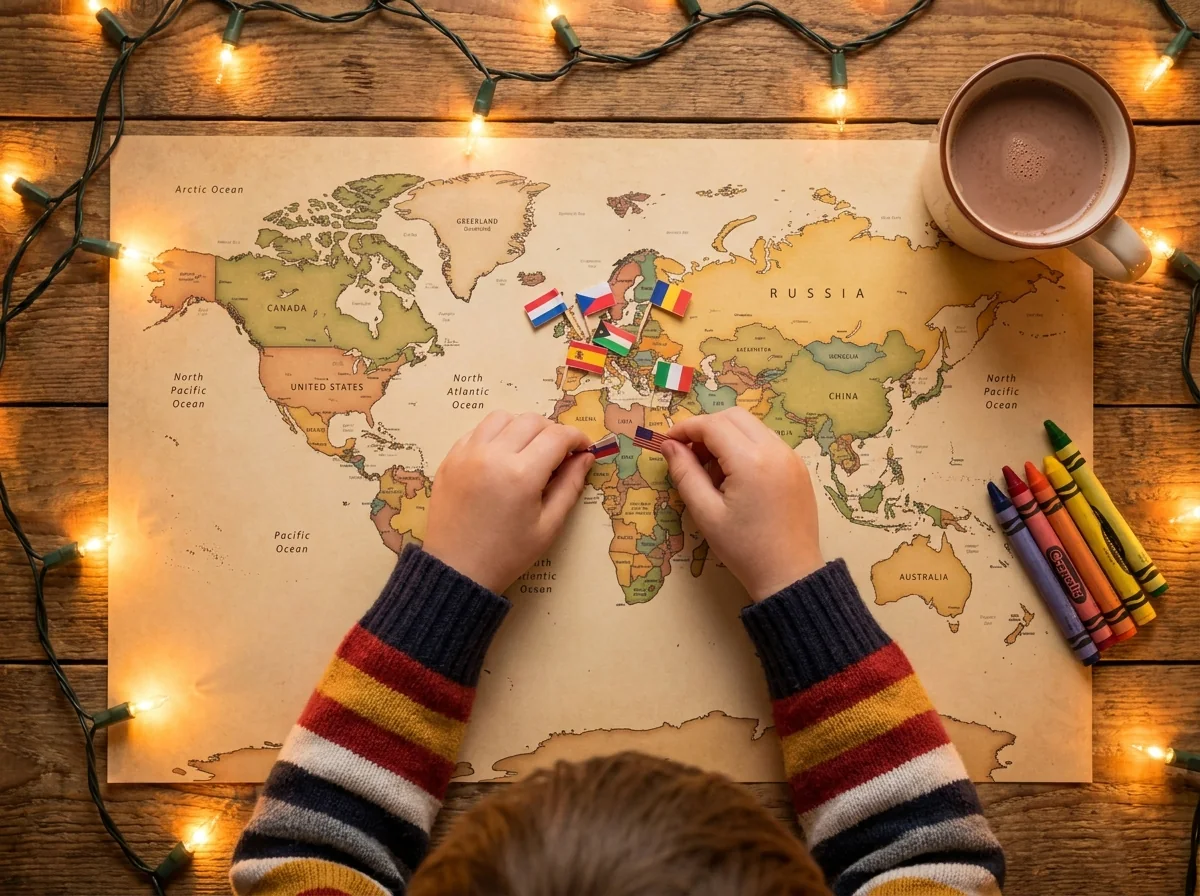
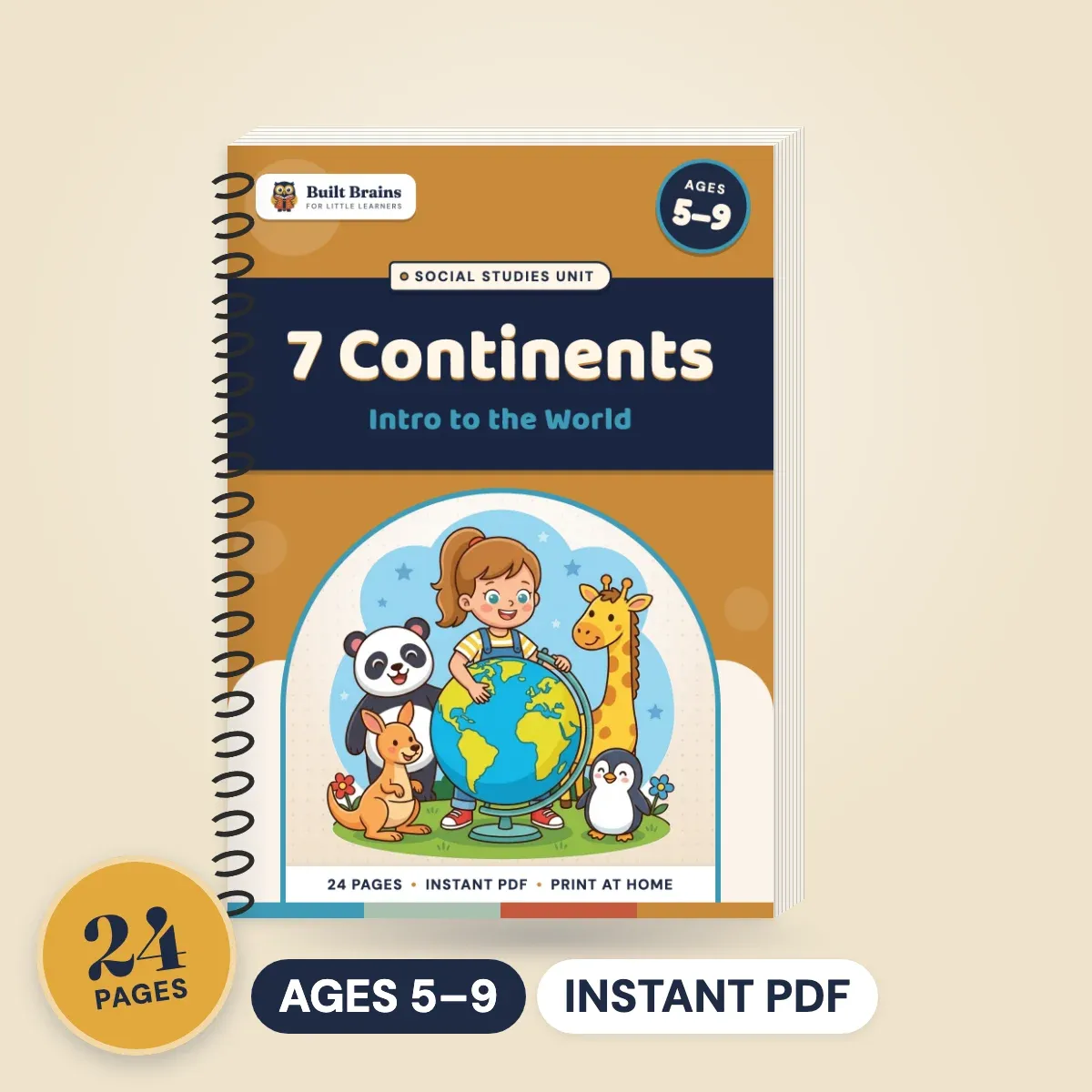
- The map. A printed world map on the fridge, with yarn from a pin at home to each new country so the route shows by the end. National Geographic Kids' country pages are handy for a flag or capital, and for 5 to 8 year olds Intro to the World: 7 Continents (ages 5 to 9) adds continent facts, a world map to color and flags.
- The suitcase. A shoebox with the day's materials, packed the night before. Opening it starts the trip.
Europe: Germany, Sweden, Italy, the Netherlands and the UK
Germany: Advent and the Christkind
Advent calendars and decorated trees have deep roots in Germany, as Encyclopaedia Britannica's history of Christmas traces. Families light one more Advent wreath candle on each of the four Sundays before Christmas, and on the night of December 5 children leave a boot out for St. Nicholas to fill with nuts, oranges and chocolate. Gifts come on Christmas Eve, from the Christkind in many regions. Greeting: Frohe Weihnachten.
Activity: A paper-plate Advent wreath with four paper candles, one flame colored each Sunday, or a boot by the door on December 5.
Sweden: St. Lucia on December 13
St. Lucia Day, December 13, brings light to the dark winter: children process in white gowns, one girl at the front in a crown of candles (electric in most schools), singing the Lucia song, then everyone eats saffron buns. Christmas is celebrated on Christmas Eve, with a big buffet and gifts from the Jultomten. Greeting: God Jul.
Activity: A paper candle crown: a card strip with white paper candles and yellow flames. Roll saffron-yellow play-dough into S-shaped buns.
Italy: nativity scenes and La Befana
Families set up a presepe, a nativity scene, in early December, and the season runs to Epiphany on January 6 (Encyclopaedia Britannica's Epiphany entry explains the date). The night before, a kindly old woman called La Befana flies on her broomstick and fills stockings with sweets, or with "coal" made of black sugar candy, which is also sweet. Greeting: Buon Natale.
Activity: Decorate a paper stocking for La Befana and hang it on January 5.
The Netherlands: Sinterklaas and a shoe by the door
Sinterklaas arrives by steamboat in mid-November. For the next few weeks children put a shoe by the door at night with a carrot for his horse, sing a Sinterklaas song and find a treat in the morning: spiced pepernoten, a mandarin or a chocolate letter. The big night is Pakjesavond, December 5, when gifts come with a funny poem about the receiver; Christmas itself is quieter. Greeting: Vrolijk Kerstfeest.
Activity: Put out a shoe with a drawn carrot inside, and trace a giant brown "chocolate letter" of your child's initial.
The United Kingdom: crackers and paper crowns
Dinner starts with a bang: crackers, paper tubes that two people pull apart to find a paper crown, a joke and a tiny gift, invented in London in the 1840s. Father Christmas fills stockings, dinner is roast turkey with Christmas pudding and mince pies, and December 26, Boxing Day, is a holiday too. Greeting: Happy Christmas!
Activity: Crackers from cardboard tubes wrapped in tissue paper and twisted at the ends, with a dictated joke and a paper crown inside to wear at dinner.
The Americas: Mexico and Canada
Mexico: Las Posadas
From December 16 to 24, neighborhoods hold Las Posadas: nine evenings of candlelit processions in which children and adults sing at doors asking for shelter, retelling Mary and Joseph's journey, then end at a home with hot fruit punch and a star-shaped piñata. The main feast is Nochebuena, Christmas Eve. Greeting: Feliz Navidad.
Activity: A "knock-knock posada": half the family sings behind a door, the other half opens it and shares hot chocolate.
Canada: réveillon in Quebec and Santa's postal code
In Quebec, many families hold a réveillon, a long late-night Christmas Eve meal, traditionally after midnight mass, with tourtière (meat pie) and a log-shaped bûche de Noël cake. Children across Canada write to Santa at a real postal address, North Pole, H0H 0H0, which reads "Ho Ho Ho." Greeting: Joyeux Noël.
Activity: A paper bûche de Noël: a paper-towel tube wrapped in brown paper with scribbled bark, a paper holly leaf and cotton-ball snow.
Asia and Africa: the Philippines, Japan, India and Ethiopia
The Philippines: parol lanterns
One of the longest Christmas seasons anywhere: carols start in September. The symbol of the season is the parol, a star-shaped bamboo-and-paper lantern hung in windows to represent the star of Bethlehem. Many families attend nine dawn masses, Simbang Gabi, from December 16 to 24, then a late-night Noche Buena feast on Christmas Eve. Greeting: Maligayang Pasko.
Activity: A paper parol: two large paper stars glued together with tissue paper in the center and paper tails, hung where light comes through.
Japan: Christmas cake and bright lights
Christmas is not a public holiday and most families are not Christian, but it is a cheerful season of city light displays, Christmas cake (sponge, whipped cream and strawberries) and, since a 1970s advertising campaign, fried-chicken dinners on Christmas Eve. The big family holiday is New Year, a week later. Greeting: Merii Kurisumasu.
Activity: A paper Christmas cake: a white circle, a ring of red paper strawberries, a candle on top.
India: stars, lamps and the "big day"
Christians are a small share of the population, but Christmas is a national holiday, biggest in Goa, Kerala, Mumbai and the northeastern states. Families hang big paper star lanterns outside and light small clay oil lamps along windows and paths; some southern homes decorate a mango or banana tree instead of a fir. In Hindi it is sometimes called Bada Din, "the big day." Greeting: Shubh Krismas.
Activity: Cut a row of paper lamps with yellow flames for the windowsill, then decorate a houseplant with paper stars.
Ethiopia: Genna on January 7
Ethiopia follows its own calendar, and Ethiopian Orthodox Christians celebrate Christmas, Genna, on January 7, as several Orthodox churches do, Encyclopaedia Britannica notes. Many people fast beforehand. On the eve, families in white cotton shawls with bright woven borders attend candlelit services through the night, then share doro wat, a spicy chicken stew, with injera flatbread. Boys and men play a stick-and-ball game also called genna. Greeting: Melkam Gena.
Activity: Gentle backyard genna with wrapping-paper tubes and a soft ball, or color a paper shawl with a bright patterned border.
Australia: Christmas in summer
December is high summer, so Christmas often means a beach day or a backyard barbecue, and a Santa pictured in shorts or on a surfboard. Towns hold Carols by Candlelight concerts on warm evenings, and schools are on summer vacation. Greeting: Merry Christmas!
Activity: The seasons experiment: stickers for home and Australia on an orange, tilted toward a lamp "sun," show how the bottom half leans toward the light in December.
Talking about differences kindly
Young children notice differences and ask about them loudly. NAEYC's position statement on equity encourages exactly this kind of accurate, respectful exposure to many cultures, rather than one "normal" and a list of exceptions. A few habits help:
- Say "some families" and "many families," not "they all." Christmas in Mumbai and in a Kerala village look different, just as New York and small-town Texas do.
- Start with what is shared. Light in the dark, food with family, songs, giving. Then differences feel like variations on a theme.
- Include people who do not celebrate Christmas. Many people in Japan, India and elsewhere mark other winter holidays or none. That is a fact to mention plainly, not a problem to solve.
- Let your child lead with questions. "Why do they wait until January 7?" beats any lesson you planned.
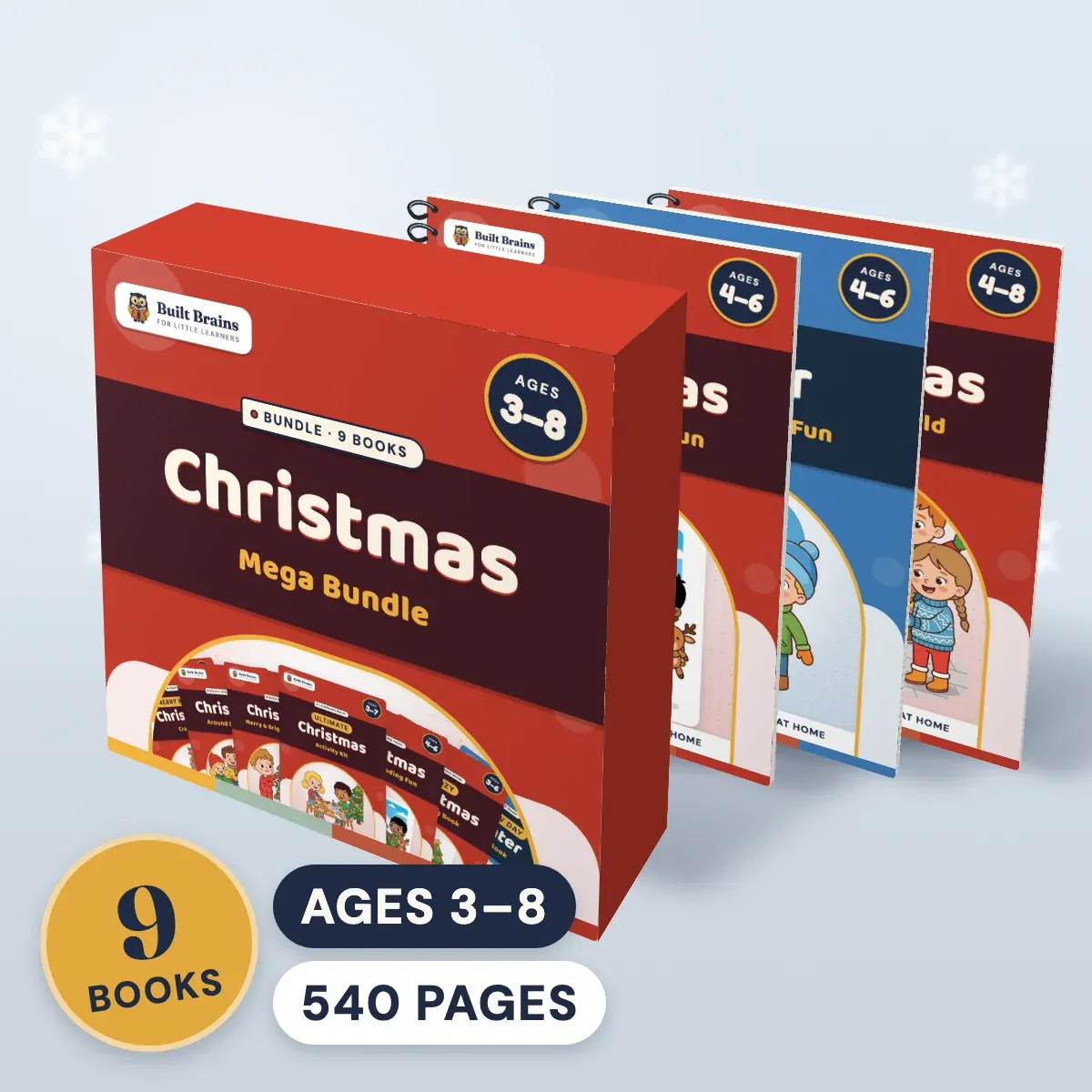
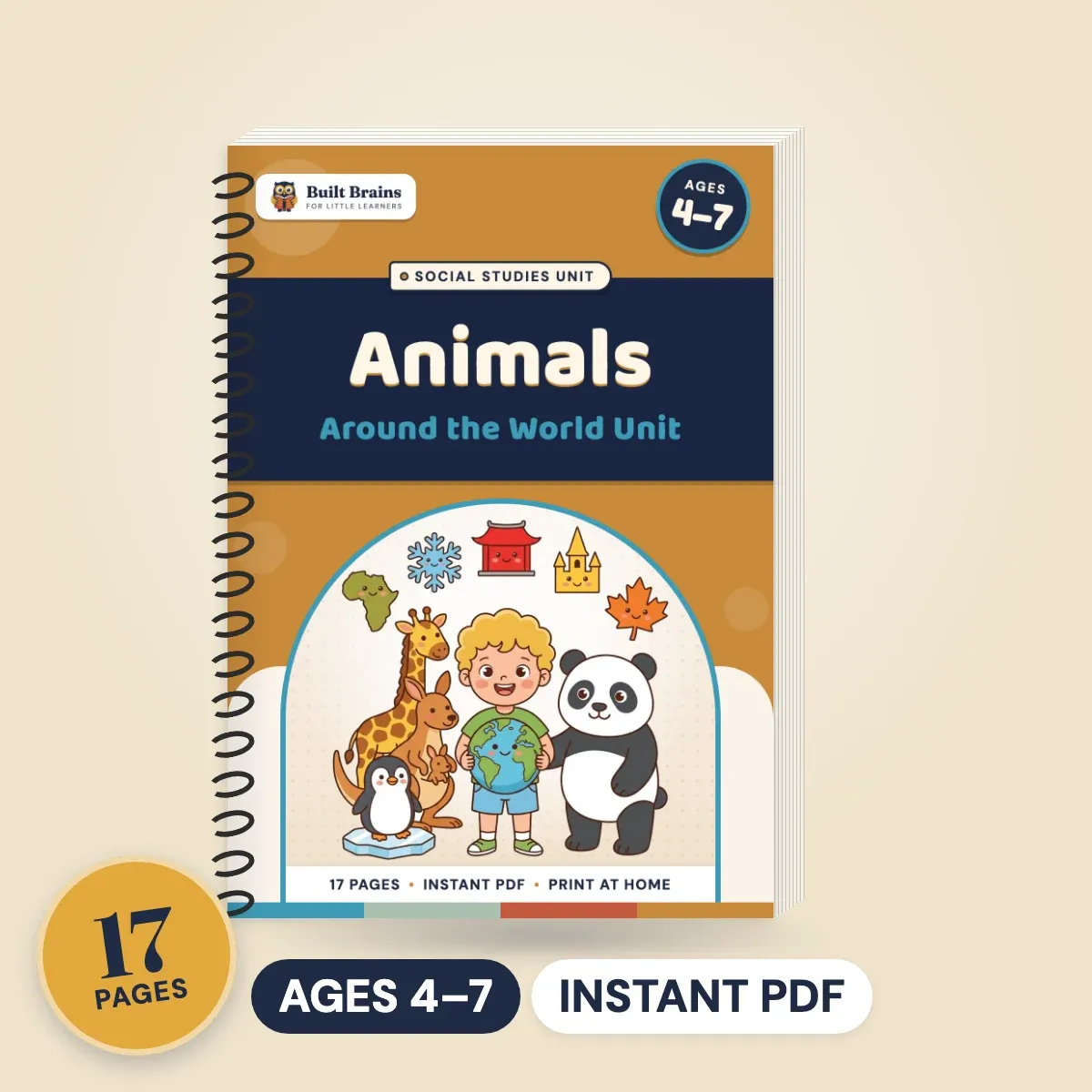
After the holidays, the Animals Around the World Unit (ages 4 to 7) continues the map habit with pandas, kangaroos and penguins. Our Christmas activities for kids guide has a 24-day countdown to run alongside, and Christmas activities for toddlers keeps 1 to 3 year olds busy while the big ones travel. All six of our Christmas printables plus three winter ones are in The Christmas Mega Bundle (ages 3 to 8).
Ages 3–7 · 214 pages
The Ultimate Christmas Activity KitCrafts, games, coloring and learning for the whole season
Sources
- Encyclopaedia Britannica – Christmas: Advent, the tree, gift-bringers, and the January 7 date on the older calendar.
- Encyclopaedia Britannica – Epiphany: January 6 as the end of the season, behind La Befana and Three Kings' Day.
- National Geographic Kids – Countries: child-friendly country facts, flags and maps for the passport pages.
- NAEYC – Advancing Equity in Early Childhood Education: accurate, respectful portrayals of many cultures rather than stereotypes.
Questions parents ask
Ethiopia and several Orthodox churches, including in Russia, Serbia and Egypt, keep Christmas on January 7 because they follow an older calendar. Italian children get a second visit on January 6, Epiphany, from La Befana. In the Netherlands the big gift night is December 5, the eve of Sinterklaas' feast day, and Sweden's St. Lucia Day falls on December 13.
Pick one country a day and keep each visit to about 15 minutes: find it on a map, hear two or three facts, say the greeting and make one thing. A paper parol lantern for the Philippines, a boot by the door for Germany's St. Nicholas Day and a paper cracker with a joke inside for the United Kingdom are reliable favorites with 5 year olds.
Fold three sheets of paper in half and staple the fold to make a 12-page booklet. Put your child's photo or drawing on the cover. Give each inside page one country: the flag to color, the greeting to trace and a space for a "stamp," which can be a sticker, a date stamp or an inked thumbprint earned after the day's activity.
Yes, in different ways. In Japan it is not a public holiday and most families are not Christian, but people enjoy light displays, Christmas cake and festive meals, then celebrate New Year as the main family holiday. In India, Christians are a small share of the population, but Christmas is a national holiday, with paper star lanterns, oil lamps, midnight services and sweets.
Six over two weeks is plenty for a 4 year old; a 5 or 6 year old can manage twelve over three weeks at four a week with a Friday review. Choose countries with a strong make-and-do hook first, such as the Philippines, Sweden, Mexico and the Netherlands, and let your child's questions decide which ones to add next year.
Reviewed by
Maternelle (Kindergarten) Teacher
Clara Tremblay is a Maternelle educator in Quebec focused on French early literacy, fine motor development, and inquiry-based play.
More about Clara →