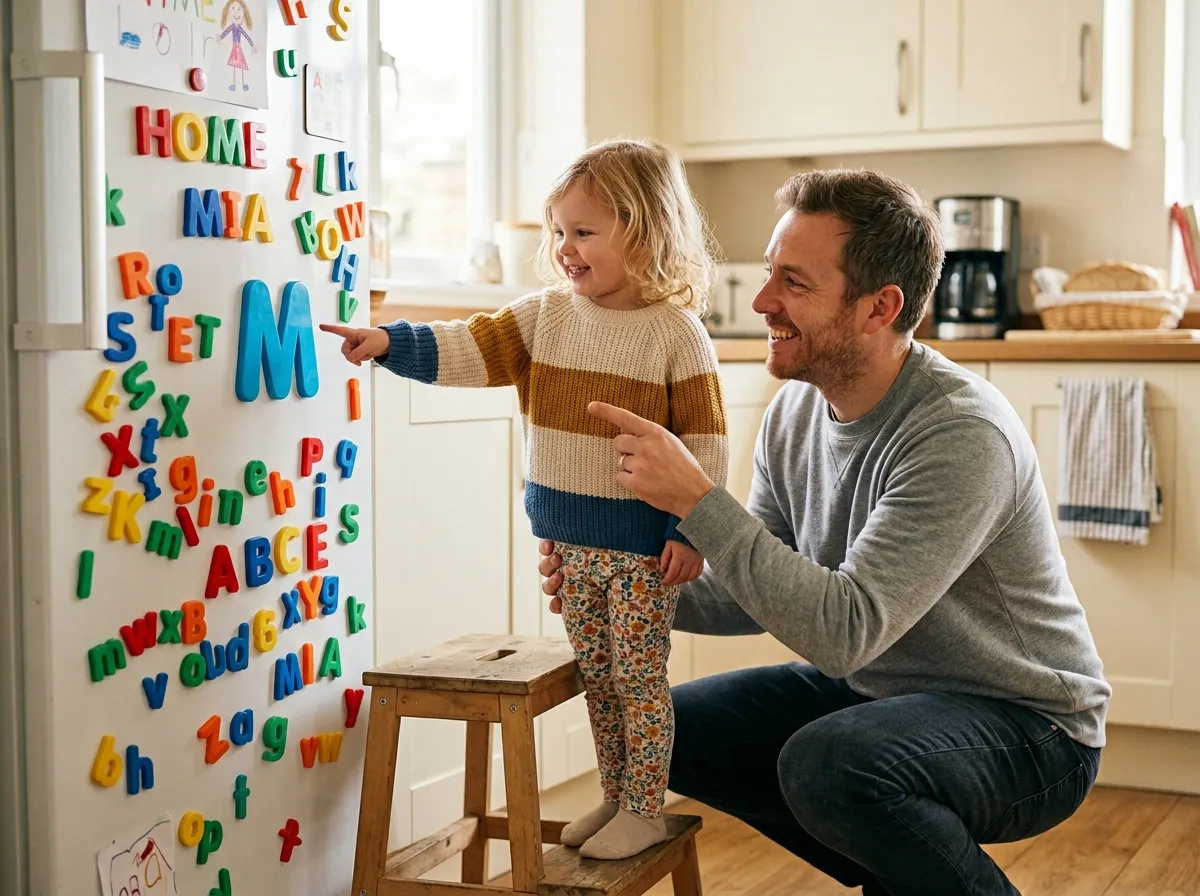
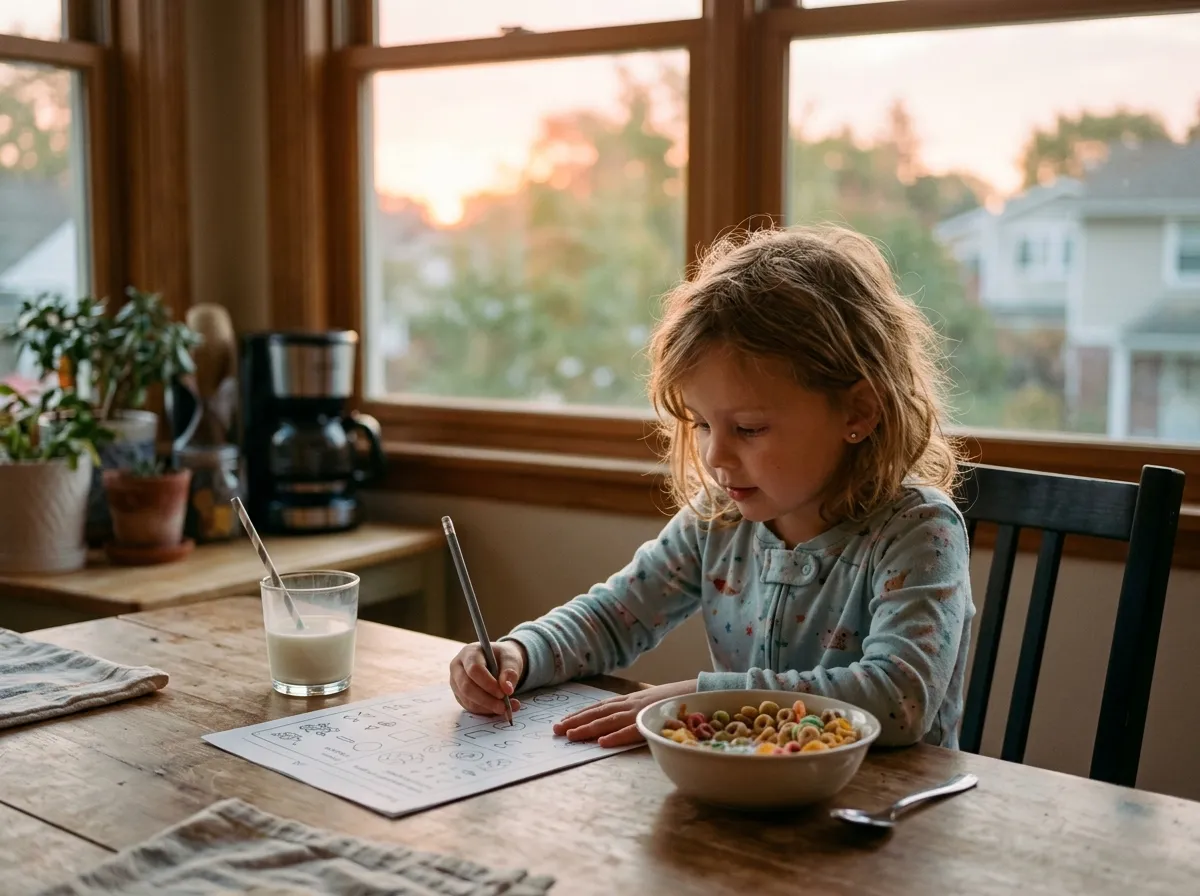
What is kindergarten morning work?
Morning work is one short page your child does right after breakfast, before the main lesson. In classrooms it keeps children busy and settled while the teacher takes attendance. At home it does something just as useful: it tells your child "school is starting" without an argument, and it reviews what they already know.
The key rules:
- It's review, not new teaching. Your child should be able to do most of it alone.
- It's short. About 10 minutes for kindergarten, 5 for preschool.
- It's the same shape every day. Same boxes, new content. Familiarity is what lets your child work independently.
- It's checked quickly. Look at it together for one minute and praise one specific thing.
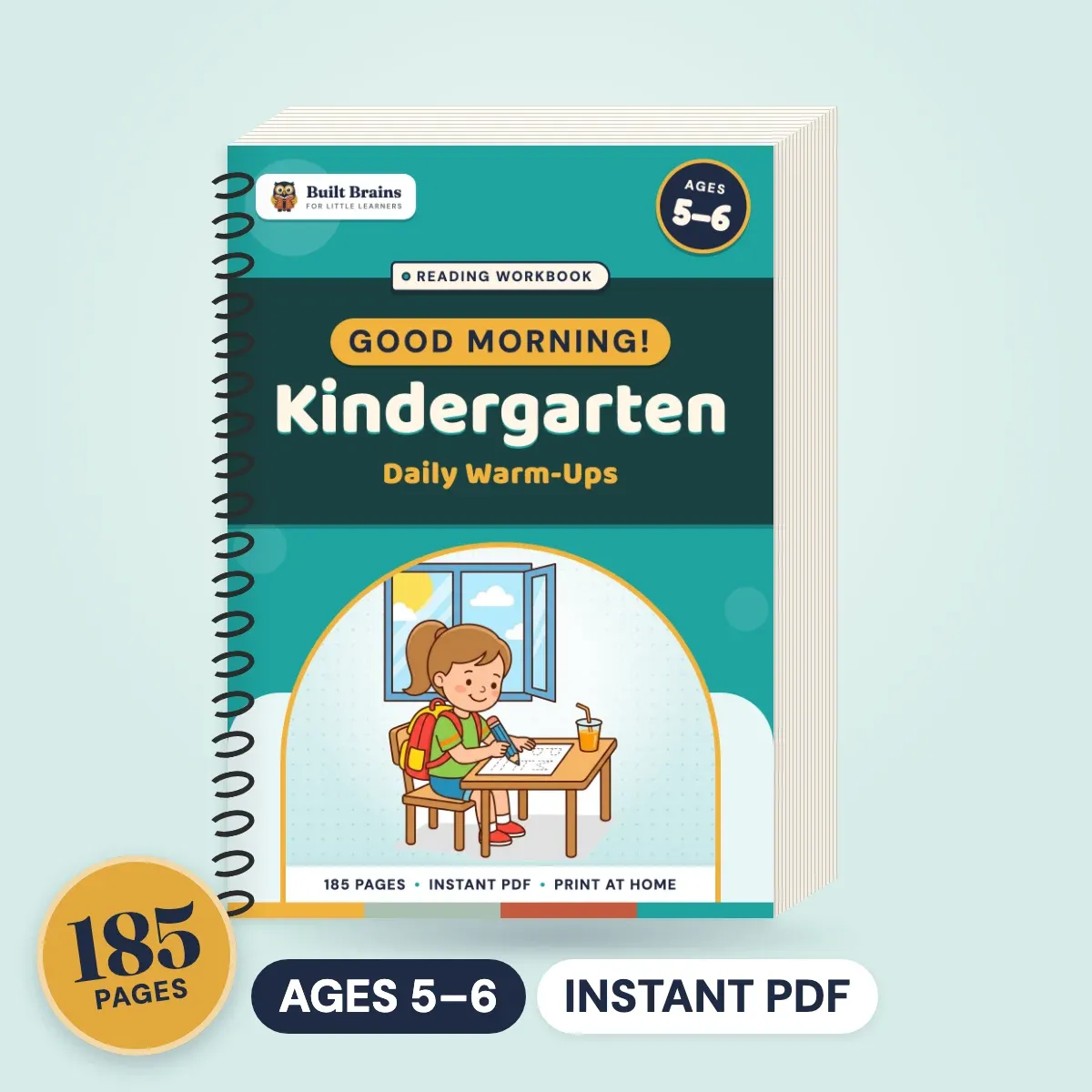
Good Morning! Kindergarten Warm-Ups is built exactly this way. Each of its 52 daily pages has the day and weather, a letter and word of the day, a number of the day up to 20, a simple sum and a drawing, plus a certificate of completion at the end. It's 55 pages for ages 5 to 6, an instant PDF in black and white that prints on US Letter or A4, with a 14-day money-back guarantee. Fifty-two pages covers one a day for about ten weeks, or two or three a week across most of a school year if you mix in the hands-on ideas below.
Why 10 minutes of morning work helps the whole day
Young children do best when the day has a predictable shape. Pediatric parenting advice, including the AAP's, often stresses predictable routines, because children who know what comes next tend to cooperate more and worry less. Morning work turns the start of the day into one of those routines.
What you get from those 10 minutes:
- An easy transition. Moving from play to "work" is hard for five year olds. A familiar page is a gentle bridge.
- Spaced review. Seeing letters, numbers and words a little every day helps them stick far better than one long session a week.
- Independence. Your child learns to read the boxes, get started and finish without you sitting beside them.
- A quick read on progress. In one glance you see if the number of the day is now easy or if "b" is still turning into "d."
- A calm first win. Starting with something they can do sets the tone for the harder lesson that follows.
What to put on a kindergarten morning work page
Use four to six small sections. Each takes one or two minutes.
Literacy boxes
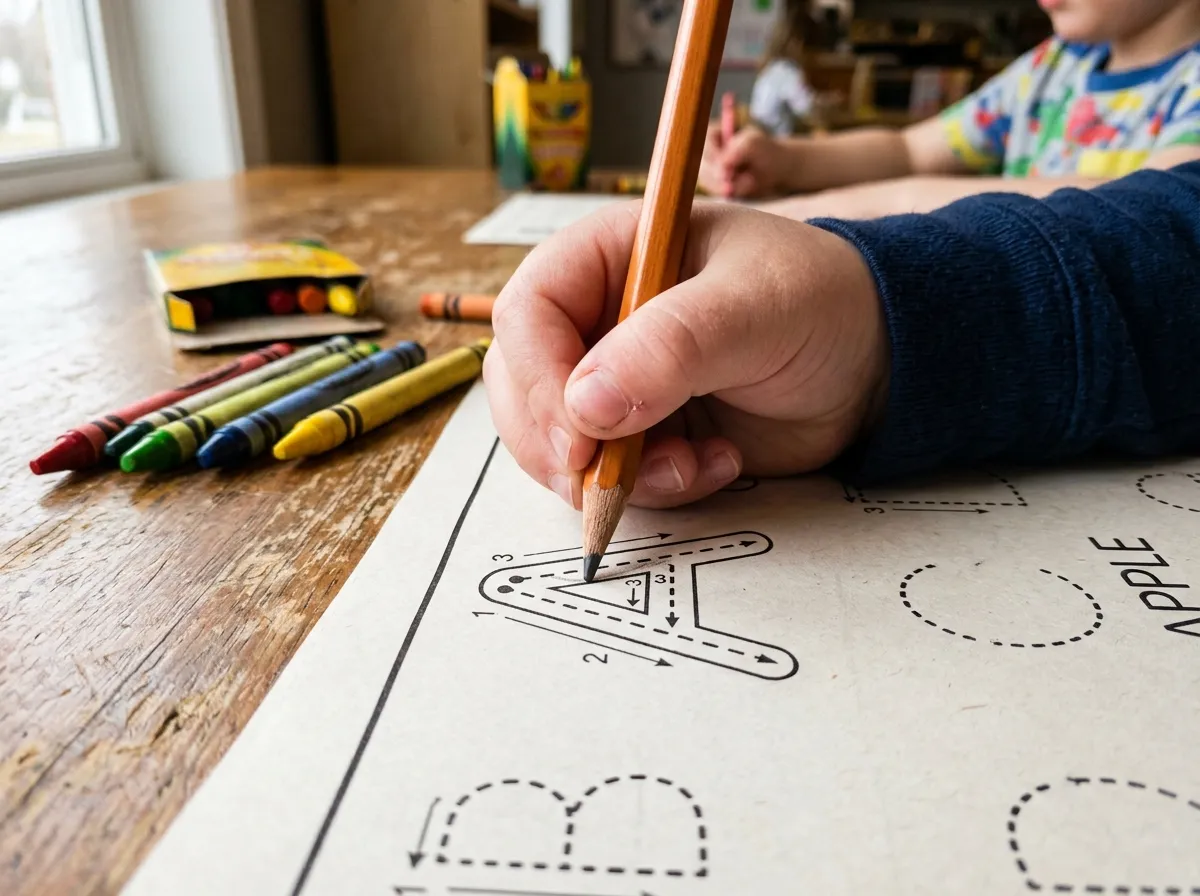
- Letter of the day: trace it, write it, circle it in a row of letters
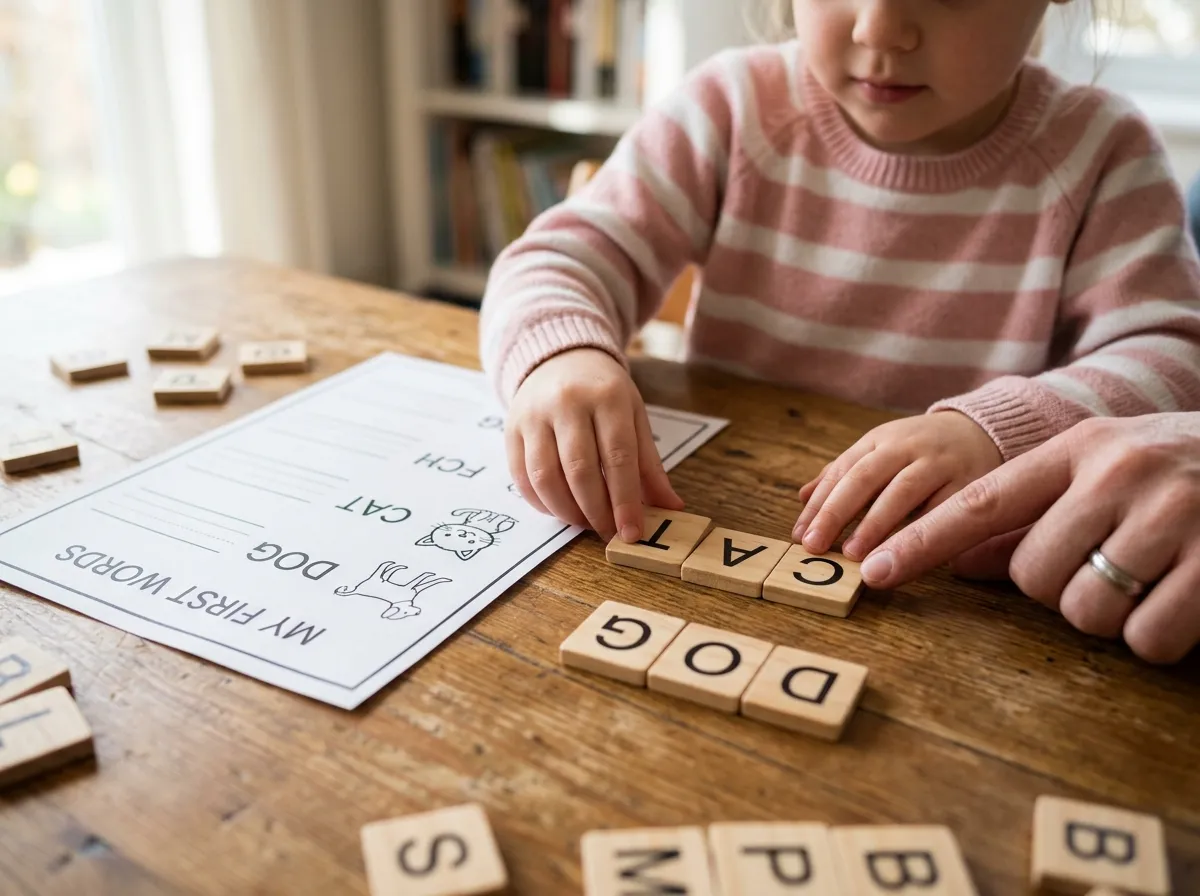
- Word of the day: read it, write it, use it in a spoken sentence
- Beginning sounds: circle the picture that starts with the letter
- Fix-it sentence (later in the year): "i see a cat" becomes "I see a cat."
Math boxes
- Number of the day: write it, show it on a ten-frame, draw that many dots
- One more, one less: the numbers on either side
- A simple sum with pictures to count
- Tally marks or a quick graph of the weather
Calendar and "me" boxes
- Day of the week, today's weather, how I feel
- A drawing box: "Draw what you want to do today"
Keep the layout the same every day. The content changes; the boxes don't.
Kindergarten morning work ideas by month
Match the page to what your child has already learned. This is a typical progression for a kindergarten year starting in late summer; adjust it to your child.
| Months | Literacy focus | Math focus | Extras |
|---|---|---|---|
| Aug–Sep | Name writing, letter tracing, beginning sounds | Counting to 10, numeral writing 0–10 | Day, weather, feelings |
| Oct–Nov | Letter of the day with sound, first sight words | Ten-frames, numbers to 15, one more | Patterns, shapes |
| Dec–Jan | CVC words (cat, sit, hop), word of the day | Numbers to 20, simple sums within 5 | Drawing with a label |
| Feb–Mar | Sight words in sentences, fix-it sentences | Sums and take-aways within 10, comparing | Tally charts |
| Apr–May | Write a short sentence, read a two-line story | Counting to 100 by tens, addition within 10 | Quick write: "Today I…" |
If you start mid-year or your child is moving faster, pick the row that matches what they already know, not the calendar.

Ages 3–5 · 185 pages
Good Morning! Preschool Warm-Ups180 five-minute pages, one for every school day
Morning work for homeschool vs the classroom
The idea is the same, but the setting changes how you run it.
In a classroom
- Children arrive at different times, so the page must be fully independent.
- Teachers often rotate paper pages with "morning tubs": puzzles, pattern blocks, play-dough or a book basket.
- The page is usually checked later, or reviewed together at circle time.
At home
- You can sit nearby, so the page can include one thing your child needs a little help with.
- There's no rush. If the drawing box turns into a long story about dinosaurs, that's language practice.
- Check it straight away, together. One minute of "Show me your number of the day" is more useful than red marks later.
- It fits neatly before the main lesson. Our preschool at home schedule and how to homeschool kindergarten guides show where it goes in the day.
A simple homeschool morning
- Breakfast, with the morning work page waiting at your child's place
- Morning work, about 10 minutes, while you tidy up
- Check it together, one minute
- Read aloud, 10 to 15 minutes
- Main lesson: phonics and math, about 20 minutes
Preschool and first grade morning work
Preschool morning work (ages 3 to 5)
Preschoolers need a shorter page, more pictures and an adult nearby. Five minutes is enough: name the day, circle the weather, color the letter of the day, count a few pictures and trace a shape. Talk through it together rather than expecting independence. Good Morning! Preschool Warm-Ups has 52 five-minute pages like this, covering letters A to Z, numbers 1 to 10, weather, feelings and shapes.
Paper is optional at this age. A "morning basket" with a song, the weather and one picture book does the same job. Hands-on play still does most of the teaching at this age.
First grade morning work (ages 6 to 7)
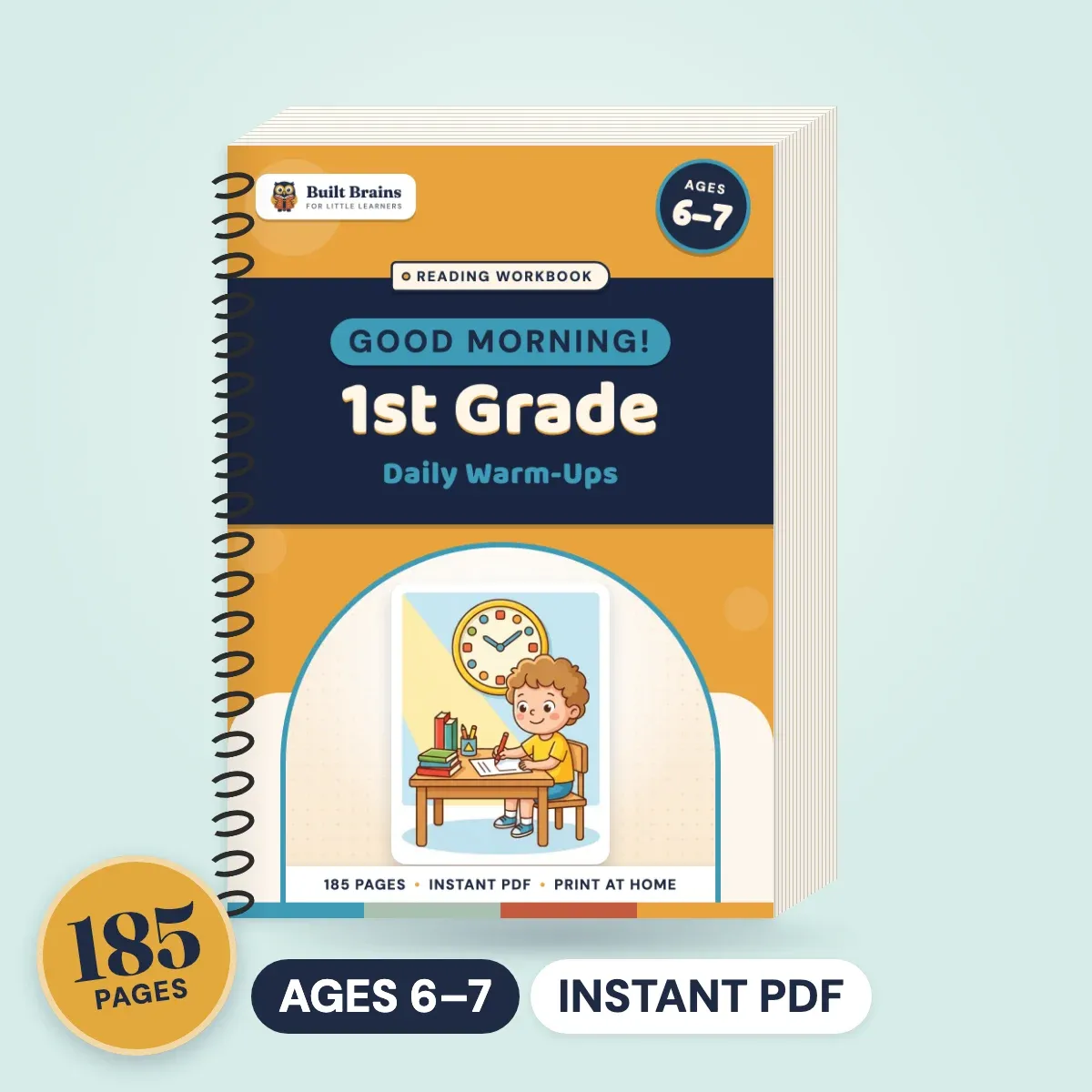
First graders can handle a little more writing and a little more challenge: a word of the day, a fix-it sentence, math of the day, number of the day and a quick write. Good Morning! 1st Grade Warm-Ups follows that format with 52 daily pages.
Common morning work mistakes (and fixes)
- Using it to teach something new. If your child needs you for every box, it isn't morning work. Move new skills to lesson time.
- Making it too long. A two-sided packet with eight tasks drains a five year old before the real lesson. One side, four to six boxes.
- Changing the layout every day. New formats mean new instructions, and your child can't start alone.
- Never checking it. Children notice. A one-minute look together tells them it matters.
- Insisting when your child is clearly done. If they're melting down, stop. Try a hands-on version (count cereal, write the letter in salt) and move on.
- Skipping play entirely. Morning work is a warm-up. The rest of a kindergartener's day still needs outdoor time, building and pretend play.
What if my child won't do morning work?
Some children resist anything that looks like a worksheet. Try these in order:
- Shrink it. Cover half the page with a sheet of paper. "Just these two boxes today."
- Let them choose the order. "Weather or number first?"
- Do the first box together, then step away for the rest.
- Swap the tool. Dry-erase markers in a sheet protector, or a fat marker instead of a pencil.
- Move the time. Some children need to run outside first. After a 20-minute play, the page often goes smoothly.
If pencil work causes real distress every day, your child may need more hand strength first. Our fine motor activities guide has ideas, and it's worth mentioning to your pediatrician if writing seems very hard compared with other skills.
How to start morning work tomorrow
Pick a spot, print one page and put it out with breakfast. Keep it to 10 minutes, look at it together, and do the same thing the next day. Within a week or two most children start without being asked.
Want to try the routine before you buy? Try our free printable book first. When you want a year of pages already planned, this is the one for kindergarten:
Good Morning! Kindergarten Warm-Ups gives you 52 ready pages with the same daily boxes: day and weather, letter and word of the day, number of the day to 20, a sum and a drawing. For younger and older children, see the Preschool Warm-Ups and 1st Grade Warm-Ups, or browse everything for kindergarten.
Questions parents ask
Morning work is a short independent task children do as the school day begins, while the teacher takes attendance or the parent finishes breakfast. It usually reviews skills already taught, such as letters, sight words, counting and the date, so children can work mostly on their own and start the day with a success.
About 5 to 15 minutes for kindergarten. Most children are comfortable with around 10. If your child regularly takes longer, the page is too hard or too long. Cut it in half or remove the section they struggle with, and teach that skill separately at lesson time.
Yes. It gives a homeschool morning a clear start and keeps review going without you planning it. Many parents put the page out with breakfast so the child begins while they clear up. It works best as a warm-up before the main lesson, not as the whole school day.
Keep it to four or five small boxes: the day and weather, a letter or word of the day, a number of the day with counting or a ten-frame, one simple sum, and a drawing or short sentence. Everything should be a skill your child has already practiced with you.
Preschoolers can, in a gentler form. Aim for about five minutes: name the day, circle the weather, color a letter, count a few pictures and trace a shape. Do it side by side at first. Three and four year olds still need an adult close by, and play counts as learning too.