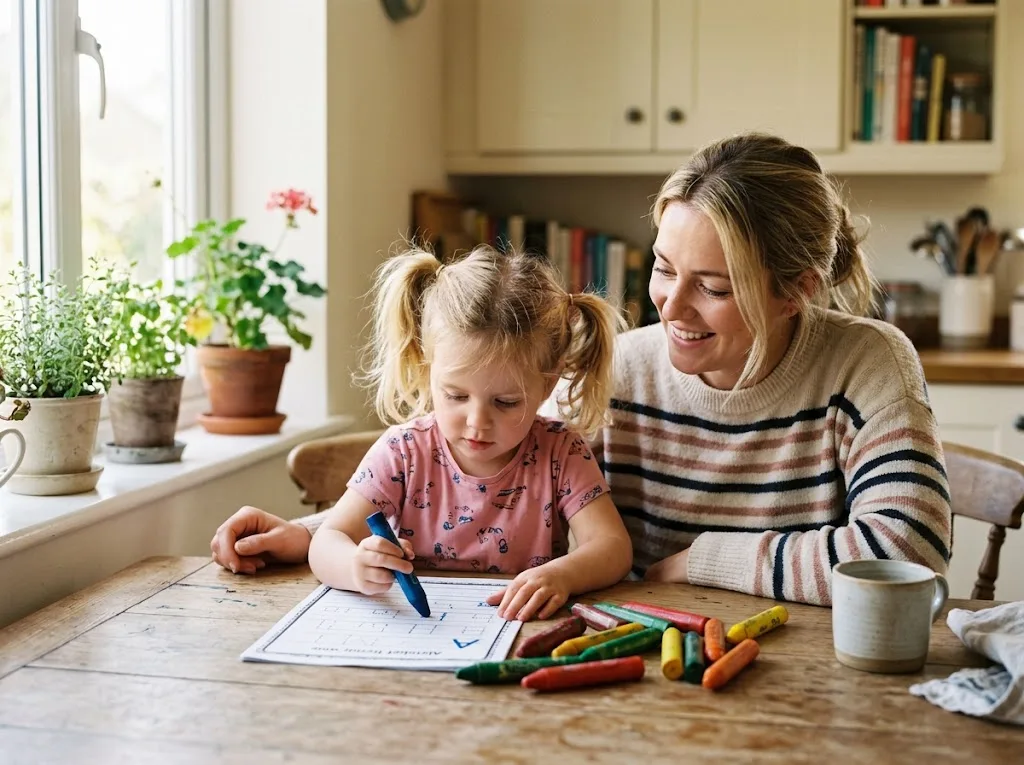
How many hours a day is preschool at home?
Less than you think. A preschool classroom runs for three hours or more, but much of that time is lining up, snack, transitions and waiting for 15 other children. At home, one-to-one, you can cover the same learning in a fraction of the time.
- Age 3: 10 to 15 minutes of sit-down learning, split into two short bursts if needed.
- Age 4: about 20 minutes a day, five days a week.
- Age 5 (pre-K): 20 to 30 minutes, with a little more writing and early reading.
The rest of the day still counts. Sorting laundry is math. Talking about what you see on a walk is language. Stirring pancake batter builds the hand muscles your child needs for writing. A schedule simply makes sure the focused part happens, at a time of day when your child is fresh.
Sample daily preschool at home schedule
Treat the times as an order of events, not a clock to race. What matters is that the day flows the same way most days, because young children feel safe when they know what comes next.
- Wake up, breakfast and get dressed. Let your child do as much as they can alone: buttons, shoes, pouring cereal.
- Morning basket (5 minutes). A song, the day of the week, the weather, one picture book. This is the “we’re starting” signal.
- Focused learning (15 to 20 minutes). The day’s letter, number or skill, with one or two printable pages and something hands-on.
- Outdoor play (45 minutes or more). Running, climbing, digging. Movement helps attention later in the day.
- Snack and free play. Blocks, dolls, pretend kitchen. Resist the urge to direct it.
- Lunch, then quiet time or nap. A busy book, audiobooks or looking at books alone. See our quiet time activities guide.
- Afternoon project (optional, 15 minutes). A craft, a science activity, baking or a nature walk tied to the week’s theme.
- Chores, dinner, bath and bedtime stories. Two or three stories a night is the most valuable reading habit you can build.
Morning is best for the focused part for most children. If your child melts down before lunch, move it to right after breakfast. If they are slow to warm up, try after outdoor play.
A weekly plan: one letter, one number, one theme
Planning gets easy when each week has the same shape. Pick a theme (animals, weather, my family), one letter and one number, then give each weekday a job:
- Monday — meet the letter. Say its sound, find it in books, color a big letter, trace it with a finger.
- Tuesday — hear the sound. Hunt around the house for things that start with it. Sort pictures into “yes” and “no” piles.
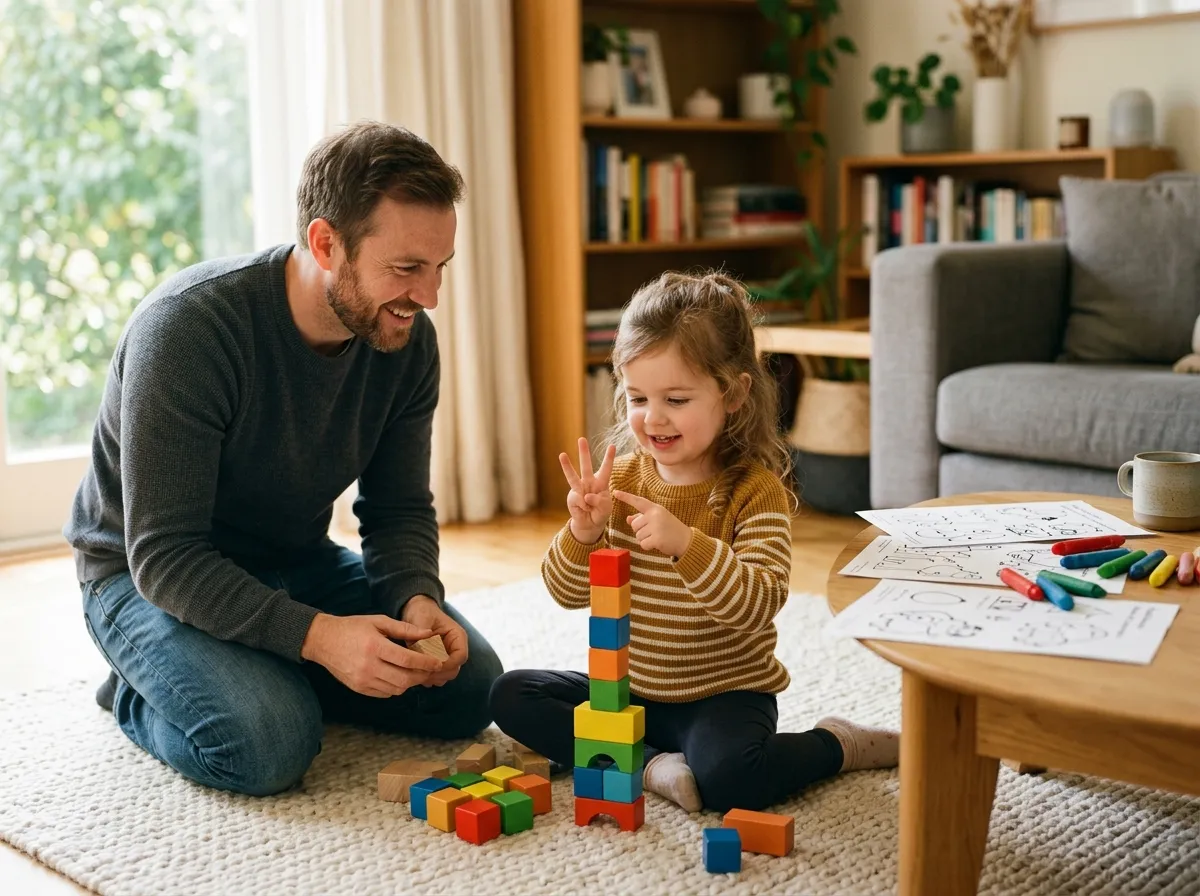
- Wednesday — count it. Build the number with blocks, fill a ten-frame, count snacks, then trace the numeral.
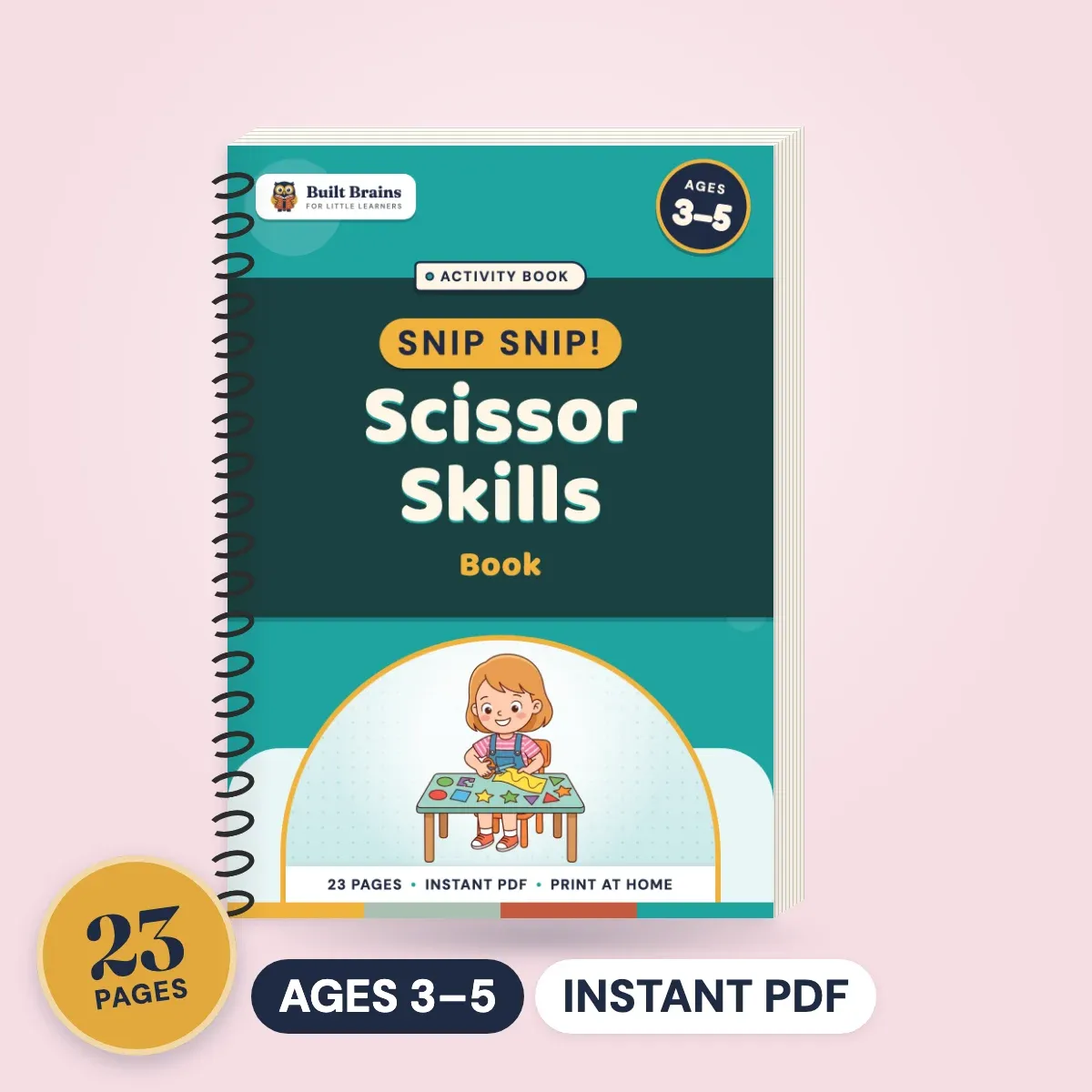
- Thursday — build small hands. Cutting practice, a maze, play-dough letters, lacing.
- Friday — create and play. Patterns, a matching game, a coloring page and a quick check of what stuck.
This is exactly the rhythm of the Complete Preschool Curriculum at Home: 36 weeks, each one planned down to the day, so you open the week, print the pages and sit down together.

Ages 3–5 · 813 pages
Complete Preschool Curriculum at Home36 weeks, planned down to the day

Ages 3–5 · 60 pages
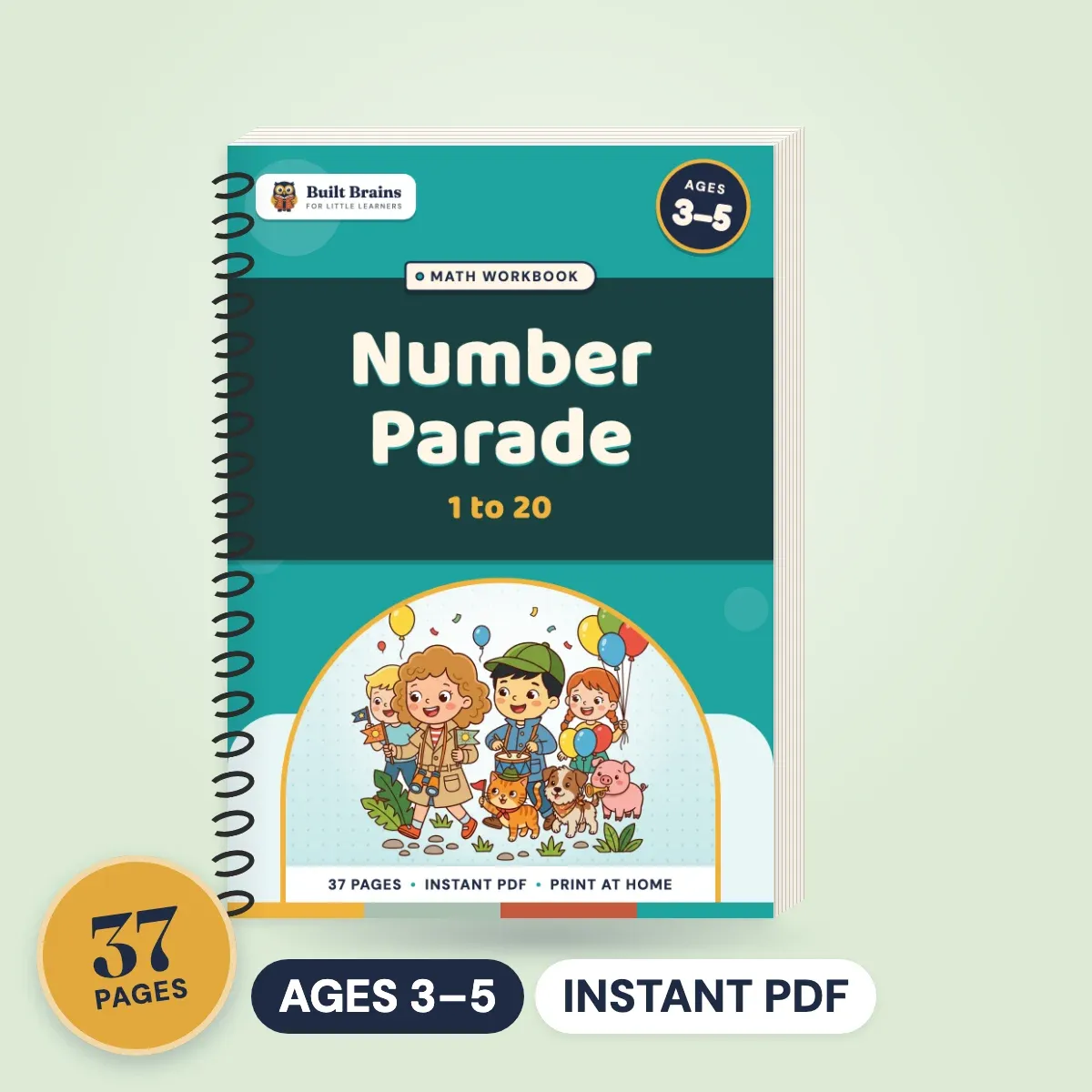
ABC Tracing Adventure: A to ZLearn every letter the right way — trace, find, color
What should a preschooler learn at home?
By the end of the preschool years, most children are working toward these skills. Treat the list as a direction, not a test. Children develop at different speeds, and a four year old who can’t yet do half of this is normal.
Early literacy
- Recognizes many letters and knows some of their sounds
- Hears rhymes and the first sound in words
- Holds a book the right way and follows a story
- Writes or attempts their own name
Early math
- Counts objects to 10 and beyond, one number per object
- Recognizes numerals 1 to 10
- Names basic shapes and colors
- Compares bigger, smaller, more and fewer
- Copies and continues a simple pattern
Fine motor and self-care
- Holds a crayon with fingers rather than a fist
- Snips and then cuts along a line with safety scissors
- Dresses with little help, washes hands, uses the toilet
Social and emotional
- Takes turns and shares with reminders
- Names feelings and is learning to calm down
- Follows two-step directions
- Sits for a short story or task
If you want a one-page view of what comes next, read the kindergarten readiness checklist.
How to set up preschool at home (without a classroom)
You don’t need a schoolroom. You need a spot, a basket and a plan.
- Choose one learning spot. The kitchen table is fine. Same place every day builds the habit.
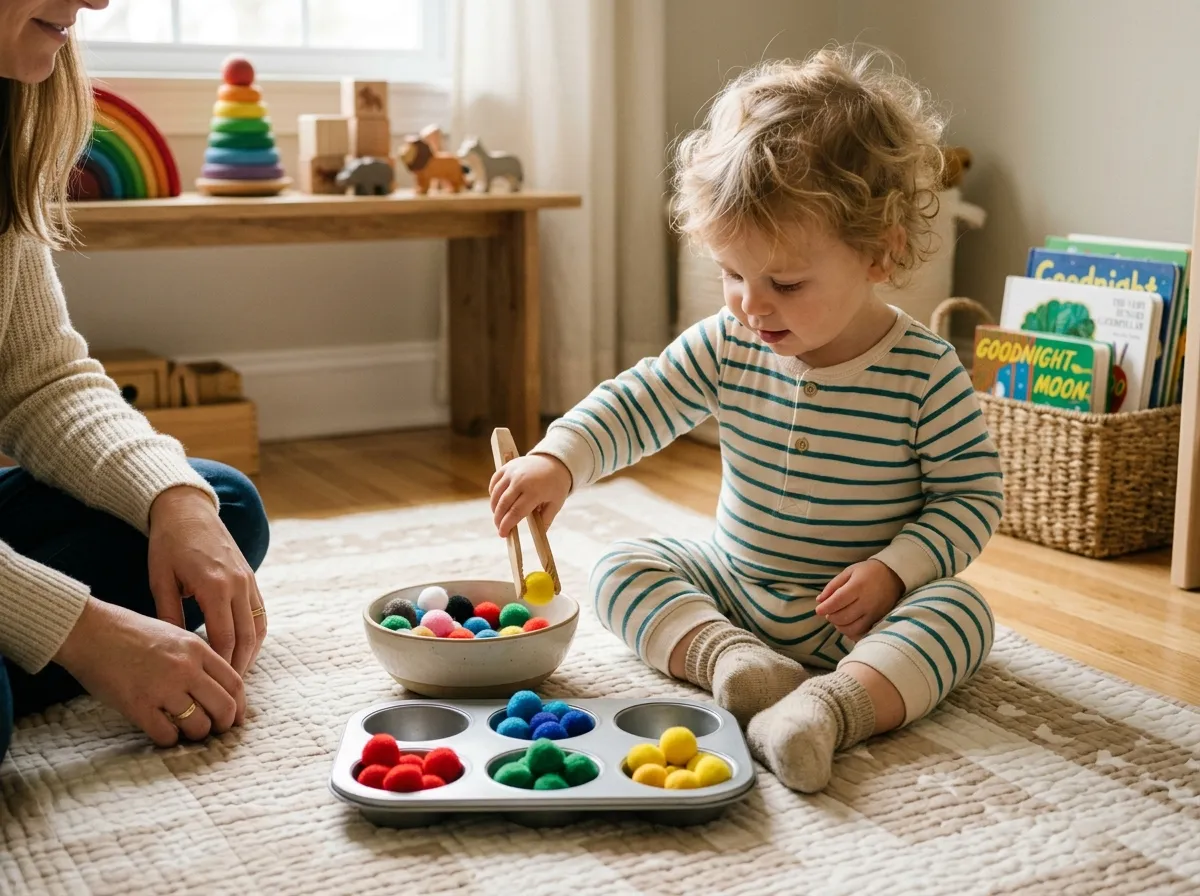
- Make a supply basket. Chunky crayons, a glue stick, child scissors, play-dough, counters (buttons or dried beans for older children), a small whiteboard.
- Print one week at a time. Printing the whole year at once is how binders end up on a shelf. Put the week’s pages in a folder on Sunday.
- Keep a book basket. Swap in library books that match the theme.
- Post a picture schedule. Simple drawings of breakfast, learning, outside, lunch and rest help your child move through the day without arguing.
What to do when your child won’t sit down
Every family has these days. A few things that work:
- Shrink it. Do one page instead of three. Five good minutes beat twenty tearful ones.
- Make it physical. Jump on letter cards, count stairs, trace letters in salt or shaving foam.
- Offer a choice. “Do you want the maze or the cutting page first?” gives control without giving up the plan.
- Move the time. Hungry, tired children can’t learn. Try after snack or after running outside.
- Skip the day. Missing one day costs nothing. Fighting about it every day costs a lot.
If your child is often restless after screens, it may help to look at the rest of the day too. Our guide to screen time for toddlers and preschoolers has ideas for easier transitions.
Start this week
Pick a start day, clear a spot at the table and do ten minutes. That’s it. If you want pages ready to go, grab our free printable book to try the routine first, or browse everything for preschool ages 3–4 and pre-K ages 4–5.
Questions parents ask
Yes. Preschool is mostly reading together, talking, playing and short, simple activities. What helps is a plan, so you aren’t deciding what to teach each morning. A curriculum with daily steps written in plain language lets any parent run it in about 20 minutes a day.
Most families start at around age 3, when children can sit for a short story and enjoy simple activities. Before that, play, talk and reading aloud are the curriculum. Start with 10 minutes a day and build up slowly as attention grows.
Four or five short days a week works well. Consistency matters more than length, so 15 to 20 minutes most days beats one long session on a weekend. Keep at least one or two days completely free for play and outings.
It can be. One-to-one attention, lots of reading and plenty of play cover the academic side well. The piece to plan for is social time: playdates, library story time, classes or a park group give children practice sharing and taking turns with others their age.
A table, crayons, safety scissors, glue, play-dough, a basket of picture books and a printer. Add a simple weekly plan and you are ready. Expensive furniture, a dedicated room or educational apps are not necessary.