What activities should a 2 year old do?
At 2, the most useful activities are the ones that build talking, moving and feelings. That is not a guess: these are the three prime areas of the Early Years Foundation Stage, the framework every nursery and childminder in England follows (EYFS statutory framework). They come first because reading, writing and maths later depend on them.
- Communication and language: listening, understanding and talking
- Physical development: big movements like running and climbing, and hand skills like scribbling and pouring
- Personal, social and emotional development (PSED): feelings, confidence, getting on with others and doing things for themselves
The government's non-statutory guidance, Development Matters, describes the steps children typically take in a "birth to three" band, and that is what your child's nursery is likely using to plan. In practice, a good day for a 2 year old looks like lots of chat, songs and stories, plenty of time outside, messy hands-on play and gentle practice at taking turns, in short bursts. If you would like more general ideas, our learning activities for toddlers covers the whole toddler stage.
The 2 year progress check, explained
Parents in England often hear about "the two-year check" and it can mean two things:
- The EYFS progress check at age 2. If your child goes to nursery, pre-school or a childminder, practitioners must review their progress between the ages of 2 and 3 and give you a short written summary of the prime areas, noting strengths and anything where extra support might help (GOV.UK – Progress check at age 2).
- The health visitor review. Your health visiting team offers a health and development review at around 2 to 2 and a half years, often with a questionnaire about talking, movement and behaviour beforehand (NHS – Your baby's health and development reviews).
Some areas combine the two into one integrated review. Neither is a test your child can pass or fail, and there is nothing to prepare. They are a chance for you to share what you see at home and to ask questions. If you have any worries about speech, hearing, movement or behaviour in between, talk to your health visitor or GP rather than waiting.
Communication and language: 12 activities
Two year olds learn words fastest through back-and-forth chat with an adult who is tuned in to them.
- Running commentary. Describe what your child is doing as they play: "You're putting the duck in the bucket."
- Nursery rhymes with actions. "Wind the Bobbin Up", "Row, Row, Row Your Boat", "Heads, Shoulders, Knees and Toes".
- Pause the rhyme. Sing a familiar line and stop before the last word for your child to fill in.
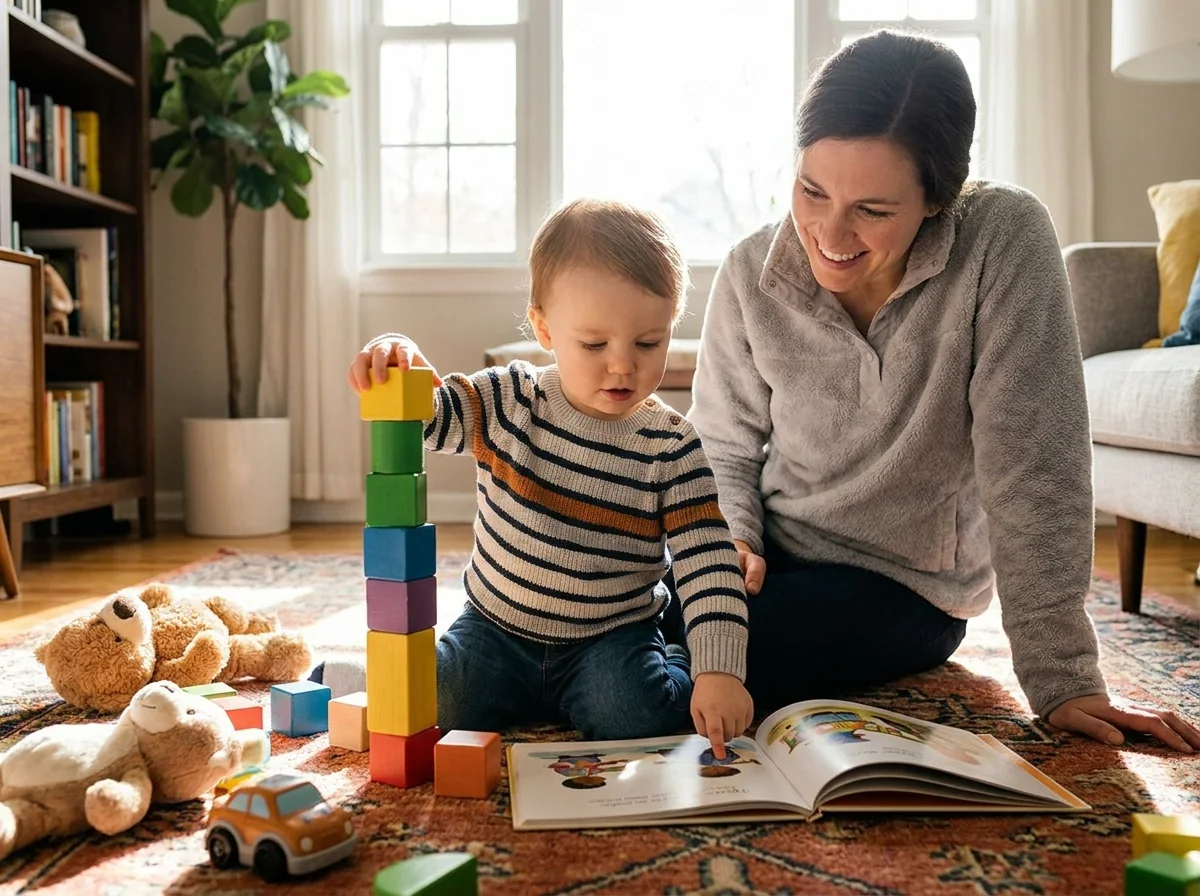
- Same book, every night. Repetition is the point. Let them turn the pages and point.
- Feely bag. Hide a toy in a bag; your child feels it and you name it together.
- Toy tea party. Teddy is hungry. What does he want? Hot or cold?
- Two-choice questions. "Apple or banana?" gives a child a word to copy.
- Photo chat. Look at family photos and name people, places and what happened.
- Sound walk. Stop and listen outside: a bird, a bus, a dog. Who can hear it?
- Puppet talk. A sock puppet who gets things wrong invites a giggle and a correction.
- Simple instructions game. "Put the spoon in the cup." "Give teddy to Daddy."
- Farm animal noises. Match toys or pictures to their sounds, then to their names.
Three talk tips that make the biggest difference
- Narrate. Talk about what is happening right now, in short, simple sentences.
- Expand. When your child says "car", add a word or two: "Red car. Fast car."
- Wait. Count to ten silently after you ask something. Many 2 year olds need that long to answer.
Physical development: 12 activities
Big movements build the core strength children later need for sitting and writing, and small hand movements build control.
- Obstacle course. Cushions to climb, a tunnel of chairs, a blanket to crawl under.
- Ball play. Roll, throw and kick a large soft ball.
- Dancing and stopping. Music on, music off, freeze like a statue.
- Park climbing. Steps, small slides and low climbing frames, with you close by.
- Puddle jumping. Wellies on, then jump with two feet together.
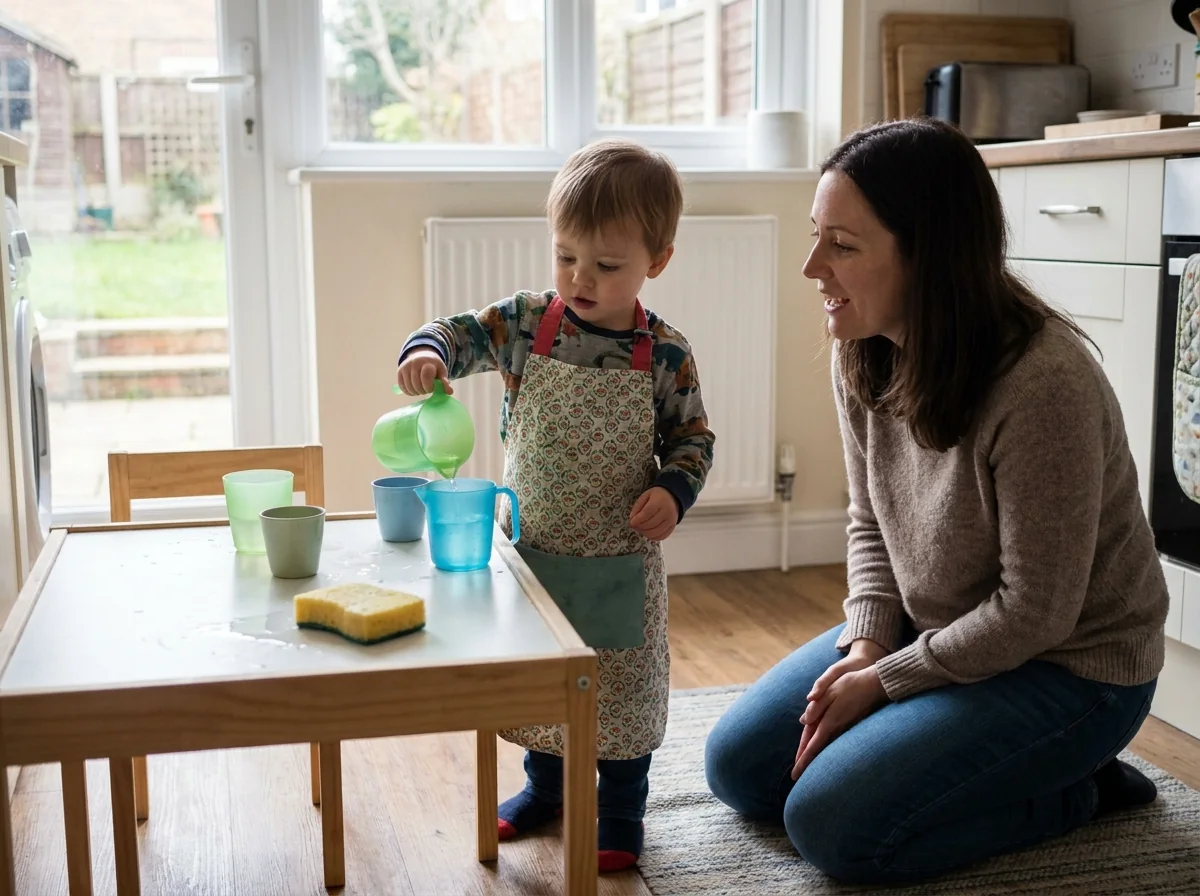
- Water pouring. Jugs, cups and funnels in the bath or a washing-up bowl.
- Dough squeezing. Squash, roll and poke play dough; add a rolling pin.
- Big chunky crayons. Scribble on a large sheet of paper taped to the floor.
- Posting. Push jar lids or cardboard circles through a slot cut in a box lid.
- Peg on a tub. Large clothes pegs clipped around the rim of a tub.
- Stickers. Peel and stick large stickers onto paper.
- Sensory tray. Dry pasta, oats or rice with scoops and spoons. Our sensory bin ideas for toddlers have plenty more.
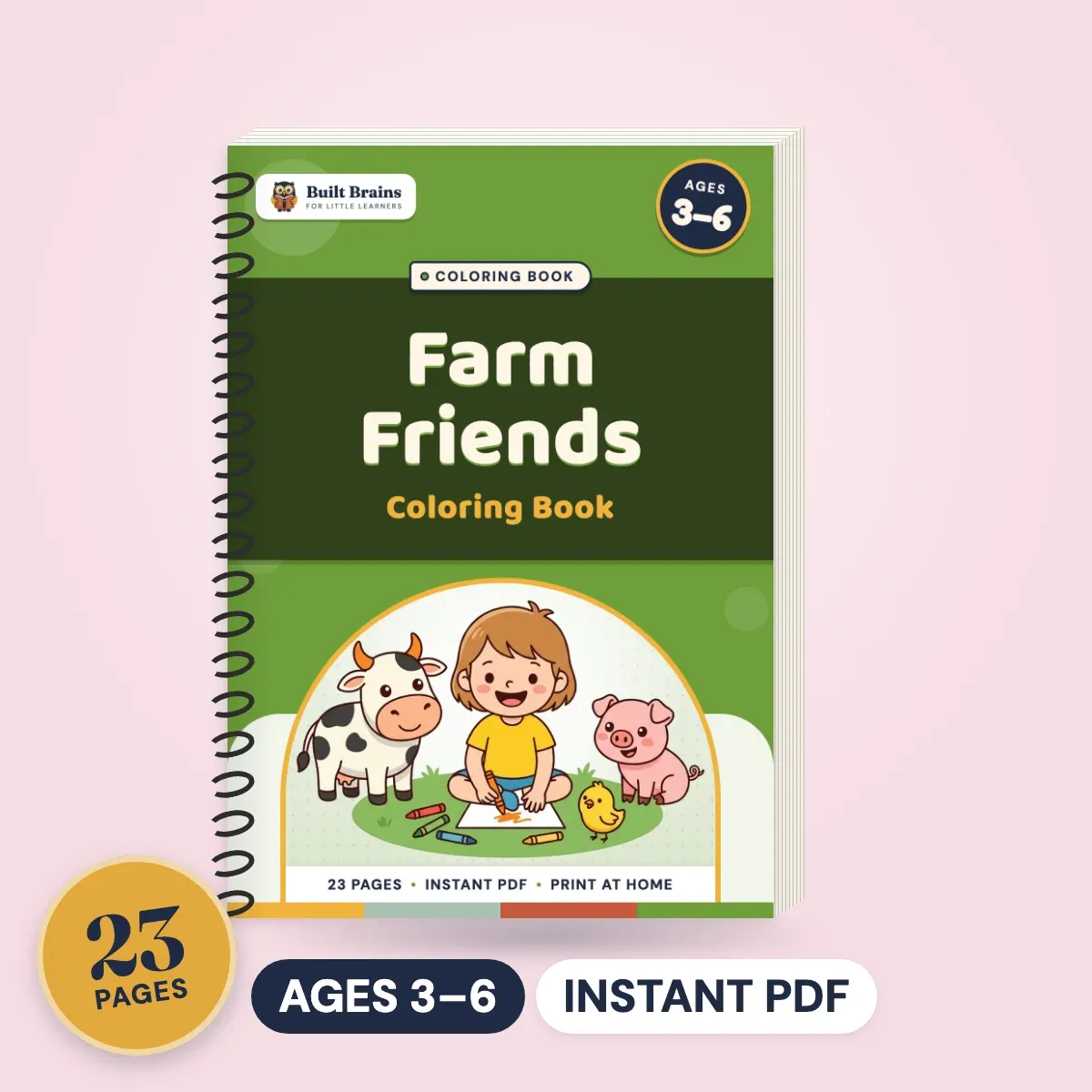
Many 2 year olds love colouring big, simple pictures. The Farm Friends Coloring Book has full-page farm scenes and big single animals with thick lines for little hands, and it comes in A4 as well as US Letter. Keep small items like beads, buttons and coins out of reach and supervise any play with small parts.
Personal, social and emotional development: 11 activities
At 2, children are learning that they are their own person, which explains the big feelings. These activities help.
- Name the feeling. "You're cross because the tower fell." Naming comes before managing.
- Feelings faces. Pull happy, sad, cross and surprised faces in the mirror.
- Rolling a ball back and forth. The simplest turn-taking game there is.
- Helping jobs. Put socks in the basket, carry the spoons, wipe the table.
- Choosing. Two tops: which one today? Small choices build confidence.
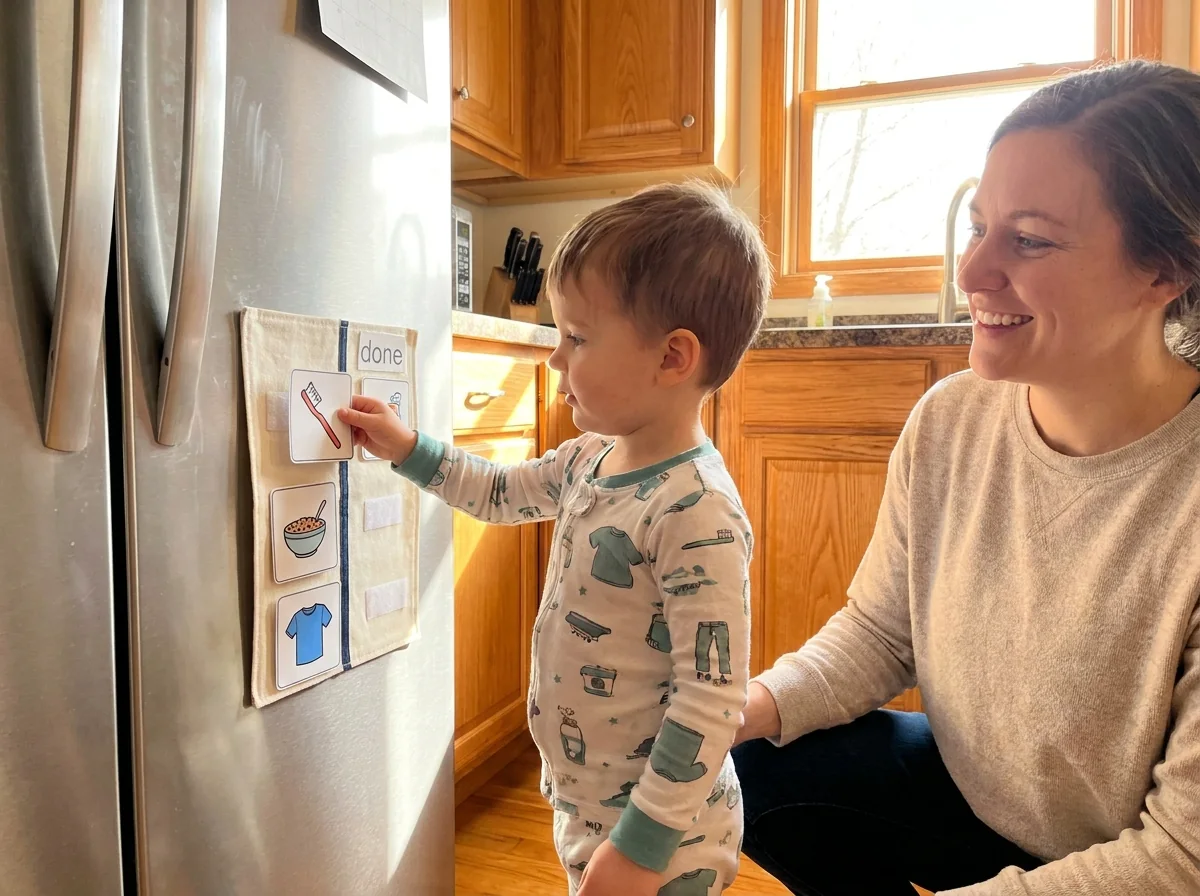
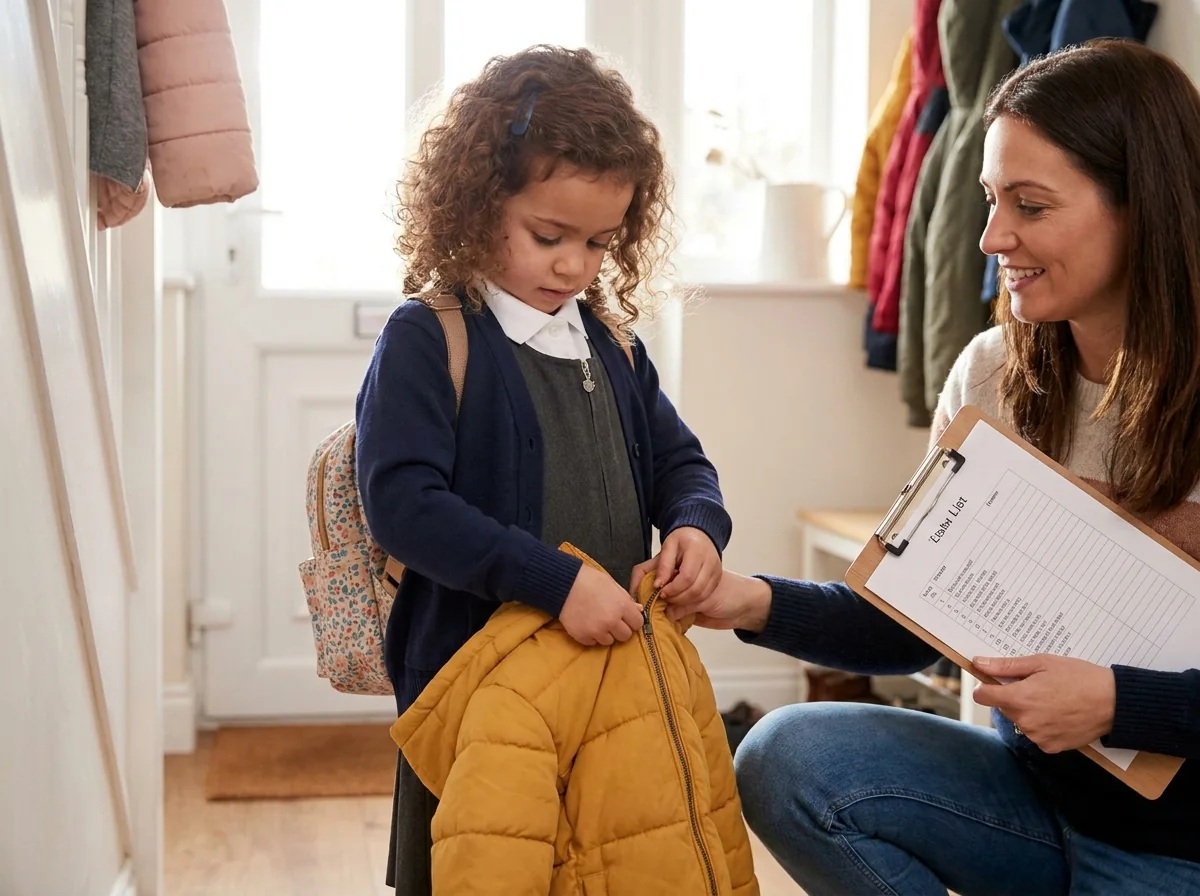
- Dressing practice. Pull on a hat, take off socks, push arms into a coat.
- Tidy-up song. The same song every time makes the routine predictable.
- Teddy's bedtime. Wash teddy's face, read him a story, tuck him in.
- Play dates. Short, with a friend, alongside rather than together. Sharing comes later.
- Calm corner. A cushion, a soft toy and a book where your child can go with you when upset.
- Goodbye routine. The same short goodbye each time you leave them, whether at nursery or with grandparents.
A calm daily rhythm for a 2 year old
Two year olds do best when the day has a familiar shape. Times will vary; the order matters more than the clock.
| Part of the day | What it looks like |
|---|---|
| Morning | Breakfast, dressing practice, then outside: park, garden or a walk |
| Mid-morning | Snack, then one short table activity: dough, stickers or a colouring page |
| Late morning | Free play with you nearby, songs and a story |
| Lunch and nap | Lunch, then nap or quiet rest |
| Afternoon | Messy play (water, sand or sensory tray), then a helping job |
| Late afternoon | Outdoors again if possible, or dancing and an obstacle course |
| Evening | Tea, bath, the same book, bed |
For more on screen-free ideas for this age, see screen-free activities for toddlers.
If you would like someone else to do the planning, the Tiny Steps Toddler Curriculum gives 2 and 3 year olds 36 playful weeks, each with a colour, a shape, a number and a theme, using big simple pages to colour, dot-dab, trace, match and count, plus first-word picture cards. It is designed for about ten minutes at a time, and all our books print in A4 as well as US Letter.
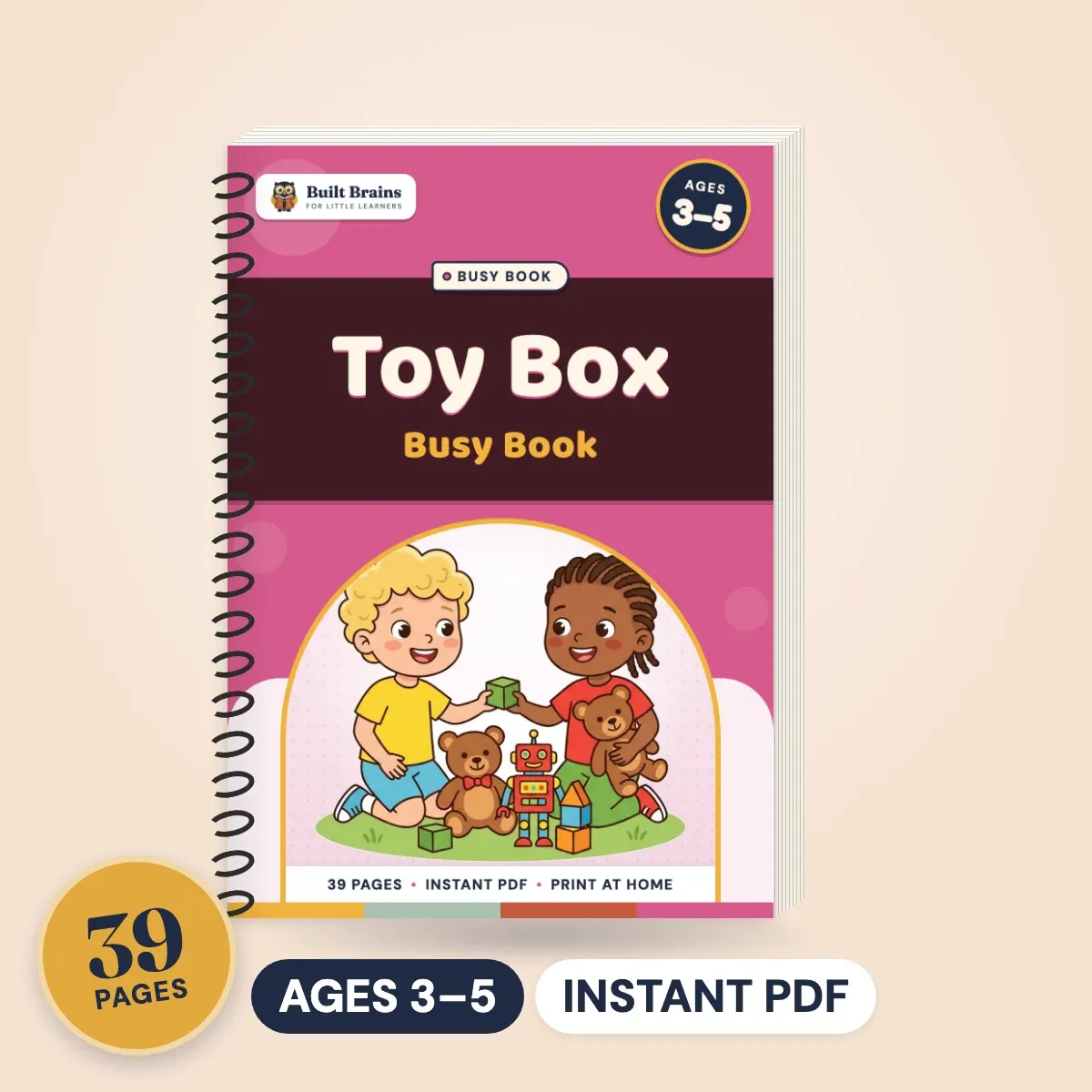
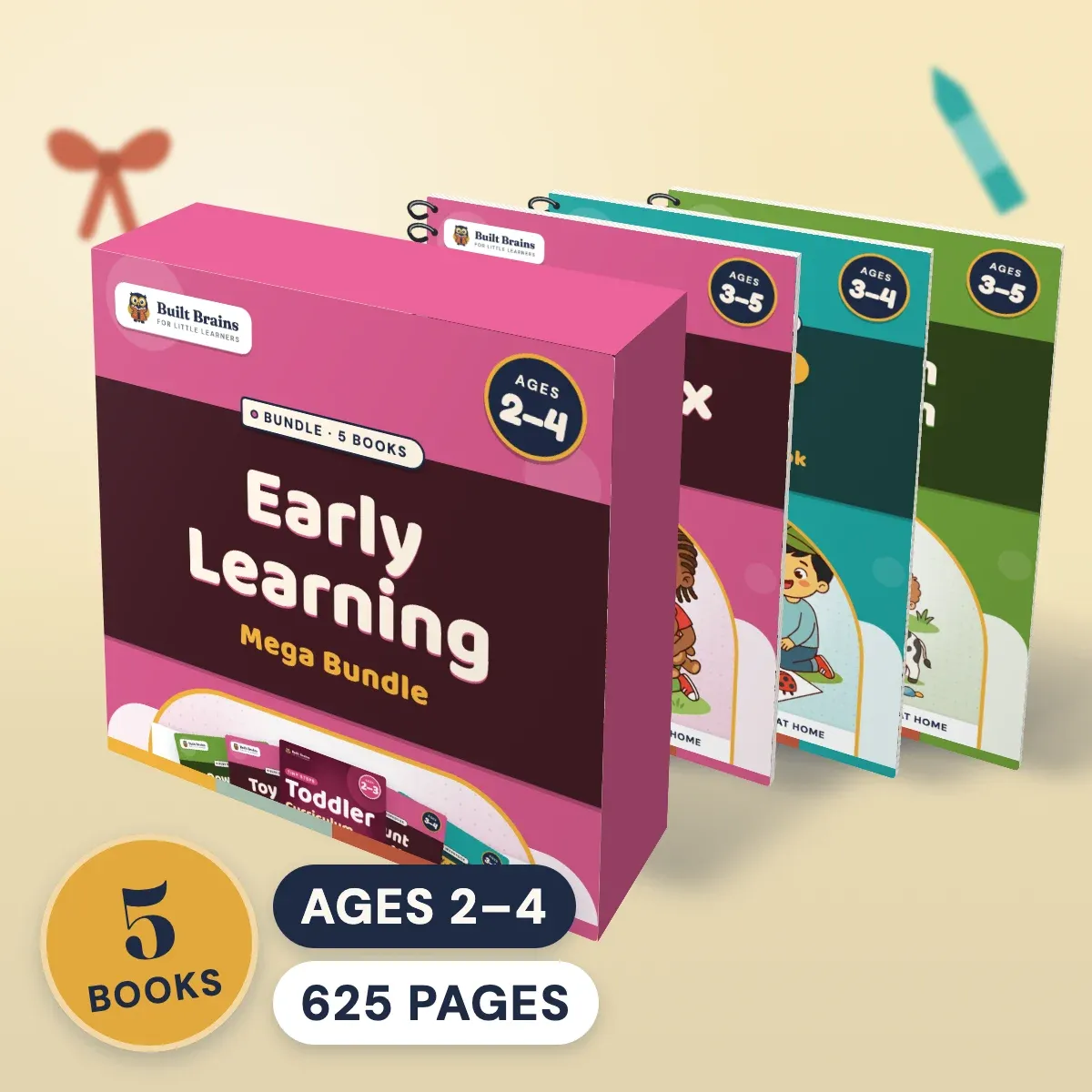
The Toy Box Busy Book adds teddies, robots and blocks to colour, count and match, and the Early Learning Mega Bundle puts the toddler curriculum together with two busy books, first counting and pre-writing tracing.
 New
Ages 2–3 · 495 pages
Tiny Steps Toddler Curriculum36 playful weeks of colors, shapes, numbers and first words
Sources
- GOV.UK – Early years foundation stage (EYFS) statutory framework: the three prime areas of learning and the requirement to review progress between ages 2 and 3.
- GOV.UK – Development Matters: non-statutory guidance on how children typically develop in the birth-to-three band.
- GOV.UK – Progress check at age 2: guidance for practitioners on the EYFS progress check and the written summary for parents.
- NHS – Your baby's health and development reviews: the health visitor review at around 2 to 2 and a half years.
Questions parents ask
At 2, the focus is on the three prime areas of the EYFS: communication and language, physical development, and personal, social and emotional development. In everyday terms that means learning new words and joining them, running, climbing and scribbling, and starting to manage feelings, take turns and do small things for themselves. Letters and numbers can wait.
In England, if your child attends nursery or a childminder, staff must review their progress between the ages of 2 and 3 and give you a short written summary covering the prime areas. Separately, your health visitor offers a health and development review at around 2 to 2 and a half. Some areas combine the two into an integrated review.
A few minutes at a time is right for most 2 year olds: an activity might last two minutes or fifteen depending on interest. Follow their lead and stop while it is still fun. Most learning at this age happens in ordinary moments, such as getting dressed, cooking, bath time and walks, rather than in planned sessions.
Some 2 year olds name a few colours or say numbers in a sing-song way, and many do not yet. Neither is a concern by itself. Development Matters focuses on talking, moving and relationships at this age. If you have any worries about your child's speech, movement or behaviour, talk to your health visitor or GP.
Not really. Nurseries follow the same EYFS framework and use everyday play: sand, water, dough, books, songs, outdoor play and simple routines. At home you have the advantage of one-to-one chat, which is exactly what builds language at 2. Ask your child's key person what they are enjoying at nursery and repeat it at home.
Reviewed by
Nursery Manager & Early Years Practitioner
Aisha Khan is a Nursery Manager and early language specialist who helps toddlers and preschoolers build foundational communication skills before starting formal schooling.
More about Aisha →