What do toddlers actually learn through play?
A lot. Between 18 months and 3, children go from a handful of words to short sentences, from wobbly walking to jumping with both feet, and from mouthing toys to building towers and pretending a block is a phone. The CDC's milestone checklists give a feel for it: by 2, most children say two words together and point to body parts when asked; by 30 months, most follow two-step directions and turn book pages one at a time; by 3, most hold a short back-and-forth conversation and join other children in play.
None of that comes from sitting at a table. It comes from talk, movement, hands and repetition. The activities below give that play a little shape. Each one lists what it builds so you know why it's worth doing, and each works with things you probably own already.
Children vary a lot at this age. If you have questions about your child's speech, movement or play, your pediatrician or health visitor is the right person to ask.
How long can a toddler focus?
Shorter than most parents expect, and that is normal.
- 18 to 24 months: 1 to 5 minutes on one activity, longer if they chose it themselves.
- 2 years: about 3 to 8 minutes of a guided activity.
- 3 years: about 5 to 15 minutes, more for something they love.
A child who plays with trains for 30 minutes but walks away from your puzzle after two is not "behind". Self-chosen play always holds attention longer. Plan for two or three short, guided activities a day, each ending before your toddler loses interest, and let free play fill the rest.
Language and early literacy activities
Language is the biggest learning job of the toddler years. Talk constantly, name everything and read every day.
- Picture book pointing. Materials: a board book with clear pictures. How: ask "Where's the dog?" then "What does the dog say?" Wait at least five seconds for an answer. Builds: vocabulary, listening, turn-taking.
- Mystery bag. Materials: a pillowcase and 4 to 5 familiar objects (spoon, ball, sock, toy car). How: your toddler reaches in, feels, pulls one out and you name it together. Builds: nouns, describing words, curiosity.
- Sing and stop. Materials: none. How: sing a familiar song ("Twinkle, Twinkle", "Wheels on the Bus") and pause before the last word of a line. Let them fill it in. Builds: rhythm, rhyme, memory.
- Narrate the day. Materials: none. How: describe what you're doing in short sentences. "I'm cutting the apple. Crunch! One piece for you." Builds: sentence patterns, action words.
- Family photo book. Materials: 6 to 10 printed photos in a small album. How: name each person, then ask "Who's that?" Builds: names, recall, early storytelling.
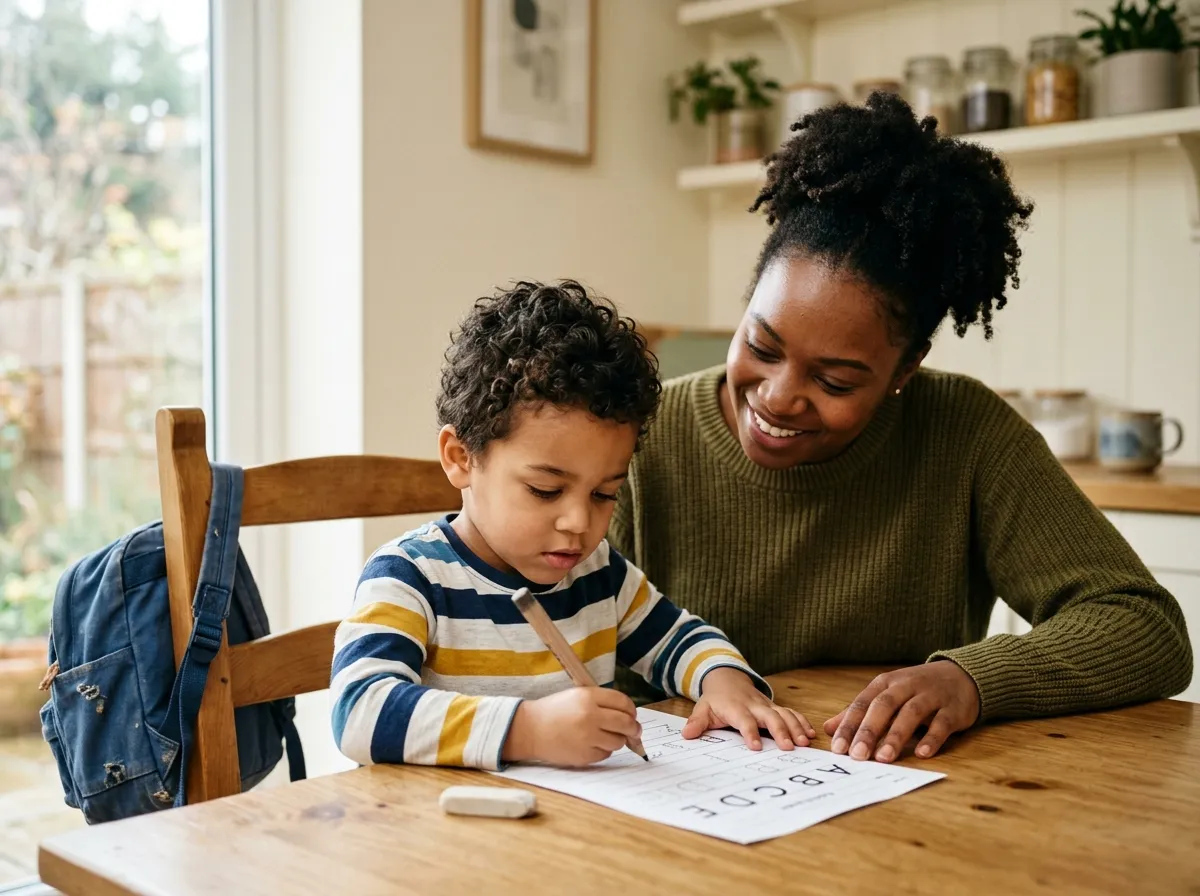
- Letter spotting (age 2½ and up). Materials: cereal boxes, signs, the first letter of their name. How: "Look, that's M, like in Mommy!" Point it out, no quizzing. Builds: print awareness.
Early math, colors and shapes
Early math
Early math for toddlers is mostly counting real things, comparing and noticing patterns.
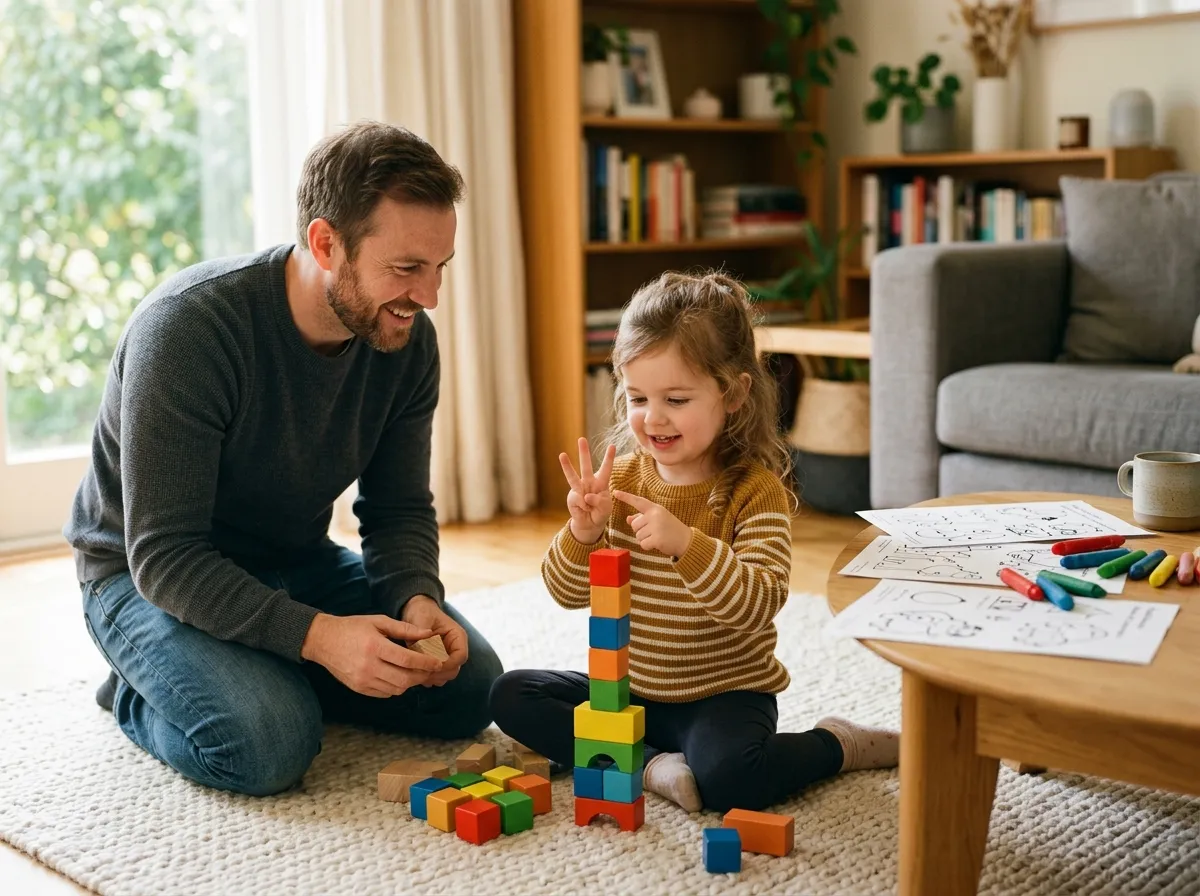
- Count everything. Materials: stairs, grapes (quartered lengthways), blocks. How: touch each item as you count out loud, slowly. Builds: one-to-one counting.
- Big and little. Materials: a big and small spoon, shoe, ball. How: hold up two and ask "Which one is big?" Builds: size comparison, math words.
- Sock matching. Materials: clean laundry. How: find the partner for each sock. Builds: matching, visual discrimination.
- More or less snack. Materials: two bowls of crackers. How: "Which bowl has more?" Then eat one and ask again. Builds: quantity sense.
- Clap patterns (age 2½ and up). Materials: none. How: clap, stomp, clap, stomp, then let them continue. Builds: patterns, listening.
- Number finger play. Materials: your hands. How: "Five Little Ducks" or "Five Little Monkeys", holding up fingers and taking one away each verse. Builds: counting backward, number words.
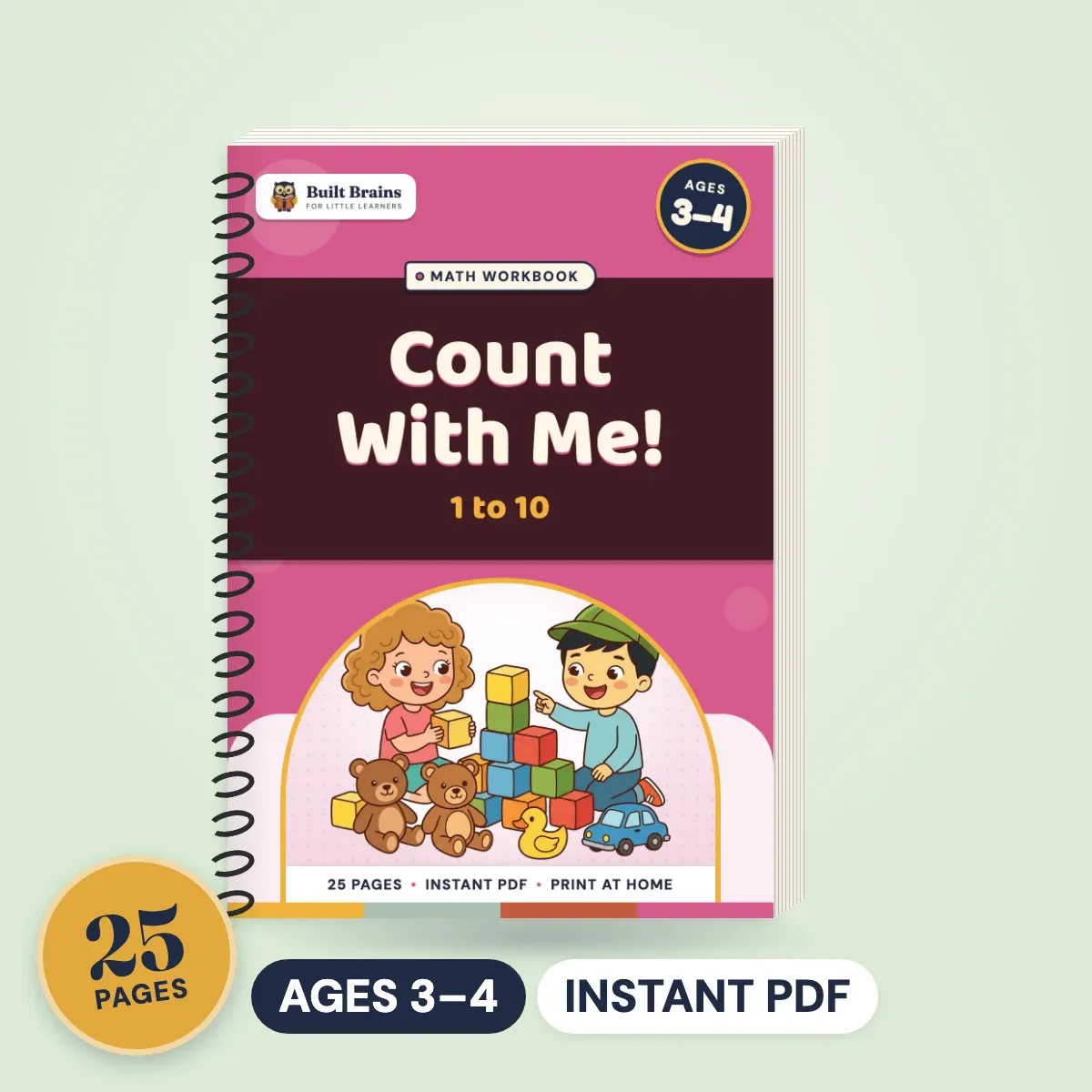
For a gentle next step around age 3, Count With Me! 1 to 10 gives one page per number with toys your child knows.
Colors and shapes
- Color hunt. Materials: a basket. How: "Can you find something red?" Collect three items, then line them up. Pick one color per day. Builds: color names, following directions.
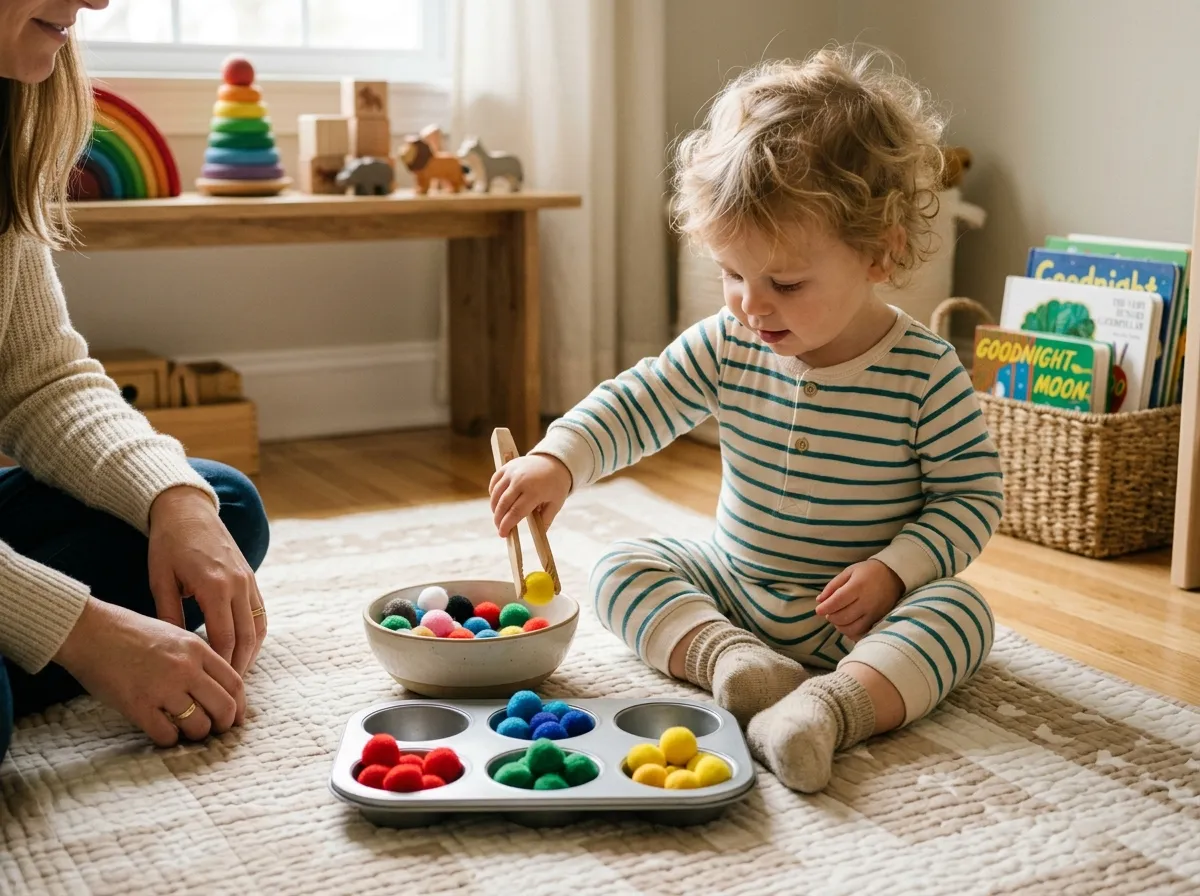
- Pom-pom sort. Materials: large pom-poms (bigger than a golf ball for under-3s) or colored blocks, and matching colored paper plates. How: put each one on its matching plate. Builds: sorting, color matching.
- Shape sorter, then shape walk. Materials: a shape sorter toy. How: play with the sorter, then walk the house naming shapes: "The clock is a circle. The door is a rectangle." Builds: shape names, spatial thinking.
- Dot-sticker shapes. Materials: a big circle, square and triangle drawn on paper, round stickers. How: press stickers along the lines. Builds: shape recognition plus pincer grasp.
- Tape shapes on the floor. Materials: painter's tape. How: make a giant circle, square and triangle. Call out "Jump into the triangle!" Builds: shape names, gross motor.
Fine motor and gross motor activities
Fine motor: little hands
Strong, nimble fingers come before holding a crayon well, and years before writing.
- Pouring station. Materials: a tray, two small plastic cups, water or dry oats. How: pour from one cup to the other, over and over. Builds: wrist control, concentration.
- Play-dough squeeze. Materials: play-dough, a rolling pin, cookie cutters. How: squash, roll, poke and cut. Builds: hand strength.
- Posting. Materials: a tub with a slot cut in the lid, jar lids or large craft sticks. How: push each one through the slot. Builds: aiming, grip.
- Sticker peeling. Materials: a sheet of large stickers (lift the corners first for younger toddlers). How: peel and stick on paper. Builds: pincer grasp.
- Tearing paper. Materials: old magazines, a glue stick. How: tear strips and stick them on a big sheet. Builds: two-handed coordination.
- Big crayon scribbles. Materials: chunky crayons, a large sheet taped to the table. How: scribble, then try lines "up and down like rain". Builds: early pencil control.
When scribbling turns into deliberate lines, usually closer to 3, Ready, Set, Trace! offers straight lines, waves and zigzags to practice.
Gross motor: big movement
Toddlers need to move, and movement helps them settle for the quieter activities.
- Pillow obstacle course. Materials: cushions, a blanket over two chairs for a tunnel. How: climb over, crawl under, jump off. Builds: balance, coordination, following directions.
- Animal walks. Materials: none. How: walk like a bear, hop like a bunny, stomp like an elephant. Builds: strength, imitation.
- Ball rolling and kicking. Materials: a soft ball. How: roll it back and forth sitting down, then try kicking. Builds: coordination, turn-taking.
- Freeze dance. Materials: music. How: dance, and freeze when the music stops. Builds: self-control, listening.
- Tape balance line. Materials: painter's tape. How: walk along a straight line, then a zigzag. Builds: balance.
Pretend play and sensory activities
Pretend play
Pretend play usually takes off between 2 and 3. It builds language, problem-solving and empathy all at once.
- Teddy's picnic. Materials: a blanket, stuffed animals, plastic plates. How: serve food to each animal. "Does Bear want an apple or a banana?" Builds: social language, counting out.
- Toddler kitchen helper. Materials: a bowl, spoon, dry pasta. How: stir, pour and "cook" alongside you. Builds: real-life vocabulary, sequencing.
- Doctor check-up. Materials: a toy doctor set or a spoon "stethoscope", bandages. How: check teddy's heart, ears and tummy. Builds: body part names, caring.
- Car wash. Materials: toy cars, a tub of soapy water, a sponge. How: wash and dry each car. Builds: fine motor, routines, vocabulary.
Sensory play
- Water play. Materials: a shallow tub, cups, a sponge, a funnel. How: pour, squeeze and splash. Always supervise water, however shallow. Builds: cause and effect, early science.
- Oat or pasta bin. Materials: a storage tub, dry oats or large pasta shapes, scoops. How: scoop, fill, dump and hide a toy to find. Builds: fine motor, exploration. Our sensory bin ideas for toddlers cover safe fillers and setup.
- Texture walk. Materials: a towel, foil, bubble wrap, a sheet of sandpaper. How: walk or touch barefoot and name each feel: soft, crinkly, bumpy, rough. Builds: describing words.
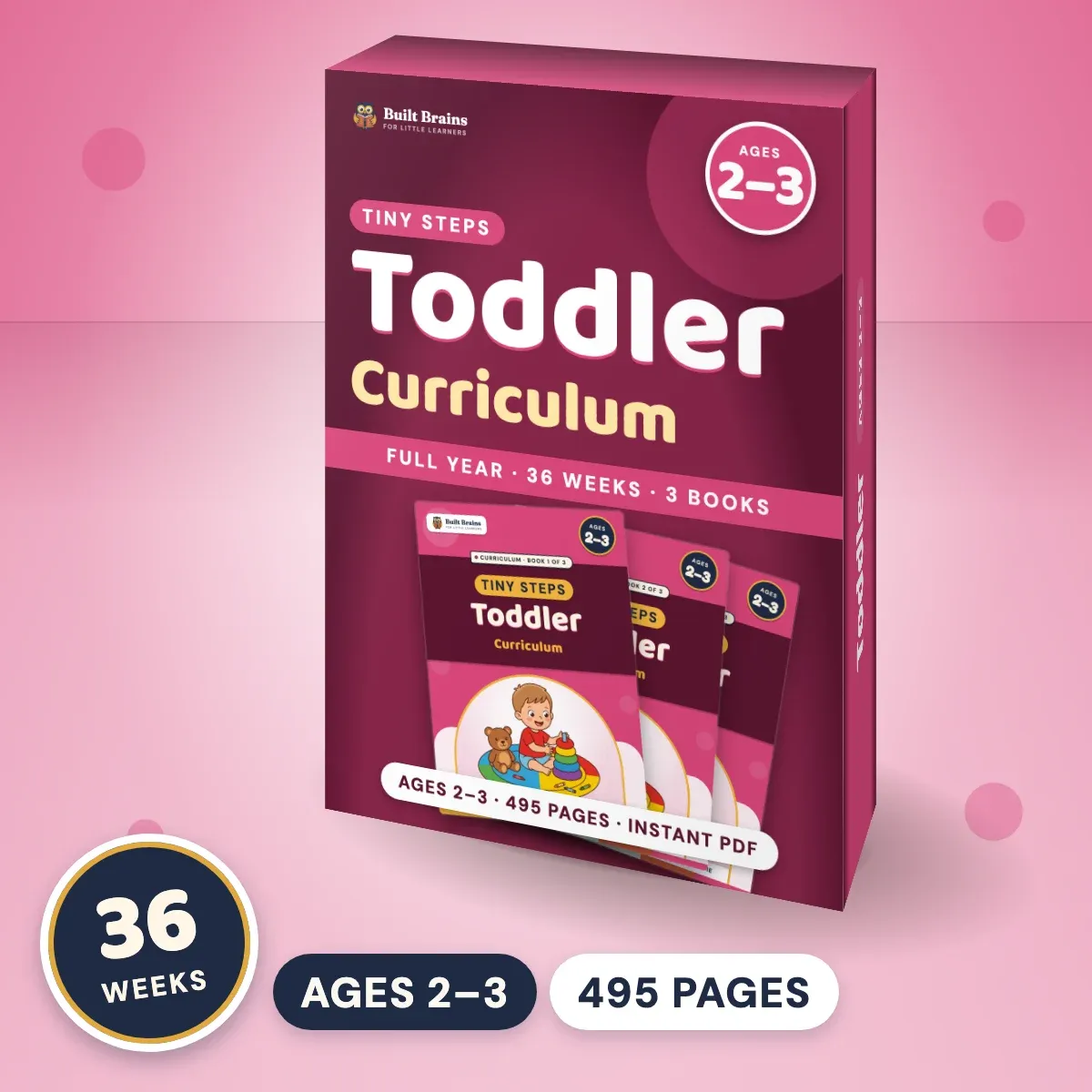 New
NewAges 2–3 · 495 pages
Tiny Steps Toddler Curriculum36 playful weeks of colors, shapes, numbers and first words
Activities by age: 18–24 months, 2 and 3 years
The same activity grows with your child. Here is how to adjust.
| Age | What most children enjoy | Keep in mind |
|---|---|---|
| 18–24 months | Posting, pouring, stacking, board books, animal sounds, water play | Everything goes in the mouth. Use large items only and stay within arm's reach. |
| 2 years | Color sorting, simple puzzles, pretend picnics, animal walks, finger rhymes | Offer two choices, not open questions. Expect 3 to 8 minutes per activity. |
| 3 years | Counting to 10 by touch, shape hunts, play-dough cutting, longer pretend play, simple tracing | Ready for a short sit-down page or two. Give them jobs and let them lead. |
What to do when your toddler won't join in
- Start it yourself, quietly. Pour water or stack blocks nearby without asking. Curiosity usually wins.
- Offer two choices. "Play-dough or water?" gives control without a battle.
- Check the basics. A hungry, tired toddler can't play well. Try after a snack or nap.
- Make it smaller. Three blocks instead of ten. One color instead of four.
- Let it go. Try again tomorrow. Nothing is lost.
Common mistakes
- Too much at once. Put out one activity, not five. A crowded table overwhelms.
- Quizzing. "What color is this?" ten times becomes a test. Name things more than you ask.
- Correcting everything. If they call a horse a dog, say "It looks like a dog! That's a horse. Neigh!" and move on.
- Using screens as the lesson. Toddlers learn far more from a live person. Our guide to screen time for toddlers has more.
A simple daily rhythm for learning at home
A predictable day helps toddlers feel safe and makes learning time easier to fit in. Treat this as an order of events, not a clock.
- Breakfast and getting dressed. Let them help: pull on socks, choose between two shirts.
- Morning activity (5 to 10 minutes). One language, math or color activity from the list above, when they're freshest.
- Outside or big movement (45 minutes or more). Park, garden, walk, obstacle course.
- Snack, then a hands-on activity. Play-dough, pouring or a sensory bin.
- Lunch and nap.
- Afternoon pretend play or water play. Let them lead.
- Helping jobs. Unloading spoons, matching socks, feeding a pet.
- Bath, stories and bed. Two or three books every night.
Choose one skill focus per day (colors Monday, counting Tuesday and so on) and you'll cover everything across the week without much planning.
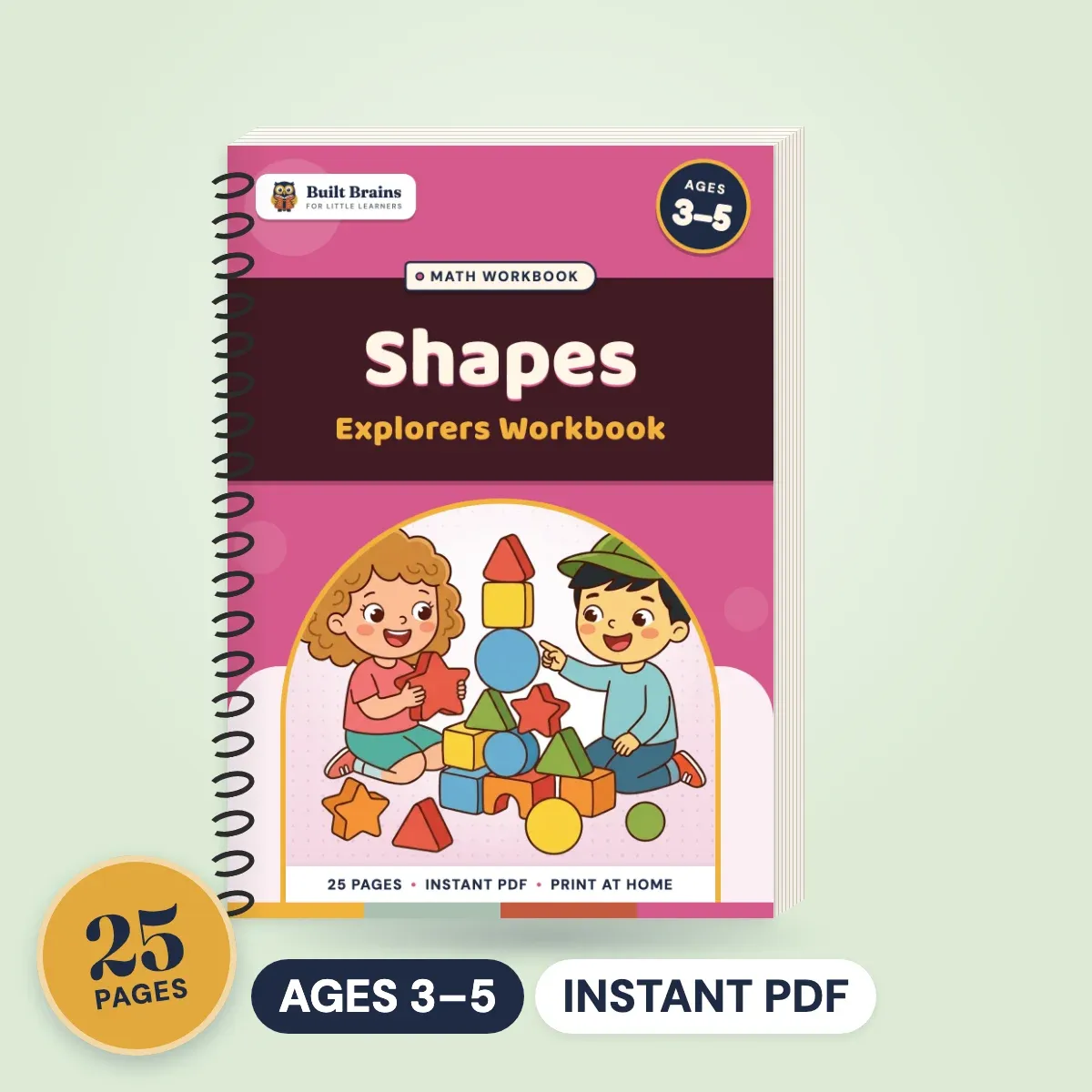
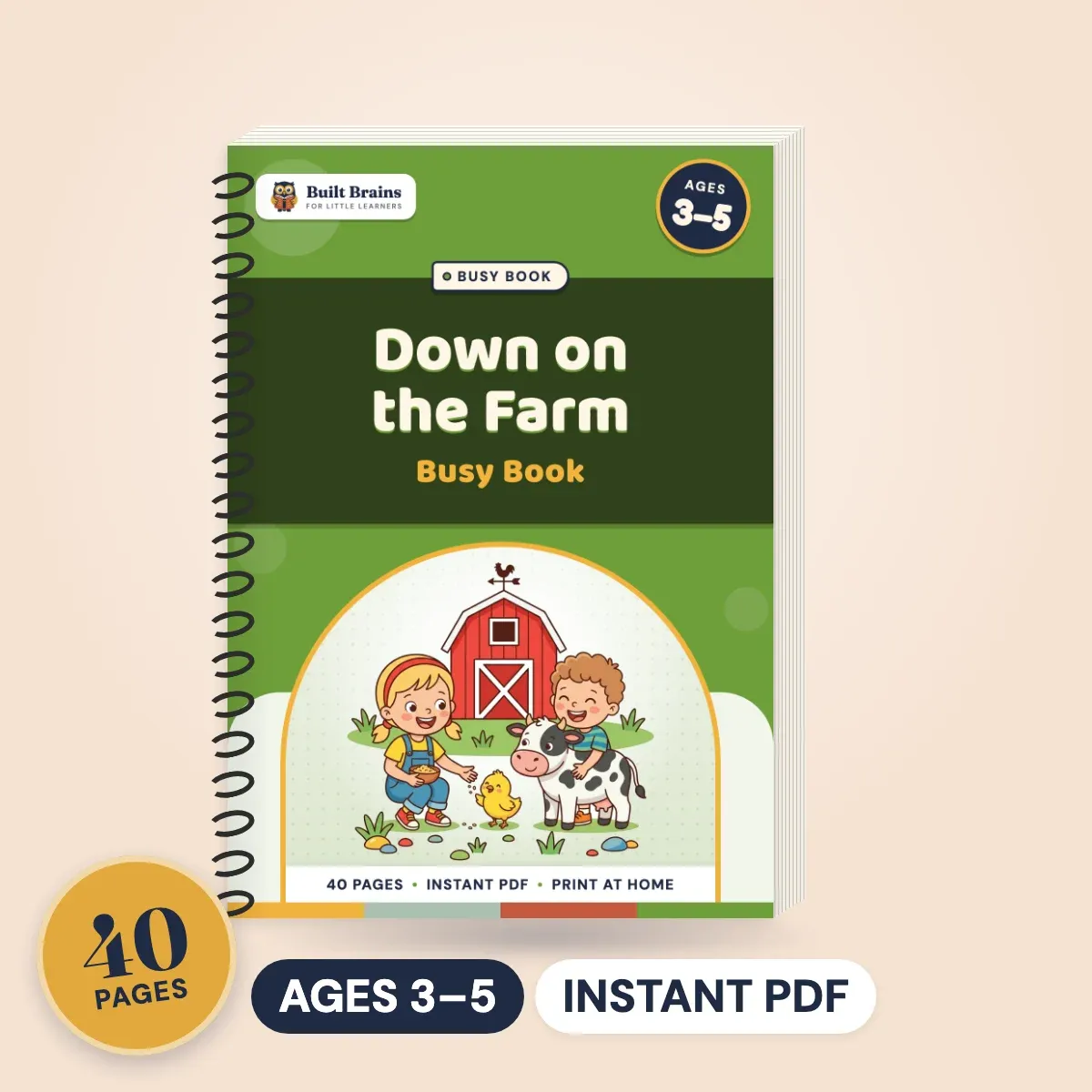
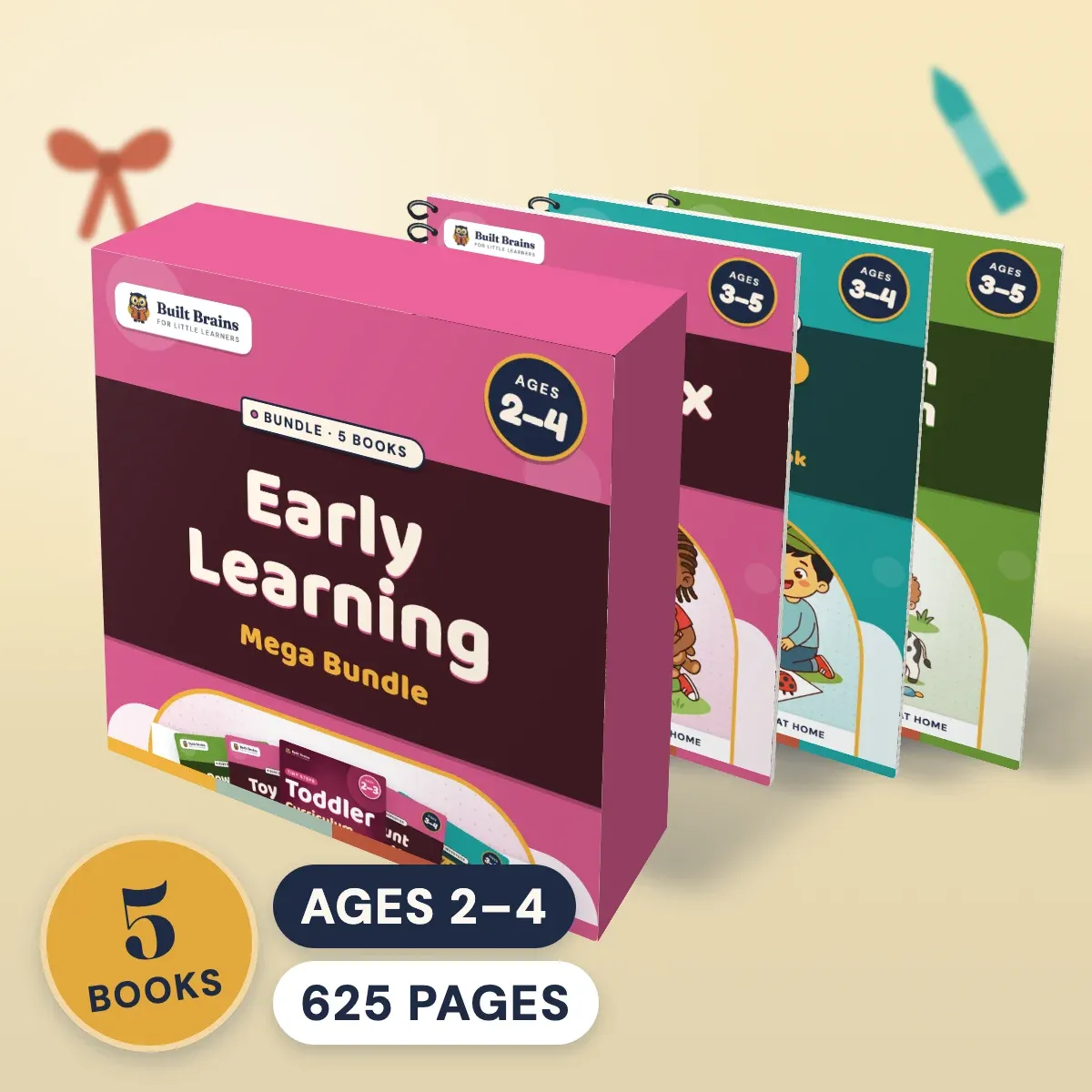
If you'd rather not plan it all yourself, the Tiny Steps Toddler Curriculum gives 2 and 3 year olds a color, a shape, a number and a theme each week, in about ten playful minutes a day. The Early Learning Mega Bundle adds the farm and toy box busy books, first counting and pre-writing tracing. You can browse everything for this age on our toddler page.
Questions parents ask
Mostly language, movement and play skills. The CDC's milestone checklists say most 2 year olds put two words together, point to body parts when asked and kick a ball. Colors, shapes and counting come in gently through play. Talking, reading aloud and letting them help around the house matter far more than flashcards or worksheets at this age.
Think minutes, not lessons. Two or three short activities of 3 to 10 minutes each is plenty for most 2 year olds, spread through the day. Many 3 year olds can manage a 10 to 15 minute sit-down activity. Stop when attention drifts. The rest of the day, play, talk and reading do the teaching.
You can point them out, but there is no need to drill them. Toddlers learn letters and numbers best in context: the "M" on the milk carton, counting stairs, singing the alphabet song. Build vocabulary, listening and counting-by-touch first. Formal letter-sound teaching fits better around age 3 to 4, when most children are ready for it.
A pillow obstacle course, a painter's tape road for toy cars, a bath-time pouring station, a pretend picnic, a color hunt around the house and a stack of library books. Put on music and play freeze dance to burn off energy. Rotate a few toys out of the cupboard so old favorites feel new.
Only very simple pages, and only as one small part of the day. Big pictures to color, dot stickers to press on shapes and a finger to trace a thick line can be fun for 2 year olds. Keep it short and never force it. Most learning at this age should come from hands-on play and conversation.