What is a visual schedule, and why does it help?
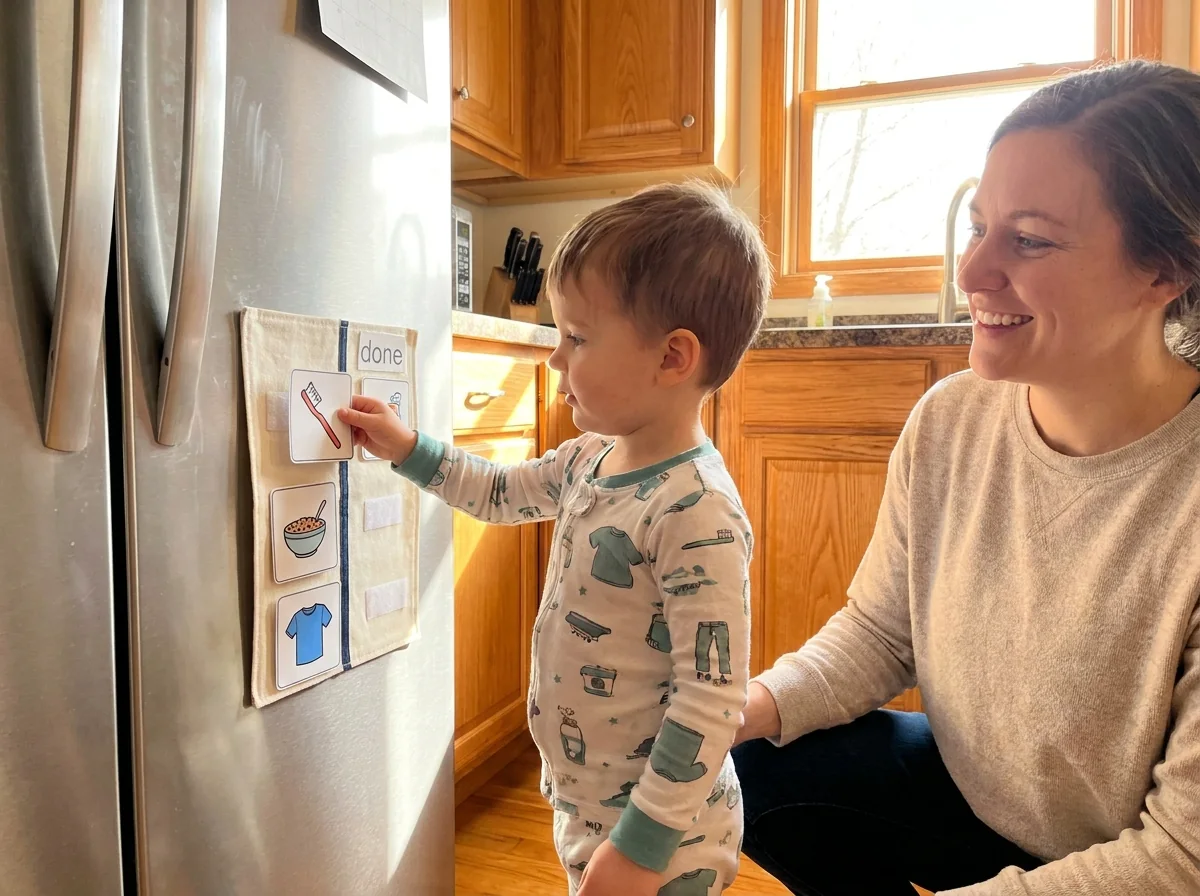
A visual schedule is a sequence of pictures that shows a child what is happening now and what comes next. It might be two photos stuck to the fridge ("First shoes, then park"), a strip of five pictures for the morning, or a checklist on the bathroom door for bedtime. Your child moves, flips or checks off each picture as they finish that step.
Visual schedules are best known as a support for autistic children, and they are widely recommended for children with ADHD too. But they help almost every child aged 2 to 9, for three simple reasons:
- Predictability. Young children cannot read a clock or keep track of a whole day in their heads. Seeing the plan answers "What's next?" before it turns into a worry.
- Independence. A child who can check the chart does not need an adult to tell them each step. That is a big deal for a 4 year old who wants to do it "by myself."
- Fewer battles at transitions. The picture becomes the reminder, not you. "What does the chart say?" lands very differently from a fifth "Go and brush your teeth."
For children with ADHD, holding several steps in mind while ignoring distractions is genuinely hard, and organizations that support ADHD families suggest lists, charts and picture schedules to help children stick with routines (Understood – Back-to-school routines for kids with ADHD). For autistic children, visual supports can make expectations clear and reduce the stress of moving from one activity to the next (Autism Speaks – Visual Supports and Autism tool kit). A schedule is not a treatment for anything, though. If you have questions about your child's attention, behavior or development, talk to your pediatrician (HealthyChildren.org – ADHD).
Types of visual schedules
First-then board
Two pictures side by side: the thing that needs to happen first, then something your child enjoys or the next part of the day. "First bath, then story." It is the best place to start for toddlers and for any child who finds longer routines overwhelming.
Daily strip
A row or column of pictures for a whole routine or a whole morning: breakfast, get dressed, play, snack, park, lunch, quiet time. Your child removes or flips each card as it is done, so the remaining strip shows exactly what is left. If you are planning a home learning day, our preschool at home schedule shows how to break the day into blocks that fit on a strip.
Task checklist
A list of steps for one job, such as getting dressed or tidying the bedroom, with a small picture and a word for each step and a box to check. This suits children of 5 and up, and it is a natural bridge to a written to-do list.
| Type | Best for | Number of steps | How it is used |
|---|---|---|---|
| First-then | Ages 2–4, tricky moments | 2 | Point to "first", then "then" |
| Daily strip | Ages 3–7, whole routines | 3–8 | Remove or flip each card when done |
| Task checklist | Ages 5–9, single jobs | 4–8 | Check each box with a pen or clip |
How to make a visual schedule
You do not need special software. Paper, a printer or a pen, and some sticky tape will do.
- Pick one routine. Start with the one that causes the most friction, usually mornings or bedtime. Do not schedule the whole day on day one.
- List the real steps. Watch what actually happens and write it down in order. For a young child, keep it to 3 to 5 steps. "Get dressed" is one step at 3; at 6 it might be its own checklist.
- Choose photos or icons. Photos of your child's own things (their cup, their toothbrush, their shoes) work best for toddlers and for children who do not yet read simple drawings. Simple icons suit most children from about 3.
- Keep each picture the same. Use the same picture for the same activity every time. If "brush teeth" is a blue toothbrush on Monday, it stays a blue toothbrush.
- Make it movable. Laminate the cards or cover them with clear packing tape, add a dot of hook-and-loop (velcro) to the back and a strip to a piece of card. Your child moves each picture to a "done" pocket or envelope. A clothespin that slides down a strip works too.
- Put it where the routine happens. Morning chart by the bedroom door or the fridge, bedtime chart in the bathroom, at your child's eye level.
- Add a word under each picture. Even pre-readers start to recognize the words over time.
Morning and bedtime visual schedule examples
Morning routine (ages 3–5)
- Toilet and wash hands
- Get dressed
- Breakfast
- Brush teeth
- Shoes and coat on
Morning routine (ages 6–9)
- Get dressed (clothes laid out the night before)
- Breakfast
- Brush teeth and hair
- Pack bag: lunch, water bottle, homework folder
- Shoes on, at the door by the leaving time
Bedtime routine (ages 2–5)
- Bath or wash
- Pajamas on
- Brush teeth
- Two books
- Cuddle and lights out
After-school or home-day strip
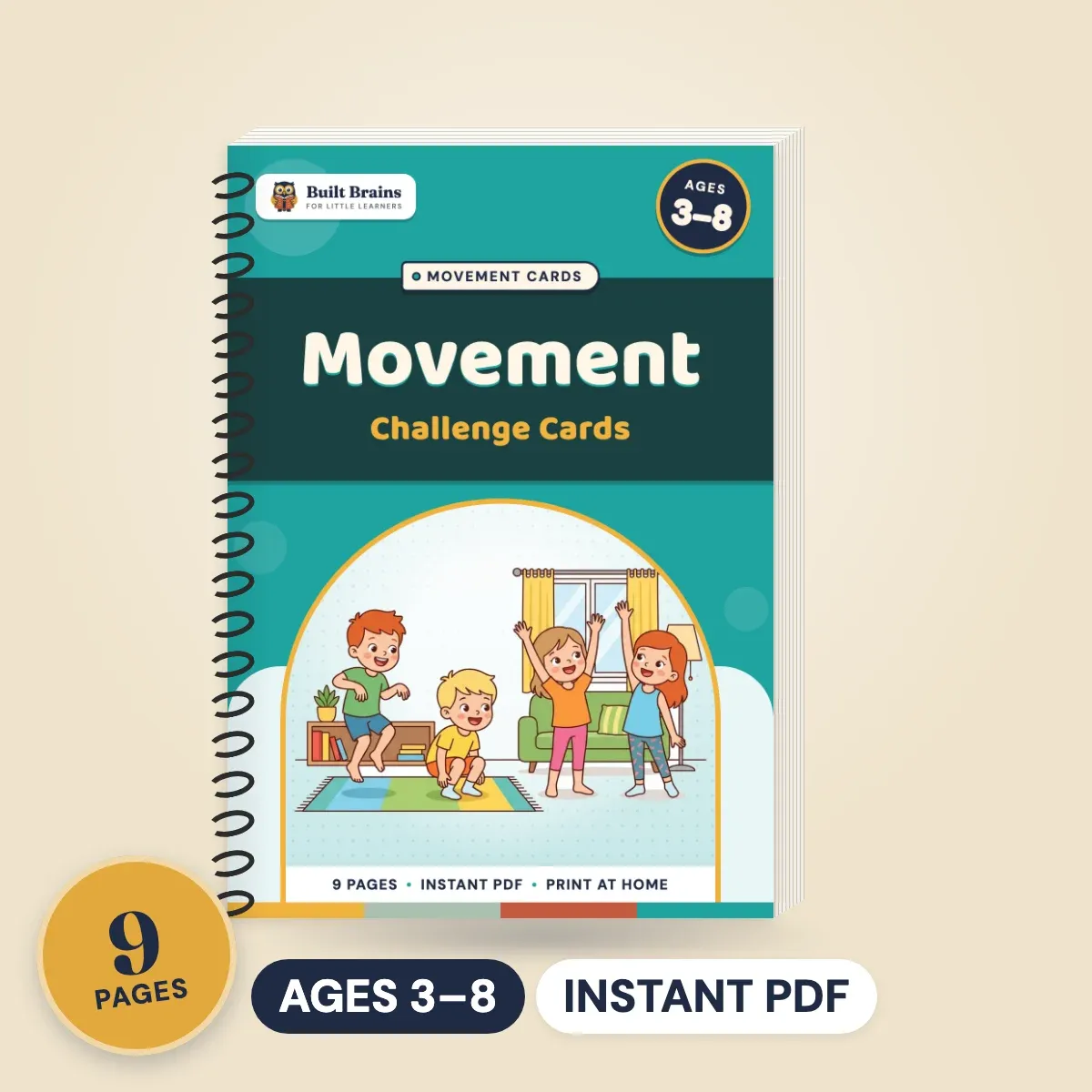
Snack, outdoor play, a table activity, free play, tidy up, dinner. A quick movement break between sitting tasks helps a lot of children, especially wigglers. Movement Challenge Cards give you 36 animal moves, like hopping like a frog or balancing like a flamingo, that work well as a picture on the strip: your child knows a break is coming, and picks a card when they reach it. For more ideas in the same spirit, see our screen-free activities for toddlers.
How to teach your child to use the schedule
A chart on the wall does nothing on its own. Teach it like any new skill.
- Introduce it at a calm moment, not in the middle of a rushed morning. Walk through the pictures together and practice once, almost as a game.
- Let your child do the moving. Guide their hand to the picture if needed, but they flip, move or check it, not you. That is what builds ownership.
- Point, don't nag. When your child gets stuck, point to the chart and ask, "What's next?" instead of repeating the instruction.
- Praise the step, not just the finish. "You moved the teeth card all by yourself!"
- Give it time. A new routine usually takes a couple of weeks of steady use before it feels normal. Stick with the same chart before changing it.
- Show changes on the chart. If the dentist is replacing the park today, swap the picture and show your child before it happens. A "surprise" card (a question mark) can be useful for children who struggle with change.
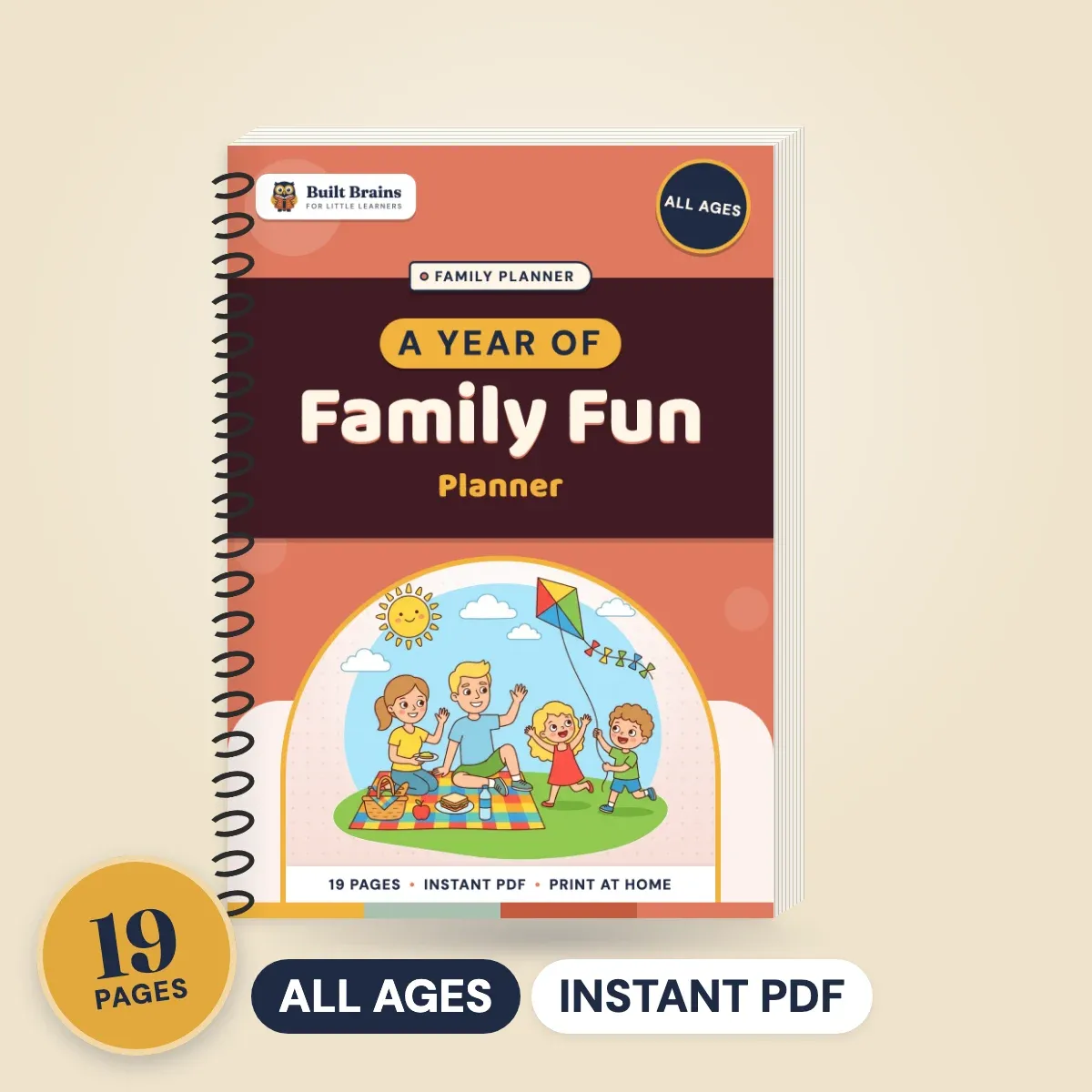
For bigger-picture planning, older children can help fill in a monthly calendar with family outings and special days. A Year of Family Fun Planner has a calendar page for every month with activity ideas and seasonal bucket lists, which makes "how many sleeps until…?" easier to see.
How to fade a visual schedule
The goal is a child who knows the routine, not a child who needs a chart forever. Once a routine runs smoothly for a few weeks:
- Combine steps. "Toilet, wash hands, get dressed" becomes one picture: "Get ready."
- Move from photos to icons, then to words as your child is ready.
- Shrink it. A big strip on the fridge becomes a small card on the bedroom door.
- Remove it for one routine at a time, keeping it handy for busy or unusual days.
- Bring it back without fuss after holidays, illness, a new baby or a move, when routines tend to wobble.
Some children, including many autistic children and children with ADHD, benefit from a visual schedule for much longer, and that is fine. Plenty of adults run their lives from lists and calendars. The schedule is a tool, not a crutch.
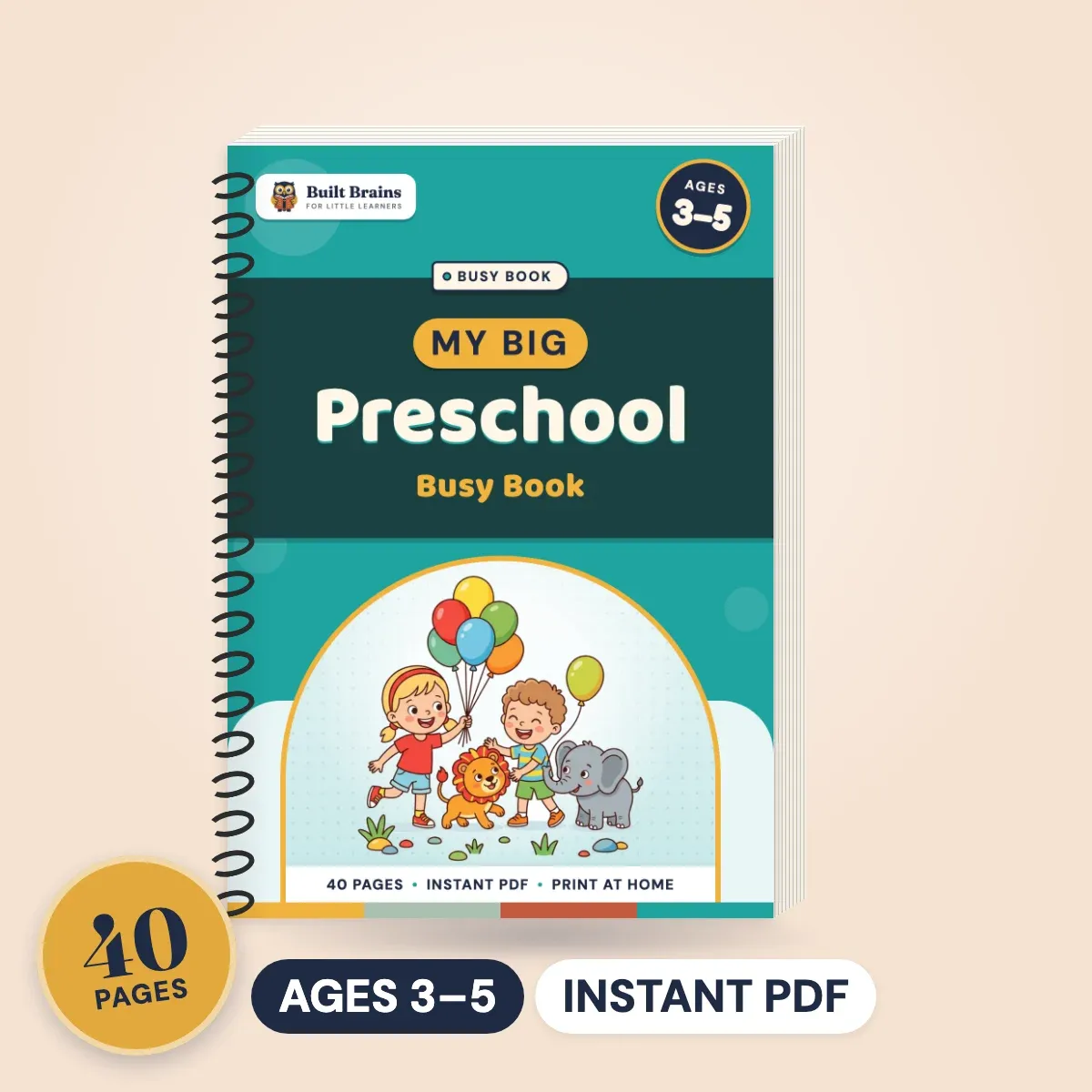
For quiet stretches built into the schedule, such as "table time" or "quiet time", a printable busy book gives your child something to do independently. My Big Preschool Busy Book has tracing, mazes, counting and matching pages, and our quiet time activities for preschoolers has more ideas.
Sources
- Autism Speaks – Visual Supports and Autism tool kit: how visual schedules and first-then boards support autistic children, with tips on consistent pictures and letting the child move them.
- Understood – Back-to-School Routines for Kids With ADHD: using lists, charts and picture schedules to help children with ADHD follow routines.
- HealthyChildren.org – ADHD: American Academy of Pediatrics information for parents on ADHD and talking with your pediatrician.
Questions parents ask
A visual schedule is a set of pictures, photos or simple words, in order, that shows a child the steps of a routine or the parts of their day. The child checks or moves each picture as they finish it. It turns a spoken list they have to remember into something they can see, which makes transitions calmer and builds independence.
Many children can use a simple first-then board from around 2, with two photos: "First shoes, then park." By 3 to 5, most can follow a strip of 3 to 5 pictures for a morning or bedtime routine. School-age children often move on to a written checklist with small icons, and older children can help design their own.
They often do. Children with ADHD can find it hard to hold several steps in mind and to switch between tasks, and a visible routine takes some of that load off. Parenting organizations for ADHD recommend lists, charts and picture schedules. If you have questions about attention or behavior, talk to your pediatrician.
Many autistic children process what they see more easily than what they hear, and find unexpected changes stressful. A visual schedule shows what is coming and in what order, which can reduce anxiety around transitions. Autism organizations recommend them widely. If you have concerns about your child's development, talk to your pediatrician.
Use photos for toddlers and for children who do not yet recognize simple drawings: a picture of their own toothbrush is clearer than a cartoon of one. Many children aged 3 and up understand simple icons. Whatever you choose, use the same picture for the same activity every time so the meaning stays clear.

Reviewed by
Early Years SENCo (Special Educational Needs Coordinator)
Ben Mitchell is an Early Years SENCo specializing in early identification and inclusive classroom strategies for neurodivergent children.
More about B. Mitchell →