What should a child know before starting Reception?
Reception is the first year of primary school in England and the final year of the Early Years Foundation Stage (EYFS), the framework that also covers nurseries and childminders. Children start in the September after their fourth birthday, so some are only just 4 and others are nearly 5. It is play-based by design: children learn through activities set out around the classroom, with short group times for stories, phonics and maths.
Ask Reception teachers what they hope to see on day one and the list is practical rather than academic:
- Uses the toilet, wipes, flushes and washes hands without help
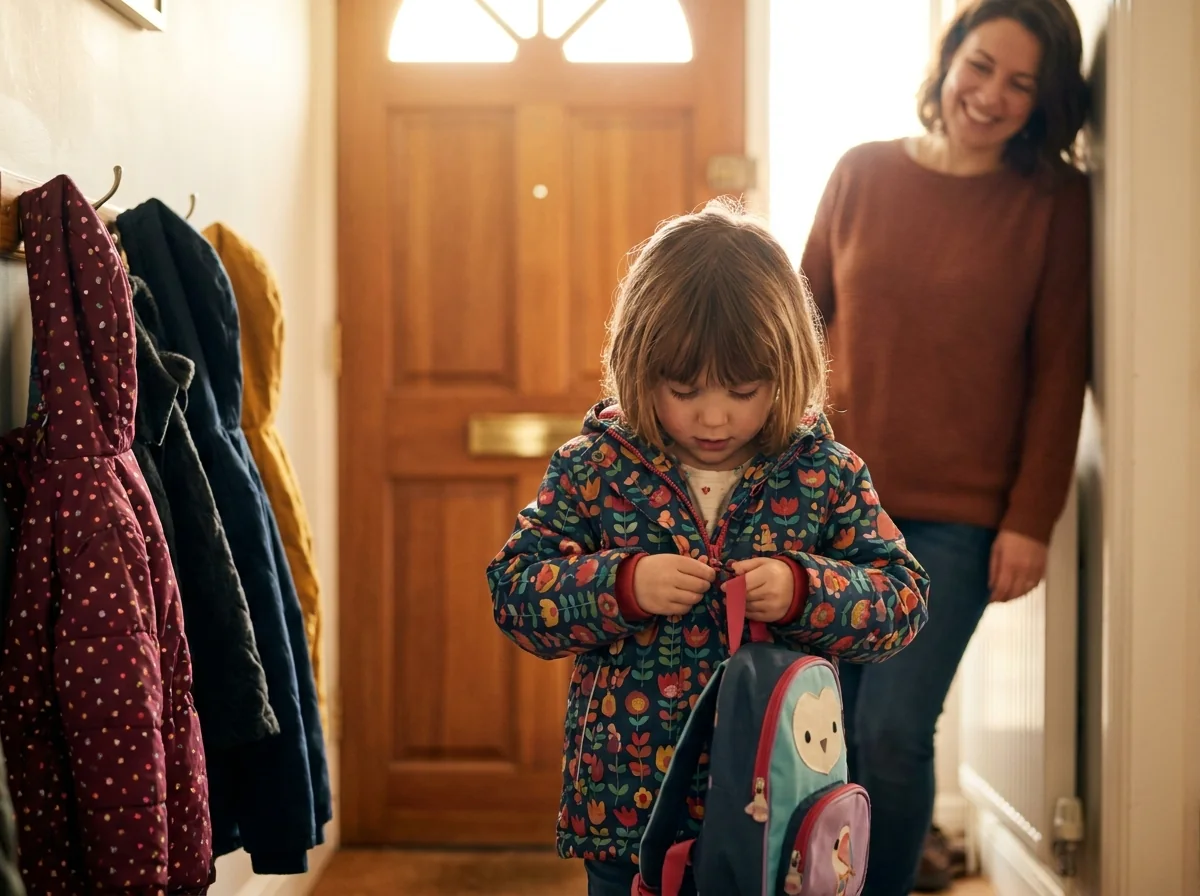
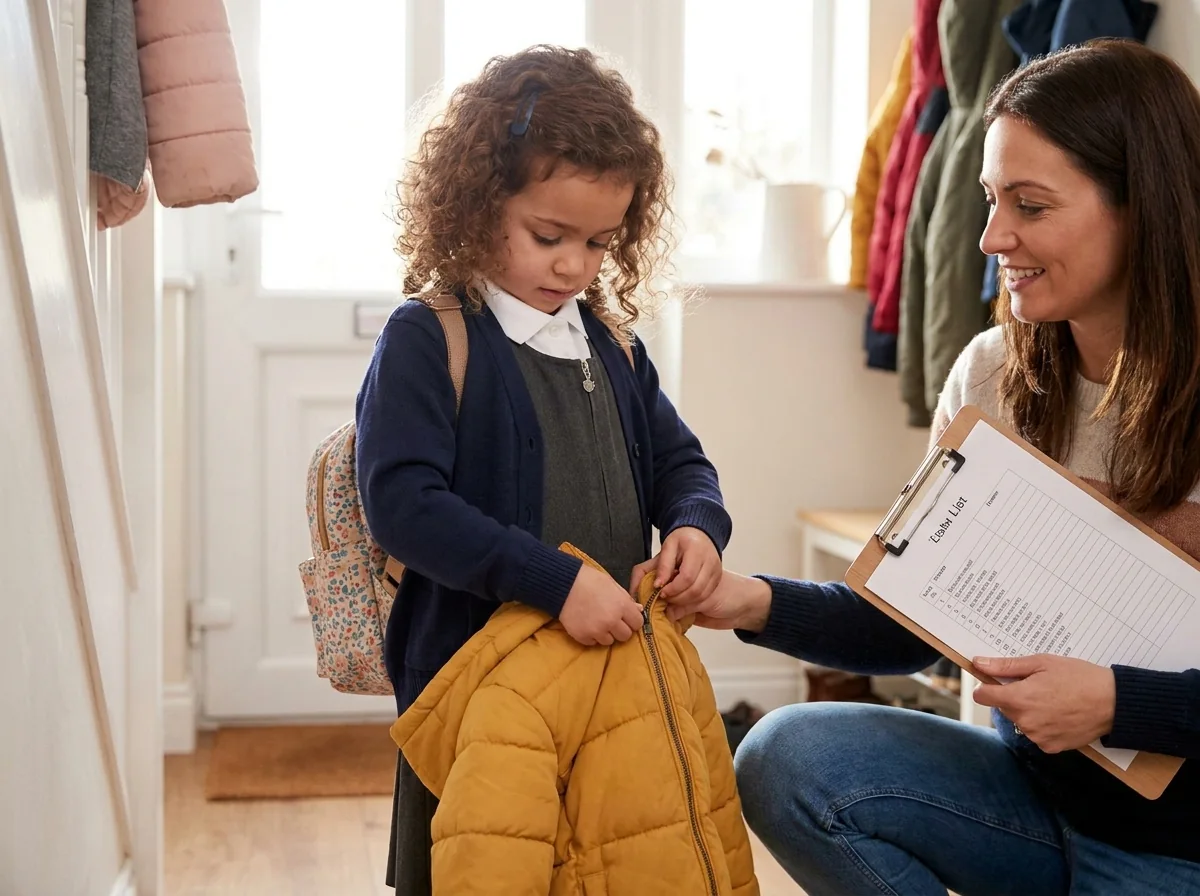
- Puts on a coat and does it up, and gets shoes on (Velcro is fine)
- Opens their own lunch box, water bottle and snack packets
- Says goodbye to mum or dad and settles within a few minutes, even with some tears
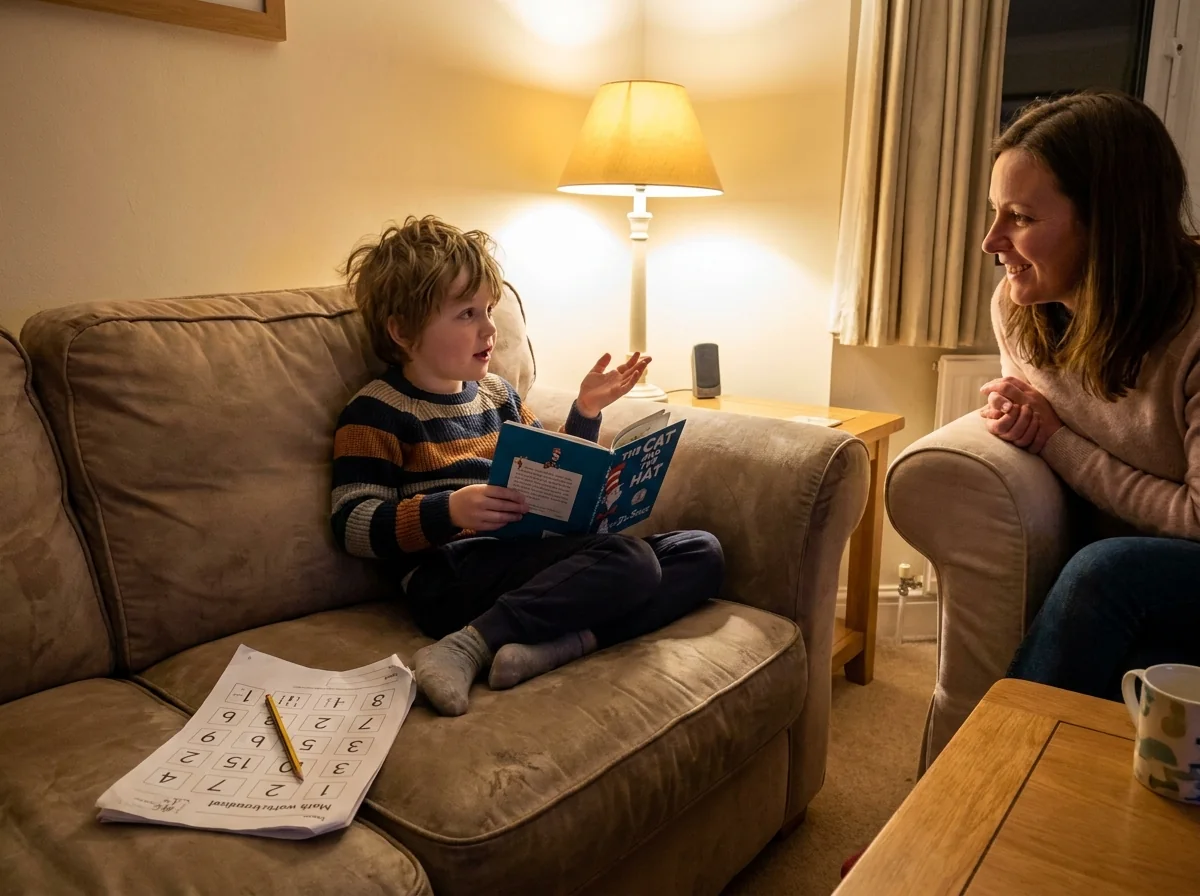
- Listens to a short story in a group and follows a simple instruction
- Asks an adult for help, and tells them when they need the toilet
- Recognises their own written name, so they can find their peg and tray
- Counts out loud to 10, and counts a few objects
- Holds a pencil or crayon with fingers rather than a fist
Nobody expects every box ticked. Children develop at different speeds, and a child who turned 4 in August is a full year younger than a classmate born the previous September. Use the checklist below as a guide for what to practise, not a test to pass.
The school readiness checklist for Reception
Looking after themselves
- Toilet independently, including wiping and hand washing
- Coat on and zipped or buttoned; shoes on the right feet
- Lunch box, yoghurt pots, fruit pots and water bottle opened without help
- Blows their nose and puts the tissue in the bin
- Knows their full name and recognises their first name written down
- Changes for PE with help only for the fiddly bits (start with easy clothes)
Listening and talking
- Speaks in sentences most adults can understand
- Follows a two-step instruction: "Hang up your coat and sit on the carpet"
- Sits for a short picture book and answers a simple question about it
- Tells you about something that happened, roughly in order
Settling and getting on with others
- Separates from a parent with a short, predictable goodbye
- Takes turns in a simple game and waits a little for a turn
- Plays alongside and with other children, sharing some of the time
- Calms down with an adult's help after being upset
- Follows a simple rule without a long argument
Early literacy
- Recognises their own name and some of the letters in it
- Enjoys books and will choose one to look at
- Joins in with nursery rhymes and notices rhymes sometimes
- Holds a book the right way up and turns pages one at a time
Early maths
- Counts to 10 out loud
- Counts a small group of objects, touching each one once
- Knows words like more, less, big, small, full, empty
- Names a circle, a square and a triangle
Hands
- Holds a pencil or crayon between fingers and thumb
- Draws a circle, a line and a person with a head and some body parts
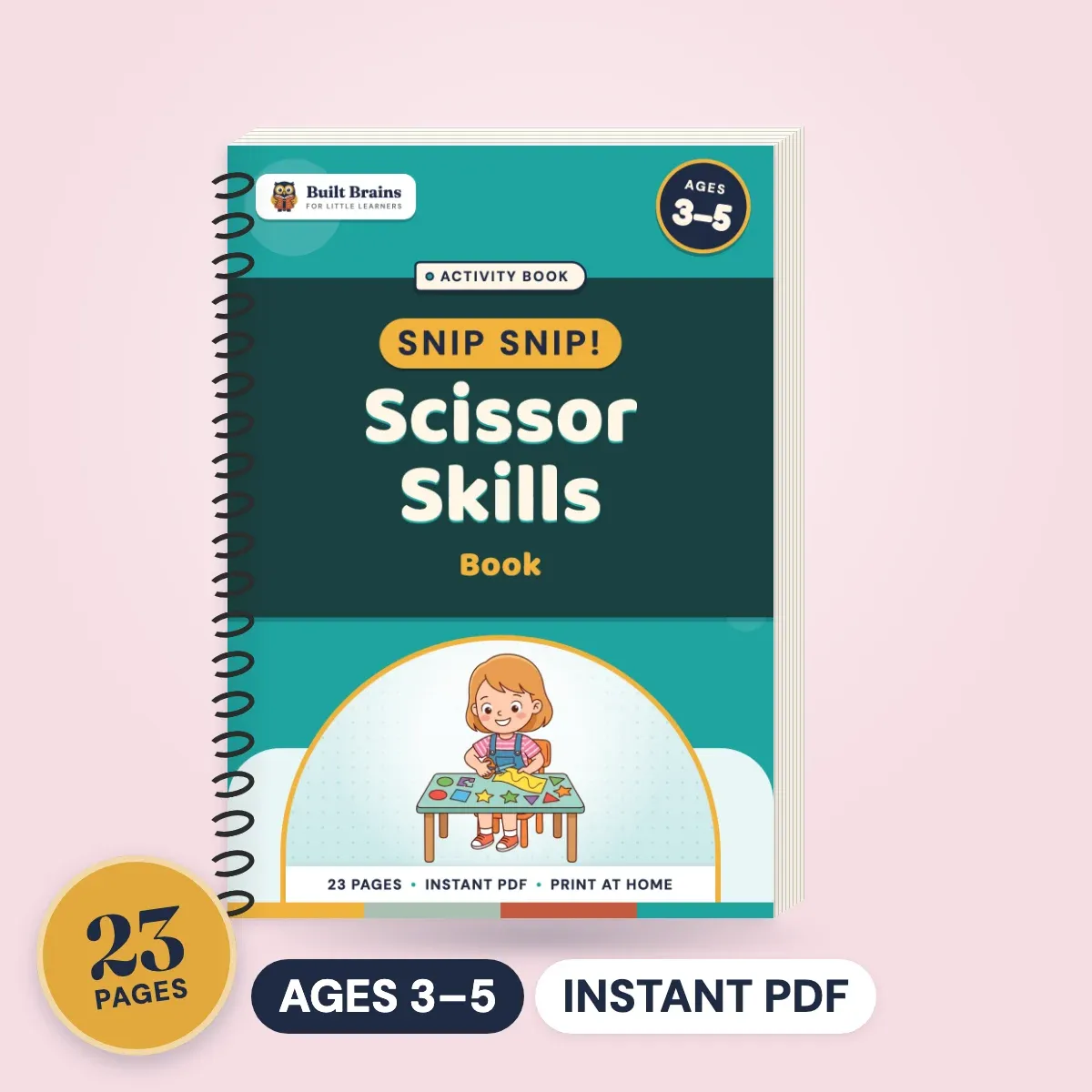
- Snips with children's scissors, even if not along the line yet
- Uses a glue stick and does up large buttons
For the hand skills, our fine motor activities for preschoolers are a good starting point, and how to teach a child to write their name covers name recognition and first attempts at writing it.
What Reception teachers do not expect
Parents worry most about the things that matter least on day one. Reception teachers do not expect children to:
- Read. Phonics starts in the first weeks of Reception and is taught step by step. Our guide to phonics phases explained shows the order schools follow.
- Write sentences, or even all their letters. Mark-making comes first, then their name, then letters as the sounds are taught.
- Know letter names. Schools teach sounds first; drilling names can muddle things.
- Count to 100 or do sums. Counting to 10 with real objects is more useful than reciting big numbers.
- Tie shoelaces or sit still for long. Velcro shoes and plenty of movement are built into the day.
Within the first six weeks, children also do the Reception Baseline Assessment: a short, one-to-one set of maths and language tasks with the teacher, using practical resources. It is used to measure the school's progress over the years, not to grade your child, and there is nothing to prepare for.
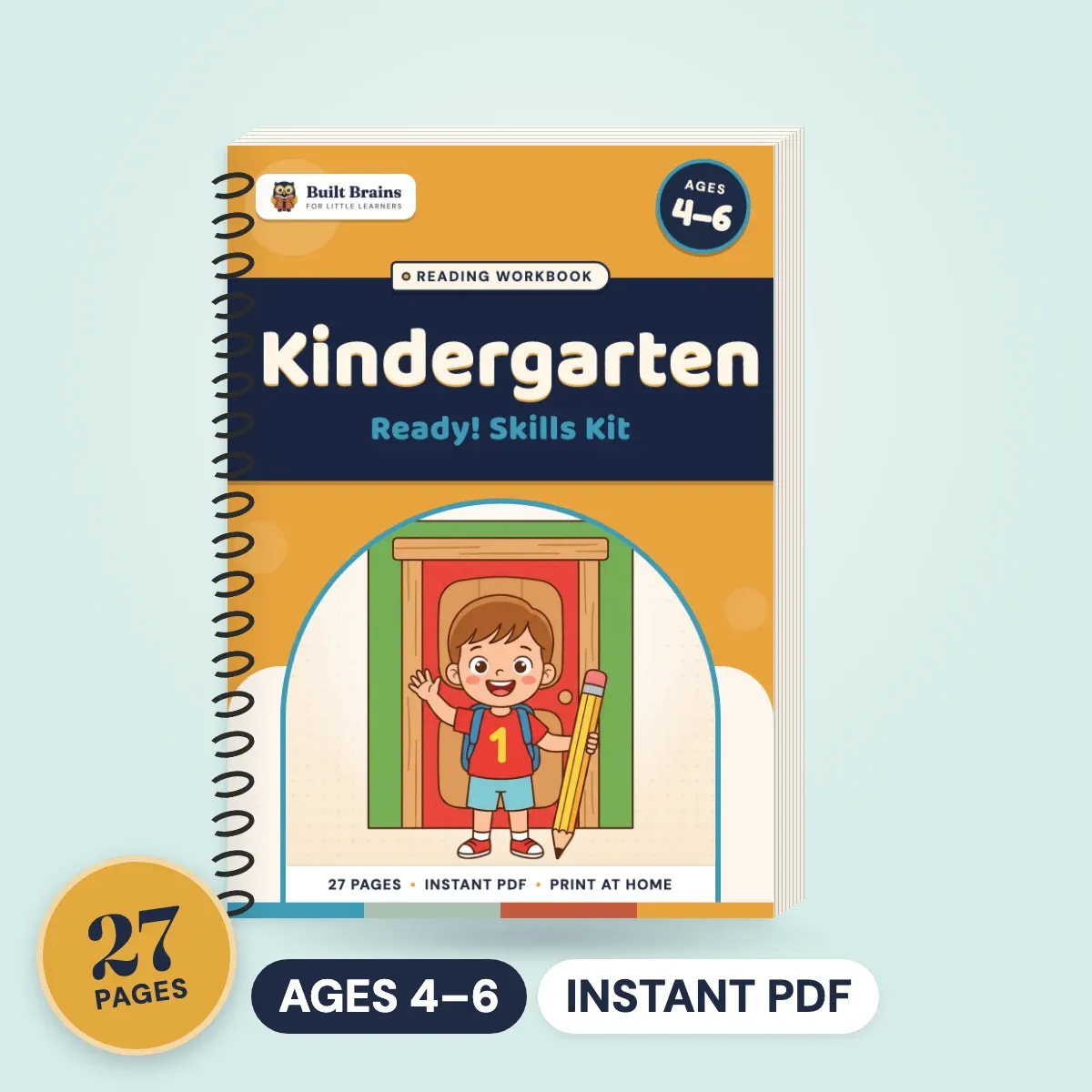
If you want a gentle, printable way to practise the hand skills and early sounds that do help, the Kindergarten Ready! Skills Kit covers cutting, pencil control, shapes, patterns, rhymes, beginning sounds and counting for ages 4 to 6. The name uses the US word, but the skills are exactly what Reception teachers notice, and like all our books it comes in A4 as well as US Letter.
The 7 areas of the EYFS and the early learning goals explained
The EYFS statutory framework sets out seven areas of learning. Three are prime areas, which come first because everything else depends on them, and four are specific areas. Each area has one or more early learning goals (ELGs), 17 in total, which describe what children are expected to be able to do at the end of Reception. Teachers judge each child as "expected" or "emerging" against them in the summer term, in what is called the EYFS Profile.
The goals are often quoted at parents of 4 year olds as if they were entry requirements. They are not; they are the finish line for the year. Here they are in plain words.
| Area | What it covers | By the end of Reception, most children can… |
|---|---|---|
| Communication and language (prime) | Listening, understanding, talking | Listen carefully, follow instructions, hold a conversation and explain their ideas in full sentences |
| Personal, social and emotional development (prime) | Feelings, independence, friendships | Manage their feelings, follow rules, dress and toilet independently, play co-operatively and show care for others |
| Physical development (prime) | Big movements and hand skills | Move with balance and co-ordination; hold a pencil effectively, use scissors and begin to form letters accurately |
| Literacy (specific) | Comprehension, word reading, writing | Retell stories, say a sound for each letter and some digraphs, blend to read simple words and sentences, and write simple phrases others can read |
| Mathematics (specific) | Number and numerical patterns | Have a deep understanding of numbers to 10, recognise small amounts without counting, count beyond 20 and compare quantities |
| Understanding the world (specific) | Past and present, people and communities, the natural world | Talk about their own lives and family, their community and other cultures, and describe what they notice in nature and the seasons |
| Expressive arts and design (specific) | Making and imagining | Use materials to make things, sing, move to music and invent stories and role play |
The non-statutory Development Matters guidance describes the steps children typically take towards these goals from birth, and is the document your child's nursery or school is most likely using to plan.
Applying for a Reception place: dates and how it works
In England, you apply for a state primary place through your local council, not the school, in the autumn before your child starts. The GOV.UK school admissions guide explains the process; the key dates are:
- Autumn (September to December): visit schools, check catchment and oversubscription rules, and apply online through your council, listing your preferences in order.
- 15 January: national closing date for primary applications. Late applications are considered after everyone who applied on time.
- 16 April (or the next working day): national offer day. You accept or decline the place by the council's deadline, and can go on waiting lists or appeal.
- May to July: the school sends induction information, settling-in visits and a start date, often with a staggered first week.
Children born between 1 April and 31 August are summer-born. Their parents can ask for a deferred start later in the year, a part-time timetable until they reach compulsory school age, or a delayed start in the following September into Reception rather than Year 1; the admission authority decides the last of these case by case. Scotland, Wales and Northern Ireland have their own systems and start ages, so check with your local authority if you live outside England.
A summer-before-Reception plan
Ten minutes a day from June is plenty. Keep the academic part short and build the rest into ordinary life.
- June: independence. Toilet, coat, shoes, lunch box and nose. Give them the job every day and be slow to help.
- Early July: separating and listening. Short goodbyes at a friend's or grandparent's with the same routine each time; a story every night with one question after.
- Late July: name and sounds. Find the first letter of their name everywhere, trace it big in the air, then on paper. Play "I spy with my little eye something beginning with mmm."
- August: counting and hands. Count stairs, grapes and steps to the car; cut, stick, thread and play with dough.
- The last fortnight: routine. Earlier bedtimes, breakfast at school-day time, a walk past the school, and the dress rehearsal with the uniform. The BBC Bitesize Parents' Toolkit has short videos on starting school that are worth watching together.
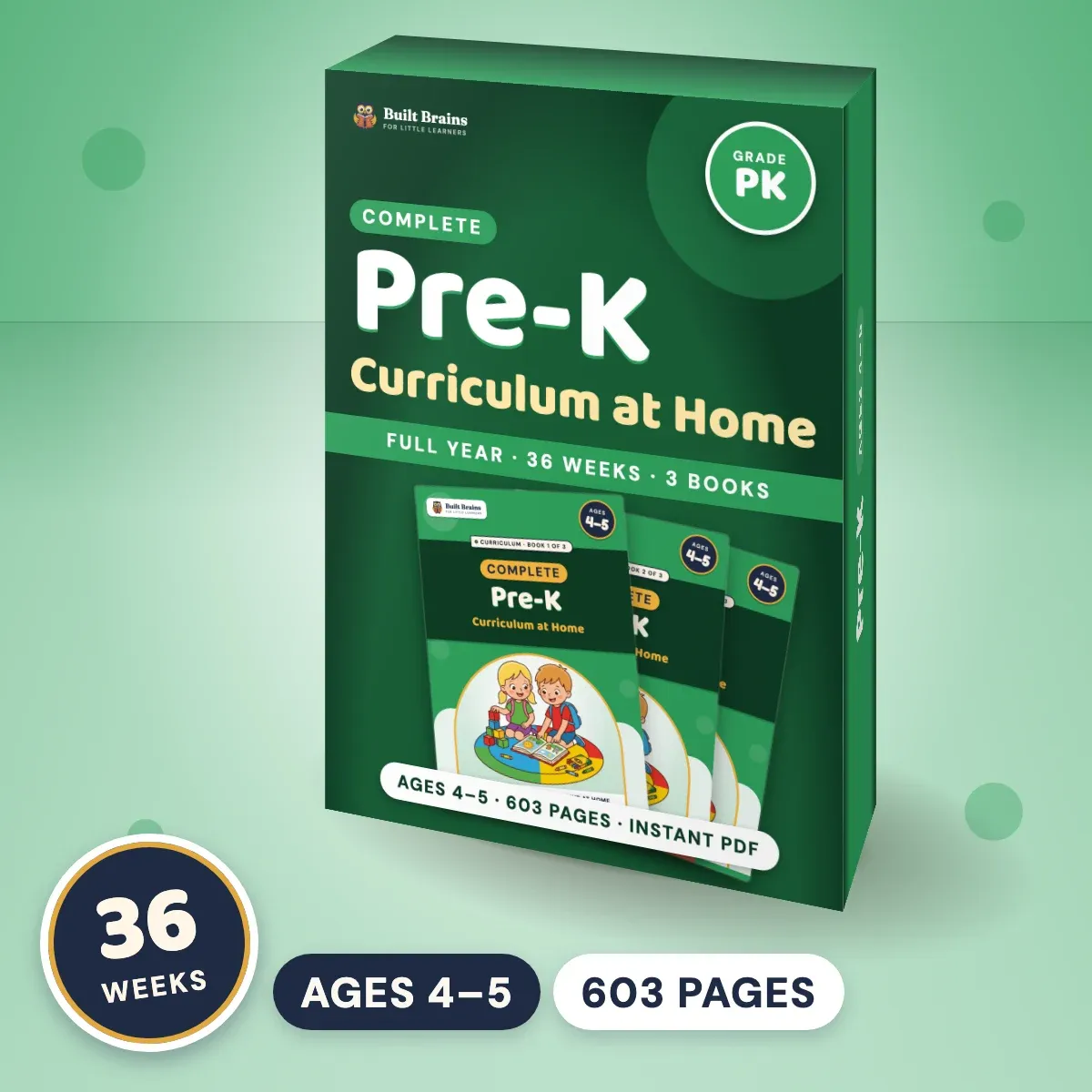
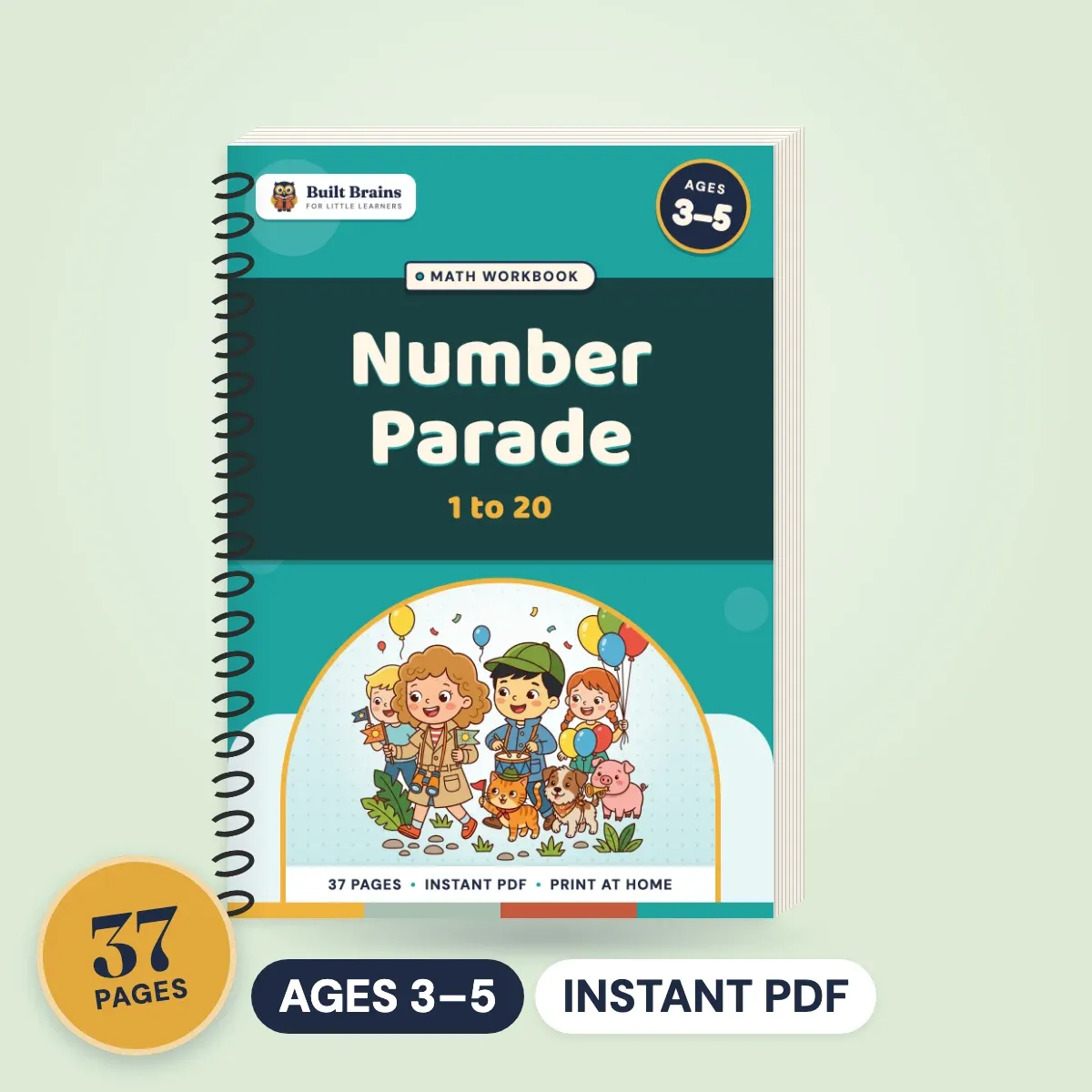
For a planned version of the table-time part, the Complete Pre-K Curriculum at Home lays out 36 weekly plans for 4 and 5 year olds, covering every letter and its sound, numbers to 20, shapes and patterns in about 20 minutes a day; the US name aside, it sits well alongside Reception. For single skills, ABC Tracing Adventure: A to Z shows the real writing path for every letter from a green starting dot, Number Parade: 1 to 20 has a page for each number, and the Snip Snip! Scissor Skills Book goes from first snips to loops. All print in A4.
How Reception compares with US kindergarten readiness
If you read American advice online, the age gap explains most of the differences. US children start kindergarten at about 5, a full year later than Reception, and pre-K at 4 is optional. So a US "kindergarten readiness" list is pitched at a child a year older, which is why it often includes knowing most letters and counting to 20. Reception, meanwhile, is closer to US pre-K in age but introduces phonics and early maths more formally and earlier. The self-care and settling skills, though, are the same on both sides of the Atlantic, as our kindergarten readiness checklist shows.
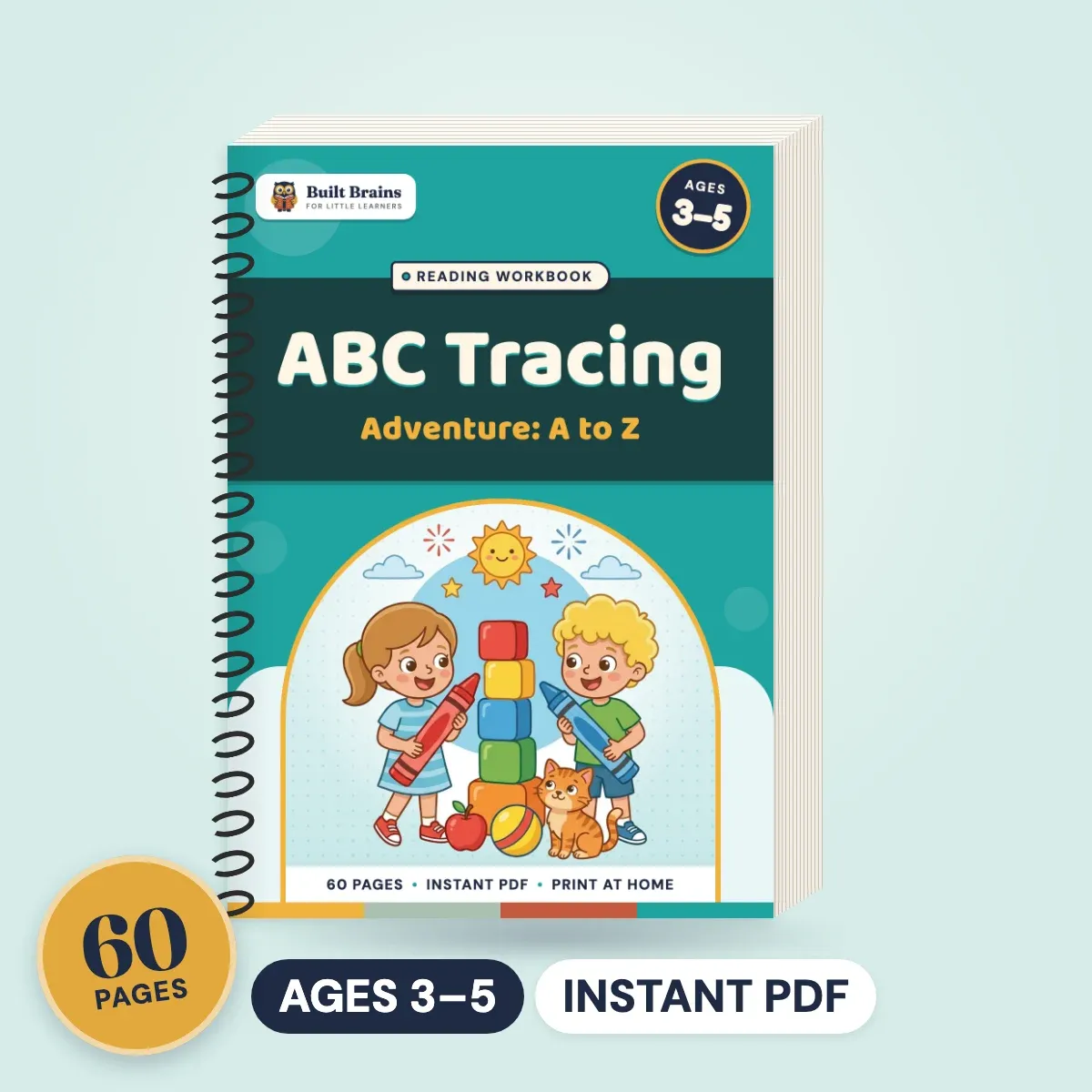
Ages 3–5 · 60 pages
ABC Tracing Adventure: A to ZLearn every letter the right way — trace, find, color
Sources
- GOV.UK – Early years foundation stage (EYFS) statutory framework: the seven areas of learning, the 17 early learning goals and the EYFS Profile at the end of Reception.
- GOV.UK – Development Matters: non-statutory guidance on how children typically progress towards the early learning goals.
- GOV.UK – Schools admissions: how to apply for a primary place, the 15 January deadline and national offer day.
- BBC Bitesize – Parents' Toolkit: practical advice and videos for families on starting school.
Questions parents ask
In England children start Reception in the September after their fourth birthday, so a class holds children who are just 4 and children who are nearly 5. School is not compulsory until the term after a child turns 5, and parents of summer-born children can ask to delay or defer the start. Reception is the final year of the Early Years Foundation Stage.
Schools care most about independence and settling: using the toilet, managing a coat and lunch box, asking for help, listening to a short story and playing alongside other children. Recognising their written name, knowing a few letters, counting to 10 and holding a pencil with a comfortable grip are a bonus. Reading, writing and sums are taught in Reception, not expected on day one.
No. Phonics is taught from the first weeks of Reception, step by step, and the early learning goals for reading and writing describe where children should be at the end of the year, not the start. What helps beforehand is enjoying books, hearing rhymes, recognising their own name and noticing the first sound in words. Children who already read are fine too; it is not a requirement.
You apply through your local council in the autumn before your child is due to start, and the national deadline for primary applications is 15 January. Offers are sent on 16 April, national offer day, or the next working day. Check your council's website for how many preferences you can list and the catchment or oversubscription rules for the schools you are considering.
The early learning goals (ELGs) are 17 short statements in the EYFS statutory framework describing what children are expected to know and do by the end of Reception, across seven areas such as communication, personal and social development, physical development, literacy and maths. Teachers assess them in the summer term of Reception as part of the EYFS Profile.
Yes. Children born between 1 April and 31 August can start in the September after they turn 5 instead, and parents can ask for them to join Reception rather than Year 1 at that point. Admission authorities decide each case, so write to them when you apply and explain your reasons. You can also start on time but part-time, or defer within the year.
Reviewed by
Early Years Foundation Stage (EYFS) Teacher
Emma Sterling is an EYFS educator who champions play-based learning and continuous provision to foster independent, inquisitive learners.
More about Emma →