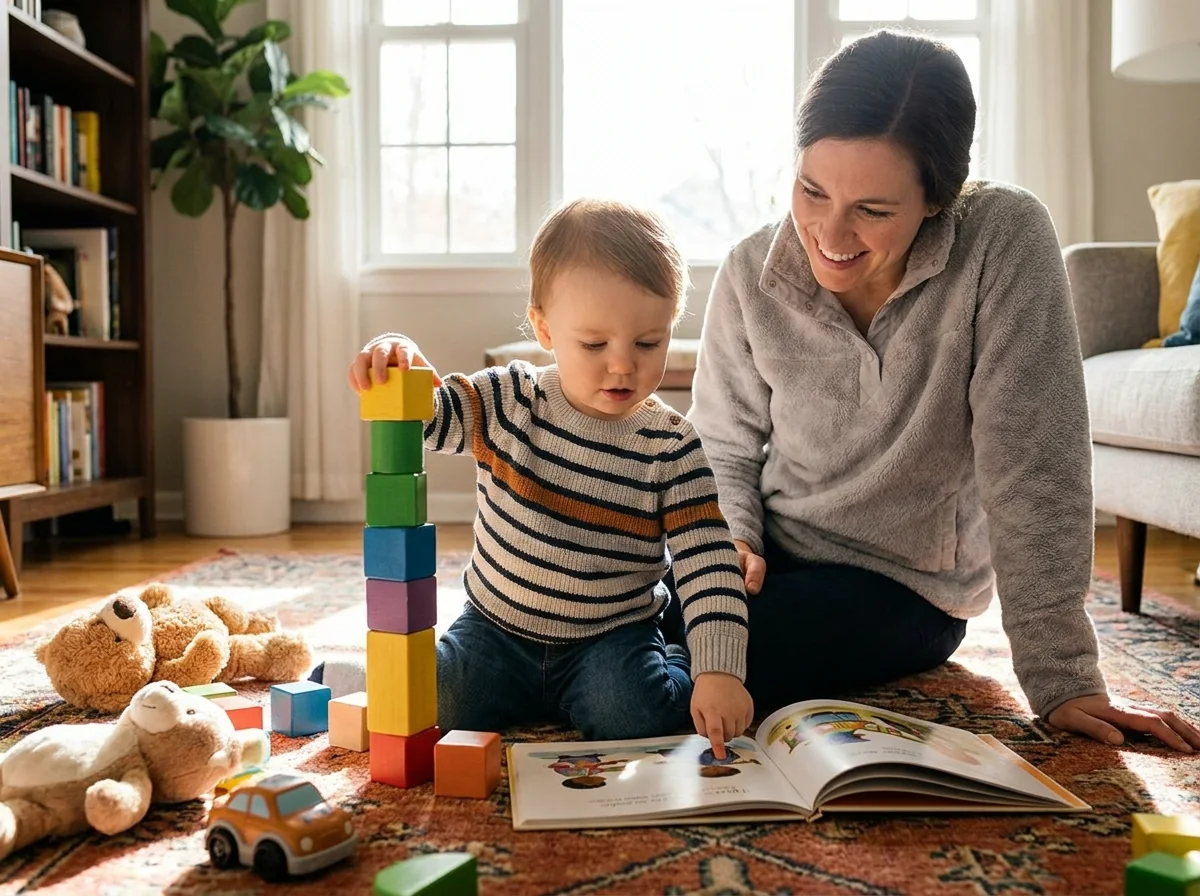
A 2 year old checklist, by area
This list follows the CDC's "Learn the Signs. Act Early." milestone checklists, revised in 2022 so that each item is something most children, about three in four or more, can do by that age, and the AAP's guidance on 2 year old development. Each area shows what most children do by 24 months and what many add by 30 months. Children vary, and a child who just turned 2 is in a very different place from one about to turn 3.
Language
- By 2: says at least two words together, like "more milk"
- By 2: points to at least two body parts when you ask
- By 2: uses gestures beyond waving and pointing, like nodding yes or blowing a kiss
- By 30 months: says about 50 words, and uses words like I, me and we
- By 30 months: puts an action word into a phrase, like "doggie run"
Early literacy
- By 2: points to things in a book when you ask, "Where's the cat?"
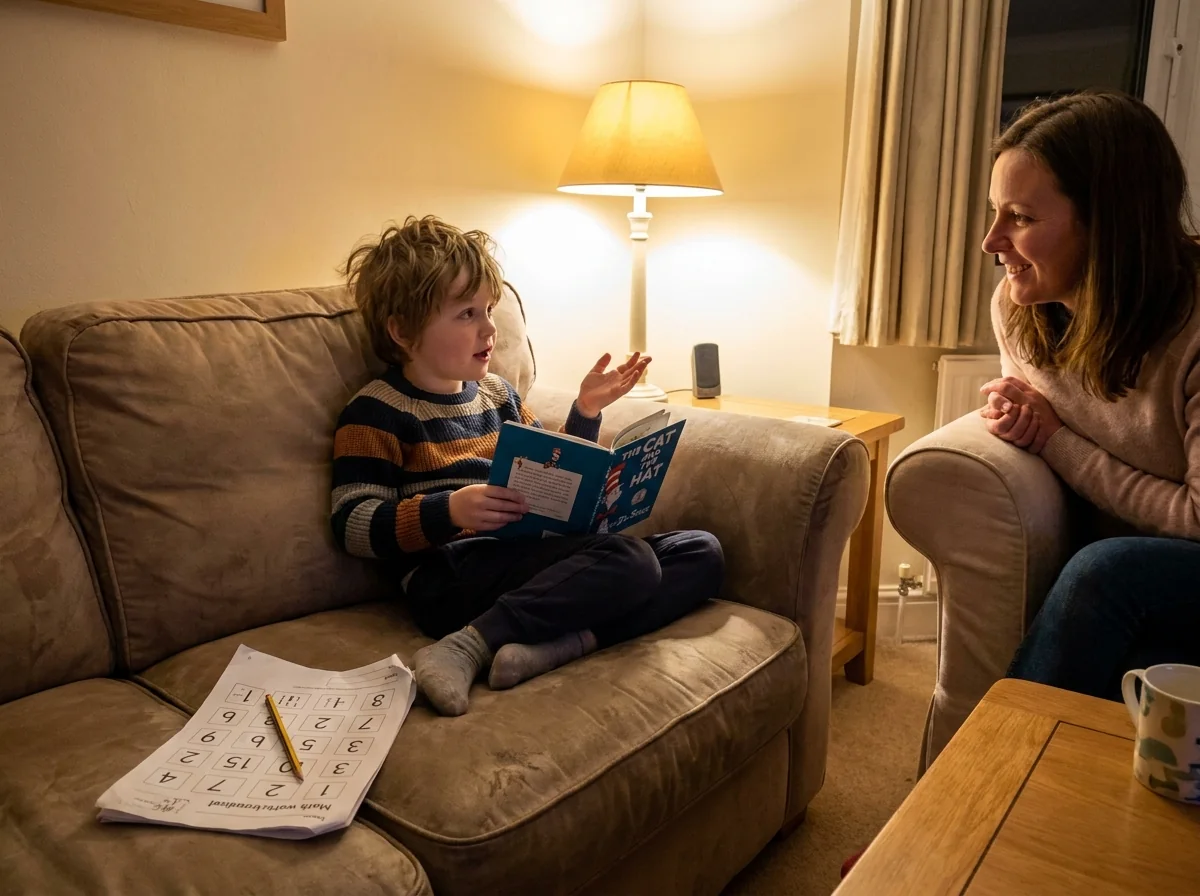
- By 30 months: names things in a book when you point and ask, "What's this?"
- By 30 months: turns book pages one at a time while you read
Early math and thinking
- By 2: plays with more than one toy at the same time, like putting blocks in a truck
- By 2: tries switches, knobs and buttons on toys
- By 30 months: shows they know at least one color, by pointing to the red crayon when asked
- By 30 months: follows a two-step instruction, like "Put the toy down and close the door"
- By 30 months: uses simple problem solving, such as standing on a stool to reach something
Fine motor
- By 2: holds something in one hand while using the other, like holding a container while taking the lid off
- Around 2: scribbles and stacks four or more blocks
- By 30 months: twists things with their hands, like doorknobs or lids
Gross motor
- By 2: runs and kicks a ball
- By 2: walks (not climbs) up a few stairs, with or without help
- By 30 months: jumps off the ground with both feet
Social-emotional
- By 2: notices when others are hurt or upset and pauses or looks sad
- By 2: looks at your face to see how to react to something new
- By 30 months: plays next to other children and sometimes with them
- By 30 months: says "Look at me!" to show you what they can do
Self-care
- By 2: eats with a spoon
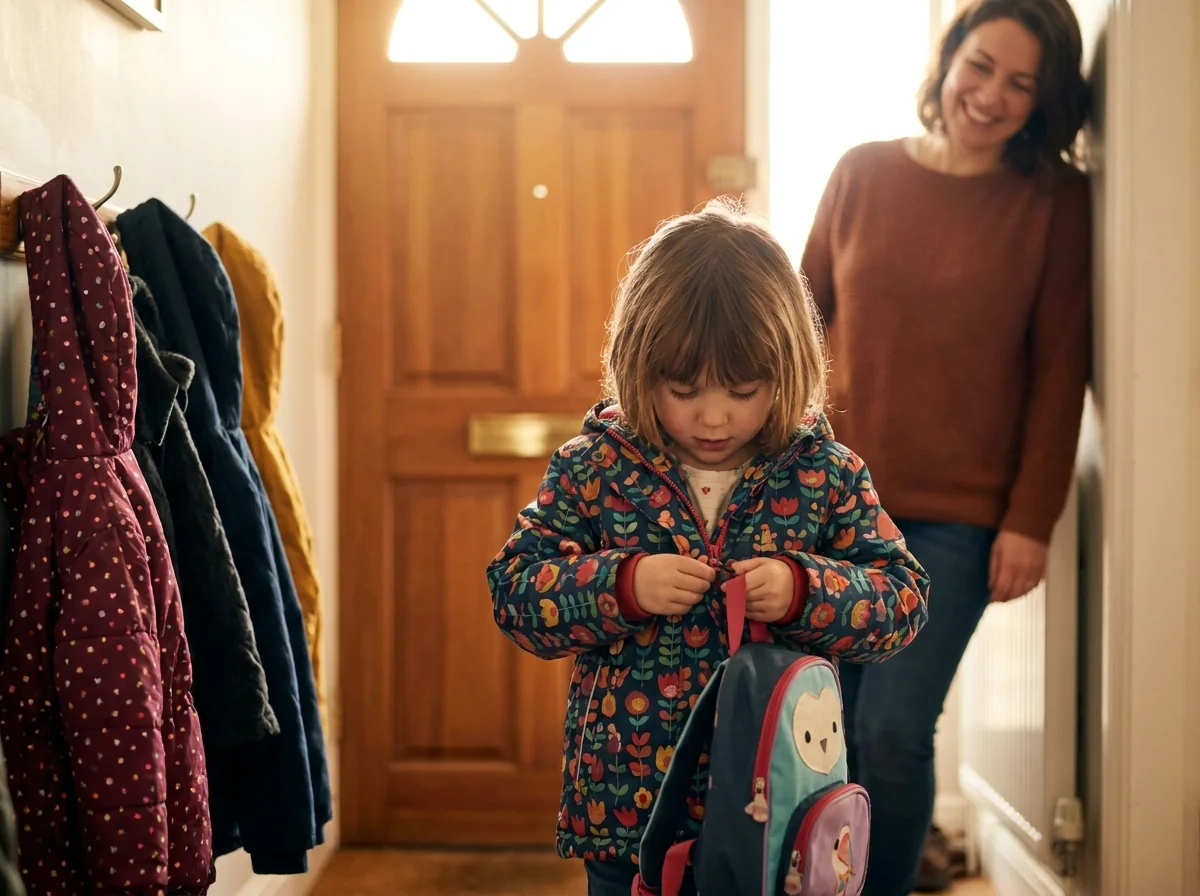
- By 30 months: takes off some clothes, like loose pants or an open jacket
- By 30 months: follows simple routines, like helping to pick up toys at clean-up time
How to read this list
- Uneven is normal. Many 2 year olds race ahead in movement and are slower to talk, or the other way round.
- Look for progress. Is your child doing a little more than three months ago? That matters more than any one item.
- Premature babies are usually measured from their due date, not their birthday, in the early years.
What should a 2 year old say?
Talking is the big story of age 2. The AAP describes 2 year olds as having a rapidly growing vocabulary of 50 or more words, and over the year moving from two- or three-word phrases toward sentences of four, five or even six words (healthychildren.org). Understanding usually runs well ahead of speaking: your child may follow "Get your shoes and bring them to me" long before they could say it.
How to grow talking, all day long
- Narrate. "You're pouring the water. Splash! Now the cup is empty."
- Add one word. Child: "Ball." You: "Big ball!" Child: "Big ball." You: "Big red ball!"
- Pause and wait. Ask a question, then count to five in your head before helping.
- Offer choices. "Apple or banana?" gives your child the words to answer with.
- Sing. Songs with actions, like "Head, Shoulders, Knees and Toes," pair words with movement.
- Read the same books again. Repetition is how toddlers learn to fill in the next word.
Does a 2 year old need to learn academics?
Parents often search for what a 2 year old should know academically. The honest answer is very little. Letters, counting and color names are not 2-year-old milestones, and flashcards, apps and worksheets are not needed. Two year olds learn by doing: pouring, stacking, climbing, pretending and talking about it all with you.
That play is the groundwork for school skills later:
| Play at 2 | What it builds later |
|---|---|
| Talking and reading together | Vocabulary, listening and the love of books that reading needs |
| Stacking, filling and emptying | Size, quantity and early counting |
| Sorting toys and socks | Matching and grouping, the start of math |
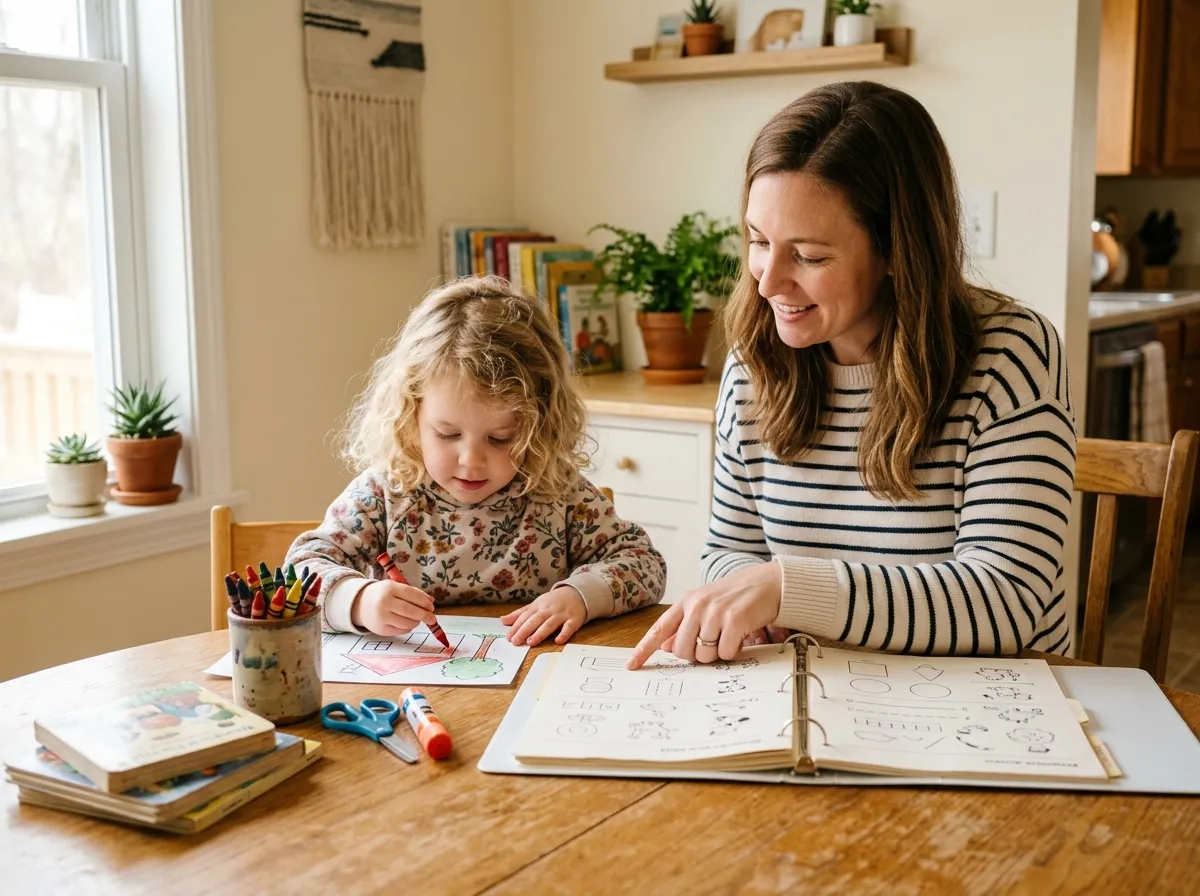
| Scribbling with chunky crayons | Hand strength and pencil control |
| Pretend play (feeding a doll, a toy kitchen) | Storytelling, imagination and taking turns |
| Climbing, running and jumping | Balance and the core strength needed to sit and draw |
If you would like a little structure, ten minutes of focused play a day is plenty. Our learning activities for toddlers and sensory bin ideas are full of ideas. Keep small items like beads and dried beans for supervised play only, since they are choking hazards for young children. And because toddlers learn language best from people, it is worth reading up on screen time for toddlers too.
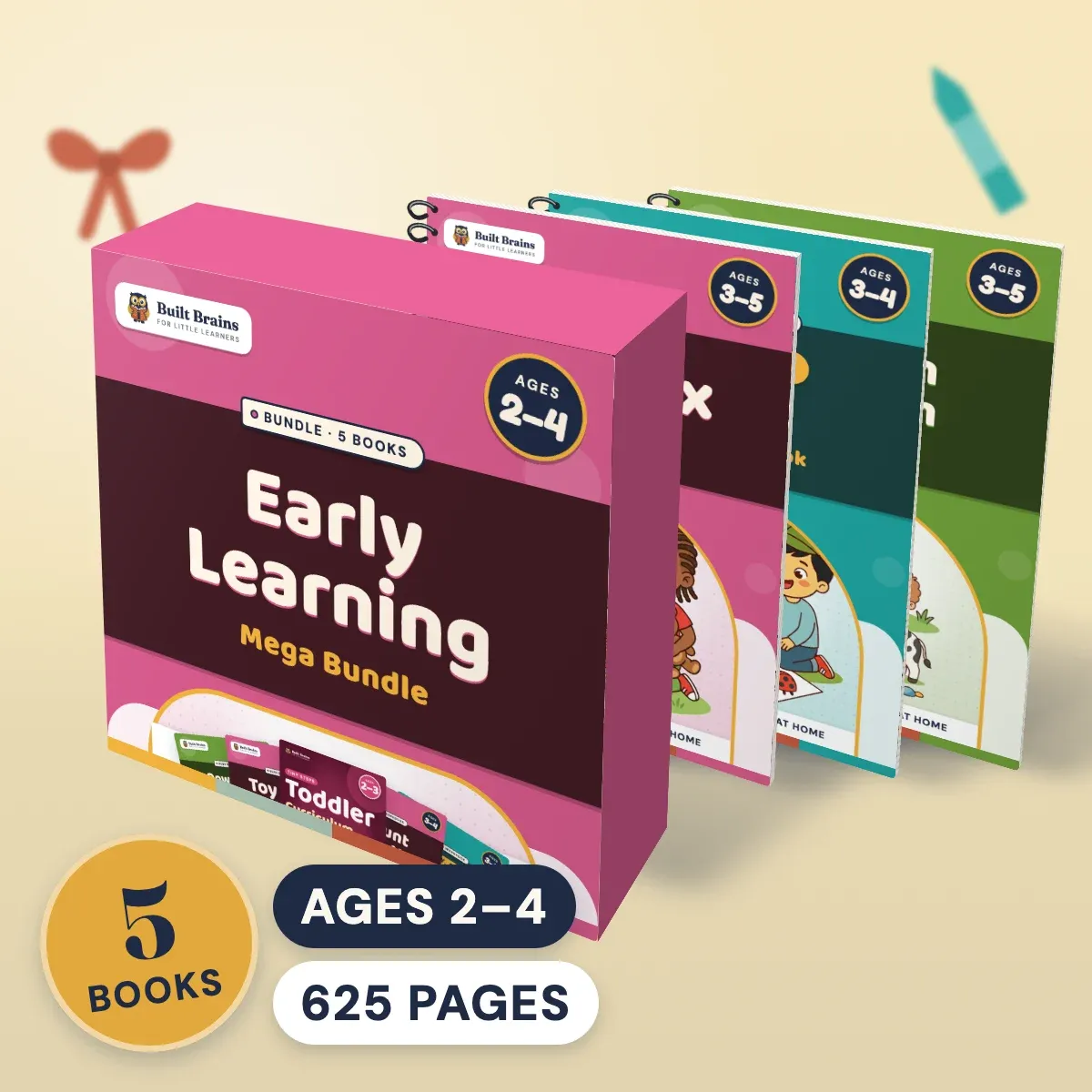
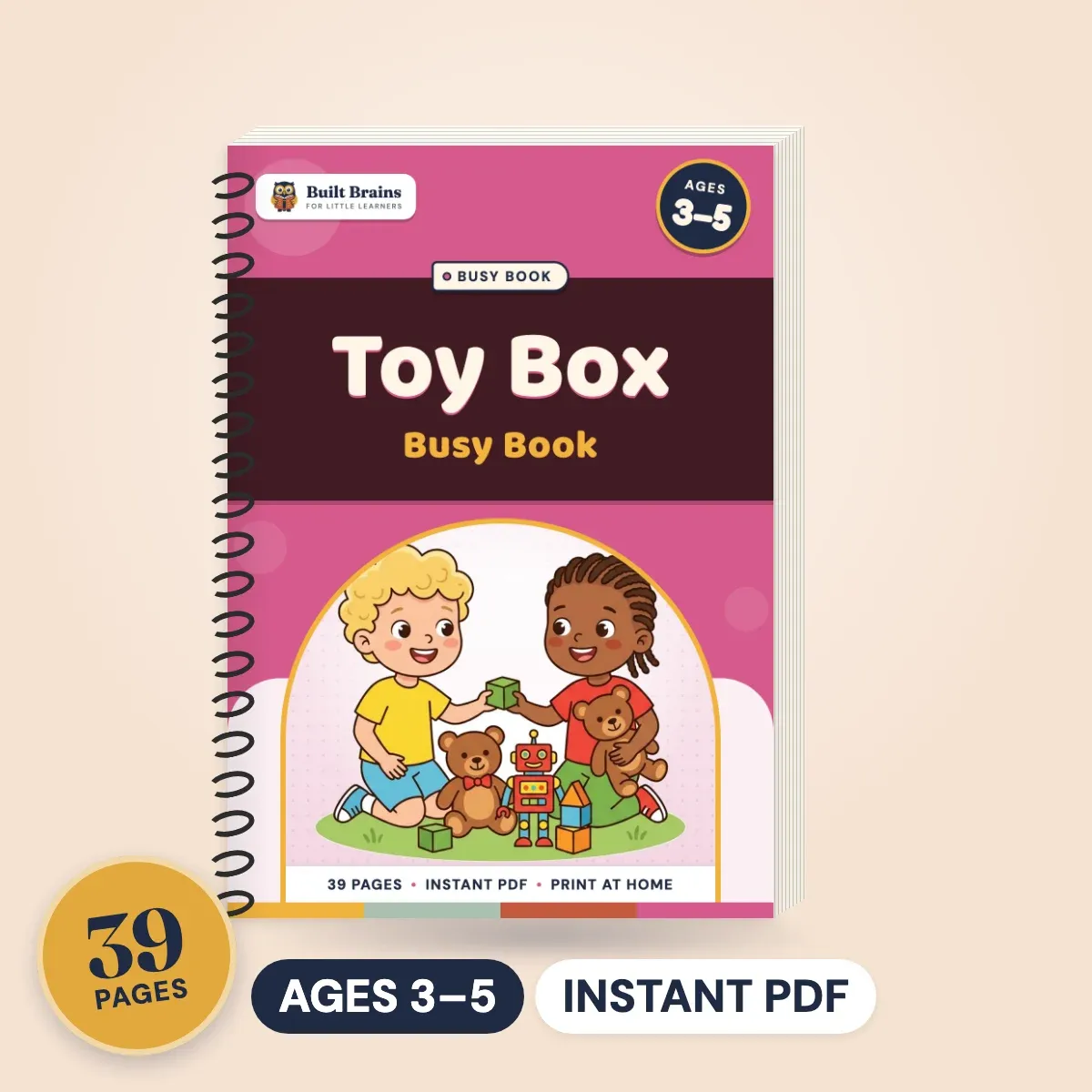
The Tiny Steps Toddler Curriculum is built for exactly this age: 36 playful weeks for 2 and 3 year olds, each with a color, a shape, a number and a theme, big simple pages for dot-dabbing, first tracing, matching and counting to 5, and first-word picture cards. It is meant to be used ten minutes at a time, with no pressure to finish a page.
What a 2 year old learns before turning 3
By 3, the CDC's checklist shows most children:
- Talking in short conversations with at least two back-and-forth turns
- Asking who, what, where and why questions
- Saying their first name when asked
- Talking well enough for others to understand most of the time
- Copying a circle when you show them how
- Stringing large beads or pasta
- Using a fork and putting on some clothes
- Noticing other children and joining them to play
That is a big year. You do not need to teach these in lessons; they grow out of the talking and play above. For what comes next, see what a 3 year old should know.
A week of easy play themes
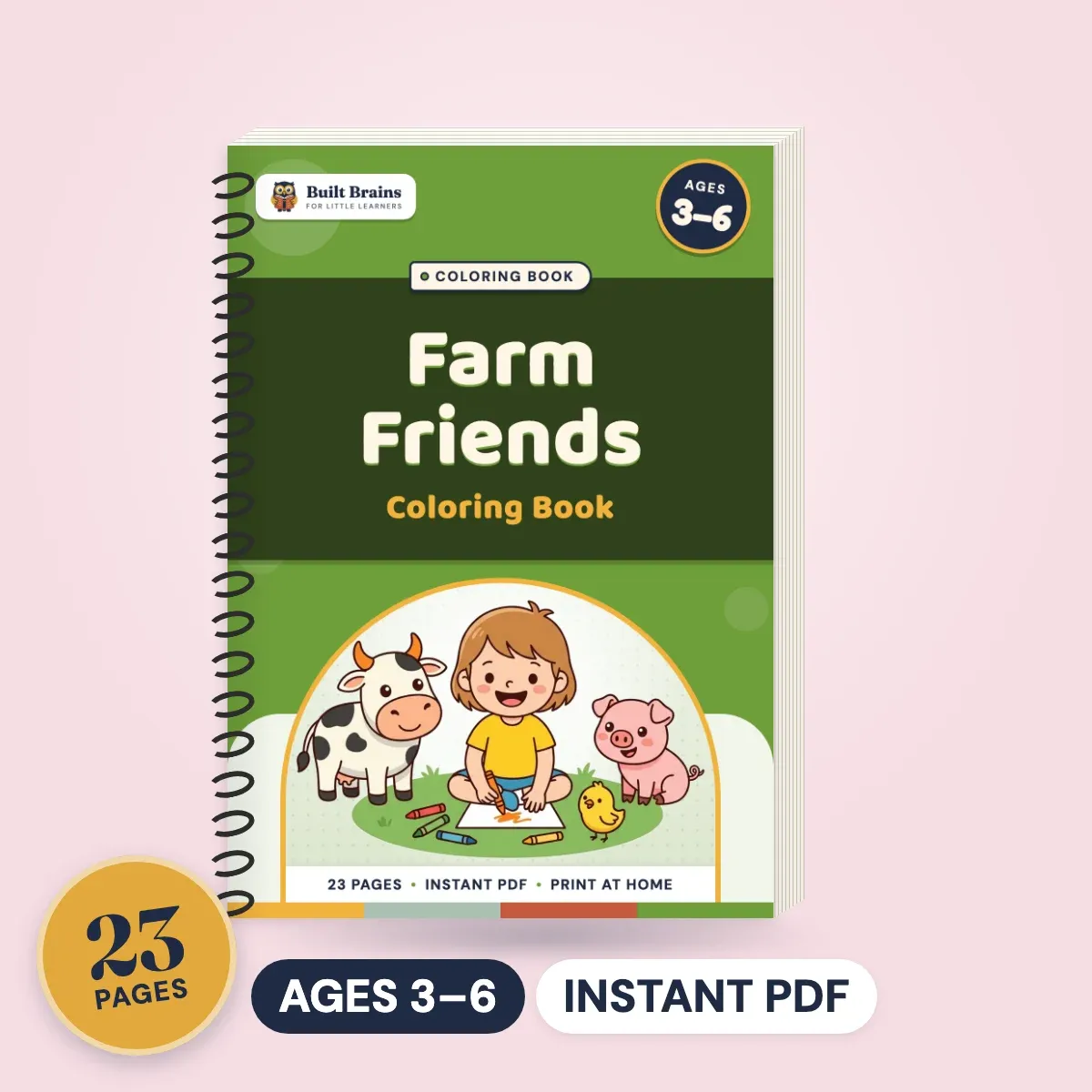
Many families like a loose theme to hang the week on: farm animals one week, things that go the next. Sing the songs, find the animals in books, and make the noises at bath time. Our toddler curriculum themes list has a full year of them. Older 2s who love coloring can enjoy big, simple pictures like the Farm Friends Coloring Book, made for little hands, with thick lines and big single animals.
When to talk to your pediatrician
The AAP recommends developmental screening at routine checkups at 9, 18 and 30 months, and autism screening at 18 and 24 months (healthychildren.org). You do not have to wait for a checkup, though. Talk to your pediatrician if your 2 year old:
- Is not using two-word phrases
- Does not follow simple instructions
- Does not copy actions or words
- Does not seem to know what everyday things, like a spoon or a phone, are for
- Walks only on their toes, or seems unsteady after months of walking
- Has lost words or skills they used to have
A concern is not a diagnosis. Often you will hear that your child is within the normal range. If not, early help through your state's early intervention program is free to evaluate for children under 3, and it works best when started early.
 New
Ages 2–3 · 495 pages
Tiny Steps Toddler Curriculum36 playful weeks of colors, shapes, numbers and first words
Sources
- HealthyChildren.org (AAP) – Developmental Milestones: 2 Year Olds: movement, hand, language and social milestones at 2 and when to talk to your pediatrician.
- HealthyChildren.org (AAP) – Language Development: 2 Year Olds: vocabulary growth across age 2 and reading together every day.
- HealthyChildren.org (AAP) – Milestones Matter: Your Child's Growth & Development By Age 5: CDC milestone checklists and the AAP's recommended screening ages.
Questions parents ask
By 2, most children say two words together, like "more milk," and use gestures such as nodding or blowing a kiss. Vocabulary grows fast over the next months: by about 30 months, most children say around 50 words. Children vary a lot, and a quiet child may understand just as much as a chatty one. Understanding matters as much as speaking.
No. Most children start to show they know one color, by pointing to the red crayon when asked, around 30 months, and naming several colors comes closer to 4. Letters and counting come later still. At 2, hearing color and number words in everyday talk is enough. Flashcards and drills are not needed and can turn learning into pressure.
Not really. Some 2 year olds say "one, two, three" like a song, which is lovely, but counting objects comes later. What builds early math at 2 is play: filling and emptying containers, stacking blocks, sorting toys by shape or color and hearing words like more, big and all gone. Counting a few things reliably usually comes around 3.
By 3, most children talk in short back-and-forth conversations, say their first name, ask who, what and why questions, copy a circle when shown, use a fork, put on some clothes and join other children in play. Some will reach these early in the year and some right at the end, which is normal.
Talk to your pediatrician if your 2 year old is not using two-word phrases, does not follow simple directions, does not copy words or actions, or has lost words they used to say. A hearing check is often the first step. Asking early is never a waste of time, and support works best when it starts early.
Reviewed by
Nursery Manager & Early Years Practitioner
Aisha Khan is a Nursery Manager and early language specialist who helps toddlers and preschoolers build foundational communication skills before starting formal schooling.
More about Aisha →