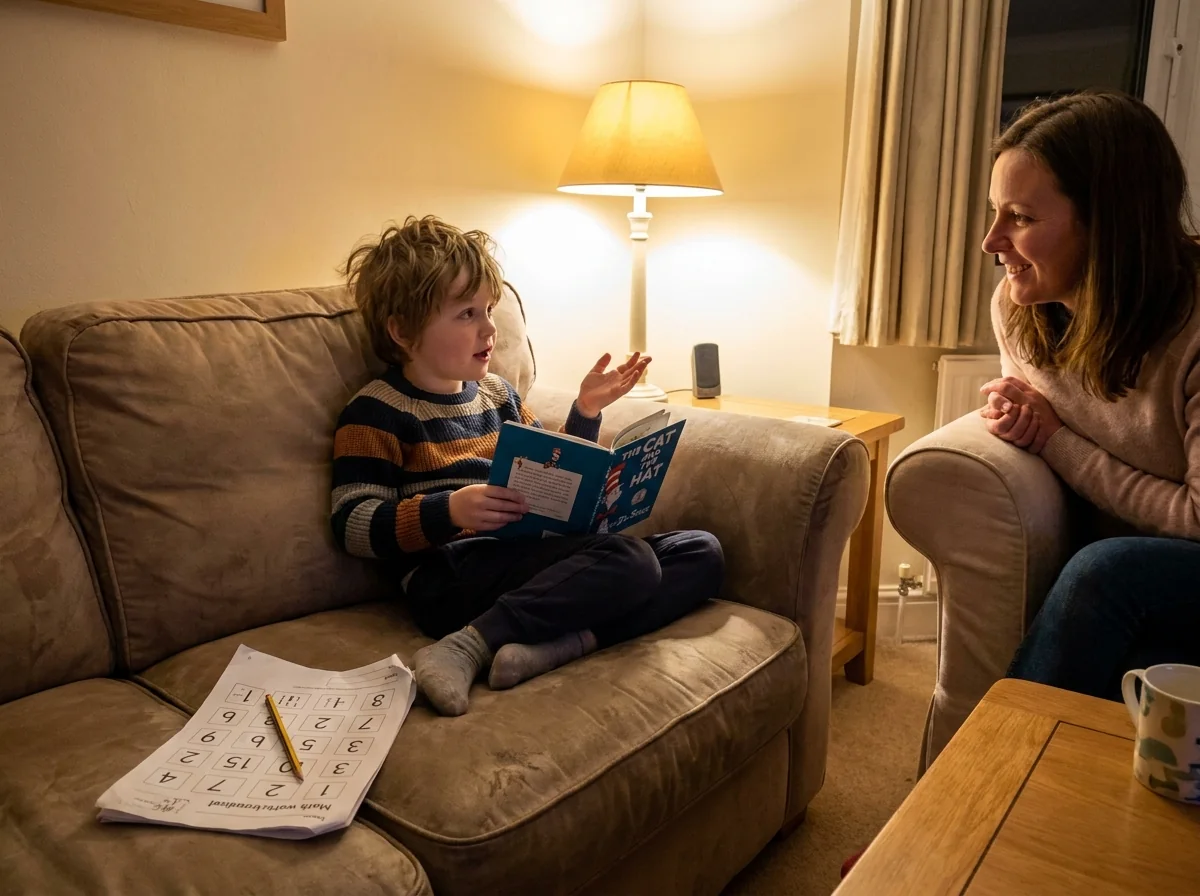
A 6 year old checklist, by area
The CDC's milestone checklists stop at age 5, so for 6 this list combines the AAP's 6-year checkup guidance (healthychildren.org) with the Common Core standards most US schools use for kindergarten and 1st grade. "Coming into 1st grade" is what kindergarten aims for; "during 1st grade" is what the year builds. Children vary a lot at 6, and a child with a summer birthday may be almost a year younger than a classmate.
Language
- Tells stories in full sentences, with the right tenses and pronouns
- Follows a teacher's directions given to the whole class
- During 1st grade: retells a story with the main events in order and asks questions to learn more
Reading
- Coming into 1st grade: knows the sound for each letter, hears and changes sounds in short words, and reads some common words by sight
- During 1st grade: reads words with sh, ch, th and ck, blends like st and fl, silent e words like cake, and vowel teams like ee and ai
- During 1st grade: reads simple books aloud with accuracy and expression
Writing
- Coming into 1st grade: writes their name, and writes simple words the way they sound
- During 1st grade: writes a few sentences about one topic, starting with a capital letter and ending with a period
Math
- Coming into 1st grade: counts to 100 by ones and tens, writes numbers to 20, adds and takes away within 10
- During 1st grade: adds and subtracts within 20, counts to 120, understands tens and ones, measures length and tells time to the half hour
Fine motor
- Holds a pencil with a mature grip and forms most letters with control
- Cuts out shapes with curves and corners, and colors mostly inside the lines
Gross motor
- Balances on one foot, hops and skips
- Is learning skills like catching a small ball, riding a bike or swimming
Social-emotional
- Plays respectfully with other children and is learning to show kindness
- Has bigger feelings about school and friendships, and can start to talk about them
- Copes with losing a game more often than not
Self-care
- Gets dressed alone, including most fastenings
- Is learning their home address and a parent's phone number
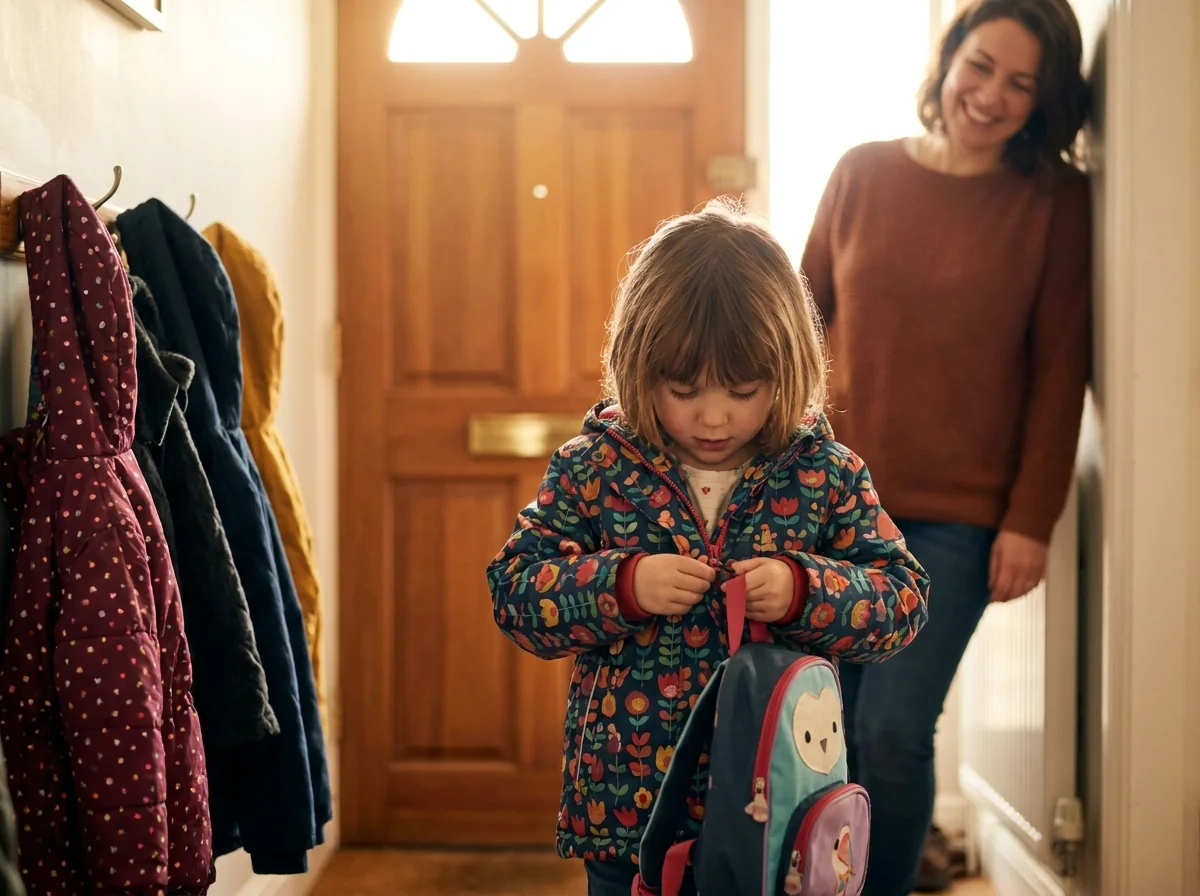
- Packs and unpacks their own school bag with reminders
What should a 6 year old know about reading?
Reading is the biggest academic change at 6. The Common Core reading foundations for 1st grade (Common Core, Reading: Foundational Skills) set out a clear order, and most phonics programs follow something close to it:
- Short vowel words (CVC): cat, pig, sun. If these are still shaky, start here. Our CVC words list has words grouped by vowel.
- Digraphs: two letters, one sound. ship, chin, that, duck.
- Blends: two sounds said quickly. stop, flag, hand, milk.
- Silent e: cap becomes cape, kit becomes kite.
- Vowel teams: rain, feet, boat.
- Two-syllable words: rabbit, sunset, picnic.
- Tricky words: the, said, was, of, and others that do not follow the rules yet.
Alongside decoding, 1st graders work on fluency: reading a simple page smoothly enough to understand it. A child who reads every word correctly but very slowly needs more practice on familiar books, not harder ones.
How to help at home
- Ten minutes a day, out loud. Your child reads to you; you read to them after.
- Let them sound it out. Wait before jumping in. If they're stuck, say, "Tap the sounds."
- Reread favorites. Rereading builds speed and confidence.
- Talk about the story. "Why did he do that? What do you think happens next?"
If blending is still hard, go back a step with CVC Word Quest: say each picture slowly, write one sound per box, then read the word. The kindergarten sight words list shows the common words most children meet first.
What should a 6 year old know in math?
Math at 6 moves from counting things to understanding how numbers are built. The table shows the kindergarten goals most children bring into 1st grade and the 1st grade goals from the Common Core (Common Core, Grade 1 Number & Operations in Base Ten).
| Skill | Coming into 1st grade | By the end of 1st grade |
|---|---|---|
| Counting | To 100 by ones and tens | To 120, starting from any number |
| Adding and subtracting | Within 10, with objects or fingers | Within 20; facts within 10 from memory |
| Place value | Teen numbers as ten and some ones | Two-digit numbers as tens and ones; 10 more and 10 less in your head |
| Bigger sums | Not yet | A two-digit number plus a one-digit number or a multiple of 10 |
| Measurement and time | Compares which is longer or heavier | Measures length with units; tells time to the hour and half hour |
| Shapes and fractions | Names flat and solid shapes | Splits circles and rectangles into halves and fourths |
Addition and subtraction within 20, with the facts within 10 known quickly, are the heart of the year (Common Core, Grade 1 Operations & Algebraic Thinking).
Easy ways to practice
- Make ten. Use ten pennies or blocks: how many more to make ten? Facts that make ten are the base of 1st grade adding.
- Bundles of ten. Rubber-band craft sticks into tens. Show 34 as three bundles and four sticks.
- Clock check. Ask what time it is at every o'clock and half past.
- Measure the house. How many paper clips long is a spoon? How many footsteps across the kitchen?
- Number of the day. Write a number and ask for 10 more, 10 less and one way to make it.
Writing at 6
Most 6 year olds start the year writing a sentence or two with some sounded-out spelling, like "I wnt to the prk." That is normal and a good sign: it shows they hear the sounds. Across 1st grade, children write short pieces that tell a story in order, give an opinion with a reason, or share facts about a topic.
Help by giving writing a real reason: a shopping list, a card for a grandparent, a sign for a bedroom door, a sentence about the weekend. Praise the ideas first, then fix one thing, such as a capital letter or a period, not every mistake.
A 30 to 45 minute day at home
Whether your child is in school or homeschooled, a short daily rhythm keeps 1st grade skills moving:
- Warm-up page (5 minutes): a quick puzzle or fix-it sentence.
- Reading aloud (10 to 15 minutes): your child reads, then you read.
- Math game (10 minutes): one of the ideas above.
- Writing (5 to 10 minutes): one real sentence or a short list.
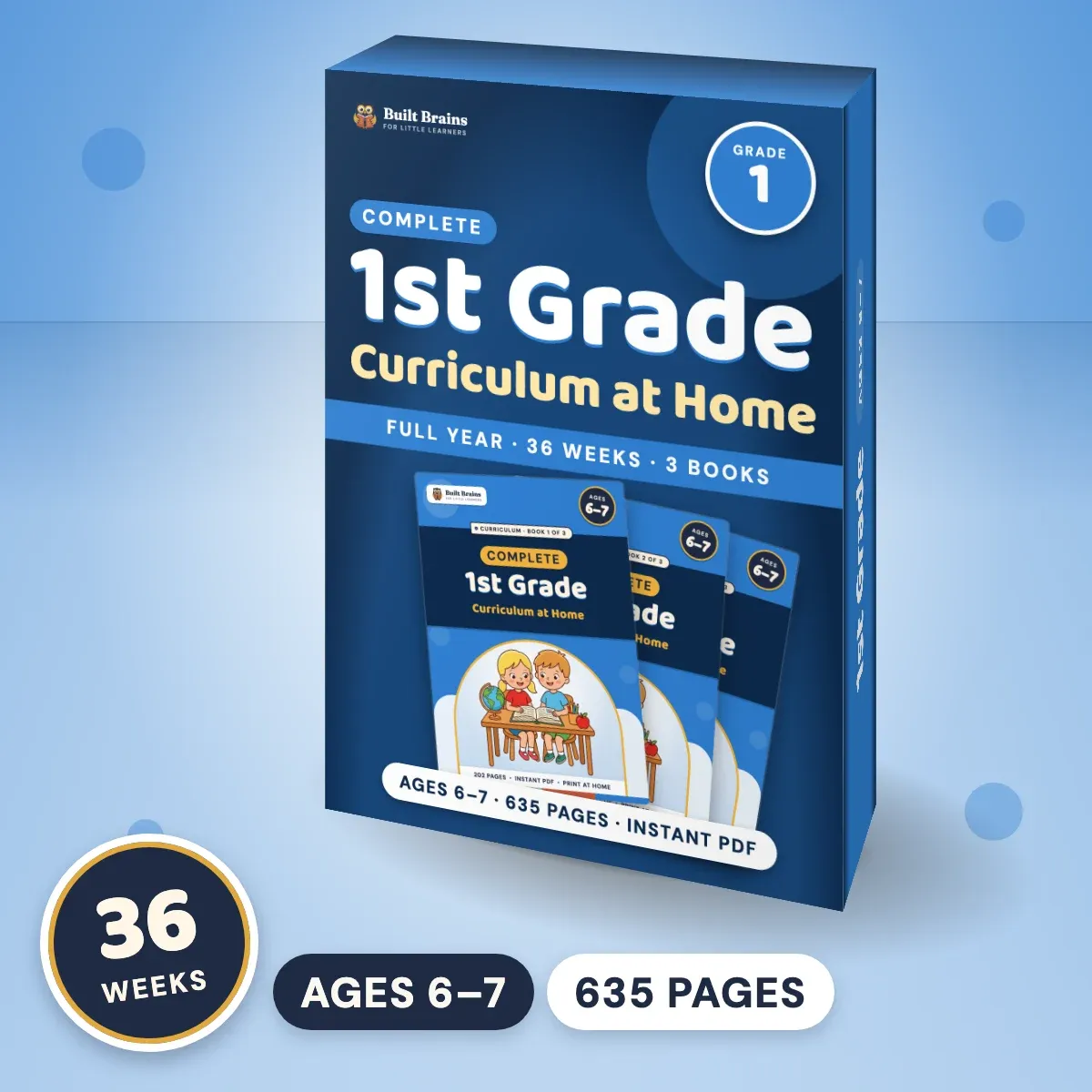
For homeschoolers, the Complete 1st Grade Curriculum at Home is a 36-week plan in about 45 minutes a day, with phonics from short vowels to vowel teams, a weekly spelling list, a reading passage with questions every week, and 1st grade math including facts to 20, place value, time, money and fractions. The Good Morning! 1st Grade Warm-Ups give a different short page for each of 180 school days. See what to teach in 1st grade for a month-by-month overview, and the 1st grade homeschool curriculum guide for planning a full year.
When to talk to your pediatrician or teacher
The AAP's 6-year checkup includes questions about school, friends and feelings, so it is a natural time to raise anything on your mind. Talk to your child's teacher and pediatrician if your 6 year old:
- Still finds it very hard to link letters with their sounds
- Cannot blend three sounds into a word, even with practice
- Is very hard to understand when talking, or struggles to follow directions
- Is very upset about school, or has stopped wanting to go
- Has lost skills they used to have
Ask about a hearing and vision check too, since both affect reading. Raising a question is not a diagnosis; it simply gets the right support in place sooner. Public schools can evaluate children for extra help at no cost.
 Save $20
4 books · 866 pages
The Complete 1st Grade BundleCurriculum, warm-ups, reading journal and cursive
Sources
- HealthyChildren.org (AAP) – Your Checkup Checklist: 6 Years Old: storytelling, movement, following directions, play and feelings at 6.
- Common Core State Standards – Grade 1 Reading: Foundational Skills: 1st grade phonics, word recognition and fluency goals.
- Common Core State Standards – Grade 1 Number & Operations in Base Ten: counting to 120, tens and ones, and adding within 100.
- Common Core State Standards – Grade 1 Operations & Algebraic Thinking: adding and subtracting within 20 and fluency within 10.
Questions parents ask
Most 6 year olds are reading simple words and short sentences, and 1st grade is the year that turns this into real reading. Expect sounding out at the start of the year and smoother reading of simple books by the end. Children vary a lot at 6; steady progress through the year matters more than where they start.
Kindergarten aims for counting to 100 by ones and tens, so many 6 year olds arrive in 1st grade able to count to 100, sometimes with a slip at the turns like 79 to 80. By the end of 1st grade the standard is counting to 120, starting from any number, and reading and writing those numbers.
Coming into 1st grade, most children can add and take away within 10 using fingers or objects. During 1st grade they learn to add and subtract within 20, know the facts within 10 quickly, understand tens and ones, add a one-digit number to a two-digit number, measure length and tell time to the hour and half hour.
There is no single official number. Most kindergarten programs teach a few dozen common words, and 1st grade keeps adding to them. More useful than a count is whether your child can sound out regular words and recognize the common tricky ones, such as said, was and the, without stopping, so they can enjoy simple books.
Not automatically, since children start reading at different times. Talk to the teacher and your pediatrician if your child still struggles to link letters with sounds, cannot blend three sounds into a word, avoids books, or has a family history of reading difficulty. Getting hearing and vision checked is a sensible first step, and early help works best.

Reviewed by
Year 1 Teacher & KS1 Phase Lead
Tom Evans is a Key Stage 1 Phase Lead dedicated to smoothing the transition from EYFS play-based learning to structured Year 1 curriculum.
More about Tom →