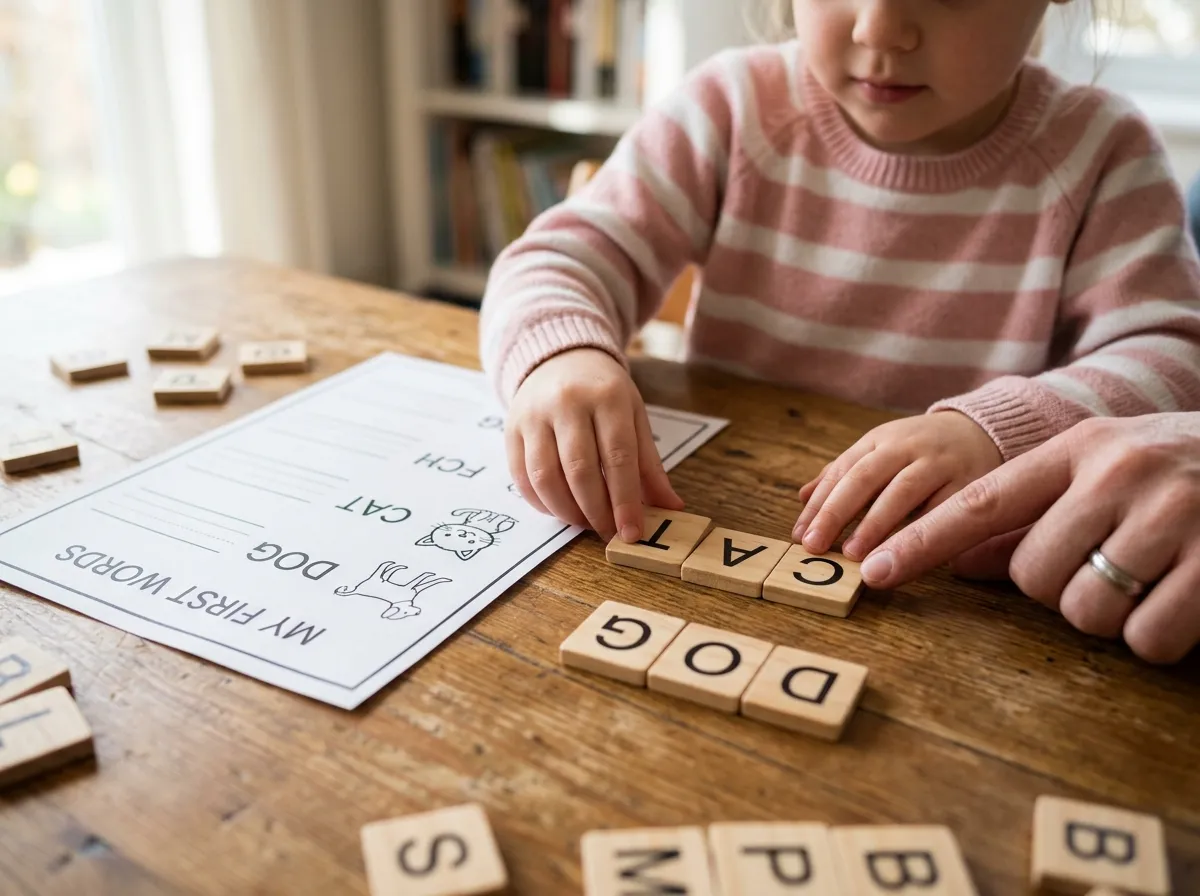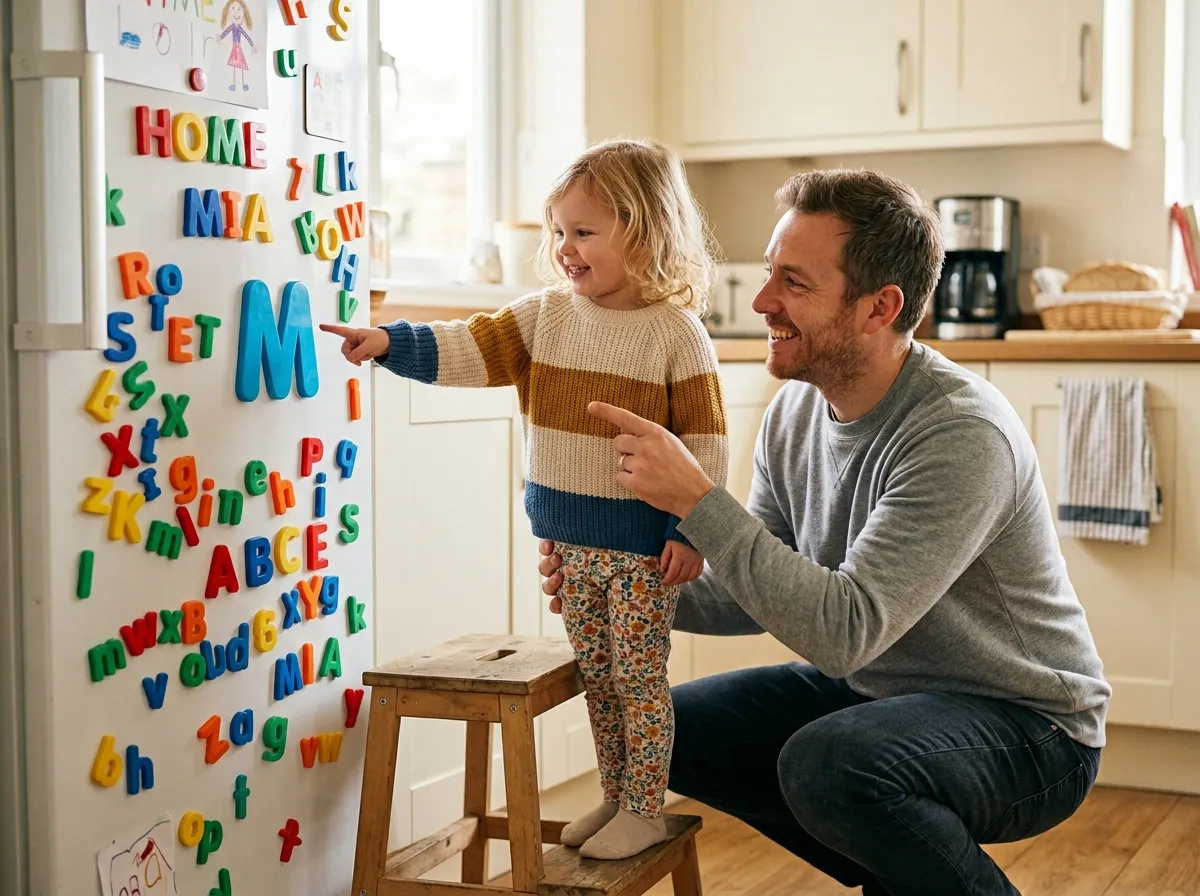
What are sight words?
“Sight words” is used in two ways, and it helps to know both:
- High-frequency words: the words that turn up most often in text. A small number of words make up a large share of what children read, so knowing them makes reading much smoother.
- Irregular or tricky words: words that don’t follow the phonics your child knows yet, like said, of or was.
The goal in the end is for a child to read these words instantly, “on sight,” without stopping to sound them out. That frees their attention for the harder words and for understanding the story.
Two word lists come up again and again:
- The Dolch list, compiled by Edward Dolch in the 1930s and 1940s from children’s books of that time. Its 220 “service words” are grouped by level: pre-primer (40 words), primer (52), first grade, second grade and third grade, plus a separate list of 95 common nouns.
- The Fry list, developed by Edward Fry, ranks 1,000 common words in order of how often they appear. The first 100 Fry words are often used in kindergarten and first grade.
The two lists overlap heavily, so it doesn’t matter much which one your child’s school uses.
Kindergarten sight words list: 40 words to start with
This list draws on the Dolch pre-primer and primer levels and the first Fry words. Words are grouped so the most useful ones come first, and each group lets your child read real sentences quickly.
Group 1
- I
- a
- the
- is
- see
- can
- we
- to
- and
- like
With group 1 alone your child can read “I can see the cat” and “We like to run.”
Group 2
- go
- my
- it
- in
- me
- you
- up
- look
- at
- am
Group 3
- he
- she
- was
- said
- for
- are
- have
- they
- of
- this
Group 4
- here
- come
- play
- no
- yes
- what
- where
- do
- with
- little
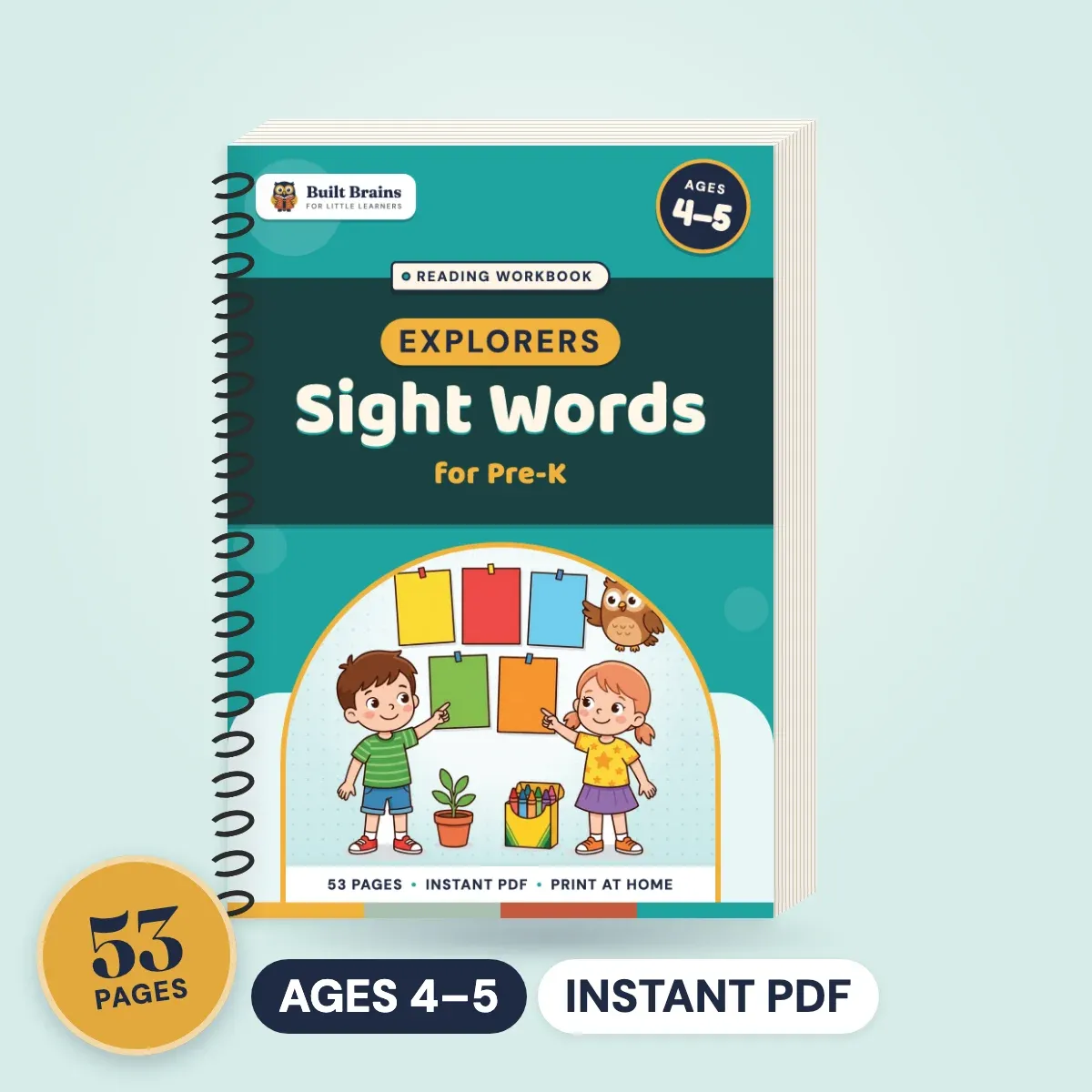
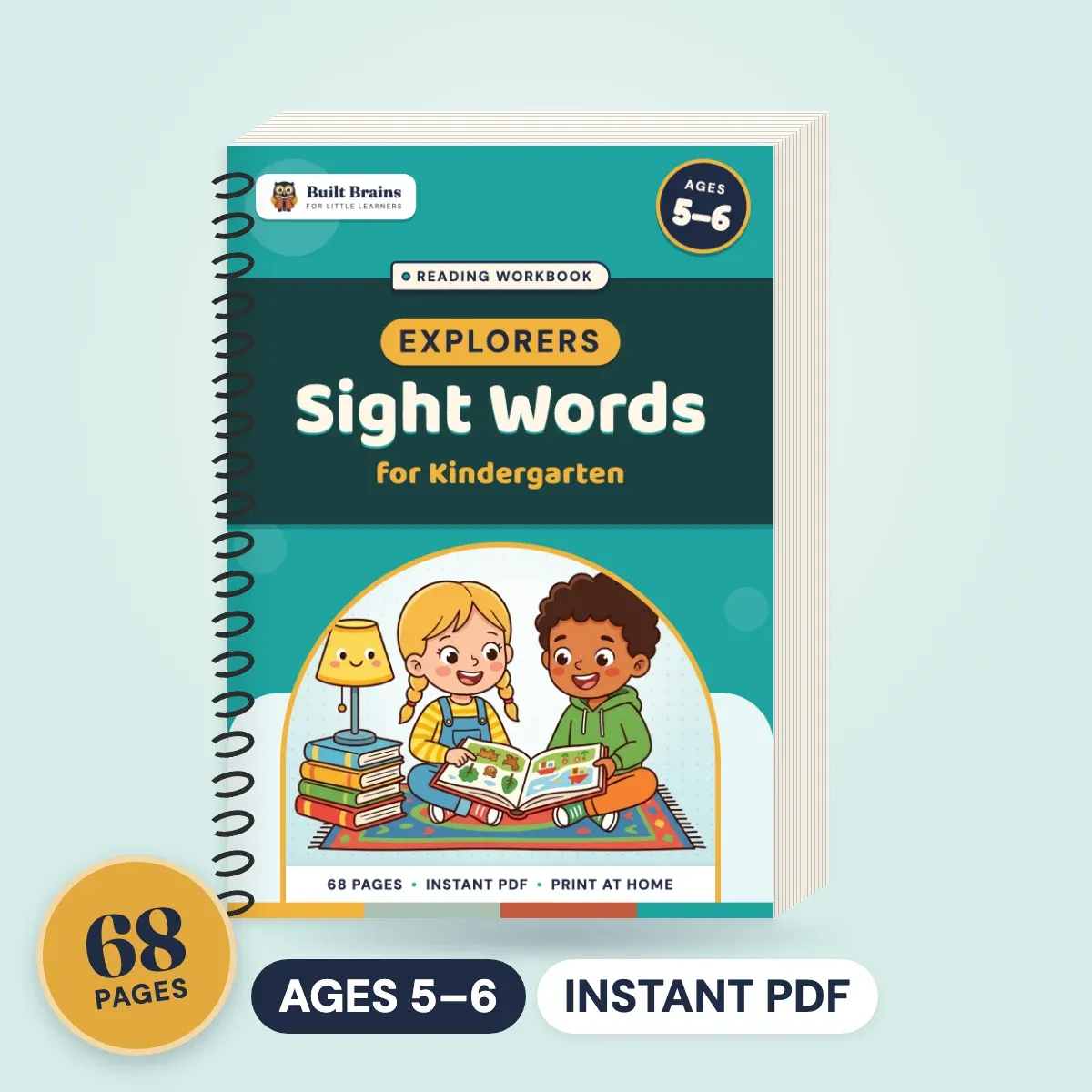
If your child’s school sends home a list, use theirs first and fill in from this one. For the full Dolch levels in order, Sight Word Explorers: Pre-K covers the 40 pre-primer words and Sight Word Explorers: Kindergarten covers the 52 primer words, one page per word with read, color, trace, write and find activities.
Heart words: teaching sight words with phonics
Older advice was to memorize sight words as whole shapes with flashcards. Many teachers now use a “heart words” approach instead, which connects sight words to the phonics your child is already learning. It’s quicker and it sticks better.
The idea: most of a sight word follows normal letter-sound rules. Only one part is tricky, and that part gets a heart because your child has to learn it “by heart.”
- Say the word and use it in a sentence: “Said. Mom said hello.”
- Say each sound out loud and count them on fingers: /s/ /e/ /d/. Three sounds.
- Write the word, one letter or letter group under each sound: s, ai, d.
- Ask: “Which parts say what we expect?” The s and the d do.
- Draw a small heart over ai. “This part is tricky. It says /e/ here. We learn it by heart.”
- Read it, write it, read it again.
More examples: in was, the w is regular, s saying /z/ is common, and the a (which says /u/) is the tricky part. In of, both letters are tricky, since o says /u/ and f says /v/. In the, th is a regular sound your child will learn, and e is the tricky part.
Plenty of sight words aren’t tricky at all. Can, it, in, up, at, and, am and yes can all be sounded out once your child knows those letters. Let them decode these. If your child is still learning letter sounds, our guide on how to teach letter sounds covers that first step.
How to teach sight words in 5 minutes a day
Short daily practice works far better than long sessions. Pick 2 or 3 new words a week and keep reviewing the old ones.
- Review (1 minute). Flip through the words your child already knows. Quick wins build confidence.
- New word (2 minutes). Use the heart words steps: say it, tap the sounds, write it, heart the tricky part.
- Find it (1 minute). Hunt for the word in a picture book or on a cereal box.
- Use it (1 minute). Read or build a short sentence together using the word.
Move a word to the “known” pile when your child reads it instantly on three different days. If they hesitate or sound it out every time, keep it in the practice pile.
Sight word games for kindergarten
- Sight word Go Fish. Make two cards for each word and play the usual way. Your child reads each word as they ask for it.
- Flashlight read. Tape words around a dark room and read each one as the flashlight finds it.
- Word jump. Write words in chalk outside. Call a word; your child jumps to it.
- Rainbow writing. Write a word in pencil, then trace over it in three different colors, saying the letters each time.
- Build it. Spell the word with magnetic letters, mix them up, and rebuild.
- Silly sentences. Mix sight word cards with picture cards to make sentences like “I see a pig in my bed.”
Printed practice gives a quiet, steady routine alongside games. The Kindergarten Warm-Ups include a word of the day.
How many sight words should a kindergartener know?
There isn’t one national number. Expectations vary a lot between schools, states and curricula. Some kindergarten programs focus on a couple of dozen words, and others work through many more by the end of the year. Your child’s teacher is the best source for your school’s list and goal.
More useful than the count is how the words are used. A child who reads 25 words instantly and can blend simple words like hop and sit is in better shape than one who has memorized 80 flashcards but can’t sound out a new word. Sight words support phonics; they don’t replace it.
As a rough guide by stage:
- Pre-K (ages 4 to 5): a handful of the most common words, like I, a, the, see and can, once letter sounds are well underway.
- Kindergarten (ages 5 to 6): steady progress through a list like the one above, a few words a week, alongside daily phonics. The kindergarten page has books for this stage.
- First grade: building to the rest of the common high-frequency words and reading them in real books.
If you’re teaching kindergarten at home, our how to homeschool kindergarten guide shows how sight words fit into a full reading plan.
Common sight word mistakes to avoid
- Too many words at once. Ten new words a week often means none of them stick.
- Only flashcards. Words need to be read in sentences and books, not just drilled.
- Memorizing words your child could decode. Let them sound out regular words like can and up.
- Guessing from the picture. Gently point back to the word: “Look at the letters. What does it start with?”
- Skipping review. Old words fade quickly without a daily minute of revisiting.
Questions parents ask
Start with words that let your child read sentences quickly: I, a, the, is, see, can, we, to, and, like. With those and a few simple nouns, your child can read “I can see the dog.” Then add go, my, it, in, me, you, up, look, at and am.
Dolch sight words are 220 “service words” plus 95 nouns, compiled from children’s books in the 1930s and 1940s and grouped by grade level. Fry words are 1,000 words ranked by how often they appear in text. The lists overlap a great deal, so either works well for kindergarten.
Only the tricky parts. Many sight words can be sounded out, so let your child decode them. For irregular words like said or was, use the heart words approach: sound out the regular letters and learn just the unusual part by heart. This builds lasting memory better than memorizing word shapes.
It depends on the school. Some kindergarten programs aim for a few dozen words and others go further, so ask your child’s teacher for their list. What matters most is reading those words instantly and in sentences, alongside being able to sound out simple new words with phonics.
Teach fewer words at once, two or three a week, and review old ones daily. Use the heart words method so the word connects to sounds your child knows. Practice in real sentences and books, not only flashcards, and use active games like word jump or flashlight reading to add movement.