The short answer: map it, then play with it
Practicing sight words well comes down to two habits:
- Teach each new word by its sounds, not by its shape. Say it, count the sounds, match them to the letters, and point out the one part that does not follow the rules.
- Then repeat it in small, varied doses: a minute of review, a quick game, a word hunt in a real book. Five minutes a day, most days.
That is it. Everything below is detail: why the sound step matters, a routine you can run before breakfast, 12 games sorted by how long they take, and a plan for the word that refuses to stick.
Orthographic mapping, in parent terms
Reading researchers call the process by which a word becomes instantly recognizable orthographic mapping. The name is technical, but the idea is simple: the brain stores a word for instant recall by linking the sounds it hears to the letters it sees. Once that link is made, usually after a handful of good exposures, the word is "in," and your child reads it without thinking.
Whole-word flash card drill skips the link. The child learns what the word looks like, roughly, and guesses from the first letter or the length. That works for a few dozen words and then collapses, which is why some children know 50 cards in April and 20 in September. Teaching the sounds first builds the connection the brain actually uses (Reading Rockets – A New Model for Teaching High-Frequency Words). The What Works Clearinghouse practice guide on foundational reading skills makes the same point: children should learn to recognize words by analyzing their parts, not by memorizing them whole (IES – Foundational Skills to Support Reading for Understanding in K–3).
Here is the mapping step for any word, in under two minutes:
- Say the word and use it: "Said. Grandma said yes."
- Hear the sounds. Tap a finger for each: /s/ /e/ /d/. Three sounds.
- Match sounds to letters. Write or show the word with one letter group under each sound: s, ai, d.
- Name the tricky part. "s and d do what we expect. The a-i says /e/ here. That is the part to remember." Many families draw a small heart over it; the kindergarten sight words list walks through that heart words routine.
- Read it, write it, read it again.
Plenty of so-called sight words are not tricky at all. Can, it, in, up, and, am, had, him and them can be sounded out, so let your child decode them. Only the odd parts of words like the, of, was, said, you and come need the "remember this" treatment. If your child is still learning letter sounds, start with how to teach letter sounds; sight words have nothing to attach to until the sounds are there.
A 5-minute daily sight word routine
Short and daily beats long and weekly. Keep two piles of cards: known (read instantly three days in a row) and working (two to five words at a time).
| Minute | What you do |
|---|---|
| 1 | Flash the known pile fast. Any hesitation sends the card back to the working pile. |
| 2–3 | Map one word from the working pile using the five steps above, or review yesterday's mapping. |
| 4 | Play one two-minute game from the list below with the working words. |
| 5 | Find the word in a real book, on a sign or in the note you wrote for lunch. |
Add new words only when the working pile drops to two. For most 5-year-olds that means two or three new words a week; for a 4-year-old, one or two.
12 sight word games (with minutes and materials)
Games are the repetition part of practice, not the teaching part. Map the word first, then play. Each game below lists the time it takes and what you need; most use nothing more than index cards and a marker.
Quick games (2–3 minutes)
- Swat it (2 min; cards, fly swatter). Spread four to six cards on the floor or table. Call a word; your child swats it and reads it aloud. Swap roles so they call and you swat, and make a few "mistakes" for them to catch.
- Speed stack (2 min; cards, timer). How many known-pile words can they read correctly in 60 seconds? Write the number on the fridge and beat it tomorrow. Only use words that have already been mapped.
- Mystery word (3 min; whiteboard). Write the word one letter at a time, pausing after each. They guess as early as they dare. Good for look-alikes such as the, they and them.
- Password door (ongoing; sticky note). One working word on the door they use most. Reading it is the password to go through.
Movement games (5 minutes)
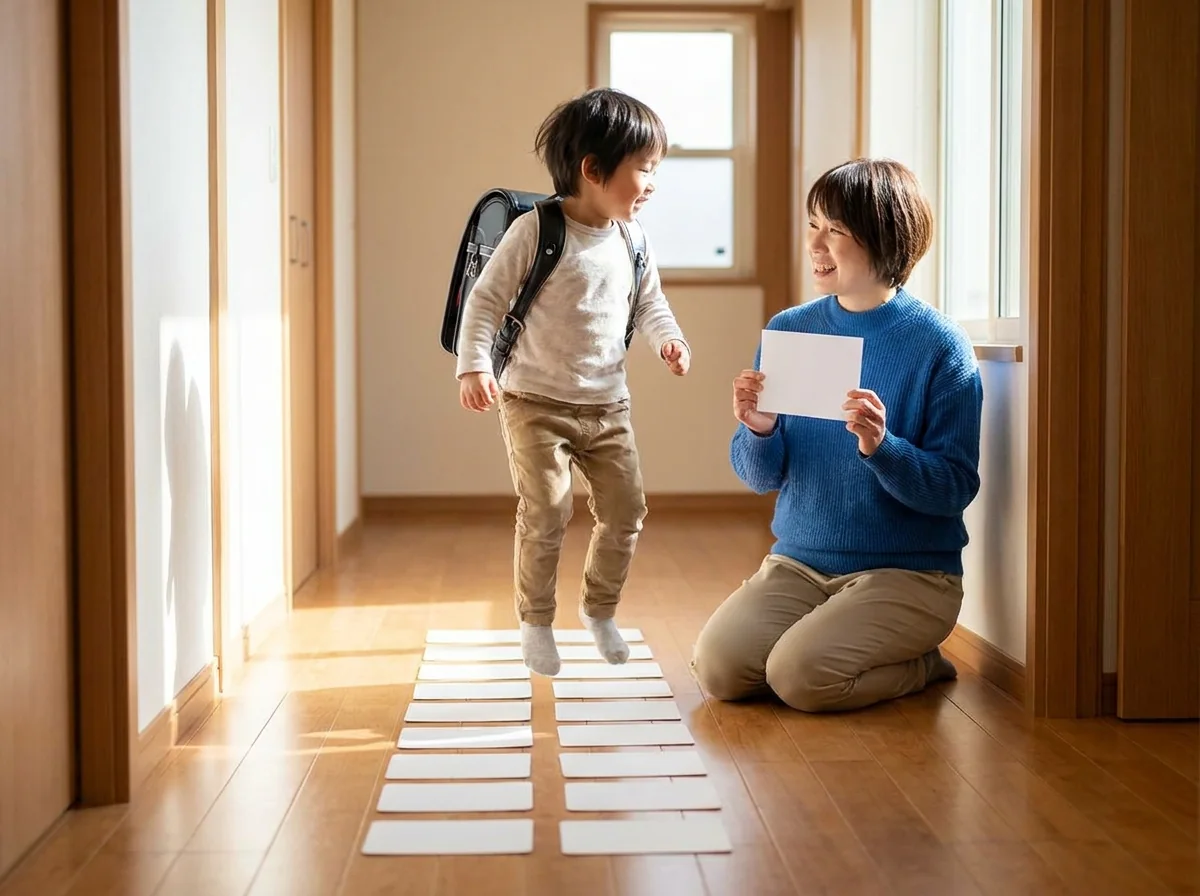
- Sight word hopscotch (5 min; chalk). Words instead of numbers in the squares. They read each word they land on; then you call a word and they hop to it.
- Parking lot (5 min; cards, toy cars). Lay cards out as parking spaces. "Park the blue car on said." They read the word as they park.
- Word toss (5 min; cards, bean bag or rolled sock). Cards face up on the floor; they throw, read where it lands, and keep the card if correct.
- Scavenger hunt (5 min; cards, tape). Tape eight cards around the house at child height. They bring each one back only after reading it to you.
Writing and reading games (5–10 minutes)
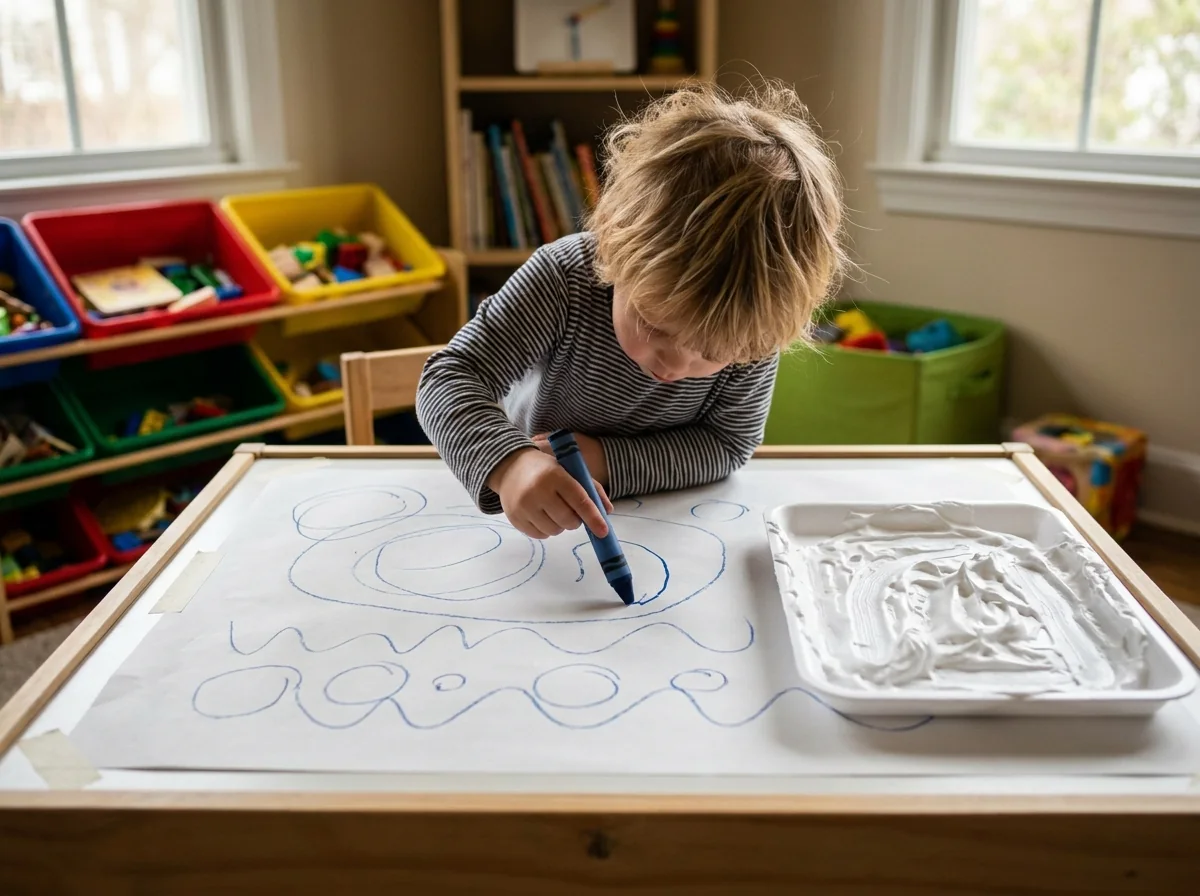
- Salt tray writing (5 min; tray, a layer of salt or sand). Say each sound as they write the word with a finger, then shake and write again.
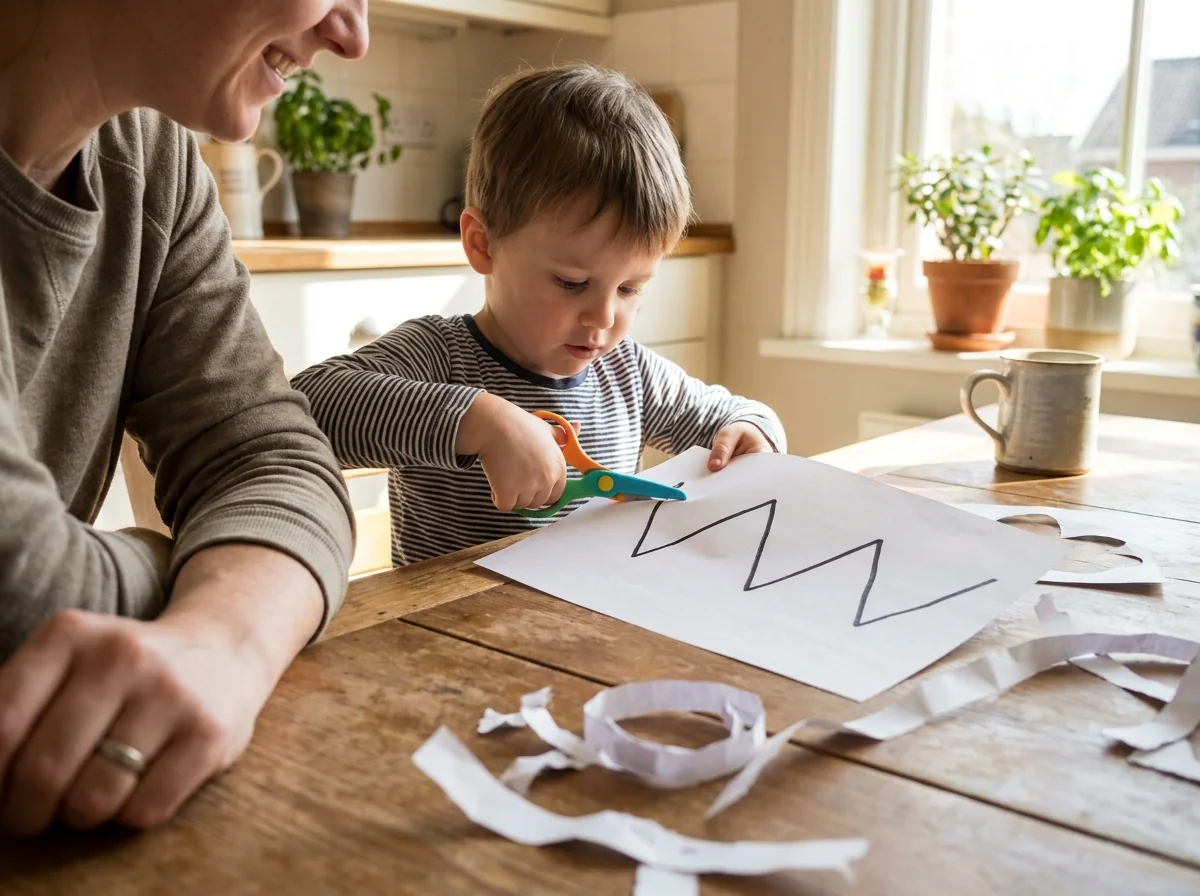
- Cut-up sentence (5 min; sentence strip, scissors). Write "We can go to the park" on a strip, cut it into words, mix them, and have your child rebuild and read it. Then swap one word to make a new sentence.
- Sight word bingo (10 min; paper grids, counters). Three-by-three grids with working and known words. You call, they cover. Have them read the whole winning line back to you.
- Book detective (3 min; any picture book). Pick one word before you read. Each time it appears, they say it and you keep the tally. Ten finds earns a sticker.
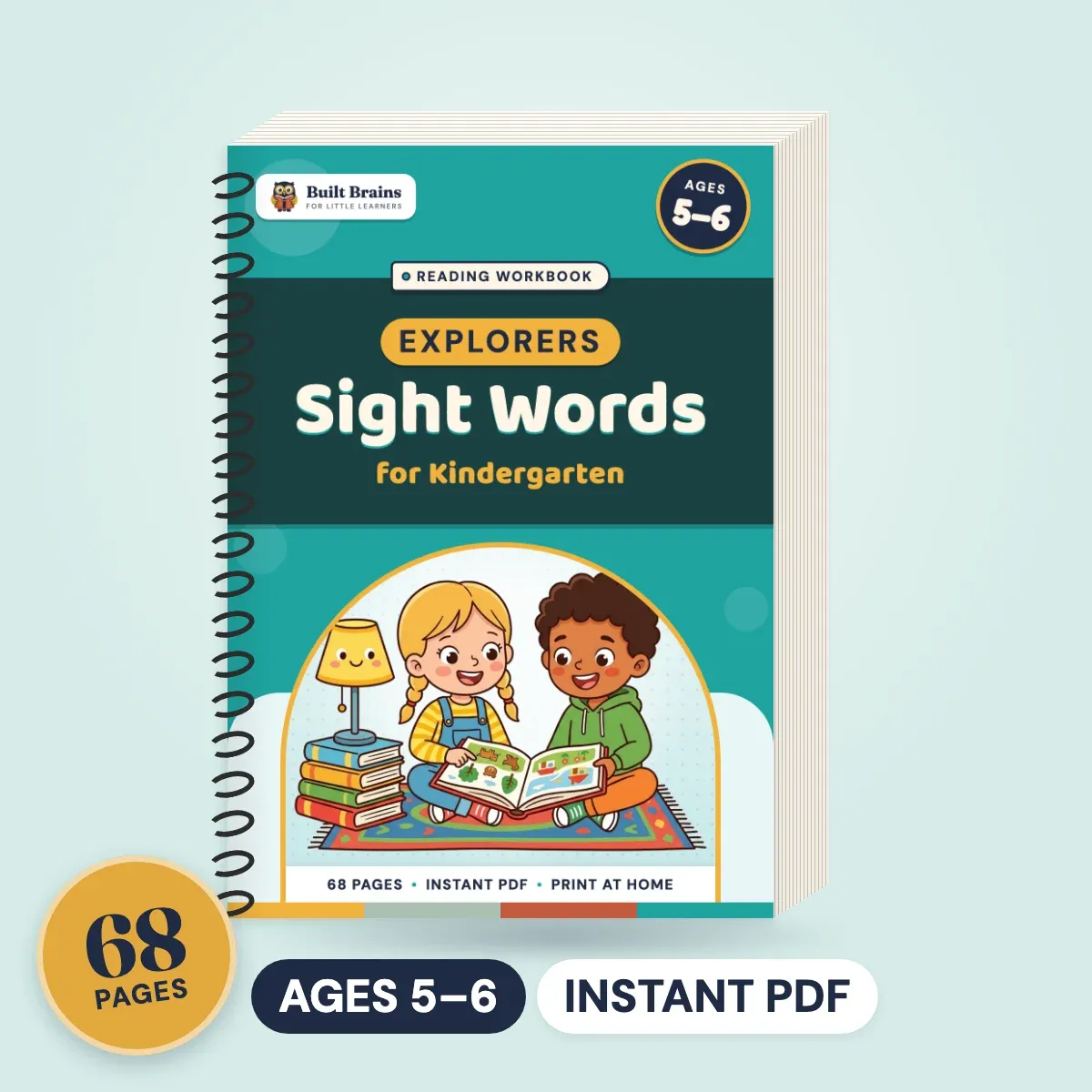
Printed practice sits alongside the games. Sight Word Explorers: Kindergarten gives each of the 52 primer words its own read, color, trace, write and find page with a review page after every four words, and Sight Word Explorers: Pre-K does the same for the 40 pre-primer words. For more printable ideas, see sight words worksheets ideas. The Florida Center for Reading Research also publishes free, printable word work games for kindergarten and 1st grade (FCRR – Student Center Activities).
What to do when a word won't stick
Every child has a few. Was, said, of, they, were, where and because are the usual suspects. When a word has been in the working pile for three weeks:
- Re-map it from scratch. Often the first mapping was rushed. Go slowly: sounds, letters, tricky part. Say the tricky part out loud every time they meet the word for a week: "w-a-s, the a says /u/."
- Give it a sentence it owns. "Where is my shoe?" Said with a shrug, every time. The sentence becomes the hook.
- Separate the look-alikes. If they confuse was and saw, retire saw for two weeks and practice only was. Then bring saw back and read them side by side.
- Make it bigger. Write it on the sidewalk in chalk, trace it on their back, build it from pasta. Larger movements give the memory another route in.
- Check the pile size. If the working pile has crept to seven or eight words, nothing will stick. Cut back to three.
- Check they can hear it. A child who cannot tell /e/ from /i/ in spoken words will struggle to map bed and bid. A week of listening games ("which word starts with /w/, was or saw?") helps more than more cards.
If a child is still guessing most words from the first letter after several months of short daily practice, or struggles to hear sounds in spoken words at all, mention it to their teacher or pediatrician. Early support makes a real difference.
Practice by age: pre-K, kindergarten, 1st grade
- Pre-K (4–5): 1–2 new words a week, 3–5 minutes a day, movement games only. Stop while it is still fun.
- Kindergarten (5–6): 2–3 new words a week, 5 minutes a day, all 12 games. By spring most children can handle the full routine above and read their words in sentences. The Good Morning! Kindergarten Warm-Ups build a phonics or sight-word page into most mornings, so the review happens without planning.
- 1st grade (6–7): 3–5 new words a week, with the emphasis shifting to reading the words in longer text and spelling them in writing. Speed stack and cut-up sentences do the most work here.
Whatever the age, the test is not the card. It is whether your child reads the word, without a pause, in the middle of a story.
Ages 5–6 · 185 pages
Good Morning! Kindergarten Warm-Ups180 daily pages: phonics, sight words and math
Sources
- Reading Rockets – A New Model for Teaching High-Frequency Words: why high-frequency words are best taught through their sounds and spellings (orthographic mapping) rather than as whole shapes.
- Institute of Education Sciences, What Works Clearinghouse – Foundational Skills to Support Reading for Understanding in Kindergarten Through 3rd Grade: the recommendation to teach children to decode words, analyze word parts, and write and recognize words.
- Florida Center for Reading Research – Student Center Activities: free printable word work activities for kindergarten and 1st grade.
Questions parents ask
Teach each word by its sounds first (say it, tap the sounds, match them to the letters, name the tricky part), then repeat it in short daily doses: a minute of card review, one quick game and a hunt for the word in a real book. Five minutes a day, most days, works better than a long weekly session.
About five minutes in kindergarten, three to five in pre-K and up to ten in 1st grade. Young children remember more from short, frequent practice than from long sessions, and a routine that short actually happens every day. Stop while it is still going well.
Usually because the word was memorized as a shape rather than mapped to its sounds, or because too many words were introduced at once. Re-teach the word slowly, naming the tricky part, cut the working pile to three words, and make sure the word is read in books, not only on cards.
No, but they are only for review. Flash cards do not teach a word; they check whether it has been learned. Introduce each word by its sounds first, then use the cards for a fast daily flip and for games such as swat it and speed stack.
Keep two to five words in the working pile at any time and add a new one only when it drops to two. That usually means one or two new words a week at 4, two or three at 5 and three to five in 1st grade, with the known words reviewed in a minute each day.
It is the process the brain uses to store a word for instant recognition, by linking the sounds in the spoken word to the letters that spell it. Once a word is mapped, after a few careful exposures, a child reads it automatically. Teaching sight words by their sounds builds that link; whole-shape memorizing skips it.

Reviewed by
Early Childhood Educator & Curriculum Specialist
Maya Caldwell, M.Ed., is a veteran kindergarten teacher and instructional coach who specializes in structured literacy and purposeful play. With over a decade of classroom experience, she designs hands-on, inclusive learning environments that turn emerging readers into confident lifelong learners.
More about Maya →