When should kids start cursive?
The usual answer is 2nd or 3rd grade, around ages 7 to 9, and the reason is simple: cursive is built on top of print. A child who still has to think about which way a b faces does not have attention to spare for joins and slant. Wait until print is automatic, then add cursive while print is still used for most schoolwork.
Signs your child is ready:
- They can write a full sentence in print without stopping to remember a letter shape.
- Letters sit on the line and are roughly the same size, with lowercase letters clearly smaller than capitals.
- They hold the pencil with a tripod grip (thumb, index and middle finger) most of the time.
- Reversals (b/d, p/q) are rare, even if not gone.
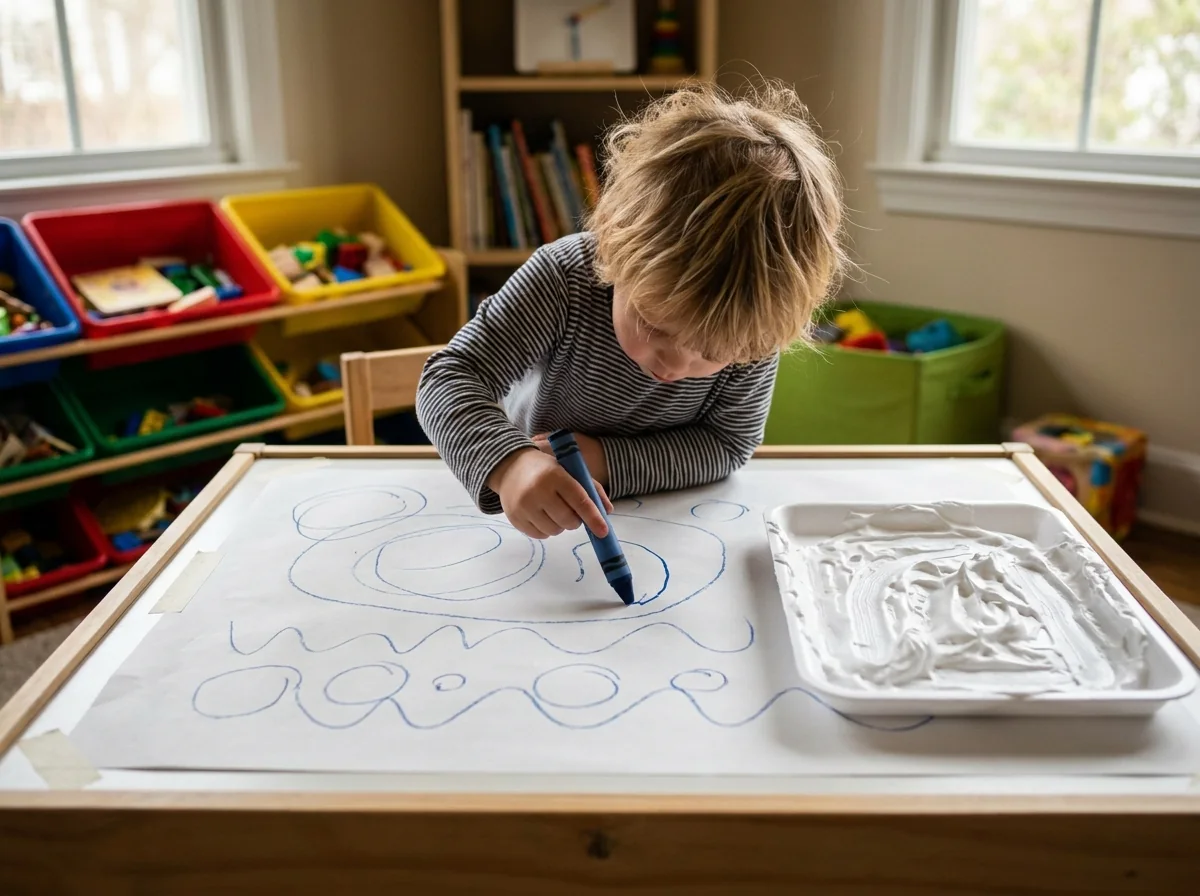
- They can draw a continuous wavy line and a row of loops without lifting the pencil.
If most of these are true at 7, start. If your 8-year-old is not there yet, a few weeks on print fluency and pencil control first will make cursive far smoother. The 2nd grade curriculum guide shows where handwriting sits in a typical year.
Why bother with cursive at all?
The Institute of Education Sciences' practice guide on elementary writing recommends teaching handwriting until it is fluent, because children who form letters without effort can put their attention into the words themselves (IES What Works Clearinghouse). Cursive adds practical advantages: every lowercase letter starts on the baseline, b and d look nothing alike, and a child who reads cursive can read cards from grandparents and signatures.
Cursive is also required in many places. A growing number of US states, California and Texas among them, have written it into their elementary standards, and in many other countries joined handwriting is simply how children write: in England the national curriculum expects children to begin joining letters in Year 2, at age 6 to 7 (GOV.UK, English programmes of study).
Set up for success: posture, paper slant and pencil
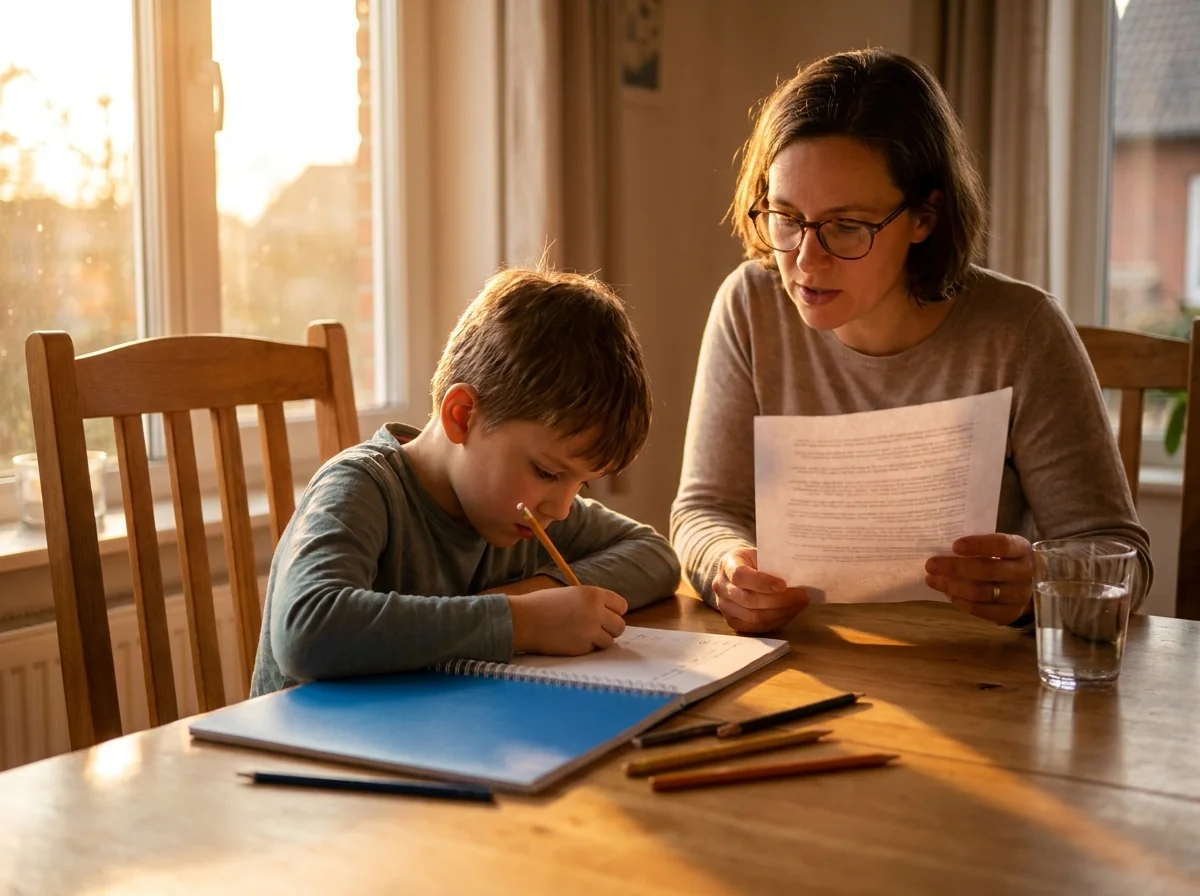
Five minutes on set-up saves months of correcting a cramped hand later.
- Feet flat, back supported, forearms on the table. Dangling feet make for a wobbly hand.
- Tilt the paper, not the wrist. Right-handers turn the paper so the top left corner points up and away, roughly 30 to 45 degrees counterclockwise. The slant of the paper gives cursive its slant, so the wrist can stay straight.
- The other hand holds the paper. Many children let it slide and then chase it.
- Lined paper with a dotted midline. Tall letters must reach the top line and small letters stop at the midline, and the dotted line makes that visible.
- A pencil that moves. An HB pencil or a smooth gel pen beats a scratchy ballpoint.
Left-handed children
Lefties can write beautiful cursive; they just need a mirror-image set-up:
- Tilt the paper the other way, top right corner up and away, roughly 30 to 45 degrees clockwise. Some left-handers like it turned even further.
- Hold the pencil about an inch (2.5 cm) from the point so they can see the writing without curling the wrist into a hook.
- Keep the hand below the writing line, not above it.
- Use pencils or quick-drying pens to avoid smudging, and seat a left-hander at the left end of a table so elbows do not clash.
- Do not insist on a rightward slant; vertical or slightly backward is normal for left-handers.
Cursive letter order: teach by stroke family
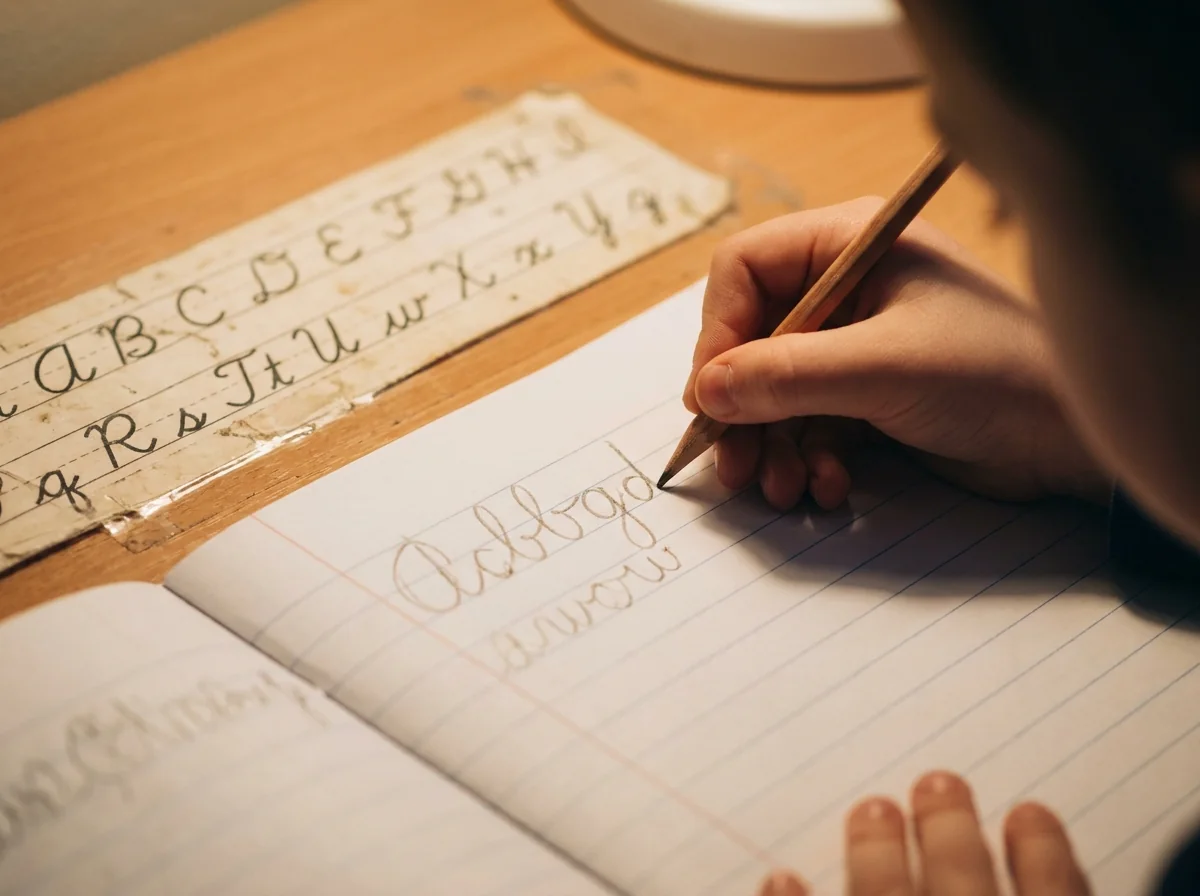
Do not teach cursive alphabetically. A to Z mixes easy letters with the hardest ones (b, f, r, s and z) and gives your child nothing to connect. Instead, teach the lowercase letters in groups that share a starting stroke. Once a child owns the stroke, each new letter in the family is a small change.
| Order | Family | Letters | The shared stroke |
|---|---|---|---|
| 1 | Under-curve letters | i, u, w, t, then e, l | Swing up from the baseline, trace down, swing up again |
| 2 | Round (down-curve) letters | c, a, d, g, q, o | Start like a c: up and over to the left, then round |
| 3 | Loop letters | h, k, b, f | A tall under-curve that loops at the top |
| 4 | Hump (over-curve) letters | n, m, v, x, y, z | Start with a hump that curves over from the baseline |
| 5 | The odd ones | r, s, j, p | Under-curve starts with a twist at the top |
Within the first family, i, u, w and t are nearly the same movement: i is one swing-up and trace-down, u is two, w is two with a bridge at the end, and t is a taller i crossed at the end. By the end of day two your child can already write "it" and "tut", and that early success matters.
Talk through every letter in the same words each time ("swing up, slide down, swing up, dot") and have your child say it with you. Air-write it big, then write it on the page.
Capitals come last; in a paragraph of cursive perhaps one letter in twenty is a capital. Group them by look-alike too (C, E, O; A, N, M; H, K; U, V, W, Y). Many teachers accept printed capitals with cursive lowercase for a long time.
Joining letters: teach connections from the first week
The whole point of cursive is that letters join, so do not spend a month on single letters. As soon as your child has i, u, w and t, join them: it, tut, wit. After e and l: let, tell, lit, little, wet, well, will, tile.
There are really only four kinds of join to learn:
- Baseline joins (most letters): the ending swing-up of one letter becomes the start of the next. This is the join in "it", "an" and "me".
- Bridge joins from b, o, v and w: these letters end at the midline, not the baseline, so the next letter starts high. "on", "we", "be" and "of" take extra practice.
- Joins into round letters (c, a, d, g, q, o): the pen has to swing up and then dip back to start the circle. "ca" and "da" are classic stumbling points.
- Joins into e: the loop of the e is made from the join itself. Point this out, or children stop, lift and start a new e.
One rule stops most arguments: the pencil stays on the paper until the word is finished, then goes back to dot the i's and cross the t's. Children who dot as they go lose the flow.
A 10-minute daily cursive routine
Four days a week, ten minutes, in this order:
- Warm-up (1 minute): a line of loops, a line of waves and a line of humps across the page, without lifting the pencil.
- One new letter or a review letter (3 minutes): watch you write it while you say the stroke words, air-write it, trace it three times, write it five times. Circle the best one.
- Join it (3 minutes): three to five short words that use the new letter with letters already learned.
- Copy one sentence (2 minutes): a sentence from a book, a joke, or the day's fix-it sentence from a warm-up page. Keep it short.
- Look back (1 minute): your child picks their best word and says why. You pick one thing to fix tomorrow, and only one.
At that pace most children cover the lowercase letters and main joins in 8 to 12 weeks, and capitals over the following month or two. Cursive as fast as their print usually takes the rest of the school year, so once the letters are taught, have your child do one short piece of real writing in cursive each day: a journal line, a thank-you note, a spelling sentence.
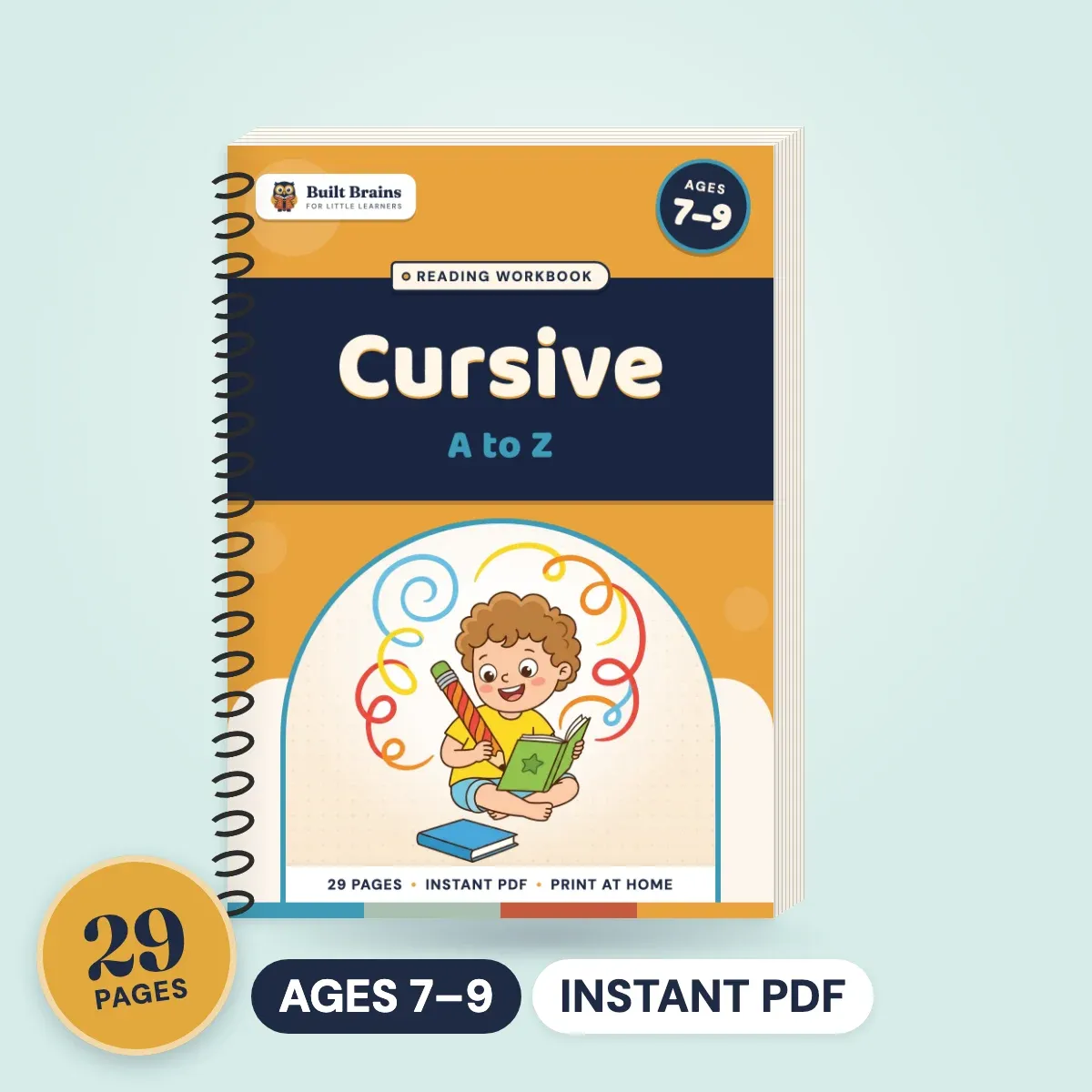
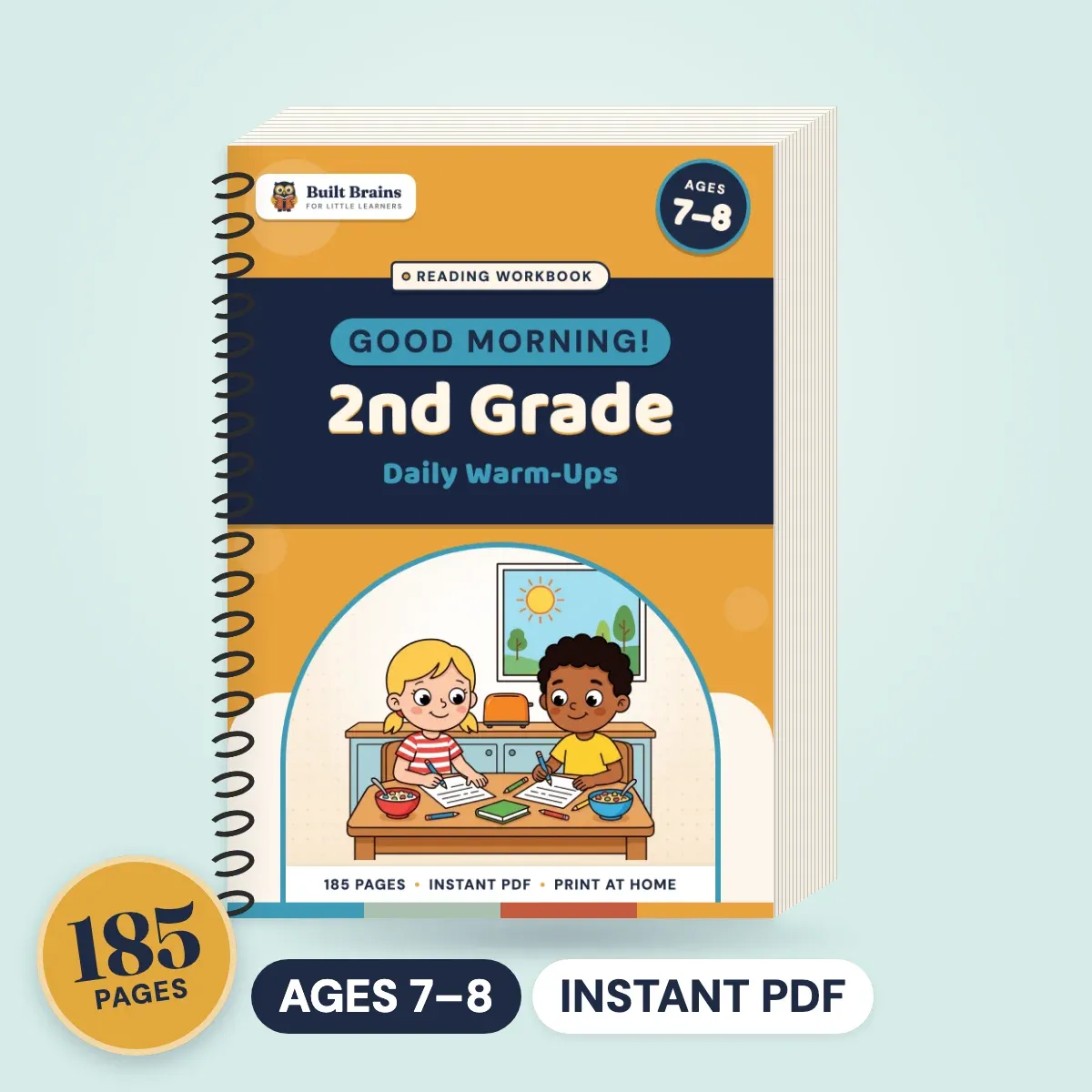
Cursive A to Z is built for exactly this routine: a big model of each capital and small letter, gray letters to trace, space to write on your own, and real words to practice, over 29 pages for ages 7 to 9. For daily copy material, the Good Morning! 3rd Grade Warm-Ups and Good Morning! 2nd Grade Warm-Ups give a word of the day and a fix-it sentence every Monday, short correct sentences worth copying in cursive. The 3rd grade curriculum guide shows where a handwriting slot fits in a homeschool day.
Common cursive mistakes and how to fix them
Most cursive problems come from a handful of habits. Catch them early and they take days to fix; leave them a year and they take months.
| What you see | What is going wrong | What to do |
|---|---|---|
| a looks like u, or d looks like cl | The round letter is not closed at the top | Teach "close the door" before the down-stroke; practice c, a and d together |
| e looks like i | The loop is pinched shut | Make e's big for a week, with the loop drawn as a small oval |
| Wrong number of humps in m and n | Child is counting strokes, not humps | "n has two humps, m has three", said aloud every time |
| Lifting the pencil mid-word | Dotting i's and crossing t's as they go | Dot and cross only at the end of the word |
| Slant changes letter to letter | Paper is square to the table | Tilt the paper; tape a strip of card as a guide |
Two mistakes are yours to avoid, not your child's. First, do not correct everything at once; one fix per day is plenty. Second, do not let cursive become a test of neatness. The goal is fluent, legible handwriting that frees your child's mind for what they want to say (Reading Rockets). Wobbly but connected beats perfect but painful.
If your child is also still finishing print, our guide to alphabet tracing covers the formation habits that carry straight into cursive.
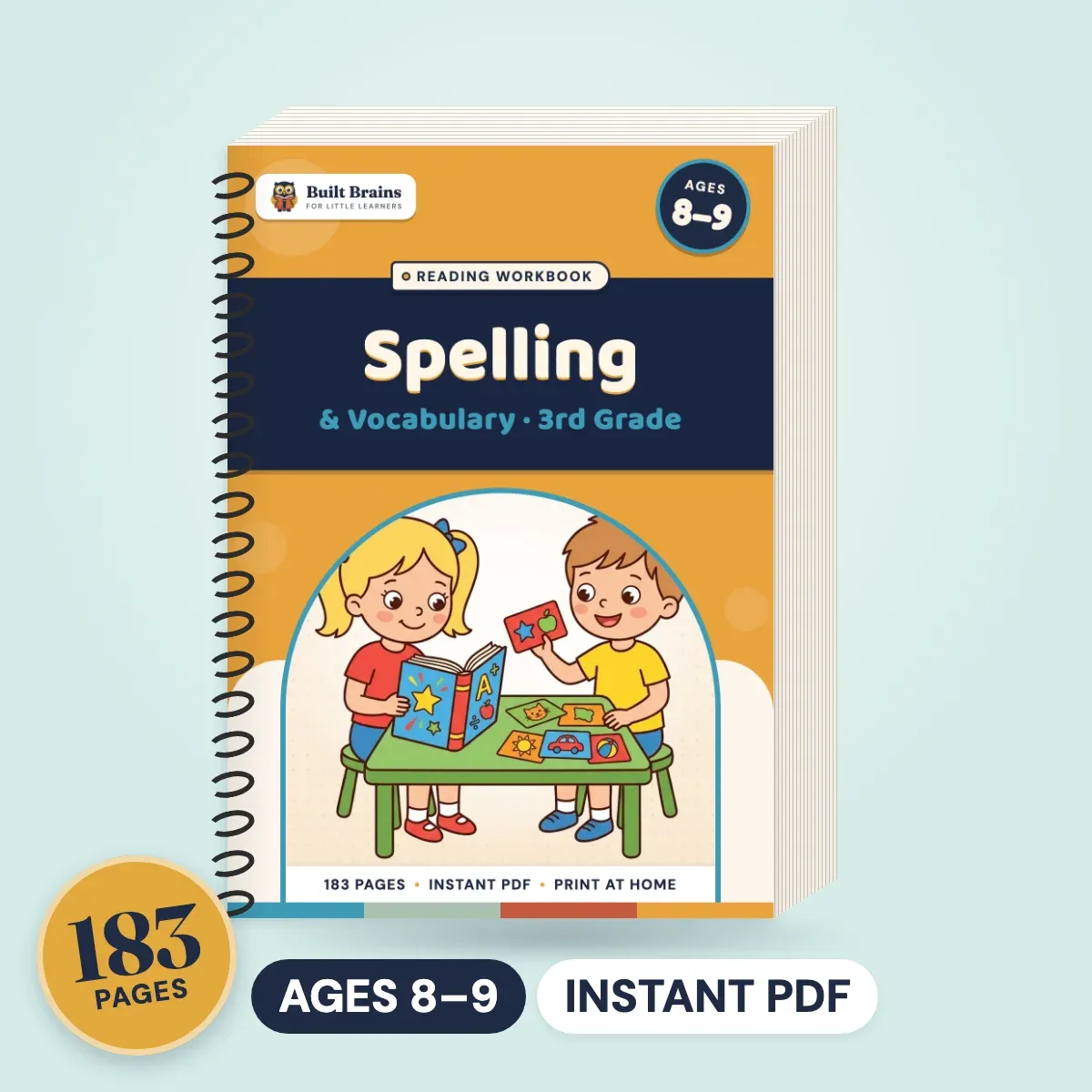
Ages 8–9 · 183 pages
Spelling & Vocabulary: 3rd Grade36 weekly lists with roots, prefixes, suffixes and vocabulary
Sources
- IES What Works Clearinghouse – Teaching Elementary School Students to Be Effective Writers: recommends teaching handwriting (with spelling and typing) to fluency as part of writing instruction.
- Reading Rockets – The Importance of Teaching Handwriting: why automatic letter formation frees attention for composing, and the case for explicit, grouped letter instruction.
- GOV.UK – National curriculum in England: English programmes of study: the expectation that children in England begin joining letters in Year 2 and use joined handwriting through key stage 2.
Questions parents ask
Most children are ready between 7 and 9, in 2nd or 3rd grade, once their print is automatic and they hold a pencil with a tripod grip. Some schools begin at the end of 1st grade. Starting later is fine too: a motivated 9 or 10-year-old often learns the whole lowercase alphabet in a few weeks.
Start with the under-curve letters i, u, w and t, which share one simple swing-up stroke, then add e and l. Next come the round letters (c, a, d, g, q, o), the loop letters (h, k, b, f), the hump letters (n, m, v, x, y, z) and finally r, s, j and p. Teach capitals after the lowercase alphabet.
In most US schools children learn print first, in kindergarten and 1st grade, and add cursive in 2nd or 3rd. A few programs teach cursive first, and that works too, as long as the method is consistent. Print first has one clear advantage: it matches the letters children see in books while they are learning to read.
Yes, and in more places than a few years ago. A growing number of US states, including California and Texas, require cursive instruction in the elementary grades, and in many other countries, such as England and France, joined handwriting is taught from around age 6 or 7. Where it is not required, many teachers still teach it in 3rd grade.
With ten minutes a day, four days a week, most children learn all the lowercase letters and the main joins in 8 to 12 weeks, then capitals over another month or two. Writing cursive as quickly as print takes longer, usually the rest of the school year of short daily use, such as a journal line or spelling sentences.
Reviewed by
Maternelle (Kindergarten) Teacher
Clara Tremblay is a Maternelle educator in Quebec focused on French early literacy, fine motor development, and inquiry-based play.
More about Clara →