
What does a 3rd grade homeschool curriculum need to cover?
Third grade is the year children move from learning to read toward reading to learn. Most third graders can decode well enough that the work shifts to understanding: longer texts, nonfiction, vocabulary and explaining their thinking. In math, the big new idea is multiplication and division, with fractions close behind.
A complete 3rd grade homeschool curriculum should give you:
- Reading: a new story or nonfiction text each week, with questions that ask why and how, not only what.
- Word study and spelling: weekly lists built on patterns, prefixes, suffixes and roots.
- Grammar and writing: short grammar lessons and regular paragraph writing (opinion, narrative and simple reports).
- Math: multiplication and division within 100, fractions, area and perimeter, rounding, adding and subtracting to 1,000, and time to the minute.
- Science and social studies: through reading, projects, library books and nature study.
If you want all of that planned week by week, this is what we built ours to do.
What's inside the 3rd Grade at Home Curriculum
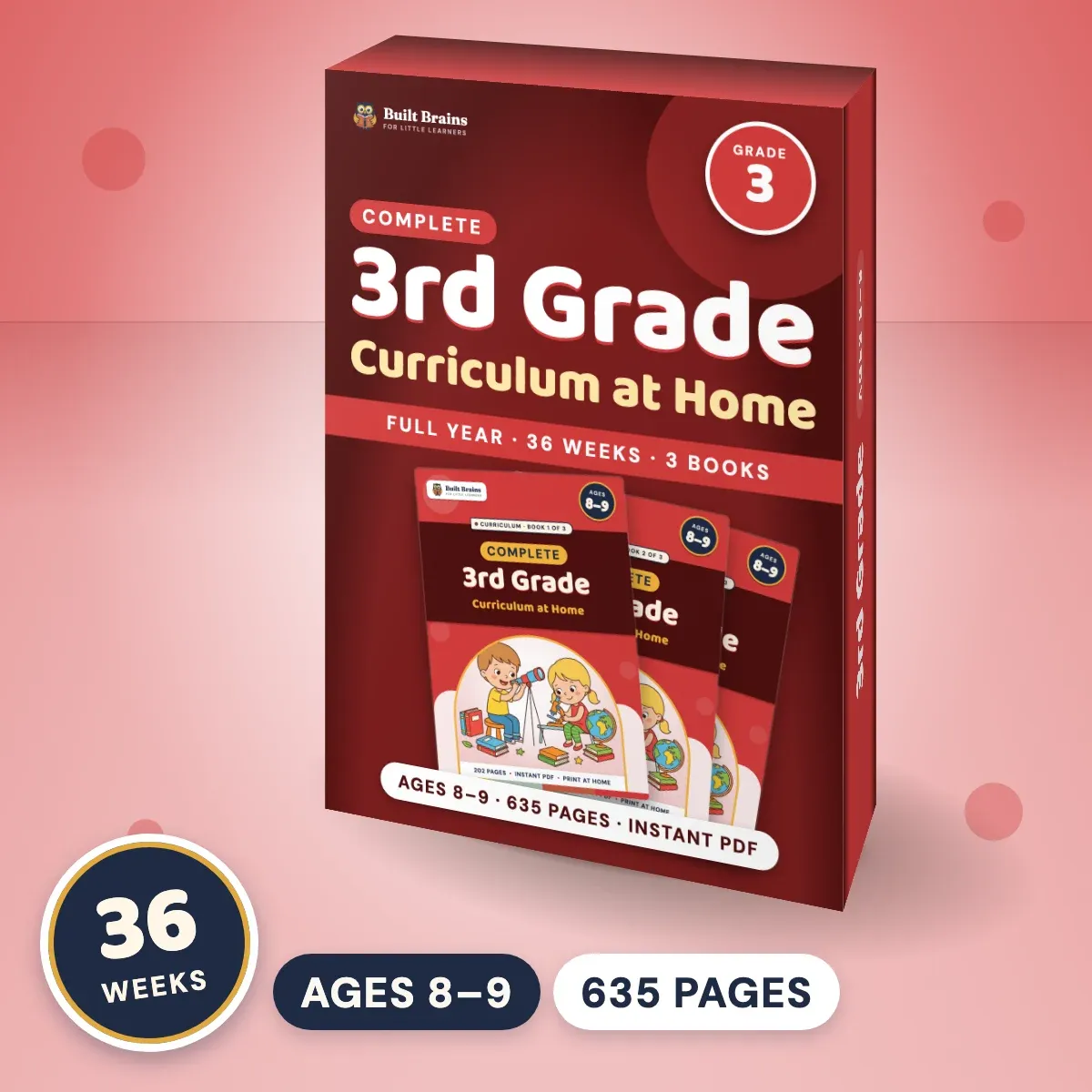
The 3rd Grade at Home Curriculum is 36 weekly plans across three printable books (weeks 1–12, 13–24 and 25–36) plus a 19-page Parents' Guide, 635 pages in all. Each week has a longer nonfiction article or story (thunderstorms, the Wright brothers, octopuses, the Statue of Liberty) with thinking questions, plus word study, grammar, writing and math. Inside you will find 60 reading pages, 48 math pages, 36 spelling pages, 12 phonics, 12 grammar and 12 writing pages, 12 plan pages and 7 read-together pages.
It is an instant PDF download, black and white, and prints on US Letter or A4. Like every Built Brains book, it comes with a 14-day money-back guarantee. Built Brains curricula are secular and faith-neutral, so they fit families looking for a secular 3rd grade curriculum.
How third grade is different from second grade
Parents often notice third grade feels like a step up. Three shifts explain most of it.
1. More independence
A second grader usually needs you beside them for every task. Most third graders can read their own directions, start a page alone and check their work with a little prompting. Use that. Teach the new idea together for 10 to 15 minutes, then let your child practice while you are nearby but not hovering.
Say: "Read the directions out loud to me, then tell me what you're going to do first." That one habit builds independence faster than anything else.
2. Reading to learn
Texts get longer and more factual. Your child meets words like habitat, pressure and invention and has to work out meaning from context. Comprehension questions start asking for evidence: "How do you know? Show me the sentence."
3. Multiplication changes math
Multiplication is not just faster adding. Third graders learn it as equal groups, arrays and skip counting first, then memorize facts. Division is taught as the partner of multiplication ("12 cookies shared by 3 people"). Fractions appear as parts of a whole and as points on a number line.
3rd grade skills checklist by subject
Use this as a guide to what most third graders work toward by the end of the year. Children develop at different rates, and it is fine to be ahead in one area and behind in another.
| Subject | By the end of 3rd grade, most children are working toward |
|---|---|
| Reading | Reading chapter books with fluency; main idea and key details; comparing two texts; using evidence in answers |
| Word study | Prefixes (un-, re-, pre-), suffixes (-ful, -less, -tion), common roots; homophones |
| Grammar | Nouns, verbs, adjectives and adverbs; verb tenses; commas in lists and dates; quotation marks |
| Writing | Organized paragraphs with a topic sentence; opinion pieces with reasons; narratives with a clear order |
| Math | Multiplication and division within 100; knowing times tables; fractions as numbers; area and perimeter; rounding to 10 and 100; time to the minute |
| Handwriting | Neat, readable print; many families add cursive this year |
For a deeper look at word lists, see our guide to 3rd grade spelling words.
A sample week of 3rd grade at home
This rhythm works for most families. Times are a guide.
- Monday (about 75 minutes). Read the week's article together. Introduce the spelling list with a word sort. Math: new concept with objects.
- Tuesday (about 75 minutes). Child rereads the article alone and answers thinking questions. Grammar mini-lesson. Math practice page.
- Wednesday (about 90 minutes). Spelling practice. Writing: plan a paragraph together. Math: practice plus a game (multiplication war with a deck of cards).
- Thursday (about 75 minutes). Writing: finish and read the paragraph aloud. Vocabulary in context. Math practice.
- Friday (about 60 minutes). Spelling check, math review, and a free-choice project: a poem, a drawing of the week's topic, a library trip.
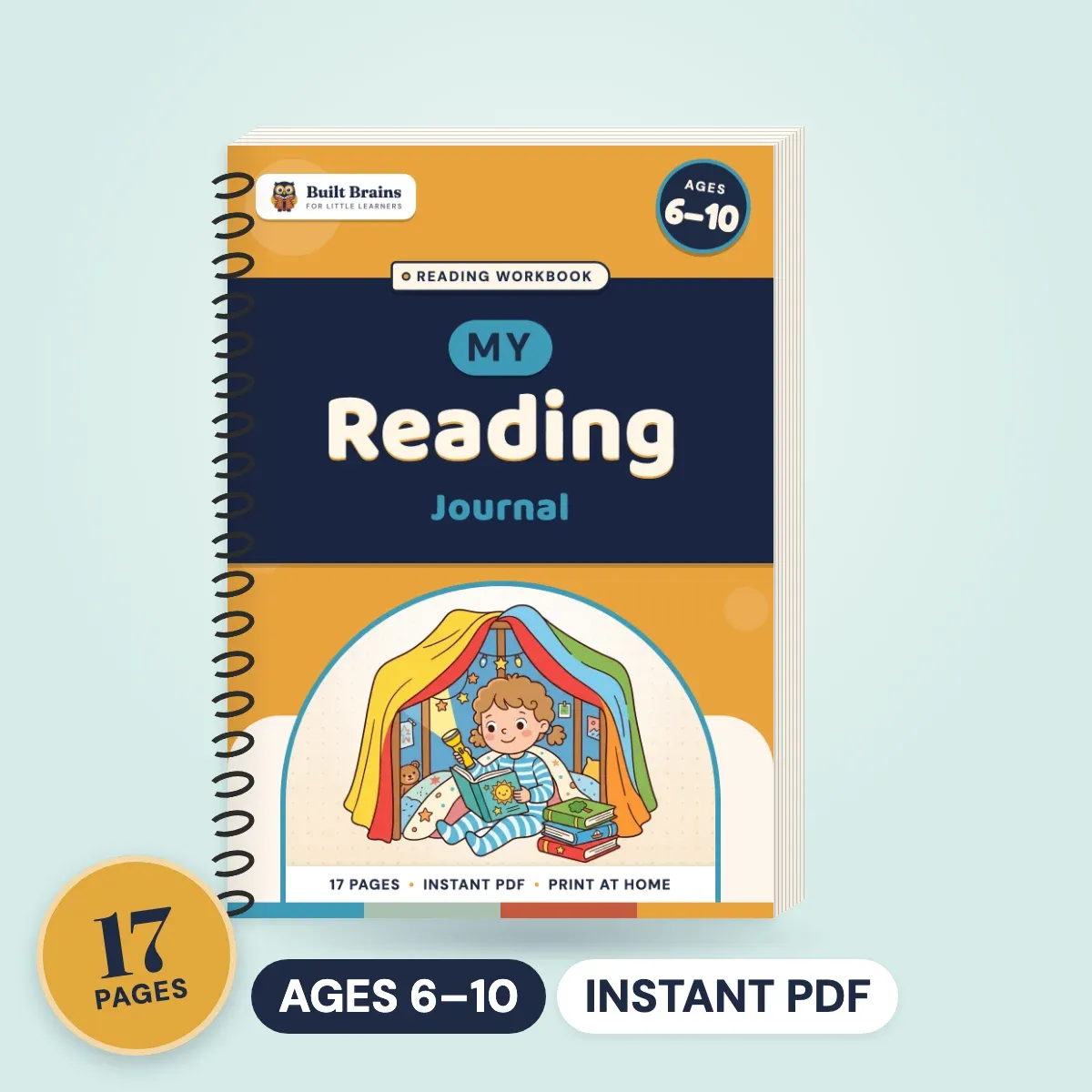
Add 20 to 30 minutes of independent reading every day. A reading journal gives that time a little structure without turning it into homework.
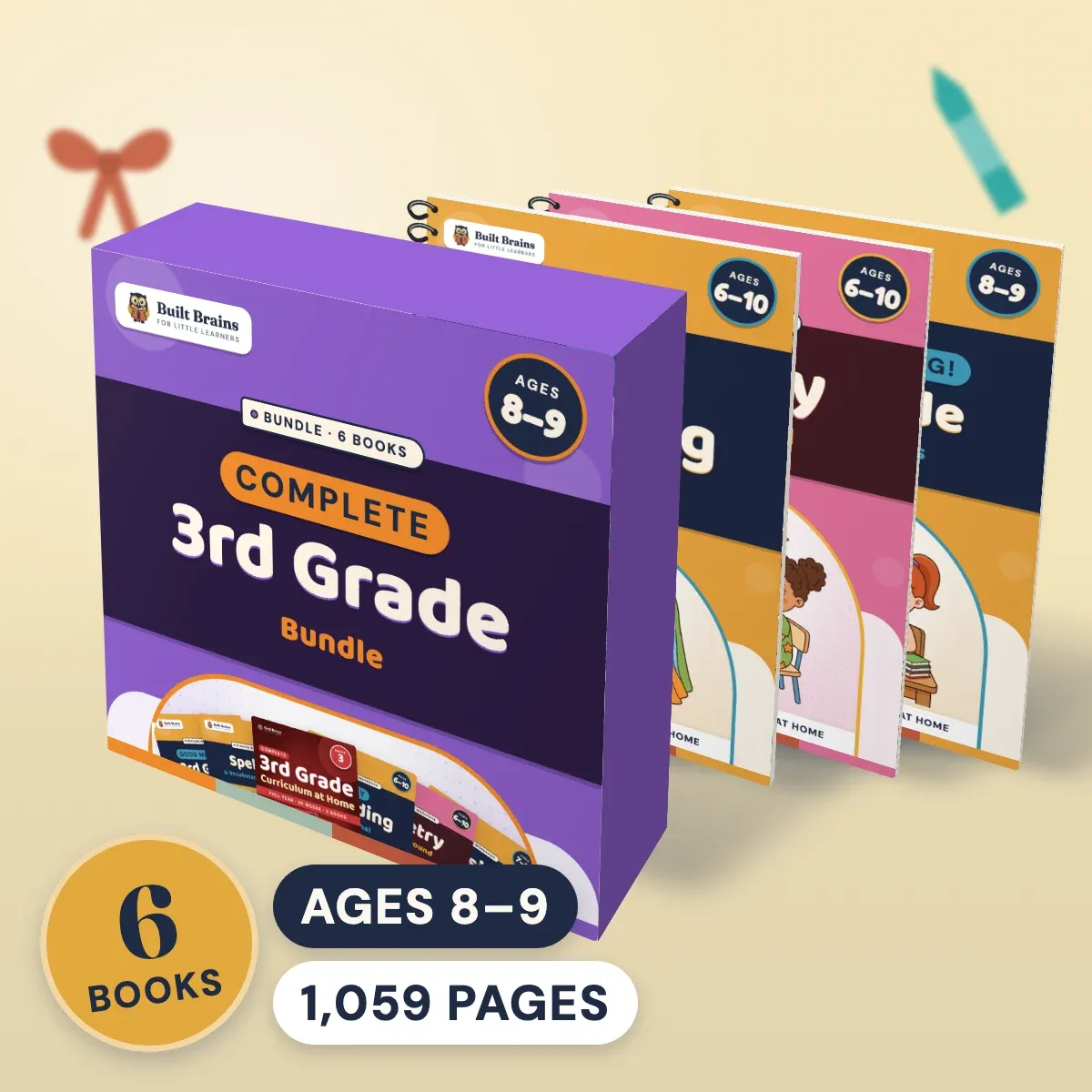 Save $36
6 books · 1059 pages
The Complete 3rd Grade BundleCurriculum, warm-ups, spelling, journal, poetry and cursive
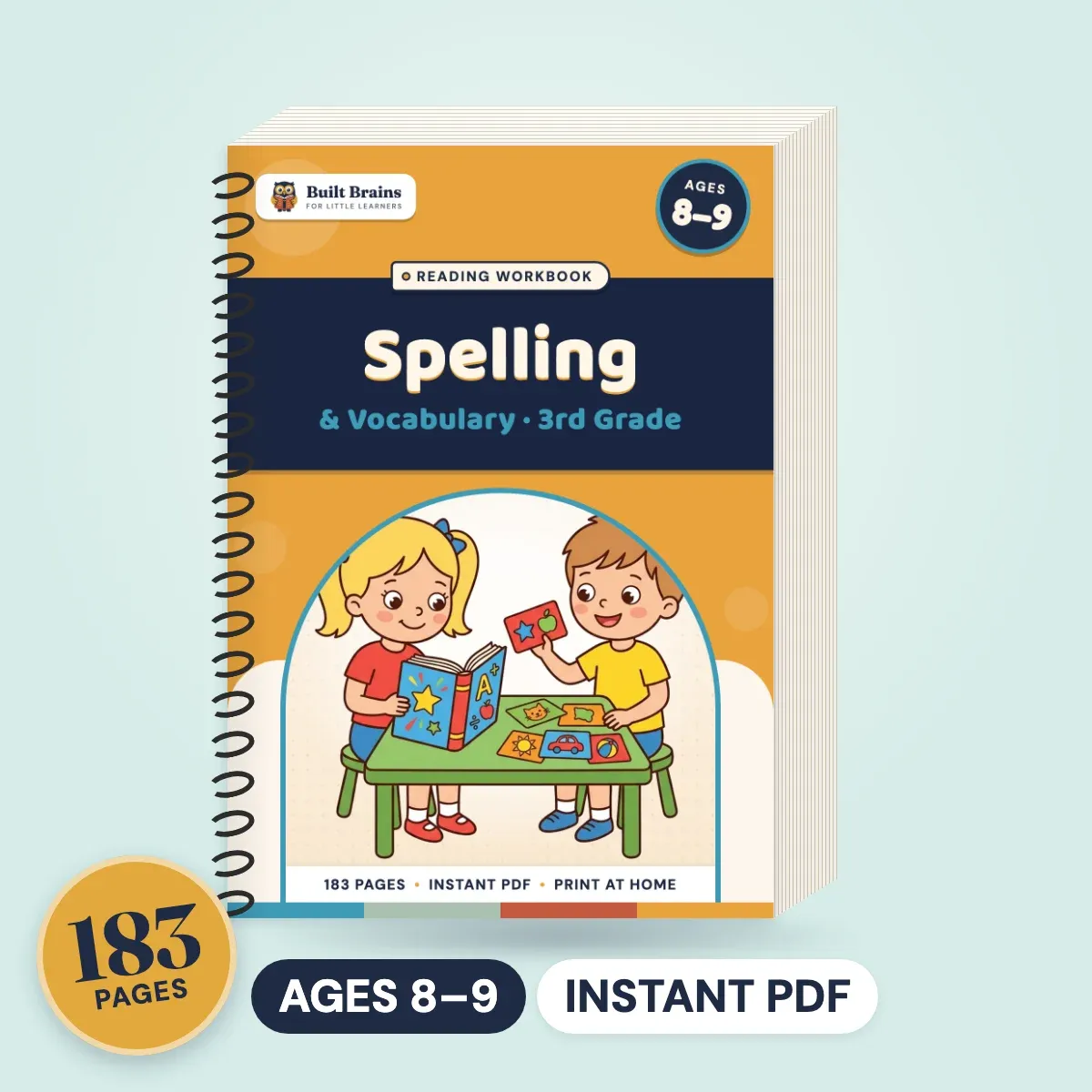
Ages 8–9 · 183 pages
Spelling & Vocabulary: 3rd Grade36 weekly lists with roots, prefixes, suffixes and vocabulary
How to teach multiplication in 3rd grade at home
Multiplication is the make-or-break skill of the year, so it is worth getting the order right.
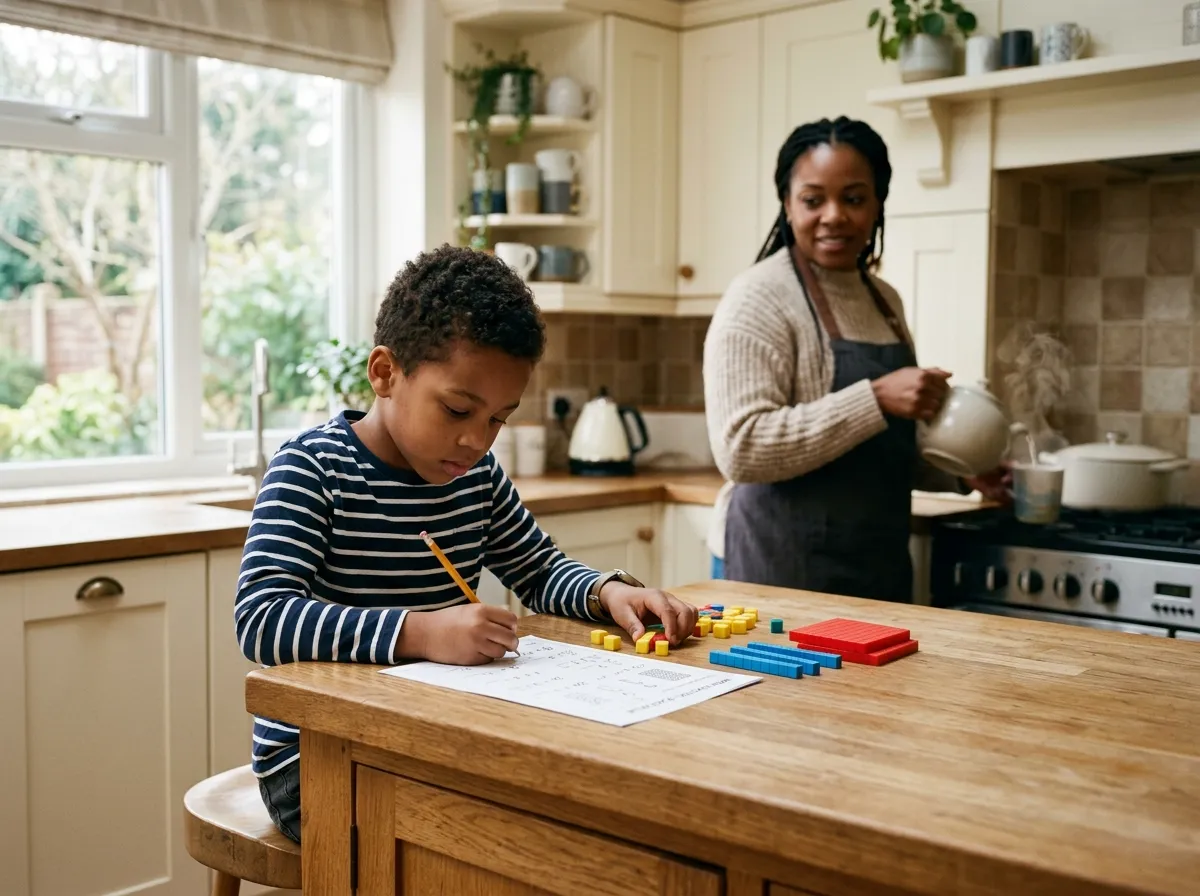
- Equal groups. "Make 4 plates with 3 grapes on each. How many grapes?" Write it as 4 × 3.
- Arrays. Arrange objects in rows and columns. Turn the array to show that 4 × 3 = 3 × 4.
- Skip counting. Count by 2s, 5s and 10s first, then 3s and 4s.
- Easy facts first. ×0, ×1, ×2, ×5, ×10. Then ×9 (finger trick), ×4 (double double) and ×3.
- The hard ones last. 6s, 7s and 8s. By then many are already known, since 7 × 5 is the same as 5 × 7.
- Then division. "I know 4 × 6 = 24, so 24 ÷ 6 = 4."
Five minutes of fact practice a day beats one long session a week. Card games, dice and car-ride quizzes all count.
Reading, spelling and writing in third grade
Reading
Mix fiction and nonfiction every week. After reading, ask questions that need thought:
- "What was the most important idea? Which sentence tells you?"
- "Why do you think the author included this part?"
- "How is this like the other book we read?"
Spelling and word study
Third-grade spelling moves from sound patterns to meaning patterns. Once a child knows that pre- means "before," the words preview, prepay and prehistoric become easier to read and spell. The Spelling & Vocabulary: 3rd Grade program has 36 weekly lists covering vowel teams, -tion and -sion, -ous and -able, Greek and Latin roots and homophones, each with a sort, practice, vocabulary in context and a Friday check.
Writing
Start short. One strong paragraph a week is a realistic goal for many third graders. Talk it through first, then write. If writing is a battle, let your child say sentences aloud while you write the first one, then they take over.
Cursive
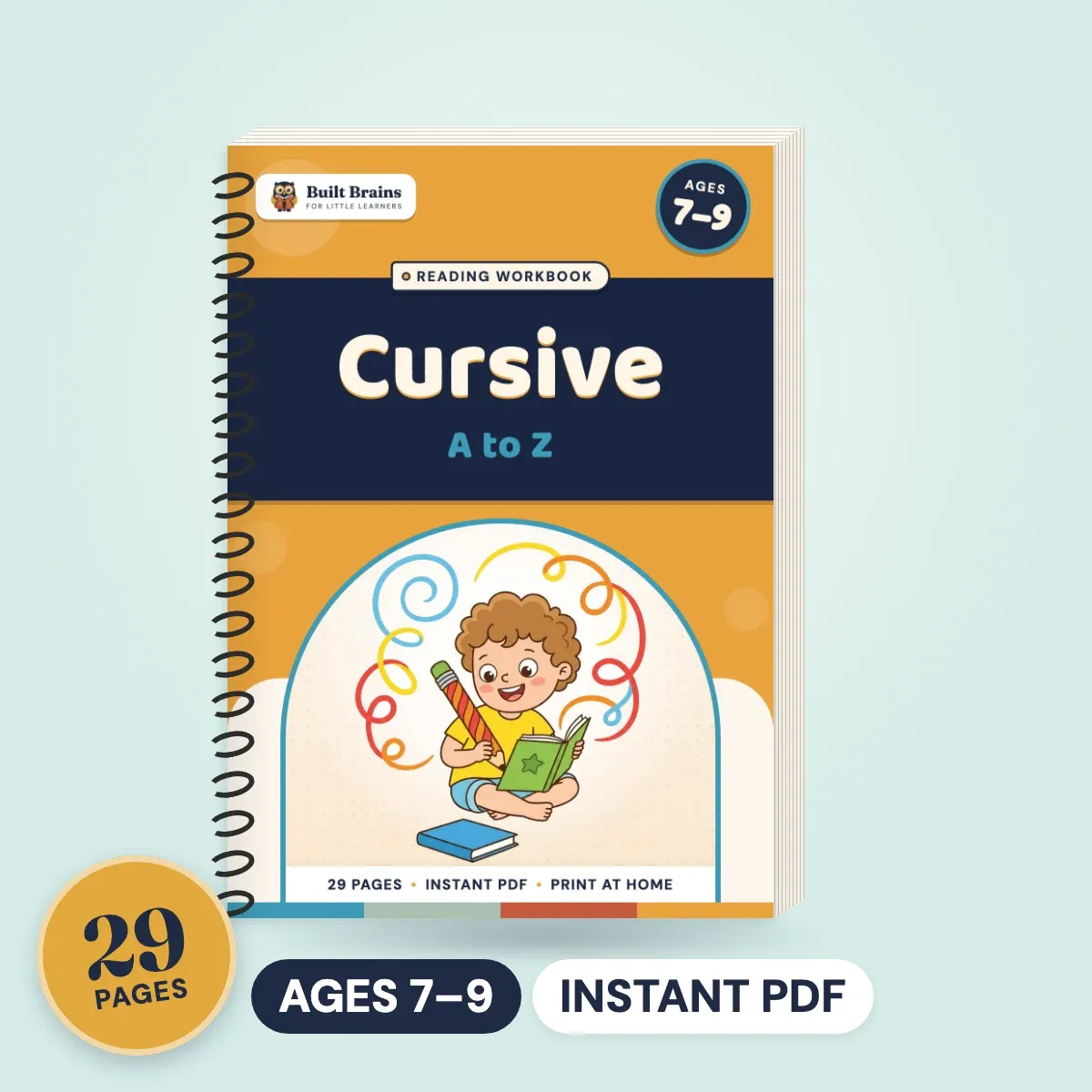
Third grade is a common time to start. Teach a few lowercase letters a week, grouped by stroke, for five to ten minutes. Cursive A to Z has a big model of each capital and small letter, gray letters to trace, space to write and real words for practice. Our guide to teaching cursive to kids covers the letter order.
Free vs paid: choosing a 3rd grade curriculum
There is no single best 3rd grade homeschool curriculum. There is the one that fits your child, your time and your budget.
Free options
Free online programs, library books and printables can absolutely work. They suit parents who enjoy planning and want to spend nothing. The cost is time: picking materials, making sure skills come in a sensible order and filling gaps. You can try our free printable book to see if our page style suits your child before you spend anything.
Paid printable curricula
These give you a sequence and the pages already made. They suit families who want to open the week and start.
Our curriculum may suit you if you want reading, word study, grammar, writing and math planned in one place, prefer secular materials and are happy printing at home.
It may not be the right fit if you want video lessons, a screen-based program, a full hands-on science kit, or you have no access to a printer.
Common mistakes
- Buying a separate program for every subject. Too many books leads to burnout by November.
- Rushing times tables. Speed without understanding leads to trouble with division and fractions.
- Dropping read-alouds. Third graders still benefit hugely from hearing books above their own reading level.
- Ignoring the attention span. Two 30-minute blocks with a break work better than one long sit.
Getting started with third grade at home
Choose your start date, print week one, and keep the first two weeks light while you find your rhythm. Check where your child is in reading and math, adjust, and build from there. Browse everything for this age on the 3rd grade page or in the curriculum collection.
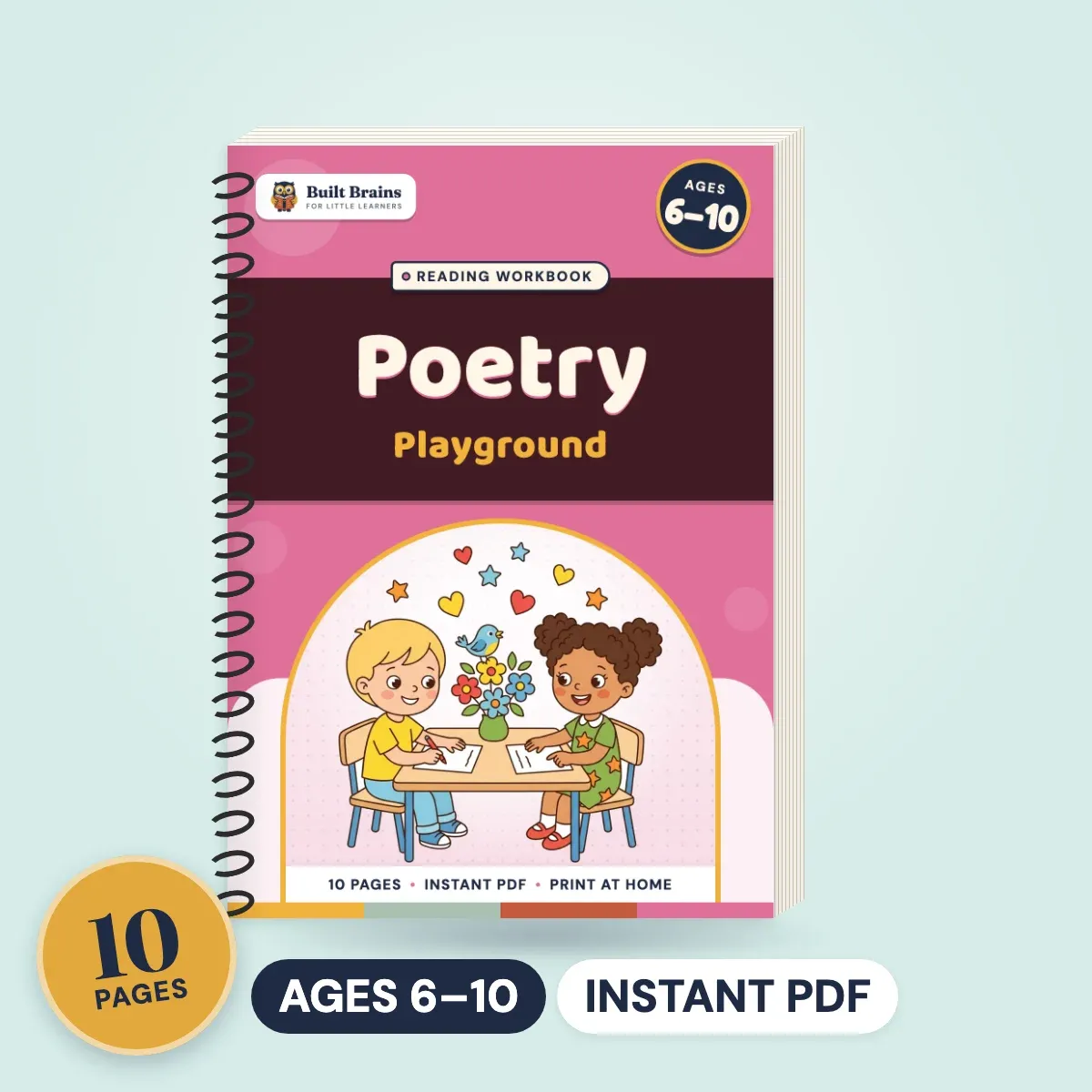
If you want the year planned for you, the curriculum below covers reading, word study, grammar, writing and math across 36 weeks. For the full set, The Complete 3rd Grade Bundle adds the spelling and vocabulary program, a reading journal, the Poetry Playground and Cursive A to Z.
Questions parents ask
In reading, longer chapter books and nonfiction, finding the main idea and explaining answers with evidence. In word study, prefixes, suffixes and roots. In writing, organized paragraphs with opinion and narrative pieces. In math, multiplication and division facts, fractions, area and perimeter, rounding, and time to the minute. Children vary, so treat this as a direction rather than a test.
Most families find one to two hours of focused work is enough, plus independent reading. Math and language arts take the largest share, often 30 to 45 minutes each. Science, history and art can run two or three afternoons a week. One-to-one teaching moves faster than a classroom, so a short day is normal, not a sign you are behind.
Yes. Free online programs, library books and free printables can cover third grade, especially if you enjoy planning. The trade-off is time: choosing, checking and sequencing materials yourself. Many parents mix a free option for one subject with a paid, planned program for math and language arts, where order and steady practice matter most.
It is a good age to start if you want to. Most children have steady print handwriting by now, and several US states have added cursive back into their standards. Five to ten minutes a few days a week, one letter at a time, is plenty. Reading cursive is a useful skill even for children who later prefer print.
Teach from where your child is, not from the grade label. Go back to the last skill they can do easily and build up from there, often with a second-grade book for a few weeks. If reading stays slow and effortful despite steady practice, talk to your pediatrician or ask about a reading assessment, since early support works best.