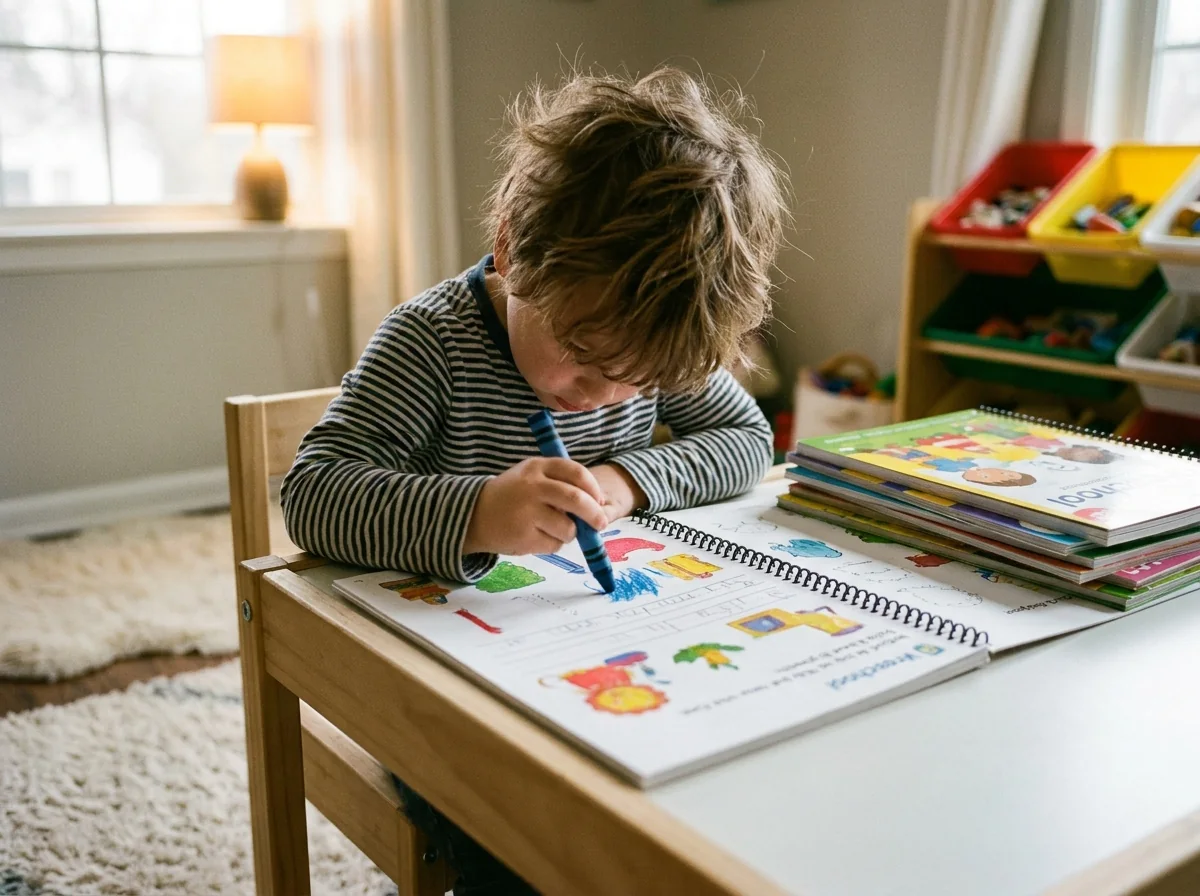
What makes a good preschool workbook for a 4 year old
The best preschool workbooks for 4 year olds look simple on purpose. Four year olds are still building hand strength and control, so a good workbook keeps the page clear and the task small. Look for these five things:
- Big lines and big pictures. Wide tracing paths and chunky letters suit a hand that is still learning control. Tiny lines lead to frustration.
- One skill per page. A page that asks your child to trace, count, color and circle all at once is a page for a 6 year old.
- A clear starting point. Letters and numbers should show where to begin and which way to go, often with a dot or an arrow, so good habits form early.
- Play built in. Mazes, hunts, dot-to-dots, cutting and coloring feel like games. That matters more at 4 than the number of pages.
- Steps that build. Lines before letters, counting objects before writing numbers, straight cuts before curves.
Around this age many children begin to copy a triangle and other simple shapes, draw a person with a few body parts and print some letters (American Academy of Pediatrics, HealthyChildren.org). A good workbook meets your child there, not at kindergarten level. For a fuller picture of this age, see what should a 4 year old know.
How many workbook pages a day for a 4 year old?
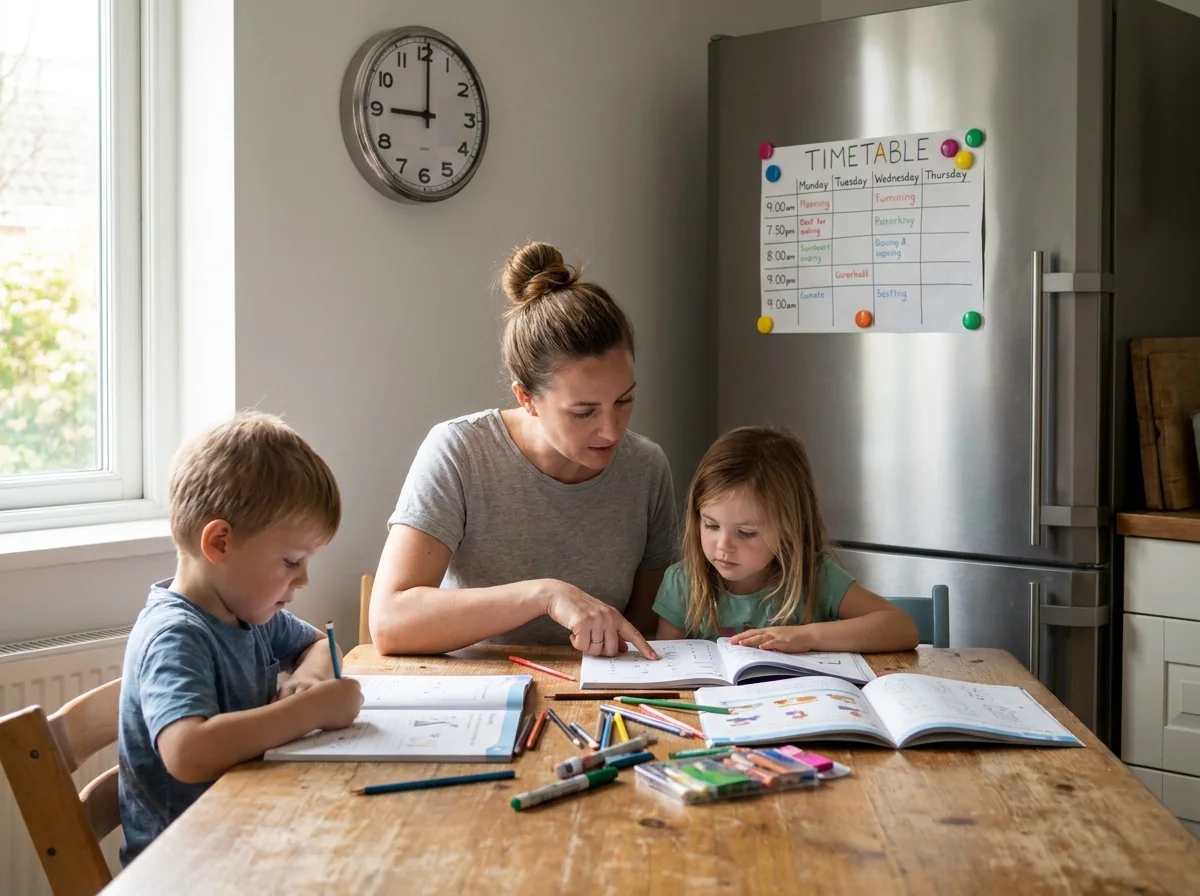
A few. For most four year olds, two to four pages, or about 10 to 15 minutes, is enough. Some days that means one careful page. Stop while your child still wants to do "one more," and they'll come back tomorrow willingly.
| Time of day | What works | How long |
|---|---|---|
| After breakfast | One tracing page and one counting page | 10 minutes |
| Quiet time | A maze, a coloring page or a look-and-find | As long as they like |
| Before dinner | A cutting page at the table with you nearby | 5–10 minutes |
Play is still the main way young children learn, and pediatricians describe it as essential to a child's health and development, building language, thinking and self-control (HealthyChildren.org – The Power of Play). Workbooks are a small, useful extra on top.
Types of preschool workbooks
Most workbooks for 4 year olds fall into one of these groups. Many children enjoy having two or three types on the go.
Tracing books (letters, numbers, lines)
Tracing builds pencil control and teaches the shape and direction of each letter or numeral. Start with pre-writing lines (straight, curved, zigzag) if your child is new to pencils, then move to capital letters and numbers. The alphabet tracing tips and number tracing 1–20 guides explain the order.
Cutting and scissor-skills books
Cutting strengthens the small muscles of the hand that later help with writing. Good books move from short straight snips to wavy lines, zigzags and curves. Use child-safe scissors and sit beside your child.
Counting and early math books
Look for pages where your child counts pictures and then matches or writes the number. Counting real objects first, like buttons or crackers, makes the page easier. The math activities for preschoolers guide has practical ideas to pair with the pages.
Mazes, matching and look-and-find
These are puzzles more than lessons, and they build attention, visual noticing and planning. They are perfect for quiet time or a car ride.
Busy books and mixed activity books
A mix of coloring, tracing, counting and matching in one book. Good for variety and for children who get bored of one skill. The busy book ideas guide shows how to use them.
A buyer's checklist for preschool workbooks
Before you buy or print a preschool workbook for age 4, check:
- Age range says 3–5 or 4–5, not "preschool to 2nd grade."
- Tracing shows a start point and the right direction.
- Pages are uncluttered, with lots of white space.
- One skill per page, with clear, short directions you can read aloud.
- Skills build in order across the book.
- Hands-on parts: cutting, coloring, cards to play with.
- Printable or reusable, so you can repeat favorites.
- Black-and-white option if you print at home, to save ink.
- A finish line, like a certificate, which four year olds love.
Our picks: preschool workbooks for 4 year olds
These are our own printable books, so we'll tell you what each is good at and who it suits best.
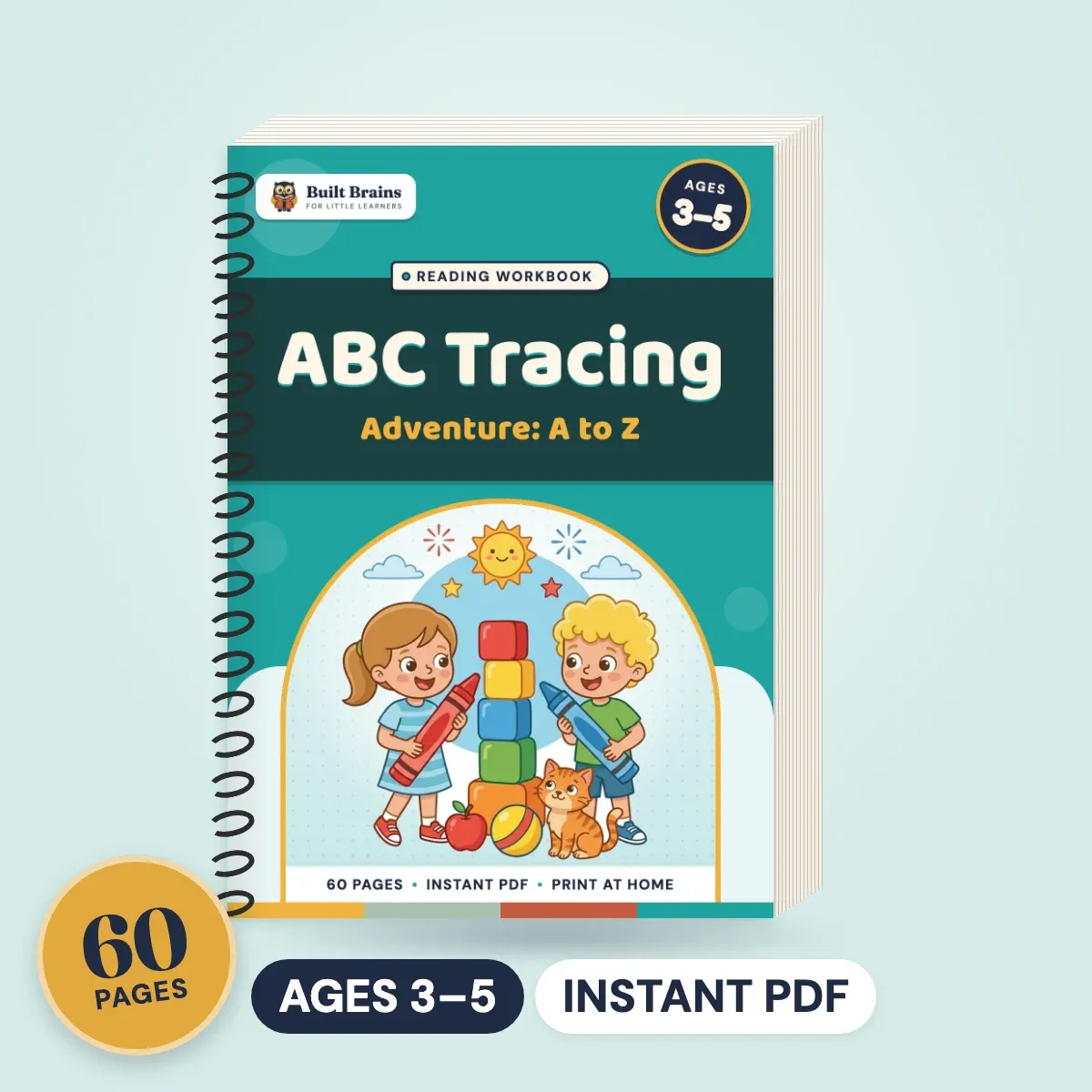
Best for letters: ABC Tracing Adventure
ABC Tracing Adventure: A to Z gives every letter two pages: a big letter to color and trace with its picture, then a letter hunt and beginning-sounds hunt. The tracing starts at a green dot and follows the real writing path. Best for: a 4 year old learning letter names and sounds. Keep in mind: it is focused on letters only, so pair it with something for numbers.
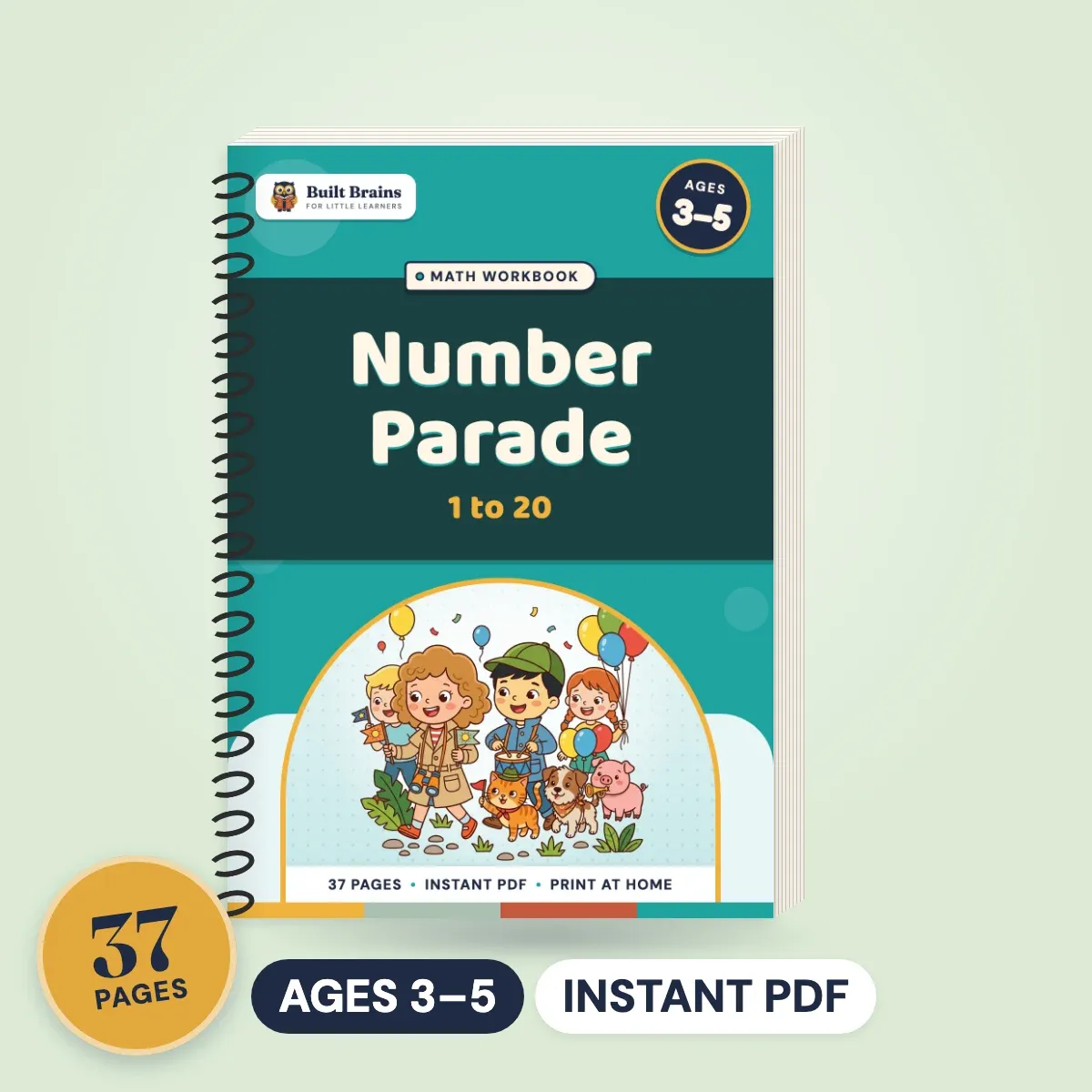
Best for numbers: Number Parade 1 to 20
Number Parade: 1 to 20 has a page for each number: color the big number, count the pictures, trace the digits and the number word, with review pages after every five. Best for: children who can count to 10 and are ready for teen numbers. Keep in mind: if counting to 5 is still wobbly, start with real objects first.
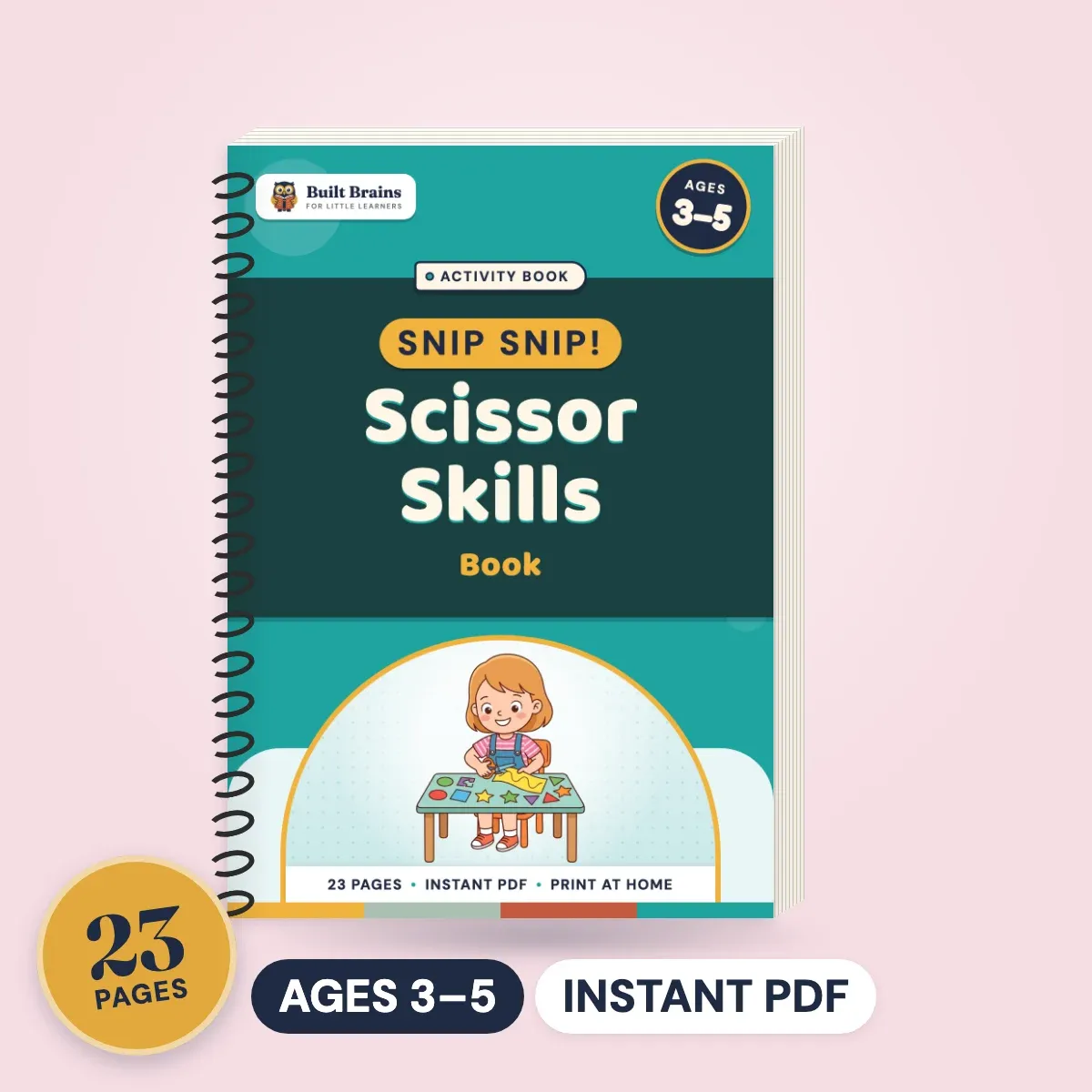
Best for scissors: Snip Snip!
Snip Snip! Scissor Skills Book moves through six levels, from straight lines to loops, with each line starting at a small picture. Each level repeats three times, so there's room to practice before stepping up. Best for: building hand strength and confidence. Keep in mind: cutting needs an adult nearby.
Best value set: Preschool Deluxe Activity Bundle
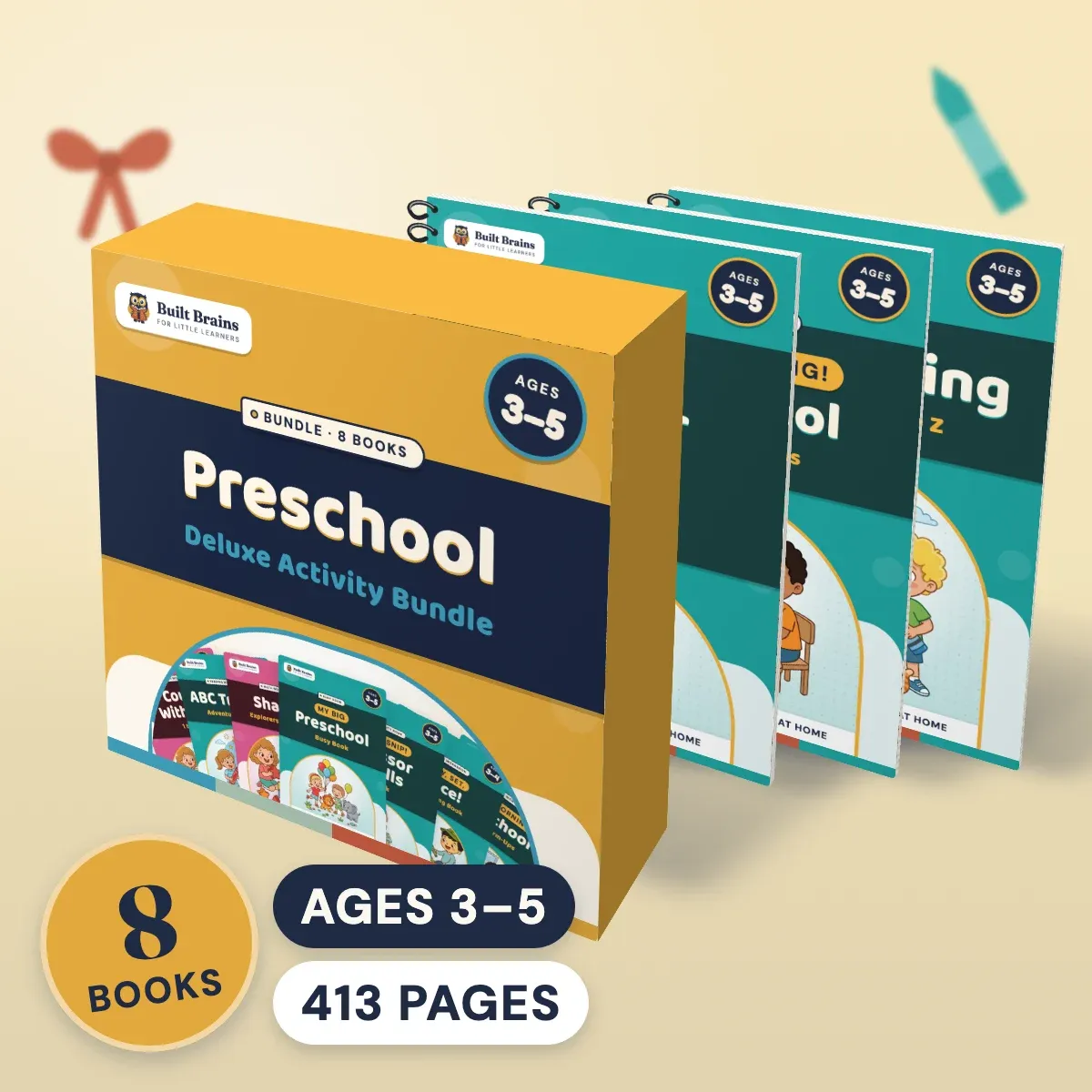
The Preschool Deluxe Activity Bundle brings together eight preschool books, including the busy book, counting, alphabet tracing, shapes, scissor skills, pre-writing, morning warm-ups and A–Z letter crafts. Best for: families who want a "learning kit for 4 year olds" covering letters, numbers, shapes and fine motor without a full curriculum. Keep in mind: it is a collection, not a day-by-day plan, so you choose what to do each day.
Best planned year: Complete Pre-K Curriculum at Home
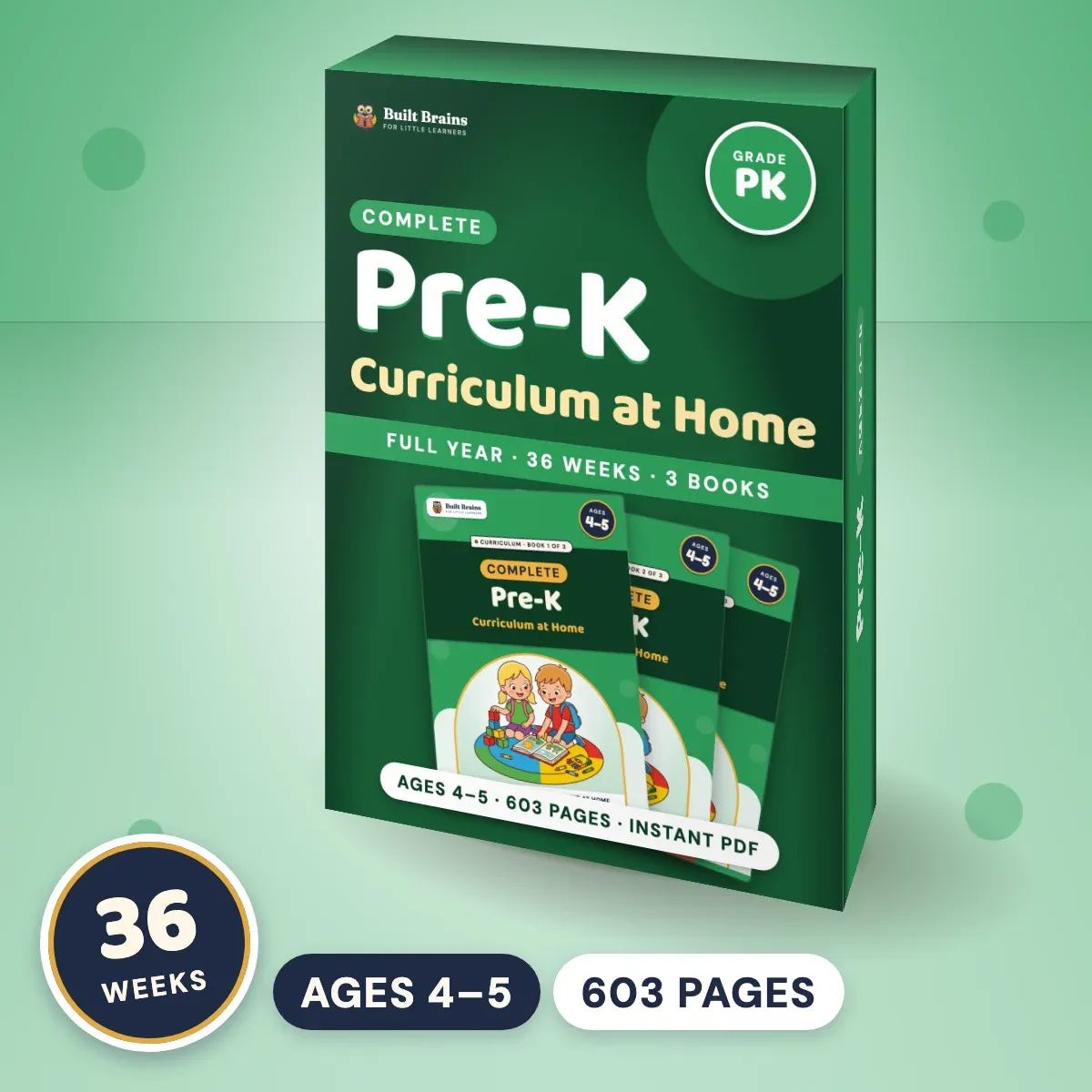
The Complete Pre-K Curriculum at Home is 36 weekly plans for 4 and 5 year olds in about 20 minutes a day: every letter and its sound, first blending and simple words, numbers to 20, shapes and patterns, and adding and taking away within 5, with a theme each week. Best for: parents who want to be ready for kindergarten without planning anything. Keep in mind: it's a full year, so it's more than you need if you only want a little extra practice. The pre-K curriculum at home guide explains how a Pre-K year fits together.
Getting the most out of any workbook
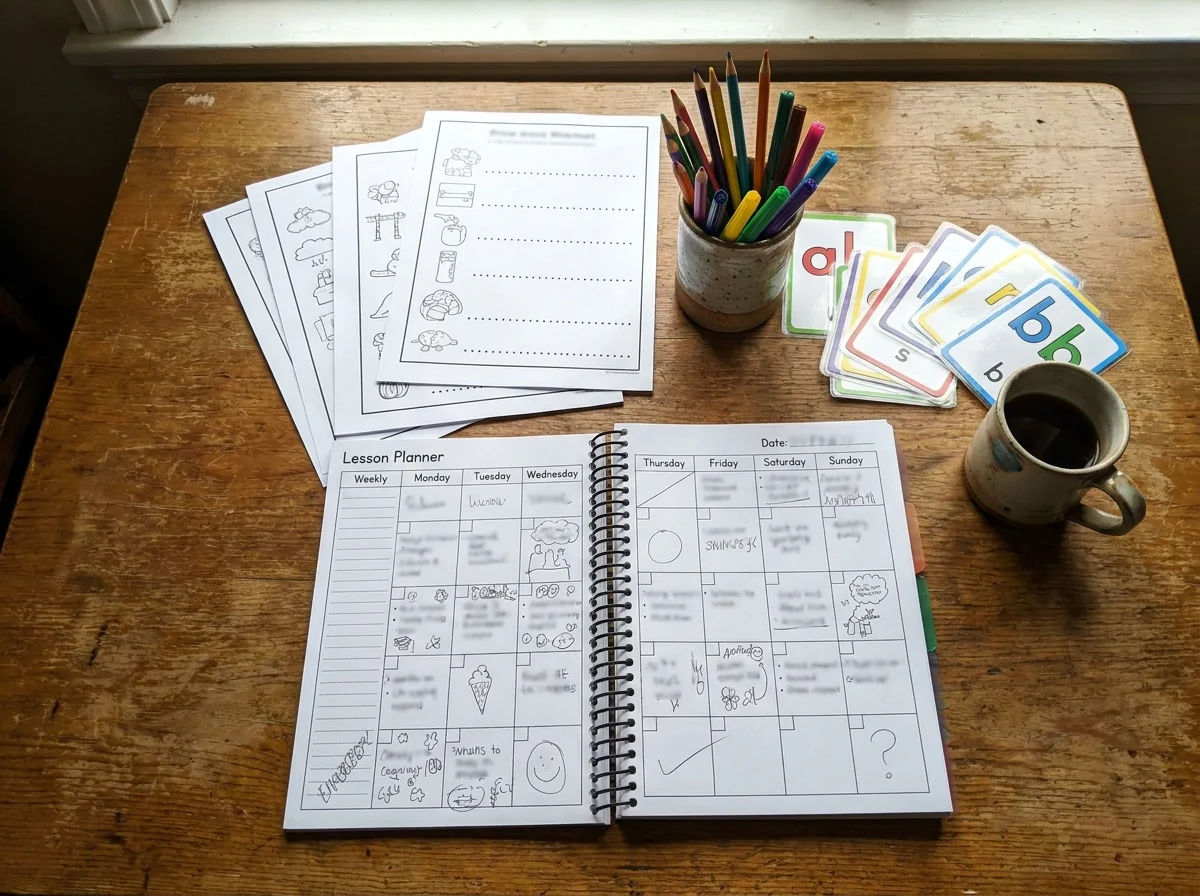
- Print a week at a time and keep the rest in a folder, so the pile doesn't overwhelm either of you.
- Use sheet protectors and dry-erase markers for pages you want to repeat.
- Say it out loud: "Start at the top, go down, back up and around." Talking through the strokes helps them stick.
- Praise effort, not neatness. A wobbly but correct "b" is a win.
- Mix in fine motor play: playdough, tongs, stickers, threading beads. The fine motor activities for preschoolers guide has plenty.
Ages 3–5 · 60 pages
ABC Tracing Adventure: A to ZLearn every letter the right way — trace, find, color
Sources
- HealthyChildren.org (American Academy of Pediatrics) – Developmental Milestones: 4 to 5 Year Olds: copying shapes, drawing a person and printing some letters around this age.
- HealthyChildren.org (American Academy of Pediatrics) – The Power of Play: why daily play matters most for young children's learning.
Questions parents ask
Workbooks are fine for most 4 year olds if they are short, playful and optional. A few pages a day can build pencil control, letter and number recognition and focus. They should sit alongside play, picture books, building and outdoor time, never replace them. If your child resists, put the book away and try again in a few weeks.
Two to four pages, or about 10 to 15 minutes, is plenty for most four year olds. Stop while your child is still enjoying it. Some days one page is enough, and some days none at all. Short, regular practice helps more than a long session once a week.
Look for letter recognition and sounds, tracing lines and letters, counting objects and recognizing numbers to 10 or 20, shapes and patterns, cutting with scissors, and visual puzzles like mazes and matching. Four year olds are often starting to copy simple shapes and print a few letters, so tracing that shows the correct start point helps.
A single workbook is best if you want to practice one skill, like letters or cutting, in a relaxed way. A Pre-K curriculum is better if you want a planned year that moves from letters to first reading and numbers to 20 in order, so you don't have to decide what comes next each week.
A printable workbook has the same kinds of pages as a bound one. The practical difference is that you can reprint a favorite page, print only what you need this week, and slide pages into a sheet protector for dry-erase practice. You do need a printer, paper and a little time to print.
Reviewed by
Early Years Foundation Stage (EYFS) Teacher
Emma Sterling is an EYFS educator who champions play-based learning and continuous provision to foster independent, inquisitive learners.
More about Emma →