
What is a pre-K curriculum?
A pre-K curriculum is a planned year of learning for 4 and 5 year olds, the year right before kindergarten. Its job is simple: help your child arrive at kindergarten knowing their letters and sounds, able to count and recognize numbers, holding a pencil comfortably, and ready to listen, take turns and try new things.
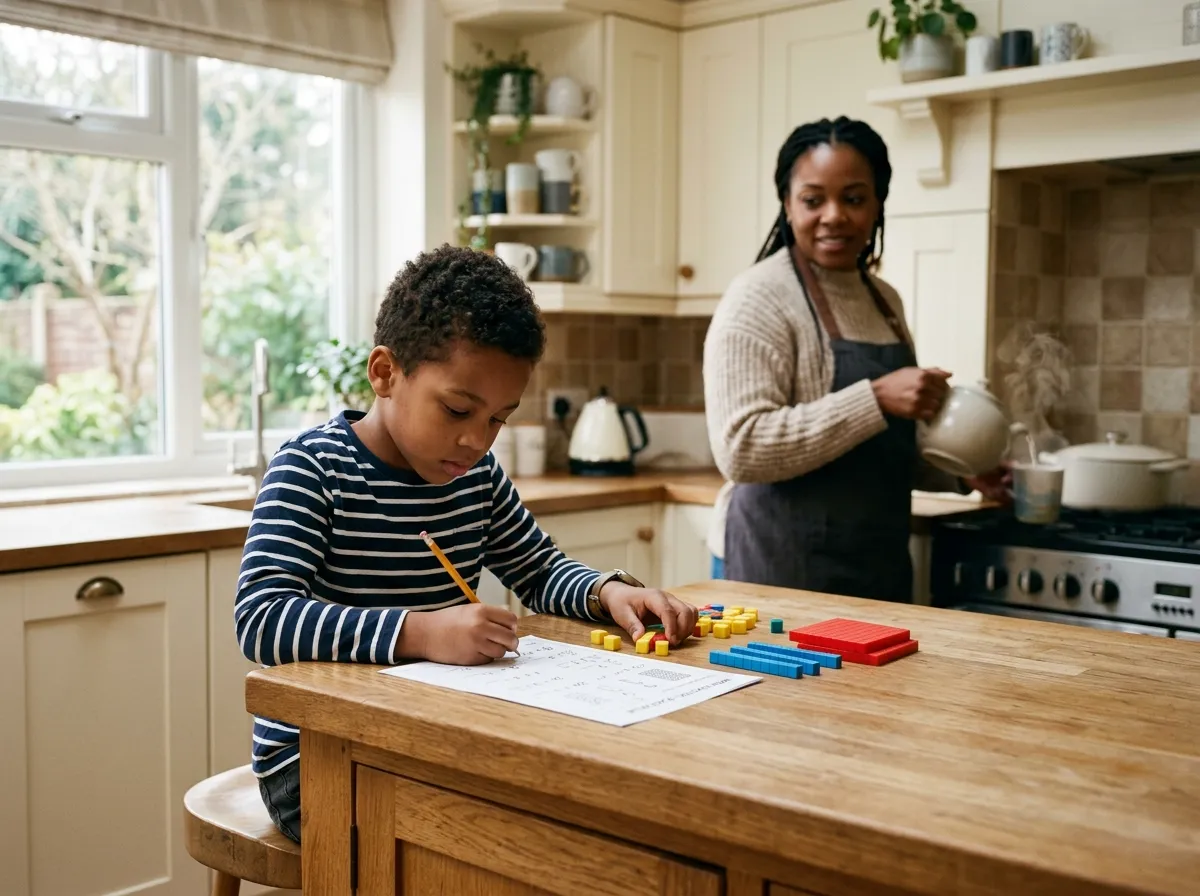
At home, that does not mean hours of worksheets. It means about 20 minutes a day of short, focused activities, surrounded by play, reading aloud and outdoor time. A curriculum just makes sure those 20 minutes build in the right order, week after week.
What's inside the Pre-K at Home Curriculum
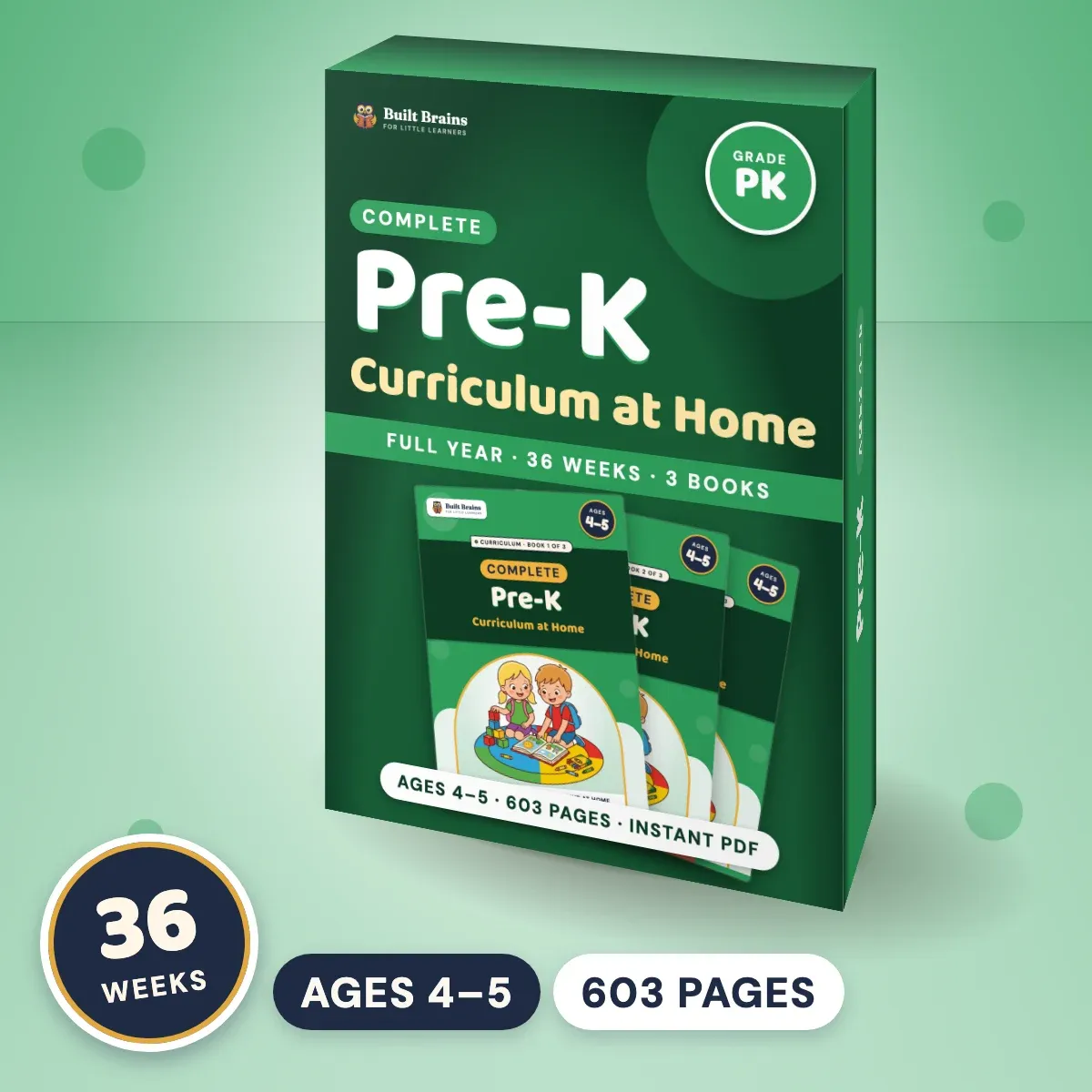
The Pre-K at Home Curriculum is 36 weekly plans in three printable books (weeks 1–12, 13–24 and 25–36), 572 pages in all, for about 20 minutes a day. It covers every letter and its sound, first blending with three-letter words, first sight words and sentences, numbers to 20, shapes, patterns, comparing, and adding and taking away within 5, with a theme to explore each week.
Inside are 57 tracing pages, 14 spot-the-difference pages, 12 reading pages, 12 draw-and-write pages, 11 counting and number pages, plus math, big-and-small, pattern, cut-out card and drawing pages. It is an instant PDF, black and white, prints on US Letter or A4, and has a 14-day money-back guarantee.
Preschool vs pre-K vs kindergarten: what's the difference?
The names get used loosely, so here is the plain version.
| Preschool | Pre-K | Kindergarten | |
|---|---|---|---|
| Typical age | 3 to 4 | 4 to 5 | 5 to 6 |
| Focused learning at home | 10 to 20 minutes | 20 minutes or so | About 30 minutes |
| Reading | Letter names, rhymes, stories | Letter sounds, first blending, a few sight words | Phonics through blends and silent e, reading simple books |
| Writing | Scribbles, lines, first letters | Writing a name, tracing letters | Writing words and short sentences |
| Math | Counting small groups, shapes, colors | Numbers to 20, patterns, adding and taking away within 5 | Counting to 100, adding and subtracting within 10 |
Pre-K sits in the middle: still playful, but a little more structured than preschool. If your child is younger, our guide to a homeschool preschool curriculum is a better starting point.
What should a pre-K curriculum cover?
Early learning frameworks such as the Head Start Early Learning Outcomes Framework group skills for this age into language and literacy, math, thinking, physical development and social-emotional growth. In practice, at home, that looks like this.
Early reading
- Knows most letter names, upper and lowercase
- Matches letters to their sounds (see how to teach letter sounds)
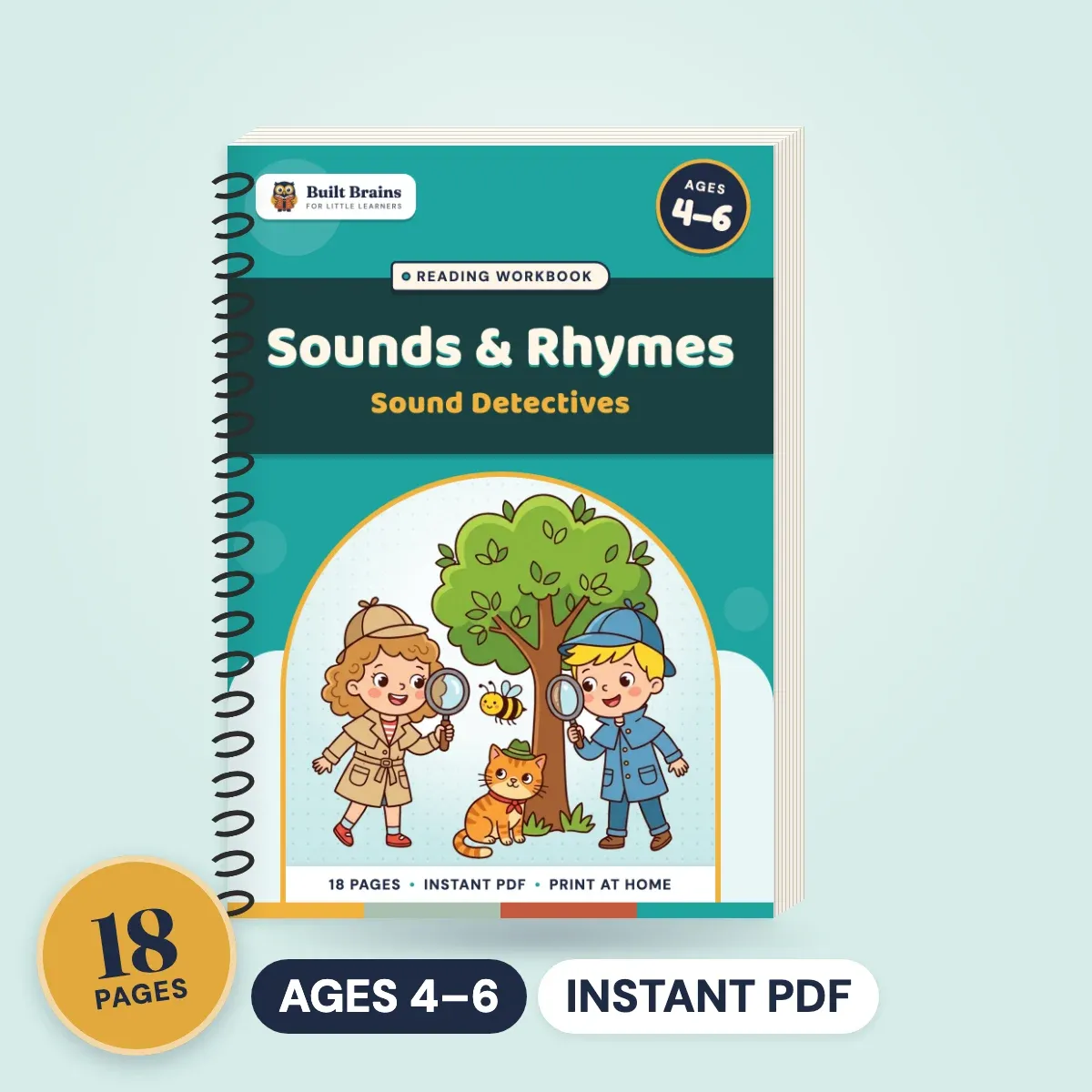
- Hears rhymes and the first sound in a word
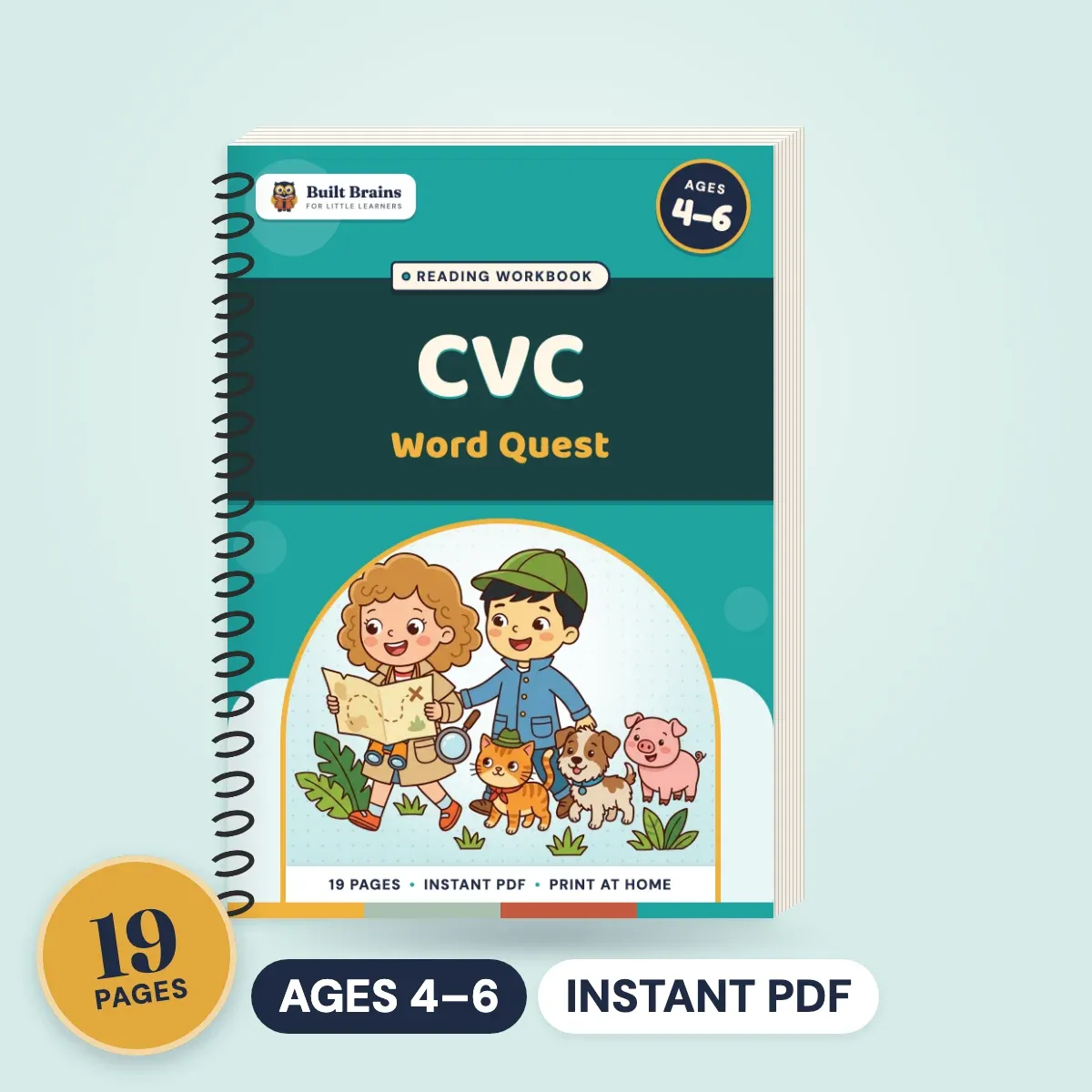
- Blends three sounds into a word: /c/ /a/ /t/, cat
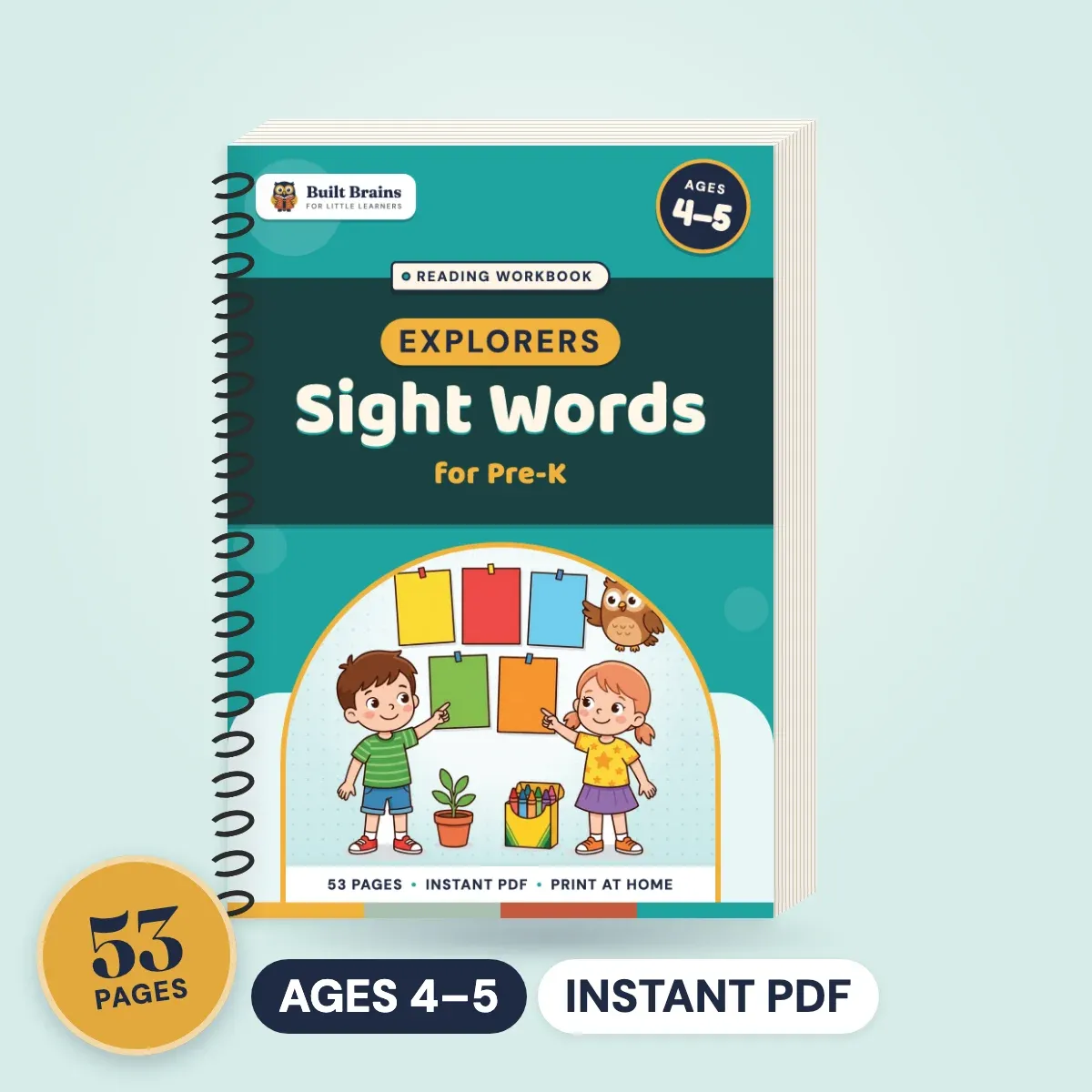
- Recognizes a handful of sight words like the, a, see and I
Early writing
- Holds a pencil with fingers, not a fist
- Writes their first name (our guide on teaching a child to write their name helps)
- Traces and copies letters and numbers
Math
- Counts objects to 20, touching each one once
- Recognizes numerals 0 to 20
- Names circles, squares, triangles and rectangles
- Copies and continues an AB or ABC pattern
- Compares more, fewer, bigger, smaller
- Adds and takes away small amounts with objects: "You have 3 crackers, I give you 2 more"
Self-help and social skills
- Follows two- and three-step directions
- Takes turns and manages small frustrations, with reminders
- Uses the bathroom, washes hands, puts on a coat
Children develop at different rates. For a full age-by-age view, see what should a 4 year old know.
A sample week of pre-K at home
Each day has about 20 minutes of focused learning. Pick a theme for the week (here, farm animals), one letter and one number.
- Monday: meet the letter. Say the sound of P. Find P in a picture book. Trace a big P with a finger, then a crayon. Hunt the house for P things: pan, pillow, pencil.
- Tuesday: blend it. Use three letter cards to make pig. Say each sound slowly, then faster until it becomes the word. Swap the first letter: pig, dig, big.
- Wednesday: count it. The number is 14. Count 14 toy animals into a "barn" box. Show 14 as one ten and four ones on a ten-frame. Trace 14.
- Thursday: small hands. Cut along a straight line, then a curve. Play-dough letters. A simple maze.
- Friday: put it together. Read a short sentence together ("I see a pig."). Make a pattern with farm stickers. Draw a favorite animal and write the first letter of its name.
Read aloud for at least 15 to 20 minutes every day, in addition to the lesson. Story time is still the single biggest reading lesson of pre-K.

How to teach pre-K at home without it feeling like school
A few habits make the difference between a child who asks for "school" and one who hides under the table.
- Same time, same spot. Right after breakfast works for most 4 year olds.
- Start with something active. A song, a movement game, jumping on letter cards.
- Talk more than you write. Saying sounds out loud teaches more than tracing them silently.
- One page, not five. One well-chosen page plus something hands-on is a full lesson.
- Stop while it's fun.
Scripts you can use:
- Starting: "It's learning time. Do you want to start with the letter game or the counting game?"
- When they're stuck: "Let's do it together. Say it with me."
- When they want to stop: "Two more, then you choose a book."
Free vs paid pre-K curriculum: an honest comparison
You can do pre-K at home for free. Plenty of families do.
A free pre-K curriculum
What works: library books, free printables, free apps and free online plans. Combined with daily reading and play, they can cover every skill on the list above.
What it costs you: time. You choose the activities, put them in a sensible order, print from several places and notice gaps. If you enjoy planning, that is a pleasure. If you dread Sunday night planning, it is often why home pre-K fizzles by winter.
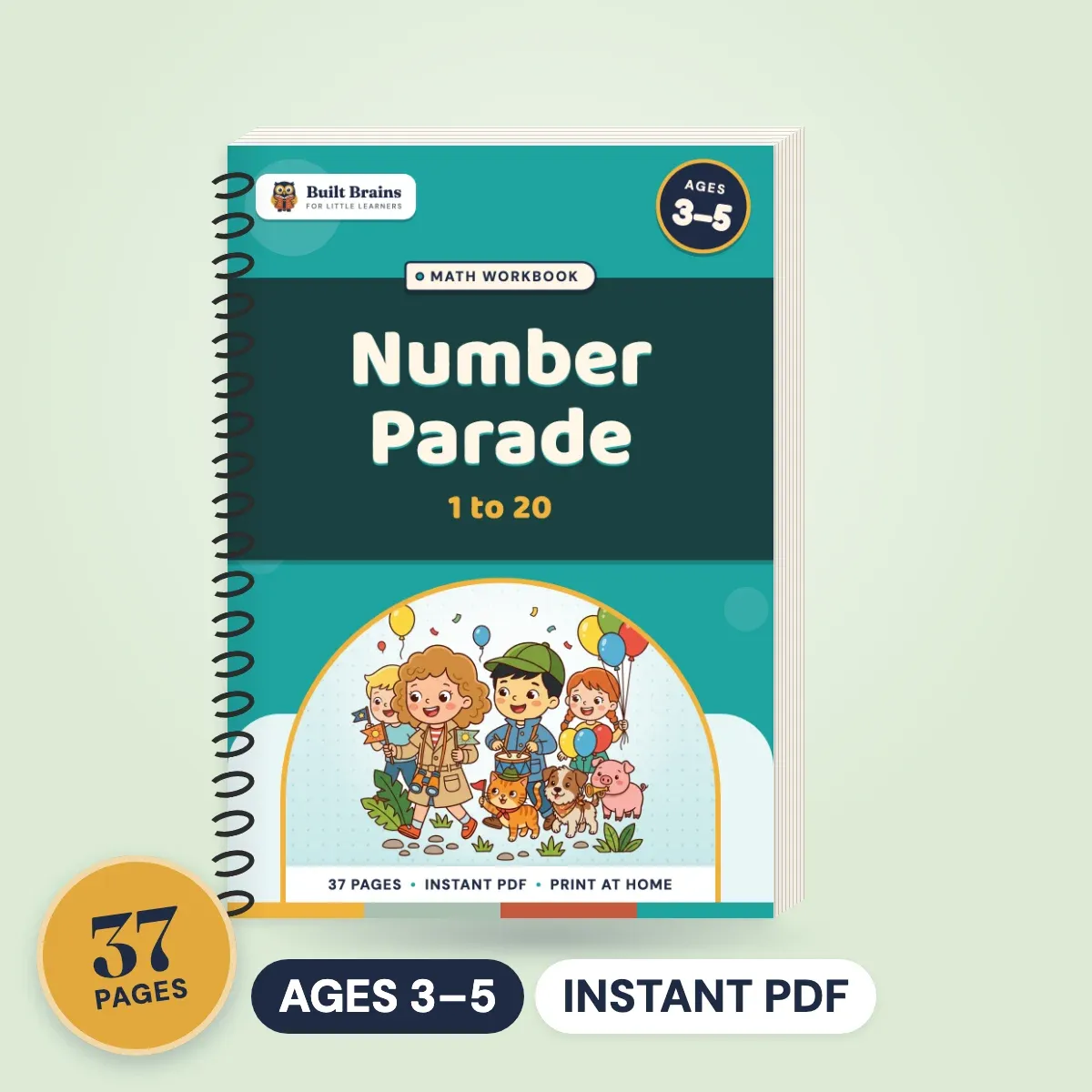
A sensible first step is to try our free printable book for a week or two and see how your child takes to printable pages before spending anything.
A paid pre-K curriculum
What you get: the sequence, the weekly plan and the pages, so you open the week and start.
Our Pre-K curriculum may suit you if you want 20-minute days planned for you, like a letter-number-theme rhythm, prefer secular materials and can print at home.
It may not suit you if you want a boxed kit with manipulatives, video lessons, or a fully worksheet-free approach, or you have no printer.
Common pre-K mistakes (and what to do instead)
- Pushing reading too hard. Some 4 year olds read early, many don't, and both are normal. Keep the focus on sounds, rhyme and blending, not on finishing books.
- Too much tracing, too little talking. Ask questions during stories: "What do you think happens next?"
- Skipping fine motor. Cutting, play-dough, lacing and picking up small objects build the hand strength writing needs.
- Comparing to other children. Compare your child to where they were last month.
- Long lessons. If tears are routine, shorten the lesson before you change the curriculum.
Is my child ready for kindergarten after pre-K?
By the end of a pre-K year, most children can recognize most letters and many sounds, write their name, count to 20 with objects and follow simple directions. Not all at once, and not all perfectly. Our kindergarten readiness checklist gives you a one-page view, and the Kindergarten Ready! Skills Kit practices cutting, pencil control, shapes, patterns, rhymes, beginning sounds and counting.
Start your pre-K year
Pick a start date, clear a spot at the table, and do 20 minutes. Keep the first two weeks easy so the routine sticks before the content gets harder. Browse everything for this age on the pre-K page.
If you want the whole year mapped out, the Pre-K at Home Curriculum gives you 36 weeks of letters, sounds, first reading and numbers to 20, ready to print.
Questions parents ask
Letter names and sounds, rhyming and hearing first sounds, blending simple three-letter words, writing a name, counting objects to 20, recognizing numerals, shapes, patterns, comparing more and fewer, and simple adding and taking away within 5. Add fine motor work, following directions and lots of reading aloud. Children vary, so use it as a direction, not a test.
Yes. Library books, free printables, free apps and free online plans can cover pre-K well if you have time to choose and order the activities. The trade-off is planning time and filling gaps between sources. A good approach is to start free for a few weeks, then pay for a planned program only if you want the sequence and pages done for you.
About 15 to 20 minutes of focused learning suits most 4 year olds, and some 5 year olds manage 25 to 30. Split it into two short bursts if attention runs out. The rest of the day is play, outdoor time, stories, meals and chores, which all teach language, math and self-control at this age.
Preschool usually means ages 3 to 4 and focuses on play, talking, first letters, colors, shapes and counting small groups. Pre-K is the year right before kindergarten, around 4 to 5. It is a little more structured and goes further into letter sounds, first reading, writing a name and numbers to 20.
Pre-K is not required in most places, and many children start kindergarten well prepared from home. What helps most is daily reading aloud, talk, play and some practice with letters, numbers, scissors and following directions. If you have concerns about speech, hearing or development, check in with your pediatrician or health visitor.