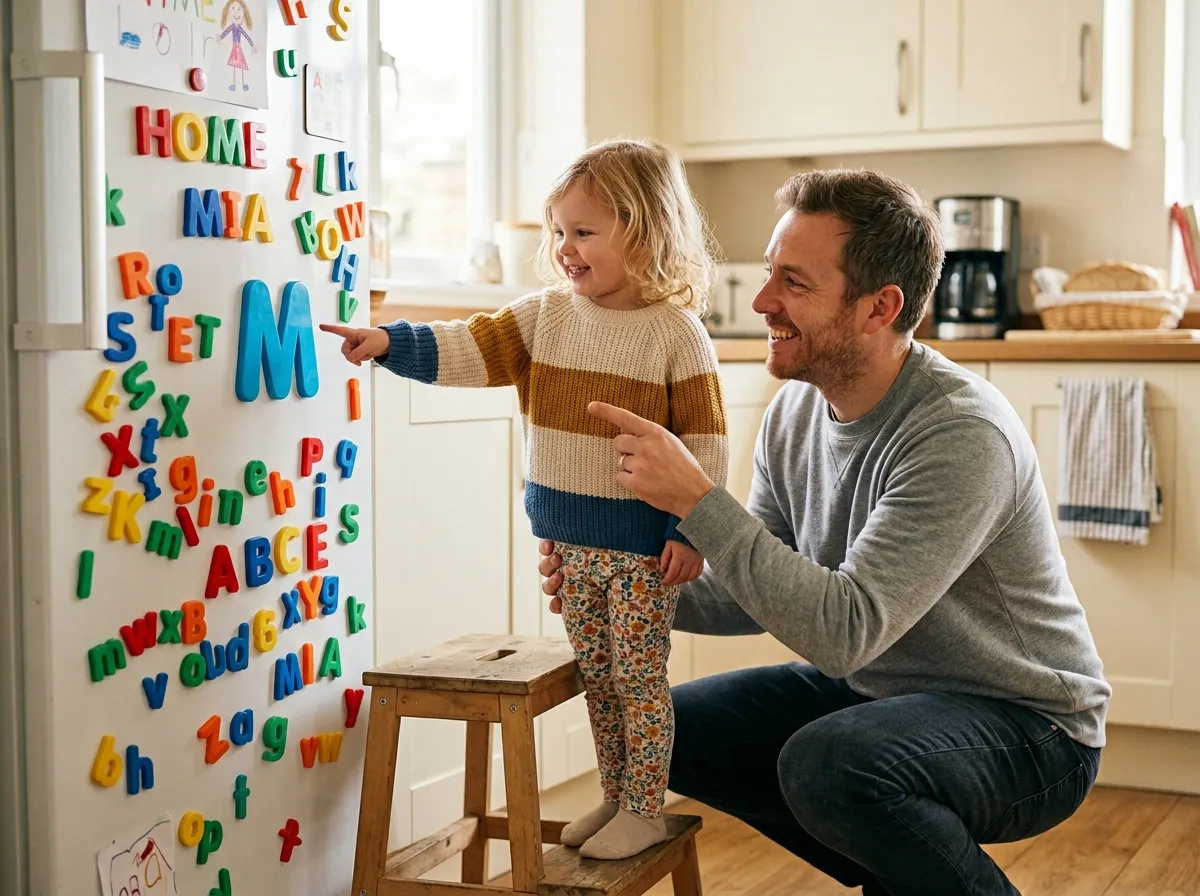
Start with listening: phonemic awareness first
Before letters mean anything, your child needs to notice that spoken words are made of smaller sounds. This is called phonemic awareness, and it is done entirely by ear. No paper, no letters. It’s the foundation that makes letter sounds click.
Good listening games for ages 3 to 5:
- Rhyme time. “Cat, hat, bat… what else rhymes with cat?” Nonsense words count: “zat” is a great answer.
- First sound I spy. “I spy something that starts with /mmm/.” Point to the milk if they need a hint.
- Robot talk. Say a word in separate sounds, “/d/ /o/ /g/,” and let your child guess the word. Then swap roles.
- Clap the syllables. “Di-no-saur” gets three claps. Start with names in your family.
You don’t need to finish phonemic awareness before starting letters. Keep playing these games all the way through. If your child can hear the /s/ at the start of sun, they’re ready to learn what s looks like.
Which letter sounds should you teach first?
Don’t go in alphabetical order. A, b, c, d gives you very few words to read. Many phonics programs begin with s, a, t, p, i, n because those six letters build lots of real words straight away: sat, pat, tap, pin, tin, nap, sip, ant, pan, sit.
A common teaching order looks like this, a few letters per week:
- s, a, t, p, i, n
- m, d, g, o, c, k
- e, u, r, h, b, f, l
- j, v, w, x, y, z, qu
Why this works: the early groups include vowels (a, i, o) so your child can make words quickly, and letters that look or sound alike, like b and d, are kept apart so they don’t get muddled.
One exception to the order: the letters in your child’s name. They’ll be motivated to learn those, so teach them whenever they come up.
How to say letter sounds correctly (no “uh”)
This is the most common mistake parents make, and it matters. If you teach b as “buh” and t as “tuh,” your child will try to blend “buh-a-tuh” and get something that doesn’t sound like bat.
Say sounds short and clean. These are sometimes called pure sounds:
- Stretchy sounds you can hold: s (sss), m (mmm), f (fff), l (lll), n (nnn), v, z, r. Hold them: “mmmm.”
- Bouncy sounds that stop quickly: t, p, k, b, d, g. Say them as briefly as you can, almost a whisper for t and p. It’s /t/, not “tuh.”
- Breath sound h: just a puff of air, not “huh.”
A quick self-check: put your hand in front of your mouth. For /t/ you should feel a little puff and hear no voice after it. Stretchy sounds are easiest for blending, which is one reason s, m and n appear early.
Multisensory ways to practice letter sounds
Young children remember what they see, hear, say and do together. Try linking each letter to a picture, an action and a movement of the hand.
- Picture plus sound. Show a card with s and a snake. Say “s, sss, snake.” Your child repeats.
- Sky writing. Write the letter big in the air with a straight arm while saying the sound.
- Sand or salt tray. Trace the letter with a finger in a shallow tray while saying the sound.
- Playdough letters. Roll snakes and shape the letter.
- Letter hunts. Find the letter on cereal boxes, signs and book covers.
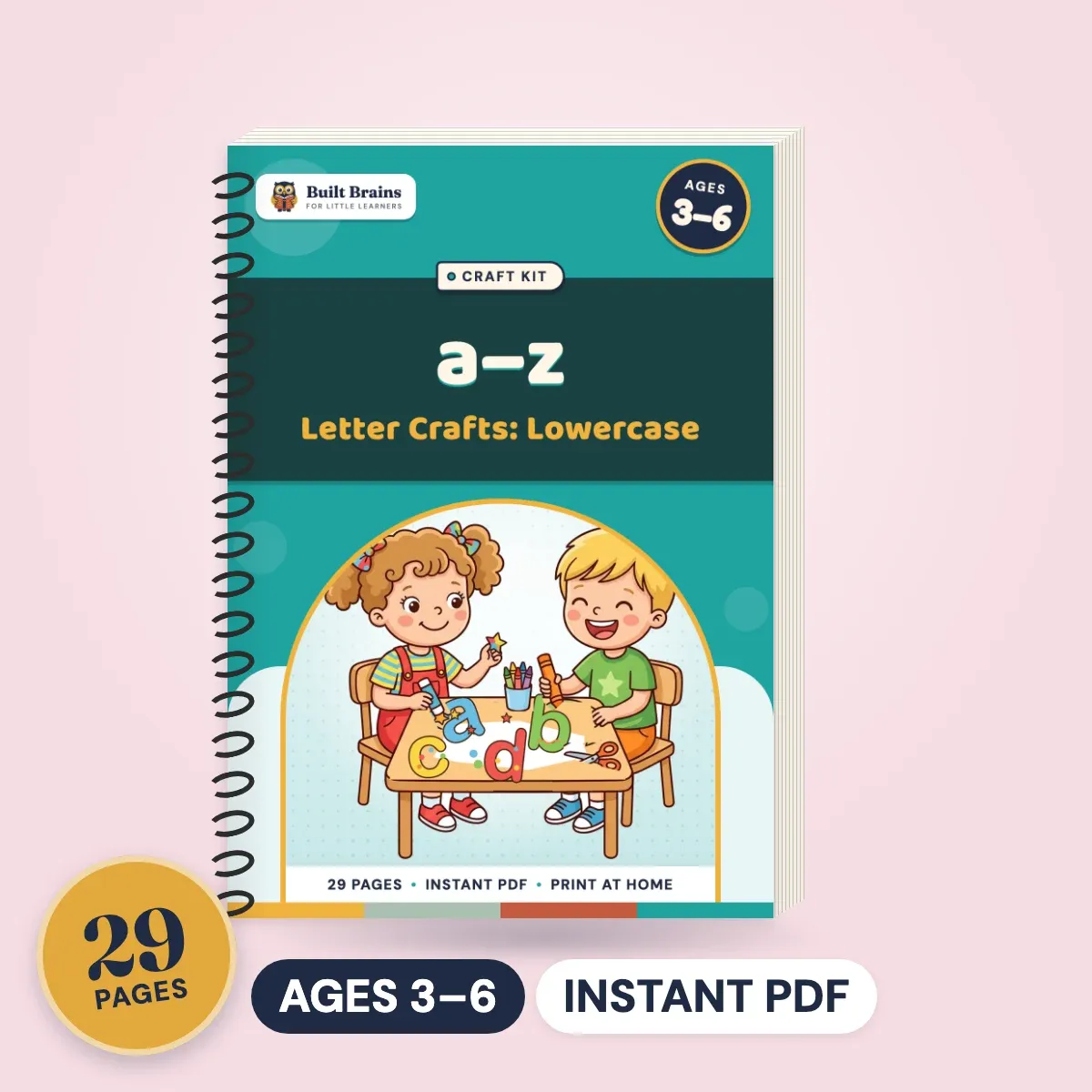
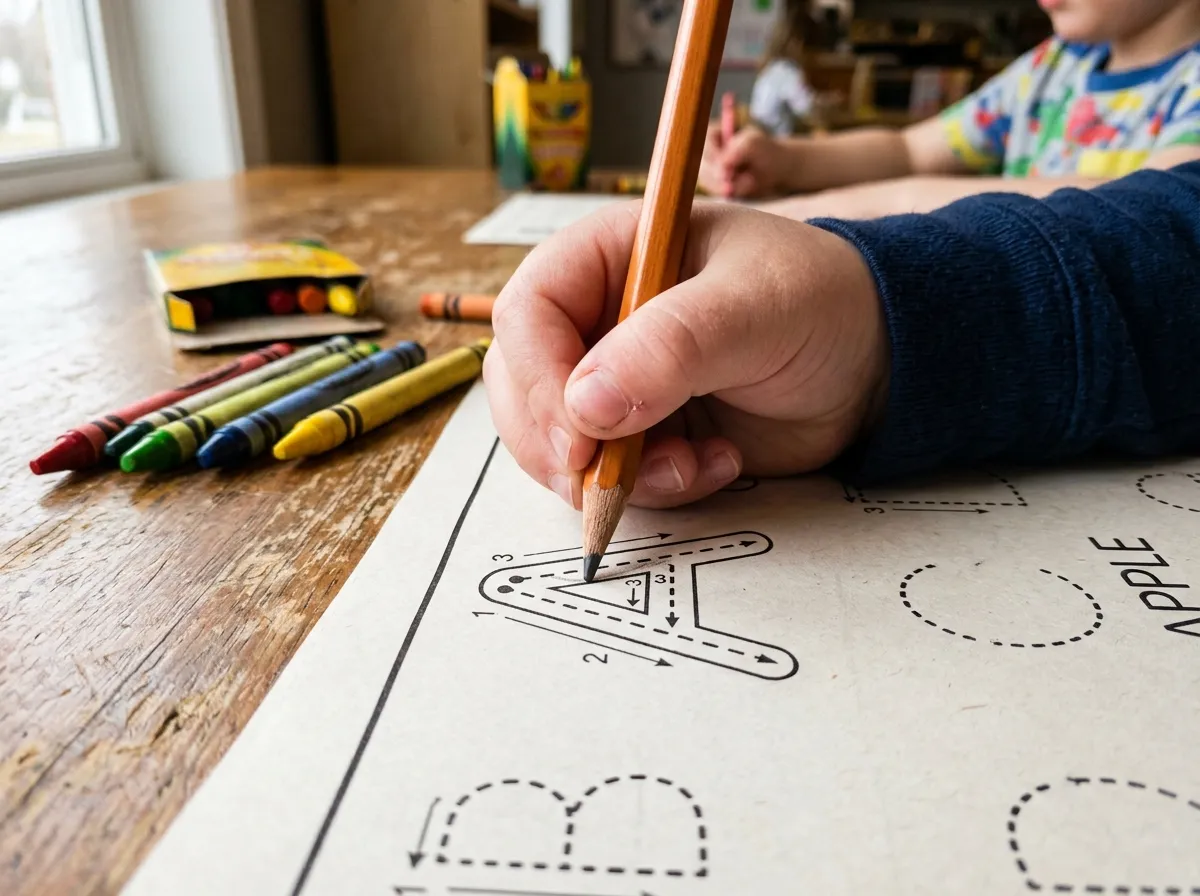
Printed pages help once your child knows a few sounds. The ABC Tracing Adventure gives every letter a picture to color, step-by-step tracing from a green starting dot, and a beginning-sounds hunt. If your child loves cutting and gluing, the lowercase letter crafts pair each letter with pictures that start with its sound.

Ages 3–5 · 60 pages
ABC Tracing Adventure: A to ZLearn every letter the right way — trace, find, color
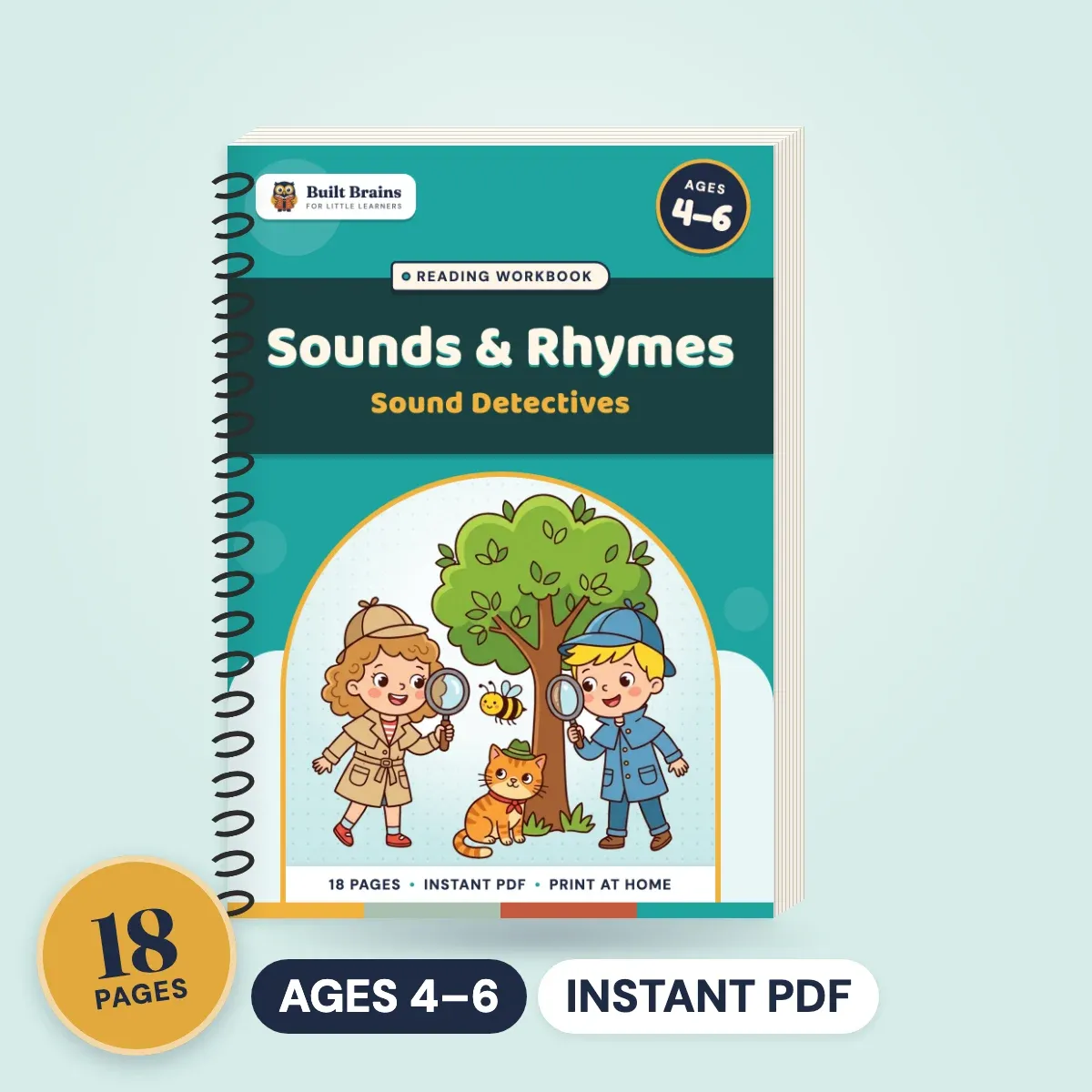
Ages 4–6 · 18 pages
Sound Detectives: Sounds & RhymesHear it, say it, circle it — the step before reading
Letter sound games that take five minutes
- Sound basket. Put 5 small toys in a basket. Your child pulls one out and says its first sound: “Car, /k/.”
- Feed the monster. Tape letter cards around a box with a mouth cut out. “Feed the monster the /m/.” Your child finds m and posts it.
- Letter slap. Lay out 4 letter cards. Say a sound; your child slaps the matching letter. Then let them call the sounds for you.
- Swat the sound. Stick letters on the wall and hand over a clean fly swatter.
- Sound walk. On a walk, pick one sound and hunt for things that start with it.
Keep it quick and stop while your child still wants more. A daily five minutes beats a weekly half-hour.
From letter sounds to reading: blending CVC words
Once your child knows s, a, t, p, i and n, start blending. CVC words (consonant, vowel, consonant) like sat, pin and tap are the first words most children read on their own.
A simple blending routine:
- Lay out three letter cards: s, a, t.
- Touch each letter and say its sound: “/s/ /a/ /t/.”
- Say them again, closer together: “/s/-/a/-/t/.”
- Slide your finger under the word and stretch it smoothly: “ssssaaat.”
- Ask: “What word is that?” and let your child say sat.
Start words with a stretchy sound (sat, man, fan, nap). They are much easier to blend than words starting with a bouncy sound, because your child can hold the first sound while reaching for the next one.
If your child says the sounds correctly but can’t hear the word, do the blending out loud yourself a few times, then try again tomorrow. Blending often clicks suddenly after days of seeming stuck.
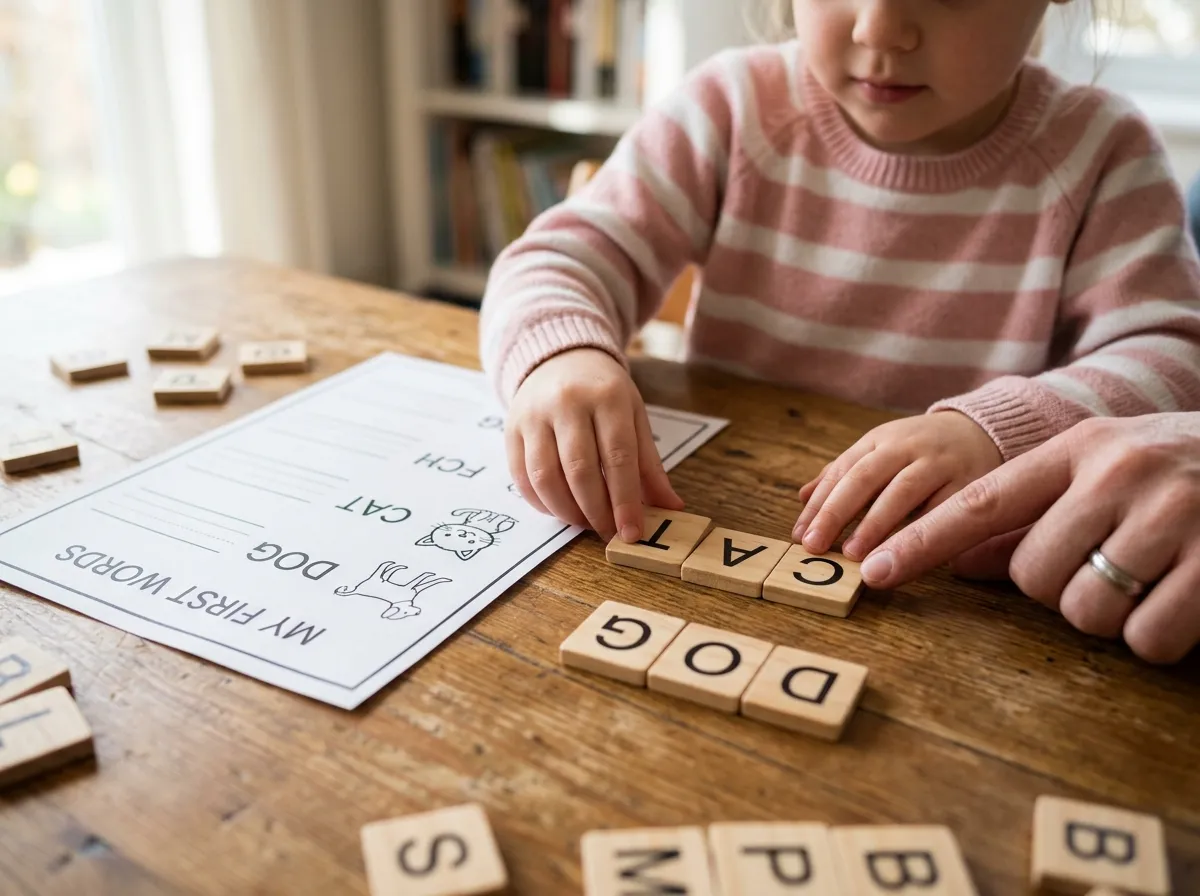
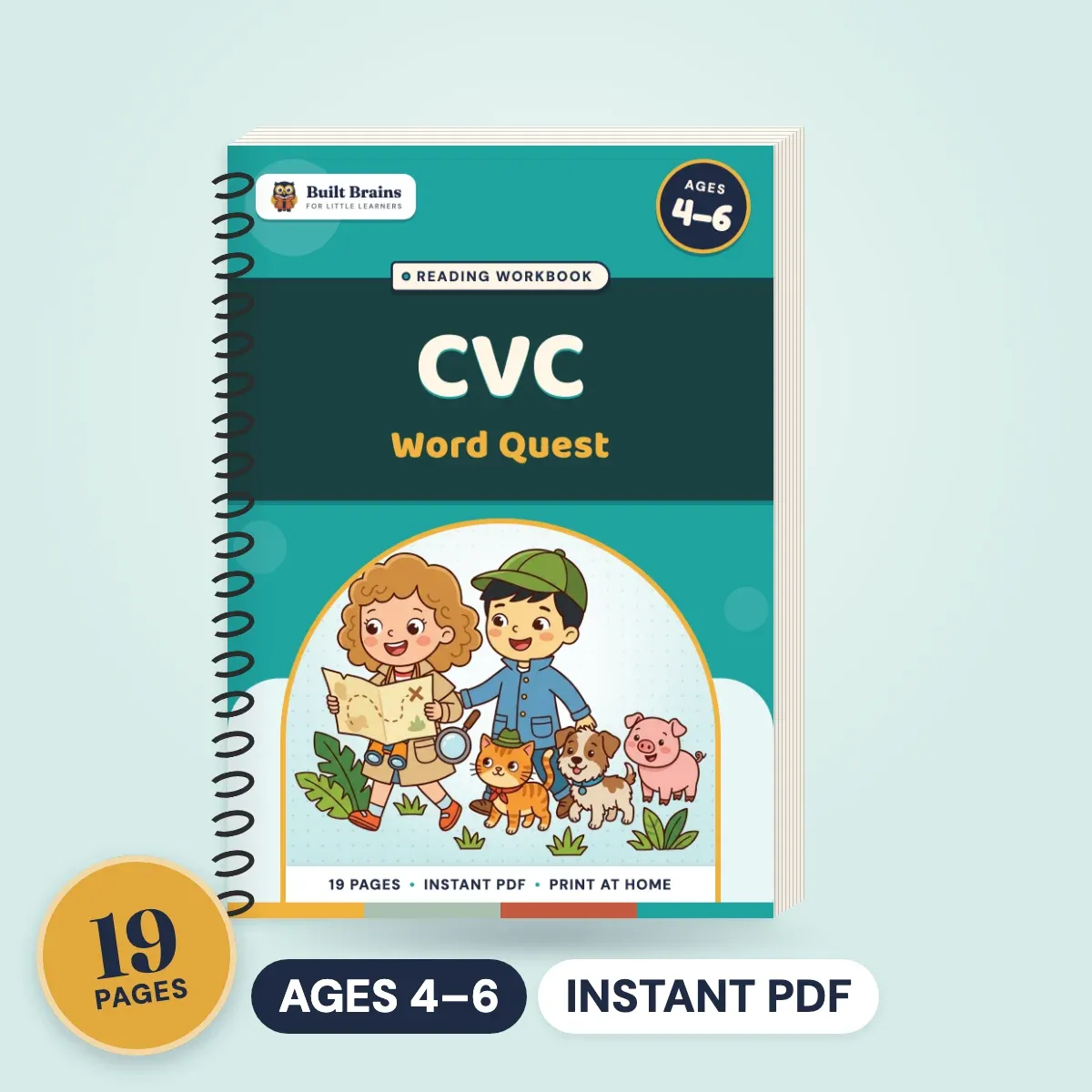
Writing words, sound by sound, builds the same skill in reverse. CVC Word Quest has children say each picture slowly and write one sound per box, then trace, read and find the words. Once blending is going well, a handful of high-frequency words will help your child read sentences; our kindergarten sight words guide explains how to add them.
Common mistakes when teaching letter sounds
- Adding “uh” to sounds. Keep bouncy sounds short and clipped.
- Teaching letter names only. Names are useful, but reading depends on sounds. Teach both, and be clear which one you’re asking for.
- Too many letters at once. Three or four new letters a week, with lots of review, is plenty for most 4 and 5 year olds.
- Teaching b and d together. Keep them weeks apart so one is solid before the other arrives.
- Waiting to blend until all 26 letters are learned. Start blending as soon as there are a few consonants and one vowel.
- Long sessions. If your child is wriggling, yawning or guessing wildly, stop.
Teaching letter sounds by age
Ages 2 to 3
Stick to listening fun: nursery rhymes, songs, silly rhyming, and noticing sounds (“Mommy and milk both start with /m/!”). Point out the letters in their name. There’s no need for formal lessons.
Ages 3 to 4
Add first-sound games and a few letters at a time, starting with their name and s, a, t, p, i, n. Tracing big letters and letter hunts work well. Keep sessions to about five minutes.
Ages 4 to 5
Most children are ready to learn all the sounds and begin blending CVC words. Ten minutes a day, with a mix of a game, a page and a quick blending practice, is a good rhythm. The preschool books page and the reading collection have printable practice for this stage.
Ages 5 to 6
Kindergarten builds on sounds with digraphs (sh, ch, th), blends (st, fl) and silent e. If your child still hesitates on some single letter sounds, keep reviewing those daily with a quick card game while moving forward.
Questions parents ask
Many phonics programs start with s, a, t, p, i, n because those letters make lots of simple words right away. Then add m, d, g, o, c, k, followed by e, u, r, h, b, f, l, and finally j, v, w, x, y, z and qu. Keep look-alike letters such as b and d apart.
Both are useful, and many children learn names from songs anyway. For reading, sounds matter more, because blending sounds is how children decode words. A good approach is to teach the sound as the main job and mention the name alongside it: “This is s. It says /s/.”
Many children learn most letter sounds between ages 4 and 5, and kindergarten usually teaches or reviews all of them. Some three year olds know several sounds, and some five year olds are still learning. Steady progress matters more than hitting a particular age.
With short daily practice, many four and five year olds learn the main 26 letter sounds over a few months, roughly three or four new letters a week plus review. Some children move faster and some need longer. Keep reviewing earlier sounds as new ones are added so nothing slips.
Blending is a separate skill. Check you’re saying pure sounds without “uh,” start with words that begin with stretchy sounds like s, m or f, and model it by stretching the word smoothly. Practice orally too, with robot-talk games. For many children blending clicks suddenly after a few weeks.