What should a 4 year old know academically? The short answer
Four is the year when a lot of pieces start to connect. Your child may suddenly notice letters on every sign, count everything on the table and ask how words are spelled. But children still vary widely at this age, and the academic expectations are modest.
By 4, most children:
- Talk in sentences of four or more words and tell you about their day
- Say words from songs, stories and nursery rhymes
- Recognize their own name and some letters
- Count a small group of objects and name a few colors
- Hold a crayon between fingers and thumb and draw a simple person
- Play pretend games with other children and want to help
Over the next year, the work is letter names and sounds, hearing rhymes and first sounds, counting to 10 and beyond, cutting and pencil control, and the independence to manage a school day. Reading and written sums come later.
Pre-K, kindergarten or reception? How the two systems work
What your 4 year old “should” know depends partly on where you live, because school starts at different ages.
In the US (and much of Canada)
Age 4 is usually the pre-K year, at home, in a preschool or in a public pre-K program. Kindergarten starts at around 5, based on a birthday cutoff that varies by state. So a 4 year old has a full year before formal school, and kindergarten teachers expect a wide range of skills on day one. Ontario and some other provinces offer junior kindergarten at 4.
In the UK and Ireland
In England and Wales, most children start reception in the September after they turn 4, even though school is not compulsory until the term after they turn 5. Reception follows the Early Years Foundation Stage (EYFS), so it is still play-based, with phonics taught step by step. Scotland and Northern Ireland start primary school at a similar age, and in Ireland many children start junior infants at 4 or 5.
The EYFS early learning goals, such as writing simple sentences and counting beyond 20, describe where children are expected to be at the end of reception, not the start. A UK 4 year old walking into school in September needs independence and confidence far more than letters.
A 4 year old learning checklist
This table combines the CDC’s milestone checklists (which describe what most children, about three in four or more, can do by a given age), the Head Start Early Learning Outcomes Framework and the UK’s Development Matters guidance. Use the middle column as “most 4 year olds” and the right column as “by around 5, before kindergarten”.
| Area | Most children by 4 | Working toward by 5 |
|---|---|---|
| Language | Sentences of 4+ words, talks about their day, answers “What is a coat for?” | Tells a short story in order, follows two- or three-step directions |
| Early literacy | Recognizes own name, knows some letters, joins in with rhymes, retells a bit of a story | Knows most letters and many sounds, hears the first sound in a word, retells 2–3 events in order |
| Writing | Draws a person with three or more body parts, makes letter-like shapes | Writes or attempts first name, copies some letters |
| Early math | Says numbers to 10, counts a few objects, names a few colors, compares more and less | Counts 10 objects accurately, says numbers toward 20, recognizes numerals 1–10, simple patterns |
| Fine motor | Holds a crayon between fingers and thumb, unbuttons some buttons, snips with scissors | Cuts along a line, traces lines and shapes with control |
| Social-emotional | Pretend play with others, comforts a friend, likes to help, behaves differently in the library than the park | Takes turns, manages small frustrations, sits for a 10-minute story |
| Self-care | Pours water or serves food with supervision, mostly independent at the toilet | Puts on coat and shoes, opens lunch containers, washes hands alone |
What the table does not mean
- A 4 year old who can’t do half the right column is normal. That column describes the end of the year.
- Younger children in a school year, summer birthdays in the UK or late birthdays under a US cutoff, often catch up across the first year of school.
- Uneven skills are typical. Look for steady progress rather than a perfect score.
What should a 4 year old know before kindergarten or starting school?
Ask kindergarten and reception teachers what they wish every child could do on the first day, and the answers are rarely “read” or “add”. They are more likely to say:
- Manage their own body and belongings. Toilet, hand washing, coat, shoes, lunchbox, finding their own bag.
- Listen to an adult in a group. Sit for a short story and follow a simple instruction given to the whole class.
- Take turns and cope with small disappointments. Not being first in line, losing a game, waiting for a turn on the slide.
- Ask for help. “Can you help me open this?” is a school skill.
- Use their hands. Hold a pencil, use scissors, glue, turn pages. Fine motor skills affect how quickly children can take part in writing tasks.
- Love stories. Children who are read to often arrive with more words and more curiosity.
Letters, sounds and counting help too, and they are the easiest part to practice at home. But if you only have time for one thing this year, give your child daily jobs to do independently and read to them every night. For a full one-page version, see the kindergarten readiness checklist.
How to practice at home in 20 minutes a day
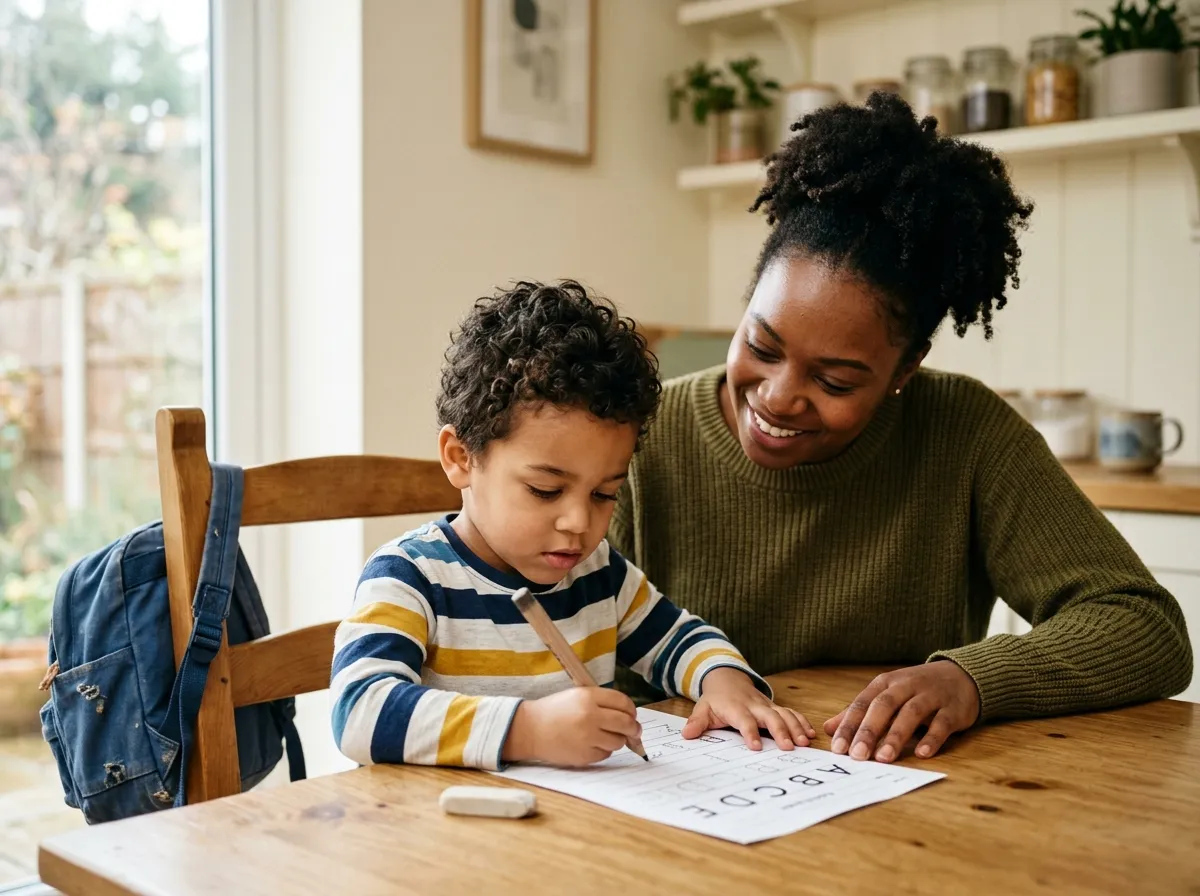
At 4, most children can manage about 15 to 20 minutes of focused learning, broken up if needed. Keep it at the table, same time each day, and stop while it is still fun.
A simple weekly rhythm
- Monday: letter of the week. Say its sound, find it in books, trace it big in the air, then on paper.
- Tuesday: sound hunt. Collect three toys that start with the sound. Sort pictures into “starts with /m/” and “doesn’t”.
- Wednesday: number of the week. Build it with blocks, show it on fingers, count that many jumps, trace the numeral.
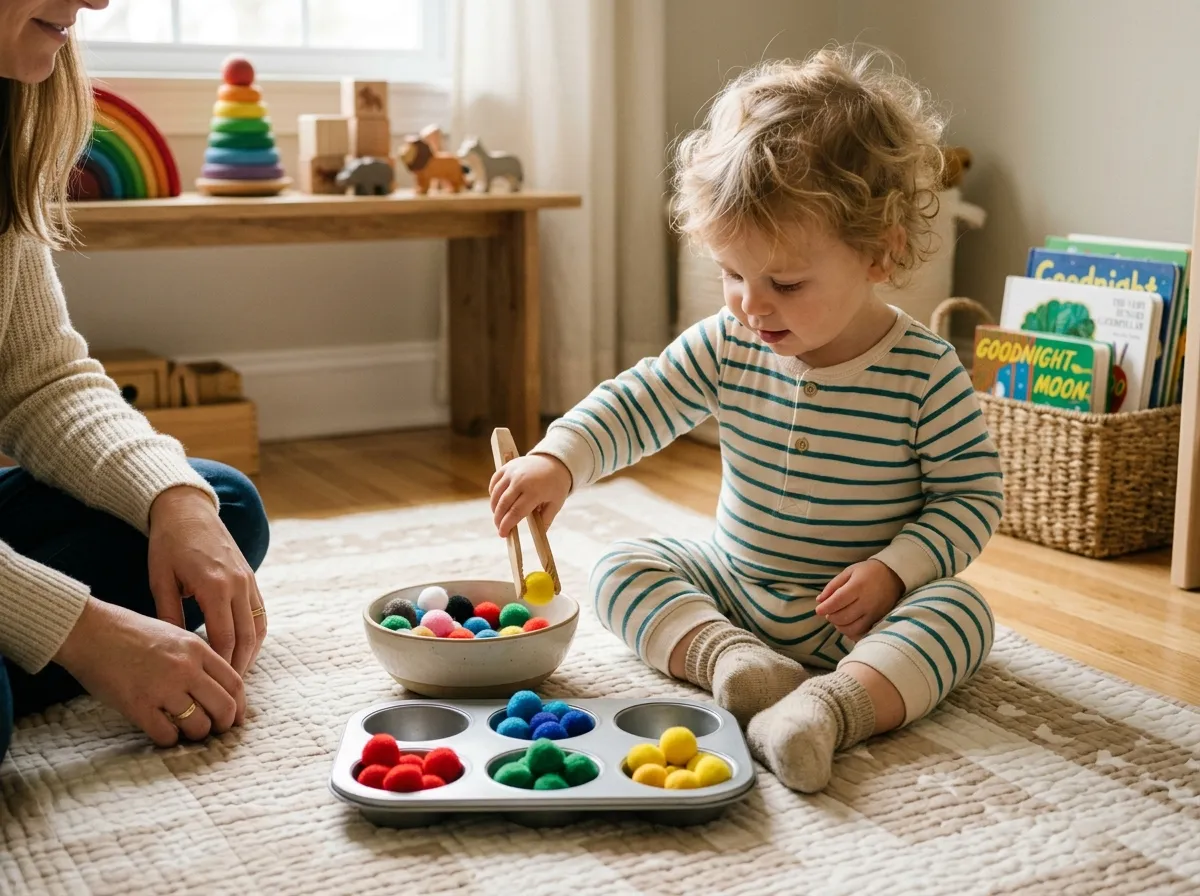
- Thursday: busy hands. A cutting strip, a maze, play-dough letters or threading beads.
- Friday: games. A rhyming game, a pattern with colored pasta (red, blue, red, blue), a matching game, then free drawing.
Everyday learning that counts
- Setting the table: one fork per plate is one-to-one counting.
- The grocery store: “Find something that starts with /b/.” “Put four apples in the bag.”
- The car: rhyming games (“What rhymes with bus?”), I-spy with sounds rather than letter names.
- Bedtime: two or three stories, and ask “What happened first? What happened next?”
Scripts for common moments
- If they say “I can’t”: “It’s tricky. Let’s do the first bit together, then you try the next bit.”
- If they rush: “Show me your slowest, most careful line. Snail speed.”
- To finish: “Last one, then you choose what we play next.”
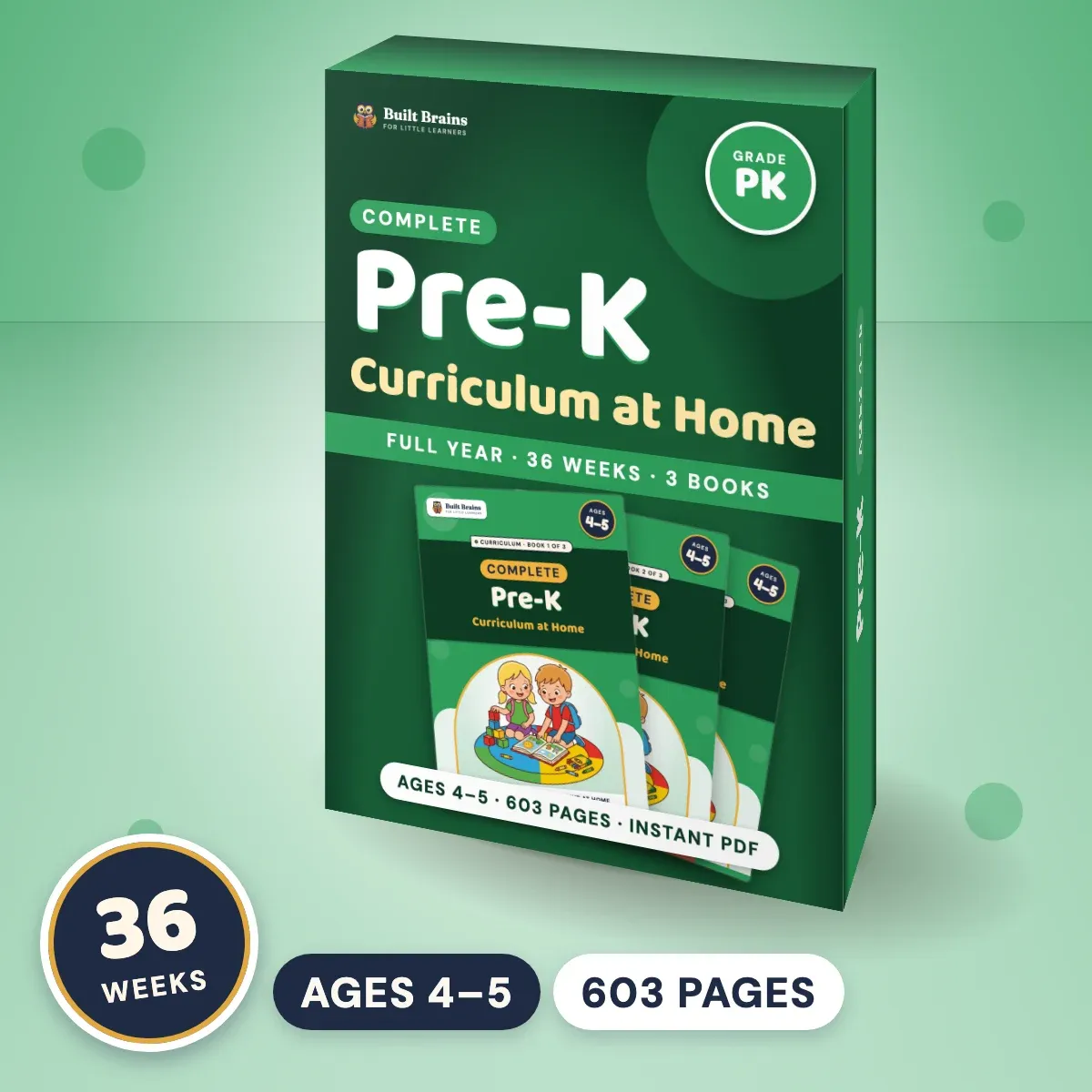
If you want the planning done for you, the Pre-K at Home Curriculum is a 36-week plan for 4 and 5 year olds in about 20 minutes a day, covering every letter and its sound, first blending, numbers to 20, shapes, patterns and simple adding and taking away. For a shorter burst of practice on the skills teachers notice on day one, the Kindergarten Ready! Skills Kit covers cutting, pencil control, shapes, patterns, rhymes, beginning sounds, counting and first letters.
 New
NewAges 4–5 · 603 pages
Complete Pre-K Curriculum at Home36 weeks to kindergarten-ready — letters, first reading and numbers to 20

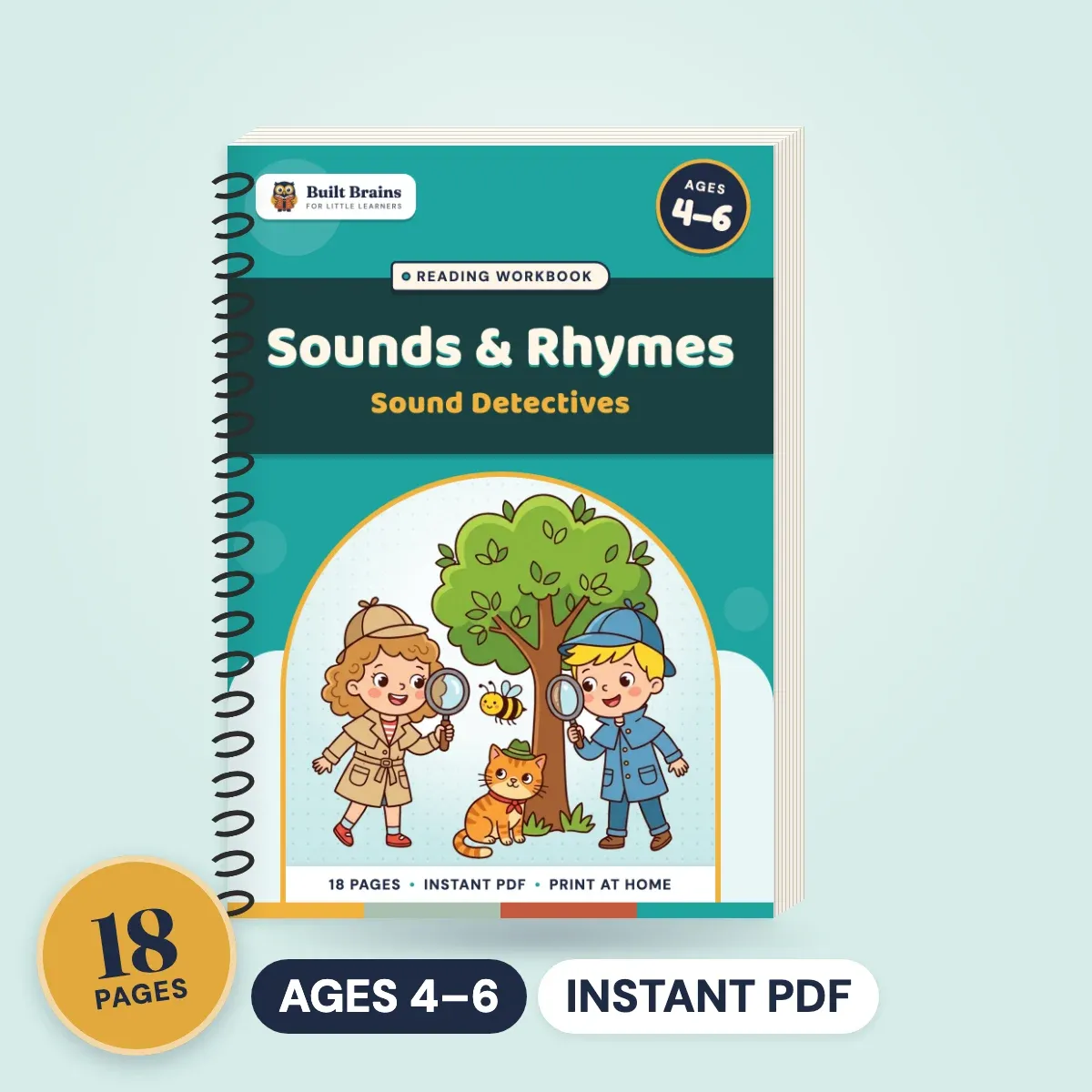
Ages 4–6 · 18 pages
Sound Detectives: Sounds & RhymesHear it, say it, circle it — the step before reading
Letters, sounds and name writing: where to start
A good order for a 4 year old:
- Rhymes and first sounds by ear. Before any letters, play listening games. “Mat, map, sun. Which one starts differently?”
- Letter names and sounds together. Teach “this is m, it says /m/” with a picture: mmm, moon. Mix capitals and lowercase from the start, since most print is lowercase.
- Their name. Recognize it first, then trace it, then write it with a model. Our guide to teaching a child to write their name walks through each step.
- Blending, if they are ready. Some children begin to blend simple words like s-a-t near the end of the year. If it doesn’t click yet, keep playing sound games.
In the UK, don’t worry about teaching phonics “the school way”. Reception will follow its own phonics program, and what helps most is a child who can hear sounds in words.
Numbers and early math: what to focus on
- Counting objects, not just reciting. Line up ten toy cars and count them by touching each one.
- How many? After counting, ask “How many cars?” The answer should be the last number said.
- Small numbers at a glance. Roll a die and see if your child can say “three” without counting the dots.
- More, fewer, same. “Who has more grapes, you or me? How can we make them the same?”
- Numerals 1 to 10. Link each written number to a quantity, then work toward 20.
- Patterns and shapes. Clap patterns, bead patterns, shape hunts around the house.
When to talk to someone
The CDC’s guidance is to act early. Mention it to your pediatrician (US) or GP, health visitor or nursery (UK) if your child:
- Is hard for strangers to understand, or doesn’t use sentences
- Doesn’t follow simple instructions or answer simple questions
- Shows little interest in other children or pretend play
- Has lost skills or words they once had
- Seems to struggle with hearing or vision
In the US, evaluations for children 3 and older are usually arranged through the local public school district, free of charge. In the UK, nurseries and health visitors can refer to speech and language therapy and other services.
Next steps
Keep the year relaxed: read every day, give your child real jobs, and spend 15 to 20 minutes on letters, numbers and busy hands. That is enough for most children to walk into kindergarten or reception ready to enjoy it.
Browse printables for pre-K ages 4–5, try the format with our free printable book, or look back at what a 3 year old should know if your child is at the younger end.
Questions parents ask
No. Most children learn to read in kindergarten in the US or in reception and Year 1 in the UK, when phonics is taught step by step. At 4, the useful groundwork is enjoying books, hearing rhymes and first sounds, and knowing some letters. Some 4 year olds do start reading, but it is not expected or a sign that others are behind.
Many 4 year olds can say the numbers to 10 and are working toward 20, often with a skipped number. Counting objects is the more important skill: touching each item once and knowing the last number tells how many. By the start of kindergarten, counting 10 objects accurately is a reasonable goal.
Many can write some of the letters, often large, wobbly or reversed. Recognizing their name in print is the first step, and writing it follows over the year. Teach a capital first letter and the rest lowercase, which is how school will teach it. Perfect letters are not expected before kindergarten or reception.
Reception teachers mostly hope for independence and confidence: using the toilet and washing hands alone, putting on a coat, opening a lunchbox, listening to a short story, taking turns and asking an adult for help. Reading, writing and sums are taught in school, so there is no need to teach them first.
Talk to your pediatrician, GP or health visitor if your child is hard to understand, doesn’t use sentences, can’t follow simple instructions, shows little interest in other children or pretend play, or has lost skills they once had. The CDC advises acting early rather than waiting to see if a child grows out of it.