What is the best 1st grade homeschool curriculum?
The best 1st grade homeschool curriculum is one that continues phonics where kindergarten left off, ties spelling to the same patterns, gives your child real passages to read, and covers first-grade math, in a daily time you can keep up. If you are spending more time planning than teaching, the curriculum is not doing its job.
At a glance, a full first-grade year should include:
- Phonics and spelling: short vowels and blends, digraphs, silent e, vowel teams (ee, ai, oa), r-controlled vowels (ar, or, er), then endings, prefixes and suffixes.
- Reading: a new short passage most weeks, read aloud and independently, with questions about it.
- Grammar and writing: capitals and periods, nouns and verbs, question marks, simple paragraphs.
- Math: facts to 20, place value to 120, two-digit adding and subtracting, time, money, measuring, fractions, shapes and graphs.
- Science and social studies themes for reading and talking.
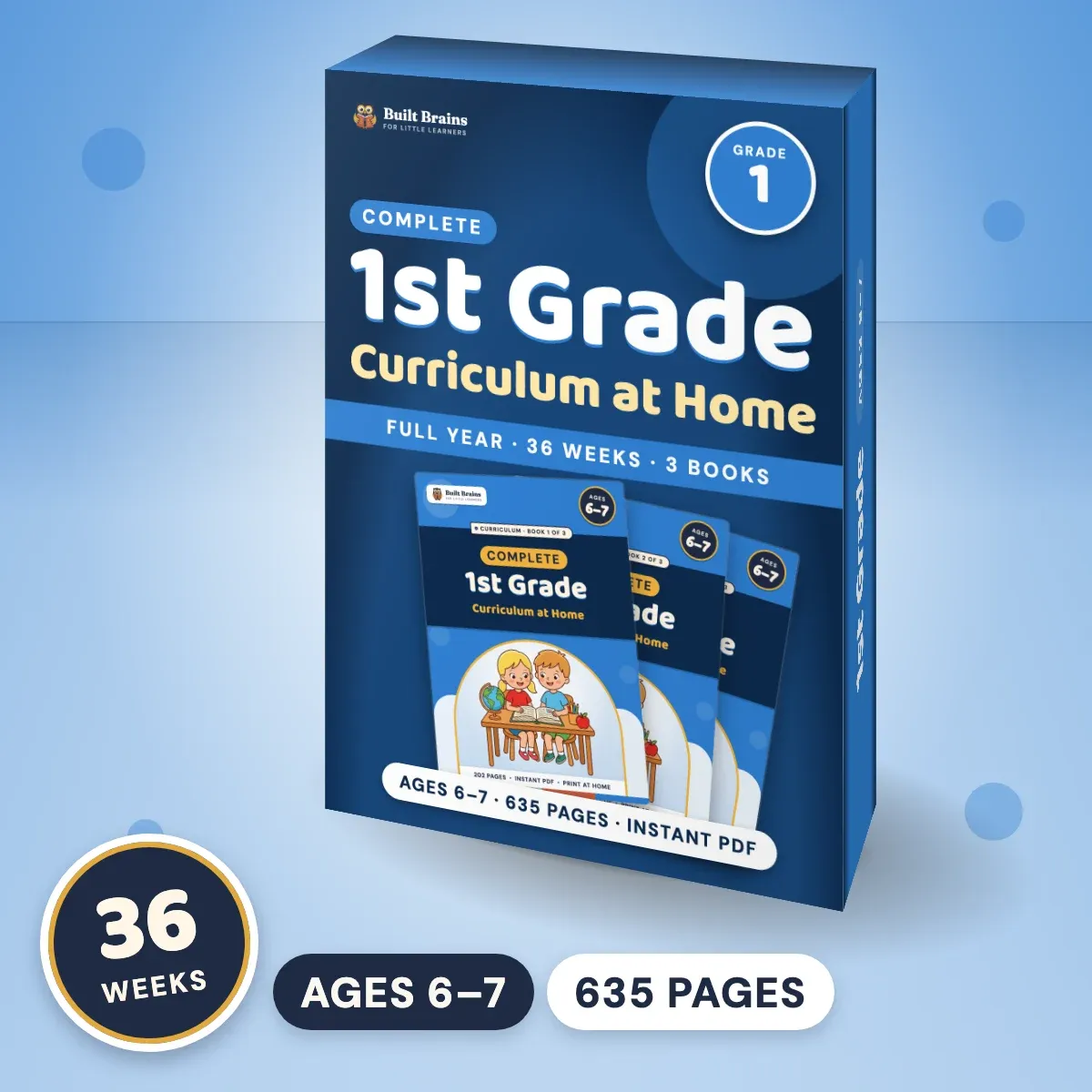
Our option is the 1st Grade at Home Curriculum, a secular, print-at-home year. From the product details:
- 36 weekly plans, 635 pages: three printable books of 12 weeks each plus a 19-page Parents' Guide.
- Every week: a spelling list built on one phonics pattern, a phonics sort, spelling practice and a Friday spelling check.
- A grammar mini-lesson, three sight words, a reading passage with questions and a writing prompt.
- First-grade math pages and a theme with facts.
- About 45 minutes a day.
It is an instant PDF download, black and white, prints on US Letter or A4, and comes with a 14-day money-back guarantee.
What do 1st graders learn? The first-grade scope
US state standards for first grade are broadly similar. Use this as a map of the year, keeping in mind that children develop at different speeds.
| Subject | What most first graders work on |
|---|---|
| Phonics | Blends and digraphs, silent e, vowel teams, r-controlled vowels, two-syllable words, -ed and -ing endings |
| Reading | Reading short passages with expression, retelling, answering who, what, where and why questions |
| Spelling | 10 or so words a week built on one pattern, plus common sight words |
| Writing | Writing several sentences on one topic, with capitals and end marks |
| Grammar | Nouns, verbs, adjectives, plurals, pronouns, contractions |
| Math | Adding and subtracting within 20, tens and ones, counting to 120, adding two-digit numbers, time to the half hour, coins, measuring length, halves and quarters, simple graphs |
| Science and social studies | Weather, seasons, plants, animals, the body, community, maps |
The biggest shift is in reading. In kindergarten, children learn to blend sounds. In first grade, they start reading whole passages and thinking about them. That is why first-grade curricula add comprehension questions and a writing response each week.
If your child is still shaky on blending three-letter words, spend a few weeks there first. Our guide on how to homeschool kindergarten has ideas for filling gaps.
How many hours a day is 1st grade homeschool?
Less than a school day. A classroom spends a lot of time on transitions and waiting. At home, one-to-one, most first graders do well with:
- Reading, phonics and spelling: 20 to 30 minutes
- Math: 15 to 20 minutes
- Writing or grammar: 10 minutes
- Read-aloud: 20 minutes or more, any time of day
That comes to about 45 to 90 minutes of focused work. Split it into two sessions if your child's attention fades: reading after breakfast, math after a snack and some outdoor play.
A sample week of 1st grade homeschool
Here is Week 11 from our first-grade curriculum. The pattern is long e (ee and ea), the grammar skill is commas in a list, the math is two-digit subtracting, and the theme is Healthy Food.
- Monday, spelling and phonics (about 45 minutes): Read the list together: tree, bee, feet, green, sleep, sea, eat, read, team, beach. Sort the words by ee and ea.
- Tuesday, grammar and sight words: Mini-lesson on commas in a list ("I packed peas, cheese and peaches"). Practice the sight words not, what and all.
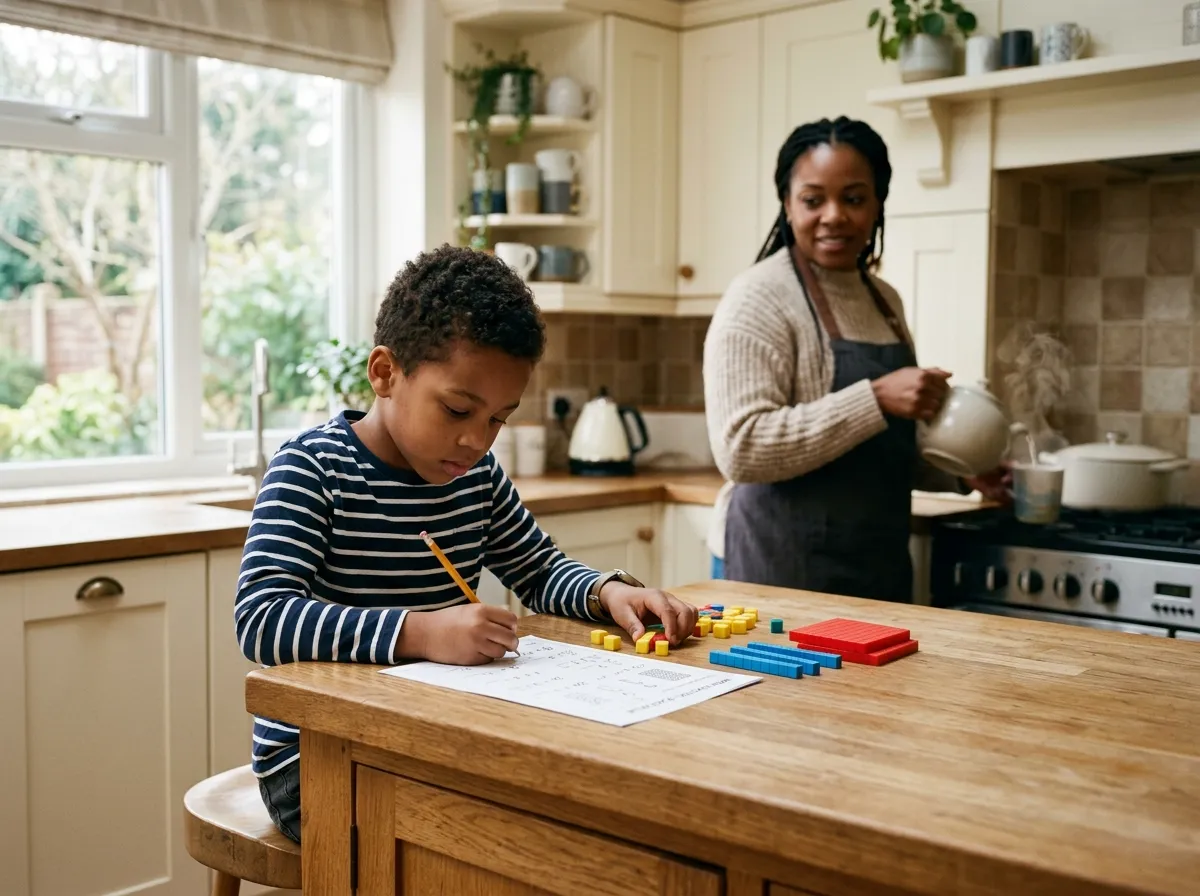
- Wednesday, math: Two-digit subtracting. Use bundles of ten straws or drawings of tens and ones first, then the pages.
- Thursday, read: Read "Treats at the Beach" twice, once together and once on their own, then answer the questions.
- Friday, write and review: A short writing prompt, the spelling check (you say each word in a sentence, your child writes it) and the healthy food theme page.
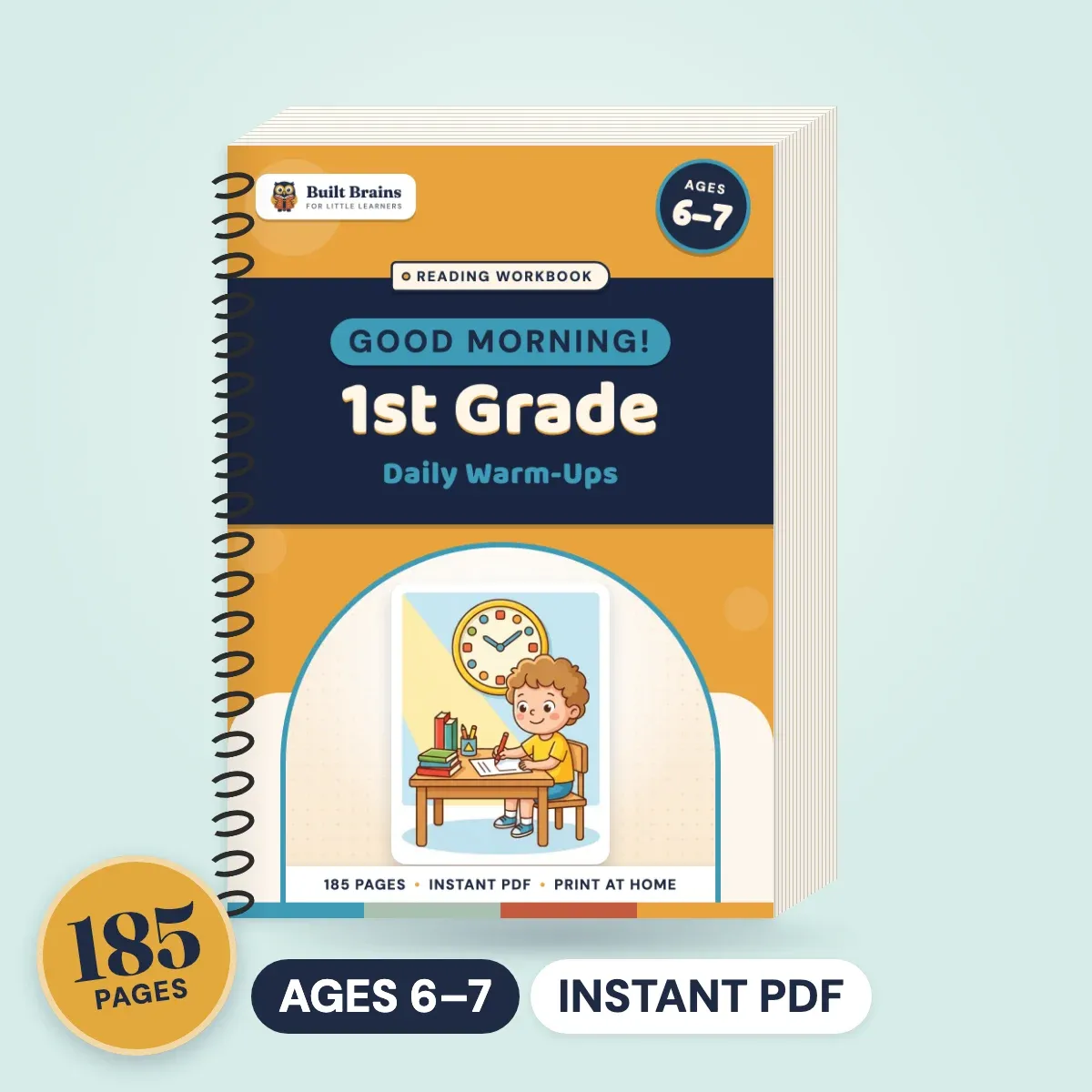
Our weekly plan gives each day one main focus. If you want math every day, add a five-minute warm-up page each morning. The 1st Grade Warm-Ups include 52 daily pages with the date and weather, a word of the day, a fix-it sentence, math of the day, number of the day and a quick write.
How to choose a 1st grade homeschool curriculum
Work through these questions with a sample week in front of you.
Does phonics pick up where your child is?
Look at the first four weeks. If they start with short vowels and blends, they suit a child who finished kindergarten phonics. If your child already reads fluently, check that the later weeks reach vowel teams, r-controlled vowels and suffixes, so you are not repeating a year.
Is spelling tied to phonics?
The strongest spelling programs use the same pattern your child is learning to read that week. A random list of unrelated words is harder to learn and easier to forget.
Are there real passages to read?
First graders need connected text: short stories and simple nonfiction, with questions that ask why and how, not only what color.
Does the math go far enough?
Check for place value (tens and ones), two-digit adding and subtracting, time, money and fractions, not just more single-digit facts.
How much prep and how much time?
Open-and-go means you can start with five minutes of reading the plan. Some programs need an hour of weekend prep. Pick honestly for your week.
Is it secular or faith-based?
At first grade, the reading and math content is much the same either way. Read sample passages and the science themes to see which fits your family. Built Brains curricula are secular and faith-neutral.
 New
NewAges 6–7 · 635 pages
Complete 1st Grade Curriculum at Home36 weeks of phonics, reading, writing, spelling and math — planned for you
 Save $20
4 books · 866 pages
The Complete 1st Grade BundleCurriculum, warm-ups, reading journal and cursive
Free 1st grade homeschool curriculum: can you do it for free?
You can, and plenty of families do. A free first-grade year usually looks like:
- A library card for read-alouds, early readers and science picture books.
- A phonics sequence you follow in order, with word lists you write yourself.
- Free math printables grouped by skill.
- A notebook for daily writing and spelling.
The cost is your time. You will plan each week, find pages that match, and decide what comes next. If you enjoy that, go for it. If you would rather spend the planning time teaching, a complete curriculum is the shortcut.
A good middle path: try our free printable book to see whether your child enjoys the style, then decide whether you want the full year.
Our option: the Built Brains 1st Grade at Home Curriculum
Here is our curriculum, described plainly so you can decide if it fits.
The 1st Grade at Home Curriculum is a 36-week printable year for ages 6 to 7. Phonics moves from short vowels and blends to digraphs, silent e, vowel teams, r-controlled vowels, two-syllable words, prefixes and suffixes. Each week has 10 spelling words on one pattern, three sight words, a grammar mini-lesson, a short passage with multiple-choice and written questions, a writing prompt and math pages. Themes run through the seasons, from Back to School and Pumpkins to Space, the Ocean and Maps & My Town. There is no religious instruction.
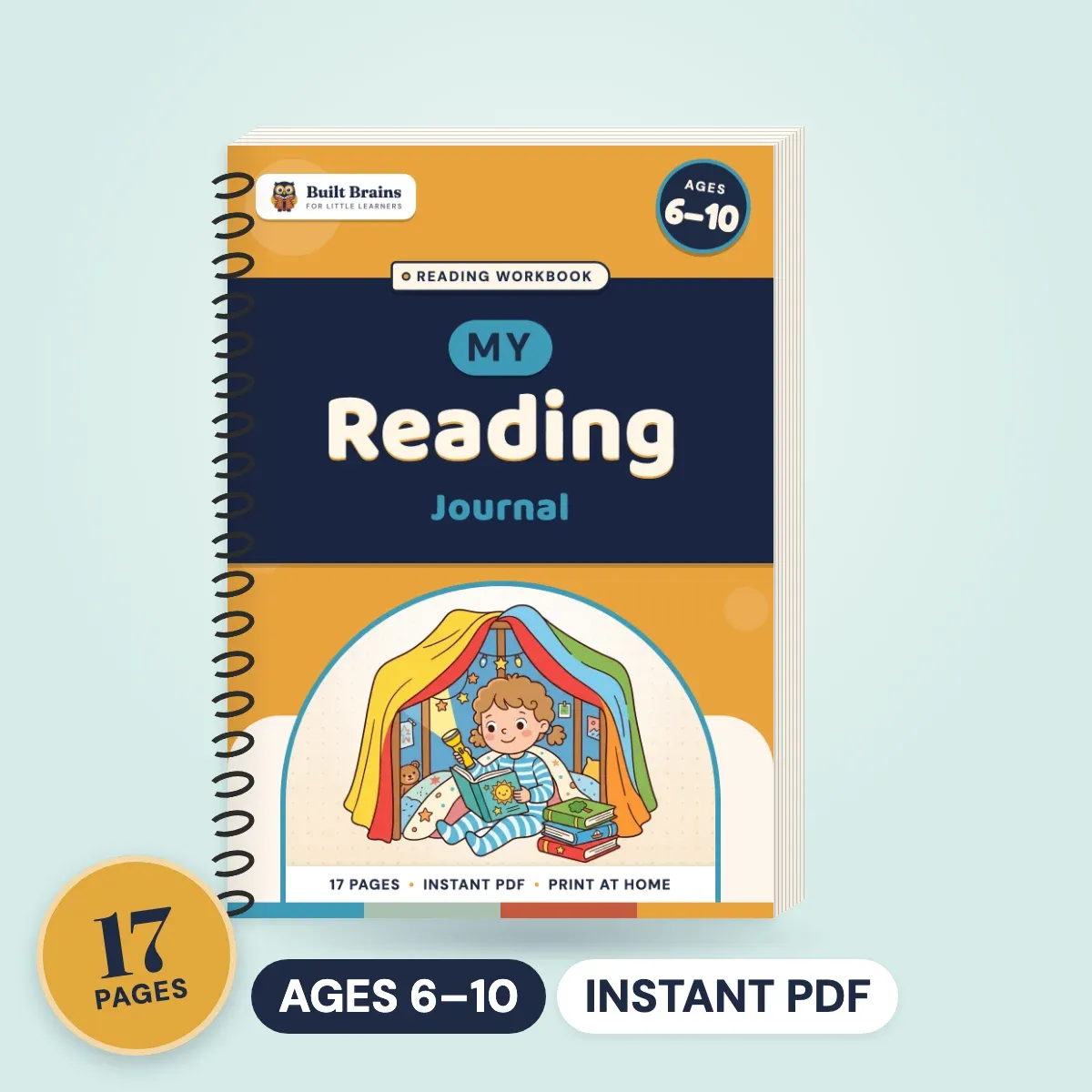
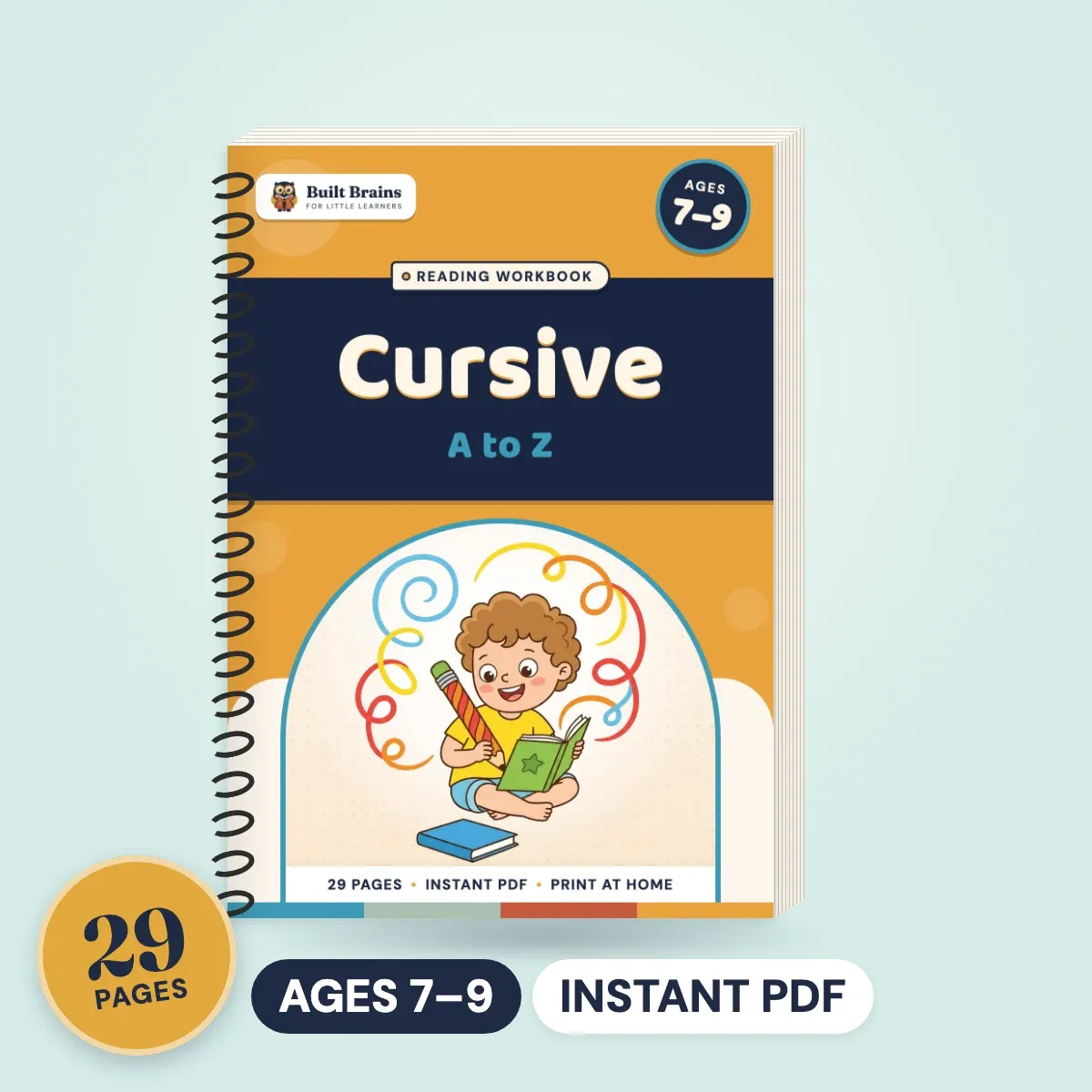
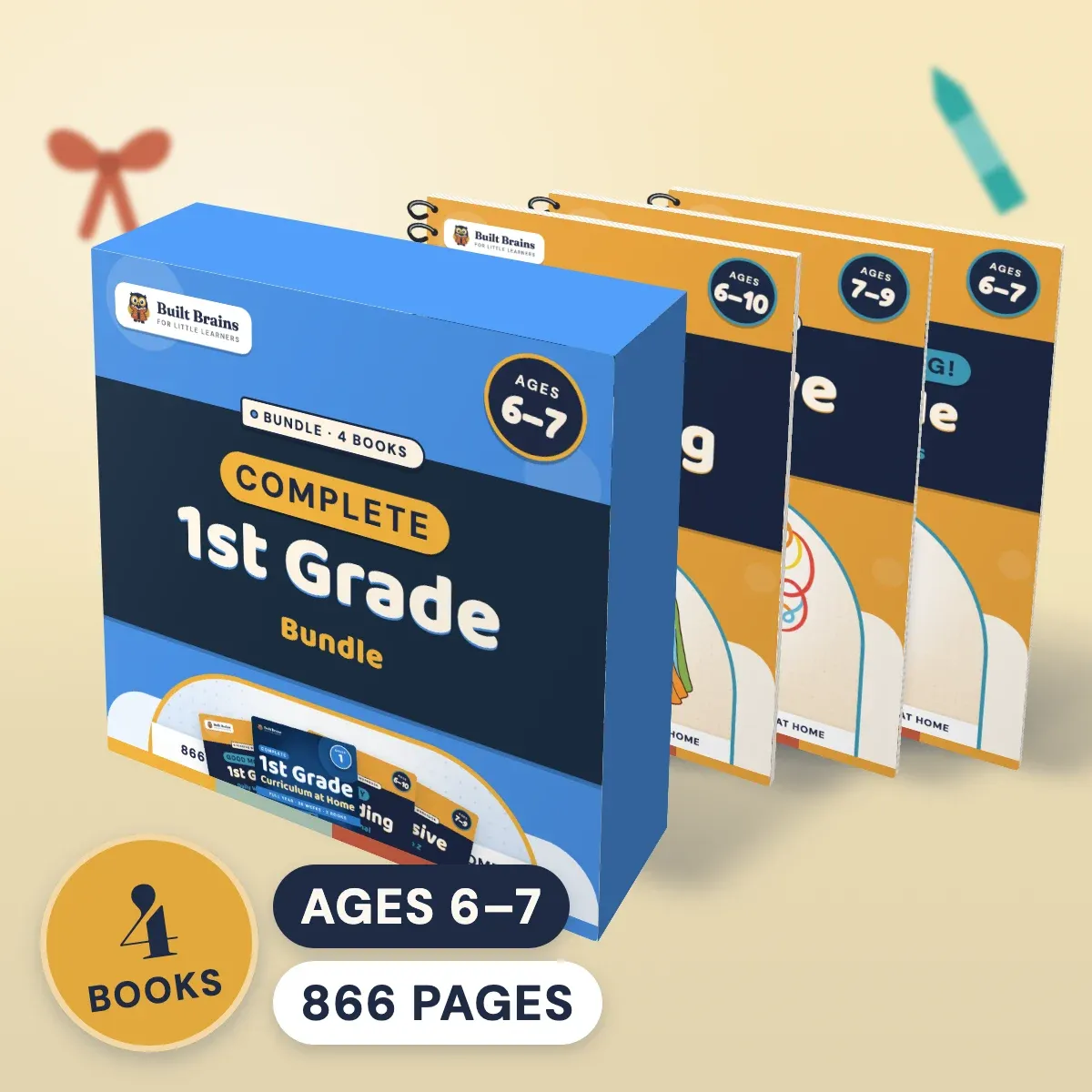
The Complete 1st Grade Bundle adds the 1st Grade Warm-Ups, My Reading Journal for tracking books and Cursive A to Z for an early start on joined writing, 716 pages in all.
It may suit you if you want a secular, open-and-go year with phonics, spelling, reading, grammar, writing and math in one place, and you are happy to print a week at a time.
It may not suit you if:
- You want a word-for-word scripted teacher's manual.
- Your child is not yet blending simple words. Start with the Kindergarten at Home Curriculum instead.
- Your child is struggling with reading and may need a specialist, multisensory program. Talk to your pediatrician or a reading specialist if you are worried.
- You want physical readers, manipulatives or a screen-based program.
- You want separate, in-depth science and history courses. Our themes are short reading-and-talking pages, so you would add library books or a separate program.
Common 1st grade homeschool mistakes
- Doing too much seat work. A first grader's attention for paper tasks is short. If tears appear at minute 25, the lesson is too long, not the child.
- Skipping reading aloud. Your child's listening level is far above their reading level. Keep reading longer books to them every day.
- Moving on before facts are solid. If adding within 10 still needs fingers every time, spend another week with games before two-digit work.
- Correcting every spelling in free writing. Correct the week's pattern words. Let the rest go so your child keeps writing.
- Comparing to a school friend. Compare your child to where they were in September.
- Buying three programs at once. Pick one core and give it a month.
How to start 1st grade homeschool this month
- Check your state's homeschool requirements and any records you need to keep.
- Spend one week checking where your child is: can they blend short-vowel words, write a sentence, add within 10?
- Choose a curriculum and print the first week only.
- Set a daily time and a cozy spot with pencils, crayons, a whiteboard and a cup of counters.
- Keep a portfolio: one reading page, one writing page and one math page each month.
If you want the whole first-grade year planned, secular and printable, the 1st Grade at Home Curriculum gives you 36 weeks of phonics, spelling, reading, grammar, writing and math in about 45 minutes a day.
See more for this age on our first grade page.
Questions parents ask
Most first graders finish the year reading simple chapter books or short passages with support, spelling common patterns like ee, ai and ar, writing a few connected sentences, adding and subtracting within 20, understanding tens and ones, and telling time to the half hour. Children vary widely at this age, so look for steady progress, not a fixed list.
Usually 45 to 90 minutes of focused lessons a day is plenty, split into short blocks for reading, spelling, writing and math. Add daily read-alouds, independent reading, outdoor play and hands-on projects. Many families finish formal work before lunch and keep afternoons free.
Yes, it is possible. A library card, a free phonics sequence, free math worksheets and lots of reading aloud can cover first grade. What you give up is time: you will plan each week yourself and hunt for pages that fit together. Many parents start free, then buy a curriculum for the subject that takes the most planning.
The core subjects are reading (phonics and comprehension), spelling, writing, grammar and math. Science and social studies are usually taught through themes and read-alouds rather than separate textbooks. Art, music and physical activity round out the week and can be as simple as drawing, singing and time outside.
In reading and math, hardly at all. Secular simply means the lessons contain no religious instruction, and science is taught from a mainstream view. Faith-based programs add scripture or devotions. Many families use a secular core for reading and math and add their own faith or values teaching separately.