
Which sight words do 1st graders learn?
By the end of kindergarten most children can read a few dozen of the most common words: the, and, a, I, is, you, see, said. First grade adds the next layer, the words that let a child read whole paragraphs instead of single sentences: when, then, them, could, were, their, about, people. In the Common Core standards this is written as reading grade-appropriate irregularly spelled words (RF.1.3g); most schools translate that into a list of 40 to 100 words for the year.
Two lists are used almost everywhere:
- The Dolch list, compiled in the 1930s, sorts 220 "service words" by level. The first grade level has 41 words.
- The Fry list, first published in the 1950s and revised since, ranks 1,000 words by how often they appear in print. The first 100 are the most frequent words in English.
The lists overlap heavily, so this article combines them: all 41 Dolch first grade words, plus the 29 words from the Fry top 100 that are not already in the Dolch pre-primer, primer or first grade levels. That is 70 words, which fits a nine-month school year at about eight a month.
If your school sends home its own list, use that first. If your child is still shaky on the kindergarten words, start with the kindergarten sight words list and the 52 primer words in Sight Word Explorers: Kindergarten; the 1st grade list is built on top of them.
The 41 Dolch first grade sight words
Here they are in alphabetical order, as published (sightwords.com – Dolch sight words):
| Starts with | Words |
|---|---|
| a | after, again, an, any, as, ask |
| b, c | by, could |
| e, f | every, fly, from |
| g | give, going |
| h | had, has, her, him, his, how |
| j, k | just, know |
| l, m | let, live, may |
| o | of, old, once, open, over |
| p, r | put, round |
| s | some, stop |
| t | take, thank, them, then, think |
| w | walk, were, when |
Many of these are fully decodable once short vowels, digraphs and blends are in place: an, as, ask, had, has, him, his, just, let, stop, them, then, when, think, thank. Teach those as phonics words and spend the memory effort on the real oddities: of, could, were, once, again, any, every, put, live, give.
29 Fry words to add in 1st grade
These are the words from the first 100 of the Fry list (sightwords.com – Fry sight words) that are not on the Dolch pre-primer, primer or first grade lists. Several sit on the Dolch second or third grade lists, but they are so common that most 1st grade classes teach them early.
| Type | Words |
|---|---|
| Function words | or, if, than, your, their, these, which, each, other, about, would, been |
| Verbs | use, write, call, made |
| Nouns and time words | word, time, day, way, number, people, water, part |
| Others | many, more, long, its, first |
Watch the homophone trio their / there / they're: there is a kindergarten (primer) word, their arrives now, and they're comes with contractions in 2nd grade. Teach their with a sentence it owns ("their shoes, their coats") and keep it away from there for a few weeks.
1st grade sight words by month (70 words)
This grouping mixes Dolch and Fry words so that each month is readable in sentences and moves roughly from easier to harder. Decodable words come early; irregular ones are spread out so there are never more than two or three new "remember this" words in a month.
| Month | Words | Focus |
|---|---|---|
| 1 (Sept) | an, as, had, has, his, him, her, them | Short vowels; s says /z/ in has and his |
| 2 (Oct) | then, when, from, just, stop, ask, old, by | Digraphs and blends |
| 3 (Nov) | after, over, open, going, every, any, many, of | Two-syllable words; any and many rhyme |
| 4 (Dec) | some, were, could, would, put, give, live, once | The irregular set; the could/would family |
| 5 (Jan) | know, think, thank, walk, take, let, may, fly | Silent k; -alk; long a and long i |
| 6 (Feb) | how, again, round, their, these, which, each, other | ou and ow; their vs there |
| 7 (Mar) | about, use, your, or, if, than, more, first | r-controlled vowels; than vs then |
| 8 (Apr) | write, word, time, way, day, long, call, been | Silent w; -ay; been |
| 9 (May) | number, people, water, made, part, its | Longer words; its vs it's |
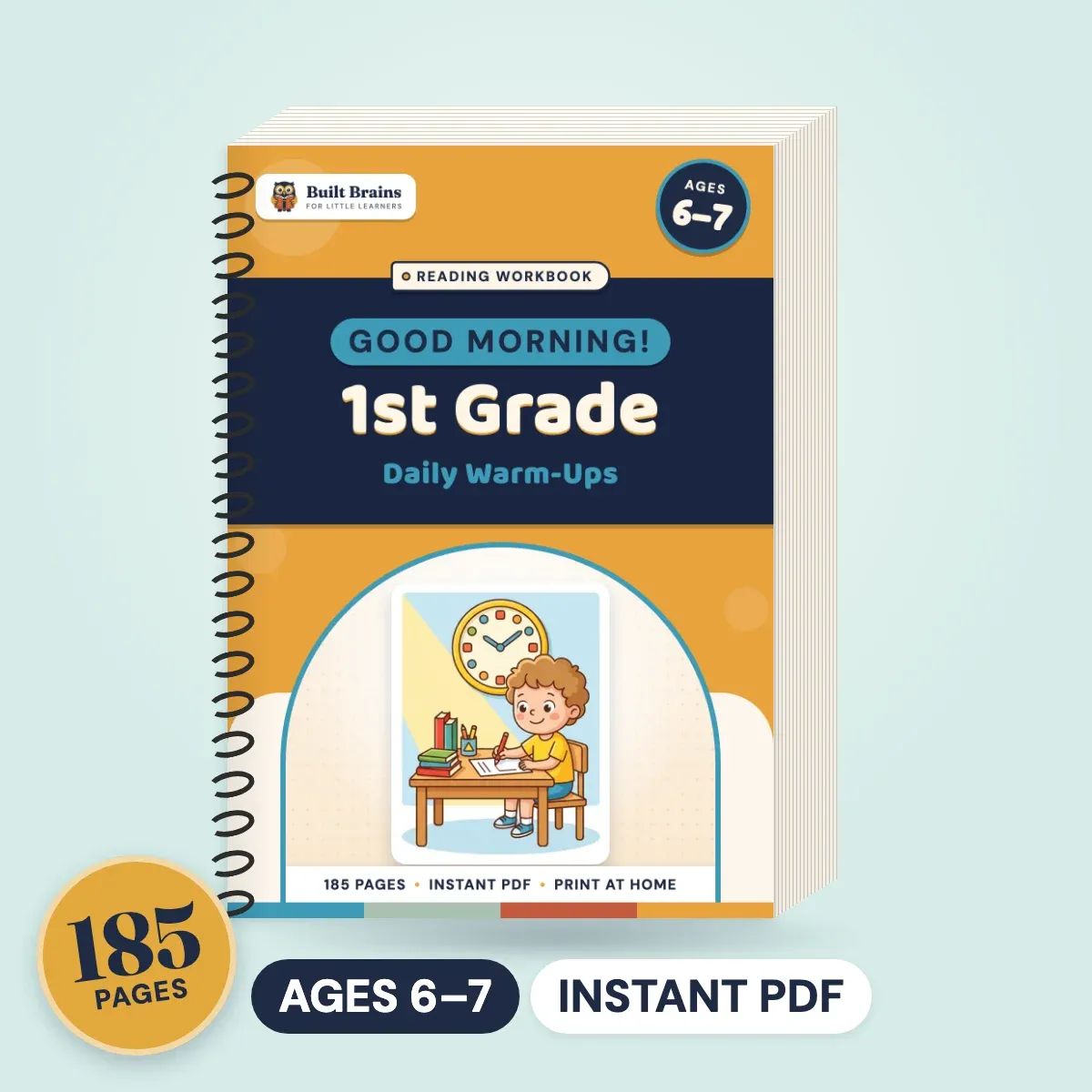
Two words a week, reviewed daily, gets through this comfortably with time to spare for the words your child's teacher adds. Good Morning! 1st Grade Warm-Ups start each week with a word of the day, a fix-it sentence and spelling pages that follow the year, so the review is built into a five-minute morning page.
How to check which words your child knows (3 minutes)
Do this at the start of the year and again every six to eight weeks. You need the 70 words on cards or printed in a column, a pencil and a quiet three minutes.
- Show each word for about three seconds. Do not help, hint or sound out.
- Mark each one instant (read within three seconds, no sounding out), slow (correct but sounded out or hesitated) or unknown (wrong, skipped or guessed).
- Stop after five unknowns in a row. Below that point the words are too far ahead; test them next time.
- Count the instants. That is your child's sight vocabulary from this list. Slow words go into the working pile first, since they are nearly there; unknowns follow in list order.
- Record the date and the three numbers. Three checks over a semester show progress better than any single score.
As a pacing target for this list (not a research benchmark): around 20 instant words in September, 45 by January and 65 or more by May. Children arrive in 1st grade with very different kindergarten experiences, so a low September number is a starting point, not a problem.
Make your own printable flash cards
You do not need a bought set. Print the monthly table above, or write each word on an index card with a thick marker, lowercase, in plain print. Keep three details right:
- One word per card, lowercase. Books are in lowercase; a card that says THEIR teaches a different shape.
- Number the back by month (1 through 9) so a dropped stack goes back in order.
- Keep a known pile and a working pile with a rubber band each. Known cards get flipped once a day; working cards get the games below.
For a sentence card set, write eight short sentences a month that use that month's words and nothing harder than CVC and kindergarten words: "His dog has a hat." "Can we stop after this?" Reading the word inside a sentence is the real test.
Games and practice that work at 6 and 7
First graders are past the point where everything must be a hopscotch grid. The best practice at this age moves words from recognizing to reading in text and spelling in writing. Pick one a day, five minutes:
- Speed read. Shuffle the known pile; how many in 60 seconds? Beat yesterday.
- Dictation sentence. You say a sentence with two target words; they write it. Then they check it against your model and fix any word that does not match.
- Word sort. Sort the month's words by a feature: has a silent letter or not, one syllable or two, can be sounded out or must be remembered. Sorting forces them to look at the letters.
- Find five. In tonight's reading book, find five of this month's words before the end of the chapter.
- Word ladder. Change one letter at a time: then, than, that, what. Good for the then/than pair.
- Write a silly story. Six sentences using eight target words. The sillier the better; the words still get read and written.
The mapping step still matters at 6: when a new word comes up, say it, tap its sounds, match them to the letters and name the tricky part (Reading Rockets – A New Model for Teaching High-Frequency Words). It takes a minute and cuts the number of repetitions a word needs. More game ideas, most of which scale up to 1st grade, are in sight words worksheets ideas.
Behind or ahead?
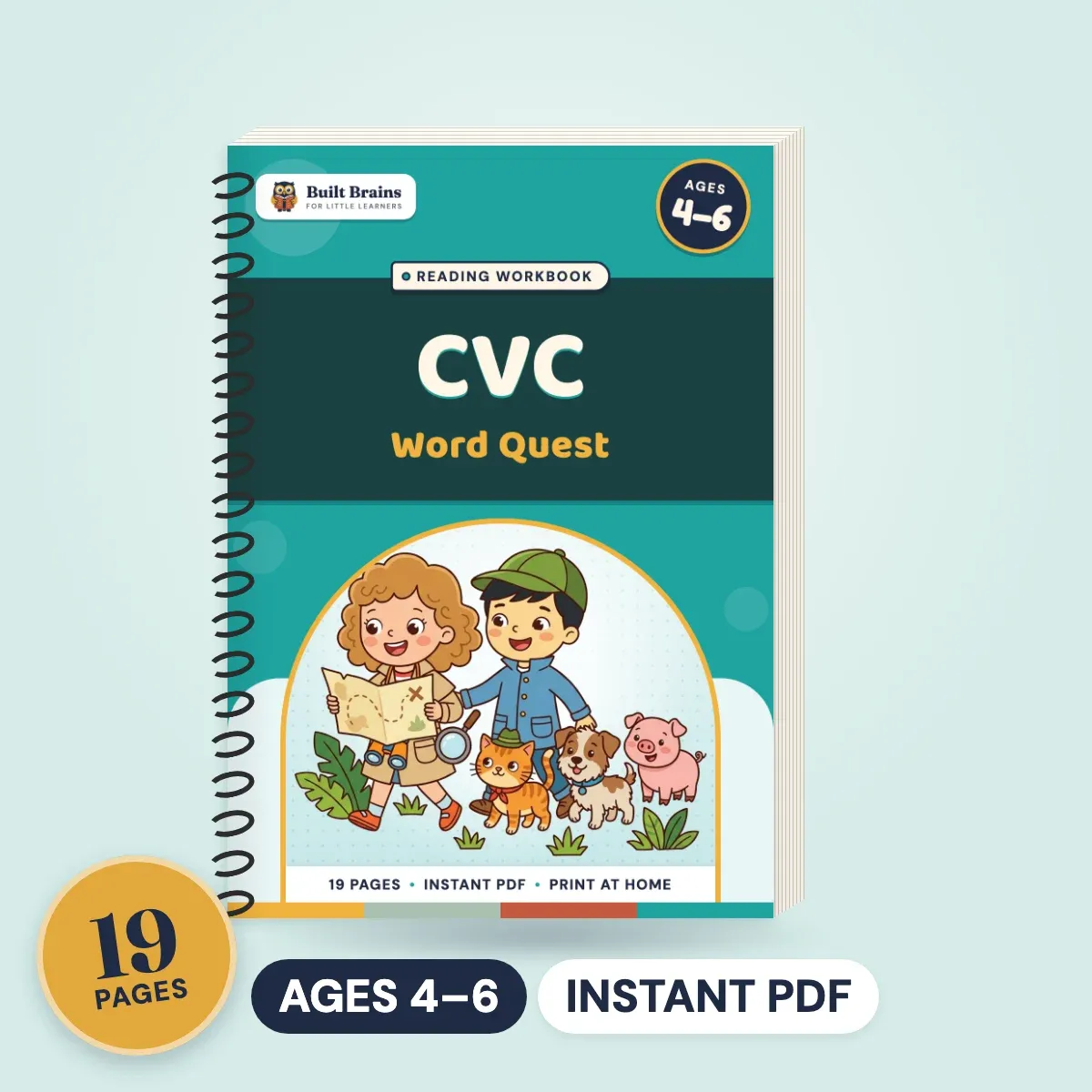
If your child is behind (fewer than 15 instant words in September, or guessing from the first letter): go back a level. Make sure CVC blending is solid with CVC Word Quest or the CVC words list, rebuild the kindergarten primer words, and keep the working pile at three. Sight words rest on phonics; a child who cannot blend c-a-t will not hold onto could.
If your child is ahead (60 or more instant words in September): do not drill the rest for speed. Move to reading them in longer books, spelling them in sentences, and the Dolch second grade words (always, around, because, before, found, those, which, would, write, your and the rest). Our guide to what to teach in 1st grade shows where sight words sit next to phonics, writing and reading aloud, and the 1st grade homeschool curriculum guide covers the full year. The Complete 1st Grade Bundle pairs the 36-week curriculum with the daily warm-ups, a reading journal and cursive.
 Save $20
4 books · 866 pages
The Complete 1st Grade BundleCurriculum, warm-ups, reading journal and cursive
Sources
- sightwords.com – Dolch Sight Words: the 41 Dolch first grade words listed above.
- sightwords.com – Fry Sight Words: the first 100 Fry words, from which the 29 additions are drawn.
- Common Core State Standards Initiative – Reading: Foundational Skills, Grade 1: the 1st grade expectation to recognize and read grade-appropriate irregularly spelled words.
- Reading Rockets – A New Model for Teaching High-Frequency Words: teaching high-frequency words through their sounds and spellings.
Questions parents ask
Most 1st grade programs aim for somewhere between 40 and 100 new words over the year on top of the kindergarten words. The combined list here is 70. By May a child on track with it reads 65 or more instantly and, more importantly, reads them without pausing inside real books.
The 41 words at the first grade level of the Dolch list: after, again, an, any, as, ask, by, could, every, fly, from, give, going, had, has, her, him, his, how, just, know, let, live, may, of, old, once, open, over, put, round, some, stop, take, thank, them, then, think, walk, were and when.
Either, or both. Dolch is grouped by grade level, which makes pacing easy; Fry is ranked by frequency, which catches very common words such as their, about and people that Dolch places later. They overlap heavily. This article merges the 41 Dolch first grade words with 29 Fry top-100 words.
Show each word for about three seconds with no hints and mark it instant, slow or unknown. Stop after five unknowns in a row. The instant count is their sight vocabulary; slow words go into practice first. Repeat every six to eight weeks and keep the dates and numbers.
Yes, whenever the word allows it. Many 1st grade sight words, such as them, when, just and stop, are fully decodable with 1st grade phonics. Only the irregular part of words like of, could and were needs to be remembered. Sounding out first builds a stronger memory than memorizing the shape.

Reviewed by
Year 1 Teacher & KS1 Phase Lead
Tom Evans is a Key Stage 1 Phase Lead dedicated to smoothing the transition from EYFS play-based learning to structured Year 1 curriculum.
More about Tom →