What are pre-K sight words?
Sight words are the short, very common words that turn up in almost every sentence a child reads: the, a, I, and, to, you. Some of them follow the phonics rules a 4-year-old is still learning (can, in, up), and some do not play fair at all (the, said, you). Either way, the goal is the same: your child eventually reads them instantly, without stopping to sound them out, so their attention is free for the rest of the sentence.
The list most pre-K programs use is the Dolch pre-primer list, 40 words that Edward Dolch pulled from children's books in the 1930s (sightwords.com – Dolch sight words). It is still the standard starting set because the words are so common: learn these 40 and your child can already read a surprising share of a simple picture book.
One thing to be clear about: pre-K sight words are a head start, not a requirement. Reading common high-frequency words by sight is a kindergarten expectation in the Common Core standards (RF.K.3c), not a preschool one. If your school calls this year pre-K, KG, K1 or nursery, the advice is the same: begin only when your child is ready, keep it playful, and stop while it is still fun.
Is my 4-year-old ready for sight words? 5 signs
Most 4-year-olds are not ready in September and many are ready by spring. Look for these signs before you start:
- They know most letter sounds, not just letter names. If you point to m and they say /mmm/, good. If they only know the alphabet song, start with letter sounds first.
- They can hear the first sound in a spoken word. "What sound does sun start with?" "/sss/."
- They notice print. They point to words on signs and cereal boxes and ask, "What does that say?"
- They can sit for five focused minutes with a book or a tracing page.
- They can tell letters apart, even if they cannot name them all. Mixing up b and d is normal; not seeing any difference between m and s means wait.
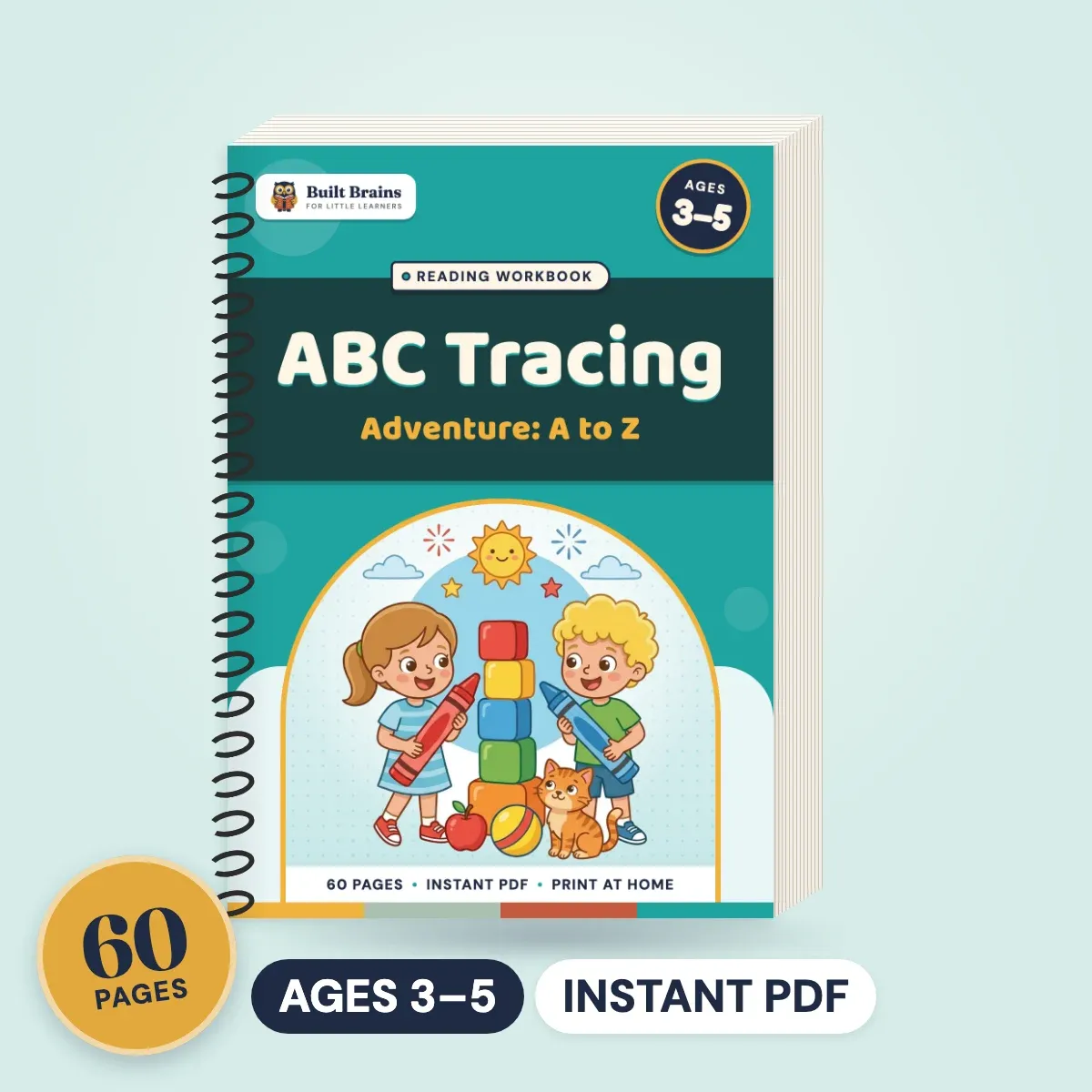
Three of the five is enough to try the first word. If your child is still working on the alphabet, ABC Tracing Adventure: A to Z gives each letter a tracing page and a letter hunt, and Sound Detectives: Sounds & Rhymes builds the listening skills in signs 1 and 2. Our letter recognition activities cover the same ground without worksheets.
Pre-K sight words list: 40 words in 4 groups
Here are the 40 Dolch pre-primer words, grouped so the most useful come first. Each group of 10 lets your child read real sentences, which is what makes the words worth learning.
| Group | Words | A sentence they can read |
|---|---|---|
| 1 | I, a, the, see, can, we, go, to, and, my | I can see the cat. |
| 2 | is, it, in, me, you, up, look, here, come, play | Look, it is up here! |
| 3 | big, little, red, blue, yellow, one, two, three, run, jump | I see two big red cars. |
| 4 | said, where, not, for, down, away, find, help, make, funny | "Where is my hat?" said Mom. |
Notice how many of these your child can sound out once they know their letters: can, in, up, it, is, big, run, not, red, jump. Teach those as phonics words, not as shapes to memorize. Save the memory work for the genuinely odd ones: the, said, you, to, one, two, where, come. (The sentences use a few nouns such as cat, cars, hat and Mom that are not on the list; simple nouns like these are easy to add alongside.)
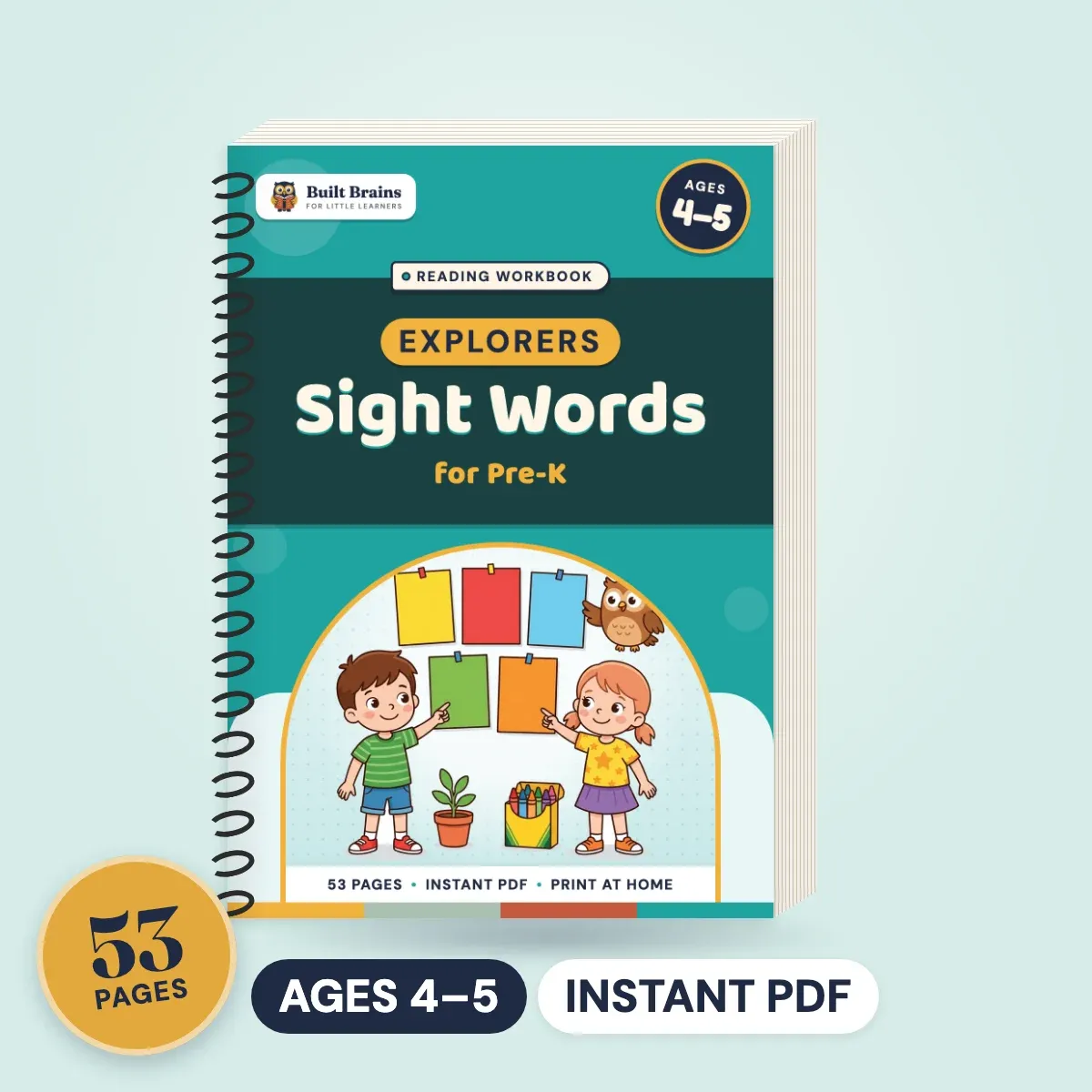
Sight Word Explorers: Pre-K works through exactly these 40 words, one page per word (read it, color it, trace it, write it, find it), with a read-and-color review page after every four words. It is made for ages 4–5 and prints at home.
The 10 sight words to teach first
If you only teach 10 words in pre-K, teach group 1: I, a, the, see, can, we, go, to, and, my. Why these?
- They make sentences. With group 1 plus a few nouns, your child reads "I can see a dog," "We go to the park" and "I see my mom." A 4-year-old who reads a whole sentence feels like a reader, and that feeling is what keeps them coming back.
- Most of them are short. Five are one or two letters long.
- They are everywhere. The, and, a, to and I are among the most frequent words in English, so every picture book you open becomes a place to find them.
A good order inside the group: I and a first (one letter each, an instant win), then the and see, then can and we, then go, to, and, my.
How many sight words a week at 4 or 5?
One or two new words a week is plenty at 4, and two or three at 5 if they are coming easily. That sounds slow, but it adds up: two words a week from January to May is the whole pre-primer list, and a child who knows 40 words cold is better off than one who has "seen" 100 and reads none of them fluently.
A rough guide:
- Just turned 4: no formal sight words yet. Read aloud daily, play with letter sounds and rhymes (rhyming activities), and point to the as you read it.
- 4½ to 5, letter sounds mostly known: 1–2 words a week, group 1 only, 3–5 minutes a day.
- 5, heading into kindergarten: 2–3 words a week, through groups 2–4, 5 minutes a day. Our kindergarten readiness checklist shows where sight words sit among everything else.
A word counts as "known" when your child reads it instantly on three different days, in a book as well as on a card.
How to teach a sight word to a 4-year-old (3 minutes)
The old way was flash cards and whole-word memorizing. The approach most reading specialists now recommend is to connect the word to its sounds, because that is how the brain stores words for instant recall (Reading Rockets – A New Model for Teaching High-Frequency Words). With a 4-year-old it looks like this:
- Say it and use it. "Can. I can hop!" Have your child say it back and hop.
- Hear the sounds. Tap one finger per sound: /c/ /a/ /n/. Three sounds.
- Match sounds to letters. Show the written word and point: "c says /c/, a says /a/, n says /n/." For a tricky word, name the odd part: "In you, the y says /y/ and o-u says /oo/. That is the part we remember."
- Write it once. Big, with a crayon or in sand. Say each letter sound as they write.
- Find it. Open any picture book and hunt for the word together.
That is the whole lesson. Tomorrow, review yesterday's word in 30 seconds, then do the same five steps with the next one. The heart words routine in our kindergarten sight words list is the same idea with a small heart drawn over the tricky part, which many 4-year-olds love.
6 sight word games for preschoolers
Four-year-olds learn with their whole bodies, so the best games involve moving, hiding and finding.
- Sight word hopscotch (5 min, chalk). Write the words in the squares instead of numbers. They read each word as they land on it.
- Fridge word (all day, sticky notes). One word on the fridge each week. Every time they pass it and read it, they get a high five.
- Word swat (3 min, fly swatter, cards on the floor). You call a word, they swat it. Start with three cards and build to six.
- Hide and read (5 min, index cards). Hide five cards around the room. They must read each one before it counts as found.
- Build the sentence (5 min, cards). Lay out "I can see the ___" and let them finish it with a toy: "I can see the dinosaur!"
- Book detective (2 min, any picture book). Before bedtime reading, pick one word and count how many times you find it on three pages.
Two or three minutes of one game, most days, beats a long session on Saturday. The Early Reading Bundle puts the pre-K and kindergarten sight-word books together with the pre-writing, alphabet, sounds and CVC books, so the printed practice runs in the same order as the skills.
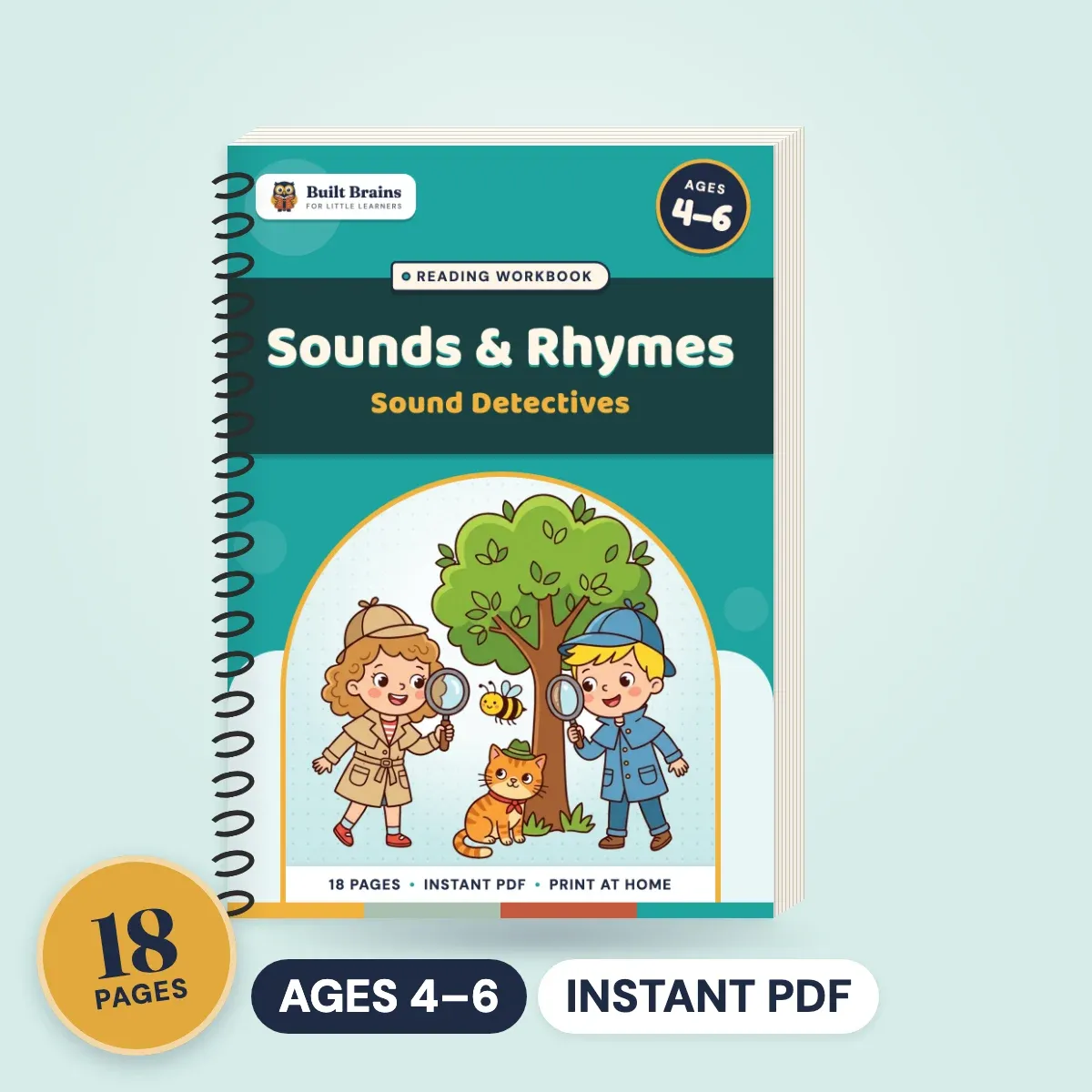
Ages 4–6 · 18 pages
Sound Detectives: Sounds & RhymesHear it, say it, circle it — the step before reading
What if the words are not sticking?
This is common at 4, and it almost always means one of three things:
- Too early. If letter sounds are shaky, sight words have nothing to attach to. Go back to sounds and rhymes for a month and try again. There is no penalty for waiting; kindergarten teaches these words from scratch.
- Too many at once. Drop to one new word a week and spend the rest of the time reviewing the known pile.
- Only cards, no books. A word learned on a card and never met in a story stays fragile. Make the find-it step non-negotiable.
Watch for the classic mix-ups too: on/no, was/saw, and the look-alikes the/they and come/came. Teach each pair in different weeks, then read them side by side once both are solid.
And keep an eye on the mood. A 4-year-old who dreads sight words will be a 5-year-old who dreads reading. If a session turns into tears, close the cards, read a funny book together, and come back tomorrow. For what else matters at this age, see what a 4-year-old should know.
Sources
- sightwords.com – Dolch Sight Words: the 40 pre-primer words used in the list above.
- Common Core State Standards Initiative – Reading: Foundational Skills, Kindergarten: reading common high-frequency words by sight is a kindergarten expectation, which makes pre-K sight words a head start rather than a requirement.
- Reading Rockets – A New Model for Teaching High-Frequency Words: teaching high-frequency words through their sounds and spellings rather than as whole shapes.
Questions parents ask
There is no required list at 4. If your child knows most letter sounds and is interested, start with the 10 most useful pre-primer words: I, a, the, see, can, we, go, to, and, my. Knowing even those 10 lets a 4-year-old read short sentences. The rest of the 40 can wait for kindergarten.
One or two new words a week at 4, and two or three at 5 if they come easily. Review the known words for a minute every day. Two words a week from January to May covers the whole 40-word pre-primer list, which is more than most kindergarten classes expect on the first day.
Not as whole shapes. Teach each word by its sounds: say it, tap the sounds, match them to the letters, and name the one tricky part to remember. Cards are fine for quick review afterward, but the word also needs to be met in real books, or it fades within weeks.
The pre-primer list is the first of five Dolch levels: 40 very common words. They are a, and, away, big, blue, can, come, down, find, for, funny, go, help, here, I, in, is, it, jump, little, look, make, me, my, not, one, play, red, run, said, see, the, three, to, two, up, we, where, yellow and you.
It is not harmful, but it is often wasted effort and can put a child off. Before letter sounds are in place, a sight word is just a shape, and shapes are forgotten fast. If your 4-year-old is not interested, read aloud, play sound games and try again in a few months.

Reviewed by
Early Childhood Educator & Curriculum Specialist
Maya Caldwell, M.Ed., is a veteran kindergarten teacher and instructional coach who specializes in structured literacy and purposeful play. With over a decade of classroom experience, she designs hands-on, inclusive learning environments that turn emerging readers into confident lifelong learners.
More about Maya →