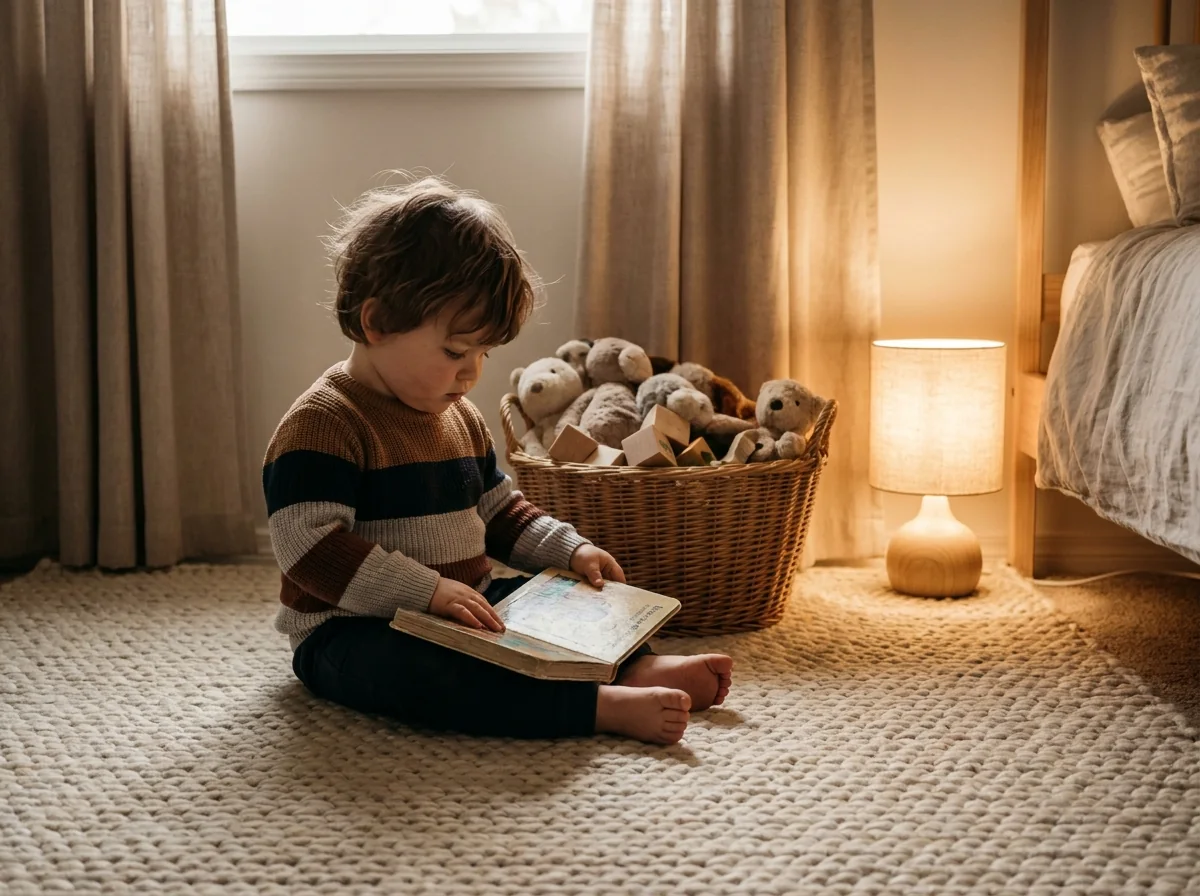
What is quiet time for a 2 year old?
Quiet time is a short daily rest where your toddler stays in one safe place, usually their bedroom, and plays calmly on their own. It goes in the same slot the nap used to, after lunch, and follows the same routine. The goal is rest, not sleep. If your 2 year old dozes off, great. If not, they still get a break from noise and activity, and so do you.
Quiet time is not a punishment and not screen time. It works best when it feels like a cozy, special part of the day, with a few books and toys that only come out then.
If you have an older child too, our quiet time activities for preschoolers guide covers longer quiet time for ages 3 to 5.
Is your toddler really dropping the nap?
Toddlers between 1 and 2 years need about 11 to 14 hours of sleep in 24 hours, naps included, and most are down to one nap a day by 18 months. Many children then give up the afternoon nap during the preschool years, between about 3 and 5 (KidsHealth, Naps). So a 2 year old who stops napping is on the early side, and some are going through a phase rather than truly done.
Signs the nap may be ending
- They lie awake and chat or play for most of nap time, most days, for two weeks or more.
- Napping pushes bedtime much later, and they're still awake long after lights out.
- They are cheerful and steady through the afternoon without a nap.
- Mornings start very early after a day with a nap.
Signs they still need the nap
- Meltdowns, clumsiness or rubbing eyes by late afternoon.
- Falling asleep in the car or stroller most days.
- Sleeping much longer at night after a skipped nap.
KidsHealth suggests that if your child won't nap, you set aside quiet time instead, and that if a child gives up daytime naps, an earlier bedtime can help (KidsHealth, Naps). That's why quiet time is the gentle answer either way: it keeps the rest slot open for the days your toddler still needs it.
How to set up quiet time for a 2 year old
1. Choose a safe place
Their bedroom is usually best, with the door closed or a safety gate across it. Two year olds will be playing without you right beside them, so check the room at their height: anchor furniture to the wall, cover outlets, tie up blind cords, and remove anything small enough to swallow.
2. Keep the same routine
Use your nap routine: lunch, potty or a fresh diaper, a drink of water, a story, then quiet time. The routine tells your toddler what's coming next.
3. Use a clear end signal
Two year olds can't tell time, so give them something they can see or hear. An ok-to-wake clock that changes color, a sand timer, or a soft song playlist works well. "When the light turns green, quiet time is over."
4. Start with 15 minutes
Begin with 10 or 15 minutes and add five minutes every week. Most 2 year olds can work up to 30 to 45 minutes; some do an hour. Ending on a success matters more than the length.
5. Come back warmly
When the time is up, go in, notice what they did ("You built a tall tower!") and move on to the afternoon.
A rotating quiet box for 2 year olds
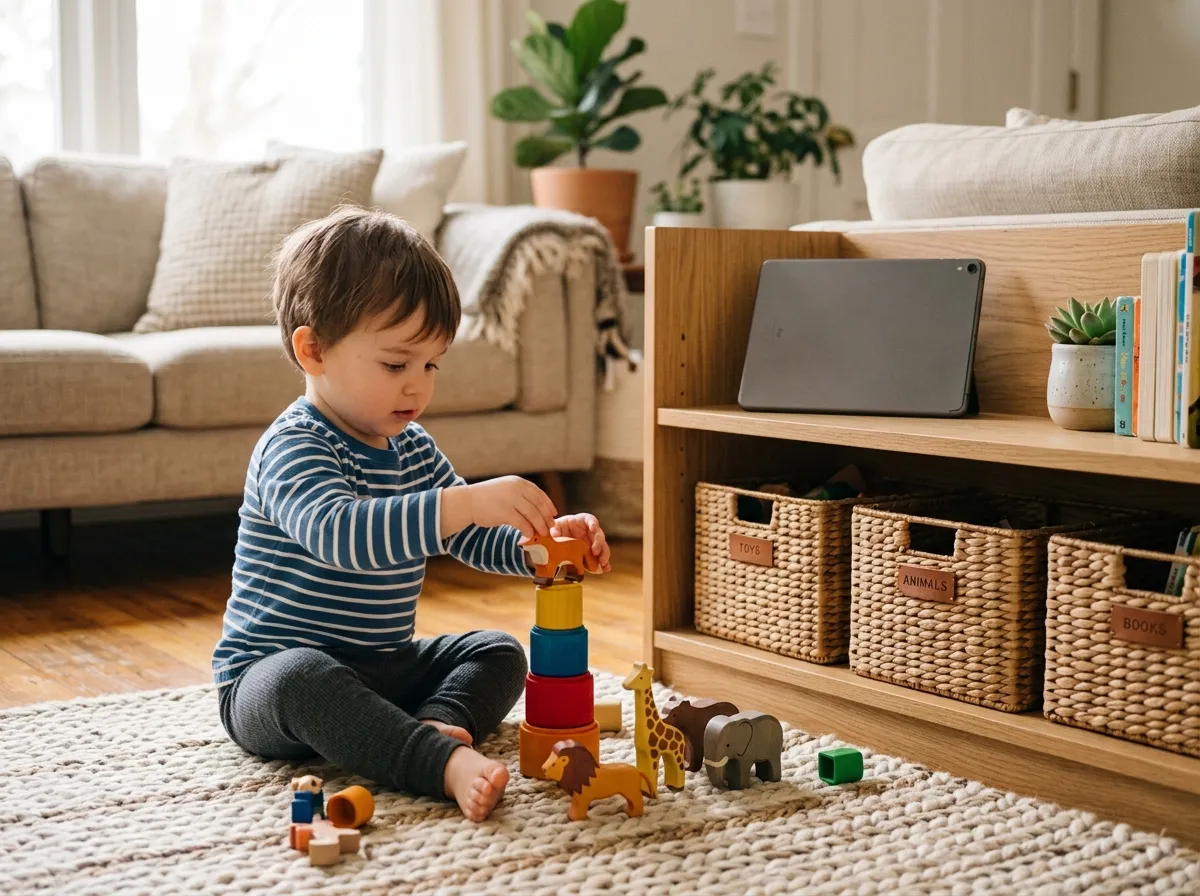
A quiet box is a small basket or bin that only comes out at quiet time. Rotate the contents every week or two so it stays interesting. Here's a list to pick from:
| Week | What goes in the box |
|---|---|
| Week 1 | Three board books, a soft toy, chunky crayons and two coloring pages |
| Week 2 | Large stacking cups, a lift-the-flap book, a busy book page or two |
| Week 3 | A big-piece wooden puzzle, a doll or animal with a blanket, a picture book |
| Week 4 | Large blocks, a farm coloring page, a photo album of family faces |
More ideas that work for twos:
- Board books and photo books: their own family photos in a small album are a favorite.
- Soft toys and a small blanket for "putting teddy to sleep."
- Chunky crayons and printed pages: big, simple pictures with thick lines.
- Large stacking and nesting toys, shape sorters, big blocks.
- Simple wooden puzzles with large knobbed pieces.
- Busy book pages: at 2, children mostly color and point rather than trace, and that's fine.
- Audio stories or calm music played on a speaker you control.
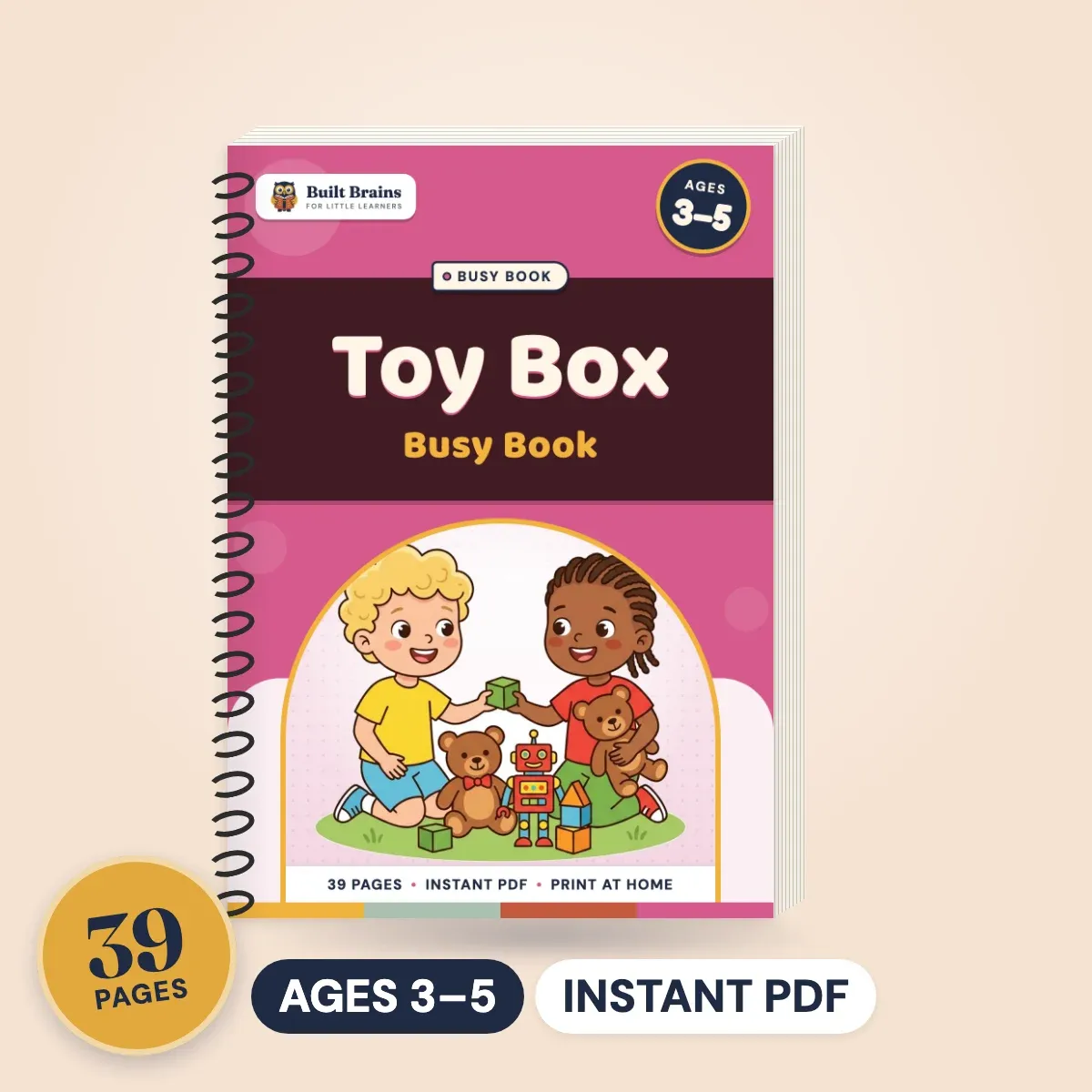
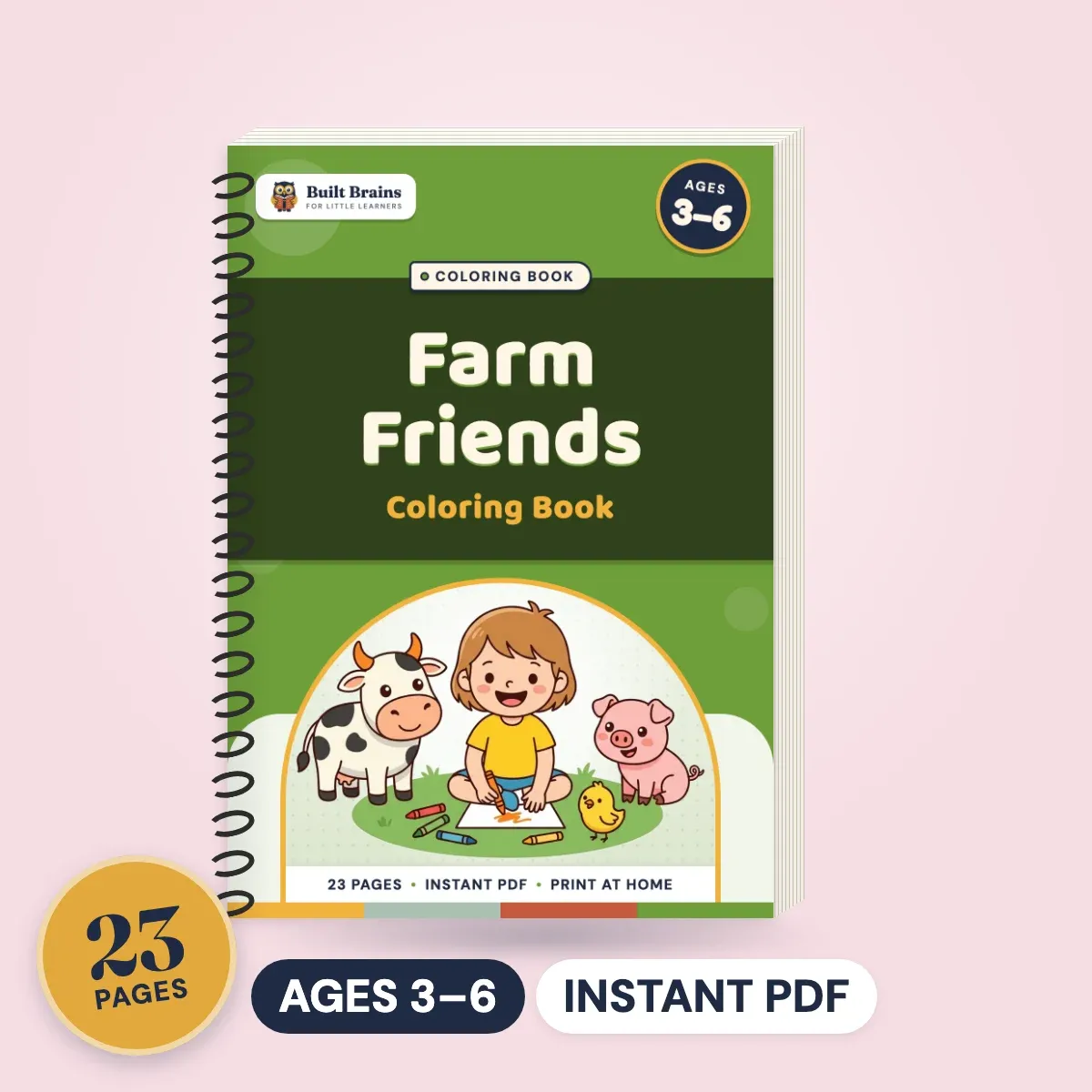
For coloring, the big line art in Farm Friends Coloring Book suits little hands, and you can print a single page at a time. The pictures in Toy Box Busy Book (teddies, blocks, a rubber duck) are things toddlers already know. Both are designed for ages 3 and up, so for a 2 year old, pick the big coloring pictures and save the tracing, mazes and counting pages for later. For more ideas, see busy book ideas and screen time for toddlers.
What's safe (and not) in a 2 year old's quiet time
Because you won't be sitting beside them, choose items with no small parts. Pediatricians list balloons, coins, marbles, small balls, toys with small parts, pen and marker caps and button batteries among household choking hazards to keep away from young children (HealthyChildren.org, Choking Prevention).
| Good for quiet time | Keep out of the quiet box |
|---|---|
| Board books and cloth books | Markers with caps |
| Chunky crayons | Small beads, buttons and coins |
| Large blocks and stacking cups | Toys with button batteries |
| Big-piece wooden puzzles | Balloons and small balls |
| Soft toys without loose parts | Scissors, glue sticks, playdough |
| Single printed coloring pages | Food or snacks |
Check in with a quick peek or a baby monitor, especially in the first few weeks.
What to do when your 2 year old won't stay
Almost every toddler tests quiet time. A few things that help:
- Walk them back calmly, with as few words as possible: "It's still quiet time." Repeat as often as needed.
- Shorten it. If they come out after eight minutes, set the timer for seven and build from there.
- Praise the staying, not just the finishing: "You stayed in your room the whole time!"
- Refresh the box. A tired, familiar box is boring. Swap in two new things.
- Check the basics: hungry, thirsty, wet diaper, needs the potty, too hot or cold.
- Stay nearby at first. Some twos need you sitting in the doorway for the first week, then in the hall, then out of sight.
- Keep it boring to leave. If coming out leads to TV or a snack, quiet time loses every time.
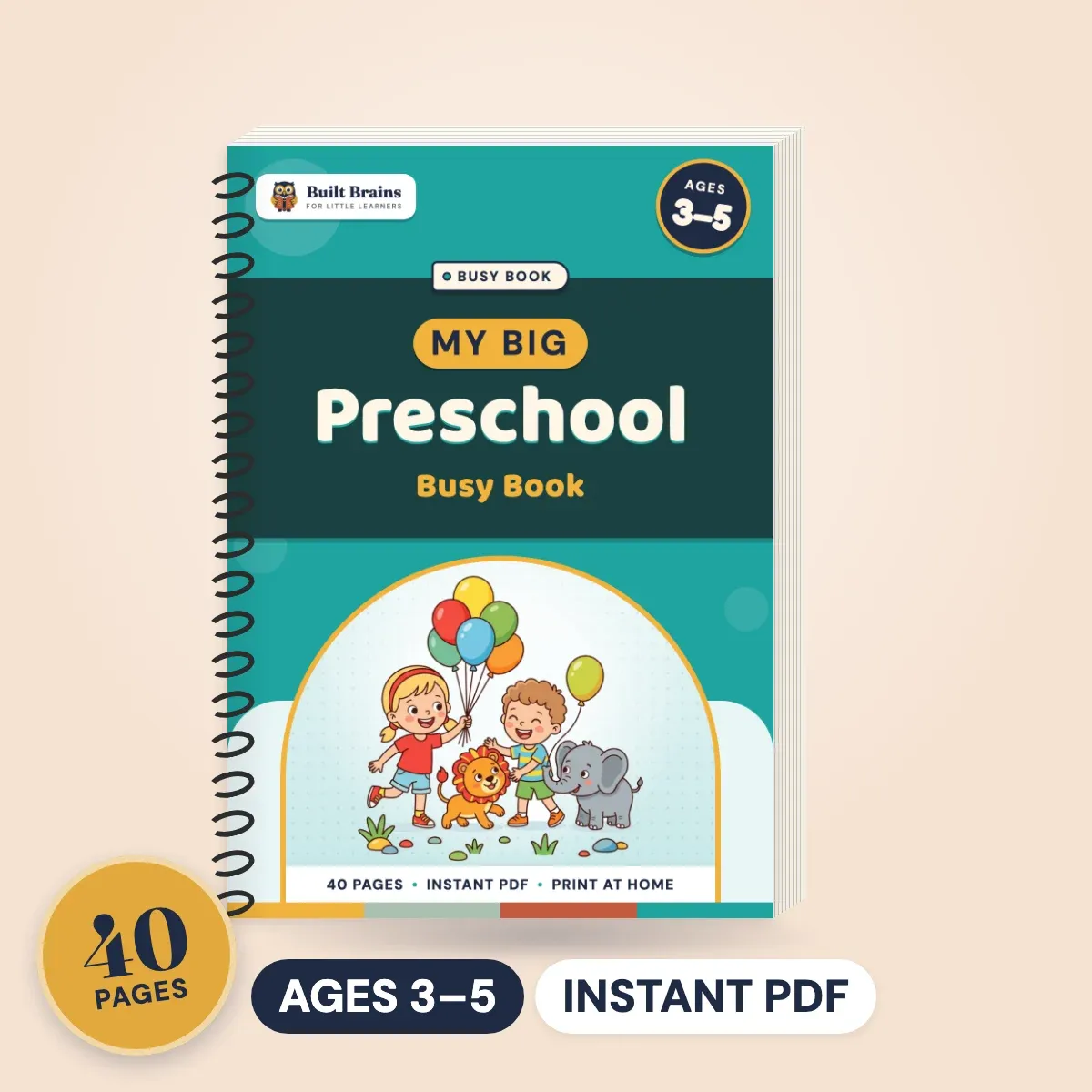
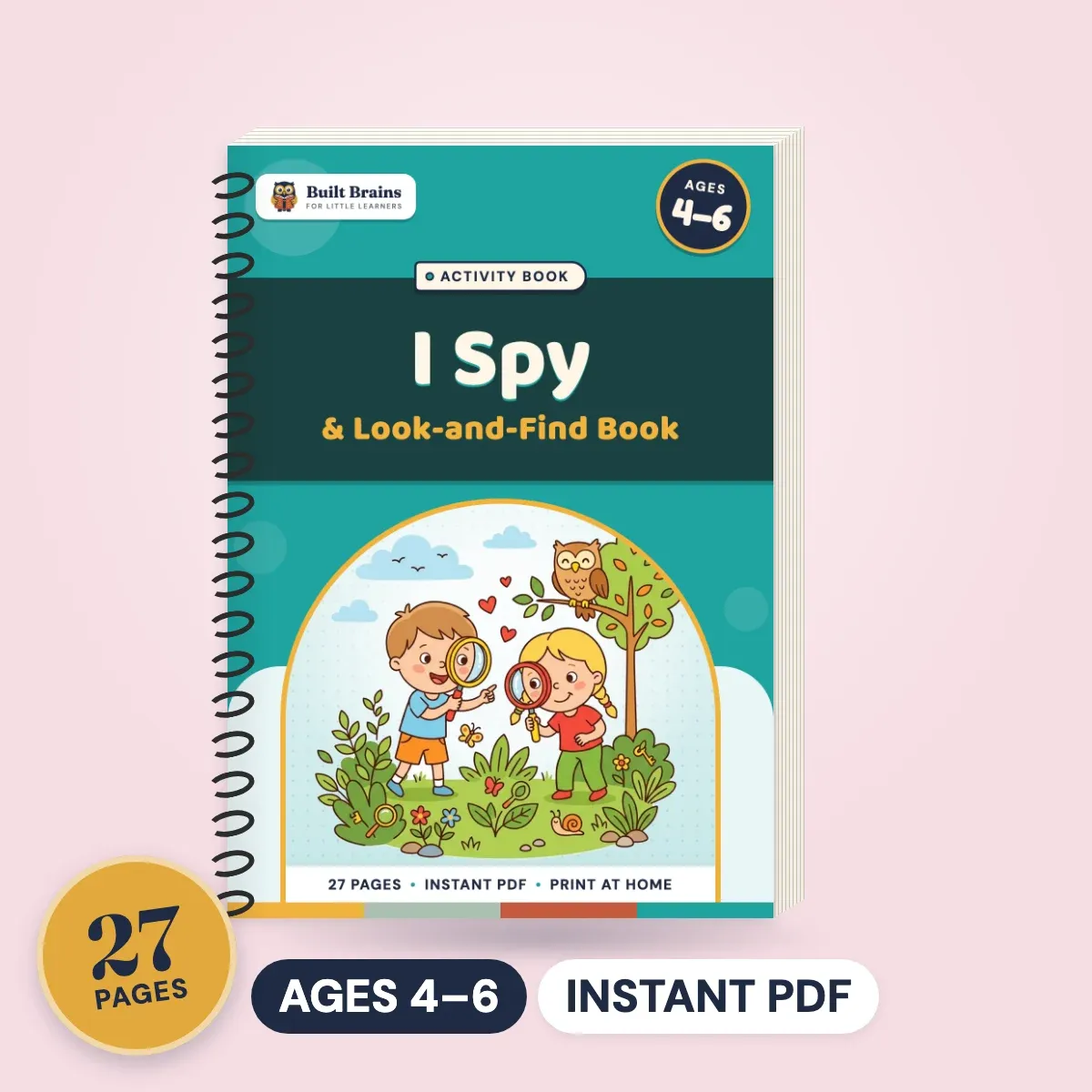
As your toddler grows into a 3 year old, quiet time can stretch longer and include simple tracing, mazes and look-and-find pages. My Big Preschool Busy Book and the I Spy & Look-and-Find Book, for ages 4 to 6, are good books to grow into.
Sources
- KidsHealth (Nemours) – Naps: toddler sleep needs, most toddlers on one nap by 18 months, preschoolers often giving up naps between 3 and 5, quiet time and earlier bedtime when a child won't nap.
- HealthyChildren.org (American Academy of Pediatrics) – Choking Prevention: household items that are choking hazards for young children, including balloons, coins, small balls, marker caps and button batteries.
Questions parents ask
It happens, but it's on the early side. Most toddlers still need one nap a day, and many children give up the nap somewhere in the preschool years, between about 3 and 5. A 2 year old who skips naps may still need the rest, so keep a quiet time and an earlier bedtime and watch for tiredness.
Start with 10 to 15 minutes and build up slowly, adding five minutes every week or so as your toddler settles in. Many 2 year olds manage 30 to 45 minutes after a few weeks; some do longer. Use a timer or an ok-to-wake clock so they can see when it ends.
Don't force sleep. Keep the same pre-nap routine, then offer quiet time in their room with books, soft toys and a few calm activities. Many toddlers drift off once the pressure is gone. If not, they still get rest, and an earlier bedtime that night can make up for the missed sleep.
Board books, soft toys, chunky crayons with paper, large blocks, simple wooden puzzles with big pieces, stacking cups and a few printed coloring or busy-book pages. Avoid anything small enough to choke on, including marker caps, coins, balloons, small balls and toys with button batteries, because your toddler is playing without you right beside them.
Walk them back calmly with as few words as possible, every time, and praise them when they stay. Shorten quiet time to a length they can succeed at, then build up. Check the basics too: a full tummy, a fresh diaper or a potty trip, and a quiet box that still feels new.

Reviewed by
Nursery Manager & Early Years Practitioner
Aisha Khan is a Nursery Manager and early language specialist who helps toddlers and preschoolers build foundational communication skills before starting formal schooling.
More about Aisha →