The short answer: a rhythm, not a schedule
Christmas break is roughly two weeks, often with travel, visitors, late nights and a pile of new toys. A timetable breaks on day one; a rhythm survives, because it is just four anchor points repeated in the same order:
- Move first. Outdoors if possible, before lunch: a walk, the playground, a scooter loop, a snowball fight or, failing that, a living-room obstacle course.
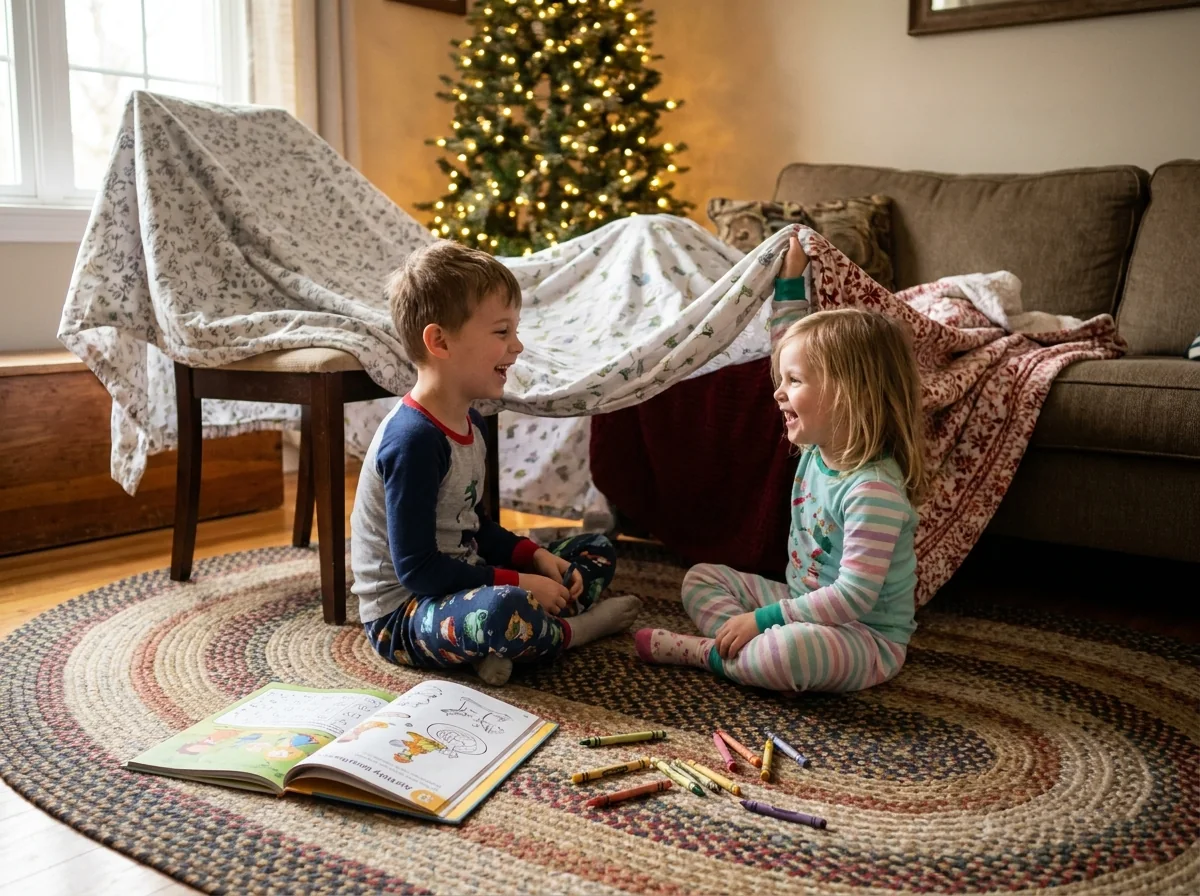
- One project a day. Baking, a craft, a board-game marathon, a library trip, a fort. One, not five.
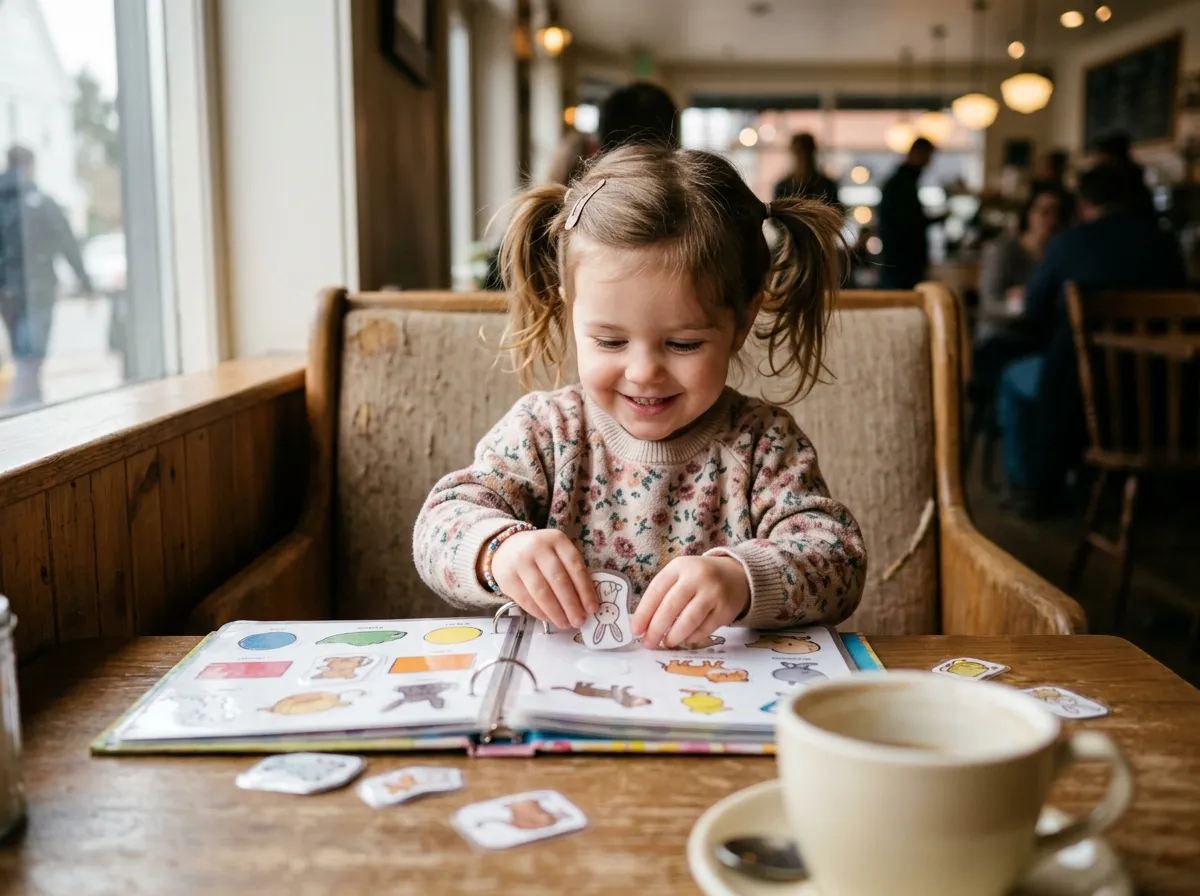
- A quiet hour after lunch. Everyone, including you, does something quiet in their own spot: books, a busy book, mazes, drawing, an audiobook. For 3 and 4 year olds this is often nap time.
- Screens in a predictable slot. Late afternoon, for example, so nobody is negotiating at 8 a.m.
Around those anchors, let the day be loose. Meals and bedtime stay roughly where they usually are, because sleep is what keeps the week pleasant: the American Academy of Pediatrics endorses 10 to 13 hours a day (including naps) for 3 to 5 year olds and 9 to 12 hours for 6 to 12 year olds. If your family does not celebrate Christmas, everything here works for any winter break.
A two-week Christmas break rhythm
Here is how the four anchors might look for ages 3 to 8. Swap days freely; the point is that each day has a shape.
| Day | Move | Project | Quiet hour |
|---|---|---|---|
| Week 1, Mon | Lights walk after dark | Countdown chain, Christmas cards | Christmas busy book |
| Tue | Playground | Bake and decorate cookies | Library books on the sofa |
| Wed | Living-room obstacle course | Wrap gifts for siblings in newspaper | Mazes |
| Thu | Visit a friend or cousin | Build a fort, eat lunch in it | Audiobook in the fort |
| Fri | Nature scavenger hunt | Christmas Eve prep (see below) | Big coloring pages |
| Christmas Day | New things, outside if possible | None. Protect naps. | A quiet corner with a new book |
| Week 2, Mon | Walk to mail the cards | Thank-you cards (drawings count) | Look-and-find pages |
| Tue | Sledding, puddles or a long walk | Toy rotation: pack half away for January | One new toy at a time |
| Wed | Playdate swap with another family | Ice, melting and freezing science tray | Winter busy book |
| Thu | Indoor dance party | New Year's Eve at noon: countdown, confetti, juice toast | Family photo book |
| Fri | Playground | Back-to-school prep: shoes, bag, early night | A favorite book |
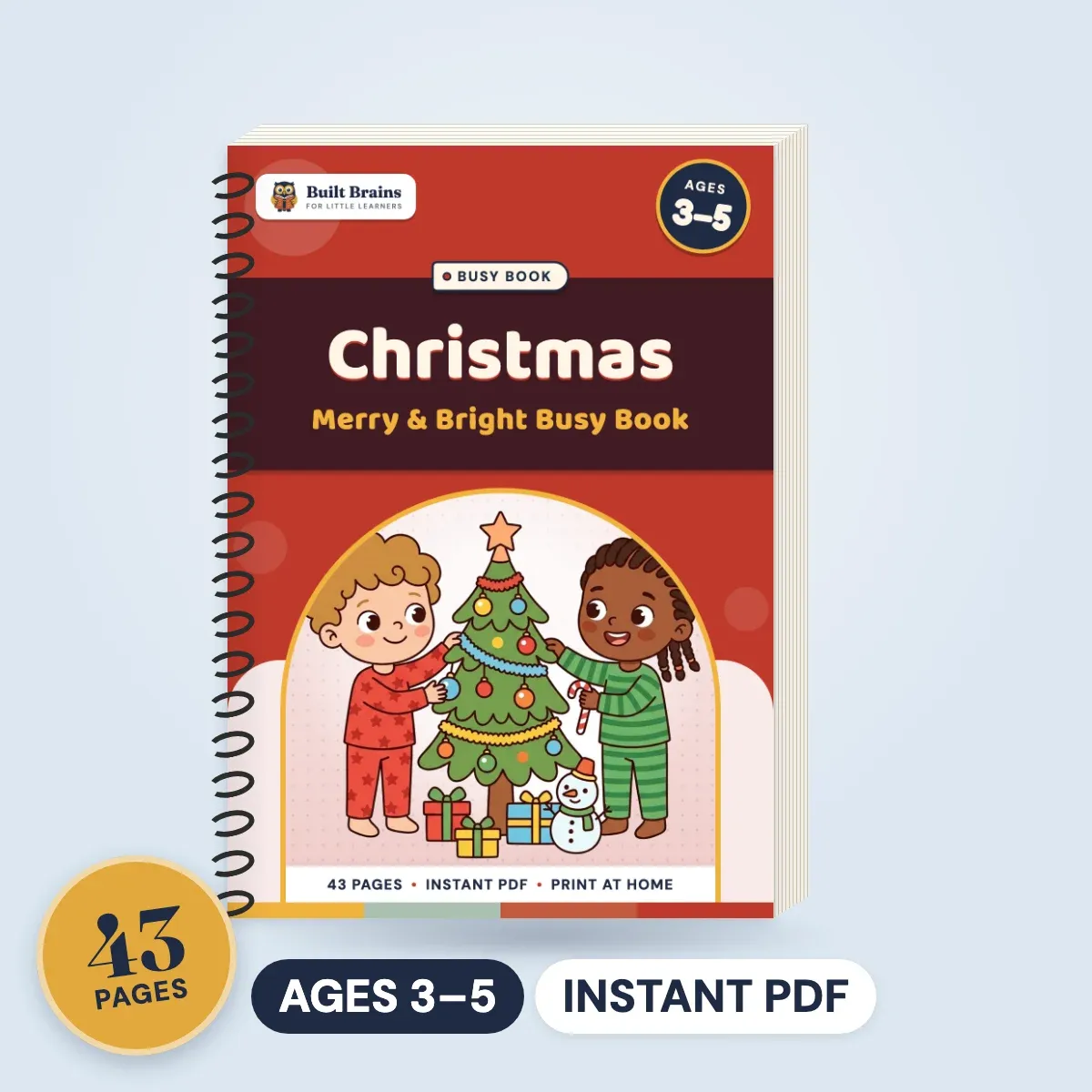
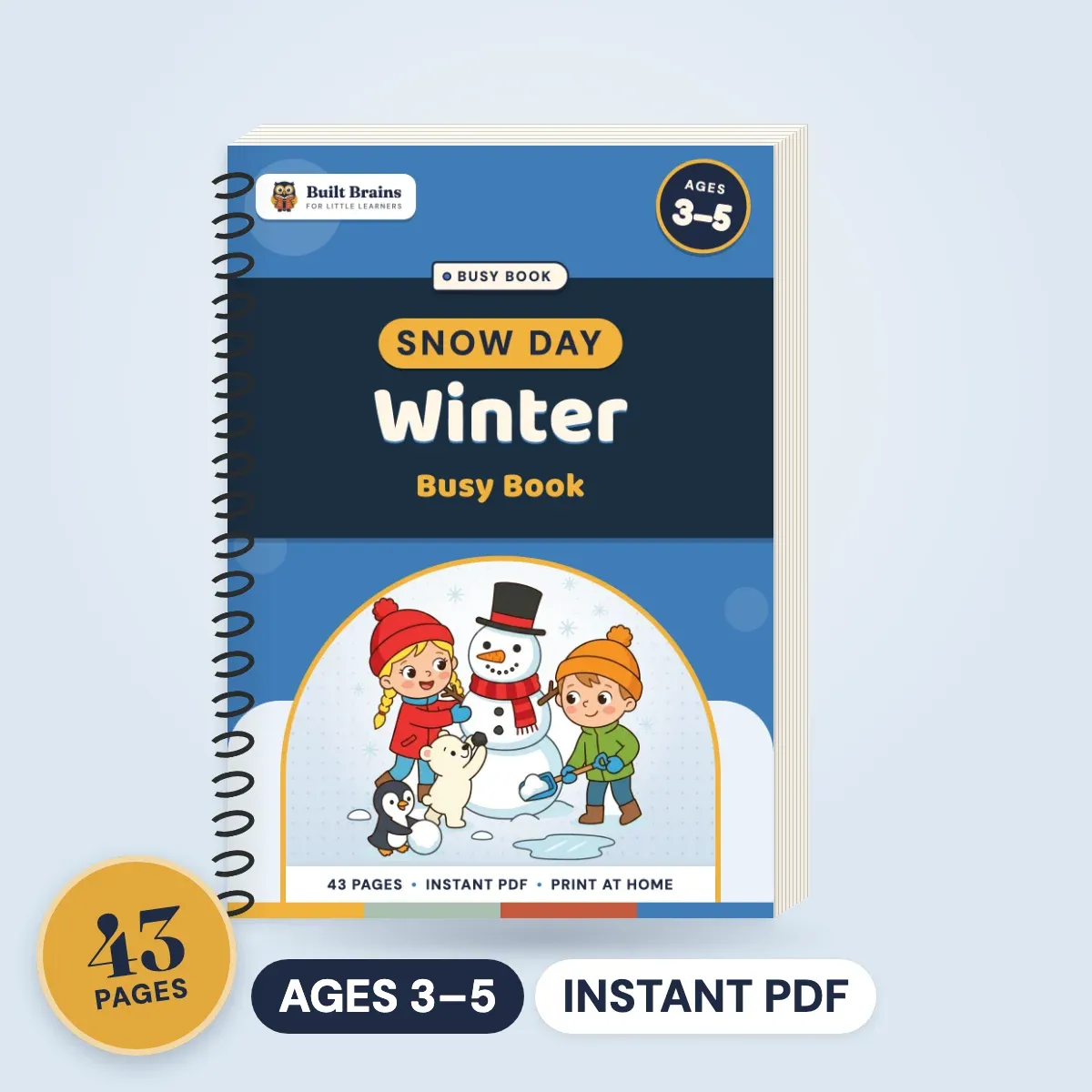
Everything in the table works with paper, crayons and household items; the quiet-hour column is where printables earn their place. The Merry & Bright Christmas Busy Book (ages 3 to 5) carries the first week with coloring, tracing, mazes and matching; the Snow Day Winter Busy Book picks up after the 25th with polar bears, penguins and sleds, when nobody wants another elf.
Low-screen activities by energy level
Match the activity to the child in front of you.
Bouncing off the walls
- Hallway bowling with a soft ball and empty plastic bottles.
- Balloon keep-up: count how many taps before it touches the floor.
- Pillow-path obstacle course with "lava" in between.
- Freeze dance to three Christmas songs, then a slow one to wind down.
- Indoor snowball fight with rolled-up socks.
- Scavenger hunt: "find something red, something soft, something that makes a noise."
- Movement cards: ten actions on index cards (hop five times, bear-crawl to the door), drawn from a hat.
Steady and ready to make something
- Bake anything with a recipe to read aloud. Counting cups and spoons is math.
- A graham-cracker gingerbread house on a milk carton with frosting.
- Paper snowflakes for the window.
- A cardboard-box creation: a sled, a spaceship, a shop.
- Board and card games. Matching games at 3 and 4, simple strategy games from 6.
- A pretend post office for the thank-you cards: stamps, a mailbox, a delivery round.
- A winter science tray: ice cubes, warm water, salt, a dropper. Which melts fastest?
Running on empty
- An audiobook under a blanket.
- A look-and-find or I-spy page at the table, one per child.
- Mazes. Calming, and quietly building pencil control.
- A fresh sticker sheet or a sticker scene.
- Play-dough with cookie cutters.
- A bath with cups and funnels in the middle of the afternoon.
- Lie on the floor and look at the tree lights with the big lights off.
More table-time ideas by age: quiet time activities for preschoolers and busy book ideas.
A Christmas Eve plan for kids
Christmas Eve is the most excited a child will be all year, and the night you most need them to sleep. Plan it like a long travel day: movement early, calm and predictable late.
- Morning: Outside for at least an hour: a long walk, a park, a bike ride. Tire the legs.
- Late morning: A real job: a vegetable for tomorrow, setting the table, a place card for each guest.
- Lunch, then quiet hour: Busy book, mazes or a new library book, everyone in their own spot.
- Mid-afternoon: The one big treat: a movie together, a lights drive, or a Christmas Eve box with new pajamas, a book and cocoa.
- Early dinner: Simple, familiar food.
- After dinner, in order: A snack for Santa and oats for the reindeer (plain oats and seeds, no glitter, which is plastic that ends up in the yard). Pajamas. One special story. Lights off a little earlier than usual.
Keeping skills warm without "school"
Nobody needs worksheets over Christmas break; two weeks off does not undo a term's learning. A few habits keep skills warm and make January easier:
- Read every day. Reading aloud, including to children who can already read, is the most useful daily habit, as Reading Rockets' guidance for families emphasizes. A Christmas picture book a night in week one, the new books in week two.
- Let them write for real reasons. A letter to Santa, place cards, a thank-you card to each gift-giver. Scribbles and dictated sentences count at 3 and 4; a 6 year old can manage a line or two with spelling as it comes.
- Count in the kitchen. Cups and spoons when baking, cookies on a tray in rows, a pizza cut into halves and quarters.
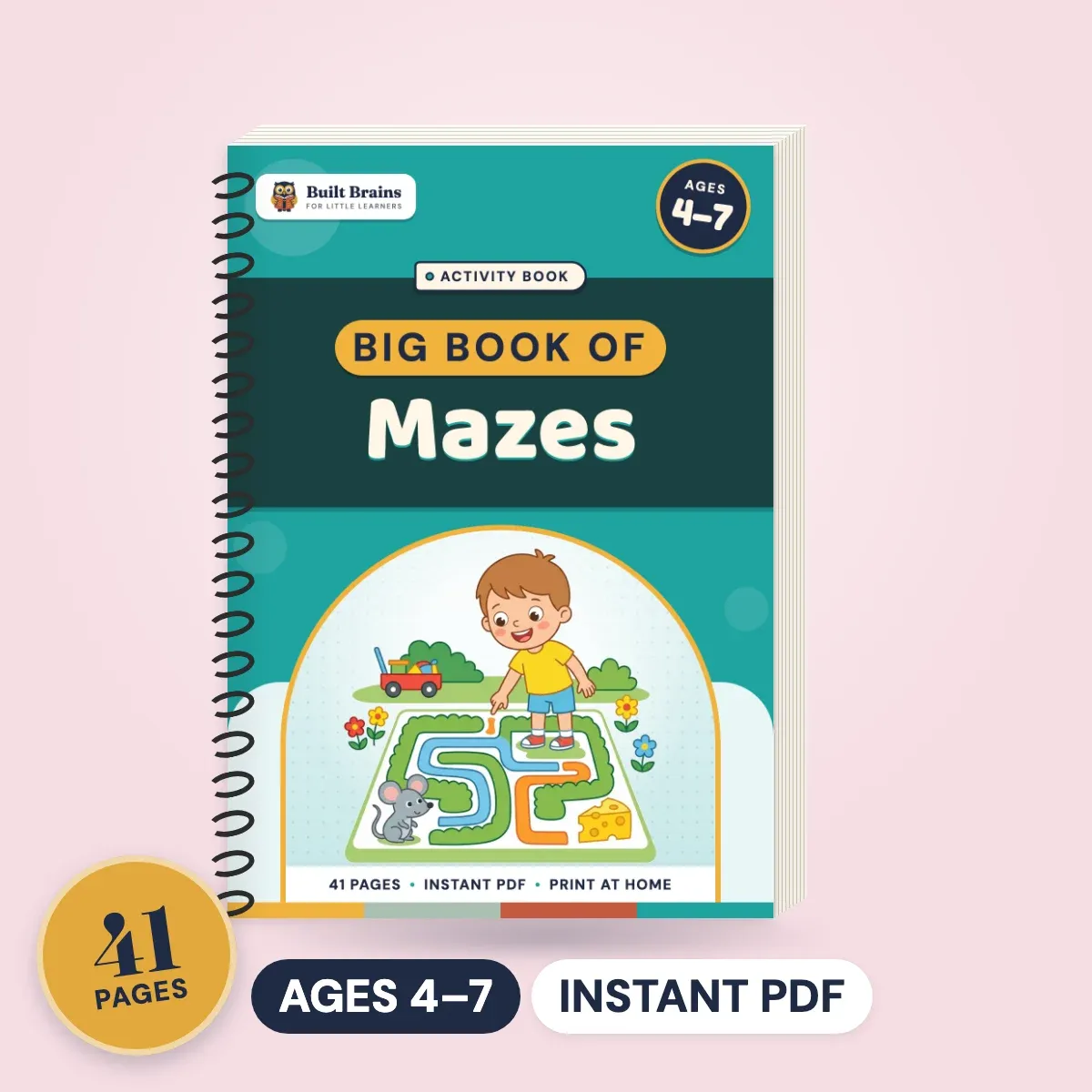
- Mazes and dot-to-dots for pencil control. Ten minutes of a maze does more for a pencil grip than a tracing sheet, because the child wants to reach the end. The Big Book of Mazes (ages 4 to 7) grows from small friendly paths to twisty ones across farm, ocean, space, dinosaur and holiday themes.
- Play games that use the skills. Letter and number matching, I spy for sounds ("something that starts with /s/"), card games for counting.
For a kindergartner or first grader, a few sight word games on two or three mornings in week two are plenty.
Screens: a predictable slot, not a battle
Screens are part of most families' holidays, and that is fine. The problems come from unpredictability (a yes at 8 a.m. and a no at 9) and from screens quietly eating sleep and outdoor time.
The American Academy of Pediatrics' advice is practical: for 2 to 5 year olds, about an hour a day of good-quality programming, watched together where you can; for older children, consistent limits that keep screens from crowding out sleep, physical activity and play. The AAP's free Family Media Plan tool lets you write the rules down, which helps when relatives are involved, and Common Sense Media is a reliable place to check whether a movie suits a 4 year old or a 7 year old.
What works in practice:
- One slot, same time daily. Late afternoon, when energy is lowest.
- Decide what to watch before turning it on. Christmas movies make this easy: one a day in the week before Christmas.
- A visible ending. "When the movie ends, we set the table." Not "ten more minutes."
- Travel days are exceptions, and say so. Tablets in the car do not break the rhythm if everyone knows it resumes tomorrow.
Our screen time for toddlers guide goes deeper for the youngest children.
The week after Christmas
The week between Christmas and New Year is the quiet one: no events, tired children, a house full of new things. Three moves help:
- Rotate the new toys. Put half away on the 27th and bring them out in January. Fewer toys out means deeper play.
- Get outside every day, whatever the weather. US physical activity guidelines call for at least an hour a day for school-age children and active play throughout the day for preschoolers, and this is the week it slips.
- Make a date. A playdate swap (you take theirs one morning, they take yours the next) gives everyone a break and makes the children's week.
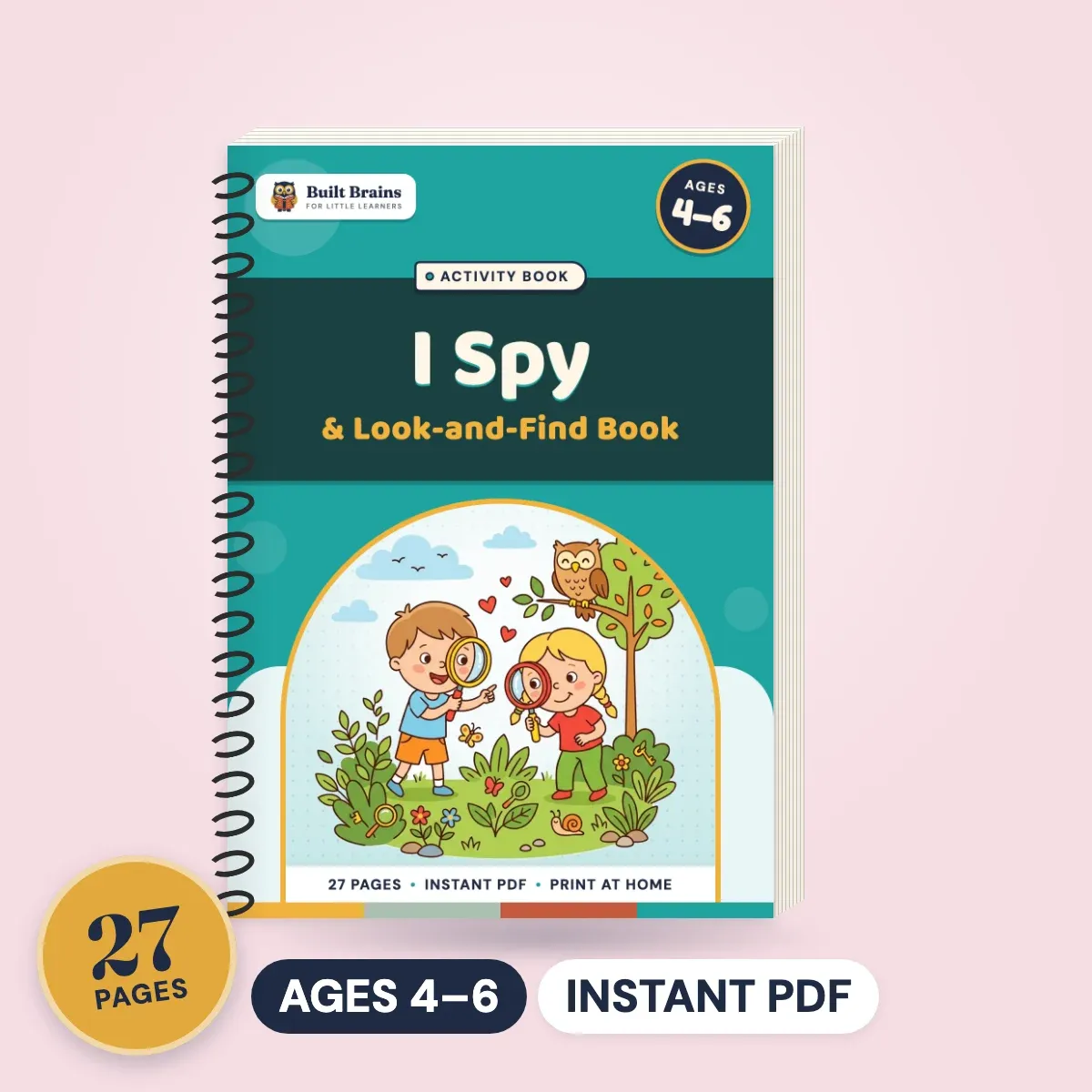
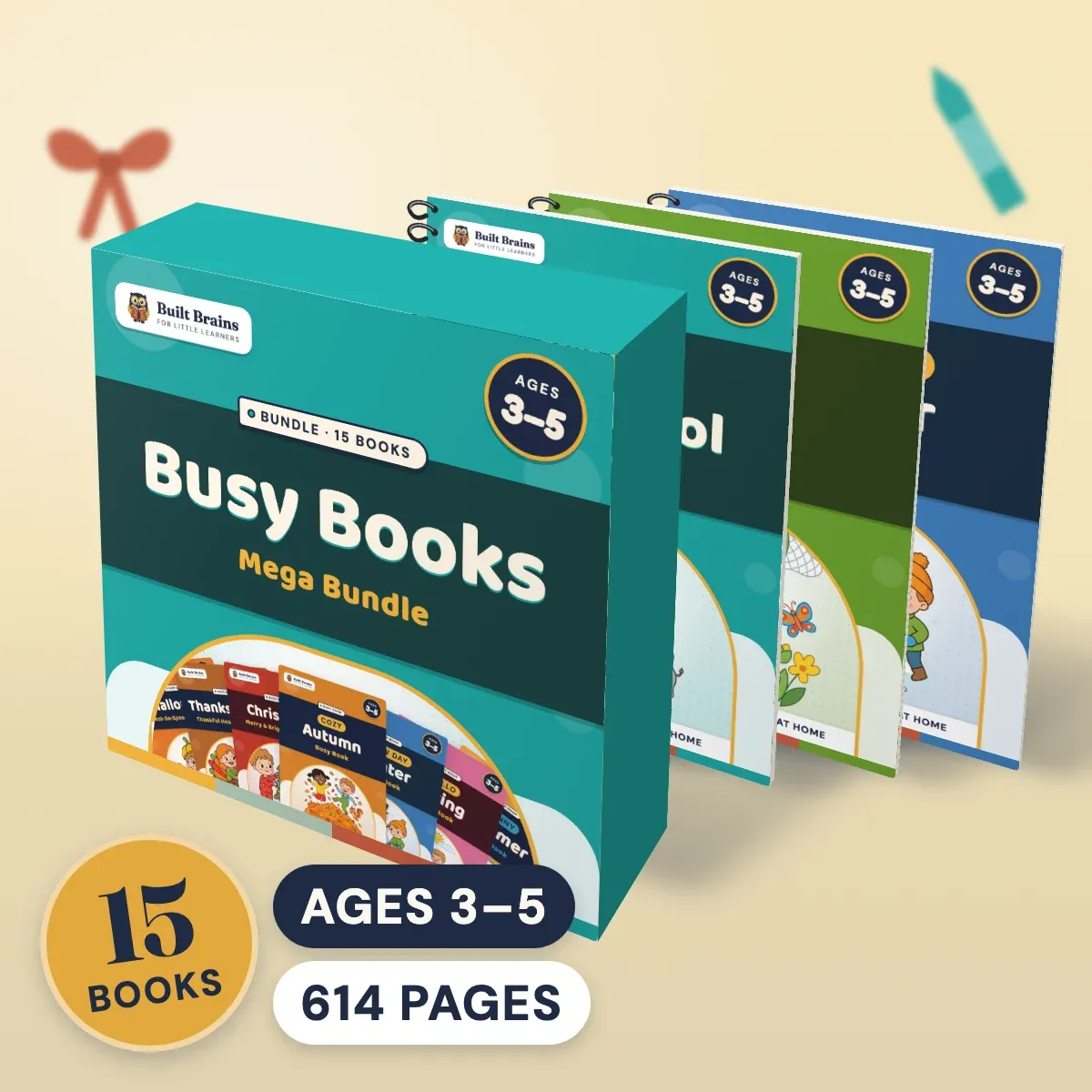
For the quiet hour, the I Spy & Look-and-Find Book (ages 4 to 6) has I-spy counting, find-the-shadow and odd-one-out pages across farm, ocean, space and dinosaur themes, for children who are done with Christmas pictures. For a busy book for every season and trip in the year ahead, the Busy Book Mega Bundle collects all 15 for ages 3 to 5. More cold-weather ideas: winter activities for preschoolers.
Sources
- HealthyChildren.org (AAP) – Healthy Sleep Habits: How Many Hours Does Your Child Need?: the 10–13 and 9–12 hour sleep ranges by age.
- HealthyChildren.org (AAP) – Kids & Screen Time: 5 C's Questions for Toddlers & Preschoolers: the about-an-hour guidance for ages 2 to 5 and co-viewing.
- Reading Rockets: reading aloud daily as the core at-home literacy habit.
- HHS – Physical Activity Guidelines for Americans: an hour a day for ages 6 to 17 and active play throughout the day for preschoolers.
Questions parents ask
Give each day the same loose shape: move first, one project, a quiet hour after lunch and screens in a single predictable slot. Then match activities to energy: hallway bowling and freeze dance when they are bouncing, baking or a cardboard-box build when they are steady, and mazes, audiobooks or a look-and-find page when they are running on empty.
Plan it like a long travel day: a big outdoor morning, a real job before lunch such as making place cards, a quiet hour, then one special afternoon treat, an early familiar dinner, a snack for Santa and oats for the reindeer, pajamas, one story and an earlier bedtime. Telling your child the order in the morning keeps the excitement steady.
The American Academy of Pediatrics suggests about an hour a day of good-quality programming for 2 to 5 year olds, watched together where possible, and consistent limits for older children so screens do not crowd out sleep, outdoor play and family time. One predictable slot each day, with a visible ending, causes far fewer arguments than ad hoc rules.
Not formal schoolwork. Two weeks off does not undo a term's learning, and children need the rest. Keep skills warm instead with daily reading aloud, writing for real reasons such as thank-you cards and lists, counting while baking, and ten minutes of mazes or dot-to-dots for pencil control. A few sight-word games in the second week are plenty for school-age children.
Rotate the new toys so only half are out, get outside every day whatever the weather, arrange a playdate swap with another family, write thank-you cards with drawings, try a simple ice-and-salt science tray and hold a New Year's Eve countdown at noon. Switch the quiet-hour pages to winter or animal themes once the Christmas pictures feel stale.

Reviewed by
Early Years Foundation Stage (EYFS) Teacher
Emma Sterling is an EYFS educator who champions play-based learning and continuous provision to foster independent, inquisitive learners.
More about Emma →