Why weather is such a good preschool science theme
Weather is the only science topic your child meets every single morning. It changes, it can be measured with things you already own, and it decides whether they wear boots. That makes it a natural first science unit for 3 to 6 year olds: observe, record, predict, check.
The theme below is built around one habit, the daily weather check, with 36 activities grouped by strand around it. Pick two or three a day. For a weather theme in a particular season, pair it with our rainy day activities or snow day activities.
Weather facts that are true and simple enough for 3 to 6 year olds
- Weather is what the sky and air are doing today: sunny, cloudy, rainy, windy, snowy, hot or cold. It can change in one day.
- Clouds are made of tiny drops of water or tiny bits of ice, so small and light they float. Clouds form when invisible water vapor in the air cools and turns back into droplets (NOAA JetStream – Clouds).
- Rain falls when the drops in a cloud join up and get too heavy to float. Snow is frozen water that falls when the air is cold enough.
- Water goes around and around. The sun warms water in puddles, rivers and seas, it rises as vapor, makes clouds, and falls again as rain or snow. This is the water cycle (NASA Space Place – What Is the Water Cycle?).
- Wind is moving air. You cannot see it, but you can see what it moves.
- A rainbow appears when sunlight shines through raindrops, so look for one with the sun behind you after a shower.
- Thunder is the sound lightning makes. When you hear it, go indoors.
36 weather activities for preschoolers, by strand
Observe and experiment
- Shaving-cream rain cloud. Jar of water, shaving-cream "cloud" on top, drops of blue food coloring until it rains. Ask: why did it rain? (The cloud got too full and heavy.)
- Rain gauge. Cut the top off a clear bottle, invert it as a funnel, mark centimeters or half-inches up the side with tape, and leave it on the step. Check after rain.
- Water cycle in a bag. Draw a sun and cloud on a zip bag, add a little water with a drop of blue, seal and tape to a sunny window. Watch it fog, bead and drip over two days.
- Shrinking puddle. Trace a puddle with chalk in the morning and again at lunch and after school. Where did the water go?
- Wind detectives. Hold up a ribbon, a feather, a sheet of paper and a pebble. Which does the wind move?
- Make a wind sock. A paper cup with the bottom cut out, crepe-paper streamers, string to hang it. Watch which way it points.
- Cloud spotting. Lie on a blanket and look for puffy cumulus, wispy cirrus and flat gray stratus. Older fives can learn the three names; everyone can describe shapes.
- Ice melt race. Three ice cubes: one in the sun, one in shade, one indoors. Predict, then check every ten minutes.
- Thermometer talk. A big outdoor thermometer by the door. Is the red line higher or lower than yesterday?
- Tornado in a bottle. Two bottles taped neck-to-neck with water in one; swirl and flip. It is a vortex, not real weather, but it shows spinning air and water.
- Make frost. Fill a tin can with crushed ice and lots of salt, stir, and watch frost form on the outside.
- Rainbow with a hose. On a sunny day, stand with the sun behind you and spray a fine mist.
Vocabulary and books
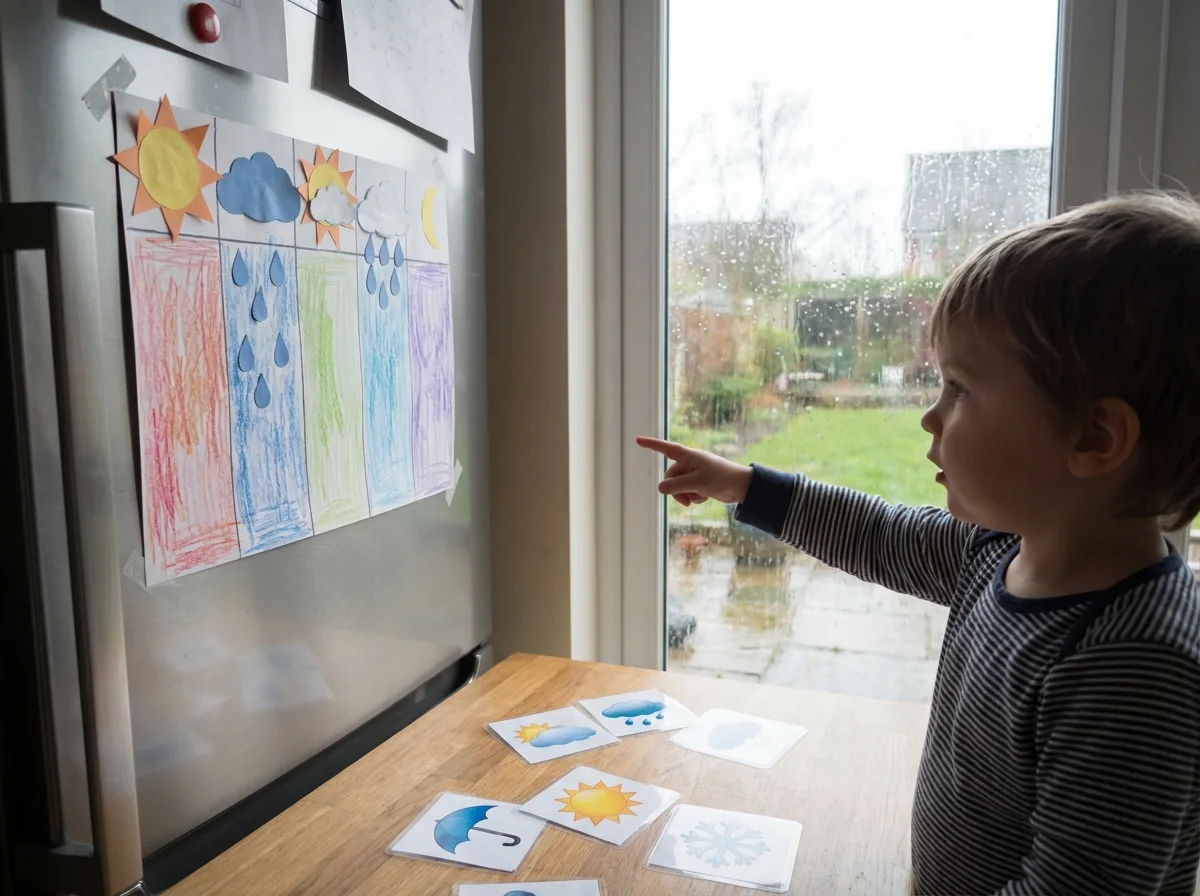
- Weather word cards. Trace and read sunny, rainy, windy, snowy, cloudy, stormy; match each to a picture.
- Dress-the-bear. Paper bear with cut-out clothes. "It is snowing today. What does Bear need?"
- Weather reporter. Hand over a cardboard microphone for a 30-second forecast at breakfast.
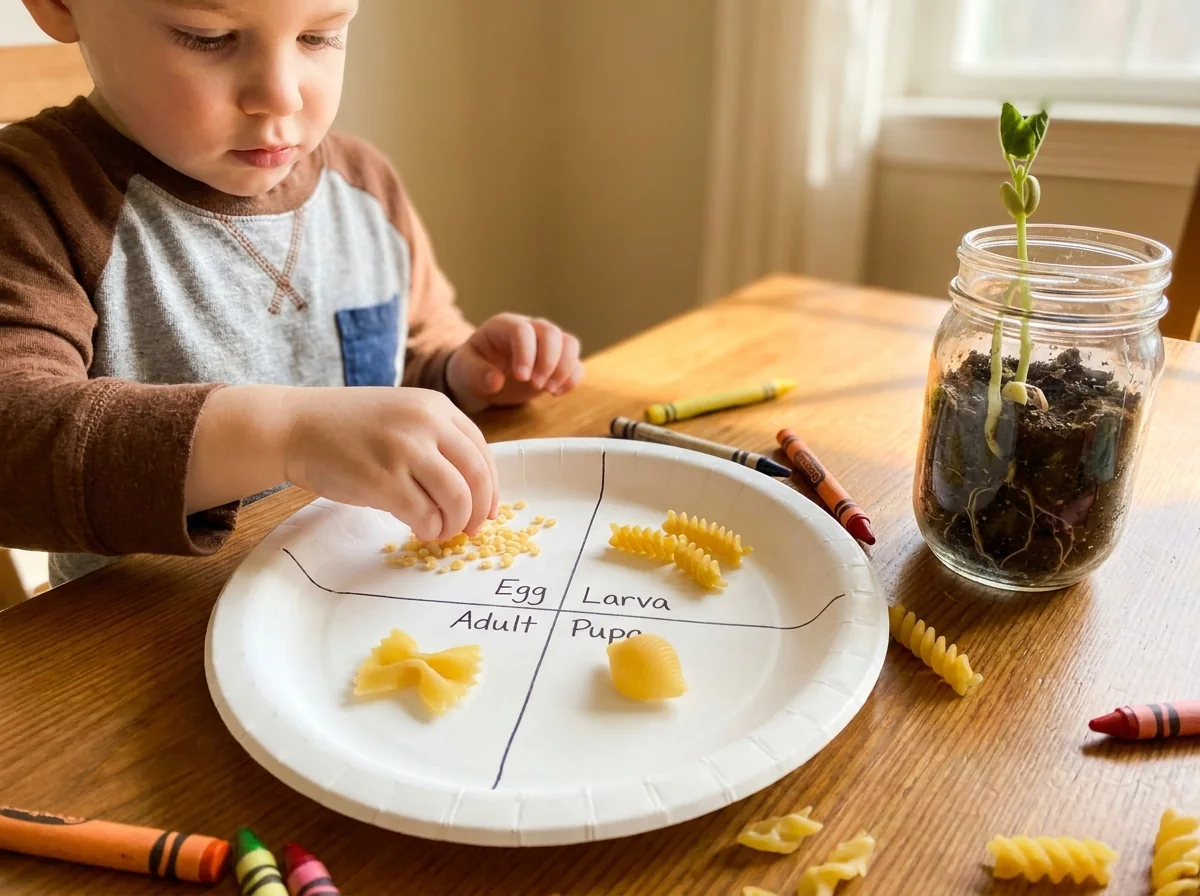
- Read-aloud fact page, then act out the water cycle: arms up (evaporate), hug (condense), fingers wiggle down (rain).
- Opposites game. Hot and cold, wet and dry, windy and still, light and dark sky.
- Describe the sky in three words every day and write them on the chart.
Math
- Weather graph. Sticker the week's weather cards in columns. Which weather won? How many more sunny days than rainy?
- Raindrop counting. Blue paper raindrops numbered 1 to 10 to hang from a paper cloud in order.
- Umbrella patterns. Color umbrella segments in an AB or ABB pattern.
- Snowflake symmetry. Fold a paper square, cut, open. Count the points (six, like real snowflakes).
- Temperature high-low. Read the thermometer at breakfast and after lunch; which number is bigger?
- Measure the rain. Read the rain gauge and compare two rainy days: more or less?
- Sun shadow clock. Stand a stick in a pot and mark the shadow each hour with a stone.
Art and fine motor
- Cotton-ball clouds. Glue cotton balls as cumulus, pull them thin for cirrus, flat for stratus.
- Coffee-filter rainbow. Marker stripes, spray with water, dry, cut into an arc.
- Paper-plate sun and cloud. Yellow plate with paper-strip rays on one side, cotton clouds on the other; flip for the forecast.
- Salt-painting lightning. Draw lightning in glue, pour salt, drip watercolor. Zig-zag lines are tricky and good pencil practice.
- Rainy-day window. A "window" of blue tissue paper streaks on clear contact paper.
- Pipette rain art. Drip watercolor from a pipette onto wet paper. Great for the pinch grip.
Movement and songs
- "Rain, Rain, Go Away" and "The Sun Has Got His Hat On" with actions.
- Weather freeze dance. "Windy" means spin, "rainy" means tiptoe, "sunny" means stretch, "stormy" means freeze.
- Storm orchestra. Rub palms (drizzle), click fingers (rain), slap thighs (downpour), stamp (thunder), then back down to quiet.
- Puddle jumping in boots after the rain. Count the jumps.
Outdoors
- Weather walk. Same route on a sunny day and a rainy day. What is different? What do you hear, smell and see?
A sample 5-day weather plan
Run the daily weather check every morning. Then pick from the table. In week two, repeat the pattern around whatever weather you actually get.
| Day | Focus | Experiment | Words and math | Art | Move and sing |
|---|---|---|---|---|---|
| Monday | Sunny | Shrinking puddle | Weather word cards | Paper-plate sun | Weather freeze dance |
| Tuesday | Cloudy | Shaving-cream rain cloud | Describe the sky | Cotton-ball clouds | Storm orchestra |
| Wednesday | Rainy | Rain gauge and water-cycle bag | Raindrop counting | Pipette rain art | "Rain, Rain, Go Away" |
| Thursday | Windy | Wind detectives and wind sock | Opposites game | Coffee-filter rainbow | Puddle jumping or a wind walk |
| Friday | Weather of the week | Ice melt race | Weather graph | Dress-the-bear | Weather reporter show |
For how a short themed block like this fits into a preschool morning, see our preschool at home schedule; for more science and nature themes across the year, see toddler curriculum themes.
Picture books for a weather theme
- Cloudy With a Chance of Meatballs by Judi Barrett
- Little Cloud by Eric Carle
- It Looked Like Spilt Milk by Charles G. Shaw
- The Snowy Day by Ezra Jack Keats
- Rain by Manya Stojic
- Come On, Rain! by Karen Hesse
- The Wind Blew by Pat Hutchins
- Thunder Cake by Patricia Polacco
- Weather Words and What They Mean by Gail Gibbons
It Looked Like Spilt Milk is the natural partner for cloud spotting; Thunder Cake is the one to read if your child is frightened of storms.
Weather safety, briefly
- Thunder means indoors. The National Weather Service rule is simple: when thunder roars, go indoors, and stay inside until 30 minutes after the last thunder (NWS – Lightning Safety Tips). Watch the storm from a window and count the seconds between flash and rumble.
- Sunny days need shade and hats. The American Academy of Pediatrics recommends keeping babies under 6 months out of direct sun, and for older children shade, a hat and sunscreen of SPF 15 or higher on exposed skin (healthychildren.org – Sun Safety). Make applying sunscreen part of the "dress for the weather" routine.
- Water play: empty rain gauges, tubs and buckets after use. Young children can drown in very little water.
- Cold days: layers, mittens and a time limit outdoors; come in to warm up and go back out.
What to print for a weather theme
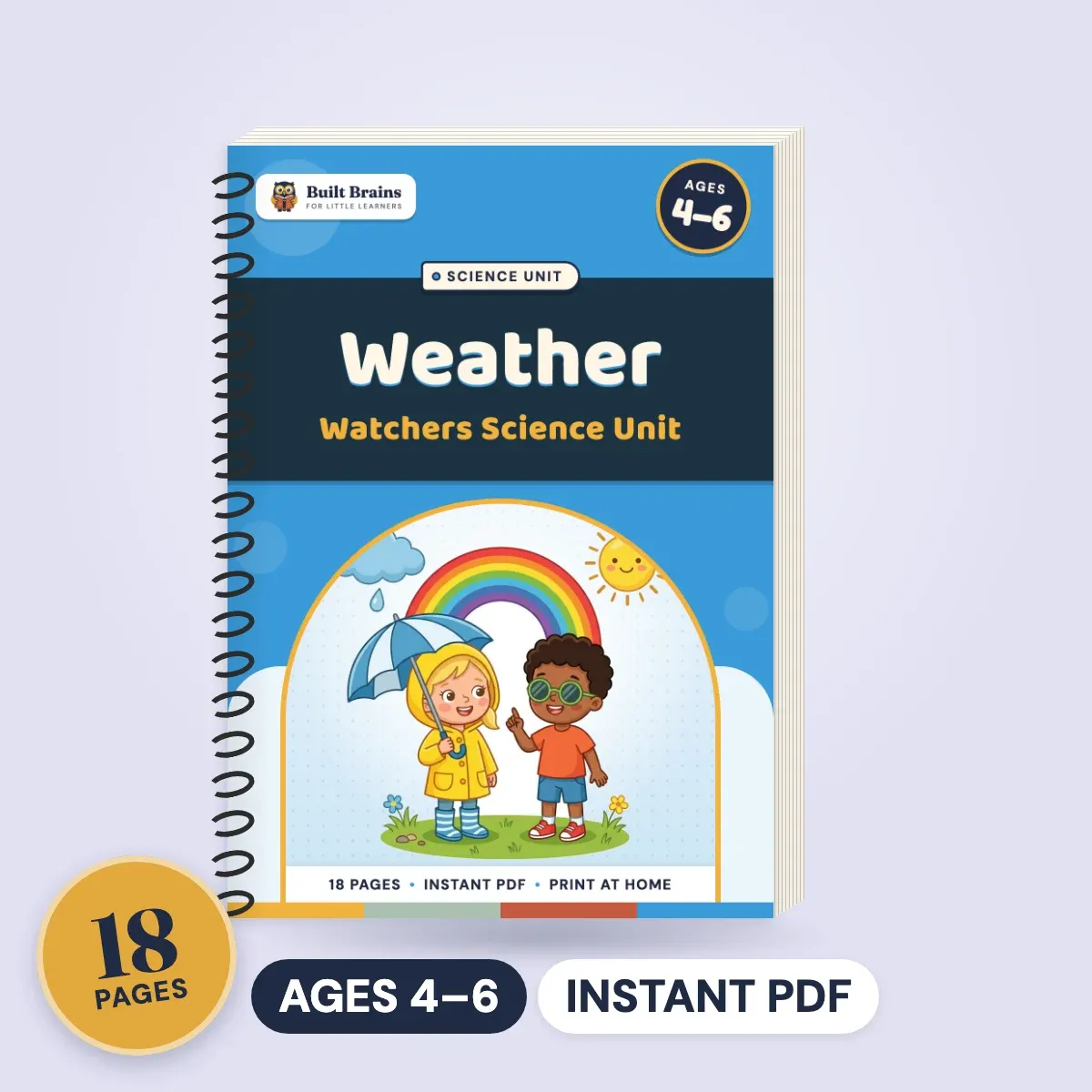
- Weather Watchers Science Unit (ages 4–6, 18 pages): a read-aloud weather fact page, weather words to trace, word cards, a weather graph, a sort of what to wear, counting, a maze and coloring. It covers the table-time half of this theme on its own.
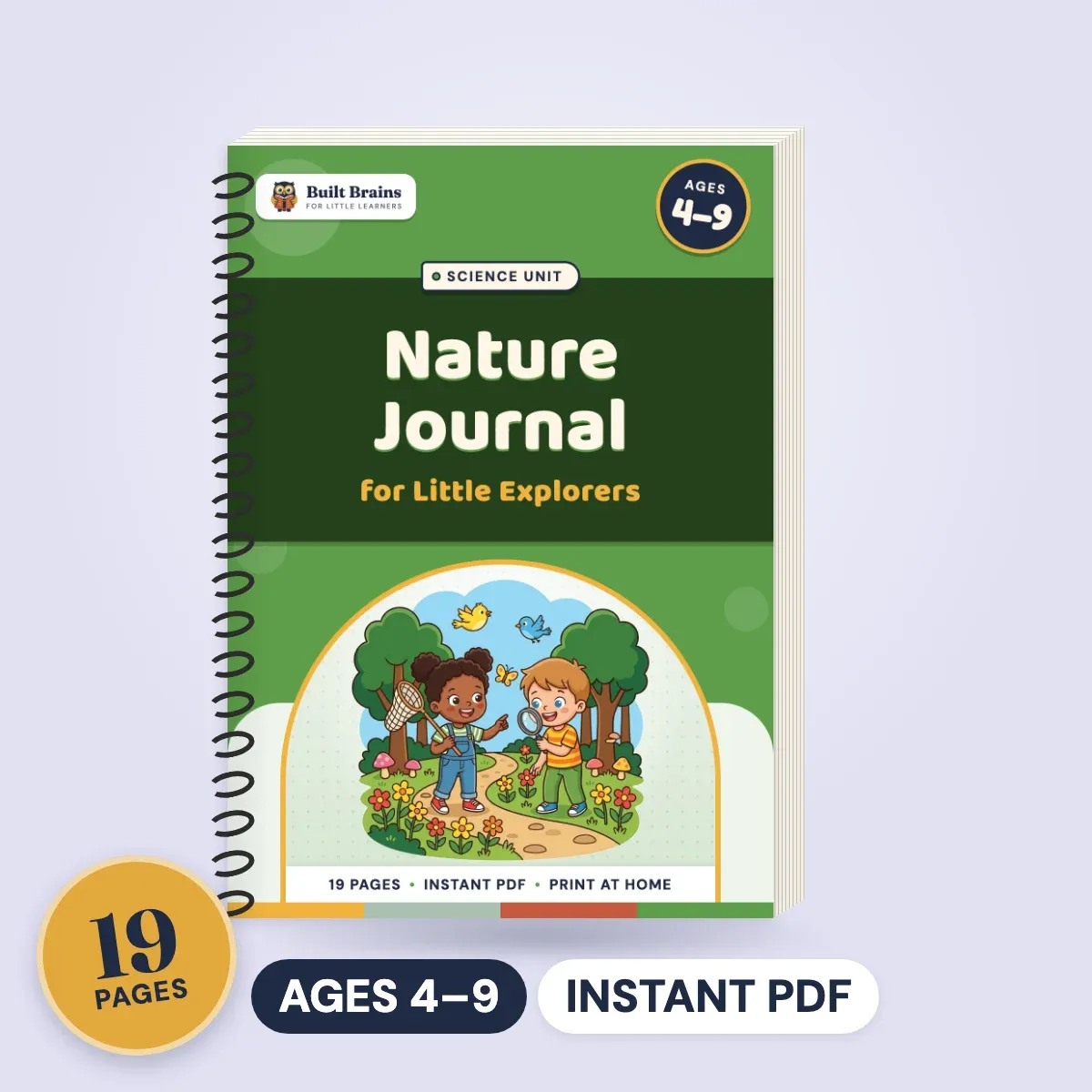
- Little Explorer's Nature Journal (ages 4–9): includes a weather log and observation pages for the daily check and the weather walk.
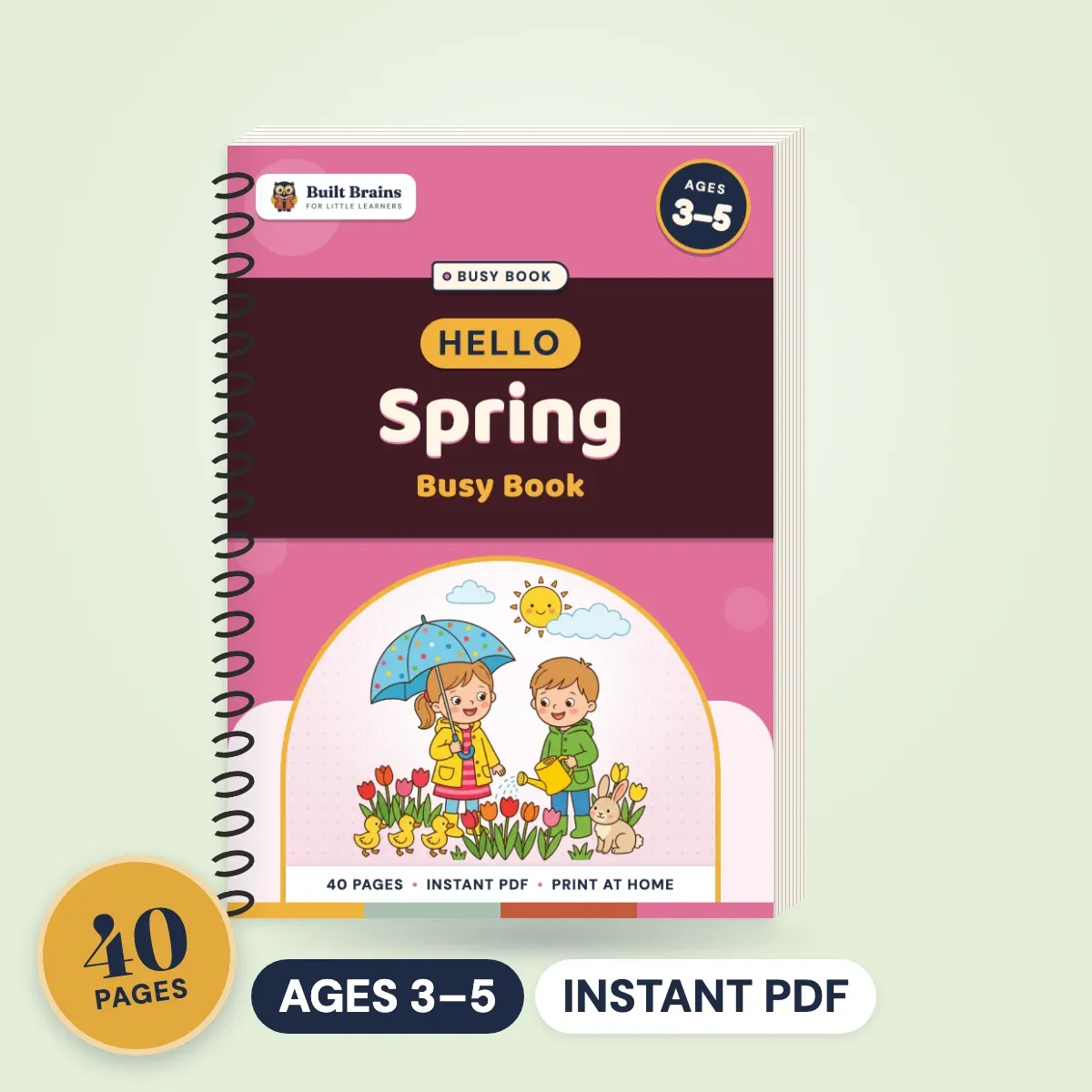
- Hello Spring Busy Book (ages 3–5, 40 pages) for puddles, raindrops and tulips if you run the theme in spring.
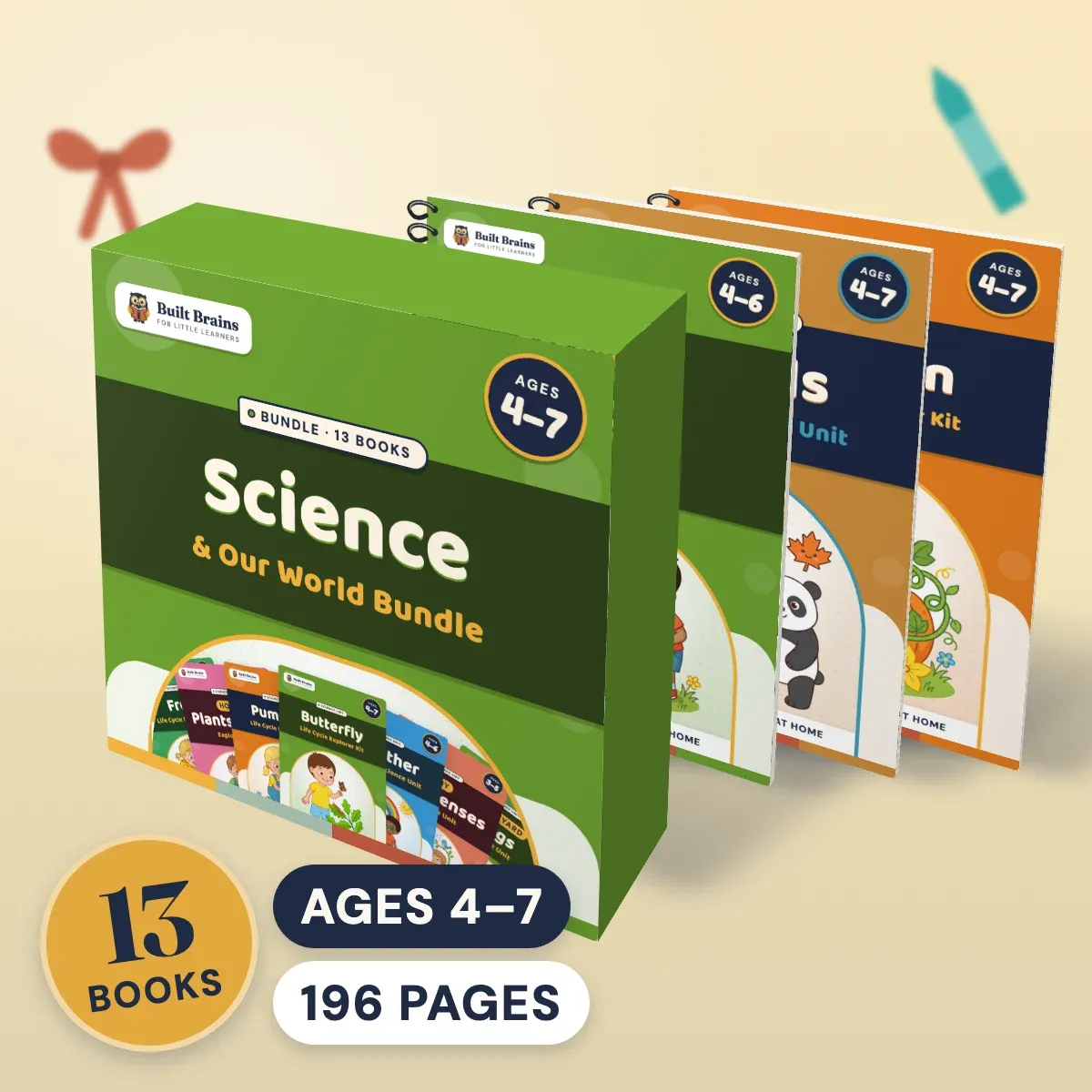
- Science & Our World Bundle (ages 4–7) if you want the weather unit alongside the five senses, life cycles, bugs and the solar system for a whole year of science themes.
Sources
- NOAA JetStream – Clouds: clouds are visible collections of tiny water droplets or ice particles that form when water vapor condenses.
- NASA Space Place – What Is the Water Cycle?: the child-level explanation of evaporation, condensation and precipitation.
- National Weather Service – Lightning Safety Tips: go indoors when you hear thunder and wait 30 minutes after the last thunder.
- healthychildren.org – Sun Safety: AAP advice on shade, hats and sunscreen for babies and children.
Questions parents ask
Four things: the weather words (sunny, cloudy, rainy, windy, snowy, stormy, hot, cold), that weather changes from day to day and can be observed and recorded, that clouds are made of tiny drops of water, and that we dress for the weather. Older fives can add the simple water cycle: water goes up as vapor, makes clouds and comes back down as rain.
The shaving-cream rain cloud. Fill a clear jar with water, float a layer of shaving cream on top as the cloud, then drip blue food coloring onto the cloud with a pipette. When the cloud gets heavy, the color "rains" into the water below. It takes five minutes and shows why rain falls when clouds fill with water.
Keep it to three words and three actions: evaporate (water goes up, stretch arms up), condense (water gathers into clouds, hug yourself), precipitate (rain falls, wiggle fingers down). Back it up with a puddle traced in chalk that shrinks through the day and a plastic bag of water taped to a sunny window that fogs and drips.
One to two weeks. Weather makes a good theme at any time of year, but it is strongest in spring and fall when the weather actually changes during the week. Twenty minutes of planned activity a day plus a two-minute daily weather check is enough; the daily check is the part that teaches the most.
No. Watching rain from a porch is fine, but when you hear thunder, go inside and stay there until 30 minutes after the last rumble, which is the National Weather Service rule. Puddle-jumping after the storm, snow play in good gear and wind-sock testing on a breezy day are all great; lightning is the one weather you only watch through a window.

Reviewed by
Early Years Foundation Stage (EYFS) Teacher
Emma Sterling is an EYFS educator who champions play-based learning and continuous provision to foster independent, inquisitive learners.
More about Emma →