What shapes should preschoolers learn, and in what order?
Start with three shapes and build from there. Circle, square and triangle are the easiest to tell apart, so most 3 year olds begin with those. Rectangle, oval, star and heart come next, usually at 4, and a diamond and hexagon can follow at 5. Alongside the flat shapes, 4 and 5 year olds can start using the words for solid shapes: cube, sphere, cone and cylinder.
That order lines up with where children are heading. US kindergarten standards ask children to name squares, circles, triangles, rectangles, hexagons, cubes, cones, cylinders and spheres, to recognize them whatever their size or which way they are turned, and to say whether a shape is flat or solid (Common Core State Standards, Kindergarten Geometry). Preschool is the time to make those shapes familiar through play, not worksheets alone.
| Age | Flat shapes | Solid shapes | What to talk about |
|---|---|---|---|
| 3 | Circle, square, triangle | Ball, block (everyday words) | Round or pointy? Same or different? |
| 4 | Add rectangle, oval, star, heart | Start saying cube and sphere | Count sides and corners |
| 5 | Add diamond, hexagon | Add cone and cylinder | Flat or solid? Does it roll or stack? |
The one idea that matters most
A shape is still the same shape when it is big, small, upside down or a different color. Many children think a triangle only counts if it points up. Show triangles that are long and thin, short and wide, and tipped on their side, and ask "Is this still a triangle? How do you know?" The answer you are listening for is about sides and corners, not looks.
10 shape hunts and sorting activities
Looking for shapes in the real world is the fastest way to make the words stick.
- Kitchen shape hunt. Find three circles (plates, lids, the clock), then three squares or rectangles (napkins, boxes, tiles). Builds: spotting shapes in real objects.
- Shape walk. On a walk, look for shapes on signs, windows, wheels and doors. Snap a photo of each one.
- I spy shapes. "I spy something shaped like a triangle." Builds: shape words, attention.
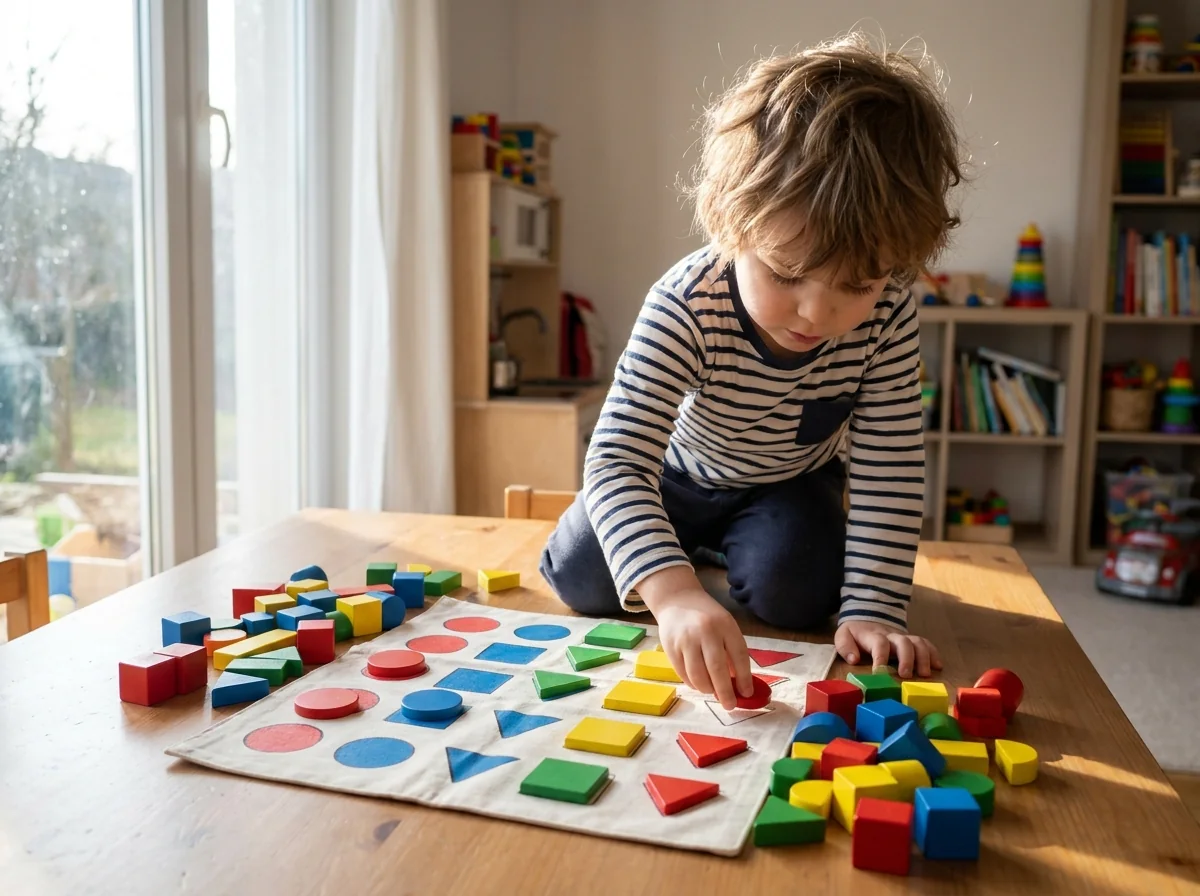
- Paper shape sort. Cut shapes in mixed sizes and colors and sort them into bowls by shape only. Builds: sorting by one rule.
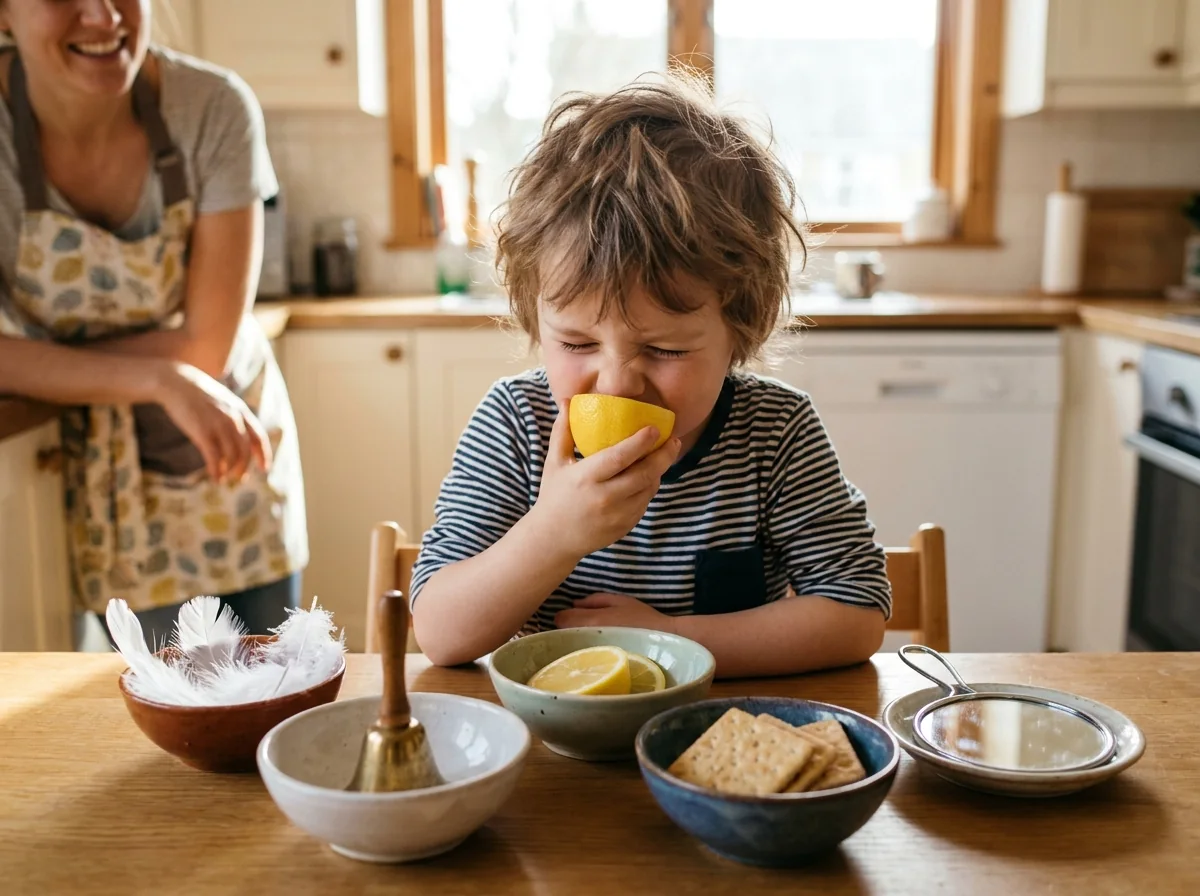
- Feely bag. Hide wooden or foam shapes in a cloth bag. Your child feels one and guesses before pulling it out. Builds: sides and corners by touch.
- Shape sorter, upgraded. Use a toddler shape sorter, but name each shape and count its corners before it goes in.
- Block sort. Sort building blocks into cubes, long blocks, cylinders and arches. Builds: solid shape words.
- Roll or stack? Test balls, cans, boxes and blocks. Which roll? Which stack? Which do both? Builds: properties of 3D shapes.
- Odd one out. Lay out three circles and one square. Which does not belong, and why?
- Shape scavenger list. Draw five shapes on a card and tick each off when your child finds one around the house.
10 making and building activities
Building a shape means paying attention to how many sides it has and where the corners go.
- Playdough shapes. Roll snakes and bend them into circles, squares and triangles. Builds: fine motor control, sides.
- Cookie-cutter dough. Press shape cutters into dough and name each shape you lift out.
- Tape shapes on the floor. Make big shapes with painter's tape. Walk, hop or drive toy cars along the sides. Builds: shapes with the whole body.
- Craft stick shapes. Use craft sticks to make a triangle (three sticks) and a square (four). How many sticks for a rectangle?
- Pipe cleaner shapes. Bend pipe cleaners into circles, hearts and stars.
- Geoboard or pegboard. Stretch rubber bands into shapes, or draw dots on paper and join them.
- Shape collage. Glue paper shapes into a picture: a house from a square and a triangle, a car from a rectangle and two circles.
- Shape stamps. Dip the ends of cups, blocks and sponges in paint and stamp circles, squares and rectangles.
- Chalk shapes outside. Draw giant shapes on the sidewalk and call out "Run to the circle!"
- Shape pictures with tracing. Trace a shape, then turn it into something: a circle becomes a sun, a triangle becomes a slice of pizza.
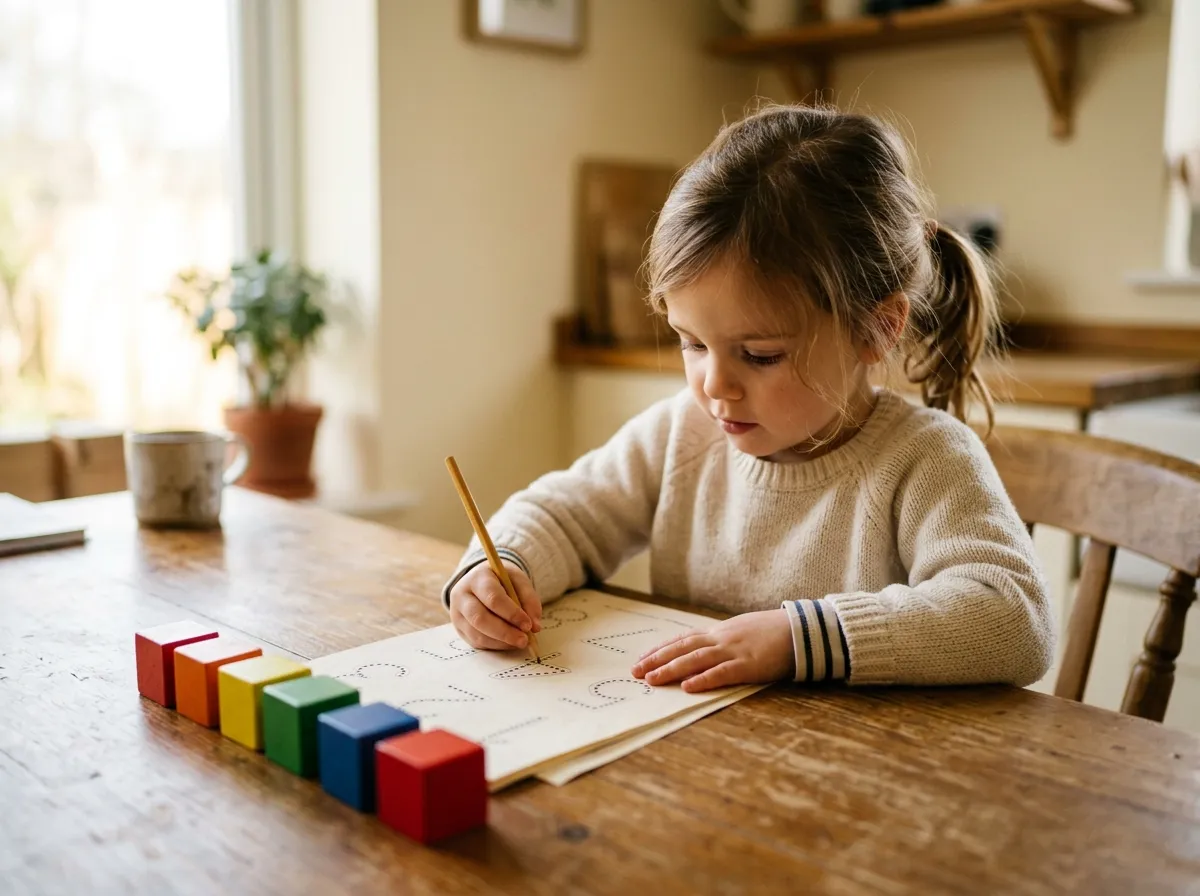
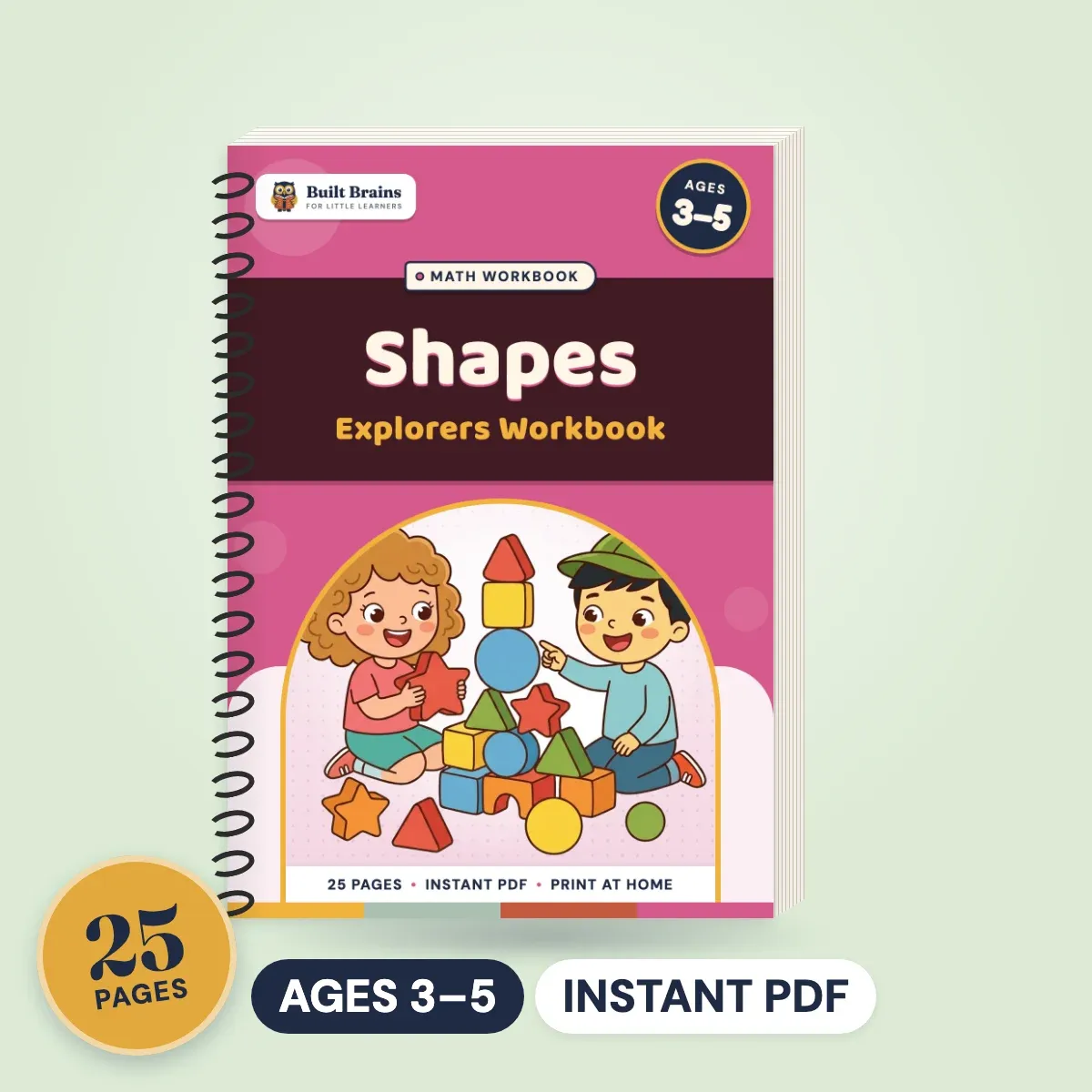
For tracing practice with a clear path, the Shape Explorers Workbook has a page each for circle, square, triangle, rectangle, oval, star, heart and diamond, followed by find-the-shape and matching pages, patterns and dot-to-dots. Pair a page with a real-life activity on the same shape and the two reinforce each other. For more hand-strengthening play, see our fine motor activities for preschoolers.
10 snack, song and movement shape activities
Shapes are everywhere in daily routines, which makes them easy to practice without setting anything up.
- Snack shapes. Cut toast or cheese slices into squares, then into triangles. "We made two triangles from one square!"
- Cracker sort. Use round, square and rectangular crackers and sort them before eating.
- Fruit shapes. Banana slices are circles, melon can be cut into cubes, and a strawberry cut in half looks like a heart.
- Pizza triangles. Count the triangles as you slice a homemade pizza or a tortilla.
- Shape song. Sing about a shape to a tune your child knows, such as "This is a square" to "Twinkle, Twinkle", and trace it in the air as you sing.
- Body shapes. Make a circle with your arms, a triangle with two people's arms, and a long rectangle lying on the floor.
- Shape freeze dance. Put paper shapes on the floor. When the music stops, call a shape and your child jumps onto it.
- Shape hopscotch. Draw a hopscotch path of different shapes and name each one as you land.
- Bath-time shapes. Foam shapes stick to the side of the tub. Make a picture and name the shapes.
- Bedtime shape hunt. Before lights out, find one shape in the bedroom: the window, the pillow, the lampshade.
Keep snack sizes safe for younger siblings. Whole grapes, hard pieces of raw fruit and small round foods are choking hazards for children under 4, so cut food small and supervise eating (healthychildren.org). The same goes for small craft items like buttons and beads.
A 2-week shapes plan (10 minutes a day)
Here is a simple plan for a 3 to 5 year old. Each day has one short activity plus one moment of shape talk during the day. Swap in any activity above that suits your child.
| Day | Shape focus | Activity | Shape talk during the day |
|---|---|---|---|
| 1 | Circle | Kitchen shape hunt (#1) | Round plates at dinner |
| 2 | Circle | Playdough circles (#11) | Wheels on the walk |
| 3 | Square | Tape square on the floor (#13) | Square crackers at snack |
| 4 | Square | Craft stick squares (#14) | Windows and tiles |
| 5 | Circle + square | Paper shape sort (#4) | Freeze dance (#27) |
| 6 | Triangle | Pizza or toast triangles (#21) | Roof shapes on the walk |
| 7 | Triangle | Turn-it-around triangles: big, small, tipped | Feely bag (#5) |
| 8 | Rectangle | Rectangle hunt: doors, books, phones | Stamping (#18) |
| 9 | Oval, star, heart | Pipe cleaner shapes (#15) | Spot hearts and stars on clothes |
| 10 | Review | Shape collage picture (#17) | Shape scavenger list (#10) |
For a 3 year old, stop after circle, square and triangle and repeat the first week. For a 5 year old, add a "solid shapes day" with blocks and cans (#7 and #8) and talk about cube, sphere, cone and cylinder.
How shapes connect to the rest of preschool math
Shapes are not a separate topic. Counting sides and corners is counting practice, and sorting shapes is the same thinking as sorting toys by color. Making patterns with shapes (circle, square, circle, square) leads into early algebra, and fitting shapes together in puzzles builds the spatial sense children later use for reading maps and graphs.
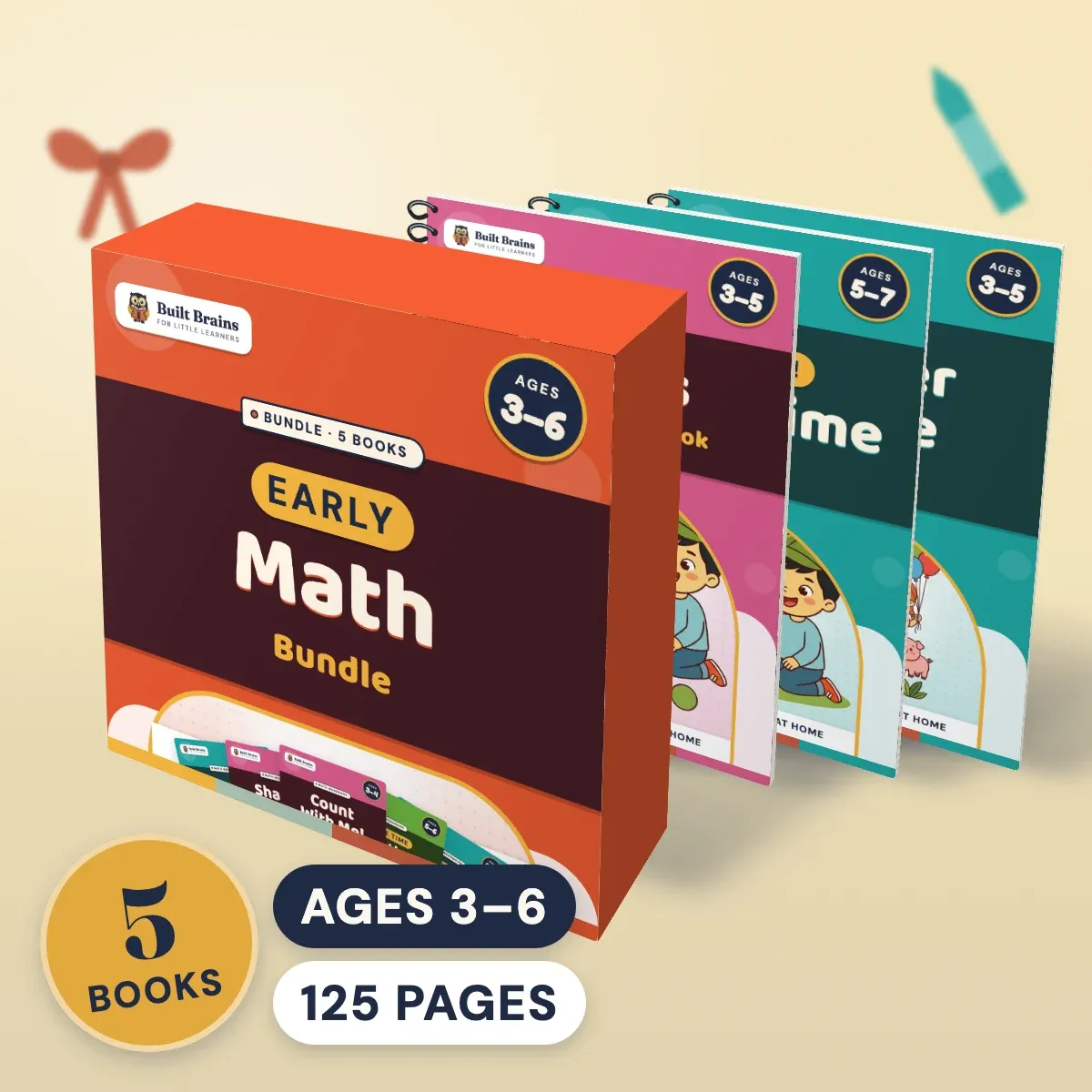
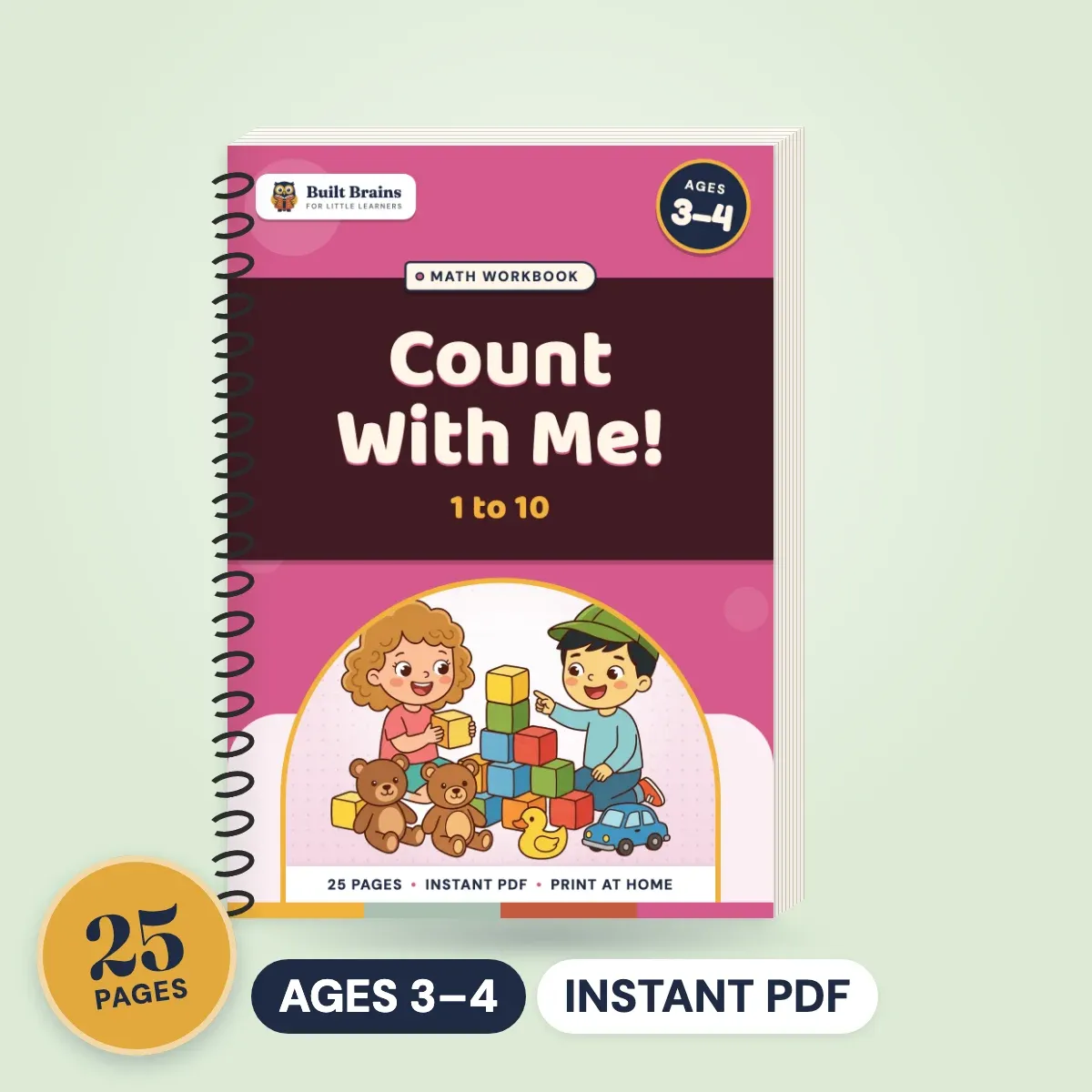
If you are building a broader math routine, our math activities for preschoolers cover counting, patterns, measuring and early adding, and what should a 3 year old know gives the bigger picture for younger children. The Early Math Bundle puts five workbooks in order for ages 3 to 6: first counting, numbers to 20, shapes, adding and taking away to 10, and telling time. For a child just starting out, Count With Me! 1 to 10 pairs well with shapes work because you can count corners as you go.
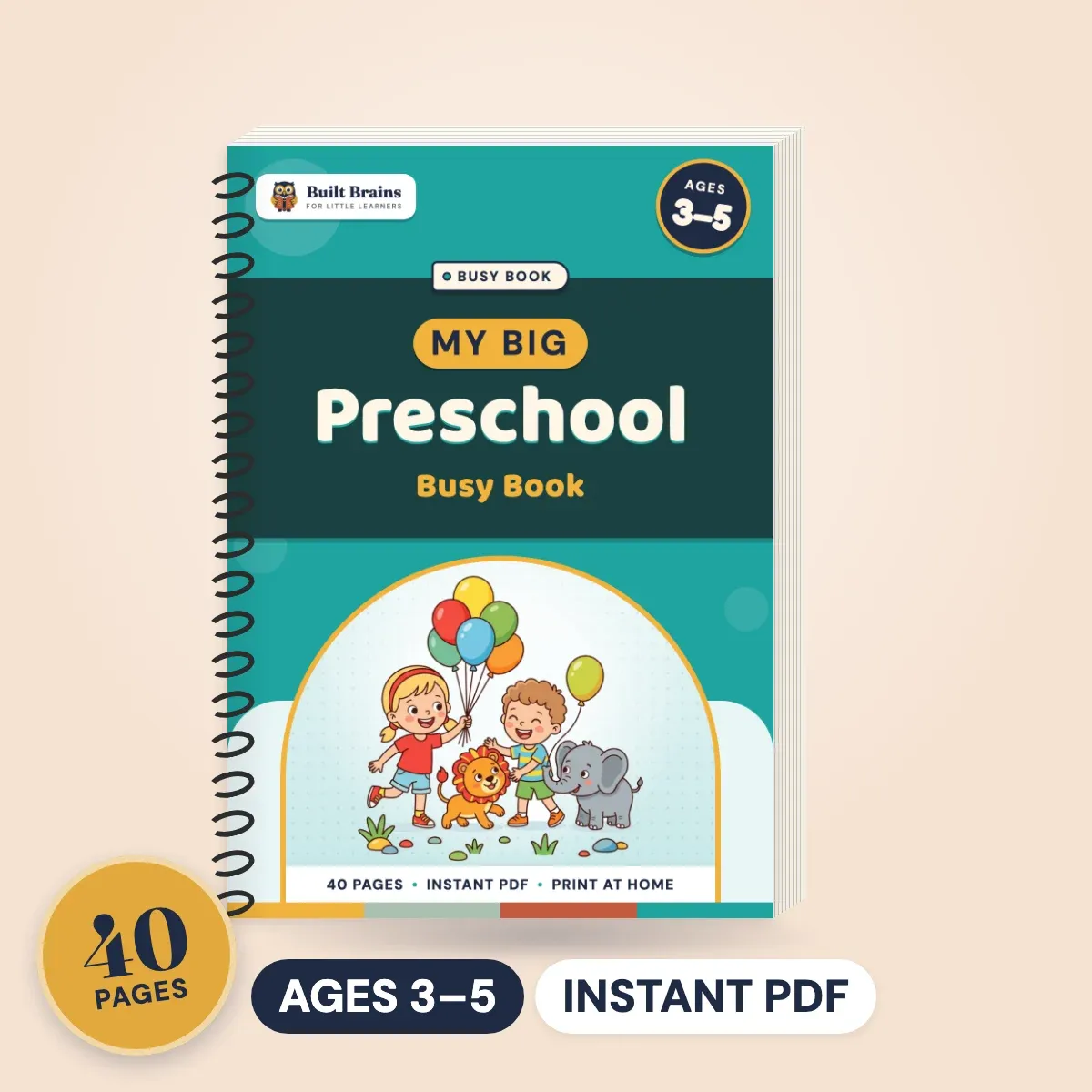
For quiet table time, My Big Preschool Busy Book mixes tracing, mazes, matching and pattern pages with pictures preschoolers love, so shape and pattern practice turns up between the coloring.
Sources
- Common Core State Standards Initiative – Kindergarten: Geometry: the flat and solid shapes kindergartners learn to name, in any size or orientation, and telling flat from solid.
- healthychildren.org – Choking Prevention: foods and small objects that are choking hazards for children under 4.
Questions parents ask
Most 3 year olds start with circle, square and triangle. By 4, many can also name a rectangle, oval, star and heart, and by 5 some know a diamond and a hexagon plus solid shapes like the cube, sphere and cone. Children vary a lot, so treat this as an order to follow rather than a test with a deadline.
Teach one shape at a time and make it physical. Trace a big circle in the air, walk around a circle drawn in chalk, then hunt for circles in the kitchen: plates, lids, clocks. Name shapes casually all day ("Can you pass the square cracker?") and let your child feel the corners and edges with their fingers.
Cut circles, squares and triangles from colored paper in different sizes and colors, then ask your child to sort them into three bowls by shape only. Mixing sizes and colors is the point: it teaches that a tiny blue triangle and a big red one are both triangles. Add a fourth bowl for "not a triangle" to make it harder.
Children handle 3D shapes from babyhood through balls and blocks, and many 4 and 5 year olds can learn the words cube, sphere, cone and cylinder. In the US, kindergarten standards include naming these solid shapes and telling flat shapes from solid ones, so preschool is a good time to start using the words during everyday play.
Five to ten minutes is plenty for a planned activity at 3 and 4, and up to fifteen at 5 if your child is enjoying it. Short and frequent beats long and rare. The rest of the learning happens through shape talk in ordinary moments: at snack time, on walks, while building and while tidying up toys.
Reviewed by
Early Years Foundation Stage (EYFS) Teacher
Emma Sterling is an EYFS educator who champions play-based learning and continuous provision to foster independent, inquisitive learners.
More about Emma →