Why a bug theme works so well at 3, 4 and 5
Bugs are the one science topic that comes to you. There is no trip to plan: a patch of grass, a damp log or a sunny window has ants, ladybugs, spiders and worms to find in any season except deep winter. Preschoolers are at exactly the age where "look closely and count" is a thrill, and insects give them something small enough to hold their full attention.
A good bug theme does five things at once: it gets children observing like scientists, it adds real vocabulary (antennae, wings, pollen, cocoon), it gives you endless counting and sorting, it fills art time with crafts that do not need a shopping trip, and it builds kindness toward small living things. The activities below are grouped by strand so you can pick a few from each column every day.
Bug facts preschoolers can actually understand
Keep the science short, true and repeatable. These are the facts worth saying over and over during the two weeks:
- Insects have six legs, three body parts (head, thorax, abdomen) and two antennae. Most have wings. Ants, bees, butterflies, ladybugs and beetles are all insects.
- Spiders have eight legs and two body parts, so they are not insects. Neither are worms, snails or slugs, which have no legs at all.
- Ladybugs are beetles. Their hard, spotted wing covers open to let them fly, and they eat tiny garden pests called aphids (National Geographic Kids – Ladybug).
- Bees carry pollen from flower to flower, which is how many plants make fruit and seeds. Honeybees live together in a hive and turn nectar into honey (National Geographic Kids – Honeybee).
- Butterflies and moths start as caterpillars. Egg, caterpillar, chrysalis, butterfly: four stages, and the caterpillar does nothing but eat.
- Many bugs are helpers. Bees, butterflies, beetles and even some flies are pollinators that help gardens and farms grow food (National Park Service – Pollinators).
36 bug activities, grouped by strand
Observe and experiment (science)
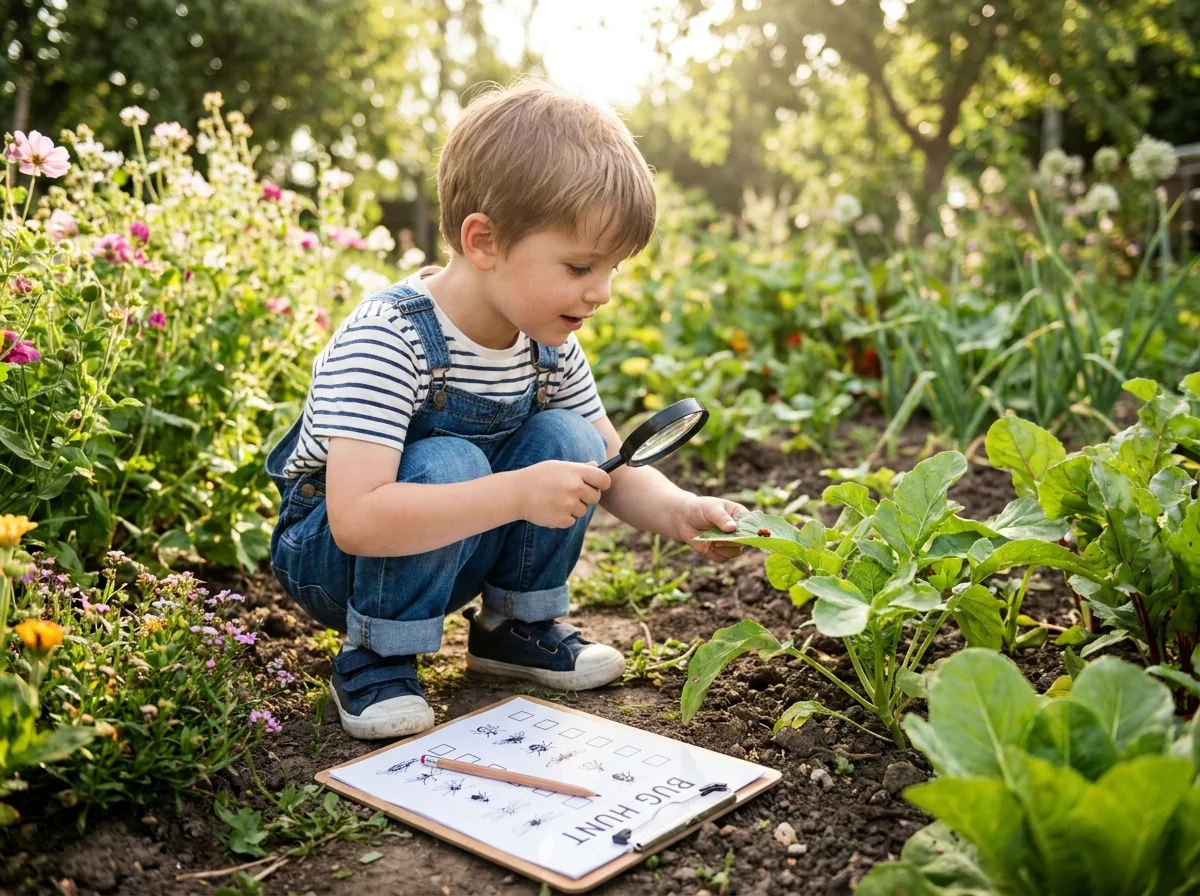
- Backyard bug hunt. Give a magnifying glass and a clear tub with air holes. Look under pots, logs and leaves. Count legs out loud before deciding "insect or not."
- Bug hotel. Stack a few bricks and stuff the gaps with bamboo, pine cones, dry leaves and rolled cardboard. Check it weekly.
- Worm observatory. Layer damp soil and sand in a clear jar, add two or three worms and some leaves on top, wrap the jar in dark paper. Unwrap after a few days to see tunnels. Release the worms afterward.
- Ant trail test. Put a drop of honey and a drop of water on a paving stone and watch which one the ants find.
- Pill bug choice box. Half the box lined with damp paper towel, half dry. Where do the pill bugs go? (They prefer damp.)
- Window-sill snail race. Two snails on a wet tray, a lettuce leaf at the end. Watch the trails they leave.
- Insect or not? sort. Picture cards or plastic bugs sorted into "six legs" and "not six legs."
- Flower watch. Sit by a flowering bush for five quiet minutes and tally every visitor.
Vocabulary and books
- Bug word wall. Add one word a day with a picture: antennae, wings, thorax, pollen, chrysalis, web.
- Read-aloud fact page. Read one fact, then act it out: "Show me your six legs."
- "I am a…" riddles. "I have spots, I am a beetle, I eat aphids. What am I?"
- Retell The Very Hungry Caterpillar with real fruit, then eat it.
- Describe-a-bug. Child describes a plastic bug (color, legs, wings) and you guess.
- Bug alphabet. A is for ant, B is for bee, C is for caterpillar; find or draw one per day.
Math
- Ladybug spot counting. Red paper circles, black dot stickers, a die. Roll and stick that many spots.
- Leg counting. Lay out plastic bugs. "Two insects: how many legs altogether?" (12.) Great for counting in sixes with older fives.
- Caterpillar patterns. Thread colored pom-poms or paper circles in an AB or ABC pattern.
- Bee hive tens frame. A ten-frame drawn as a honeycomb; fill with yellow pom-pom "bees" to make 10.
- Bug graph. After the bug hunt, graph what you found with stickers in columns.
- Measuring worms. Cut pipe-cleaner "worms" of different lengths and order them shortest to longest.
- Spider legs. A paper circle body plus eight pipe-cleaner legs. Count to eight again and again.
Art and fine motor
- Paper-plate ladybug. Paint red, cut a line for the wings, add black spots and a folded-paper head.
- Egg-carton caterpillar. Cut a six-cup strip, paint, add pipe-cleaner antennae.
- Coffee-filter butterfly. Color with washable markers, spray with water, dry, pinch into a clothespin body.
- Handprint bee. Yellow handprints with black stripes drawn on, tracing-paper wings.
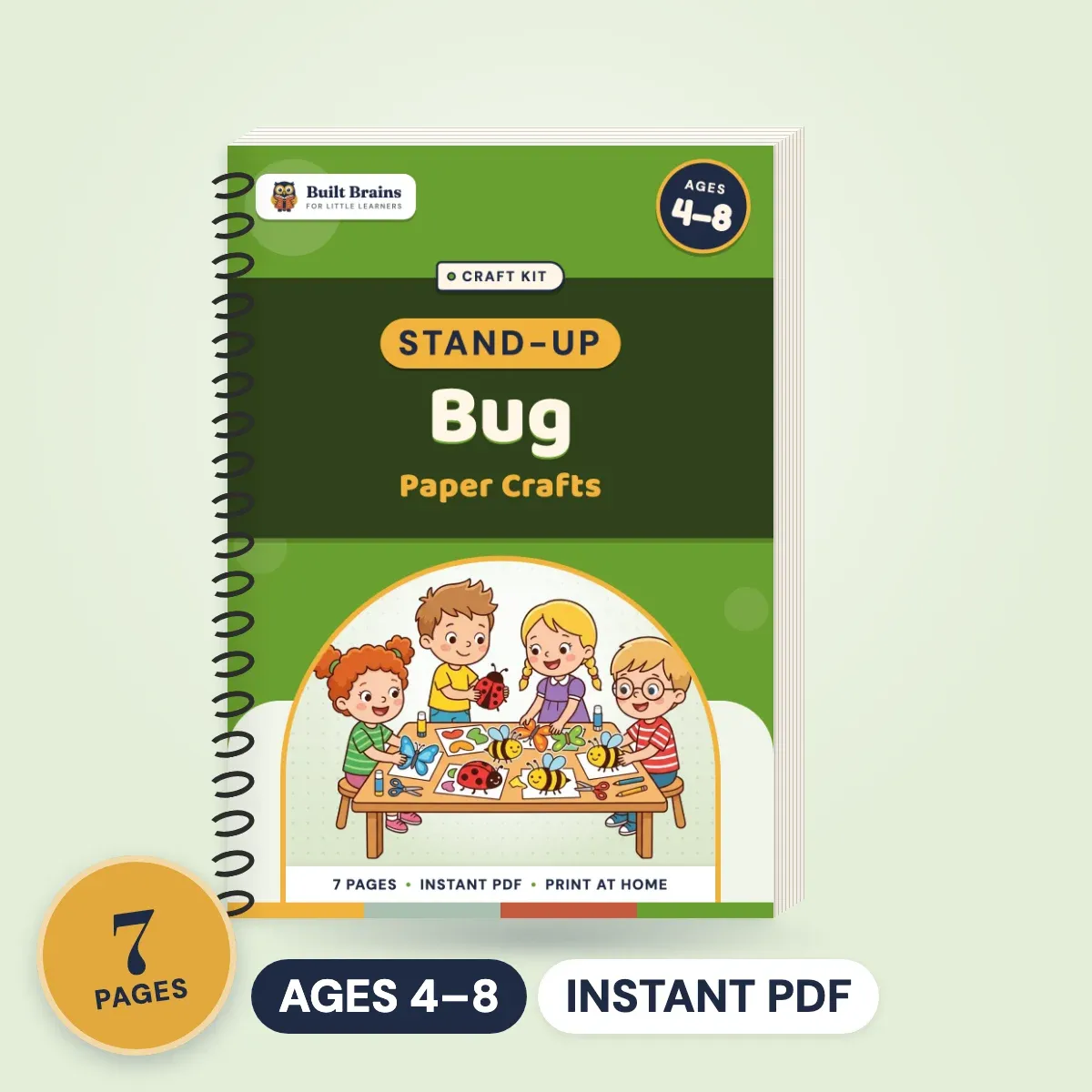
- Stand-up paper bugs. Color, cut and fold printable bugs that stand on their own, then line them up for a bug zoo. The Stand-Up Bug Paper Crafts has 12 of them, including ladybugs, bees, butterflies, snails and beetles.
- Fingerprint bugs. Press fingertips in paint, add legs and antennae with a fine marker once dry.
- Spider web weaving. Punch holes around a paper plate and thread yarn across to make a web.
- Play-dough bugs. Bodies from dough, legs from matchsticks or dry spaghetti. Count the legs.
Movement and songs
- "The Ants Go Marching." March in a line, one by one, then two by two.
- "Itsy Bitsy Spider" with the hand actions, then act it out full-size on the stairs.
- Bug yoga. Curl like a caterpillar, stretch wide like a butterfly, crouch like a cricket.
- Buzz, flutter, crawl. Call out a bug and children move like it; "freeze" when you say "bird!"
- Bee pollination relay. Carry yellow pom-pom "pollen" from one paper flower to another with a spoon.
Outdoors
- Chalk bug trails. Draw a giant ant trail in chalk and walk it heel-to-toe.
- Plant for pollinators. Sow a pot of sunflower or nasturtium seeds and watch who visits in summer.
A sample 5-day bug plan
Use this as week one, then repeat the pattern in week two around a single bug (butterflies and bees are the favorites). For how a themed week fits into a wider routine, see the preschool at home schedule.
| Day | Focus | Science | Math | Art and craft | Move and sing |
|---|---|---|---|---|---|
| Monday | What is an insect? | Insect-or-not sort | Leg counting | Egg-carton caterpillar | Buzz, flutter, crawl |
| Tuesday | Ladybugs | Flower watch and tally | Ladybug spot dice | Paper-plate ladybug | Bug yoga |
| Wednesday | Ants | Ant trail test | Caterpillar patterns | Fingerprint ants | "The Ants Go Marching" |
| Thursday | Spiders (not insects!) | Backyard web search | Spider legs to eight | Paper-plate web | "Itsy Bitsy Spider" |
| Friday | Bees and butterflies | Bug hotel build | Bee hive ten-frame | Coffee-filter butterfly | Pollination relay |
Keep sessions short: 20 to 30 minutes of planned activity for 3 year olds, up to 45 minutes for 5 year olds, with the outdoor hunt as a separate daily habit.
Picture books for a bug theme
- The Very Hungry Caterpillar by Eric Carle
- The Grouchy Ladybug by Eric Carle
- The Very Busy Spider by Eric Carle
- The Very Quiet Cricket by Eric Carle
- Diary of a Worm by Doreen Cronin
- Bugs! Bugs! Bugs! by Bob Barner
- Some Bugs by Angela DiTerlizzi
- Ten Little Ladybugs by Melanie Gerth
- Are You a Ladybug? by Judy Allen
- The Honeybee by Kirsten Hall
Read one a day and keep the same two or three on repeat; preschoolers learn vocabulary from the fifth reading, not the first.
Bug safety for little explorers
Most bug fun is completely safe, but a few habits keep it that way:
- Hands off stinging insects. Bees, wasps and hornets are watch-only. Teach children to stand still and walk away calmly rather than swat.
- Wash hands after handling bugs, soil or compost, and before snack.
- Insect repellent: the American Academy of Pediatrics advises against DEET-based repellents on babies under 2 months and recommends applying it for your child rather than letting them do it (healthychildren.org – Insect Repellents).
- Small parts: googly eyes, pom-poms and beads are choking hazards for children under 3. Use torn paper and crayons for the youngest crafters.
- Release everything. Bugs go back where you found them at the end of the activity, which is a lesson in itself.
What to print for a bug theme
You do not need much. For a two-week theme at home, these cover the table-time side:
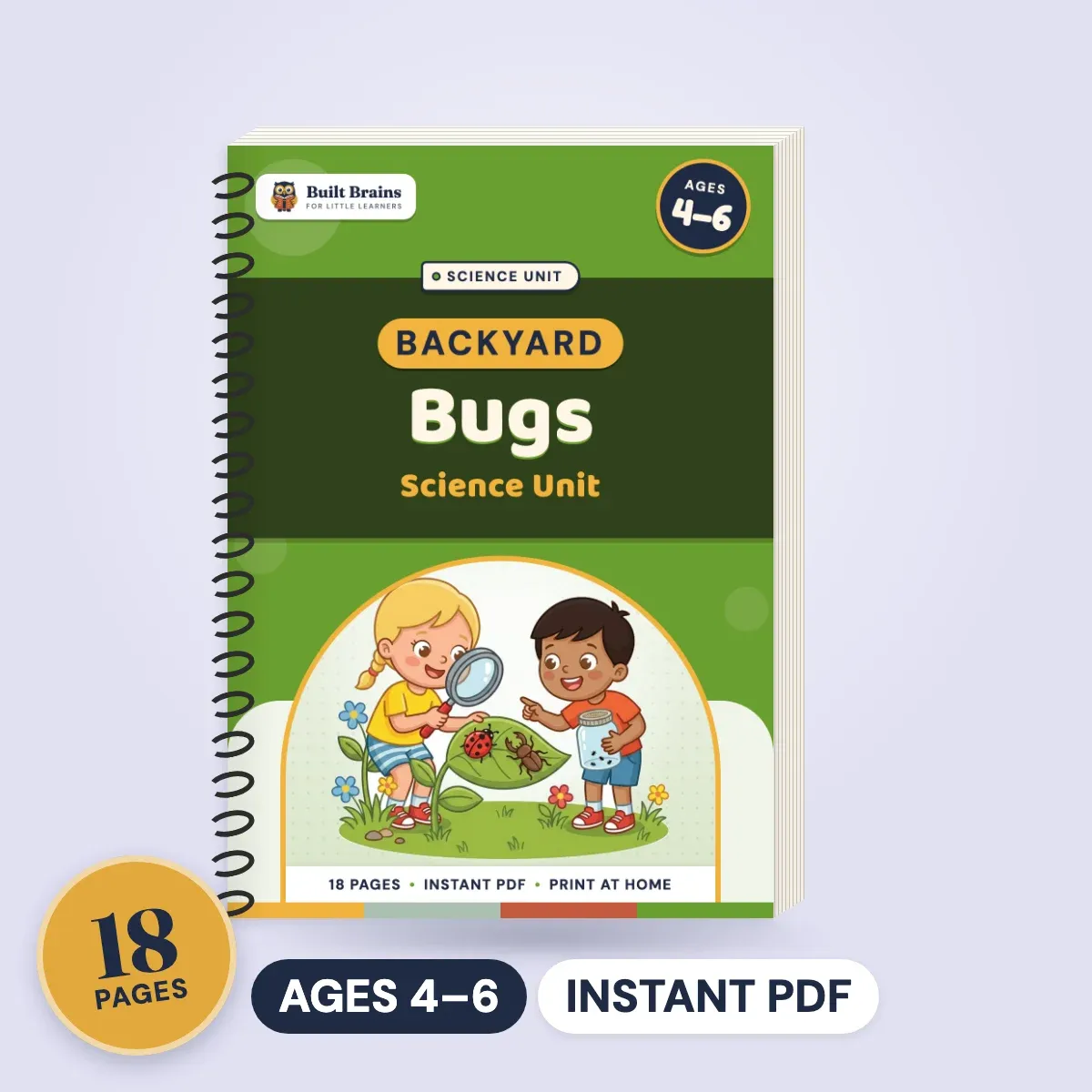
- Backyard Bugs Science Unit (ages 4–6, 18 pages): a read-aloud insect fact page, tracing, word cards, counting, sorting, a maze and coloring with ladybugs, ants, bees and butterflies. This is the "science" half of the theme.
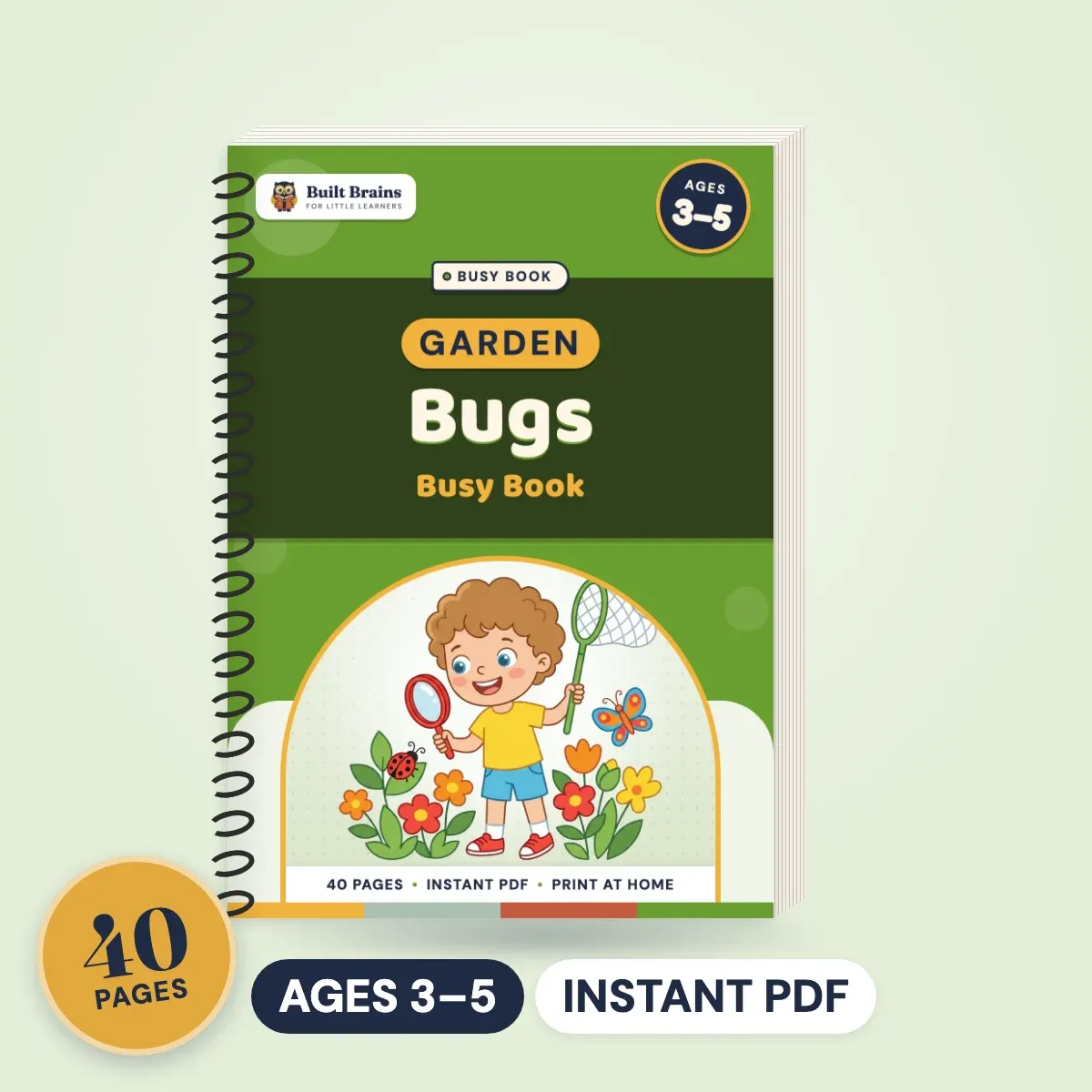
- Garden Bugs Busy Book (ages 3–5, 40 pages): ladybugs, bees, snails and butterflies across coloring, tracing, mazes, dot-to-dots, counting and matching. Good for quiet time and for younger siblings.
- Stand-Up Bug Paper Crafts (ages 4–8): 12 bugs to color, cut and fold so they stand up.
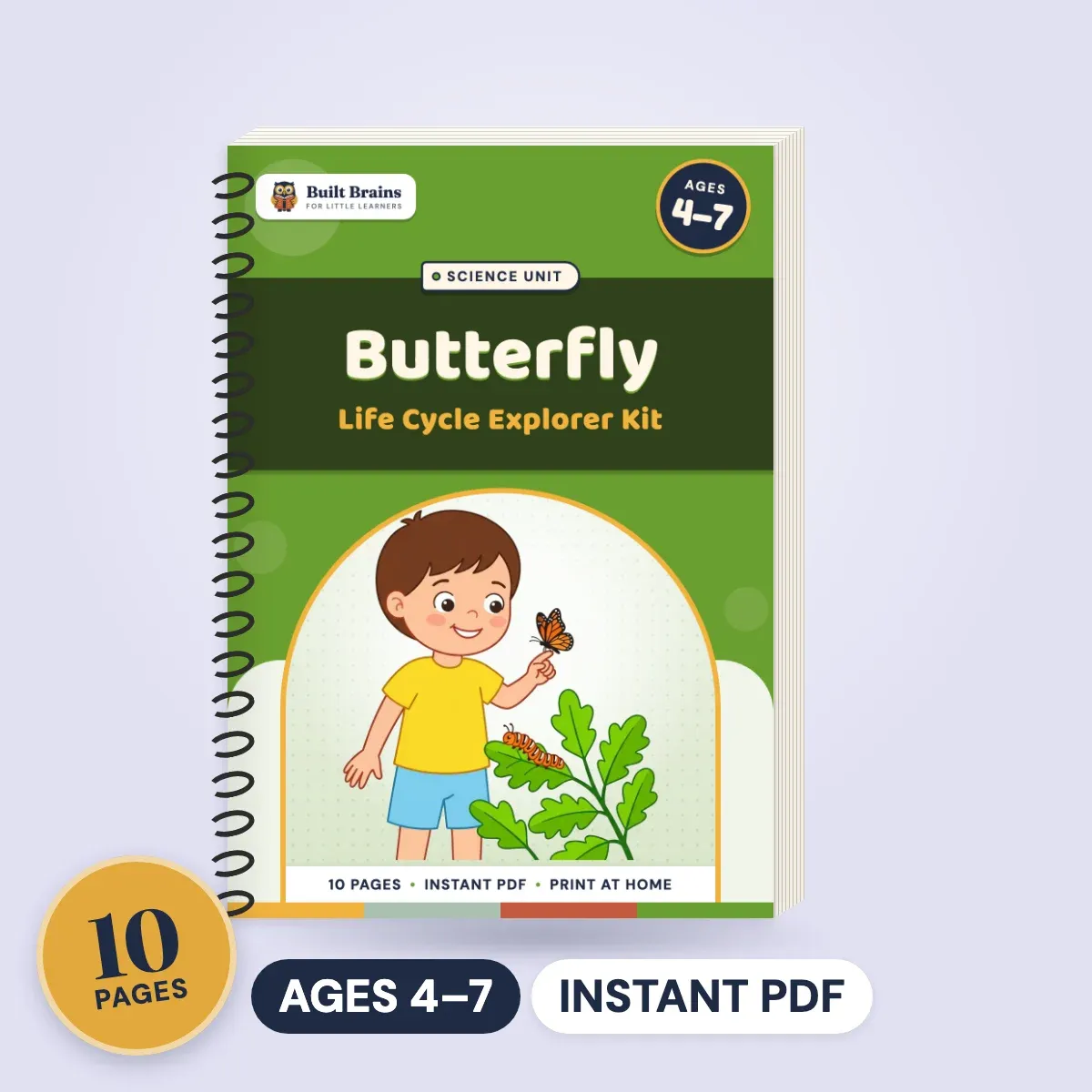
- Butterfly Life Cycle Explorer Kit (ages 4–7) for week two: a fact page, a life-cycle wheel and cut-and-paste sequencing.
- Little Explorer's Nature Journal (ages 4–9) for the bug observation pages and scavenger hunts.
The cutting and folding in the craft pages doubles as scissor practice; our fine motor activities for preschoolers guide has more on getting that right. In spring, this theme slots neatly beside the ideas in spring activities for preschoolers, and a shredded-paper "bug hunt" bin from our sensory bin ideas brings toddlers into the fun.
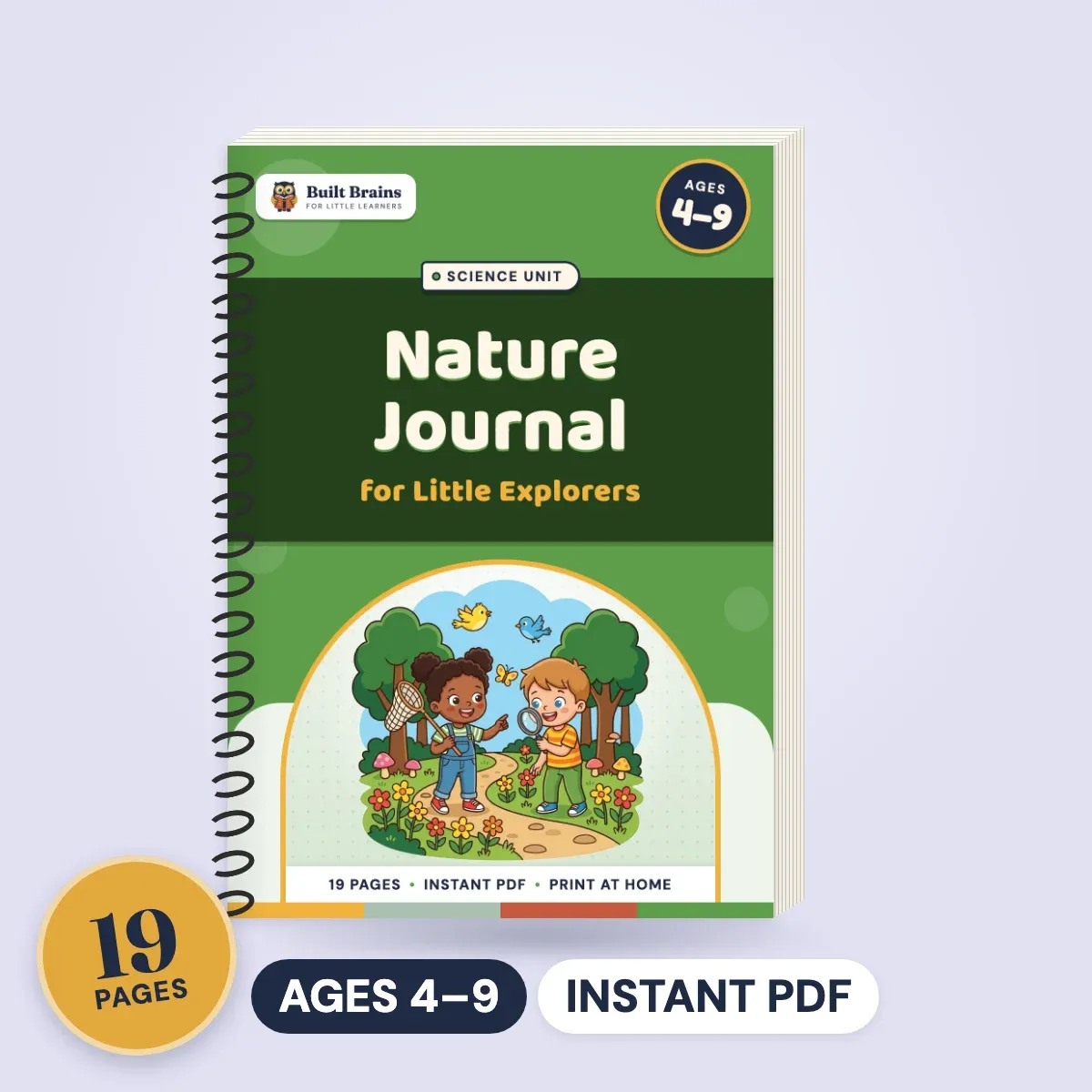
Ages 4–9 · 19 pages
Little Explorer's Nature JournalScavenger hunts, leaf rubbings and observation pages
Sources
- National Geographic Kids – Ladybug — ladybugs are beetles with hard wing covers that eat aphids.
- National Geographic Kids – Honeybee — honeybees live in hives, collect nectar and pollen, and make honey.
- National Park Service – Pollinators — bees, butterflies, beetles and flies as pollinators that help plants produce fruit and seeds.
- healthychildren.org – Insect Repellents — AAP guidance on repellent use for young children.
Questions parents ask
Observation first: looking closely, counting legs and wings, and noticing where bugs live. Then vocabulary (antennae, wings, thorax, pollen), sorting and counting, and the idea of a life cycle. A bug theme also builds respect for small living things and gets children outdoors, which is where most of the real learning happens.
Keep it simple: "bug" is the everyday word for any creepy-crawly, and "insect" is the scientific word for the ones with six legs, three body parts and two antennae. Spiders have eight legs, so they are not insects. Worms, snails and slugs have no legs at all, so they are not insects either.
Yes, with two rules. Look with eyes and a magnifying glass, and only touch a bug when a grown-up says it is safe (worms, pill bugs, ladybugs and snails are good first bugs). Leave bees, wasps and anything you cannot name alone, wash hands afterward, and keep small craft pieces such as googly eyes away from children under 3.
One to two weeks works well. Week one covers "what is a bug" with observing, counting and crafts; week two picks a favorite, usually butterflies or bees, and goes deeper with a life cycle. Twenty to thirty minutes of planned activity a day is plenty at this age, with the rest happening naturally outdoors.
Paper-plate ladybugs, egg-carton caterpillars, coffee-filter butterflies, handprint bees and pipe-cleaner spiders. Each uses things you already have, takes under 20 minutes and practices cutting, gluing and folding. Printable stand-up bugs that children color, cut and fold are a good option when you want less setup.

Reviewed by
Forest School Leader & Early Years Educator
Lucy Graham is a certified Forest School Leader who uses the natural world as a classroom to build resilience, motor skills, and environmental awareness in early learners.
More about Lucy →