Why a farm theme works for preschoolers
The farm is the classic first preschool theme for a reason: 3-year-olds already know half the cast. They can moo and oink, they know "Old MacDonald," and they eat eggs, bread and milk every day without knowing where any of it comes from. That gives you a theme with no cold start, plenty to sort and count, and a real science story (seed to plant, egg to chick, cow to milk) that is simple and visible.
Pretend play with a shoebox barn stretches language, memory and turn-taking, and the counting that comes with it ("three pigs, two cows, how many?") is the everyday math talk NAEYC encourages families to build into routines.
Run it like any theme: one or two activities a day, 10 to 20 minutes each, the same few books all week, and a basket of toy animals, an egg carton and some shredded paper left out. For how a theme fits into a morning, see our preschool at home schedule, and toddler curriculum themes for what to run next.
Farm literacy and math activities
Literacy
- C is for cow, P is for pig. Trace the letter in a tray of cornmeal or dry oats, then walk a toy animal along it saying the sound.
- Animal sound match. You make the sound, your child finds the animal, then swap.
- Mother and baby. Match cards or toys: cow and calf, sheep and lamb, pig and piglet, hen and chick, horse and foal, duck and duckling.
- Farm word cards. Match toys to words (cow, pig, hen, egg); at 4 and 5, trace the word. More in letter recognition activities.
- Rhyme in the barn. Pig, big, dig, wig. Hen, pen, ten, men. Finish the rhyme: "The pig in the wig did a little ___."
- Retell "The Little Red Hen." Give out jobs (plant, cut, grind, bake) and act it out with a toy hen and a spoonful of flour.
- Farm journal. Each day your child draws one farm animal and dictates a sentence for you to write under it.
Math
- Egg-carton counting. Number the cups of an egg carton 1 to 12 and fill each with the right number of pom-poms or dried pasta.
- Legs sort. Two hoops: two legs (hen, duck, farmer) and four legs (cow, pig, sheep, horse). Count to check.
- Fence building. Build a block fence around a "field" and count the blocks. Build a longer one for the horse.
- Animal patterns. Pig, cow, pig, cow. Then pig, cow, sheep. What comes next?
- Big and small. Line up the animals from biggest to smallest. Is a sheep bigger than a hen? Than a horse?
- Hens fly away (ages 4–5). Five hens on the fence, two fly off. How many are left? Say it as a number sentence.
- Market stall. Play food costs buttons (an apple is 2) and your child "buys" with exactly the right number.
Farm science and sensory activities
- Egg to chick sequence. Egg, cracking egg, wet chick, fluffy chick, hen. Put the pictures in order, then tell the story.
- Plant a bean. A dried bean in a clear cup with damp paper towel. Check it daily: roots first, then a shoot. Plants need light, water and air.
- Butter shake. Heavy cream in a jar with a tight lid, shaken and passed around for about 10 minutes until a lump of butter forms. Spread it on crackers.
- Wool, feather, leather. Touch samples (a wool sweater, a craft feather, a leather shoe) and match each to the animal it came from.
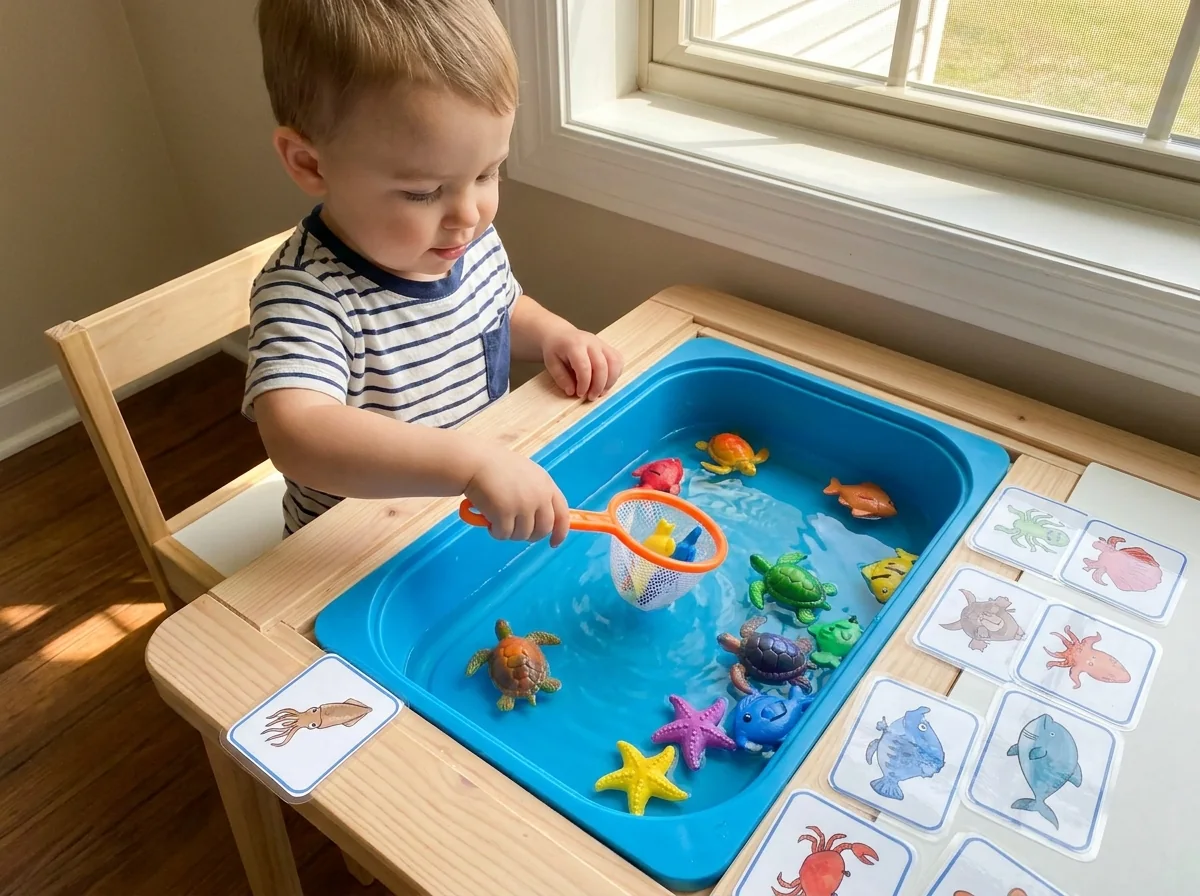
- Farm sensory bin. Dry oats as "mud", toy animals, a block barn and a scoop. Dried corn or beans are for ages 3 and up only; small fillers are choking hazards for children under 4. More setups: sensory bin ideas.
- Pig mud spa. Toy pigs in a tub of chocolate-pudding "mud" or cocoa play dough, then a wash station.
- Where does it come from? Lay out milk, an egg, a slice of bread, an apple and a wool sock. Match each to a picture of the cow, hen, wheat field, apple tree or sheep.
- Weather watch. Check the weather each morning, as farmers do, and record sun, cloud or rain on a chart.
Simple true farm facts for ages 3–5
- A chick hatches about 21 days after the hen starts sitting on the egg (Texas A&M AgriLife Extension). It breaks out with a tiny hard bump on its beak called an egg tooth.
- A hen lays about one egg a day. A rooster is a boy chicken, and he crows.
- A cow gives milk after she has a calf. Milk is made into butter, cheese and yogurt. A cow's stomach has four parts, and she chews her food twice.
- Sheep grow wool. A farmer gives them a haircut once a year, and the wool is spun into yarn.
- Pigs roll in mud to keep cool, because they barely sweat.
- Bread starts as wheat, a grass that farmers grow in big fields and grind into flour.
- Plants need sunlight, water, air and soil to grow. Bees help many farm plants make fruit.
Farm art, fine motor, movement and outdoor activities
Art and fine motor
- Cotton-ball sheep. Glue cotton balls onto a sheep outline; add clothespin legs that your child clips on (great pincer practice; see fine motor activities).
- Paper-plate pig. Pink paint, a paper-cup snout, triangle ears, a curly pipe-cleaner tail.
- Handprint hen. Paint a palm, press, add a comb, beak and legs.
- Corn-cob painting. Roll a dried or cooked corn cob through paint and across paper.
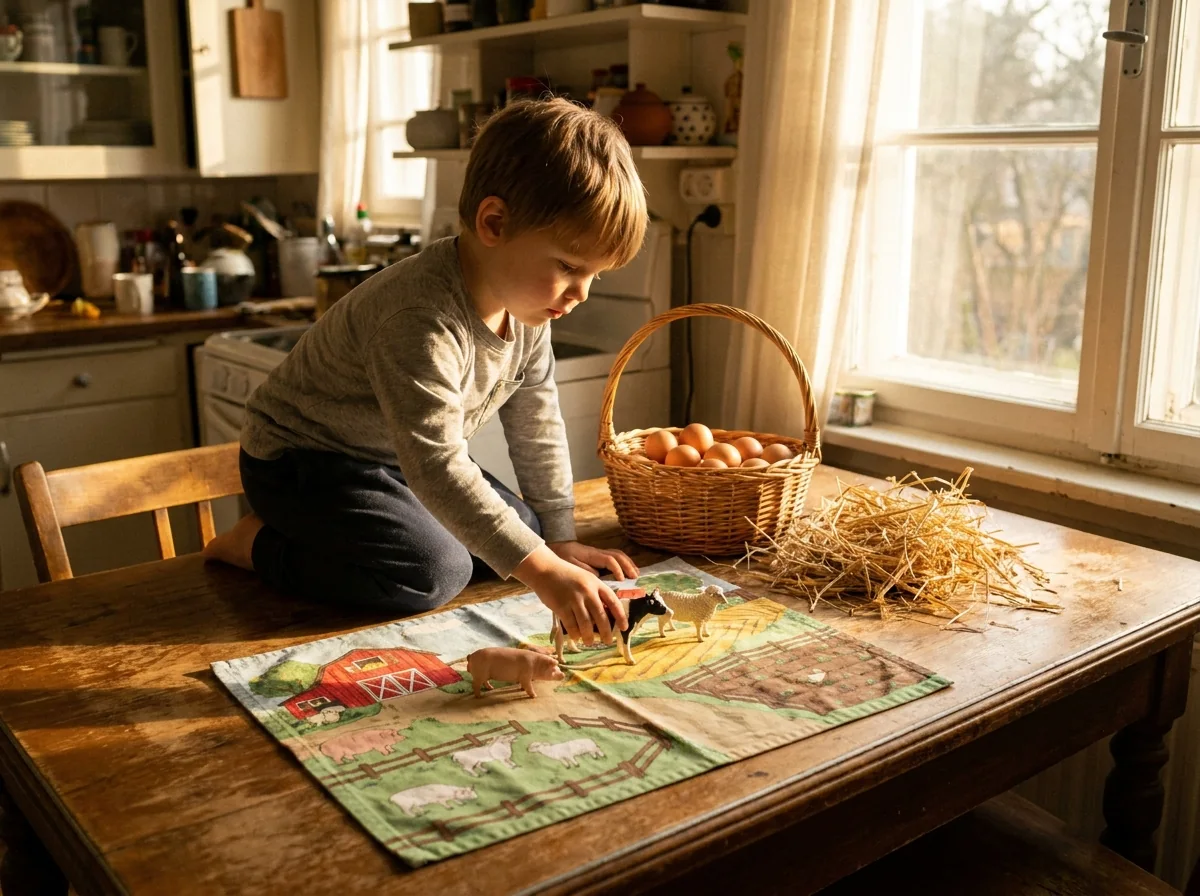
- Build a barn. A shoebox barn with a cut-out door; paint it red, add straw and the toy animals.
- Farm mazes and dot-to-dots. Help the tractor reach the barn; start wide and short for a 3-year-old.
- Coloring pages. Big, simple cows, pigs, sheep, hens and tractors with thick lines.
Movement and songs
- "Old MacDonald." Let your child choose the animal each verse and make up a sound for the tractor.
- Animal walks. Waddle like a duck, trot like a horse, roll like a pig, flap like a hen.
- Egg-and-spoon race. A plastic egg on a spoon from nest to coop.
- Hay-bale hop. Cushions on the floor; hop from bale to bale without touching the "mud."
- "The Farmer in the Dell." A circle game that teaches turn-taking.
Outdoors
- Visit a farm or farmers' market. Even a market stall gives you real eggs, apples and a grower to ask "where did this come from?" National Agriculture in the Classroom has free resources on food and farming.
- Tractor chalk track. Draw a winding track from "field" to "barn" on the driveway and drive ride-on toys along it, stopping at numbered gates.
Sample 5-day farm plan for preschool
| Day | Morning (15–20 min) | Afternoon (10–15 min) | Book |
|---|---|---|---|
| Mon | Animal sound match + C is for cow | Farm sensory bin | Big Red Barn |
| Tue | Mother and baby + egg-carton counting | Cotton-ball sheep | Rosie's Walk |
| Wed | Egg to chick sequence | Handprint hen | The Little Red Hen |
| Thu | Legs sort + fence building | Butter shake | Click, Clack, Moo |
| Fri | Farm mazes and coloring | Tractor chalk track | Mrs. Wishy-Washy |
For a second week, swap in the bean planting (start it Monday), the pig mud spa, the market stall and the farm visit. Keep "Old MacDonald" as the daily opener.
Farm picture books for preschoolers
- Big Red Barn by Margaret Wise Brown and Felicia Bond. A gentle farm day from sunrise to night; the best first read.
- Rosie's Walk by Pat Hutchins. Position words (over, under, around) as a hen strolls past a fox.
- The Little Red Hen (Paul Galdone's version). Wheat to bread, with a lesson about helping.
- Click, Clack, Moo: Cows That Type by Doreen Cronin and Betsy Lewin. Funny at 4 and 5, with a sneaky lesson in letter-writing.
- Mrs. Wishy-Washy by Joy Cowley. Muddy animals, a bath, and repetition early readers join in with.
- Little Blue Truck by Alice Schertle and Jill McElmurry. Every animal sound, in rhyme.
- Farmer Duck by Martin Waddell and Helen Oxenbury. A hard-working duck and the friends who help.
- The Very Busy Spider by Eric Carle. Each farm animal asks the spider to play; the web is raised to touch.
What to print for a farm theme
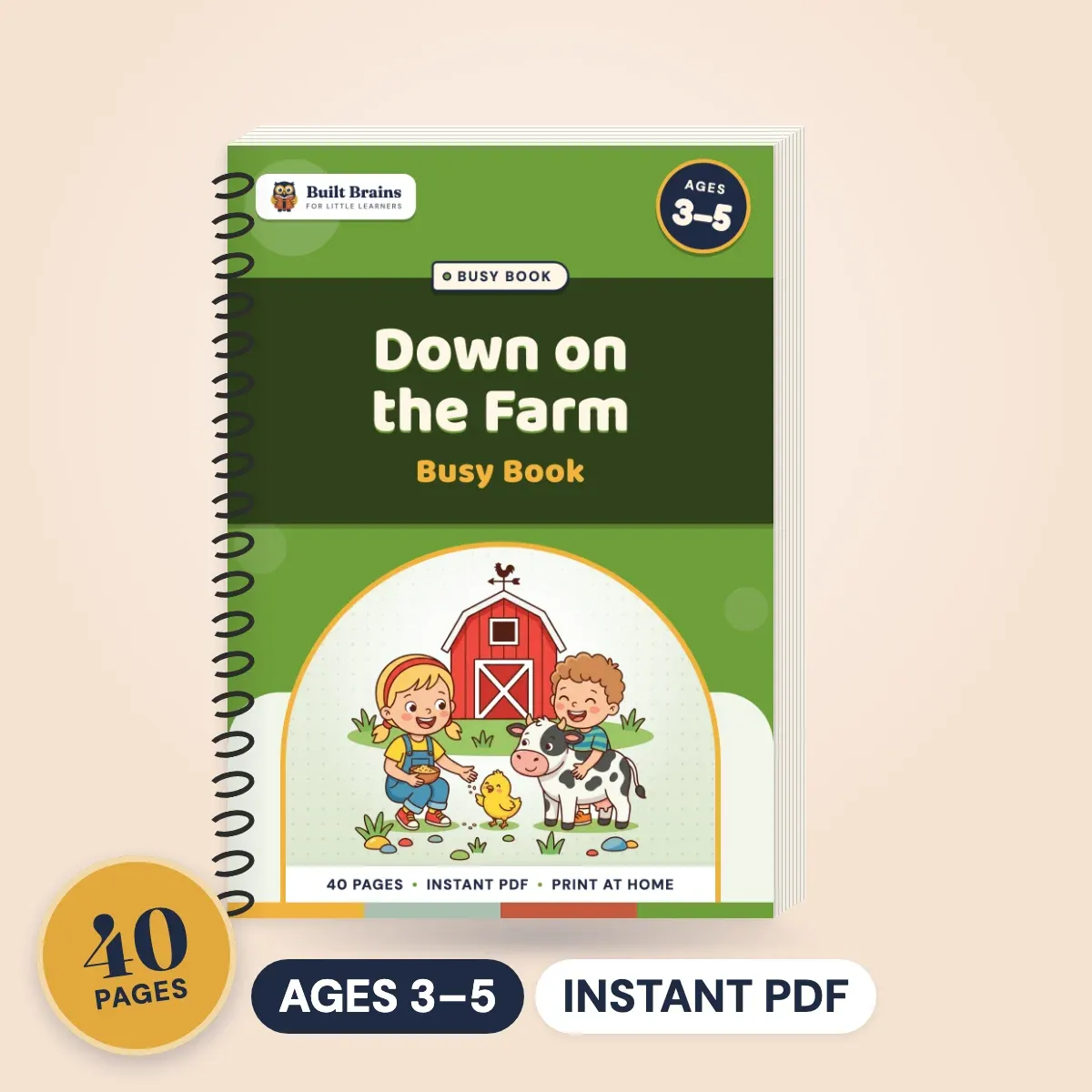
- Down on the Farm Busy Book (ages 3–5, 40 pages): farm animals and tractors to color, plus tracing, mazes, dot-to-dots, matching, counting, patterns and big-and-small, with word cards and clip cards. Covers activities 4, 11, 12 and 28.
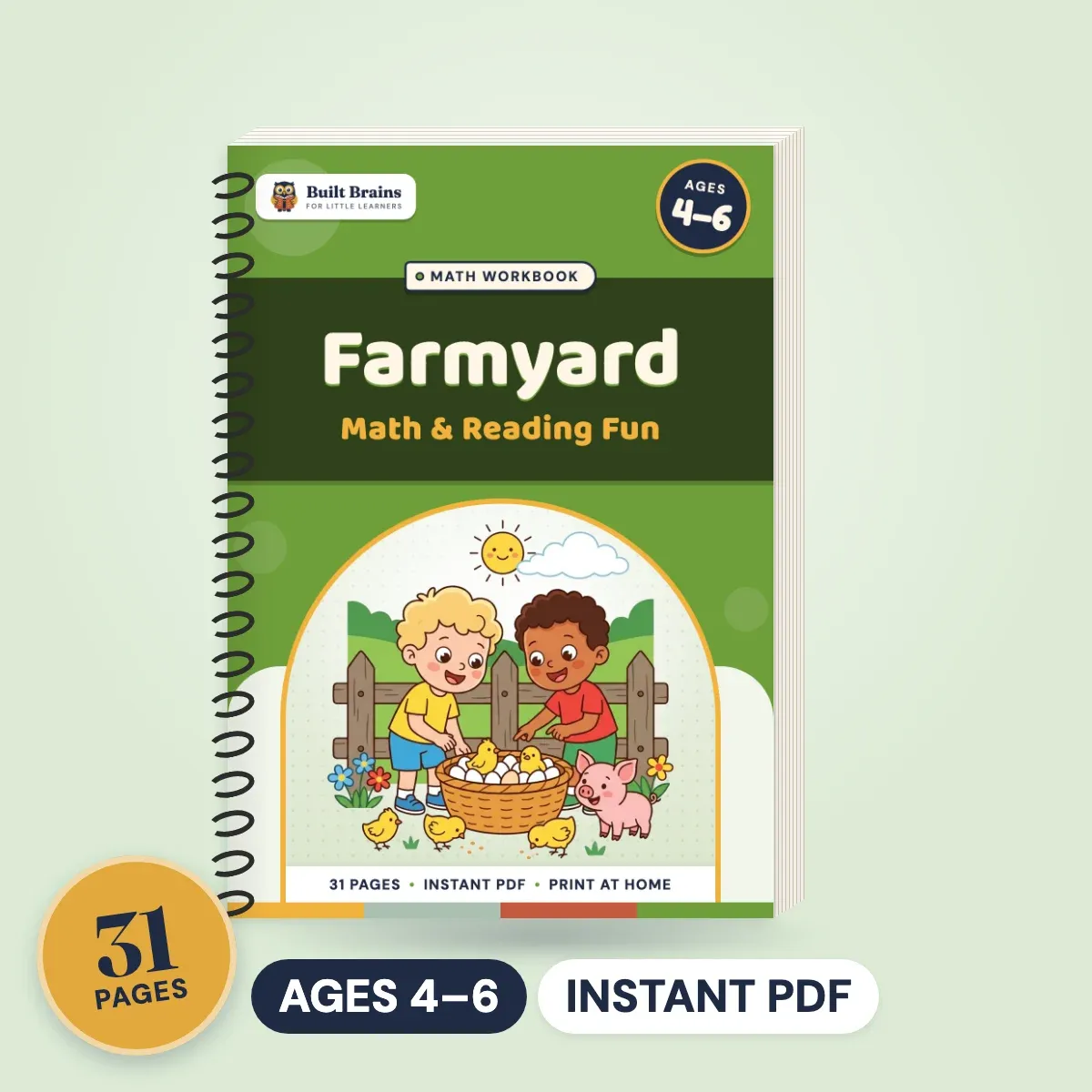
- Farmyard Math & Reading Fun (ages 4–6, 31 pages): count and add animals to 20, take away eggs, trace and read farm words, and find them in a word search.
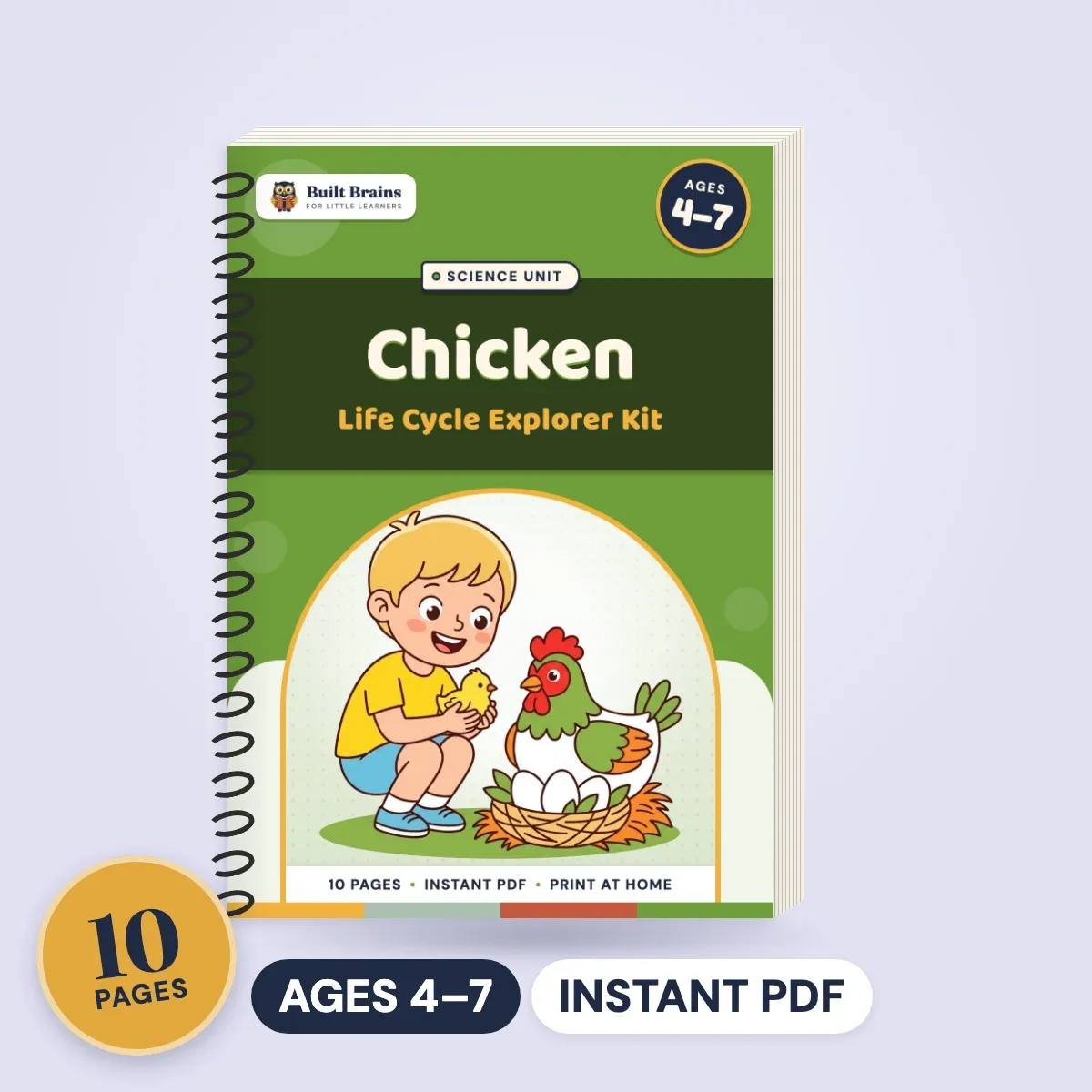
- Chicken Life Cycle Explorer Kit (ages 4–7, 10 pages): a read-aloud fact page, a life-cycle wheel, cut-and-paste sequencing and word tracing. The printed version of activity 15.
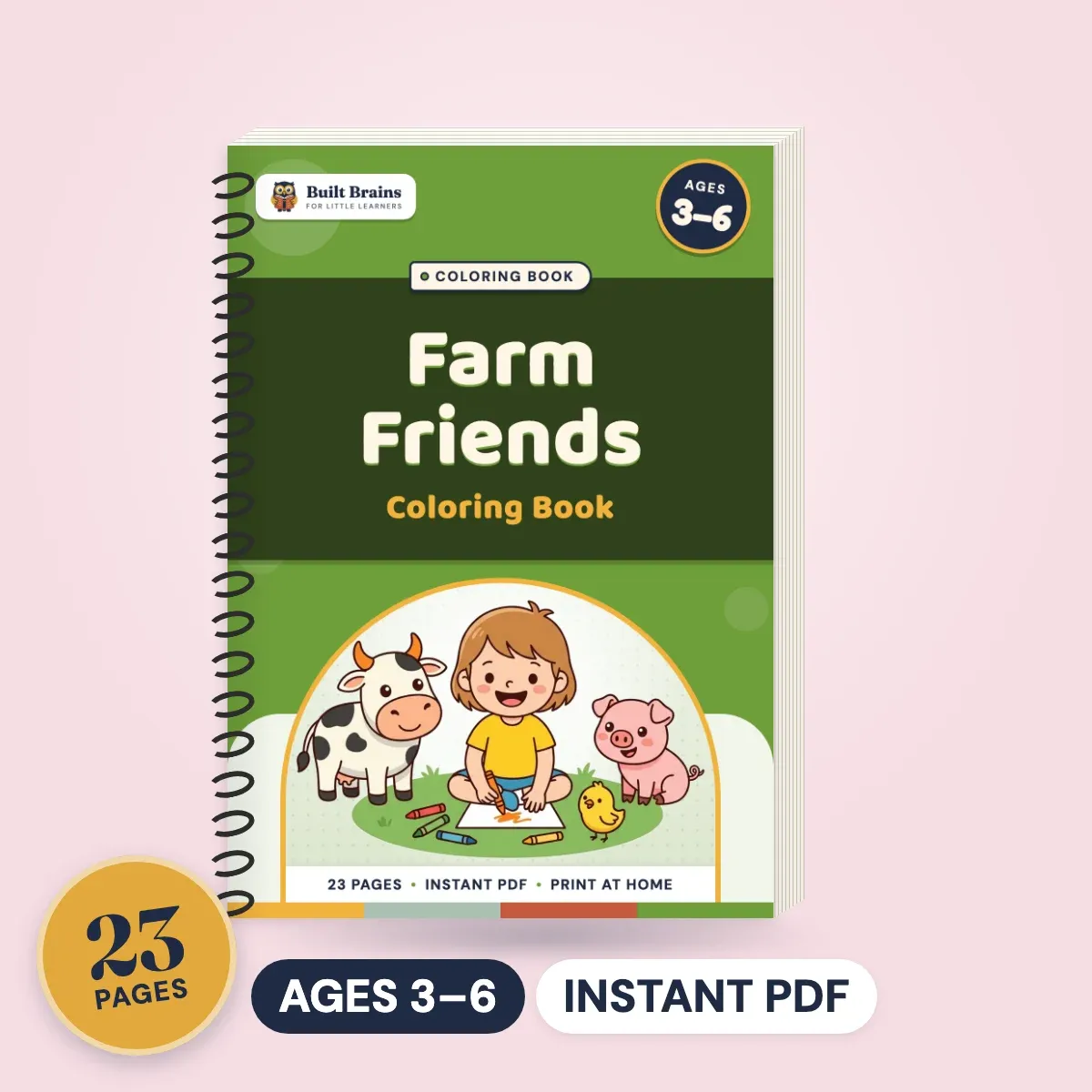
- Farm Friends Coloring Book (ages 3–6, 23 pages): cows, pigs, sheep, hens and tractors with thick lines.
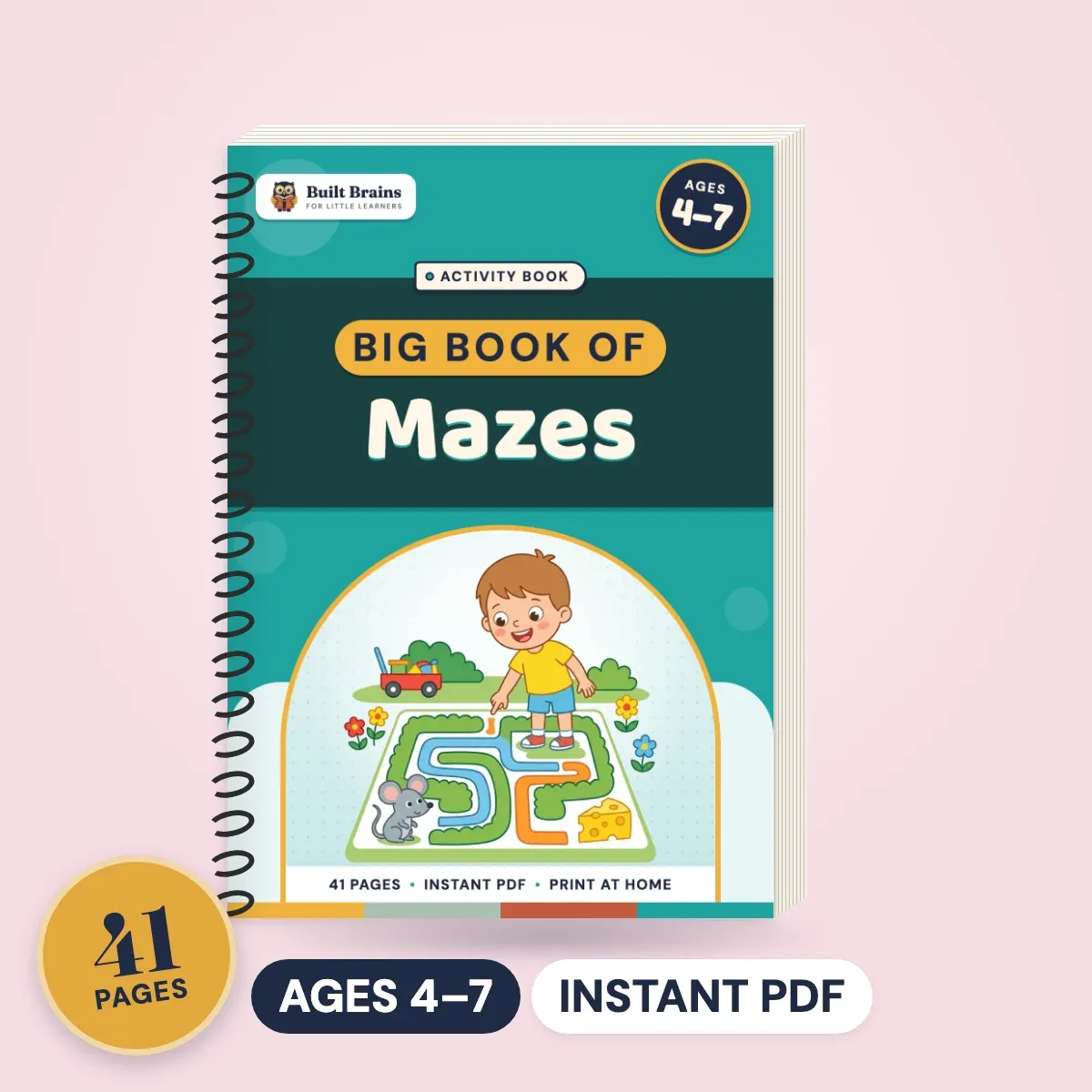
- The Big Book of Mazes (ages 4–7, 38 mazes): a farm section among ocean, space and dinosaur mazes that get harder as your child does.
Laminate the mother-and-baby cards and egg-carton numbers and they will last into next year's theme. In autumn, the same animals carry straight into a harvest week; see fall activities for preschoolers.
Sources
- Texas A&M AgriLife Extension – Hatching Eggs in the Classroom: chicken eggs hatch after about 21 days of incubation.
- NAEYC – Support Math Readiness Through Math Talk: why everyday counting and number talk matters for preschoolers.
- National Agriculture in the Classroom: resources for teaching young children where food, fiber and farm products come from.
- healthychildren.org – Choking Prevention: dried beans, corn and other small items as choking hazards for children under 4.
Questions parents ask
Animal names, sounds and babies (vocabulary and matching), where food comes from (milk, eggs, wool, bread), counting and sorting with eggs and animals, the egg-to-chick life cycle (sequencing), and the idea that plants need sun, water and soil. Farm songs and pretend play also stretch language, memory and turn-taking.
Count plastic eggs into an egg carton (1 to 12), sort toy animals by legs (two or four), match number cards to groups of animals, measure a "fence" with blocks, pattern pig-cow-pig-cow, and do simple take-aways: five hens, two fly off. An egg carton is the best free math tool of the whole theme.
Put real food on the table and trace it backward: milk from a cow, eggs from a hen, bread from wheat the farmer grows, apples from a tree. Match food pictures to animal or plant pictures, visit a farm or farmers' market if you can, and plant a bean in a cup so your child sees food start from a seed.
About 21 days. A hen (or an incubator) keeps the eggs warm the whole time, and the chick uses a tiny hard tip on its beak, called an egg tooth, to break out of the shell. Many preschools hatch eggs in spring; at home, a life-cycle wheel and a picture book cover the same sequence without the commitment.
Yes, in small doses. Pick big, simple coloring pages, short mazes, matching pairs (mother and baby) and counting 1 to 5. Keep sessions to about 10 minutes and let your child pick the page. Word tracing, counting to 20 and taking-away pages are better saved for 4 and 5, when hands and attention are ready.
Reviewed by
Nursery Manager & Early Years Practitioner
Aisha Khan is a Nursery Manager and early language specialist who helps toddlers and preschoolers build foundational communication skills before starting formal schooling.
More about Aisha →