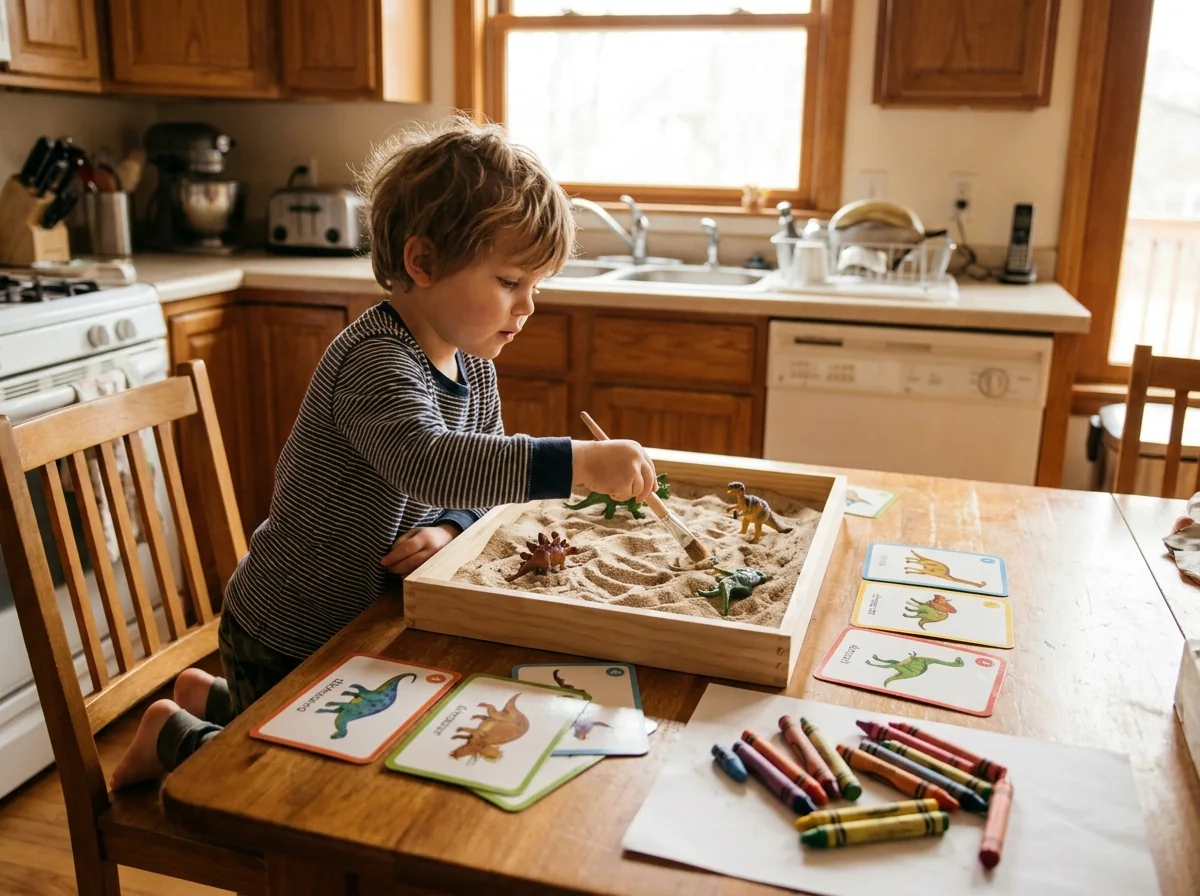
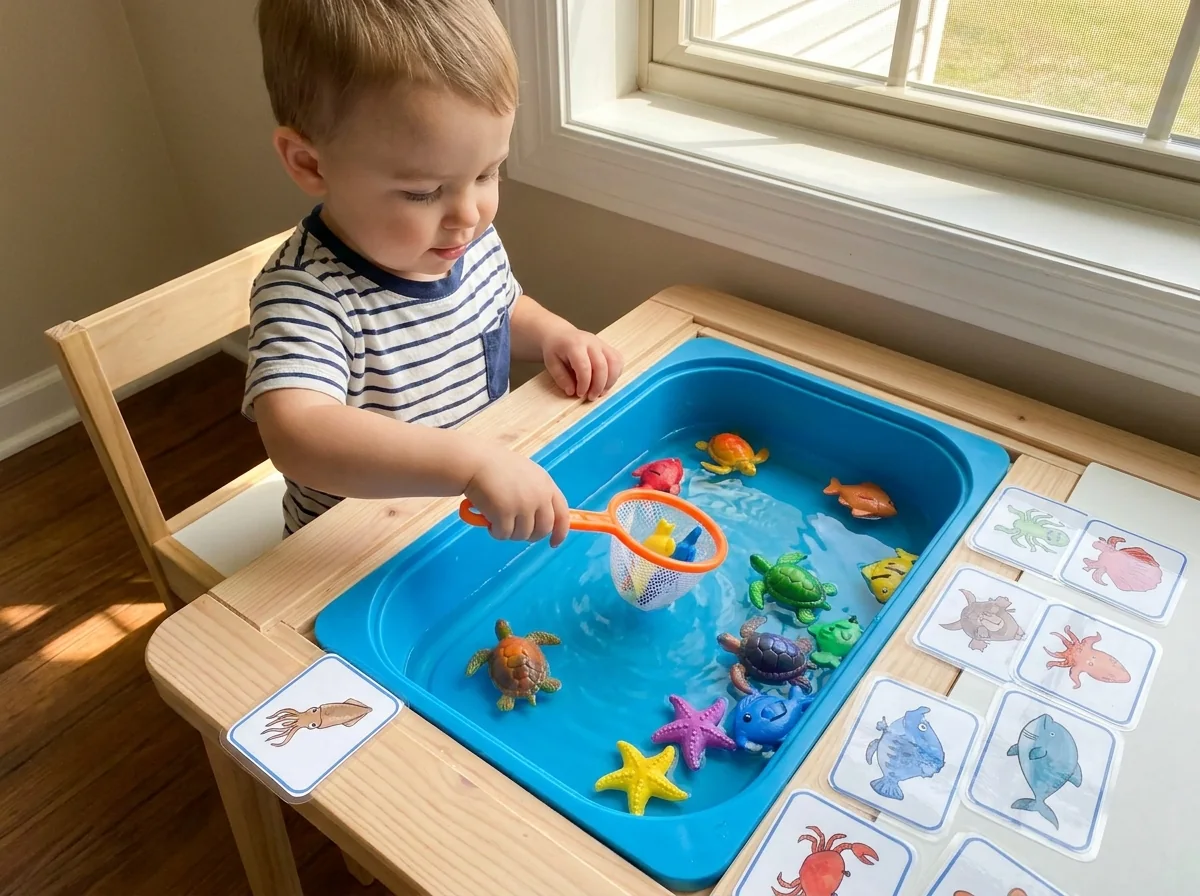
Why an ocean theme works for preschoolers
An ocean theme has three things going for it. It is built around water, which preschoolers would play with all day anyway. It has an enormous cast of animals that are strange enough to be fascinating and familiar enough to name. And it opens the door to real science questions (why is the sea salty, how does a whale breathe, why do things float) at exactly the age children start asking them.
That hands-on, question-rich play is what early-years experts recommend. NAEYC's guidance for families stresses that children learn language, self-control and problem-solving through play, and a theme gives a week of play a shared vocabulary.
Two ground rules. First, water safety: young children can drown in a few inches of water, so every water activity below is a sit-beside-them activity, and bins are emptied straight after (healthychildren.org). Second, pace: one or two activities a day, 10 to 20 minutes each, with the same books and toys out all week. For how a theme fits into a morning, see our preschool at home schedule.
Ocean literacy and math activities
Literacy
- O is for octopus, F is for fish. Trace the letters in a tray of sand, then paint them with water on the sidewalk and watch them dry.
- Fishing for letters. Magnetic letters in a bowl of water, a magnet on a string. Catch one, say its sound. For more ideas, see how to teach letter sounds.
- Sea-animal name clap. Clap the syllables: oc-to-pus (3), whale (1), jel-ly-fish (3), sea-horse (2).
- Ocean word cards. Match toy sea animals to words (fish, crab, shell, boat). At 4 and 5, trace the word.
- Shell rhymes. Shell, bell, well, smell. Finish the rhyme: "Down in the deep, the fish are ___."
- Retell "The Rainbow Fish." Give your child shiny scales (foil squares) to hand out as you retell it together.
- Message in a bottle. Your child dictates a message, you write it, roll it up and "find" it in the water bin later.
Math
- Fish in the bowl. Number five (or ten) paper bowls and count goldfish crackers or paper fish into each.
- Shell sort. Sort real or paper shells by size, color and shape. Then line them up from smallest to biggest.
- Octopus arms. Glue exactly eight paper strips onto a paper-plate octopus. Count them twice.
- Sea-star fives. Most sea stars have five arms. Count by touching each arm, then find other fives (fingers, toes).
- Sink-or-float tally. Guess, test, and tick a two-column chart. Which column has more?
- Shark subtraction (ages 4–5). Six fish swimming, the shark eats two. How many are left? Say it as a number sentence.
- Wave patterns. Blue, white, blue, white with paper strips. Add a third color when it gets easy.
More number ideas are in math activities for preschoolers.
Ocean science and sensory activities
- Sink or float. A bowl of water and a tray of objects: cork, coin, lemon, crayon, shell, plastic lid. Guess first, then test.
- Ice rescue. Freeze toy sea animals in a tub of water overnight. Give warm water, a squeeze bottle and a spoon. Which melts faster, warm water or rubbing?
- Salty sea. Two cups of water, a spoon of salt stirred into one. Taste a drop of each (then stop). Explain that ocean water is salty, which is why we cannot drink it.
- Does salt help things float? Drop an egg into fresh water (it sinks), then into very salty water (it floats). A real surprise at 4 and 5.
- Blowhole breathing. Hold your breath, then "surface" and blow out through a straw held on top of your head. That is how a dolphin breathes.
- Ocean in a bottle. Water, a drop of blue food coloring, then baby oil to fill. Tip it slowly to make waves.
- Ocean sensory bin. Blue-dyed water or dry blue rice (ages 3 and up), shells, toy sea animals and a small net. Setup and safety tips are in our sensory bin ideas.
- Shell listening. Hold a large shell to an ear. It is not the sea, but the sound of the room echoing inside the shell.
Simple true ocean facts for ages 3–5
- The ocean covers more than 70 percent of the Earth, and most of it has never been explored by people.
- It is one big connected ocean. We give its parts names: Pacific, Atlantic, Indian, Arctic and Southern.
- Ocean water is salty. Fish breathe underwater through gills, but dolphins, whales and sea turtles come up for air.
- The blue whale is the biggest animal that has ever lived, bigger than any dinosaur.
- An octopus has eight arms, three hearts and blue blood, and it can change color to hide.
- Sea stars are not fish, and they have no brain. Jellyfish have no brain, heart or bones.
- Crabs walk sideways. A seahorse dad carries the eggs.
- Coral reefs are built by tiny animals, not by rocks or plants.
Ocean art, fine motor, movement and outdoor activities
Art and fine motor
- Paper-plate jellyfish. Paint half a plate, punch holes along the straight edge and thread ribbon or yarn tentacles. Threading is excellent hand practice; see fine motor activities for preschoolers.
- Handprint fish. Paint a palm, press, add an eye and a bubble trail of fingerprints.
- Bubble-wrap coral. Press paint-covered bubble wrap onto paper, then add fish once dry.
- Shell painting. Wash shells, paint with watercolor, string a few into a necklace (ages 4 and up, short cords, supervised).
- Ocean mazes. Help the turtle reach the beach; start wide and short for a 3-year-old.
- Play-dough tide pool. Blue dough, shells to press in, pipe-cleaner anemones.
- Coloring pages. Big, simple dolphins, turtles and octopuses with thick lines, printed as often as wanted.
Movement and songs
- Animal moves. Swim like a fish, scuttle sideways like a crab, float like a jellyfish, flap like a ray, shuffle like a turtle on sand.
- "Slippery Fish." The classic cumulative song; act out each bigger animal.
- "Baby Shark" with the full family of actions, if you can bear it. Children can.
- Bedsheet waves. A sheet held between two people, toy fish on top, waves getting bigger.
- Freeze: tide's out. Dance like waves; when the music stops, lie flat like the beach at low tide.
Outdoors
- Beach, lake or puddle. Collect shells, pebbles and seaweed (or sticks and stones), sort them on a towel, and look for creatures at the water's edge, holding hands near water.
- Sidewalk ocean. Draw a chalk sea with waves, fish and a boat, then hop from fish to fish counting.
Sample 5-day ocean plan for preschool
| Day | Morning (15–20 min) | Afternoon (10–15 min) | Book |
|---|---|---|---|
| Mon | O is for octopus + name clap | Sink or float | Commotion in the Ocean |
| Tue | Fish in the bowl | Paper-plate jellyfish | Hooray for Fish! |
| Wed | Fishing for letters | Ice rescue | The Rainbow Fish |
| Thu | Octopus arms + shell sort | Animal moves + "Slippery Fish" | Mister Seahorse |
| Fri | Ocean mazes and coloring | Ocean sensory bin outside | The Snail and the Whale |
For a second week, swap in the salty-sea tests, blowhole breathing, handprint fish, bubble-wrap coral and a trip to real water. Repeat the two books your child asked for most.
Ocean picture books for preschoolers
- Commotion in the Ocean by Giles Andreae and David Wojtowycz. A rhyme for each animal; read one a day.
- Hooray for Fish! by Lucy Cousins. Bright, simple and perfect for 3-year-olds learning opposites.
- The Rainbow Fish by Marcus Pfister. The sharing classic, with shiny scales to count.
- Mister Seahorse by Eric Carle. Ocean dads who carry the eggs, with see-through pages.
- The Snail and the Whale by Julia Donaldson and Axel Scheffler. A long, rhythmic read for ages 4 and 5.
- Swimmy by Leo Lionni. A small fish, a big idea about working together.
- The Pout-Pout Fish by Deborah Diesen and Dan Hanna. Repetition children join in with.
- National Geographic Little Kids First Big Book of the Ocean by Catherine D. Hughes. The nonfiction one for every "why."
What to print for an ocean theme
- Under the Sea Busy Book (ages 3–5, 40 pages): dolphins, sea turtles, crabs and a treasure chest across coloring, tracing, mazes, dot-to-dots, counting, patterns and matching, with word cards and clip cards. Covers activities 4, 8, 14 and 27.
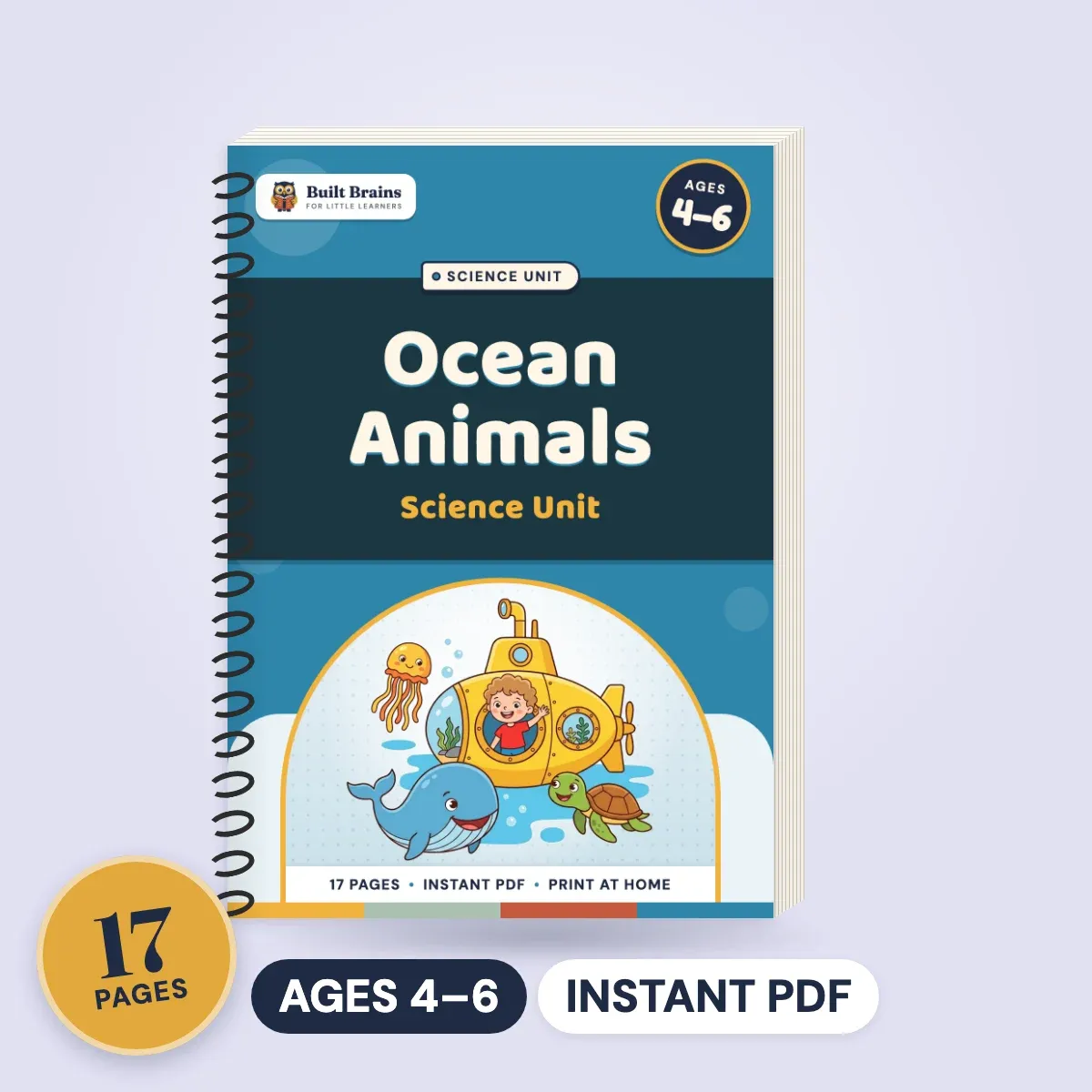
- Ocean Animals Science Unit (ages 4–6, 17 pages): read-aloud ocean facts, then tracing, counting, sorting, mazes and coloring with whales, octopuses, sea turtles and crabs. Use the fact pages at story time.
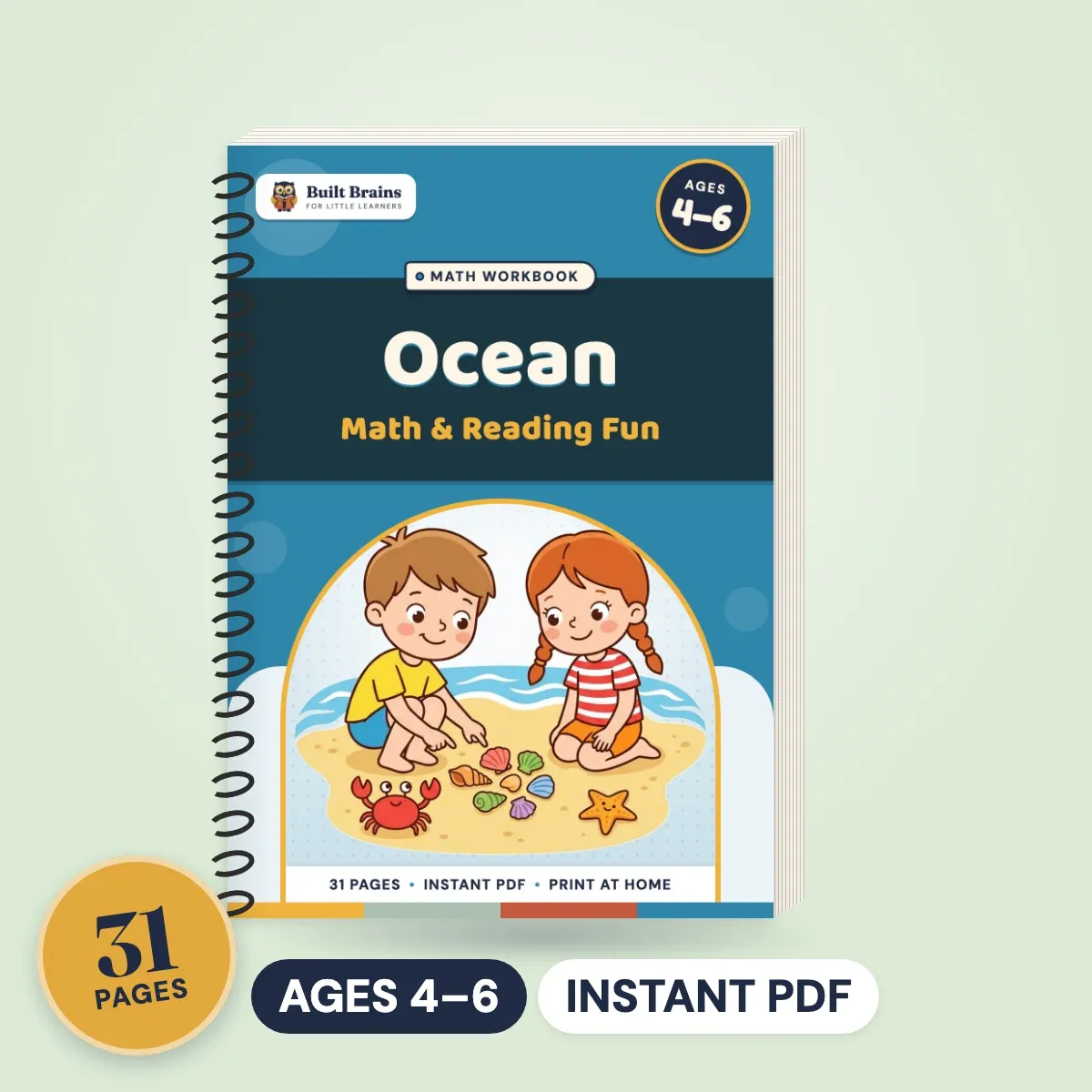
- Ocean Math & Reading Fun (ages 4–6, 31 pages): count and add fish to 20, take away shells, trace and read ocean words.
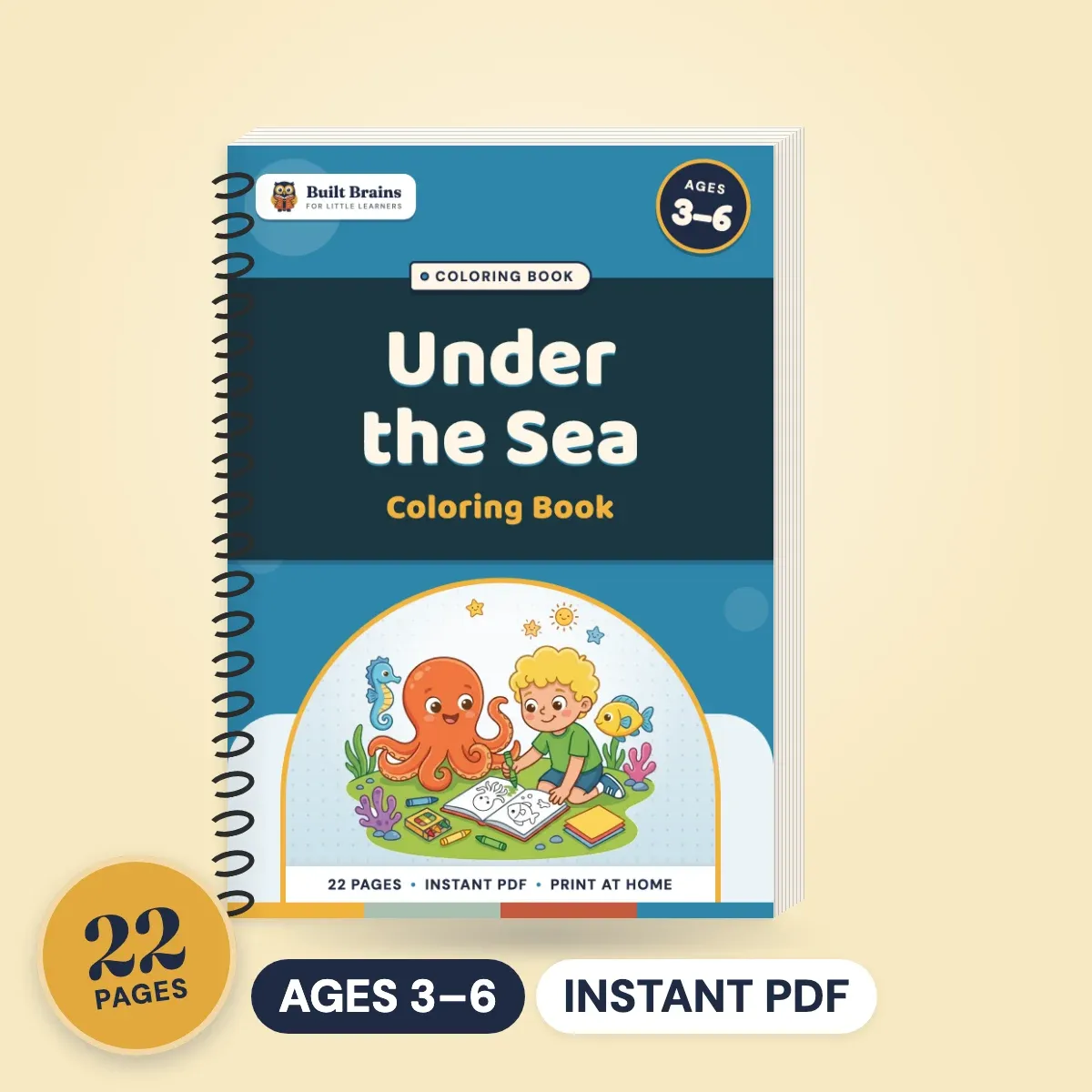
- Under the Sea Coloring Book (ages 3–6, 22 pages): big, simple sea creatures with thick lines.
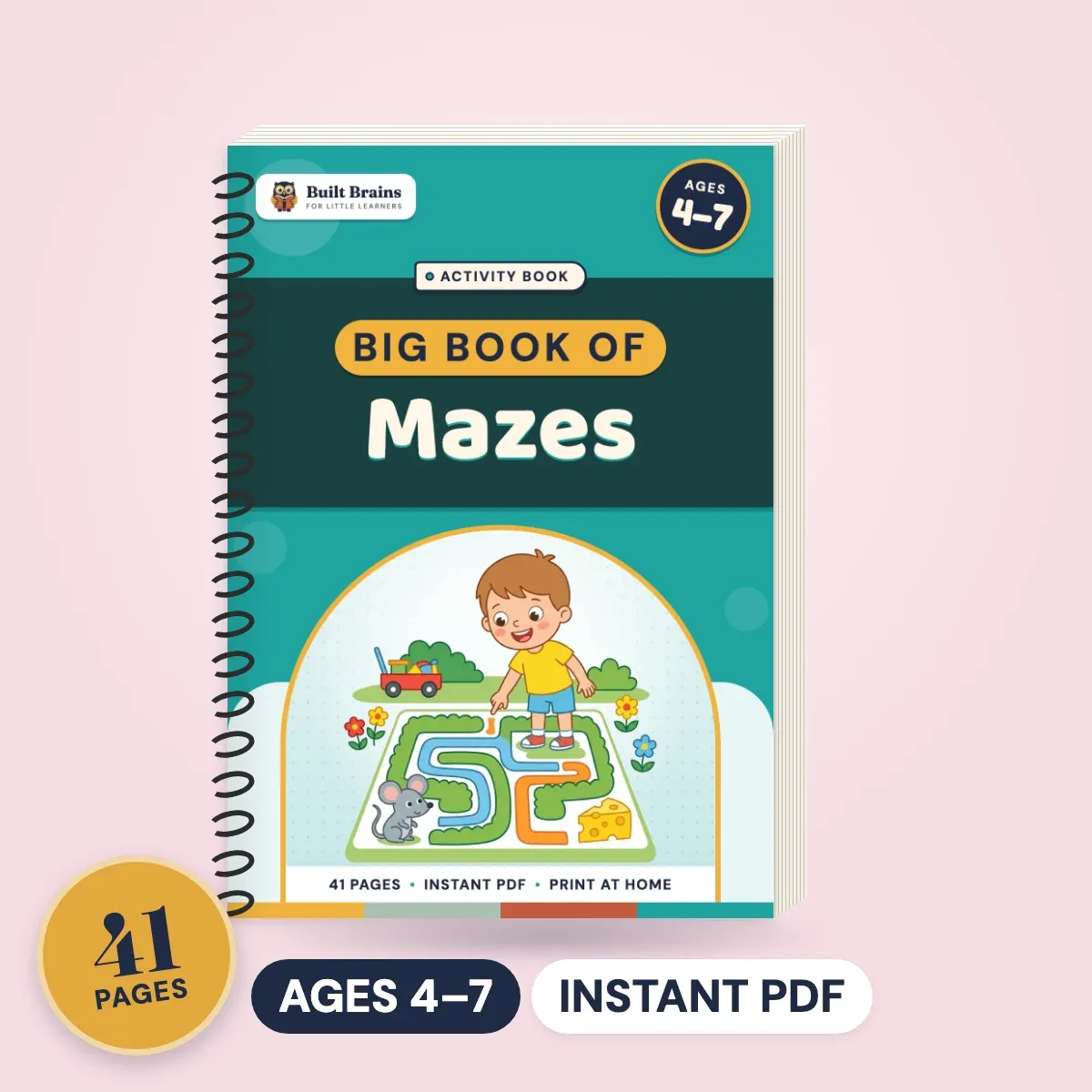
- The Big Book of Mazes (ages 4–7, 38 mazes): an ocean section among farm, space and dinosaur mazes that grow with your child.
Slip the counting and word-card pages into plastic sleeves and use a dry-erase marker so they survive wet hands. When the theme ends, the same water-and-animals structure makes a good Earth Day week, with the focus shifted to keeping the ocean clean.
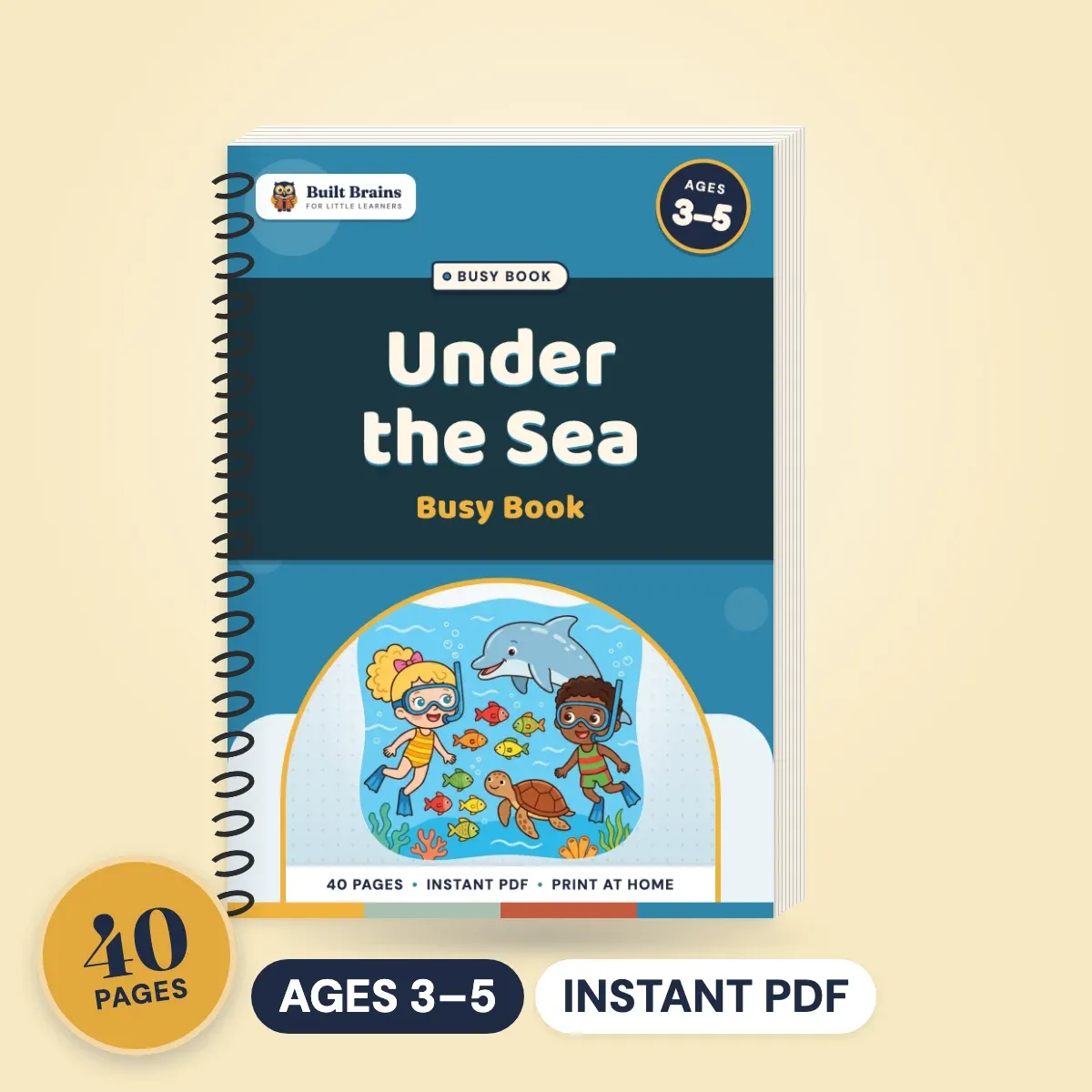
Ages 3–5 · 40 pages
Under the Sea Busy BookDolphins, turtles and treasure to color, count and trace
Sources
- NOAA National Ocean Service – How much of the ocean have we explored? — the ocean covers more than 70 percent of Earth's surface and most of it remains unexplored.
- NOAA Fisheries – Blue Whale — the blue whale is the largest animal ever to live on Earth.
- National Geographic Kids – Octopus — eight arms, three hearts, blue blood and color change.
- healthychildren.org – Water Safety for Young Children — drowning risk in small amounts of water and the need for arm's-reach supervision.
Questions parents ask
Sorting and classifying (fish or mammal, shell or rock), counting and comparing with fish and shells, early physics through sinking and floating, rich vocabulary (tide, coral, tentacle, fin) and care for living things. Water play also builds hand strength and concentration, and the theme gives letter sounds and rhymes a context children remember.
Sink or float with a bowl of water and household objects, ice rescue with sea animals frozen in a tub, a "boat wash" for toy boats, pouring between cups of different sizes, a shell-washing station with a toothbrush, and a salt-water versus fresh-water float test with an egg. Supervise every minute; young children can drown in very little water.
Start with a globe or a map: the blue is the ocean, and there is more blue than land. The water is salty, which is why you cannot drink it. Some animals that live there breathe underwater through gills (fish) and some come up for air (dolphins, whales, turtles). Then read a picture book and let the toys act it out.
No. Dolphins and whales are mammals, like us: they breathe air through a blowhole on top of the head, are warm-blooded and feed their babies milk. Fish breathe underwater through gills and most lay eggs. Sharks are fish. Sea turtles are reptiles that breathe air. Sorting toy animals into "comes up for air" and "stays under" makes it stick.
Coloring pages with big, simple sea creatures, short mazes, counting 1 to 5 fish and matching pairs of shells. Keep sessions to about 10 minutes and let your child choose the page. Save word tracing, counting to 20 and taking-away pages for 4 and 5. Printing a few favorites again beats a thick pile done once.

Reviewed by
Forest School Leader & Early Years Educator
Lucy Graham is a certified Forest School Leader who uses the natural world as a classroom to build resilience, motor skills, and environmental awareness in early learners.
More about Lucy →