Why a dinosaur theme works for preschoolers
Ask a room of 4-year-olds to sort anything and you get shrugs. Ask them to sort dinosaurs into plant-eaters and meat-eaters and you get a debate. That is the whole point of a theme: it lends ordinary skills a reason. Dinosaurs come with long, satisfying names to sound out, obvious big-and-small comparisons, eggs and footprints to count, and a built-in science story about fossils and how we know what we know.
Play-based learning of this kind is not a detour from "real" learning. NAEYC's guidance for families is clear that play is how young children build language, self-control and problem-solving, and a theme gives that play a shared vocabulary for a week or two.
How to run it: pick one or two activities a day, 10 to 20 minutes each, and repeat the favorites. Keep a basket of toy dinosaurs, a few picture books and a stack of printed pages within reach. A 3-year-old needs more digging and stomping; a 5-year-old can handle more tracing, counting past 10 and the "how do we know?" questions. For how a theme fits into a week, see our preschool at home schedule.
Dinosaur literacy and math activities
Literacy (letters, sounds, words)
- D is for dinosaur. Trace a big letter D with a finger, then stomp a toy dinosaur along it. Say /d/ each time it lands.
- Dinosaur name clap. Clap the syllables: Tri-cer-a-tops (4), Steg-o-saur-us (4), T. rex (2). Which name is longest?
- Footprint letter hunt. Cut 10 paper footprints, write a letter on each, and hide them around the room. Find them and say each sound.
- Dino word cards. Match toy dinosaurs to word cards (egg, bone, roar, dig). At 4 and 5, trace the word underneath.
- Roar rhymes. Finish the rhyme: "The dino went to bed and bumped his ___." More in rhyming activities for preschoolers.
- Retell the story. After "How Do Dinosaurs Say Goodnight?", act out bedtime with the toys. Who was grumpy? What happened next?
- My dinosaur book. Fold three sheets in half, staple, and let your child draw one dinosaur per page while you write the dictated sentence.
Math (counting, sorting, size)
- Eggs in the nest. Make five nests from shredded paper, number them 1 to 5 (or 1 to 10) and count the right number of pom-pom "eggs" into each.
- Big and small sort. Line up every toy dinosaur from smallest to biggest, then by tail length.
- Plant-eater or meat-eater? Two hoops on the floor. Triceratops, Stegosaurus and Brachiosaurus in one; T. rex and Velociraptor in the other.
- Footprint measuring. Cut a huge paper footprint and measure how many of your child's feet fit inside it.
- Dino patterns. Lay out a repeating line: T. rex, Triceratops, T. rex, Triceratops. What comes next?
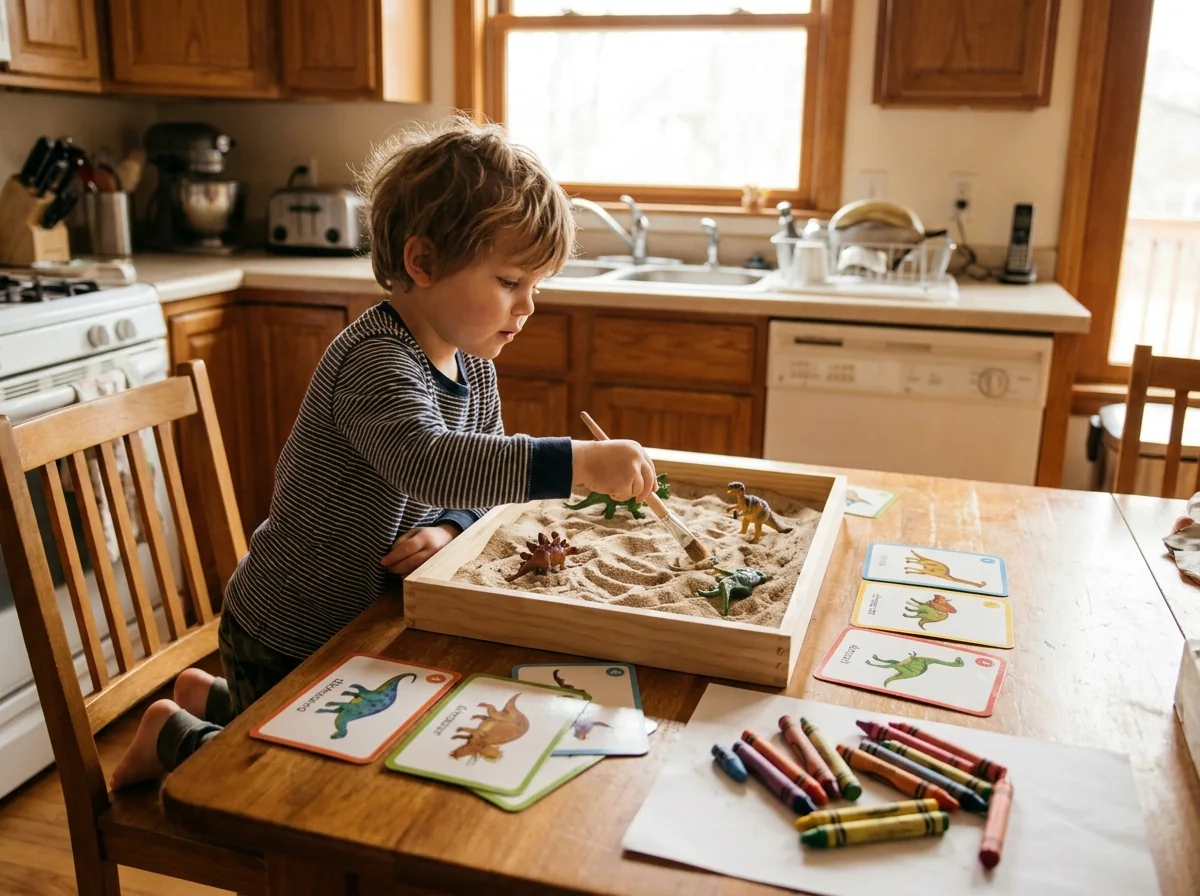
- Fossil subtraction (ages 4–5). Six "bones" (craft sticks) in the sand. A dinosaur takes two. How many are left? Say it as a number sentence.
- Dice stomp. Roll a die and stomp that many steps. Roll again and count on.
More ideas that fit any theme are in math activities for preschoolers.
Dinosaur science and sensory activities
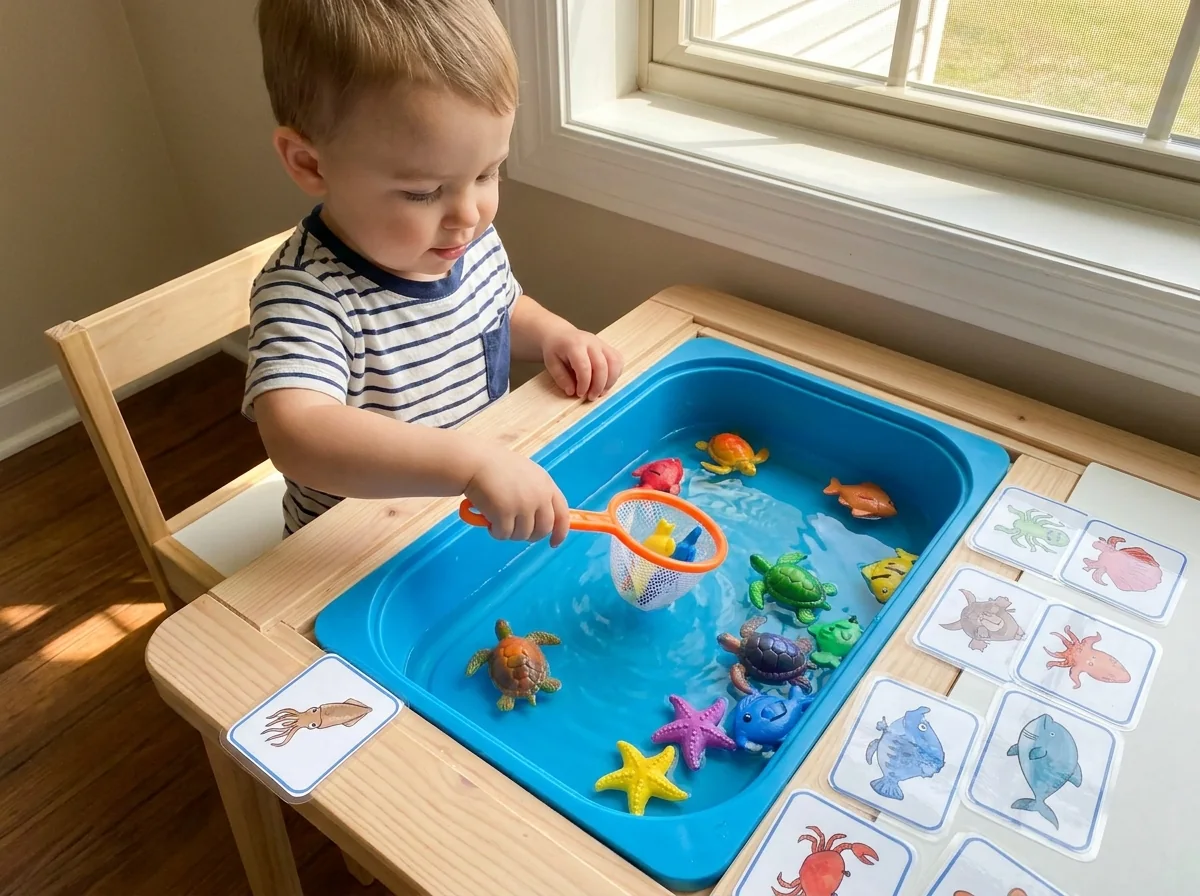
- Fossil dig. Bury toy dinosaurs in a tub of dry oats, sand or dry beans (beans for ages 3 and up only) and hand over a paintbrush and a spoon. Dig slowly. Set-up tips are in our sensory bin ideas.
- Salt-dough fossils. Press shells, toy feet and leaves into salt dough (two parts flour, one part salt, one part water) and bake on low until hard. Talk about how real fossils form when bones are buried and slowly turn to rock.
- Frozen eggs. Freeze a small dinosaur inside a water-filled balloon. Peel off the balloon and "hatch" it with warm water and a spoon.
- Footprints in mud. Press toy feet into play dough or real mud. Which print is deepest? Why?
- Herbivore lunch. Give the plant-eaters a tray of lettuce and leaves to "eat", and look for plants in the yard that look prehistoric (ferns, pine cones).
- Bird watch. Sit at the window and look for birds. Birds are living dinosaurs, so you are dinosaur-spotting.
- Volcano (with help). Baking soda, a squirt of dish soap and vinegar in a cup buried in sand. Scientists think a giant space rock hitting Earth, not volcanoes alone, ended the age of dinosaurs.
Simple true dinosaur facts for ages 3–5
- Dinosaurs lived millions and millions of years ago and died out about 66 million years ago, long before there were any people. People and dinosaurs never lived at the same time.
- Birds are the living relatives of dinosaurs. The American Museum of Natural History describes birds as dinosaurs that survived.
- Dinosaurs hatched from eggs.
- Some ate plants (Triceratops, Stegosaurus, Brachiosaurus). Some ate meat (T. rex).
- The word dinosaur means "terrible lizard." Triceratops means "three-horned face."
- People who dig up and study fossils are called paleontologists.
- Flying pterosaurs and swimming plesiosaurs lived at the same time but were not dinosaurs.
Dinosaur art, fine motor, movement and outdoor activities
Art and fine motor
- Fork-print stegosaurus. Paint a green body, then press a fork dipped in paint along the back for plates.
- Paper-plate dinosaur. Fold a plate in half, add a neck and tail, and let your child add spikes with cut triangles.
- Egg-carton dino. Cut a strip of egg-carton cups, paint it, add googly eyes and pipe-cleaner legs.
- Dino mazes. Help the dinosaur find its egg. Start with wide, short mazes for a 3-year-old and work up.
- Play-dough dinosaurs. Roll bodies, pinch spikes, press in craft-stick bones. Great for hand strength; see fine motor activities for preschoolers.
- Cotton-swab skeleton. Glue cotton swabs onto black paper in a dinosaur shape.
- Coloring pages. Big, simple dinosaurs with thick lines, printed as many times as needed.
Movement and songs
- Dino stomp. Stomp like a heavy T. rex, tiptoe like a tiny baby dinosaur, swing a long Brachiosaurus neck.
- "We're Going on a Dinosaur Hunt." Swap the bear for a dinosaur and add swamp, cave and volcano verses.
- Freeze dance: dinosaur edition. When the music stops, freeze as a fossil.
- Egg-and-spoon dash. A plastic egg on a spoon from nest to nest.
- Tail tag. Tuck a scarf into a waistband as a tail; the catcher tries to grab it.
Outdoors
- Chalk footprints. Draw a giant trail of dinosaur prints down the sidewalk and leap from one to the next, counting.
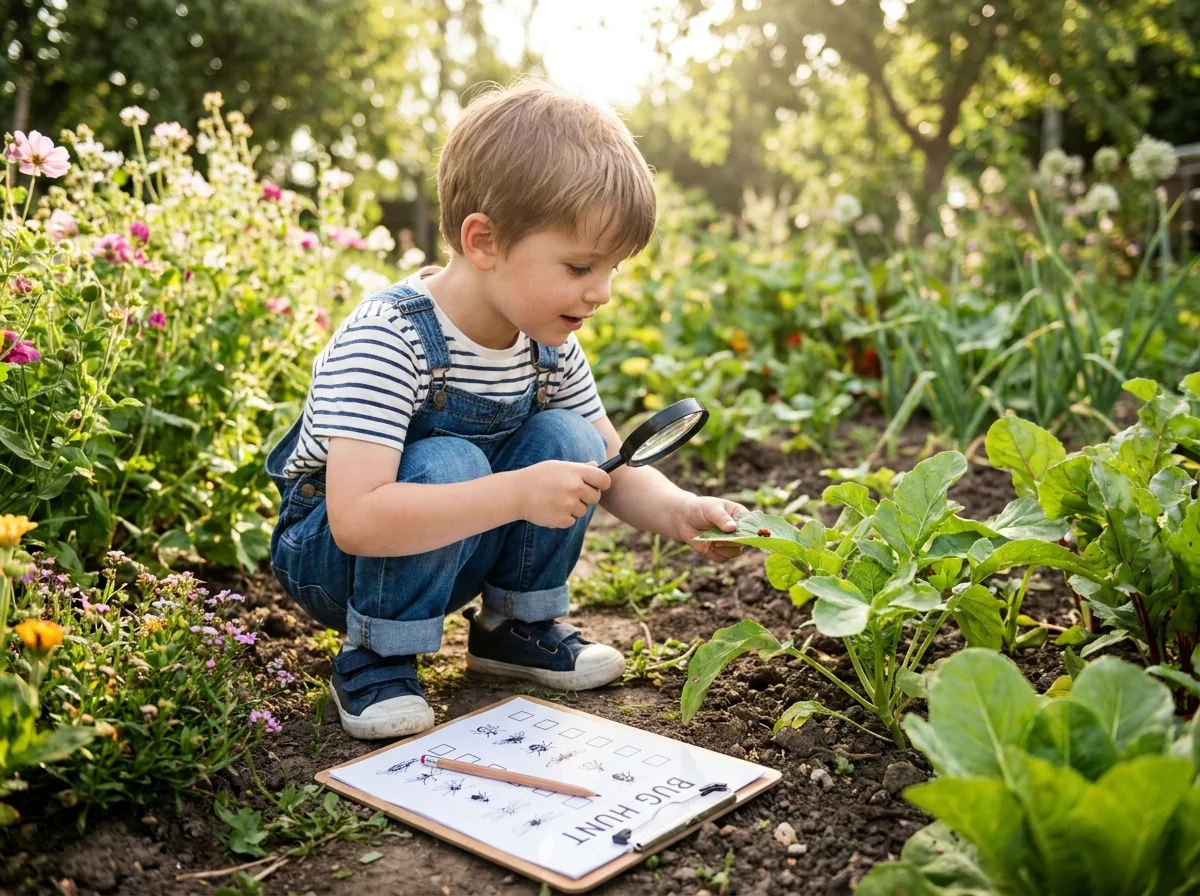
- Bone hunt. Hide craft sticks in the yard or a sandbox and dig with a trowel.
- Museum trip. If a natural history museum is within reach, go. If not, museum websites have real skeleton photos to compare with the toys.
Sample 5-day dinosaur plan for preschool
Run it once for a one-week theme, or twice (swapping in the unused activities) for two weeks.
| Day | Morning (15–20 min) | Afternoon (10–15 min) | Book |
|---|---|---|---|
| Mon | D is for dinosaur + dino name clap | Fossil dig | Dinosaur Roar! |
| Tue | Eggs in the nest | Fork-print stegosaurus | Ten Little Dinosaurs |
| Wed | Plant-eater or meat-eater sort | Salt-dough fossils | Bones, Bones, Dinosaur Bones |
| Thu | Footprint letter hunt | Dino stomp + freeze dance | Dinosaurumpus! |
| Fri | Dino mazes and coloring | Chalk footprints outside | How Do Dinosaurs Say Goodnight? |
Keep Friday light; the week's favorite book read twice is a better end than a new activity.
Dinosaur picture books for preschoolers
- How Do Dinosaurs Say Goodnight? by Jane Yolen and Mark Teague. The bedtime classic; the whole series works for the theme.
- Dinosaur Roar! by Paul and Henrietta Stickland. Opposites (big and small, fast and slow) in a few words per page. Perfect for 3-year-olds.
- Dinosaurumpus! by Tony Mitton and Guy Parker-Rees. Rhyming and stomping; read it before the dino dance.
- Ten Little Dinosaurs by Mike Brownlow and Simon Rickerty. Counting backward from 10.
- Bones, Bones, Dinosaur Bones by Byron Barton. How a skeleton is found, moved and put together.
- Harry and the Bucketful of Dinosaurs by Ian Whybrow and Adrian Reynolds. Harry learns every dinosaur's name; so will your child.
- Tyrannosaurus Drip by Julia Donaldson and David Roberts. A gentle plant-eater story for ages 4 and 5.
- National Geographic Little Kids First Big Book of Dinosaurs by Catherine D. Hughes. The nonfiction one for "why" questions.
What to print for a dinosaur theme
Print a few pages that match the activities above and reuse the favorites.
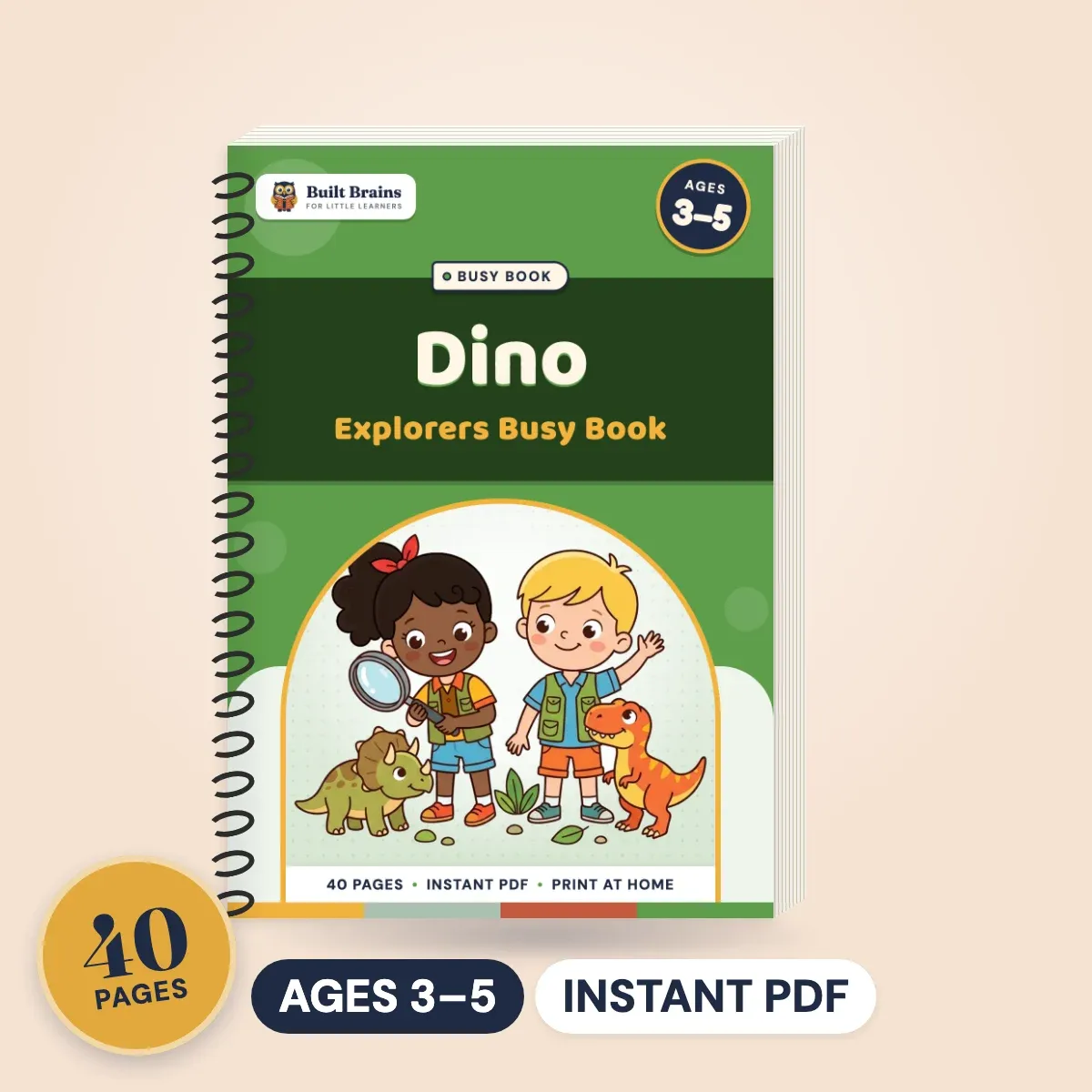
- Dino Explorers Busy Book (ages 3–5, 40 pages): coloring, tracing, mazes, dot-to-dots, counting, patterns and more-or-less, plus word cards and clip cards that cover activities 4, 8, 12 and 25 in one go.
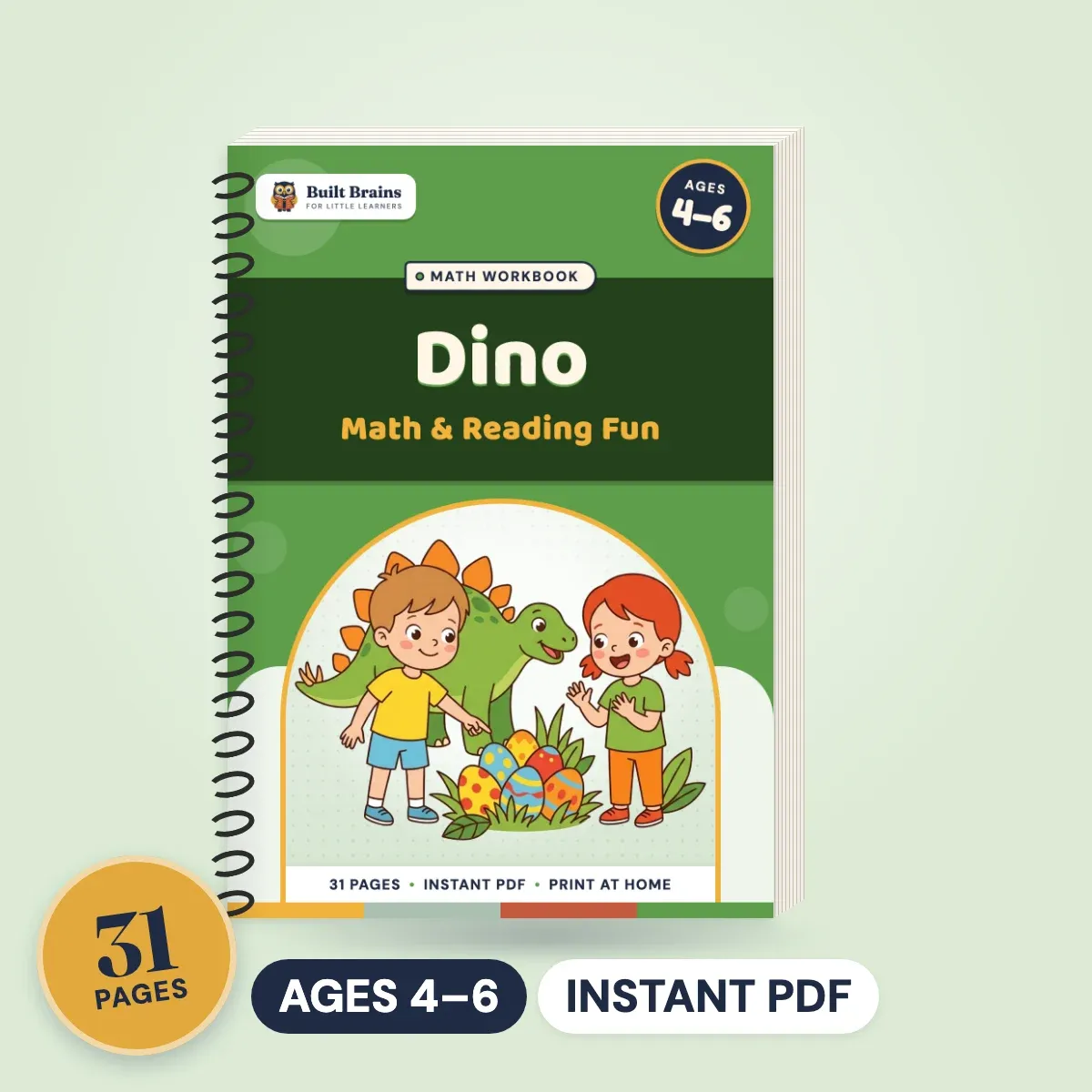
- Dino Math & Reading Fun (ages 4–6, 31 pages): counting to 20, adding and taking away, word tracing, sentences and word searches for the older end of the age range.
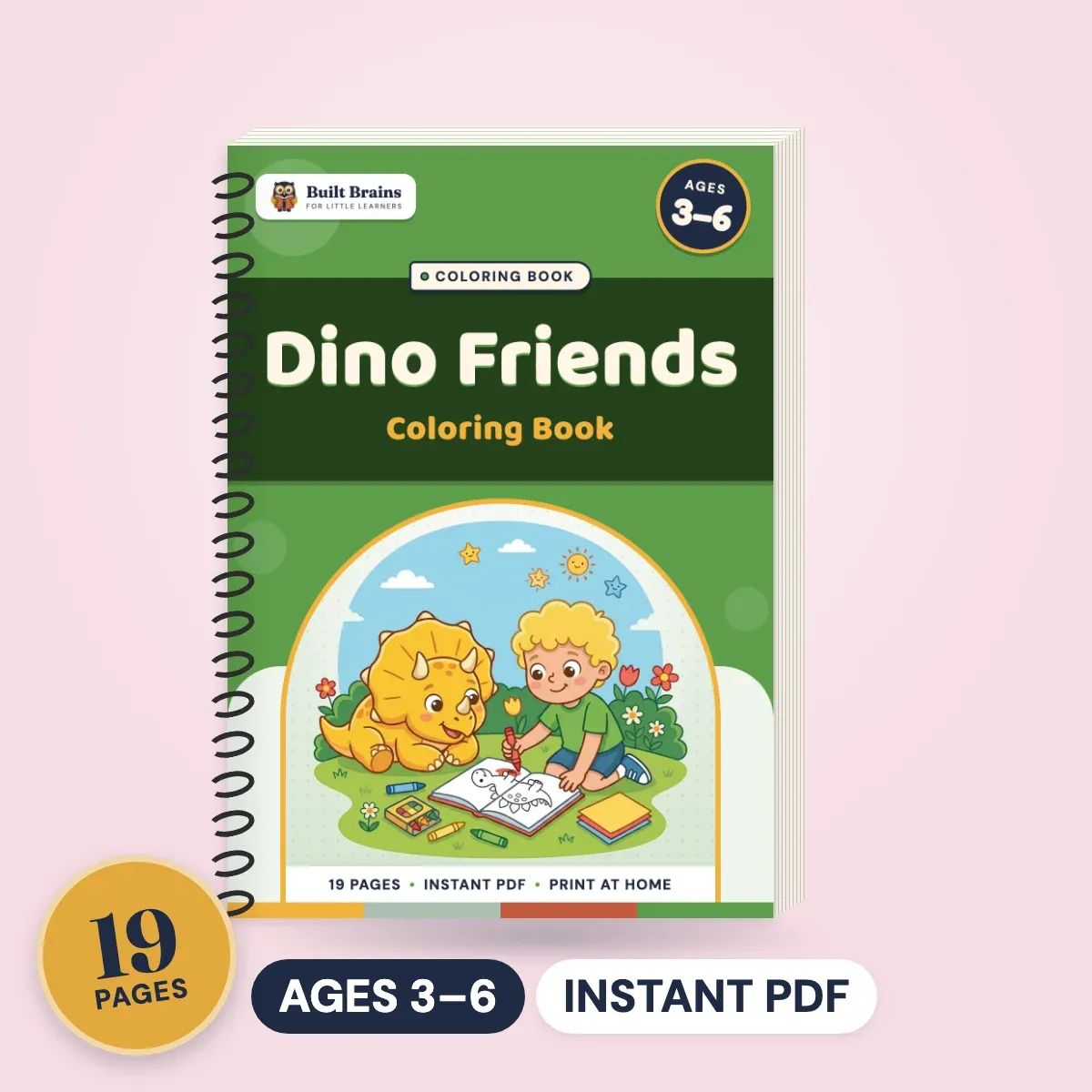
- Dino Friends Coloring Book (ages 3–6, 19 pages): T. rex, Triceratops, Stegosaurus and a hatching baby, with thick lines for little hands.
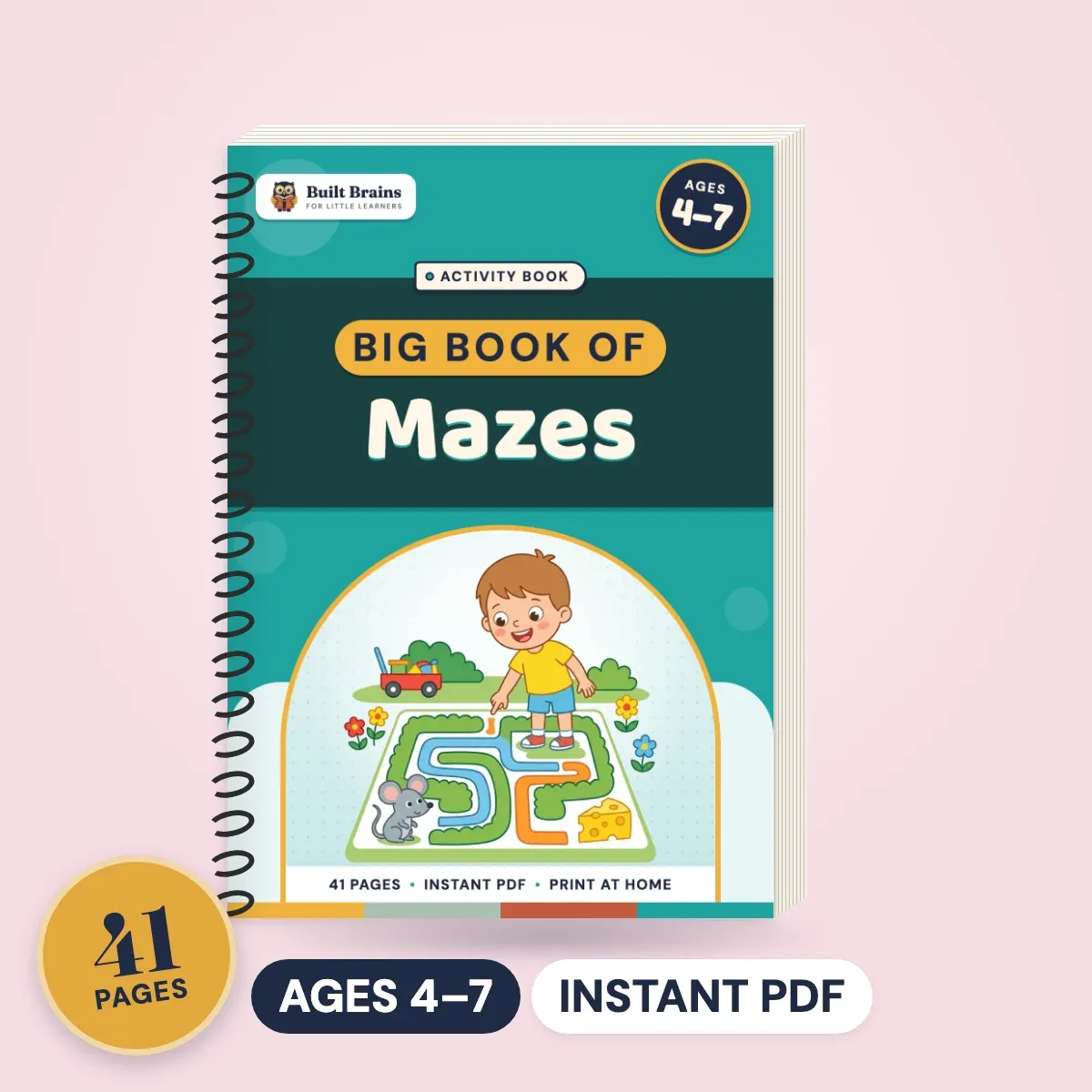
- The Big Book of Mazes (ages 4–7, 38 mazes): friendly first mazes that grow harder, with a dinosaur section among the farm, ocean and space ones.
Slip the word cards and the nest-counting page into a plastic sleeve and they last the whole theme with a dry-erase marker. When the dinosaurs are done, the same structure works for any toddler or preschool theme: keep the plan table and swap the content.
Sources
- U.S. Geological Survey – Did people and dinosaurs live at the same time?: humans and non-bird dinosaurs never coexisted; tens of millions of years separate them.
- American Museum of Natural History – Dinosaurs: birds as living dinosaurs, plant-eating and meat-eating groups, and what fossils tell us.
- NAEYC – 10 Things Every Parent Should Know About Play: why play-based themes support language, self-regulation and problem-solving.
Questions parents ask
Plenty: new vocabulary (fossil, herbivore, extinct), sorting and comparing (big and small, plant-eater and meat-eater), counting and one-to-one matching with eggs and footprints, letter sounds through dinosaur names, and early science habits like observing, asking questions and digging carefully. The theme also gives reluctant writers and movers a reason to join in.
One to two weeks works well for ages 3 to 5. A week lets you touch every subject once; two weeks lets children revisit favorites, which is how preschoolers actually learn. Run one or two short activities a day, 10 to 20 minutes each, and stop while they still want more. Reuse the same figures and words all week.
No. The last non-bird dinosaurs died out about 66 million years ago, long before the first humans appeared. Scientists know this from the layers of rock the fossils are found in. Birds, however, are living descendants of dinosaurs, which is a fact that delights most 4-year-olds and is worth repeating all week.
A fossil dig is the easiest. Bury toy dinosaurs in a tub of sand or dry oats, then hand over a paintbrush and a spoon and ask your child to uncover them slowly, like a paleontologist. Talk about what they found, how big it is and what it might have eaten. Follow up with a picture book about how real fossils are found.
Yes, if you pick pages with big pictures and thick lines, and keep sessions short. For a 3-year-old, coloring, simple mazes, dot-to-dots and counting 1 to 5 are plenty. Save tracing full words and adding for 4 and 5. Printing a handful of favorites again and again is better than a thick pile done once.

Reviewed by
Year 1 Teacher & KS1 Phase Lead
Tom Evans is a Key Stage 1 Phase Lead dedicated to smoothing the transition from EYFS play-based learning to structured Year 1 curriculum.
More about Tom →