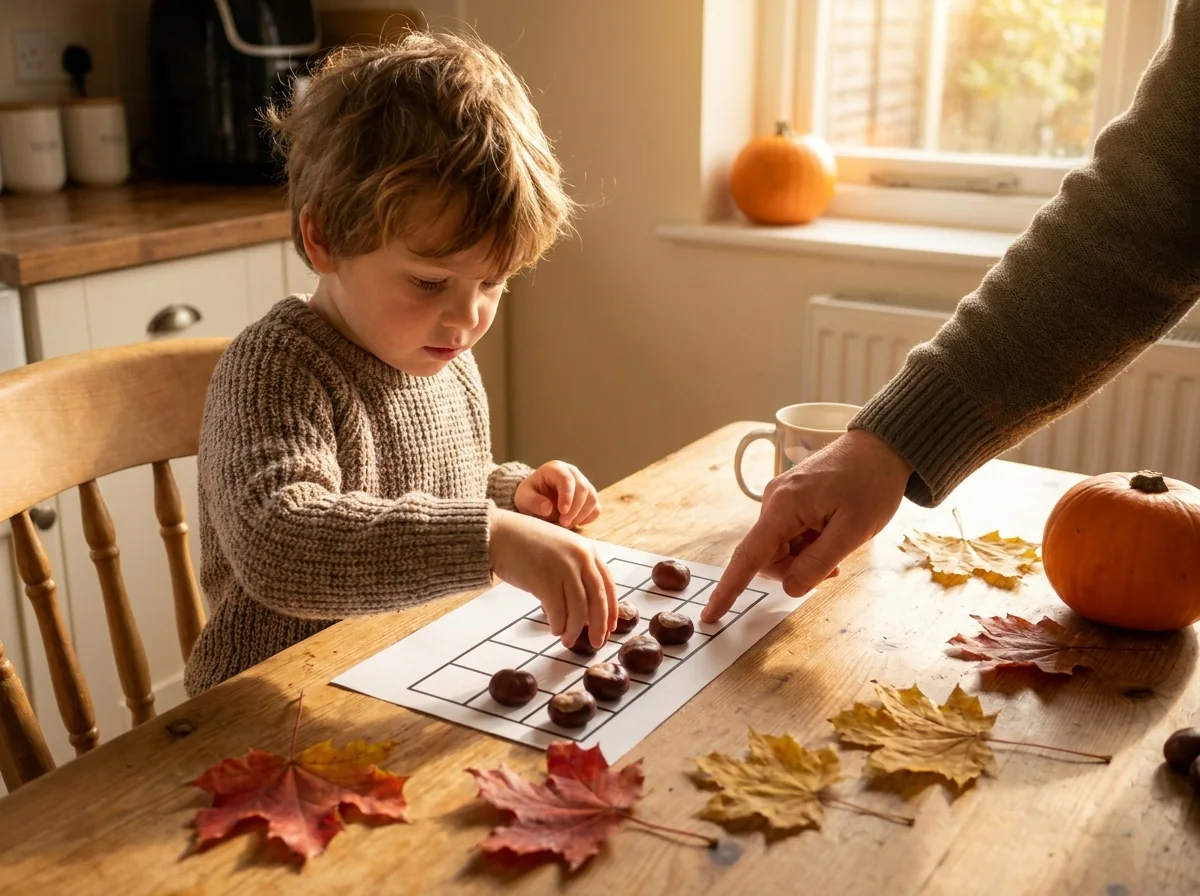
What is EYFS maths in Reception?
Maths in Reception is the final stage of the Early Years Foundation Stage, and it is far more about understanding numbers than doing sums on paper. At the end of the year, teachers judge each child against two early learning goals (ELGs) for maths, set out in the EYFS statutory framework:
| Early learning goal | In plain words, by the end of Reception most children can… |
|---|---|
| Number | Really understand numbers to 10, including what each one is made of (5 is 4 and 1, or 3 and 2); recognise up to 5 things without counting; and quickly recall number bonds to 5 and some to 10, including doubles |
| Numerical Patterns | Count out loud beyond 20 and notice the pattern; compare amounts up to 10 (more, fewer, the same); and explore patterns such as odd and even, doubles and sharing equally |
These are the finish line for the year, not the starting point, and the non-statutory Development Matters guidance shows the smaller steps children usually take on the way. A child starting Reception who can count to 10 and recognise a few numbers is doing well. If your child is younger, our maths activities for preschoolers cover the earlier steps, and the Reception school readiness checklist explains what schools hope for on day one.
Many schools plan their early maths around a few key ideas, such as cardinality (the last number counted tells you how many), comparison and composition (numbers are made of other numbers), which the NCETM's Early Years materials set out for teachers. You do not need the jargon at home, but it explains why your child's teacher keeps asking "How do you know?"
Subitising to 5
Subitising means seeing how many there are without counting. Adults do it with dice faces; children learn it gradually, starting with 2 and 3. It matters because a child who can see "three" and "two" at a glance can start to see five as three and two.
Subitising activities
- Dice flash. Show a dice face for a second, then hide it. How many?
- Dot cards. Draw 1 to 5 dots on cards in different arrangements. Quick look, quick answer.
- Finger flash. Hold up fingers briefly: "Show me three without counting."
- Domino snap. Match dominoes with the same number of spots.
- Quick handful. Drop a few buttons on the table, cover them with your hand after a peek. How many?
- Ten frame peek. Show a ten frame with up to 5 counters for two seconds.
- Subitising walk. Spot small groups outside: three birds, two bikes, four windows.
Composition: numbers to 5 and number bonds to 10
Composition is knowing that numbers are made of smaller numbers: 5 can be 4 and 1, 3 and 2, or 5 and 0. When children know this without counting, those facts are called number bonds. Reception children are expected to know the bonds to 5 well and some of the bonds to 10, especially doubles like 5 and 5.
| Number | Bonds |
|---|---|
| 5 | 0 + 5, 1 + 4, 2 + 3 |
| 10 | 0 + 10, 1 + 9, 2 + 8, 3 + 7, 4 + 6, 5 + 5 |
Number bond activities
- Hide and seek. Put 5 conkers under a cup and tip some out. How many are still hiding?
- Two-colour ten frame. Fill a ten frame with red and yellow counters. "Six red and four yellow make ten."
- Fingers to 10. Show 7 fingers. How many are down?
- Shake and spill. Paint 5 beans red on one side. Shake, spill and record how many show red and how many show white.
- Bus stop. Ten toy passengers on a bus; some get off. How many are left?
- Two plates. Share 5 grapes between two plates in every way you can find.
- Skittles. Knock down skittles; how many fell and how many are still standing?
- Number bond hopscotch. Jump on a number, then call out its partner to 10.
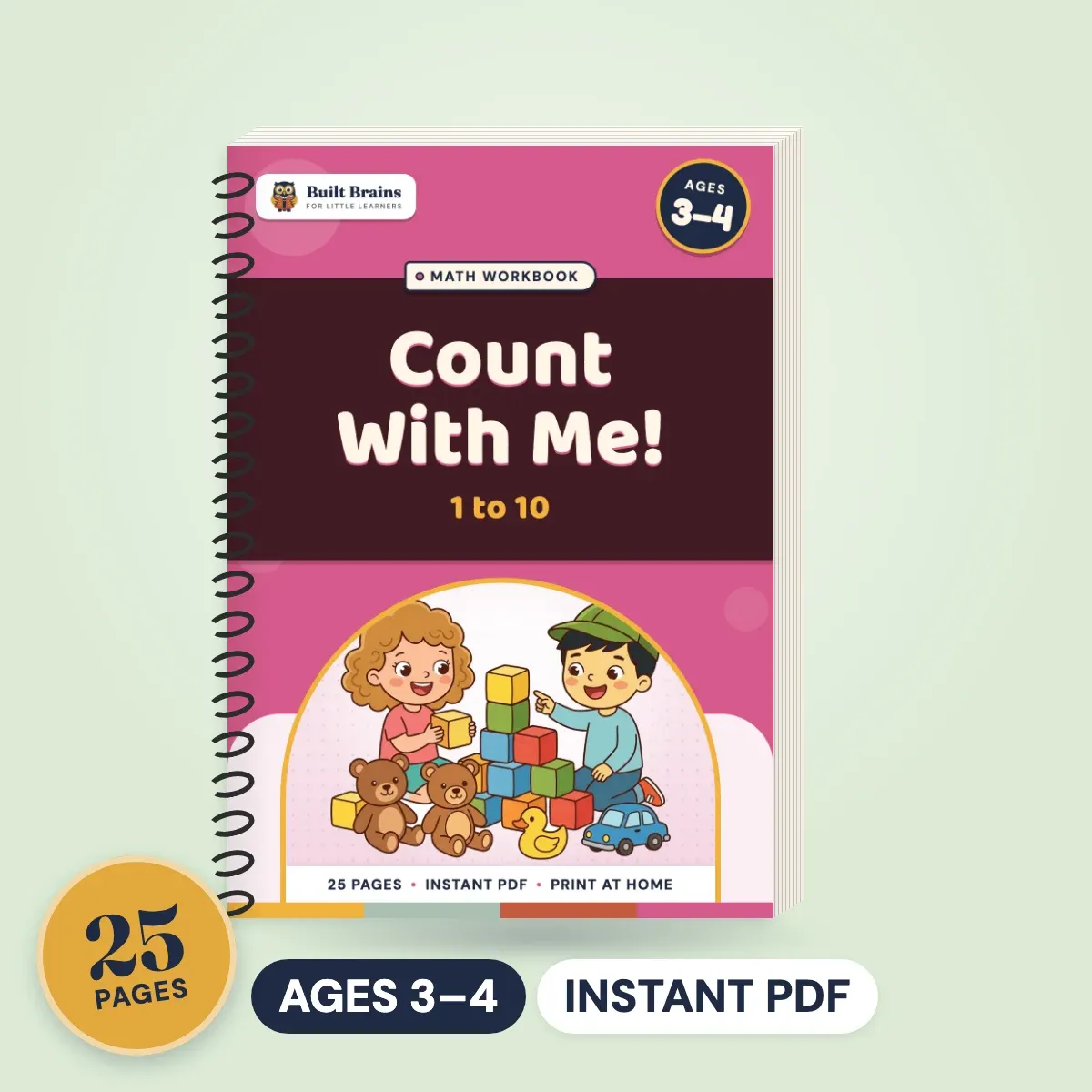
The Count With Me! 1 to 10 workbook gives a page for each number from 1 to 10 with counting, matching and more-or-less pages, a useful companion to these hands-on games. Like all our books, it comes in A4 as well as US Letter.
Counting beyond 20
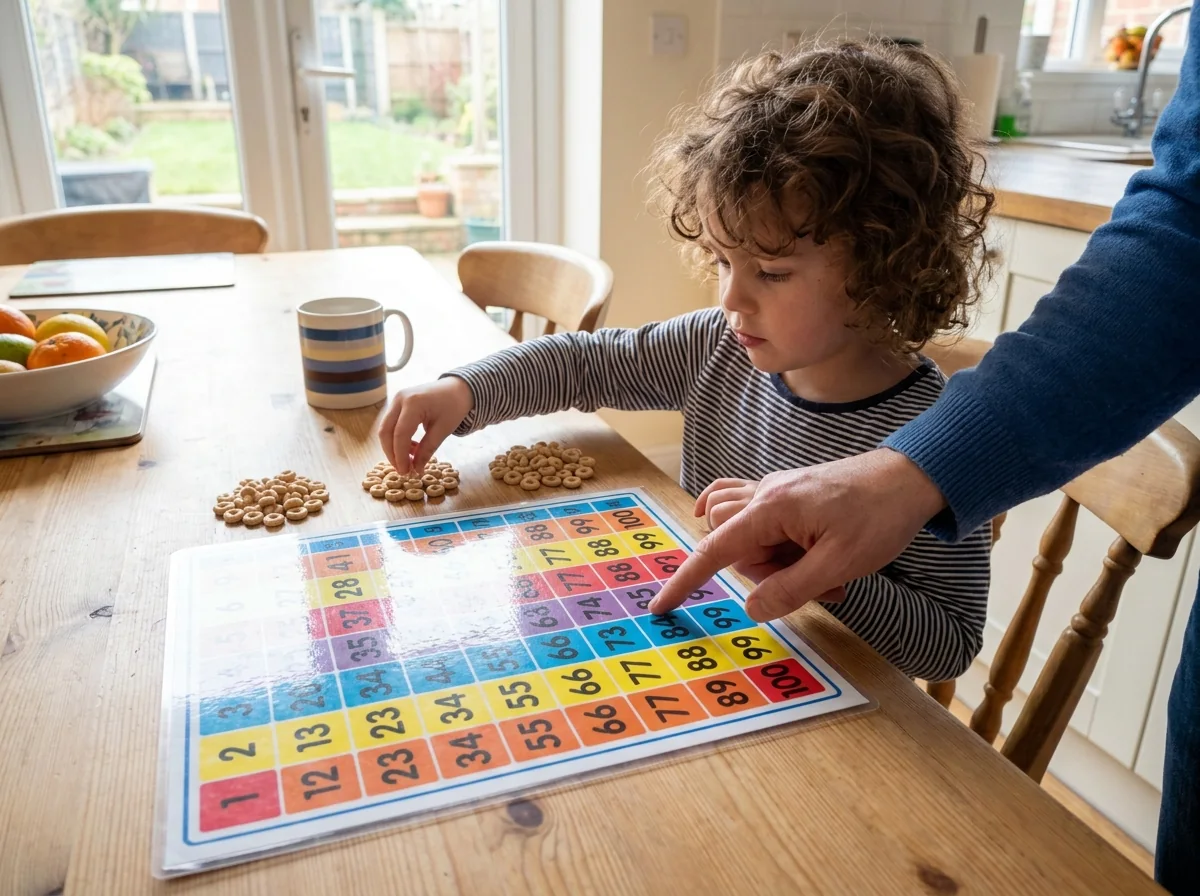
The Numerical Patterns goal asks children to count out loud past 20 and notice that the pattern repeats: twenty-one, twenty-two, twenty-three is just like one, two, three with "twenty" in front.
- Counting stairs. Count every step up and down, and keep going on longer flights.
- Number line on the floor. Chalk or tape a line from 0 to 30 and walk it, saying each number.
- Teen trouble spotting. Count from 10 to 20 and back, slowly. "Thirteen, fourteen, fifteen" are the tricky ones.
- Counting collections. Count a jar of pasta or a bag of conkers into groups of ten.
- Countdown to tea. Count back from 20 while the timer runs.
- Number spotting. Find numbers on front doors, buses, clocks and birthday cards.
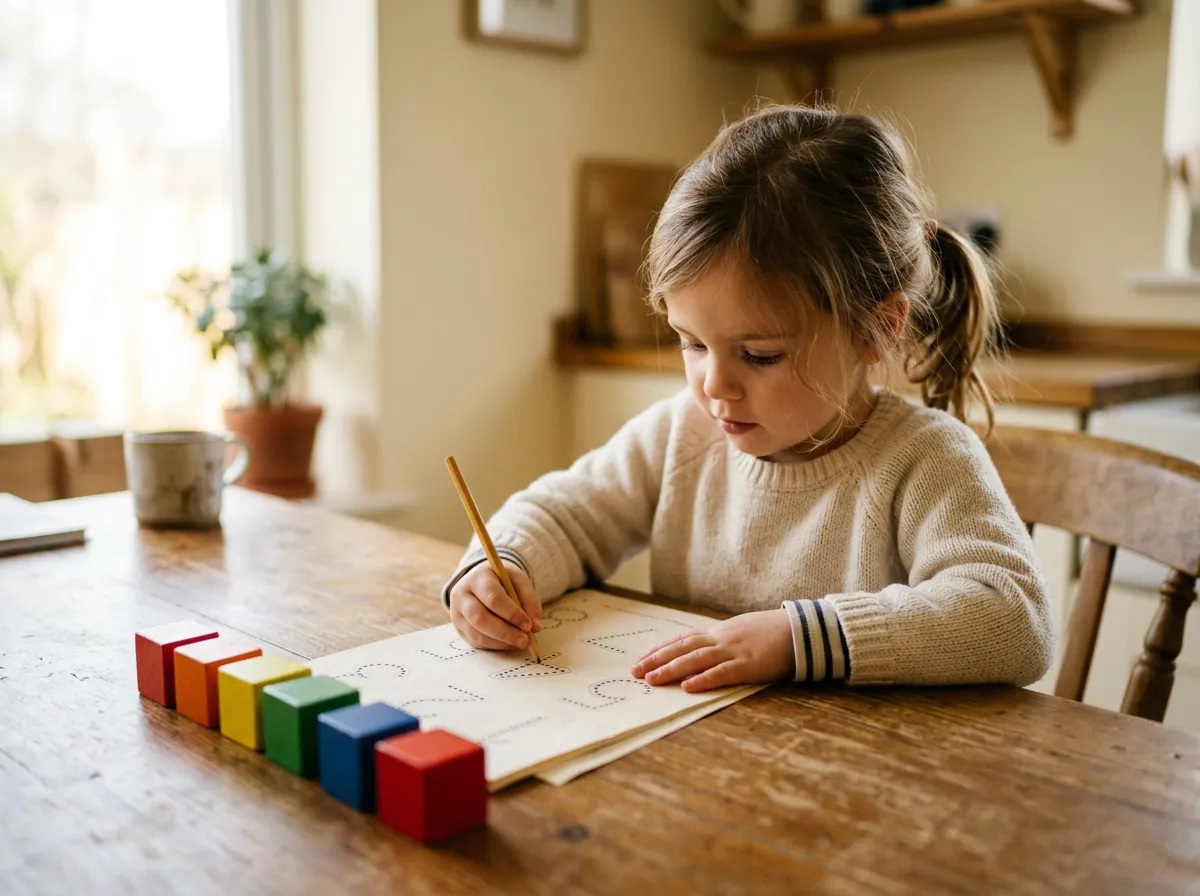
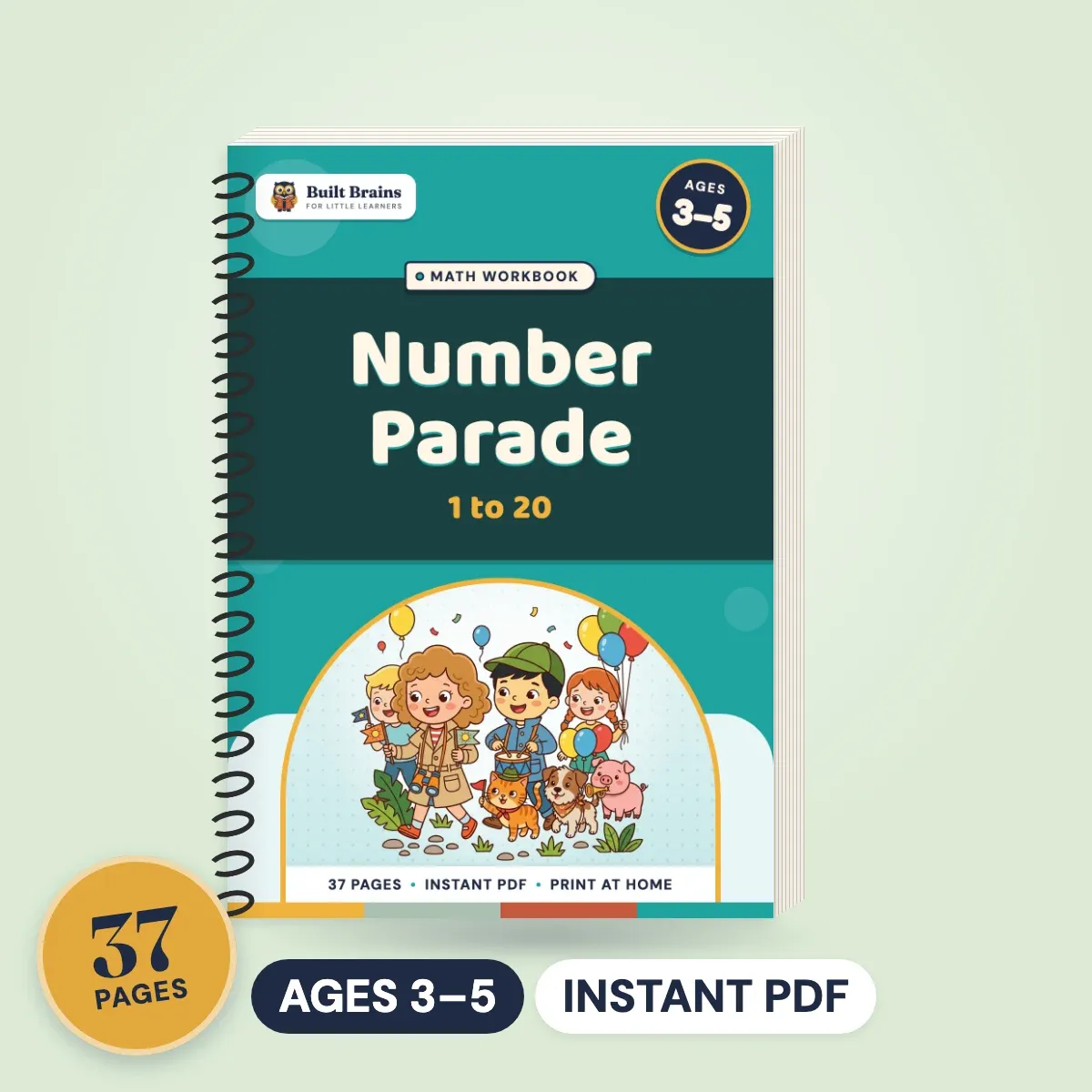
For writing numbers alongside the counting, Number Parade: 1 to 20 has a page for every number to 20, with counting, tracing the digit and the number word, and review pages after every five numbers. Our guide to number tracing 1–20 explains how to connect each numeral to a real quantity.
Doubling, sharing and odd and even patterns
These are the "explore and represent patterns" part of the second goal. They do not need worksheets: real objects and snack time do the job.
- Mirror doubles. Put 3 buttons in front of a mirror. How many now?
- Ladybird doubles. Draw a ladybird and add the same number of spots on each wing.
- Snack sharing. Share 6 crackers between two people. Is it fair? Now try 7.
- Teddy picnic. Share 10 grapes between two, then five, teddies.
- Odd one out. Pair up socks or shoes. Is there one left over? If yes, the number is odd.
- Partner lines. Line up toys in pairs. Even numbers make neat pairs; odd numbers leave one alone.
- Double dice. Roll one dice and double it with counters.
- Conker sort. Collect conkers on a walk, then sort them into pairs and count the pairs.
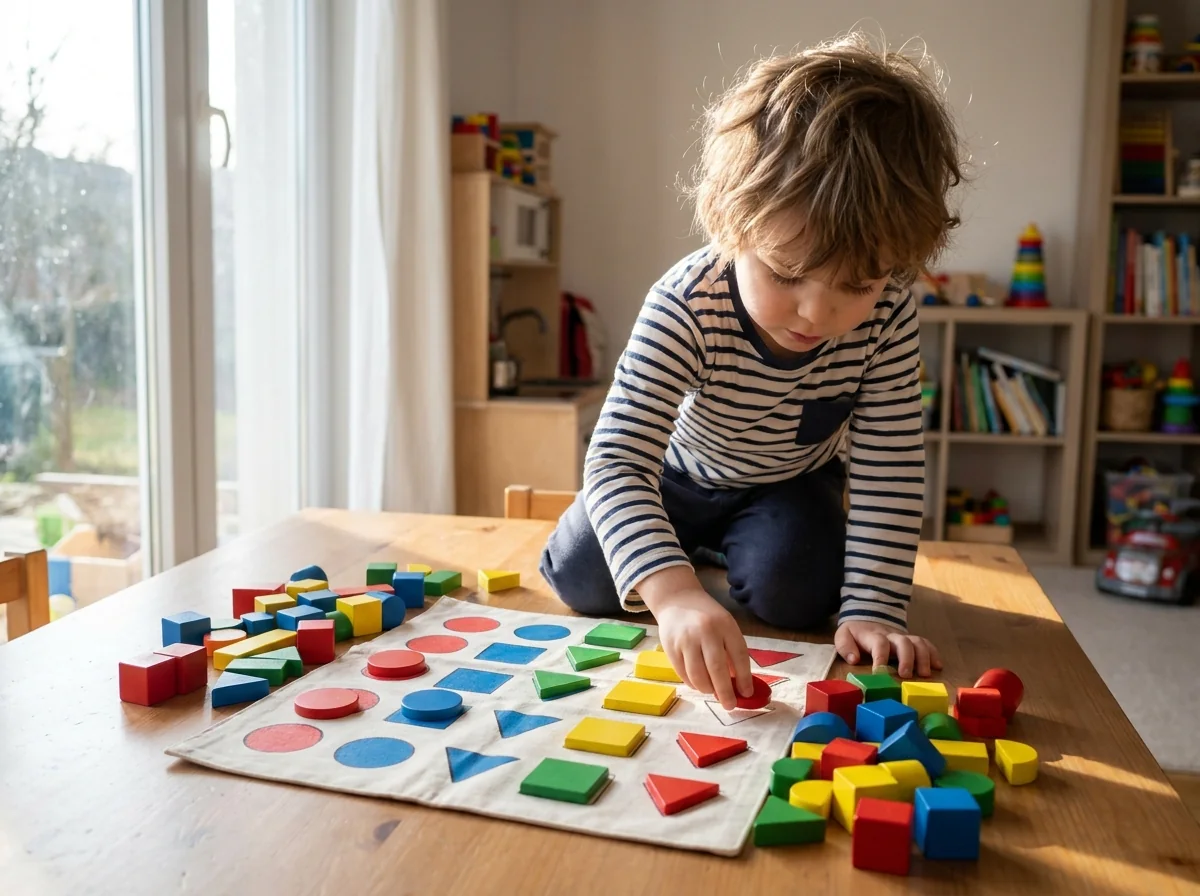
- Pattern making. Build repeating patterns with blocks or shapes: red, blue, red, blue. What comes next?
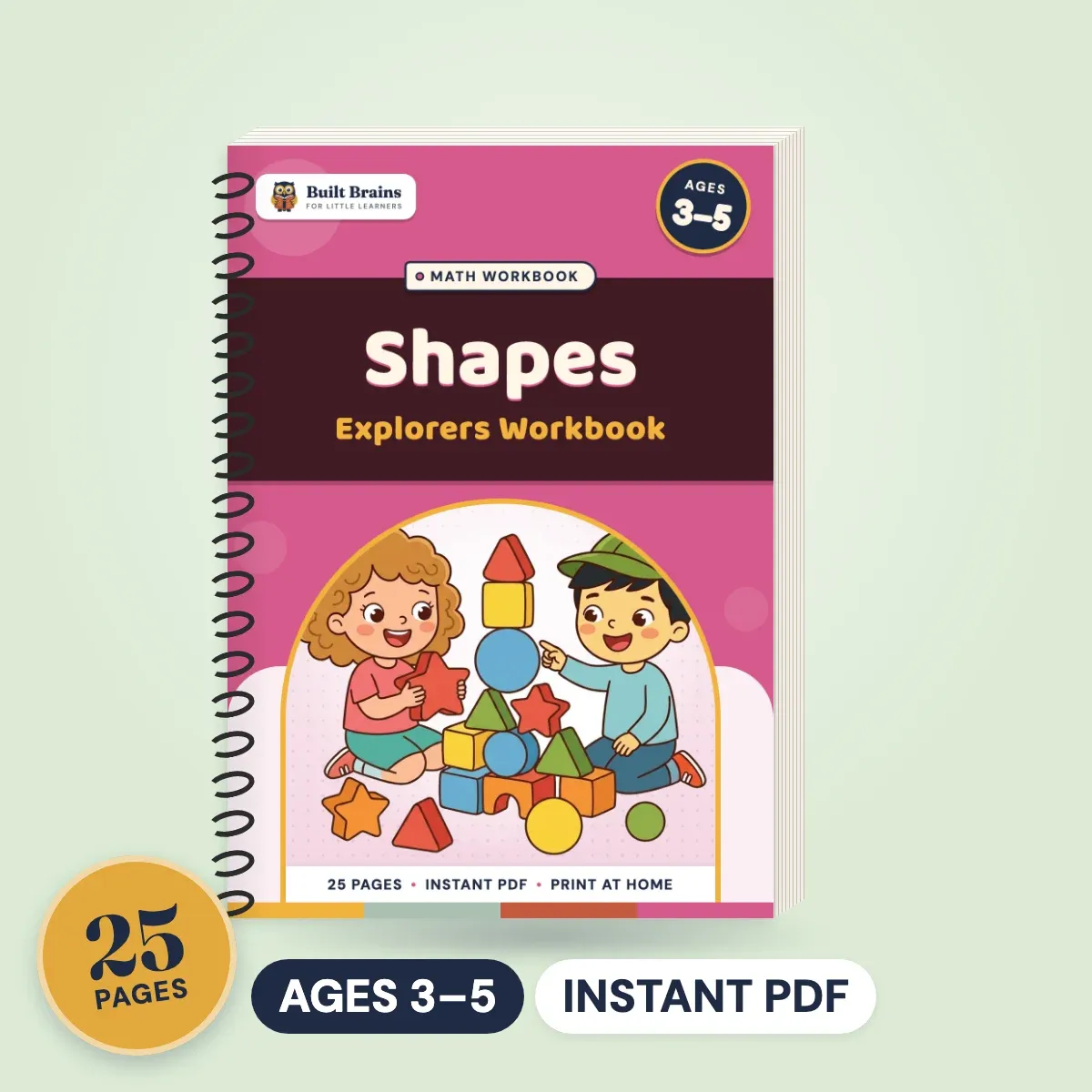
Shapes and patterns go well together. The Shape Explorers Workbook adds tracing, finding and matching eight shapes, plus pattern and symmetry pages, if your child enjoys that side of maths.
Conkers, beans and buttons are great counters but can be a choking hazard for younger brothers and sisters, so keep them out of reach of under-fours and tidy them away after play.
A weekly 10-minute maths plan for Reception
Ten minutes a day is enough to support what your child is doing at school. Ask the teacher which number or idea they are focusing on and use it here.
| Day | Focus | Activity (number) |
|---|---|---|
| Monday | Subitising | Dice flash and dot cards (1, 2) |
| Tuesday | Number bonds to 5 | Hide and seek with conkers (8) |
| Wednesday | Counting beyond 20 | Floor number line (17) |
| Thursday | Bonds to 10 | Two-colour ten frame (9) |
| Friday | Doubles and sharing | Snack sharing (24) |
| Weekend | Real life | A board game, cooking or counting on a walk |
Use maths words through the rest of the day too: more, fewer, the same, double, half, first, next, last. Ask "How do you know?" after an answer, and let your child be the one who checks.
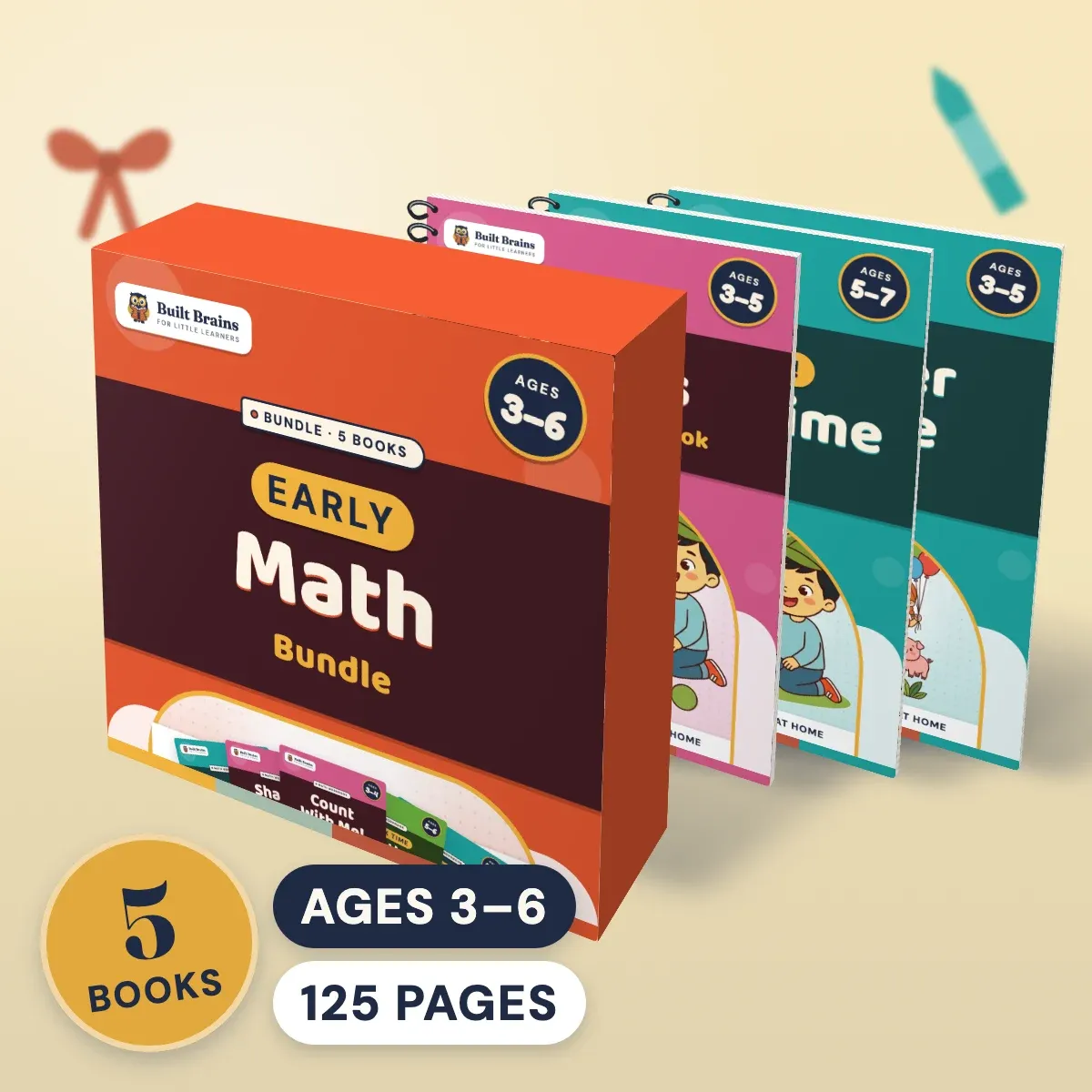
If you would like the materials ready to print, the Early Math Bundle puts five workbooks in order for ages 3 to 6: first counting, numbers to 20, shapes, adding and taking away to 10, and telling time. The name uses the US word "math", but the content follows the same steps as Reception maths, and it prints in A4.
Sources
- GOV.UK – Early years foundation stage (EYFS) statutory framework: the two maths early learning goals, Number and Numerical Patterns, assessed at the end of Reception.
- GOV.UK – Development Matters: non-statutory guidance on how children typically progress in maths through the early years.
- NCETM – Early Years: key ideas in early maths for teachers, including cardinality, comparison, composition and subitising.
Questions parents ask
There are two. Number: children understand numbers to 10, including how each is made up, recognise up to 5 objects without counting, and recall number bonds to 5 and some to 10. Numerical Patterns: they count beyond 20, compare quantities up to 10, and explore patterns such as odd and even, doubles and sharing equally.
Subitising means seeing how many things there are in a small group without counting them one by one, the way you know a dice face shows four at a glance. Reception children are expected to subitise up to 5. It helps them see numbers as wholes made of smaller parts, which supports adding and number bonds later.
Number bonds to 10 are the pairs of whole numbers that add up to 10: 0 and 10, 1 and 9, 2 and 8, 3 and 7, 4 and 6, and 5 and 5. By the end of Reception, children are expected to know bonds to 5 well and some bonds to 10, including doubles. Ten frames and fingers make the pairs easy to see.
Keep it short, practical and playful. Count real objects, play dice and board games, share snacks fairly, look for numbers on doors and buses, and ask "How many?" and "How do you know?" often. Ten minutes a day is enough. Ask your child's teacher which number they are focusing on that week and play with that.
Writing numerals is not part of the maths early learning goals, which focus on understanding quantity, counting and patterns. Children do practise forming numbers in Reception as part of their handwriting and maths, and many enjoy it. At home, prioritise counting and talking about numbers, and treat number formation as a bonus.
Reviewed by
Early Years Foundation Stage (EYFS) Teacher
Emma Sterling is an EYFS educator who champions play-based learning and continuous provision to foster independent, inquisitive learners.
More about Emma →