
What should you teach in kindergarten?
Kindergarten at home covers four main areas. What follows lines up in general terms with what many US public kindergartens teach (many states base their standards on the Common Core or something similar), and it works well for UK, Canadian and Australian families too, since the core early skills are much the same.
- Reading: letter sounds, blending sounds into words, short vowels, digraphs (sh, ch, th), blends, silent e, and 50 to 100 sight words. See our kindergarten sight words list.
- Writing: correct letter formation, writing words by sound, then simple sentences with a capital and a period.
- Math: counting to 100, numbers to 20, comparing, adding and subtracting within 10, shapes, measuring and sorting.
- Science and social studies: seasons, weather, plants, animals, the five senses, family, community helpers and maps.
About 30 minutes of focused learning a day is enough for most 5 year olds.
What's inside the Kindergarten at Home Curriculum
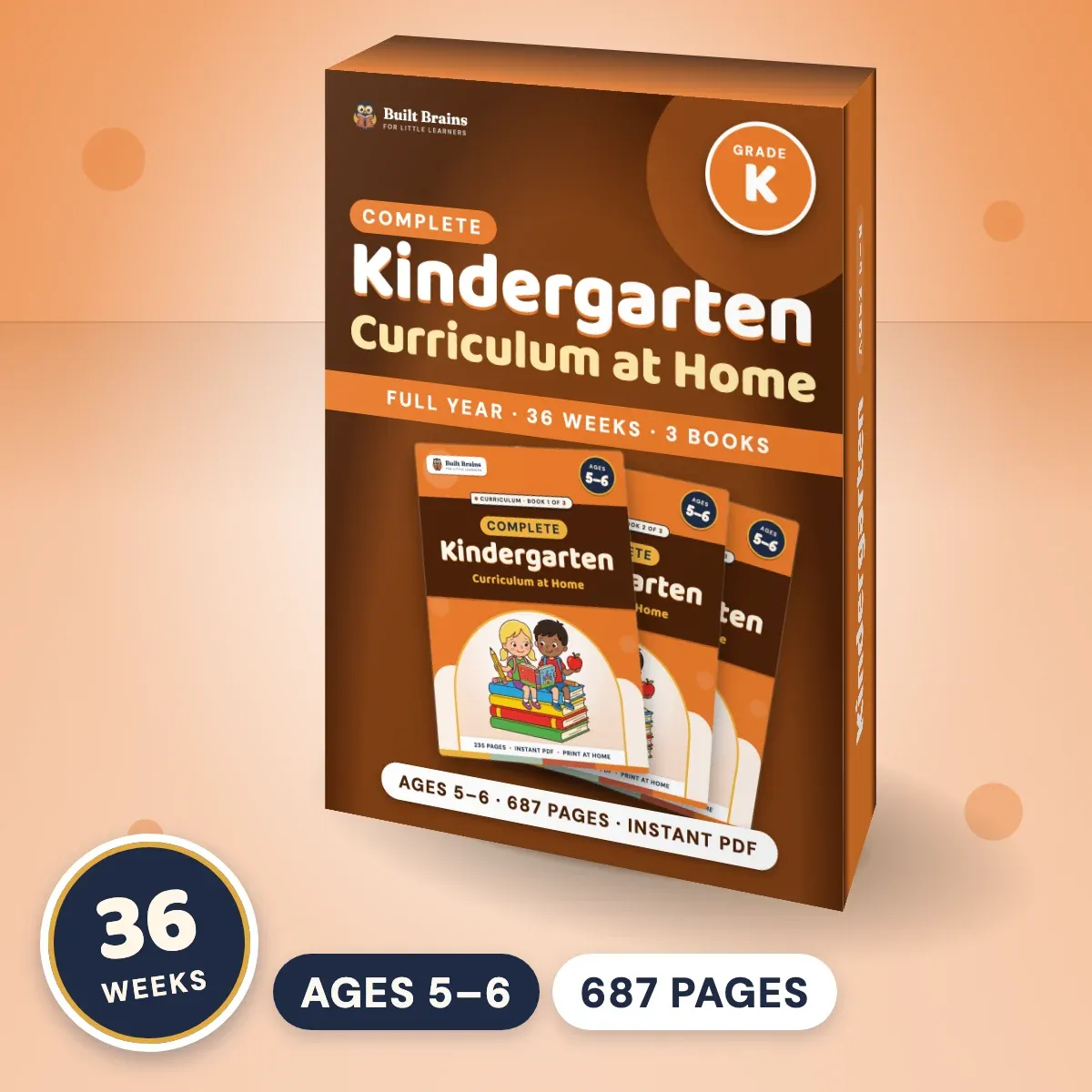
The Kindergarten at Home Curriculum follows this kind of sequence in 36 weekly plans, for about 30 minutes a day. It covers phonics in order (letters, short vowels, digraphs, blends and silent e), 70+ sight words, a little decodable story and questions every week, math from counting to 100 to adding and subtracting within 10, shapes and measuring, and a science or social studies theme each week.
It comes in three printable books (weeks 1–12, 13–24 and 25–36) plus a 19-page Parents' Guide, 687 pages in all, including 48 tracing pages, 28 reading pages, 19 math pages, 12 draw-and-write pages and 8 counting and number pages. It is an instant PDF, black and white, prints on US Letter or A4, with a 14-day money-back guarantee.
A kindergarten scope and sequence, month by month
This is a typical order for a September start. If you start in January, begin at the top row anyway. Move faster or slower depending on your child.
| Month | Reading and phonics | Math | Writing | Science and social studies |
|---|---|---|---|---|
| Sept | Review letter names; first sounds (s, a, t, p, i, n); rhyming | Counting to 20; numbers 0–5; sorting | Name; lines and circles; letters s, a, t | All about me; my five senses |
| Oct | More consonants; blending CVC words (sat, pin) | Numbers 6–10; more and fewer | Letters by stroke family; labeling pictures | Fall and leaves; apples and pumpkins |
| Nov | Finish all letter sounds; first sight words (the, I, a, see) | Counting to 50; ten-frames; shapes | Writing CVC words by sound | Family; thankfulness; community helpers |
| Dec | All short vowels in CVC words; reading short phrases | Combinations to 5; first adding with objects | "I see a ___" sentences | Winter; holidays around the world |
| Jan | Digraphs sh, ch, th; more sight words | Numbers 11–20 as ten and some ones; counting to 100 | Capital and period; spacing | Weather; animals in winter |
| Feb | Digraphs ck, wh; reading decodable sentences | Adding within 10; story problems | Writing two-sentence pieces | Kindness and friendship; famous Americans |
| Mar | Beginning blends (st, fl, cr); ending blends (nd, mp) | Taking away within 10; number bonds | Short "how-to" writing | Plants and seeds; spring |
| Apr | Silent e (cake, bike, home) | Measuring length and weight; comparing | Opinion sentences: "I like ___ because ___" | Life cycles; Earth Day |
| May | Review; reading simple decodable books | Counting to 100 by tens; review facts within 5 | A short story with a beginning and end | Ocean, summer, maps and my neighborhood |
Our guide on how to teach letter sounds goes deeper on the reading column.
Kindergarten skills checklist
Use this to see where your child is, not to grade them. Many children meet some of these goals in first grade, and that is normal.
Reading
- Knows all letters and their most common sounds
- Blends and reads CVC words (cat, sun, pig)
- Reads words with sh, ch, th and simple blends
- Reads common sight words by sight
- Retells a story's beginning, middle and end
Writing
- Writes first and last name
- Writes letters correctly, mostly from the top
- Spells simple words by sound
- Writes a short sentence with spaces, a capital and a period
Math
- Counts to 100 by ones and tens
- Counts objects to 20 and writes numbers to 20
- Compares numbers and groups (more, fewer, the same)
- Adds and subtracts within 10 with objects or drawings
- Names flat shapes and solid shapes (cube, sphere, cone)
- Compares length and weight
Learning habits
- Sits and focuses for 10 to 15 minutes
- Follows multi-step directions
- Tries again after a mistake, with encouragement
Still deciding whether your child is ready to start? The kindergarten readiness checklist covers the skills that come before this list.
A sample kindergarten day at home
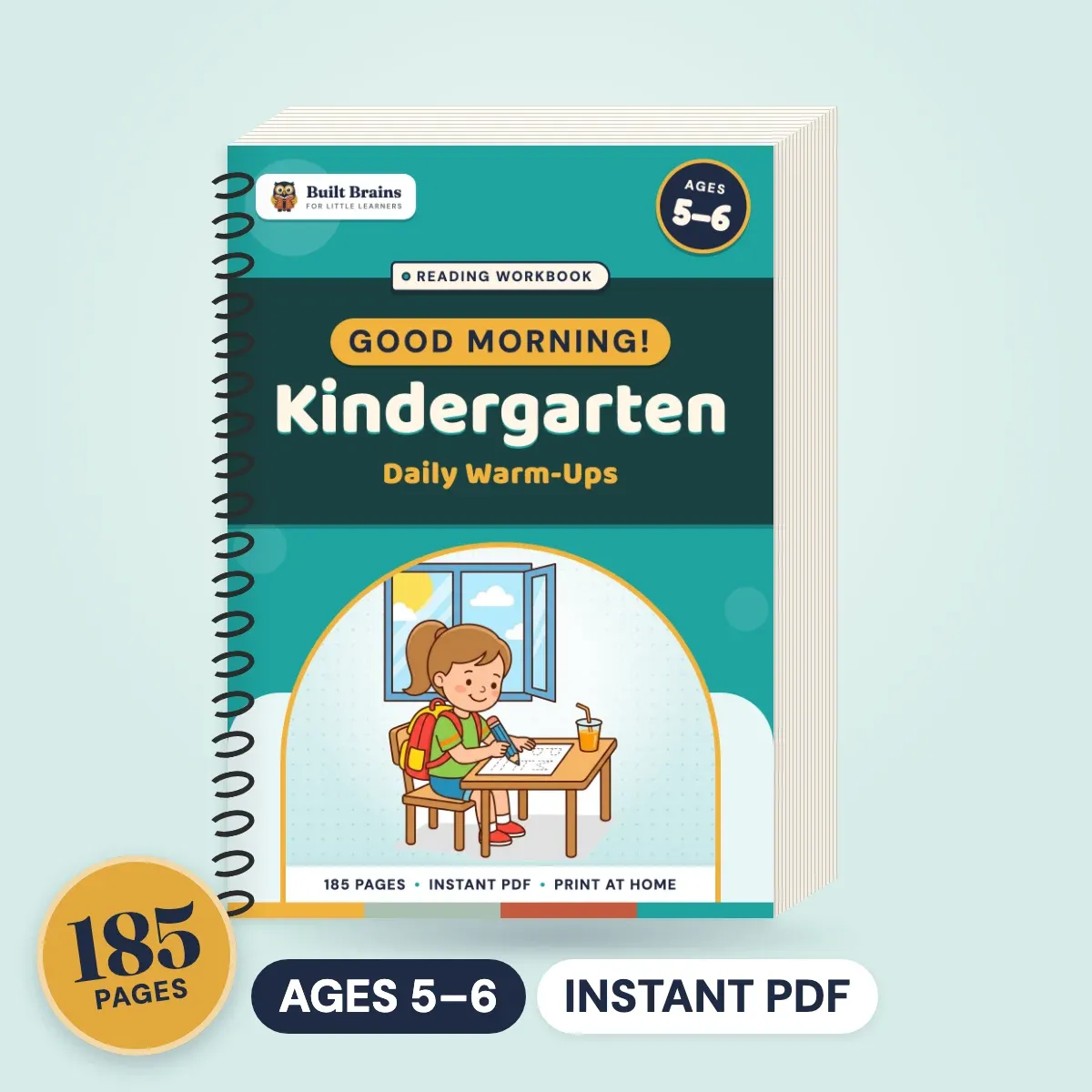
- Morning warm-up (5 minutes). Day, date, weather, letter of the day. A page from Good Morning! Kindergarten Warm-Ups works well here.
- Phonics and reading (15 minutes). New sound, blending practice with letter cards, then read the week's little story.
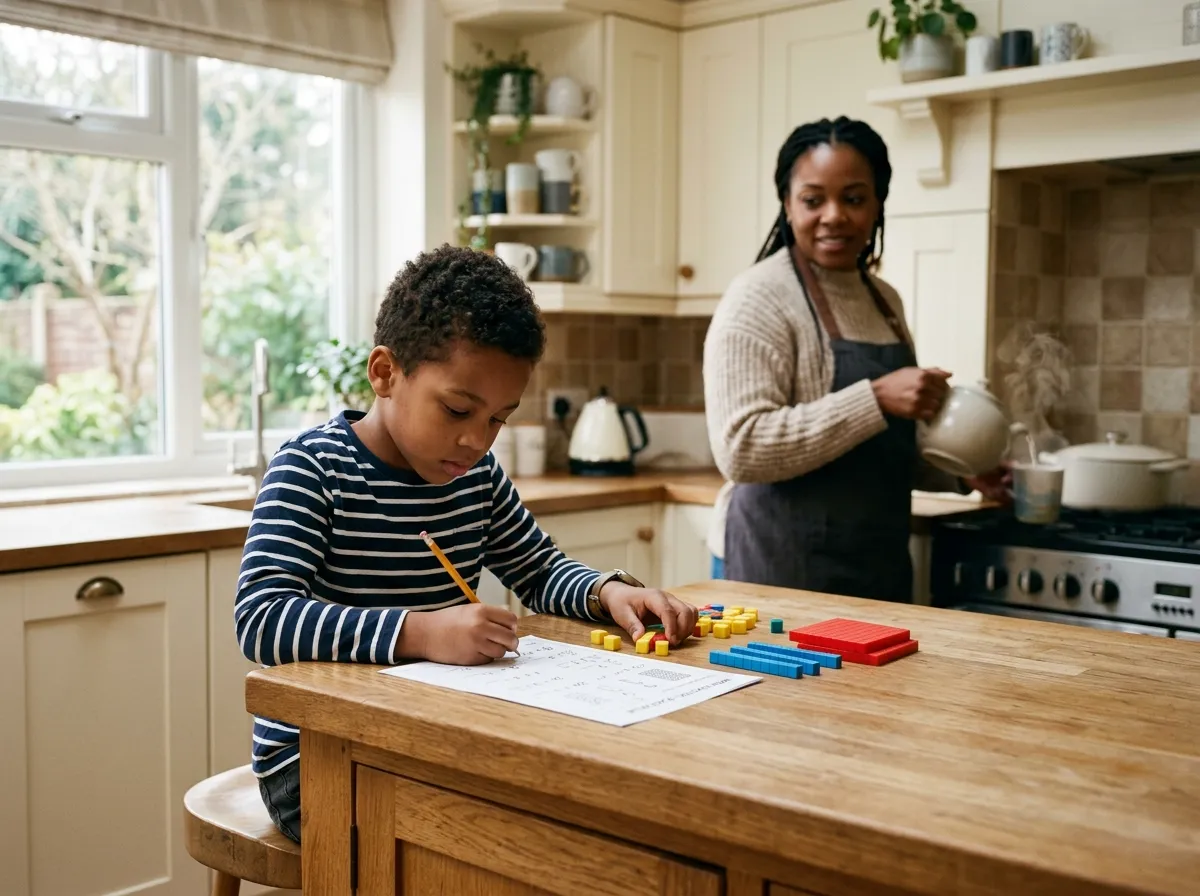
- Math (10 to 15 minutes). Hands-on first: counters, ten-frames, dominoes. Then one page.
- Read-aloud (20 minutes or more). Picture books and simple chapter books above your child's reading level.
- Afternoon theme (2 or 3 days a week). A science activity, a nature walk, a map game or an art project.
Our full guide on how to homeschool kindergarten covers setup, schedules and record keeping.
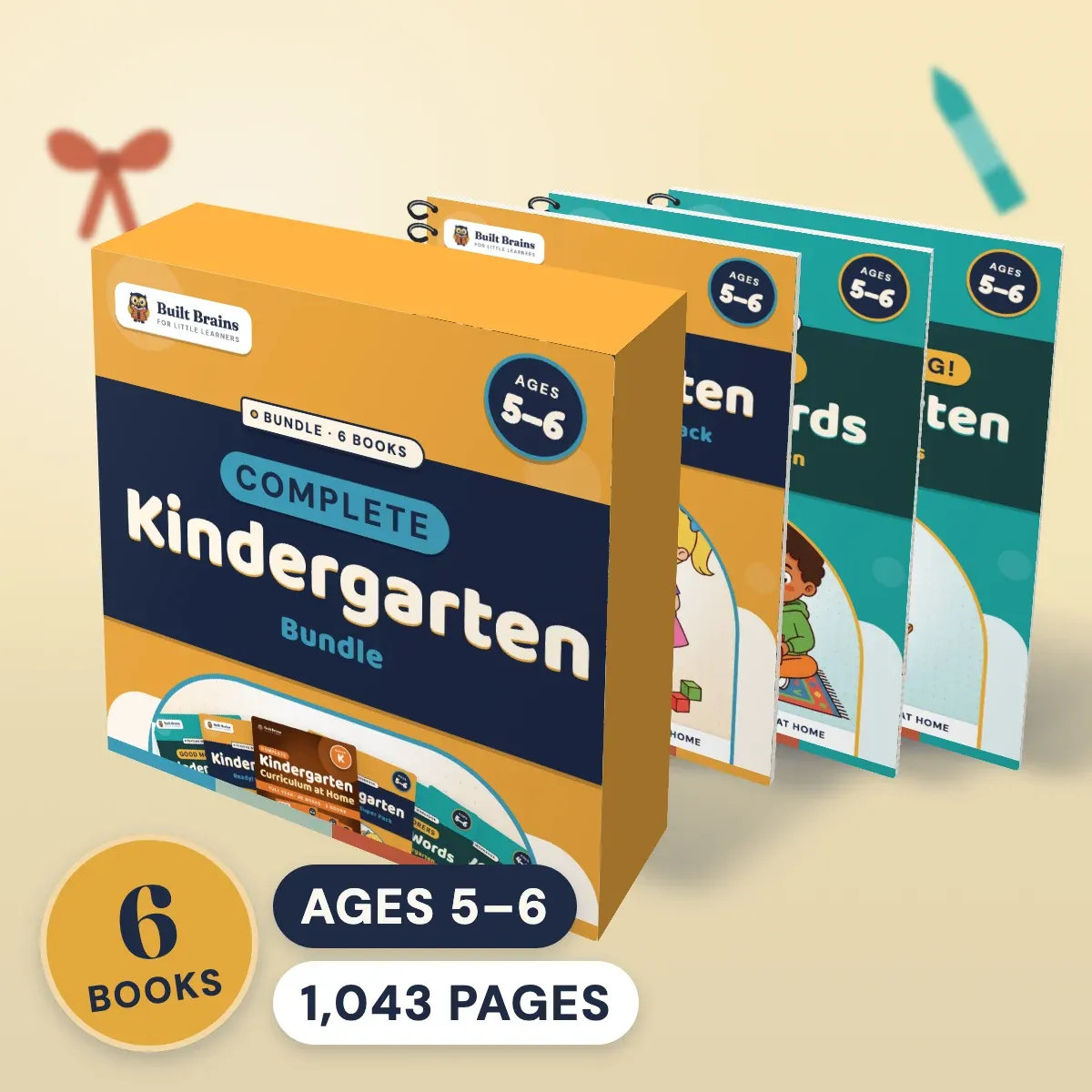 Best valueSave $32
6 books · 1043 pages
The Complete Kindergarten BundleCurriculum, warm-ups, sight words and enrichment

How to teach kindergarten reading at home
The order matters more than the materials.
- Sounds before names. Say /m/, not "em," when teaching reading.
- Blend early. Once you have s, a, t, p, i and n, you can make sat, pin, tap and nap.
- Add sight words slowly. Three or four a week, practiced in sentences, not only on cards.
- Read decodable text. Little stories that use only the sounds your child knows build confidence.
- Keep reading aloud. Vocabulary and love of books come from you reading to them.
Script for blending: "Let's say each sound. /s/ /a/ /t/. Now say them faster. Sss-aaa-t. What word is it?"
How to teach kindergarten math at home
Kindergarten math is about understanding numbers, not speed.
- Count real things. Snacks, stairs, toy cars. Touch each one once.
- Use a ten-frame. It shows 7 as "5 and 2 more" and 13 as "10 and 3 more."
- Tell story problems. "There are 4 ducks. 2 swim away. How many are left?"
- Play games. Dice games, dominoes, Snakes and Ladders and simple card games all practice counting and adding.
Common mistakes when planning kindergarten at home
- Starting with too much. Thirty focused minutes is plenty. More often leads to resistance.
- Teaching letters alphabetically. Starting with s, a, t, p, i, n lets your child read real words within weeks.
- Worksheets before hands-on. Use objects first, then the page.
- Comparing to schooled friends. One-to-one learning looks different, and that is fine.
- Skipping fine motor. Cutting, play-dough and drawing build the hand strength needed for writing.
Free or paid: do you need a kindergarten curriculum?
You can teach kindergarten using the scope and sequence above, library books and free resources. Plenty of families do. The trade-off is planning time and keeping skills in order. To try our page style first, download the free printable book.
A planned curriculum helps if you want each week laid out so you can open it and start. Ours may suit you if you want phonics, sight words, math and a weekly theme in one place, secular materials and 30-minute days. It may not suit you if you want video lessons, a boxed kit with manipulatives, or you can't print at home.
Start teaching kindergarten at home
Print the first month of the scope and sequence above, check where your child is with the skills checklist, and begin at the right row. Browse more for this age on the kindergarten page.
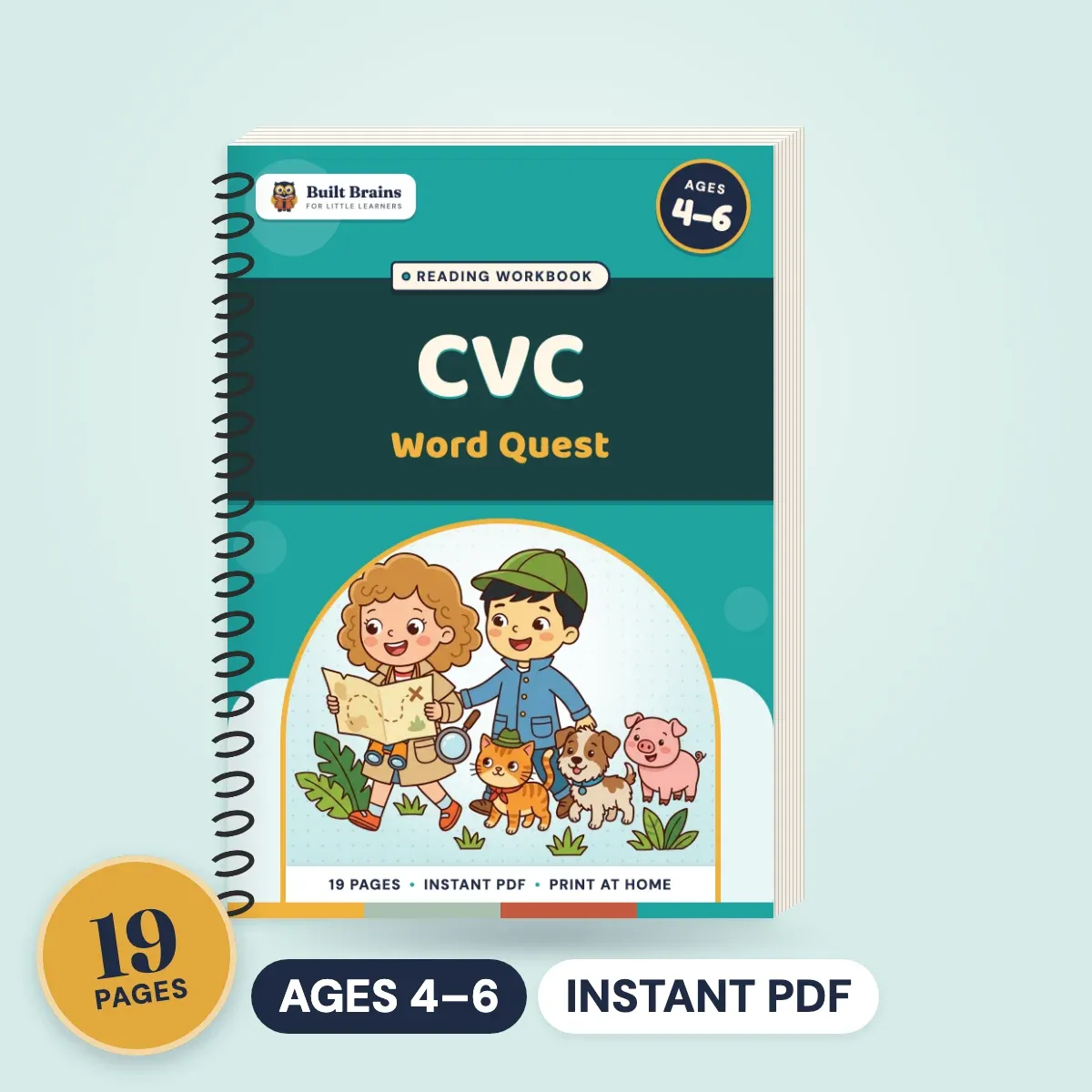
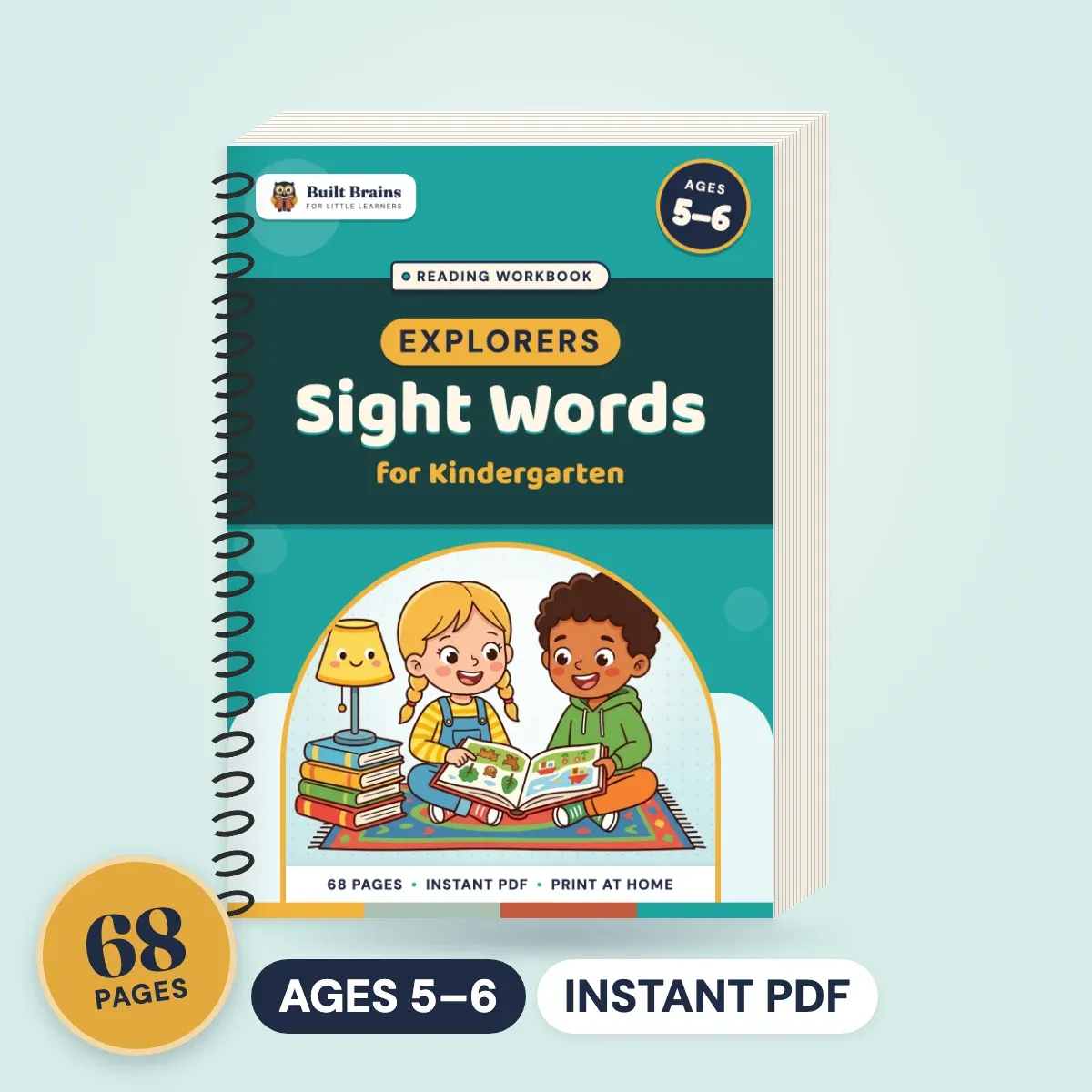
If you'd rather have every week planned, the Kindergarten at Home Curriculum follows this order across 36 weeks. The Complete Kindergarten Bundle adds the morning warm-ups, the readiness kit, the enrichment super pack, the kindergarten sight words book and CVC word practice.
Questions parents ask
Letter sounds and blending them into words, a core set of sight words, and writing simple words and sentences. In math, counting to 100, understanding numbers to 20, and adding and subtracting within 10 using objects. Just as important are reading aloud every day, listening, following directions and building hand strength for writing.
A scope and sequence is a map of what a curriculum teaches (the scope) and in what order (the sequence). For kindergarten, it usually lists phonics skills from single letters to blends and silent e, sight words, math from counting to adding and subtracting, and science and social studies themes, spread across about 36 weeks.
About 30 minutes of focused learning a day is enough for most 5 year olds, often split into a reading block and a math block. Add daily read-alouds, play, outdoor time and practical life skills. Most families finish formal work well before lunch, which is normal for one-to-one teaching.
Many kindergarteners finish the year reading simple decodable books and short sentences, but children vary a great deal and some click later in first grade. What matters is steady progress in letter sounds and blending. If reading feels unusually hard despite regular practice, mention it to your pediatrician or ask about a reading screening.
By the end of kindergarten most children are working toward counting to 100 by ones and tens, writing numbers to 20, counting objects accurately, comparing groups, adding and subtracting within 10 with objects or drawings, naming flat and solid shapes, and comparing lengths and weights. Fluency with sums within 5 is a common goal.