
What is the best secular kindergarten homeschool curriculum?
The best one is the one that teaches reading and math in a sensible order, fits into about half an hour a day, and that you will actually open four or five mornings a week. "Secular" simply means it contains no religious instruction, so families of any faith or none can use it as written.
A complete secular kindergarten curriculum should give you:
- Phonics in a clear sequence: letter sounds, then blending short-vowel words, then digraphs like sh and ch, blends, and silent e.
- Decodable reading: short stories that only use sounds your child has already learned.
- A modest number of sight words, taught alongside phonics, not instead of it.
- Kindergarten math: counting to 100, numbers to 20, comparing, adding and subtracting within 10, shapes and measuring.
- Handwriting practice that grows from tracing into writing words and short sentences.
- Science and social studies themes to read and talk about.
- A weekly plan so you are not deciding what to teach each morning.
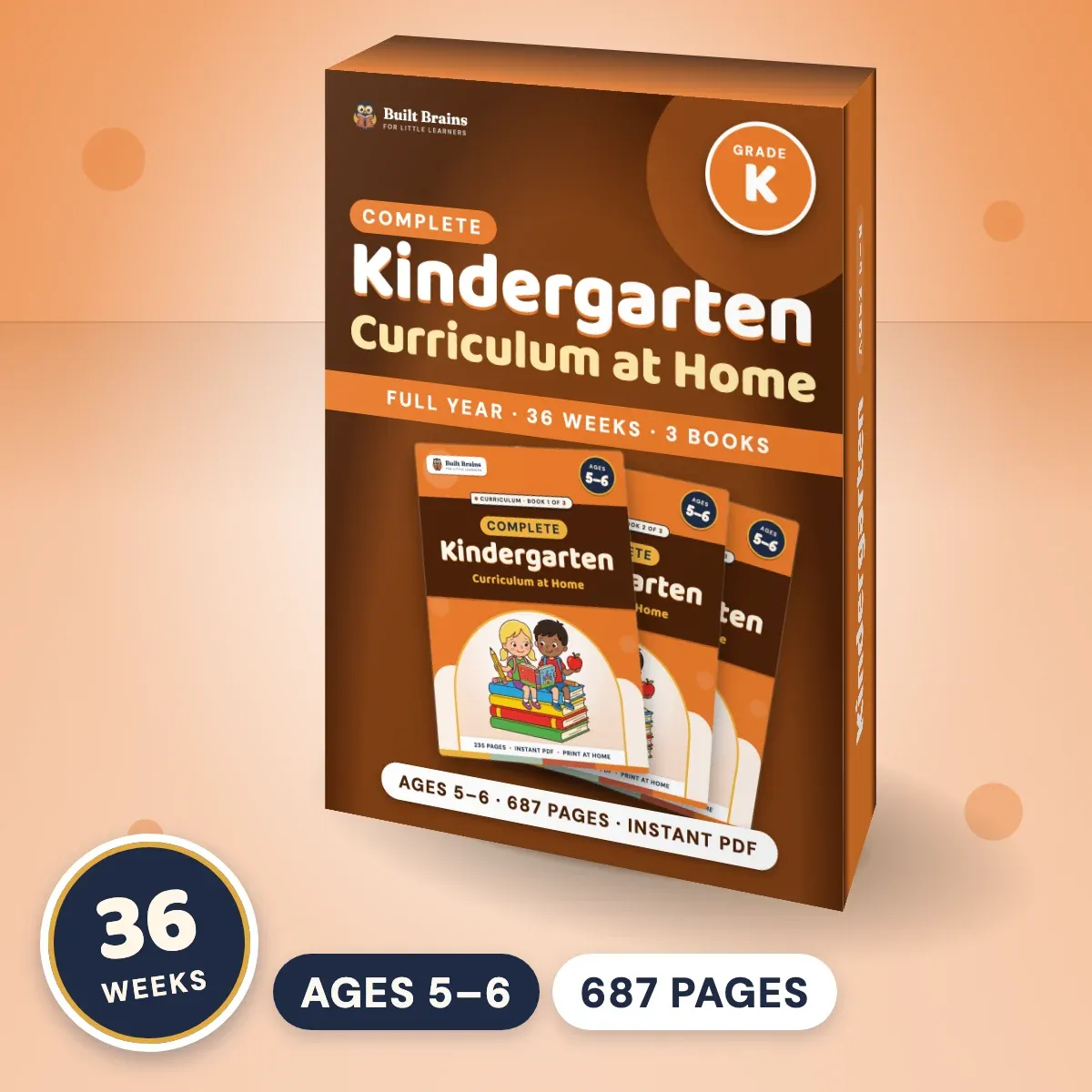
Our own option is the Kindergarten at Home Curriculum, and Built Brains curricula are secular and faith-neutral. Here is what is inside, described from the product details:
- 36 weekly plans, 687 pages: three printable books of 12 weeks each plus a 19-page Parents' Guide.
- Phonics in order: letters and sounds, short vowels by word family, then digraphs, blends and silent e.
- 70+ sight words, two or three new ones a week.
- A short decodable story with questions every week.
- Math from counting to 100 and teen numbers to adding and subtracting within 10, plus shapes and measuring.
- A science or social studies theme each week, in about 30 minutes a day.
It is an instant PDF download, black and white, prints on US Letter or A4, and has a 14-day money-back guarantee.
What does "secular" mean in a homeschool curriculum?
When homeschool families say secular, they usually mean three things:
- No religious instruction. No scripture memory, prayers, devotions or faith-based character lessons built into the lessons.
- Science from a mainstream scientific view. In later grades this means topics like the age of the Earth and evolution are taught as science teaches them.
- History and social studies without a faith lens. People and events are presented factually.
You will also see the word neutral. A neutral curriculum has no religious content but leaves out topics that families disagree on, especially in science. For older children this difference matters. For kindergarten, it barely does: science at this age is weather, seasons, plants, animals, the five senses and the human body.
Where faith can still show up at kindergarten level
Even "secular" programs touch a few areas, so it helps to know where to look:
- Holidays. Many programs include winter holidays. Look at whether they are presented as culture and tradition or as religious teaching.
- Dinosaurs and fossils. A popular kindergarten theme. Check whether the program mentions how long ago dinosaurs lived, if that matters to your family.
- Character and kindness lessons. Fine in any program, but some faith-based ones use scripture here.
Secular does not mean anti-religious. Many families of faith use secular curricula for reading and math and add their own faith teaching separately. That approach also keeps your options open if you change programs later.
What should a kindergarten homeschool curriculum cover?
Most US state kindergarten standards cover similar ground. Children vary a lot at this age, so treat this as the year's direction, not a checklist your child must finish by June.
| Subject | By the end of kindergarten, most children are working on |
|---|---|
| Phonics and reading | All letter sounds, blending three-letter words (cat, sit, hop), reading simple sentences, a set of common sight words |
| Writing | Writing their name, writing letters correctly, sounding out words to spell them, writing a short sentence |
| Math | Counting to 100 by ones and tens, writing numbers to 20, comparing groups, adding and subtracting within 10, teen numbers as "ten and some more" |
| Shapes and measurement | Naming 2D and 3D shapes, comparing longer and shorter, heavier and lighter |
| Science | Weather and seasons, plants and animals, the five senses, caring for the Earth |
| Social studies | Family, community helpers, maps and their town, simple national symbols |
If you want a deeper look at the year, our guide to how to homeschool kindergarten covers daily rhythm, records and state rules. To check whether your child is ready to start, use the kindergarten readiness checklist.
How to evaluate a kindergarten curriculum before you buy
Look at the sample pages and the scope and sequence (the list of what is taught each week). Then check these five things.
1. Phonics order
Reading should build one step at a time. A sound sequence that goes letters, then short vowels, then digraphs (sh, ch, th), then blends (fl, st), then silent e is a strong sign. Be cautious of programs that ask children to guess words from pictures or memorize long lists of whole words before they can sound out simple ones. For background, see our guide to how to teach letter sounds.
2. Sight words: how many and how
A few common irregular words (the, said, was) are needed early. Look for two or three new ones a week, practiced by reading, tracing and writing, rather than 20 flashcards at a time. Our kindergarten sight words guide explains how to teach them.
3. Math scope
Kindergarten math should go beyond counting worksheets. Look for comparing numbers, teen numbers, adding and subtracting within 10, word problems, shapes, measuring and patterns. Real objects first, pages second.
4. Time per day
A kindergarten curriculum that needs two hours a day is designed for a classroom. At home, one-to-one, 30 minutes of focused work is usually enough. If the sample lesson looks long, it probably is.
5. Parent prep
Ask yourself: can I open this at 8:55 and start at 9:00? Some programs need you to gather manipulatives, read a teacher's guide and prepare games. Others are open-and-go. Neither is wrong, but be honest about how much time you have.
Types of secular kindergarten curriculum
Each style suits a different kind of family.
- All-in-one printable. Phonics, math and themes in one download with weekly plans. Low cost, little prep, you print as you go. Needs a printer and some paper.
- Boxed all-in-one. Physical books, readers and often manipulatives arrive in a box. No printing, more expensive, sometimes more prep.
- Literature-based. Built around picture books and read-alouds, with phonics and math often bought separately. Rich, but you will spend time gathering books.
- Online or app-based. Lessons on a screen, often self-checking. Little parent prep, but more screen time than many families want at five.
- Mix and match. A separate phonics program, a separate math program, library books for science. Flexible and tailored, but you do the planning.
 New
NewAges 5–6 · 687 pages
Complete Kindergarten Curriculum at Home36 weeks of phonics, reading, math and more — planned for you
 Best valueSave $32
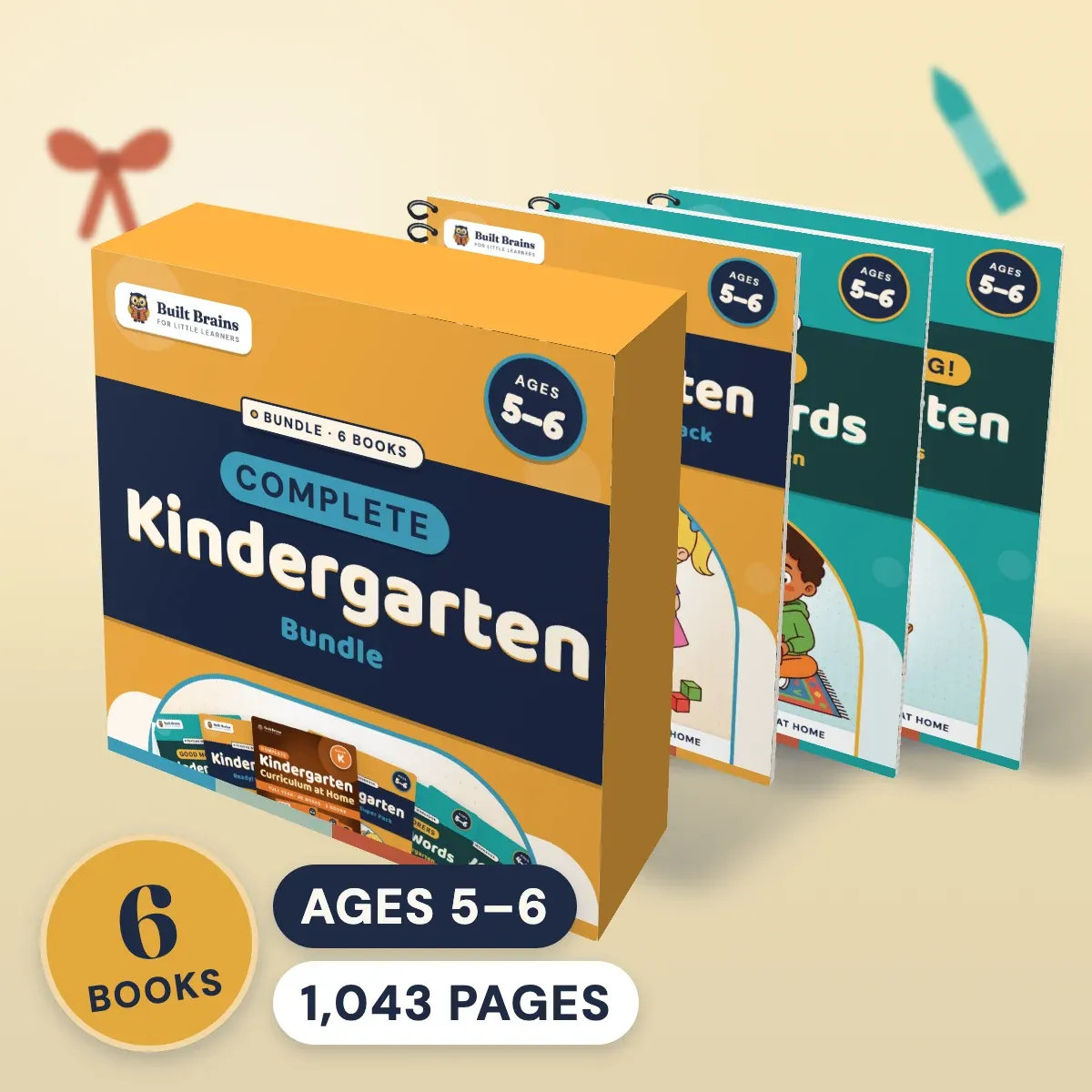
6 books · 1043 pages
The Complete Kindergarten BundleCurriculum, warm-ups, sight words and enrichment
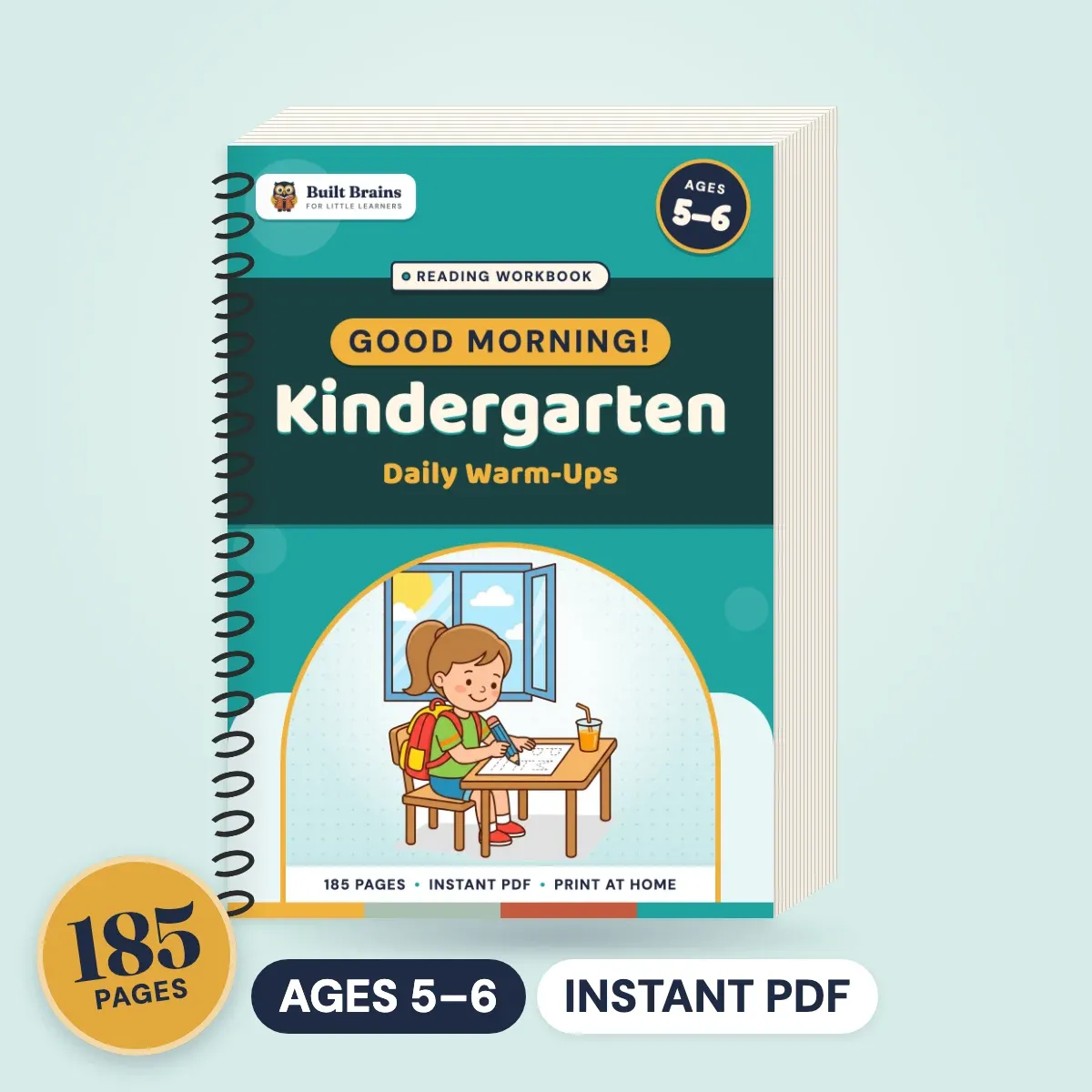
Ages 5–6 · 185 pages
Good Morning! Kindergarten Warm-Ups180 daily pages: phonics, sight words and math
A sample week of secular kindergarten homeschool
Here is how a week looks in our curriculum, using Week 5 (the "-at" word family, with an Apples & Fall theme). Each day is about 30 minutes.
- Monday, phonics: Meet the "-at" family. Say cat, hat, bat, mat together, then do the phonics intro page.
- Tuesday, reading: Read and match the words, build them, then practice the sight words "and" and "go."
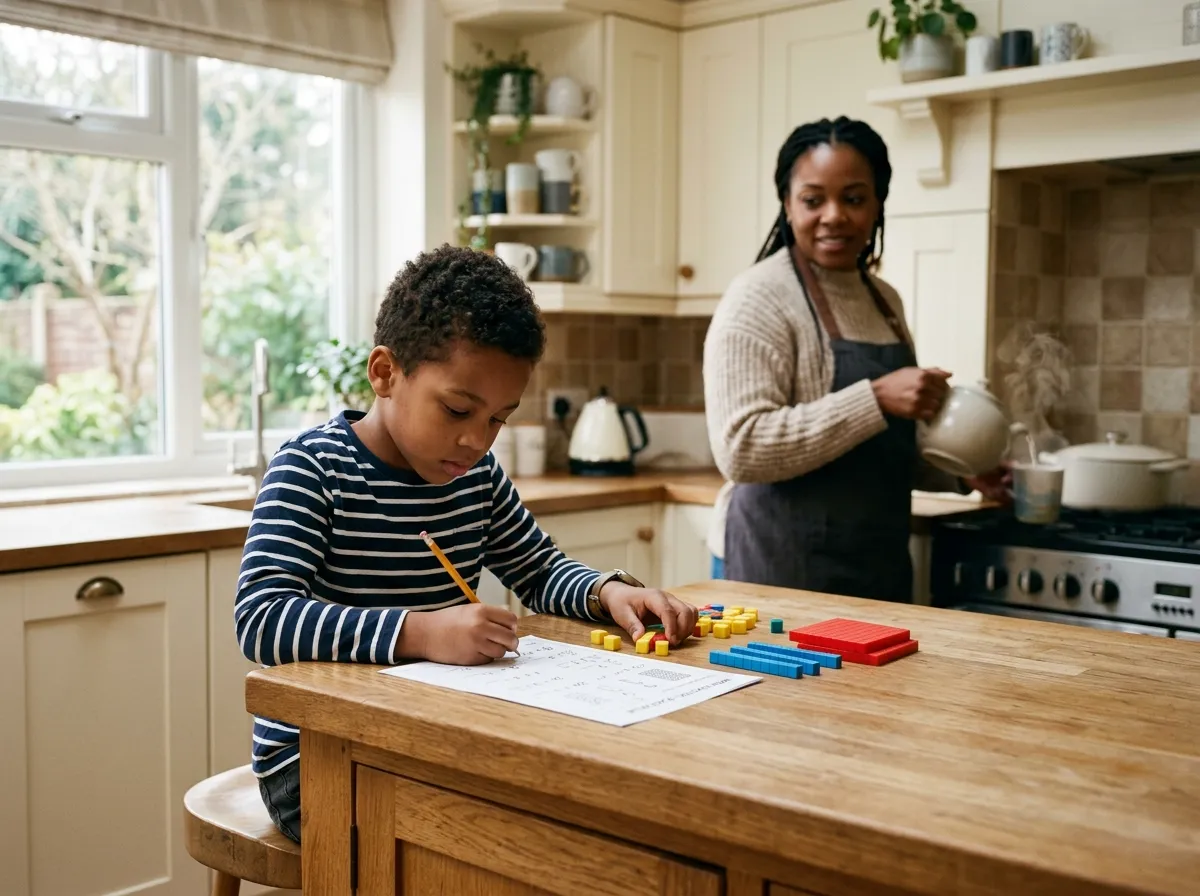
- Wednesday, math: 2D shapes. Hunt for circles, squares and triangles around the kitchen first, then do the pages.
- Thursday, story: Read the week's little story together ("The cat sat on a mat..."), answer the questions and write one sentence.
- Friday, theme and review: Read the apple facts, draw what you learned and do the weekly check-in.
Around this: read aloud every day, play outside, cook together and let your child help with chores. That is a full kindergarten week.
Our option: the Built Brains Kindergarten at Home Curriculum
Since this is our blog, here is our curriculum described plainly so you can judge it.
The Kindergarten at Home Curriculum is a 36-week printable program for ages 5 to 6 in about 30 minutes a day. Each week has a one-page plan that tells you what to do Monday to Friday, phonics and sight word pages, a decodable story, math pages and theme facts. The first four weeks move quickly through letters A to Z as a review, then each week builds on the last. Math asks children to use real things first (spoons, blocks, snacks) before the pages.
The content is secular and faith-neutral. Themes include family, community helpers, weather, plants, the ocean, space, dinosaurs and fossils, and a "Holidays Around the World" week that treats winter holidays as culture and tradition. There is no religious instruction, and nothing on the age of the Earth or evolution, so it works for secular, neutral and faith-based families alike.
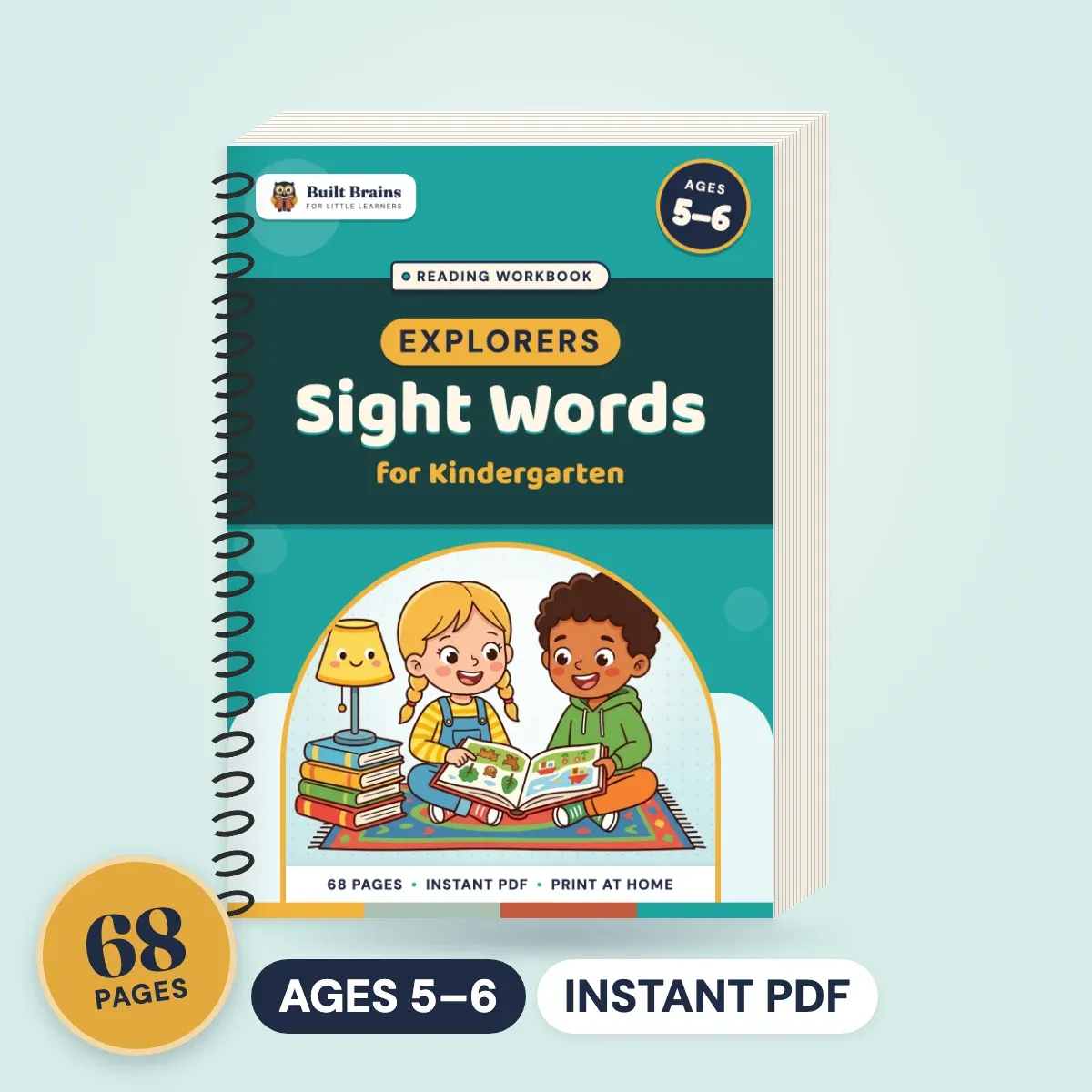
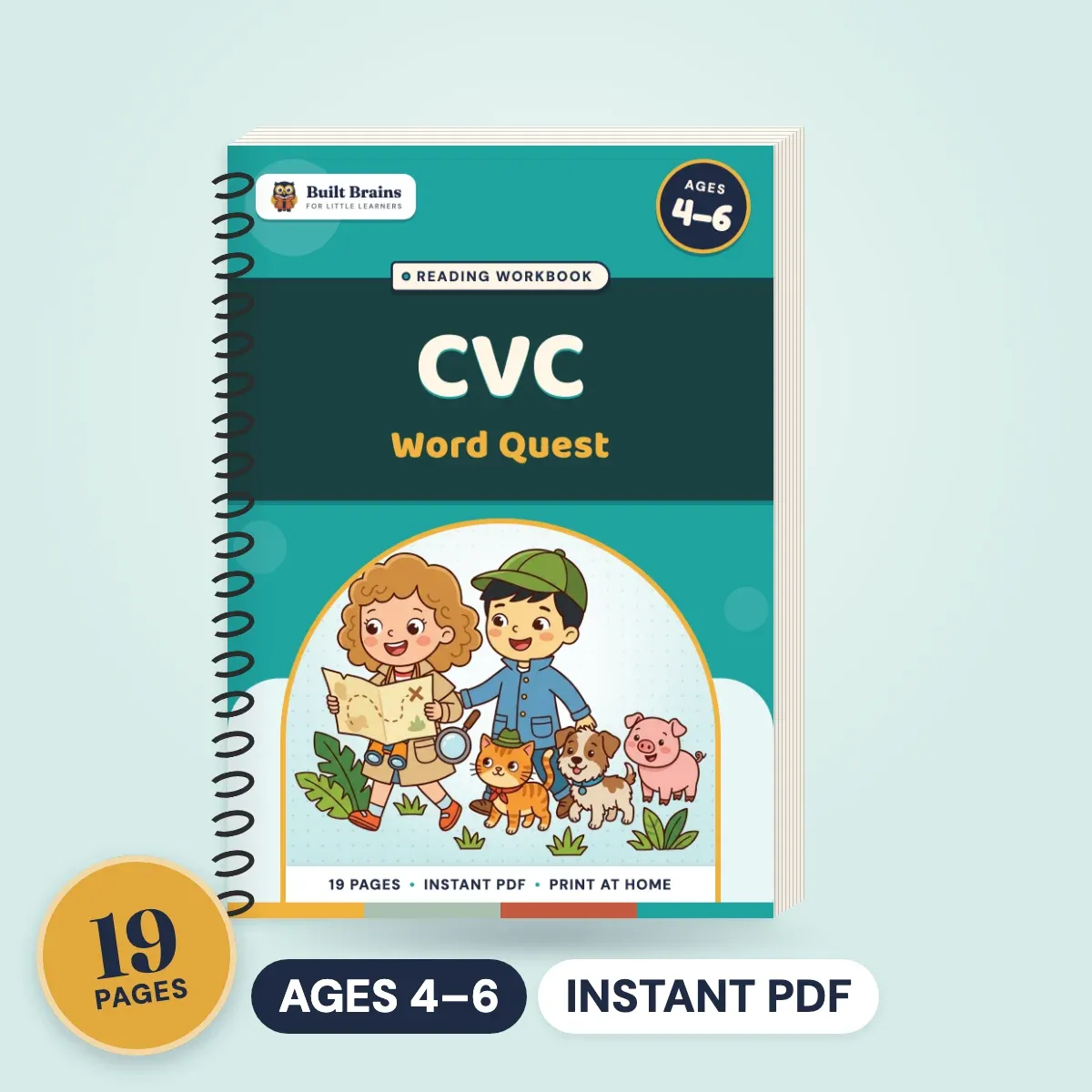
If you want the extras too, the Complete Kindergarten Bundle adds Kindergarten Warm-Ups, the Kindergarten Ready! Skills Kit, the Enrichment Super Pack, Sight Word Explorers (the 52 primer sight words) and CVC Word Quest, 1,043 pages in all.
When a printable kindergarten curriculum isn't the right fit
Be honest with yourself about these before you buy ours or anyone's.
- You want a fully scripted lesson. Our plans tell you what to do each day in a few lines, not a word-for-word script. If you want "say this, then say this," look for a scripted phonics program.
- Your child needs an intensive reading approach. If reading is a struggle or dyslexia runs in your family, a dedicated multisensory phonics program, and advice from your pediatrician or a reading specialist, may serve you better.
- You want manipulatives in the box. We use household objects. Families who want a ready-made kit of counters and readers may prefer a boxed program.
- You have no printer. Printing 600+ pages a year at a shop adds up. Print a week at a time and it is manageable, but it is real.
- Your child does not know most letter sounds yet. The first month reviews letters quickly. Start with our gentler Pre-K at Home Curriculum instead, then move up.
- You live outside the US and want a local fit. The phonics and math work anywhere, but a few social studies weeks (the flag, the Liberty Bell) are American.
How to start a secular kindergarten curriculum this week
- Check your state's homeschool rules and note anything you need to file or record.
- Try free pages first. Try our free printable book to see whether your child enjoys the style.
- Print one week only. Put it in a folder with a pencil, crayons and scissors.
- Pick a time. Most five year olds focus best mid-morning after breakfast and some outdoor play.
- Run it for three weeks before judging. The first week is always bumpy.
- Keep a few pages each month as a simple portfolio.
If you want phonics, math, stories and themes planned for the whole year in a secular, print-at-home format, the Kindergarten at Home Curriculum is built for exactly that.
Questions parents ask
A secular curriculum has no religious content and teaches science from a mainstream scientific view. A neutral curriculum also has no religious content but avoids topics some families disagree on, such as the age of the Earth. At kindergarten level the difference is small, because science is mostly weather, plants, animals and the five senses.
Most kindergarteners need only 30 to 60 minutes of focused lessons a day, split into short pieces of 10 to 15 minutes for phonics, math and writing. Read-alouds, play, time outdoors and everyday chores fill the rest. Children vary, so watch for signs of fatigue and stop while it is going well.
Yes, many parents do, using library books, free printables and a phonics sequence. The hard part is order and consistency: knowing which sound comes next and having materials ready each day. If planning drains you, a complete curriculum saves that time, and you can still add your own books and projects around it.
Not strictly. Kindergarten can be taught with reading aloud, a phonics book and everyday math. A curriculum helps when you want a clear sequence, little planning and a record of what was covered, which some states ask homeschoolers to keep. Check your state's homeschool rules before you decide.
It can be. What matters is the teaching order, the length of lessons and whether you use it consistently. Printable curricula cost less and you print only what you need. Boxed curricula include physical readers and manipulatives and need no printer. Choose based on how you like to teach, not on the packaging.